REVIEW · SIEM REAP
1-Day Angkor Wat Cycling Tour: Scenic Bike Adventure in Siem Reap
Book on Viator →Operated by Hok Cambodia Journeys · Bookable on Viator
Pedal through Angkor’s ruins, not crowded buses. This private cycling day turns the big sights into something you can pace yourself through, with hotel pickup, cool water and towels, and an English guide explaining what you’re seeing. I like the way Hok Cambodia Journeys keeps the rhythm flexible for your group, so you’re not forced into a rigid scramble.
Two things I especially like: you cover about 12 miles (20 km) on mostly flat ground, and the plan includes both the headline stops and quieter temples that many people skip. One drawback to plan for is the Angkor Temple Pass: it’s not included and costs $37 per person, plus you’ll still be riding and walking during hot hours.
In This Review
- Key things to know before you pedal Angkor
- Cycling Angkor in a day: what you get for $49
- The 20 km bike loop: why this feels easier than it looks
- From Angkor Wat to Bayon: how the day is paced
- Stop 1: Angkor Wat (about 2 hours)
- Stop 2: Angkor Thom via the South Gate (about 1 hour)
- Bayon and the royal terraces: the “story beats” you can actually follow
- Stop 3: Bayon Temple (about 30 minutes)
- Stop 4: Terrace of the Elephants (about 30 minutes)
- Ta Nei: a calmer pause in the forest temples
- Stop 5: Ta Nei (about 30 minutes)
- Ta Prohm: where the jungle and the cameras meet
- Stop 6: Ta Prohm (about 1 hour)
- Prasat Kravan and local village cycling: a different kind of Angkor day
- Stop 7: Prasat Kravan (about 30 minutes)
- Tickets, heat, and what to wear (so you don’t suffer)
- Guide and safety: the difference between a ride and a scramble
- Where this tour is great value (and where it might not fit)
- Who should book this bike tour from Siem Reap?
- Should you book this 1-day Angkor cycling tour?
- FAQ
- What time does the tour start?
- How long is the cycling tour?
- How far do we cycle?
- Does the tour include pickup from my hotel?
- What’s included in the price?
- What is not included?
- What should I wear to visit the temples?
- Is the tour refundable if plans change or weather is bad?
Key things to know before you pedal Angkor
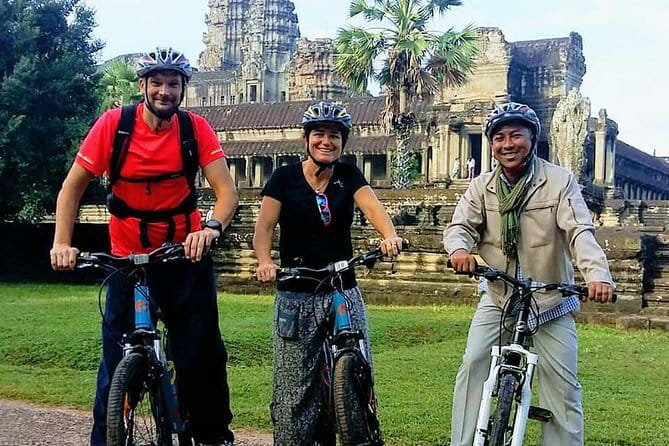
- Private pace, private route: your guide sets the tempo and route for your group.
- Big sights plus smaller stops: Angkor Wat, Angkor Thom, Bayon, Ta Prohm, plus Ta Nei and Prasat Kravan.
- Heat helpers included: cool water, cool towels, and local snacks keep things manageable.
- Mostly flat 20 km ride: you’ll cycle around 12 miles over terrain described as flat.
- Safety gear and guide support: safety equipment is provided, and riding mixes road and trail.
- Ticket cost is separate: budget the Angkor Temple Pass on top of the $49 tour price.
Cycling Angkor in a day: what you get for $49
This tour is built for one clear goal: see Angkor’s signature highlights in one day without spending the whole time in slow, uncomfortable transit. For $49 per person, you’re buying a guide-led plan, a bike, and the comfort stuff that matters when you’re out in the sun—cool water, cool towels, and local snacks.
The private setup is a big part of the value. You’re not negotiating a group bottleneck at every gate or trying to keep up with strangers who want to sprint. Instead, Hok Cambodia Journeys plans the route and you pedal at a pace that fits your group. That matters a lot at Angkor, where the walking can drain you even if the cycling is easy.
You can also read our reviews of more cycling tours in Siem Reap
The 20 km bike loop: why this feels easier than it looks

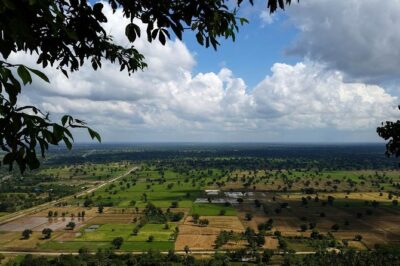
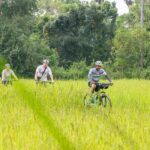
The cycling portion is described as about 12 miles (20 km) on flat terrain. That’s not a “race” distance, and it’s short enough that most people can manage it with breaks. The ride also includes a mix of road and trail, which can sound intimidating until you realize the guide’s job is to keep you safe and moving smoothly.
Think of it like this: you’re getting the fun of riding between temples, while still having time to slow down, look around, and catch your breath. With cool water and towels on hand, you’re not stuck improvising in the middle of the day. And since pickup and drop-off are direct at your hotel, you don’t lose time figuring out local transport before and after.
A practical note: if you’re sensitive to heat or long days, plan to move steadily at the start. The itinerary is front-loaded with longer temple time, then adds shorter stops later.
From Angkor Wat to Bayon: how the day is paced
You start at 8:00am with hotel pickup and your bike. The day is designed to build from the most iconic site outward, so your energy matches the schedule. Expect a mix of temple time and cycling time, totaling about 6 to 7 hours.
Stop 1: Angkor Wat (about 2 hours)
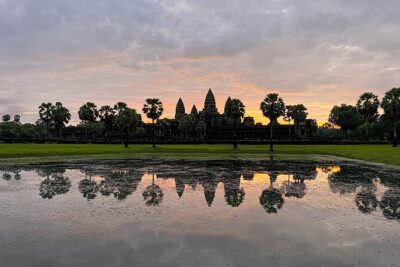
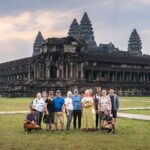
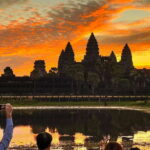
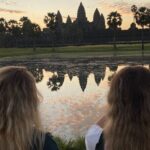
Angkor Wat is the big one, and this tour gives it real time—about 2 hours. You’ll also get a taste of the area beyond the main gates, including local villages and the forest around Angkor. That combo is valuable because Angkor can feel like pure stone if that’s all you do; the surroundings help you understand how the ruins sit in daily life.
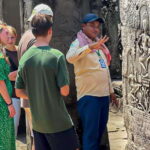
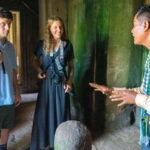
Don’t worry about having to know details ahead of time. An English guide walks you through context as you go, which is the difference between seeing a famous temple and understanding what you’re looking at.
Stop 2: Angkor Thom via the South Gate (about 1 hour)
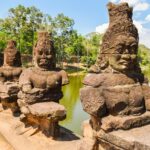
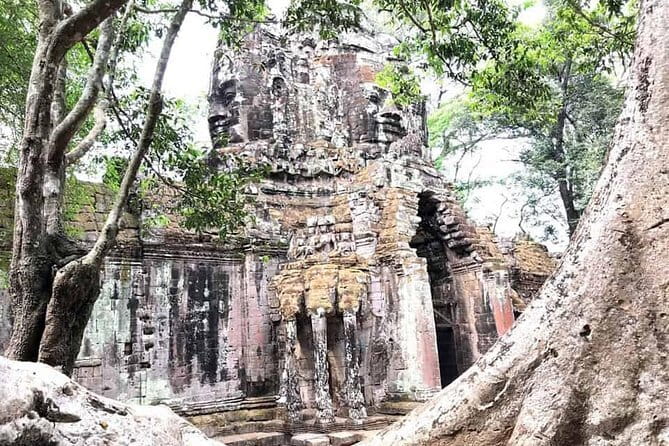
Next you enter Angkor Thom through the South Gate, then head to key sights inside the ancient city: Bayon, the Elephant Terrace, and the Victory Gate. This section moves faster, but it’s still guided, which helps you connect landmarks instead of treating each stop like a separate photo op.
Angkor Thom is also where the walking starts to feel like part of the work. The good news is that the schedule builds in time for you to eat before the final round of key temples.
You can also read our reviews of more tours and experiences in Siem Reap
Bayon and the royal terraces: the “story beats” you can actually follow
Stop 3: Bayon Temple (about 30 minutes)
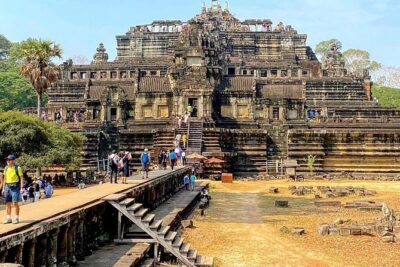
Bayon sits in the center of Angkor Thom and was built by King Jayavarman VII. It’s dedicated to Lord Lokesvara, a savior god in Mahayana Buddhism. Those facts matter because Bayon isn’t just a striking face-filled temple; it’s a clue to the beliefs and leadership behind the construction.
You’ll spend about 30 minutes here, which is usually enough time to notice the main features without rushing through every corner.
Stop 4: Terrace of the Elephants (about 30 minutes)
Right in front of the royal palace area, the Terrace of the Elephants is described as a royal conference hall. It also has an easy-to-grasp origin story: elephants were used to move kings, royal family, and generals.
This is one of those stops where an explanation from the guide turns the stone into something functional. You’re not just staring at architecture—you’re picturing how power and ceremony worked in the Khmer Empire.
Ta Nei: a calmer pause in the forest temples
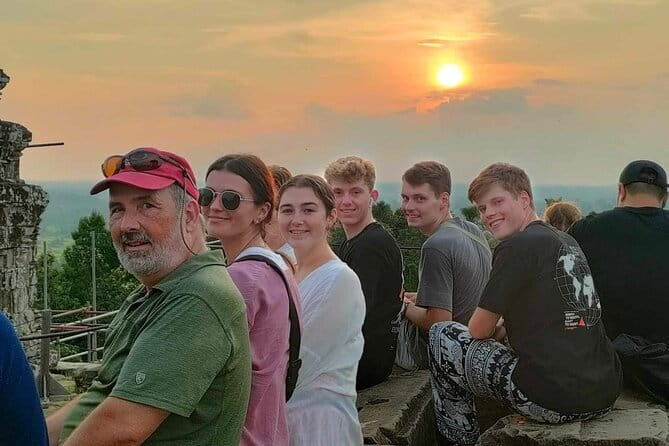
Stop 5: Ta Nei (about 30 minutes)
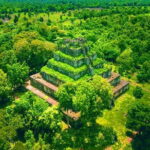
After the major clustered sights, the tour threads into a smaller path through the forest to visit Ta Nei. It’s a small temple complex and is described as peaceful—exactly the kind of stop that helps your brain reset after the most famous sites.
If you’re the sort of person who enjoys when a place feels like it’s still living in its own quiet world, this stop is likely to be a highlight. The route also keeps things varied, so you’re not stuck only in wide open temple courtyards.
Ta Prohm: where the jungle and the cameras meet
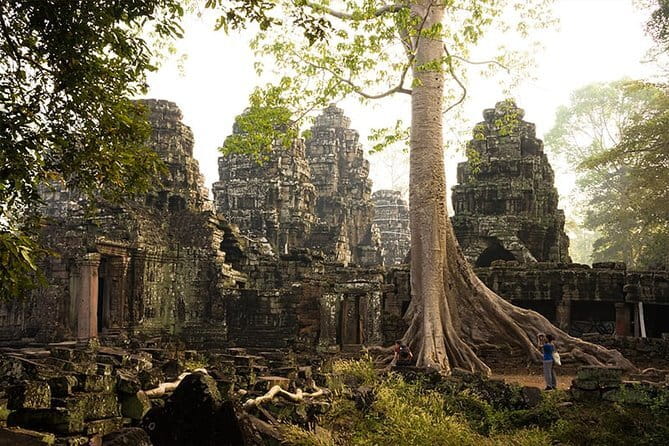
Stop 6: Ta Prohm (about 1 hour)
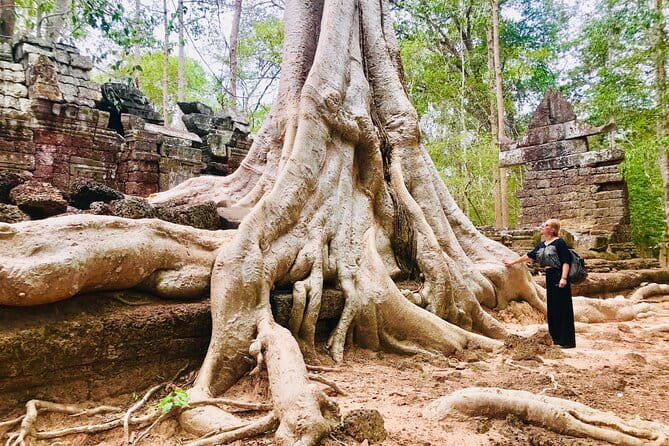
Ta Prohm is the popular jungle temple, and Hollywood fans recognize it from Tomb Raider. The tour gives you about 1 hour here, which is long enough to enjoy the dramatic tree roots and architecture without the feeling that you’re being herded through.
Ta Prohm was built by King Jayavarman VII in 1186 and dedicated to his mother. When you know the dedication, the site feels less like set dressing and more like a deliberate memorial space.
This is also the stop where you’ll likely feel the contrast most strongly: vivid jungle atmosphere against carved stone. The guide’s role here is key, because the best parts of Ta Prohm are easy to miss if you only focus on the most obvious photo angles.
Prasat Kravan and local village cycling: a different kind of Angkor day
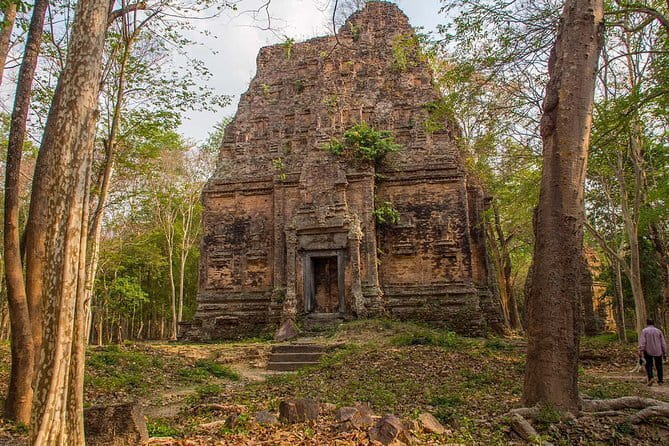
Stop 7: Prasat Kravan (about 30 minutes)
After Ta Prohm, you’ll cycle through local villages for a local interaction and to experience everyday living-culture and traditions. The stop itself is about 30 minutes, but the village cycling is the part that often makes this tour feel more human than purely monumental.
Prasat Kravan is one of the less central temple experiences on the day, which is exactly what you want if you’re tired of going from one “top spot” to another. It breaks the rhythm and helps you see the ruins as part of a wider area, not isolated islands of tourism.
Tickets, heat, and what to wear (so you don’t suffer)
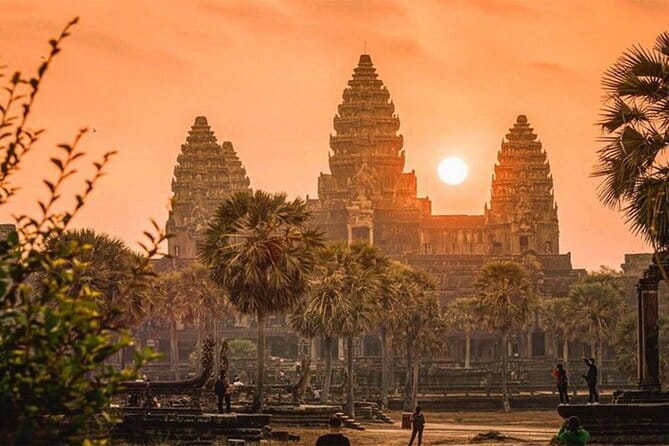
The bike is included, and so are cool water and towels, plus local snacks. But the big ticket item—literally—is the Angkor Temple Pass. It costs $37 per person and isn’t included in the tour price.
That means your real day-spend is going to be more than the $49 you see on the tour. Still, you’re getting a full guided day and a bike setup, so it’s not just paying for entry—it’s paying for transportation and interpretation between sites.
What to wear: you should have clothes that cover your shoulders and knees. This is not optional at temple sites, and it’s the kind of rule that can ruin a day if you show up in the wrong outfit. Plan for hot weather clothing that still covers you, and consider light layers you can handle while cycling.
Guide and safety: the difference between a ride and a scramble
This is a private tour, so you don’t have to match the pace of strangers. Instead, Hok Cambodia Journeys plans the route and keeps you moving at a rhythm that fits the group. That pacing control is a big deal at Angkor, where short distances can still feel like a marathon once you hit the walking zones.
Safety equipment is provided, and the ride is described as safe even though it includes some road and trail. In practice, that means the guide is watching the route and helping you handle transitions so you’re not stressed about where to look or where to turn.
The English guide also matters here. You don’t just get directions; you get context as you move, which keeps the day from turning into a series of temples where you only remember what you photographed.
Where this tour is great value (and where it might not fit)
At $49 per person, this tour is a smart deal if you want a guided Angkor day with less hassle and more comfort. The big value drivers are hotel pickup/drop-off, bike included, and the cooling + snacks that help you stay functional through a long morning.
It may not be the best choice if you want a slow, lingering temple day with no cycling at all. The itinerary has set time blocks—Angkor Wat about 2 hours, then shorter stops. You’ll be seeing a lot, not sitting in one place all day.
Also, if you have serious mobility limits, cycling plus temple walking could be more demanding than you expect, even if the terrain is described as flat. The tour is said to be most suitable for people who can participate comfortably—so be honest about your comfort with a full day.
Who should book this bike tour from Siem Reap?
I’d send you on this if you match one of these profiles:
- You want less logistics stress and more time on ruins.
- You like the idea of riding between sites, not only walking.
- You want the big three sights—Angkor Wat, Angkor Thom, and Ta Prohm—plus extra temples like Ta Nei and Kravan.
- Your group benefits from a private pace, especially if you’re traveling with different comfort levels.
It’s also a good fit if you enjoy variety: village cycling, forest temple atmosphere, and major ceremonial stone landmarks all in one day.
Should you book this 1-day Angkor cycling tour?
Book it if you want an efficient, guided Angkor day that feels active but not frantic. The private format, the included water and towels, and the mix of signature and quieter temples make it a strong value.
Hold off if you’d rather spend the day mostly in one or two temples with lots of free roaming time, or if the separate Angkor Temple Pass cost ($37 per person) would stretch your budget. And if your weather luck is a concern, remember the experience requires good weather—if it’s canceled for poor weather, you’ll be offered a different date or a full refund.
FAQ
What time does the tour start?
The tour starts at 8:00am in Siem Reap.
How long is the cycling tour?
It runs about 6 to 7 hours.
How far do we cycle?
You cycle around 12 miles (20 kilometers) over flat terrain.
Does the tour include pickup from my hotel?
Yes. The guide collects and drops you off directly at your hotel.
What’s included in the price?
Bicycle, an English tour guide, cool water and towels, and local snacks are included.
What is not included?
The Angkor Temple Pass is not included (it’s $37 per person). Accommodation, meals, and the guide’s tips are also not included.
What should I wear to visit the temples?
Wear clothes that cover your shoulders and knees.
Is the tour refundable if plans change or weather is bad?
You can cancel for a full refund up to 24 hours in advance. The experience also requires good weather; if it’s canceled due to poor weather, you’ll be offered a different date or a full refund.