REVIEW · SIEM REAP
Siem Reap: Angkor Wat 2-Day Tour with Sunrise and Sunset
Book on GetYourGuide →Operated by Siem Reap Experiences · Bookable on GetYourGuide
Angkor at dawn feels like a time machine. This 2-day Angkor Wat sunrise and sunset tour in Siem Reap is built around the right pacing: early starts, cooler morning temple walks, then a full day loop that ends with sunset views. You get an English-speaking guide, air-conditioned transport, and a tight route designed for people who don’t want to spend days planning.
What I like most is the hands-on focus on the Khmer story: you’re not just ticking off temples, you’re learning how each site fits into the empire’s politics and religion. I also really like the way the day is structured to reduce the worst of the heat and crowds, especially with the 4:30am sunrise start and early arrivals at key spots.
The main drawback is simple: it’s a long, hot two days. Even with breaks, water, and chilled towels, the schedule is intense, and it may not suit everyone—especially if you don’t handle early mornings and a lot of walking well.
In This Review
- Key takeaways before you go
- Why This Two-Day Angkor Wat Tour Works (Sunrise + Smart Temple Coverage)
- Day 1 (4:30am–1:00pm): Angkor Wat Sunrise, Ta Prohm, Bayon, and Ta Keo
- Angkor Wat at sunrise
- Ta Prohm: the jungle temple stop
- Angkor Thom and Bayon: the smiling faces
- Ta Keo: the mountain temple climb
- South Gate of Angkor Thom: gods and demons on a bridge
- Day 2 (10:30am–7:00pm): Preah Khan, Neak Pean, Pre Rup, and a Proper Sunset Finish
- Preah Khan: the big temple built for a family story
- Neak Pean: the bathing and healing concept
- Ta Som: dancers, long hair, and a distinctive gate
- East Mebon: ancestors and the reservoir setting
- Pre Rup: the coffin-like form and Hindu meditation
- Phnom Bakheang: hill, 33 towers, and heaven symbolism
- Sunset finish
- Guides and the Small Details That Make the Difference
- Transport, Water, and Pacing in the Heat
- What’s Actually Included for $34 (and What You Must Pay Separately)
- Temple Pass, Dress Rules, and Prep Checklist That Actually Matters
- Who Should Book This Angkor Wat Sunrise and Sunset Tour (and Who Might Skip It)
- Should You Book This Angkor Wat 2-Day Sunrise and Sunset Tour?
- FAQ
- Do I need to buy an Angkor Archaeological Park entry ticket?
- What time does the sunrise tour start on day 1?
- When does the second day start and end?
- Which temples are included across the two days?
- Is the tour guided in English?
- Are meals included?
- What’s included in the transport?
- What should I wear and avoid?
- Is the tour suitable for wheelchair users or older travelers?
- What’s the cancellation and booking flexibility?
Key takeaways before you go
- Sunrise plus sunset: day 1 starts early at Angkor Wat; day 2 ends with sunset for a full-circle experience
- 11 temples, two loops: you cover the big hits without trying to DIY everything
- Real context from your guide: you’ll connect temples to Khmer rulers and religious shifts
- Air-conditioned minibus support: easier between stops, with chilled bottled water and wipe towels
- Temple pass is on you: entry tickets are not included, so plan that part first
- Heat is part of the deal: expect a long day and dress for sun protection
Why This Two-Day Angkor Wat Tour Works (Sunrise + Smart Temple Coverage)
This tour is for people who want Angkor to feel like a story, not a scrapbook. The structure matters: the early morning small tour gives you a calmer experience around Angkor Wat and the surrounding sites, then the second day expands into the broader circuit with more variety of temple styles and symbolism.
You also get a practical advantage if you’re staying in Siem Reap long enough to use a multi-day temple pass. The route is designed so you see the key temples that most first-timers regret missing. By day 2, you’re not stuck in decision mode—you’re in guided context mode.
Price helps, too. At $34 per person, you’re paying for transport, a guide, and the time/route organization over two separate days. The only big extra cost is the temple pass you must purchase yourself.
You can also read our reviews of more evening experiences in Siem Reap


Day 1 (4:30am–1:00pm): Angkor Wat Sunrise, Ta Prohm, Bayon, and Ta Keo
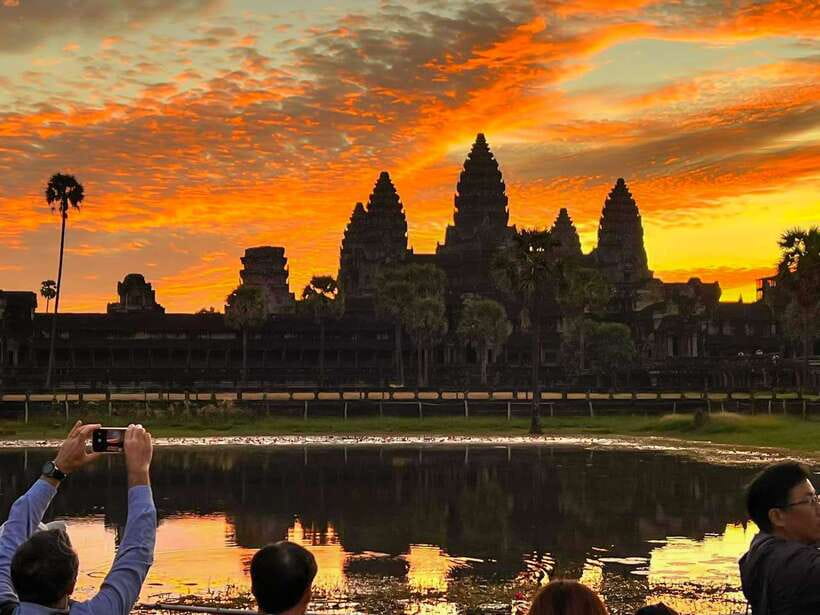
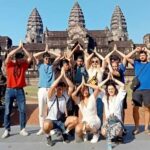
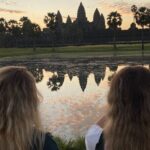
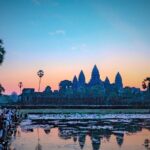
Day 1 starts before most of Siem Reap wakes up. You’ll begin with sunrise at Angkor Wat on the small-group route, with early arrival timing so you can find good viewing points before the heaviest crush. Angkor Wat is UNESCO-listed, and it still looks dramatic even when the light is low—especially when the sky starts to change.
Angkor Wat at sunrise
This is the headliner for a reason. The sunrise timing isn’t just about photos; it’s about atmosphere. In the cooler morning hours, you can actually slow down and notice architectural details and carvings before your body starts bargaining with you.
Ta Prohm: the jungle temple stop
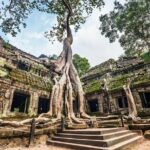
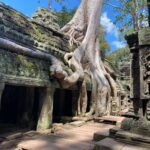
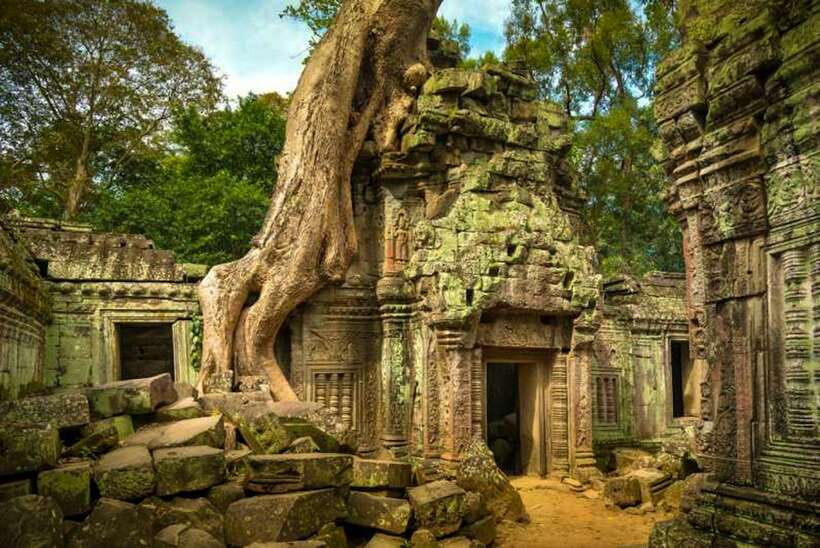
Next comes Ta Prohm, the famous jungle temple. You’ll see the strange mix of ancient stone and living roots, and your guide’s job is to help you interpret what you’re seeing instead of treating it like a movie set. If you’ve seen Tomb Raider, it’s the same kind of visual drama—but the guide helps you ground it in the temple’s real setting and meaning.
Angkor Thom and Bayon: the smiling faces
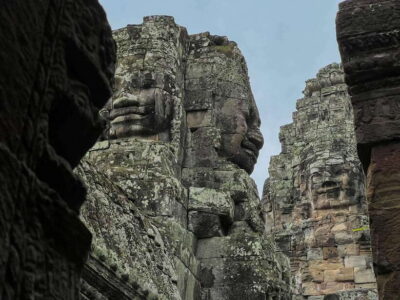
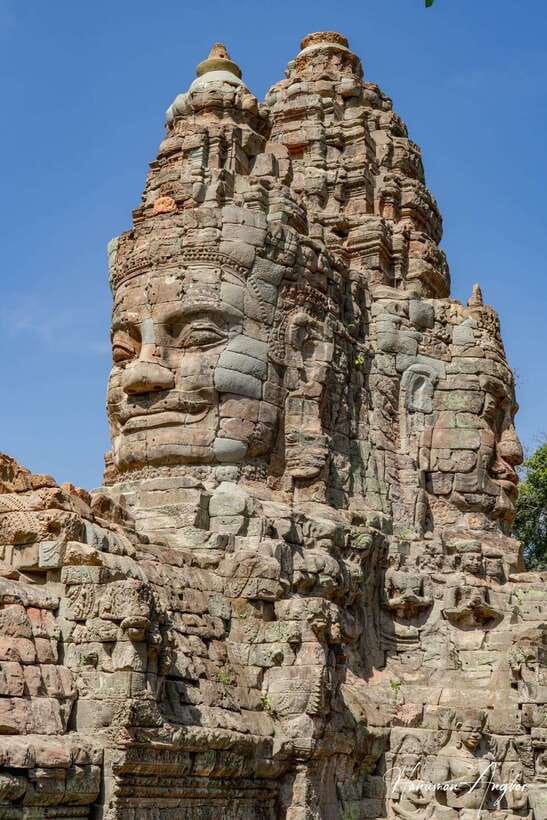
Then you head into Angkor Thom and stop at Bayon, where the big smiles on the towers become the visual anchor of the day. Bayon is tied to Jayavarman VII’s reign, and it’s highlighted as the only Buddhist state temple and the last major temple built in the Angkor empire. That context turns those faces from “cool art” into “political and religious message in stone.”
You can also read our reviews of more tours and experiences in Siem Reap

Ta Keo: the mountain temple climb
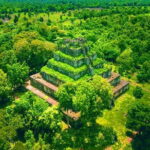
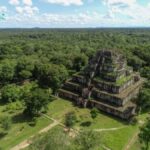
Ta Keo is your “work for the view” moment. It’s a 10th-century mountain temple, and you’ll walk up the structure. This is where footwear and comfort matter, and it’s also why people who struggle with steps may want to think twice.
South Gate of Angkor Thom: gods and demons on a bridge
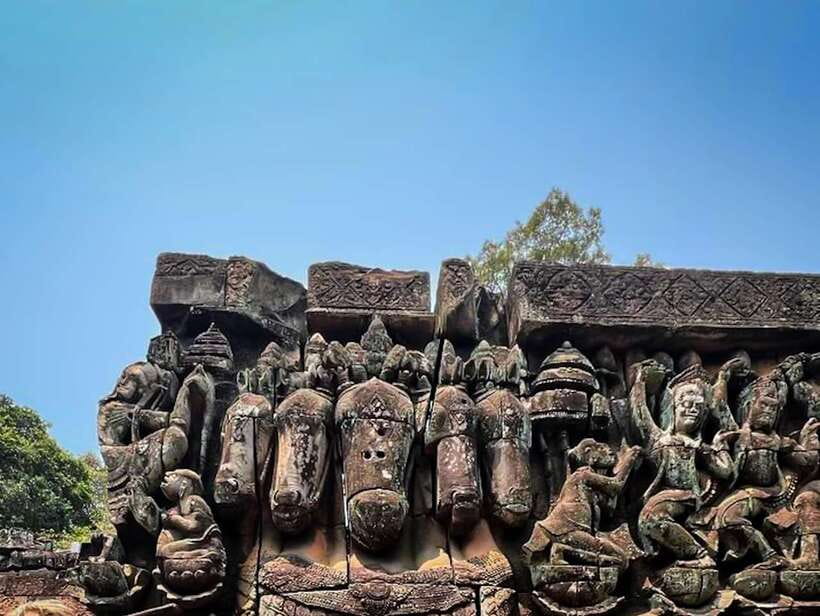
Day 1 closes at the South Gate, with the bridge of statues of gods and demons. This is the kind of detail you’ll miss if you wander without help: rows of figures that carry the body of a seven-headed naga. It’s a strong finish because it’s both symbolic and visually clear—stone storytelling in motion.
Day 2 (10:30am–7:00pm): Preah Khan, Neak Pean, Pre Rup, and a Proper Sunset Finish
Day 2 is the bigger loop. You start later (10:30am) so you’re not immediately paying for day 1 with another early alarm, but it’s still long enough to feel like a full temple day. The payoff is range: you’ll hit major sites, then move through temples that each show a different “chapter” of Angkor’s layout and belief system.
Preah Khan: the big temple built for a family story
Preah Khan is the biggest temple on this loop. The guide frames it as a temple built by King Bayon for his father, which gives you a way to read the scale: this wasn’t only about worship, it was about remembrance and royal power.
Neak Pean: the bathing and healing concept
Then comes Neak Pean, where the water around the island temple is connected to bathing and health in the Angkor period. It’s easy to see it as just another pond-side ruin. With the right explanations, you start seeing how temple design was used as part of daily belief and ritual.
Ta Som: dancers, long hair, and a distinctive gate
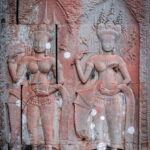
Ta Som adds a different kind of decoration. There’s a big tree over the east gate, and the site is packed with sculpted dancers with long hair. Your guide connects it to its original purpose—built for the king’s sister—which gives the sculptures a more personal, human angle.
East Mebon: ancestors and the reservoir setting
East Mebon is a temple built for the ancestors. It was connected to a reservoir and constructed as early as the 10th century. That early date helps you notice how Angkor’s plans stretched across generations, not just one ruler’s vision.
Pre Rup: the coffin-like form and Hindu meditation
Pre Rup is often mistaken for a crematorium, but the focus is different: a stone structure that looks like a coffin and was used by Hindus to meditate within at the full moon. This stop is one of the best examples of why a guide helps. Otherwise, you might only see shapes. With context, you get practice—when and why people would have used this structure.
Phnom Bakheang: hill, 33 towers, and heaven symbolism
Phnom Bakheang sits at the top of a hill. The 33 towers are explained as representing the heavens, turning the climb into a built religious diagram. The day ends up feeling more “designed” than random, like every stop is part of a larger map.
Sunset finish
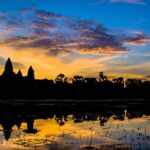
Day 2 concludes with sunset. Even if you’ve already seen Angkor Wat earlier, sunset changes the mood across the entire complex. The light is softer, shadows stretch, and you start noticing temple geometry differently. It’s a great way to close the loop: sunrise begins the story; sunset helps you feel the scale.
Guides and the Small Details That Make the Difference
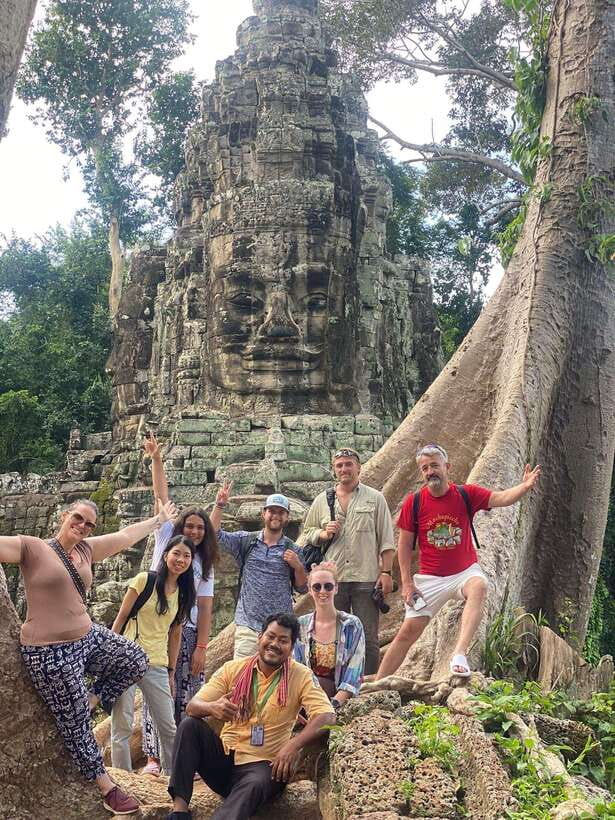
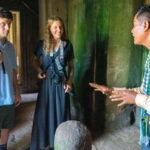
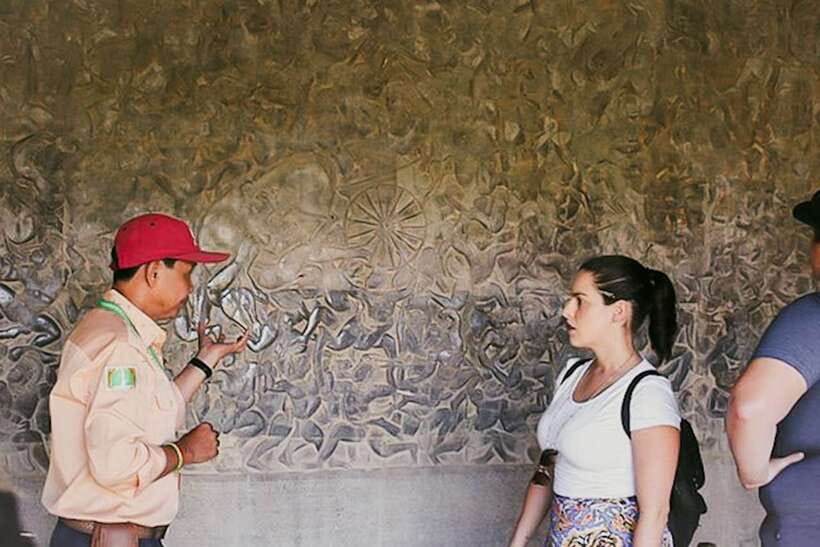
The guides are a big reason this tour gets such strong feedback. Names show up again and again—Sary, Sok, Sayon, Sam, Vone, Pheap, Pip, Nick (Kosal), John, Simon, Heang, and Touch Pheap. Different personalities, same result: explanations that connect what you see to what the Khmer rulers were trying to communicate.
Here’s what I’d pay attention to if you want to judge the quality of a guide quickly:
- They point out details you’d otherwise miss in seconds.
- They time stops so you get better photo views and less crowd overlap.
- They answer questions without making it feel like you’re in a lecture.
Some guides are also described as “aggressive” with group photo timing—which, for most people, just means they don’t wait around for perfect light. I’d rather have good organization and a clean shot than endless hovering.
On sunrise day, a few guides are specifically praised for finding viewpoint spots at different times, so you don’t end up fighting the crowd for the same angle. On day 2, guides like Sam and others are credited with connecting each structure to its origins and religious setting, which keeps the long walking day from becoming just a parade of ruins.
Transport, Water, and Pacing in the Heat
This is a two-day schedule, and the heat is real. What helps is the logistics: hotel pickup and drop-off, an air-conditioned minibus, and chilled bottled water at stops. You also get refreshing wipe towels, which sound small until you’re trying not to feel like a damp towel yourself.
The tour pacing is designed for energy management. Morning is cooler, so you explore more on day 1 and reach your early afternoon end point (about 1:00pm). Day 2 runs until around 7:00pm, which is later than many half-day options, but it also lines up with that sunset finish.
One thing to know: the breaks are there, but it’s still not a relaxed stroll. People who are sensitive to heat should plan for slower moments and bring sensible sun protection.
What’s Actually Included for $34 (and What You Must Pay Separately)
Let’s talk value in plain terms.
Included:
- Hotel pickup and drop-off
- Air-conditioned minibus
- English-speaking guide
- Two separate days (small tour and big tour)
- Visit to 11 temples
- Sunrise on day 1 or sunset on day 2 (built into the schedule)
- Chilled bottled water
- Wipe towel refresh
- Local tax
Not included:
- Angkor Archaeological Park entry ticket (temple pass)
- Meals
That temple pass point is the one you shouldn’t forget. Your guide can help you purchase it after pickup, or you can buy online in advance through the official government site: https://www.angkorenterprise.gov.kh/
For me, the value equation is pretty straightforward: paying a low fixed rate makes sense only because the guide + transport + organization carry the heavy lifting. If you were to hire a driver for two full days and still want a guide to interpret what you’re seeing, costs usually rise fast. Here, you’re buying structure.
Temple Pass, Dress Rules, and Prep Checklist That Actually Matters
You’ll get the most out of this if you show up ready.
First, the temple pass: you must buy your own ticket or reserve it online ahead of time. This isn’t optional, and it’s not the kind of thing you want to solve while everyone’s standing in line.
Dress rules are strict:
- No shorts
- No short skirts
- No sleeveless shirts
- Alcohol and drugs aren’t allowed
What to bring:
- Sunglasses
- Sunscreen
- Comfortable clothes
- A charged smartphone
Also, plan for a full day of wear and tear on your body. If you’re thinking about Ta Keo’s climb and you know steps bother you, you’ll want to adjust expectations early.
Who Should Book This Angkor Wat Sunrise and Sunset Tour (and Who Might Skip It)
This tour is a great fit if:
- You’re in Siem Reap for a short window and want the major temples handled
- You don’t want to piece together history on your own
- You like being guided to the best viewpoints and photo spots
It may be less ideal if:
- You want a slow, restful pace
- You struggle with very early starts and long hot days
- You need wheelchair access (the activity notes say it’s not suitable for wheelchair users)
One more detail that matters: the notes also say it’s not suitable for people over 70 years. If that’s your situation, consider a more flexible plan or a slower itinerary you can tailor day by day.
Should You Book This Angkor Wat 2-Day Sunrise and Sunset Tour?
Book it if you want Angkor to feel organized and meaningful, with a route that covers Angkor Wat, Ta Prohm, Bayon, Ta Keo, Preah Khan, Neak Pean, Ta Som, East Mebon, Pre Rup, Phnom Bakheang, plus the South Gate experience—without you having to manage every decision.
I’d also book it if you plan a third day with flexibility. The tour is designed so that after day 2, you can rest, revisit favorites, or use a private tuk-tuk to explore extra corners without losing the core story your guide lays out.
Skip or rethink if early mornings and heat are dealbreakers for you. In that case, you might prefer fewer sites per day and more downtime. Angkor rewards patience, and your body has to be on board too.
FAQ
Do I need to buy an Angkor Archaeological Park entry ticket?
Yes. The temple pass entry ticket is not included, and you’ll need to purchase it yourself, either online through the official site or at the ticket office after pickup.
What time does the sunrise tour start on day 1?
Day 1 is a small tour from about 4:30am to 1:00pm, with sunrise included.
When does the second day start and end?
Day 2 is the big tour from about 10:30am to 7:00pm, with the sunset included on that day’s schedule.
Which temples are included across the two days?
The tour includes visits to 11 temples total, including Angkor Wat, Ta Prohm, Bayon, Ta Keo, South Gate of Angkor Thom, Preah Khan, Neak Pean, Ta Som, East Mebon, Pre Rup, and Phnom Bakheang.
Is the tour guided in English?
Yes. It includes an English-speaking guide.
Are meals included?
No. Meals are not included, though the day includes occasional rest and food breaks as the tour progresses.
What’s included in the transport?
Hotel pickup and drop-off are included, and you travel by air-conditioned minibus. You’ll also get chilled bottled water and wipe towels.
What should I wear and avoid?
Bring sunglasses, sunscreen, and comfortable clothes. Avoid shorts, short skirts, sleeveless shirts, and alcohol or drugs are not allowed.
Is the tour suitable for wheelchair users or older travelers?
The activity notes state it is not suitable for wheelchair users and people over 70 years, even though wheelchair accessibility is listed under included items. If you fall into either group, you should consider whether the walking demands will work for you.
What’s the cancellation and booking flexibility?
Free cancellation is available up to 24 hours in advance for a full refund, and there is a reserve now & pay later option.