REVIEW · SIEM REAP
Siem Reap: Bike the Angkor Temples – Full-Day 30km Tour
Book on Viator →Operated by Discova Southeast Asia · Bookable on Viator
Angkor by bike beats the usual loop. You glide past villages and temple walls instead of sitting in traffic. I especially love the off-road back roads feel and the fact that stops are paced so you’re not just speed-running monuments. One thing to plan for: the ride is about 25–30 km and includes some sand or bumpy dirt that’s not ideal for brand-new riders.
What really made it click for me was the human scale. Small groups (max 10) mean you actually hear the story behind what you’re seeing, and guides like Wich, Moon, Chen, Mun, Pat, and Samnang Chan are repeatedly praised for mixing practical safety with clear explanations. I also like that you get real breaks: bottled water, fruit and snacks, and a lunch option that’s Khmer food, not just a dry sandwich.
Before you book, check your temple clothing and your legs. Sleeveless and see-through tops aren’t allowed, and shorts/pants must be at least knee length for entry. It’s doable for most people in moderate fitness, but it’s still an all-day effort in heat.
In This Review
- Key highlights to know before you pedal
- Price and what you’re really paying for
- The ride setup: meeting at ផ្ទះគ្រូ Café and getting geared up
- What you ride each day: distance, terrain, and heat reality
- Angkor Wat in the morning: the big opener
- Angkor Thom: from main road to sculpture-and-demons vibes
- Bayon and the terraces: smiling faces and a mid-day rhythm
- Srah Srang: the break that helps you keep going
- Ta Prohm: roots, ruins, and that otherworld feeling
- Cycling through Siem Reap back roads: everyday life between temples
- What’s included (and what isn’t)
- Clothing rules and comfort tips for temple entry
- Who this tour fits best
- Should you book the Siem Reap bike tour of Angkor temples?
- FAQ
- How long is the bike tour and how far do we ride?
- What’s included in the $35 price?
- Do I need to pay for Angkor temple entrance fees?
- Where do we meet, and when does the tour start?
- Is this tour suitable for beginners?
- What clothing do I need for temple entry?
Key highlights to know before you pedal
- Back-road temple access: You ride through villages and quieter paths, not only the main roads.
- Morning start at Angkor Wat: The tour begins early, so your first temple feels less chaotic.
- Small-group pace (up to 10): More time for questions, photos, and walking the temple grounds.
- Temples you’ll actually remember: Angkor Wat, Bayon, Ta Prohm, plus terraces in Angkor Thom.
- Snacks + Khmer lunch option: Bottled water, fruit, and a meal break in the middle of the day.
- Some dirt trails, some sand: Expect “comfortable but not effortless” cycling for parts of the route.
Price and what you’re really paying for
This tour runs about $35 per person, which is a strong deal for a full day with bike + helmet, an English-speaking cycling guide, and food basics along the way. You also cover a lot of temple ground without spending the whole day coordinating tuk-tuks or waiting around.
Here’s the catch you need to budget for: temple entrance fees are not included. You’ll buy an Angkor Pass at the park entrance, listed as $37 for a single day entry. So your all-in day cost is basically $35 + the Angkor Pass, plus any optional add-ons at lunch or along the route.
If you’re deciding between “bike day” and “car day,” ask yourself what you want most:
- If you want a more active, outdoorsy Angkor day, bike value is high.
- If your priority is maximum comfort with minimal effort, then you may feel the bike price is only part of the story, since you’re trading convenience for movement and heat.
You can also read our reviews of more cycling tours in Siem Reap
The ride setup: meeting at ផ្ទះគ្រូ Café and getting geared up
You meet at ផ្ទះគ្រូ Café (GPS pin 9VH7+X7G) in Siem Reap. The start time is 7:30 am, and the tour ends back at the same meeting point.
You don’t get hotel pickup, so plan your morning with a little buffer. Once you arrive, the staff handles:
- introductions
- a safety briefing
- bike + helmet fitting (they provide a high-quality mountain bike)
One of the small perks I like about tours like this is that you’re not guessing. Your bike is set up for you, you’re told the route style, and you get the rules for cycling in a group. That matters because you’ll mix quiet paths with public roads at certain points, and you want to feel safe rather than “winging it.”
What you ride each day: distance, terrain, and heat reality
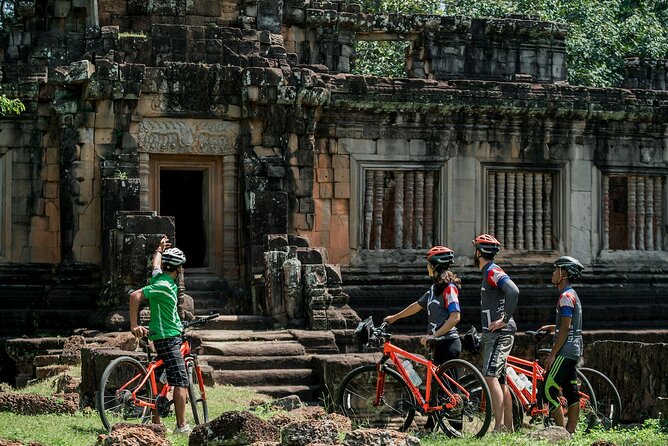
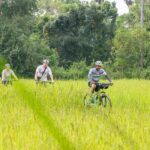
The day is about 8.5 hours total, and you’ll cover roughly 15–18 miles (25–30 km). The route is described as mostly flat and using small roads, but with dirt trails that can be rough.
From what I gathered, the ride is often fine for people with moderate fitness. Still, plan around the real-world details:
- Expect sand or bumpy stretches on some segments.
- The day can run hot. One review mentioned temperatures around 35°C, so you’ll want hat, sunscreen, and breathable clothes.
- If your knees or back are touchy, the mix of dirt and uneven ground can feel like a workout even if the route is not steep.
Good news: you’re not racing. The pacing is designed for photo stops and temple walking, and the bike type (mountain bike with shocks) helps on less-smooth sections.
Angkor Wat in the morning: the big opener
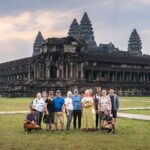
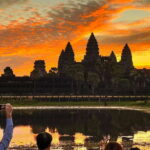
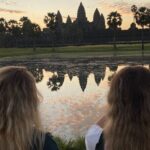
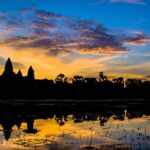
Your first major stop is Angkor Wat. The tour starts early enough that you’re not fighting full crowds the whole time, and the morning light makes the stone feel dramatic in a way you don’t get from late-day bus tours.
What you’ll do there:
- explore the vast galleries and carved stone surfaces
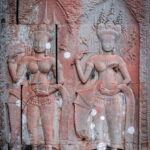
- get explanation of what you’re looking at, including the Ramayana-themed bas-reliefs described for Angkor Wat
A biking tour changes your relationship with Angkor Wat. You arrive by movement, not a drop-off that immediately turns into standing in a line. Then you can take your time walking the spaces you’d otherwise skip if you were rushed by a schedule.
Potential drawback: it’s still a famous site, so it’s not a “quiet hideaway.” You’ll enjoy it more if you’re ready for crowds in parts of the complex and you treat your guide-led stops as your “quick context,” not your only time inside.
Angkor Thom: from main road to sculpture-and-demons vibes
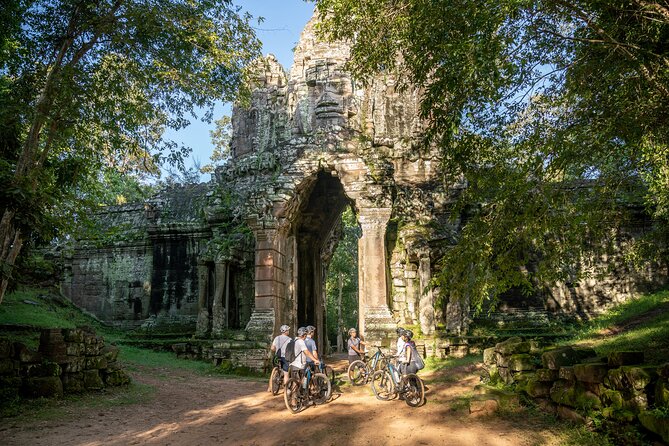
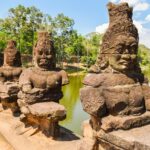
After Angkor Wat, you cycle toward Angkor Thom and pass through a more ceremonial approach. The route includes stopping points for what’s on the way, including stone sculptures of expressive divinities and demons.
This segment is valuable because it sets the tone for why Angkor is more than one temple. Angkor Thom is the feel of a whole ancient city—walls, gateways, and the sense that you’re stepping into an older urban map.
Then you roll into the heart of the story with Bayon.
You can also read our reviews of more tours and experiences in Siem Reap
Bayon and the terraces: smiling faces and a mid-day rhythm
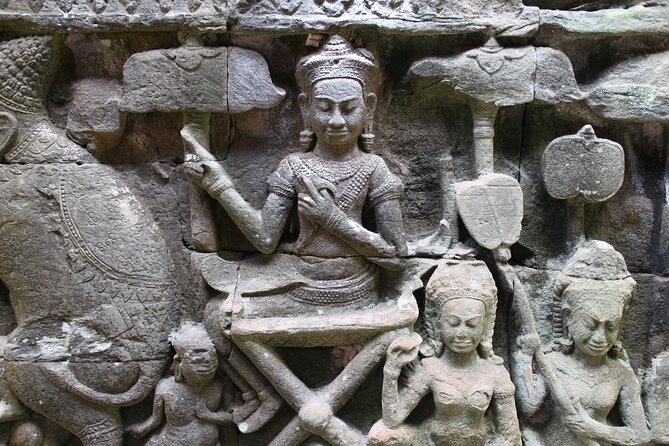
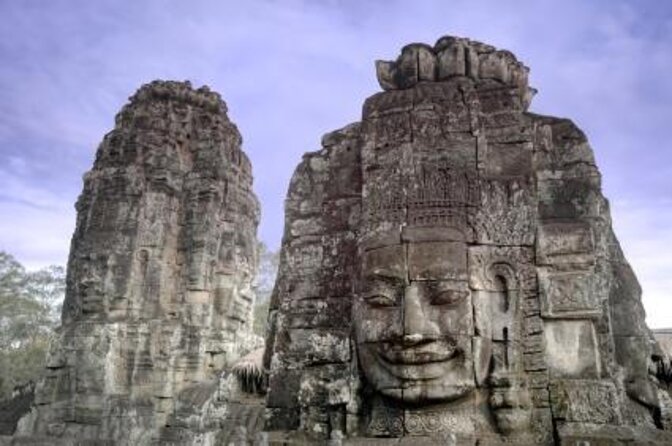
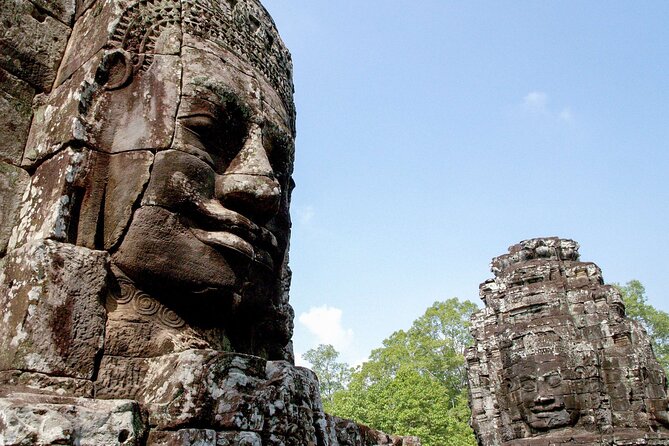
Bayon Temple is famous for its stone towers topped by smiling bodhisattva faces. On a bike day, Bayon hits differently than if you arrive in a line of cars. You’re closer to the surroundings, cycling under trees and through shifting shades, which makes the temple feel less like a single photo location and more like a moment inside a living area.
In this part of the day, you’ll also get time tied to the terraces:
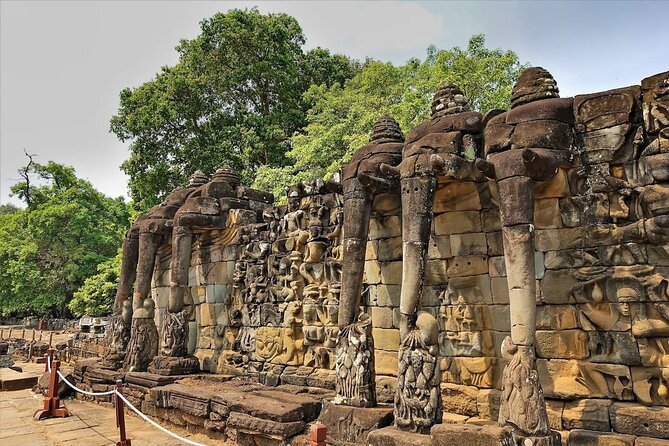
- Elephant Terrace
- Terrace of the Leper King
- Royal Enclosure
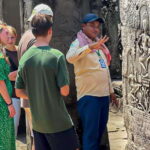
The guide helps connect what you’re seeing to the wider symbolism, so you’re not just looking at carvings—you’re understanding why they matter.
Lunch fit: the schedule includes a real food break around this middle stretch, with a lunch option in Khmer cuisine and snacks/water support before and after. If you pick the with-lunch option, the meal is arranged in advance, and dietary needs can be advised at booking.
Srah Srang: the break that helps you keep going
You’ll also stop at Srah Srang, with time built in for lunch and snacks plus cultural and historical notes from your guide. Even if you’re not sure what Srah Srang is in the grand Angkor system, it’s a smart scheduling move: it’s the part of the day that resets your energy.
This matters because the second half includes Ta Prohm, and that’s a stop where you’ll want clear attention. A tired, overheated brain doesn’t absorb much, and the point of paying for a guide is so you can actually hear the story while you’re standing there.
Ta Prohm: roots, ruins, and that otherworld feeling
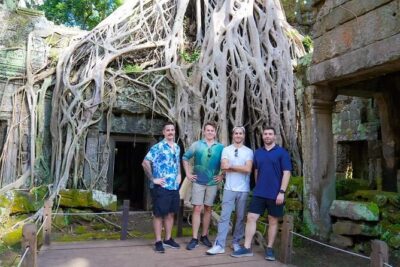
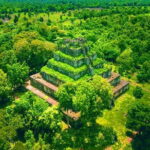
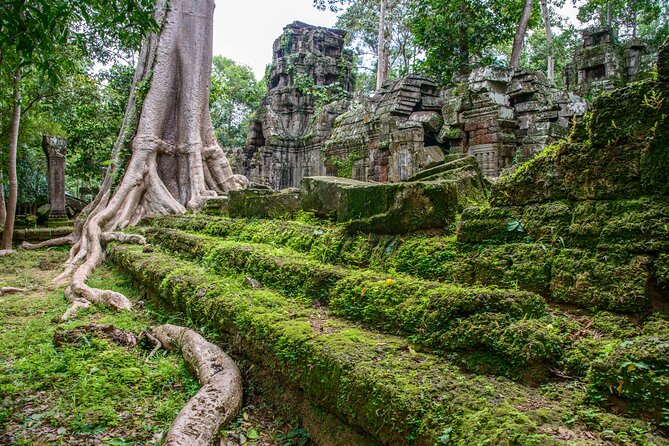
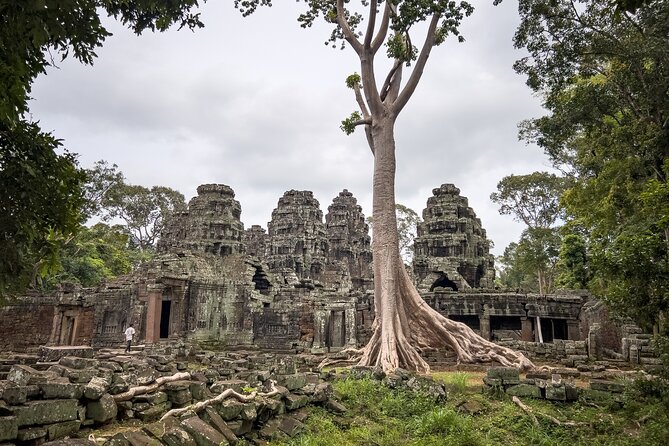
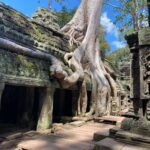
In the afternoon, you head to Ta Prohm, the temple known for its tall trees and sprawling root systems growing out of the ruins. This is the stop many people come for, and for good reason.
What to expect:
- slower walking and more time for photos
- guide storytelling about symbolism and temple history
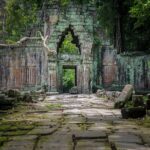
The biking aspect continues to pay off here. You ride into Ta Prohm through a more peaceful, jungle-adjacent feel rather than arriving as a purely road-side tourist group. That transition makes Ta Prohm more atmospheric, and it gives you time to settle in rather than rushing to beat the clock.
Cycling through Siem Reap back roads: everyday life between temples
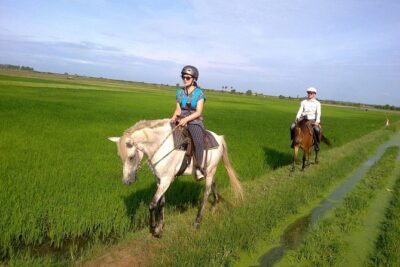
After the last temple stop, you cycle back toward Siem Reap through smaller villages. This is one of the most practical “why bike” benefits.
Instead of only seeing temple walls, you pass:
- homes and farm areas
- everyday routines
- the rhythm of a rural Cambodia day
It’s also where the physical side of the tour becomes its own reward. You’re already tired, but you’re moving through real places, not just waiting between museum stops.
What’s included (and what isn’t)
Included:
- bike and helmet
- English-speaking cycling guide
- snacks, fruits, and bottled water
- lunch if you choose the lunch option
Not included:
- Angkor Pass / entrance fees (listed as $37 for single day entry)
One more detail worth noting: the tour doesn’t include hotel pickup or drop-off. That’s normal for bike tours, but it means you should plan how you’ll reach the meeting café on your own.
Clothing rules and comfort tips for temple entry
Temple dress rules are strict. Bring or wear clothing that won’t get you turned away:
- sleeveless and see-through shirts are not allowed
- shorts and pants must be at least knee length
Comfort advice that will save your day:
- wear proper shoes that handle dirt and sand
- use sunscreen and a hat (the start time is early, but heat builds)
- consider breathable cycling clothes and something to cover up your shoulders and arms
One review even mentioned people getting tired and possibly feeling knee strain from bumpy/sandy trail segments. That’s not a deal-breaker, but it’s a reason to show up with a bit of leg strength and to pace yourself during rough sections.
Who this tour fits best
I think this tour is perfect for:
- first-time Angkor visitors who want more than a bus-and-photo day
- people who like active travel and don’t mind cycling in heat
- history-minded travelers who appreciate guide context while walking
- anyone who wants a day that includes both temples and village life
It may be less ideal if:
- you want mostly flat, cushy road cycling without surprises
- you’re injury-prone or have major mobility limits
- you hate the idea of dressing knee-length even in warm weather
Families: child seats are available on request, and they can accommodate a child up to 14 kg. If you’re traveling with kids, ask about fit early and plan for a long warm day.
Should you book the Siem Reap bike tour of Angkor temples?
Book it if you want your Angkor day to feel like a real journey, not a checklist. The value is strong when you factor in bike + helmet, guide-led temple time, and the food/water package. The biking through countryside and villages is also the part you’ll remember when the temple photos all blur together.
Skip (or consider a different style of tour) if you’re sensitive to heat and uneven ground, or if you’re expecting a purely smooth, easy ride. You’ll still get the temples, but you need to be ready for sand/bumpy trail moments.
My practical “make the call” advice:
- If you can handle a full day of movement and you’re comfortable dressing for temple entry, this tour is a great match.
- If you’re unsure about fitness, I’d still consider it—but only if you’re willing to take the rough segments slowly and treat the day as active sightseeing, not a workout race.
FAQ
How long is the bike tour and how far do we ride?
The tour runs about 8 hours 30 minutes and covers approximately 15–18 miles (25–30 km).
What’s included in the $35 price?
You get a bike and helmet, an English-speaking cycling guide, snacks, fruits, and bottled water. Lunch is included only if you choose the lunch option.
Do I need to pay for Angkor temple entrance fees?
Yes. Entrance fees are not included. At the park entrance, your guide helps you purchase an Angkor Pass, listed as $37 for single day entry.
Where do we meet, and when does the tour start?
You meet at ផ្ទះគ្រូ Café (9VH7+X7G) in Siem Reap at 7:30 am. The tour ends back at the same meeting point.
Is this tour suitable for beginners?
Most of the ride is mostly flat and on small roads, but some dirt trails are unsuitable for beginning riders. Some segments may be bumpy or involve sand.
What clothing do I need for temple entry?
Sleeveless shirts and see-through shirts aren’t allowed. Shorts and pants must be at least knee length to be permitted entry into the temples.