REVIEW · SIEM REAP
1-Day Amazing Angkor Wat Tour with Sunset & All Interesting Major Temples
Book on Viator →Operated by Happy Angkor Tour · Bookable on Viator
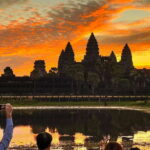
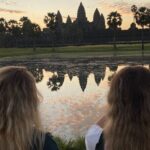
Angkor in heat needs a smart system. This 1-day Angkor Wat tour stacks the top sights into one plan, with hotel pickup and guided temple explanations that save you from the day going sideways. You’ll hit Angkor Wat first, then keep moving through the classic circuits toward sunset at Phnom Bakheng.
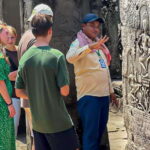
I especially like the comfort touches that make temple time survivable: bottled water and cool, wet towels at the stops. I also like that you get an English-speaking licensed guide who helps you understand what you’re looking at, not just where to walk next.
One thing to weigh: you’ll still pay extra for temple entry (the Angkor + all temples pass is $37 per person), and this is a long day with a lot of walking in warm weather. If Phnom Bakheng is busy, the team may adjust how you reach the top, since access is limited.
In This Review
- Key highlights worth planning around
- How this tour saves your Angkor Day from chaos
- Price and logistics: what $67.50 really covers
- The day start: Angkor Wat at 8:00am
- Ta Prohm: gigantic roots and that movie-set feeling
- Ta Nei: short visit, calmer vibe
- Angkor Thom and Bayon: Victory Gate to the many-faced centerpiece
- Baphuon and Phimeanakas: Hindu layers inside the royal zone
- Terrace of the Elephants and the Terrace of the Leper King
- Preah Palilay: a quiet finish inside Angkor Thom
- Phnom Bakheng at sunset: the payoff, with a real capacity limit
- Comfort breaks that aren’t fluff in Angkor heat
- How to decide if this tour fits your travel style
- Should you book this Angkor Wat day tour?
- FAQ
- Is the Angkor + all temples pass included in the $67.50 price?
- What’s included in the tour?
- How long is the tour and when do you start?
- Is this tour private?
- Can I cancel for a full refund?
- What about sunset viewing on Phnom Bakheng if it’s crowded?
Key highlights worth planning around
- Hotel pickup + drop-off means you skip the “where do we start?” scramble.
- Cool water and cool wet towels keep the heat from turning the day into a slog.
- English-speaking licensed guide helps you read the carvings and temple layouts.
- Major sites in one push: Angkor Wat, Ta Prohm, Bayon, and more without wasting time on transport.
- Phnom Bakheng at the end for that sunset moment, with access limits at the peak.
How this tour saves your Angkor Day from chaos
Angkor can be a puzzle on paper and a stress test in real life. The big risk on your own is losing hours to taxis, waiting, and getting caught in crowd bottlenecks. This tour fixes that by grouping the key temples into a tight route and handling the driving.
The day is built to keep you moving without turning it into a race. You get picked up from your hotel or guest house around 8:00am, then the plan takes you from site to site while your guide focuses on meaning—why the temple was built, what the carvings show, and how the religious mix shifted over time.
That focus on “temples over transport” matters more than it sounds. If you spend your day budgeting rides between scattered areas, you’ll cover fewer temples and end up frustrated. Here, the structure is meant to help you see the famous ones plus several major stops that many visitors skip.
You can also read our reviews of more evening experiences in Siem Reap


Price and logistics: what $67.50 really covers
The base price is $67.50 per person, and it mainly pays for people and comfort. You’re getting an air-conditioned vehicle with a driver, an English-speaking licensed guide, and hotel pickup and drop-off.
Temple admission is separate. The Angkor + All Temples pass is $37 per person, and you’ll buy temple passes along the way before starting the main visits. Lunch is not included; it’s listed as depending on the menu, with about $5 per person.
So is it good value? In my book, yes—if you only have one day. The math changes if you’re staying nearby and doing Angkor purely on your own, but with limited time the guided route plus transfers can be a bargain. You’re paying to buy back time, reduce fatigue, and get context as you look at the stones.
The day start: Angkor Wat at 8:00am
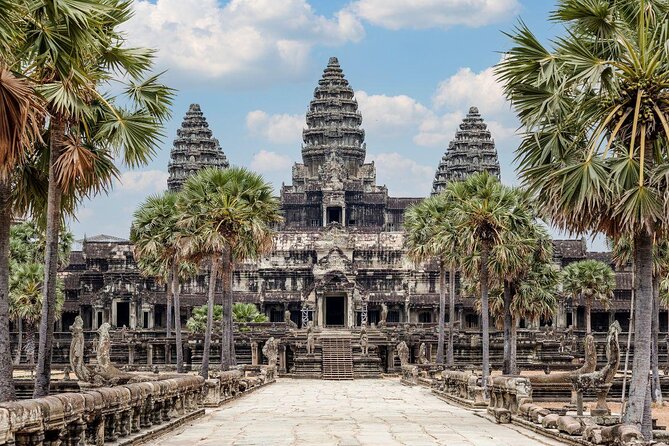
You’ll meet your guide and start in the morning from your lobby, then head to pick up your temple pass and get rolling. The first major stop is Angkor Wat, scheduled for about 2 hours.
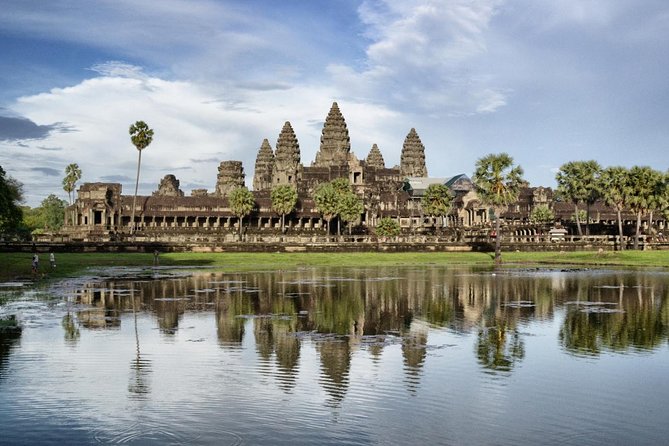
Angkor Wat isn’t just the “must-see.” It’s also the anchor point for how the whole complex makes sense. A good guide matters here because you can walk the grounds and still miss what you’re seeing—symbols, orientation, and what the carvings are trying to say.
You’ll also feel the rhythm of the day change after this stop. Angkor Wat sets your baseline for scale and layout, then the next temples can feel more like chapters in the same story instead of random ruins.
Ta Prohm: gigantic roots and that movie-set feeling
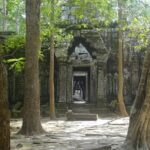
After Angkor Wat comes Ta Prohm, allotted about 2 hours. This is the temple famous for massive tree roots weaving over stonework, and it’s where the “wow factor” hits fast.
What makes Ta Prohm work on a guided schedule is how your guide can pace the experience. You don’t just rush through photo angles; you slow down enough to notice how the structure and roots interact.
There’s also an emotional shift. Ta Prohm doesn’t feel polished or staged; it feels caught mid-moment, which is why it lands so hard. If you’re thinking you’ll spend your day chasing selfies, this stop helps you do more than that—it pulls you into observation.
Ta Nei: short visit, calmer vibe
Next is Ta Nei, kept intentionally brief at about 15 minutes. This one is described as smaller and quieter, with less restoration and surrounded by big trees.
This is a useful pause in a long day. You get a different texture than the larger, heavily visited scenes—more “small temple inside a forest mood” than “big landmark for mass crowds.”
Because the stop is short, it’s also a good moment to check your energy level. If you’re feeling worn out, you can still get something meaningful here without the schedule running away from you.
You can also read our reviews of more tours and experiences in Siem Reap
Angkor Thom and Bayon: Victory Gate to the many-faced centerpiece
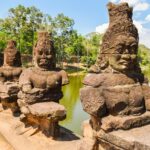
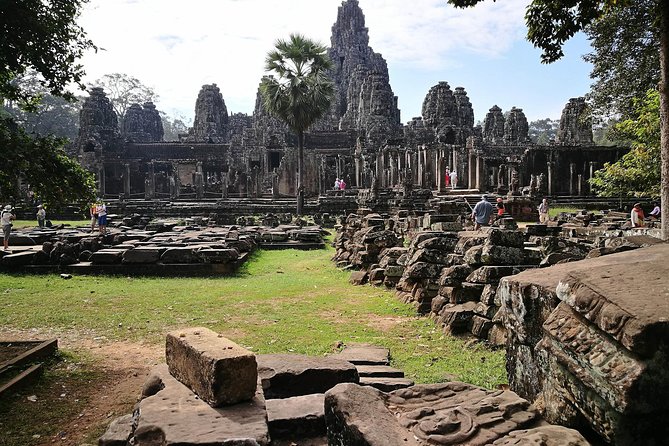
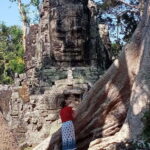
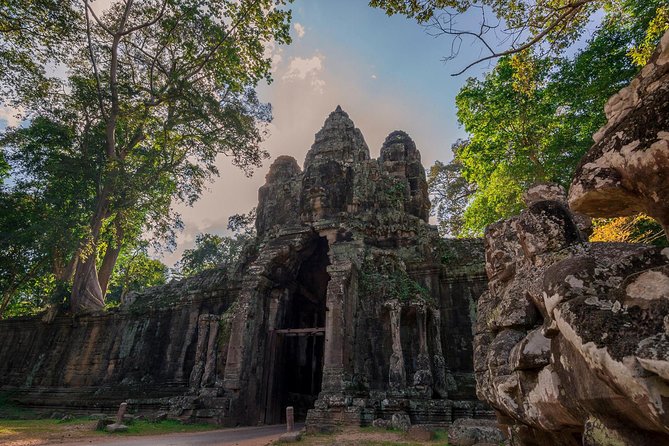
Then the tour moves into Angkor Thom, starting with a look at the Victory Gate (about 10 minutes), followed by Bayon Temple.
Bayon is the star within Angkor Thom, scheduled around 45 minutes. Here’s the headline detail you’ll hear a few times: 49 towers with faces on each tower from multiple sides. Your guide helps you understand the symbolism behind what those faces represent—so it doesn’t become a simple “count the heads” game.
The practical win with having a guide on Bayon is navigation. Bayon is visually busy, and without context you can wander in circles. With the guided flow, you get to key points and you learn what to look for when you turn your head from one face to the next.
If you like temple photography, Bayon is also where your route needs to be timed right. You’ll likely get photo opportunities because the guide knows good spots for group shots, not just where everyone is standing.
Baphuon and Phimeanakas: Hindu layers inside the royal zone
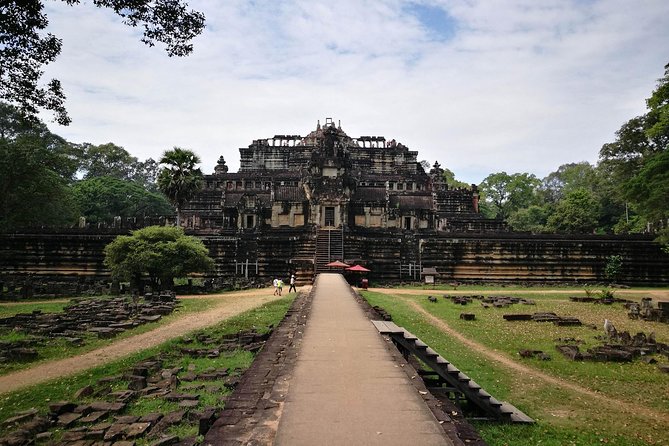
After Bayon, the tour includes Baphuon Temple for about 1 hour. It’s described as a Hindu temple built before Angkor Wat, dating to the 11th century, and featuring a reclining Buddha that was built later, in the 16th century.
That mix of time periods is a big part of why Baphuon matters. You’re not just looking at a single-era monument—you’re looking at how later additions changed the feel of an earlier temple.
Then you move to Phimeanakas, scheduled for about 15 minutes. It’s a 10th-century pyramid Hindu temple located in the center of the old royal palace area inside Angkor Thom. The tour pairs it with the surrounding ancient royal enclosure wall, so you get a clearer sense of how power was laid out in stone.
These two stops make the day feel less like a list of famous hits. They help you see continuity and change—Hindu frameworks, later religious shifts, and how Angkor’s architecture carried those changes forward.
Terrace of the Elephants and the Terrace of the Leper King
Two of the most striking parts of Angkor Thom arrive next, both on terraces within the same larger complex.
First is the Terrace of the Elephants, about 30 minutes. It’s paired with the Elephant and Leper King area. Then you’ll visit the Terrace of the Leper King for about 10 minutes.
Even if you don’t memorize every carving detail, your guide’s explanations turn these terraces into more than background textures. This is the kind of stop where context helps you spot what you’re looking at, instead of just seeing a long wall with figures on it.
It’s also a useful change of pace. Terraces mean you can pause, look, and process what you’ve already seen. The day is still full, but these sections let you breathe.
Preah Palilay: a quiet finish inside Angkor Thom
After the terraces, the itinerary includes Preah Palilay, around 15 minutes. It’s described as a quieter Buddhist temple located behind the royal palace area within Angkor Thom.
This stop works well late in the day because it’s less “instant wow,” more “slow noticing.” You’re not overwhelmed by towers or huge tree roots. Instead, it’s a calmer breather that helps you end the Angkor Thom zone without rushing.
If you’ve been doing major temple hopping all morning, Preah Palilay gives you a moment to reset your eyes. You’ll appreciate it more because it’s a different kind of atmosphere than the bigger set pieces.
Phnom Bakheng at sunset: the payoff, with a real capacity limit
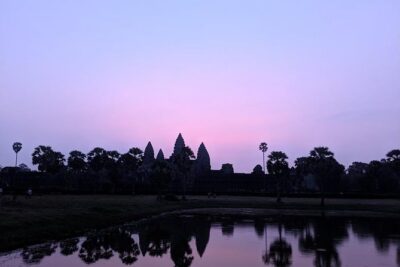
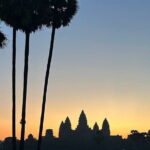
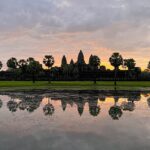
Finally, the tour heads to Phnom Bakheng, scheduled as the last temple and focused on sunset viewing. The time on this stop is listed at about 2 hours, because sunset takes time and the climb needs patience.
There’s a key practical detail: the peak has limited number of tourists allowed. The tour notes that if it’s busy, they will take you to an alternative option (the exact wording is cut off, but the idea is clear—access can be constrained).
This is why the day ends the way it does. If sunset viewing were guaranteed without limits, everyone would crowd the peak at the same time. Instead, the schedule acknowledges reality and builds in a way to manage it.
So for your planning mindset: aim to enjoy the viewpoint experience, not to treat the peak as the only possible “win.” Even if you can’t reach exactly where you imagined, the day’s value still comes from seeing the full set of major temples with guiding context.
Comfort breaks that aren’t fluff in Angkor heat
The tour includes cool water and cool wet towels and uses an air-conditioned vehicle between stops. That sounds like a small detail until you’re walking in warm weather and realizing how much energy you spend just staying comfortable.
Your guide also keeps the day practical, including keeping you on a route that limits extra back-and-forth. People also point out that the guides help with photo timing and group shots, which can save you from the usual chaos of taking turns with a camera.
There’s a further comfort angle that comes from the private format. This is described as a private tour/activity where only your group participates. That can reduce waiting around for other people and helps the pacing feel more tailored.
How to decide if this tour fits your travel style
This tour is best if you have limited time and want to cover the best-known temples plus major extras in a single day. It’s also a smart pick if you care about temple meaning—religion, carving details, and how the complex developed over time.
If you only want a couple of temples and prefer to wander at your own speed for hours, you may end up wishing for a slower day. This is built for a full circuit, and one note of caution in the material is that it can be a lot of walking in hot conditions.
If you’re traveling as a couple, a small family, or a group that wants AC transport and fewer logistical headaches, this fits nicely. If your group needs a very gentle pace, you may want to consider whether a shorter half-day would suit you better—but based on this itinerary, it’s designed to be full.
Should you book this Angkor Wat day tour?
Book it if you’re doing Angkor with one day and you want a plan that covers the big monuments plus key additions like Bayon, Baphuon, and the terraces inside Angkor Thom. The combination of hotel transfers, English-speaking licensed guidance, and heat-fighting extras like cool towels makes it easier to focus on the temples instead of the clock.
Skip or rethink it if you’re hoping for a light day with minimal walking, or if you’re sensitive to long temple sequences in warm weather. Also factor in the extra $37 admission pass so there are no surprises when you arrive.
If you want the cleanest experience, arrive prepared to be on the move, and lean into the guide’s explanations—Angkor looks best when you understand what you’re seeing.
FAQ
Is the Angkor + all temples pass included in the $67.50 price?
No. The Angkor + All Temples pass is listed as $37.00 per person and admission is not included in the base price.
What’s included in the tour?
You get an English-speaking licensed guide, pick-up and drop-off at your hotel, an air-conditioned vehicle with driver, and cool water plus cool wet towels during the day.
How long is the tour and when do you start?
Pickup starts around 8:00am from your accommodation, and the tour duration is listed as 8 to 9 hours.
Is this tour private?
Yes. It’s described as a private tour/activity, meaning only your group will participate.
Can I cancel for a full refund?
Yes. Cancellation is free, and you can cancel up to 24 hours in advance for a full refund.
What about sunset viewing on Phnom Bakheng if it’s crowded?
The tour notes that the peak has limited tourist access. If it’s busy, the plan adjusts how you handle the viewpoint so you can still experience sunset timing within those limits.