One place can teach you Cambodia in a day. This small-circuit route strings together Angkor Wat, Bayon, and Ta Prohm, plus a short stroll through the old Angkor Thom grounds, and it turns big stone monuments into real stories you can follow with a good local guide. I especially love how much ground you cover without feeling rushed, and I like the way the guide connects carvings and architecture to the people and beliefs that shaped them. One consideration: the temple fee is extra, so your final cost will be higher than the headline price.
The best part is the pacing. You get a pickup, an air-conditioned car break between sites, drinking water and cold towels, and a local English-speaking guide to keep you oriented while the crowd energy does its thing around the gates. Just plan for the entry rules up front: you’ll need covered knees and shoulders at the temples, and comfortable shoes really matter when you’re walking for hours.
In This Review
- Key highlights to look for
- Angkor’s Big Three: Why this trio works
- Price and tickets: what your day will really cost
- Getting there with hotel pickup and a cooler ride
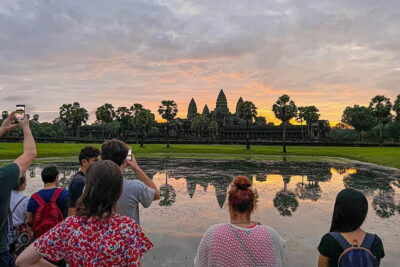
- Angkor Wat in 3 hours: the flag temple and the layout lesson
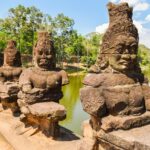
- Angkor Thom South Gate (Tonle Oum): the 5-gate city idea
- Bayon’s faces and the Angkor Thom highlights you don’t want to miss
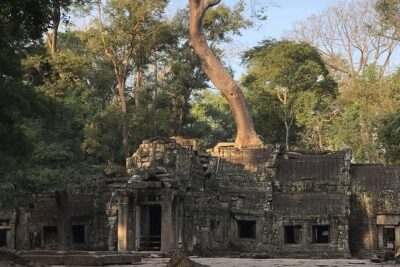
- Ta Prohm: the tree-temple finish that changes your mood
- What makes this tour a strong value
- Who this tour suits best (and who should think twice)
- Should you book this Angkor Wat, Bayon, Ta Prohm tour?
- FAQ
- What is the duration of the tour?
- Does the price include temple admission tickets?
- What is included in the tour price?
- What temples are included?
- How long do you spend at Angkor Wat, Bayon, and Ta Prohm?
- Do I need to cover my knees and shoulders?
- Is hotel pickup offered?
- Is tipping included?
- Is the tour private?
- What if I need to cancel?
Key highlights to look for
- Dan, your storyteller guide: strong narration that links carvings and design to Cambodian history and religion
- Angkor Wat scale in real terms: a 3-level temple with 5 main towers, built under King Suryavarman II
- Angkor Thom without confusion: South Gate (Tonle Oum) plus the layout of the 5-gate city
- Bayon’s face towers: you’ll get the key viewing angles inside and out, not just quick photos
- Ta Prohm’s tree-temple vibe: famous for the way roots and ruins share the same space
Angkor’s Big Three: Why this trio works
If you only do one Angkor circuit, do one that mixes the types of temples you’re seeing. This route does it. Angkor Wat is the grand, symmetric centerpiece. Bayon is all expression and spiritual symbolism, thanks to the face towers. Ta Prohm is the ruin-in-the-garden look people come for, where nature and architecture collide.
What makes this day feel smart is the order. You start with the biggest visual statement first, then shift to Angkor Thom’s political-religious core, and finish with Ta Prohm, which tends to leave you thinking long after you walk out.
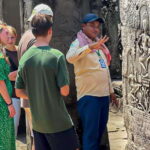
Also, you’re not just handed a camera tour. The guide is there to explain what you’re looking at. In one standout experience, the guide was Dan, and his storytelling approach was a big reason people felt the temples made sense, from the beliefs behind the building to the meaning of wall carvings.
You can also read our reviews of more walking tours in Siem Reap

Price and tickets: what your day will really cost
The tour price is $45.00 per person, and it’s built around a half-day format of about 5 to 7 hours. That’s a fair base rate for hotel pickup, an air-conditioned car, and a local English-speaking guide who stays with you through multiple major stops.
Here’s the part you need to plan for: temple entry fees are not included. The temple fee listed is $37.00 per person. Tipping for the guide and driver is also recommended, but it isn’t included in the price.
So your working total is roughly:
- $45.00 tour price
- + $37.00 temple fee
- + tip (recommended)
If you’re comparing options, don’t just compare headline prices. Compare what you get for that money: the guide time matters at Angkor, because the temples are layered and symbolic. A good guide can help you move from seeing shapes to understanding why those shapes were made.
Getting there with hotel pickup and a cooler ride
This tour runs with hotel pickup and drop-off, so you don’t waste time figuring out tuk-tuk logistics or where to meet. You’ll ride in an air-conditioned car, which is a real quality-of-life factor when your itinerary includes several temple walks.
You also get drinking water and cold towels. Small items like this add up over a long temple day, especially when you’re out in open spaces for parts of the route. If you tend to get thirsty easily or hate warm towels, this included comfort will make the day feel smoother.
You’ll also have a mobile ticket, which can be convenient if you don’t want to juggle paper. And because it’s a private activity limited to your group, you’re less likely to feel like you’re constantly pushing through for your own space.
Angkor Wat in 3 hours: the flag temple and the layout lesson
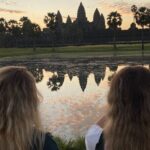
Your first big stop is Angkor Wat, with about 3 hours on site. The plan includes seeing it from outside and going inside, and your guide explains the history as you go. That matters here, because Angkor Wat isn’t just a pretty structure. It’s huge, layered, and designed to communicate power and belief.
A few facts you’ll likely hear during the visit:
- It was built from 1113–1150 AD by King Suryavarman II.
- Its size is often described as roughly 330 meters by 260 meters.
- It has three levels and five main towers.
- It’s also a national symbol of Cambodia, even showing up on the Cambodian flag, tied to the idea of the country’s soul.
Why this helps you: once you know it’s three levels and five towers, you’ll start noticing alignments and how the design guides your eyes. Even if you’re not a temple architect in your spare time, the guide’s walkthrough gives you a mental map so you can appreciate what you’re seeing instead of wandering.
The one practical caution is the entry dress rule: knees and shoulders must be covered. Plan your clothing before you leave the hotel. I’d rather be slightly warm in a covering top than spend time at the last second scrambling for something that fits.
Angkor Thom South Gate (Tonle Oum): the 5-gate city idea
After Angkor Wat, you head to Angkor Thom, starting with the South Gate, known as Tonle Oum. This part is brief—around 30 minutes—but it’s strategically important because it sets the geography for what comes next.
Here’s a key detail you’ll learn: Angkor Thom is laid out as a 3-kilometer square city, with five gates. The route specifically calls out:
- South Gate
- Ghost Gate (Gate of the Dead)
- Victory Gate
- Dei Chhnang Gate (also referred to as the North Gate)
- Killing Gate
This gate lesson is useful because it stops the whole place from feeling like random stone. With the layout explained, Bayon and the surrounding structures start to feel like part of a planned system rather than a cluster of ruins.
Also, you get the advantage of a guided stop here instead of only photographing the gate and rushing on. Even a short stop can feel valuable when the guide gives you the right context.
You can also read our reviews of more city tours in Siem Reap




Bayon’s faces and the Angkor Thom highlights you don’t want to miss
Next up is Bayon, with about 1 hour. Bayon is famous for its faces, and your visit includes both outside views and inside the temple with guide commentary.
The reason Bayon is worth more than a quick look is that it’s visually repetitive. You can keep seeing the face towers from different angles, but you’ll get more out of it when you understand the setting and religious meaning behind the architecture. A good guide helps you notice what’s consistent and what’s different between carvings and viewing positions.
From Bayon, you continue deeper into the Angkor Thom area. Even though the main stops are focused, the route also includes major landmarks such as:
- Baphuon Temple
- Elephant Terrace
- Terrace of the Leper King
- Royal Palace
That’s a lot of name recognition in one day, and for most people the biggest risk is mixing them up. This is where an English-speaking local guide earns their keep. They help you connect the names to what you’re standing in front of, rather than letting you leave with a photo album and a shrug.
One more practical note: you’ll likely do a mix of stairs and uneven stone. Comfortable walking shoes aren’t optional. And since valuables aren’t recommended on the tour, keep your bag simple and your attention on your feet.
Ta Prohm: the tree-temple finish that changes your mood
Your last major temple is Ta Prohm, around 1 hour. It’s described as a tree temple and also known as the Tomb Raider temple, which tells you what most people expect: nature working through the ruins.
The best part of finishing with Ta Prohm is the change in tone. After Angkor Wat’s structured scale and Bayon’s face-filled symbolism, Ta Prohm’s mix of roots and stone can feel more emotional. The guide will still give history and interpretation, but the atmosphere does the heavy lifting here.
Expect to see it from outside and inside as you move through. The guide helps you understand why it looks the way it does—so you don’t just treat it like a movie set. You’ll also get a better sense of how the temple’s design interacts with the environment.
And then, you return to your hotel. That last step matters. Ta Prohm is the kind of place where you might want to linger, but being done with the day when you still have energy keeps the experience enjoyable instead of tiring.
What makes this tour a strong value
At $45.00, plus temple fees, this isn’t a budget “just drive by the monuments” deal. It’s priced for a full guide-led day that covers the high-demand stops and several Angkor Thom landmarks.
The value comes from three places:
1) You get expert interpretation, not just access.
When a guide like Dan uses storytelling to explain Cambodian history, religion, and wall carvings, the temples stop being purely visual. You start understanding the why behind the what.
2) The route is balanced across temple types.
You see the grand statement (Angkor Wat), the face-symbol centerpiece (Bayon), and the nature-in-ruins experience (Ta Prohm). You also get Angkor Thom context through the South Gate lesson and the surrounding key sites.
3) You reduce friction.
Hotel pickup and drop-off, air-conditioned transport, water, and cold towels all remove little hassles that can eat up your day. When you’re on a tight Angkor schedule, that convenience is part of the value.
The main drawback is cost stacking: the temple fee is a big add-on, and tipping is expected. If you’re trying to keep spending ultra-low, you’ll feel that extra. If you’re okay paying for a guide-led experience, the structure justifies the spend.
Who this tour suits best (and who should think twice)
This fits best if you want:
- A guided day across Angkor Wat, Bayon, and Ta Prohm
- A route that includes extra Angkor Thom stops like Baphuon and Elephant Terrace
- A smooth day with pickup, car transport, and included water and towels
- People who like history explanations while still enjoying iconic temple views
Think twice if:
- You dislike paying extra once you arrive for temple entry fees
- You have trouble with walking on uneven ground and stairs for several hours
- You expect a slow, unstructured visit with unlimited time at one site
You’re advised not to bring valuables, which suggests you should travel light and keep your hands free for the walks.
Should you book this Angkor Wat, Bayon, Ta Prohm tour?
I’d book it if you want a well-paced small-circuit day with a guide who helps you read the temples instead of just scanning them for photos. The combination of Angkor Wat’s grand scale, Bayon’s face towers, and Ta Prohm’s tree-temple mood is exactly the mix most people come to Angkor for, and the added Angkor Thom landmarks make the day feel complete.
You might skip it if you’re looking for the cheapest possible Angkor day and don’t care much about interpretation. In that case, the temple fee still hits, and you’d be paying for guiding time you won’t use.
FAQ
What is the duration of the tour?
The tour runs about 5 to 7 hours.
Does the price include temple admission tickets?
No. Temple fee is listed as $37.00 per person and is not included.
What is included in the tour price?
Included items are an air-conditioned car, drinking water and cold towels, hotel pickup and drop-off, and a local English-speaking tour guide.
What temples are included?
The tour includes Angkor Wat, Bayon, Ta Prohm, and stops around Angkor Thom including the South Gate.
How long do you spend at Angkor Wat, Bayon, and Ta Prohm?
Angkor Wat is about 3 hours, Bayon is about 1 hour, and Ta Prohm is about 1 hour. The Angkor Thom South Gate stop is about 30 minutes.
Do I need to cover my knees and shoulders?
Yes. You must cover your knees and shoulders when entering the temples.
Is hotel pickup offered?
Yes, hotel pickup and drop-off are included.
Is tipping included?
No. Tipping for the guide and driver is recommended.
Is the tour private?
Yes. It is described as private, with only your group participating.
What if I need to cancel?
The experience offers free cancellation. You can cancel up to 24 hours in advance for a full refund.