REVIEW · SIEM REAP
Siem Reap: Guided Countryside Bike Tour
Book on GetYourGuide →Operated by Siem Reaper Travel · Bookable on GetYourGuide
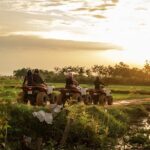
Bikes beat tuk-tuks for real village views. This guided morning ride takes you past rice fields and back roads outside Siem Reap, with calm stops at markets, farms, and temples.
I love the small group setup (limited to 12) and the way guides keep everyone together while you’re still free to look around. I also love the hands-on food culture, including sampling fruit and snacks at village stops and learning how rice wine gets made.
One consideration: it’s a bike tour. You need decent comfort riding, since you’ll cover back roads and some unpaved sections, and it isn’t suitable for people who can’t ride.
In This Review
- Key things I’d prioritize
- Why a countryside bike tour fits Siem Reap so well
- From hotel pickup to bike fitting: the part that makes or breaks it
- The morning route: rice fields, farms, and market time
- Market stops are about more than shopping
- Mushroom farms and rice wine: the most memorable smell-and-story stops
- Temples and lotus farms: culture outside the Angkor spotlight
- The ride itself: flat most of the way, but not a carpet
- How long and how far?
- Seating comfort tip
- Guides and group size: where the experience becomes personal
- Price and value: $35 for real rural access
- What to bring so the morning feels easy
- Who this isn’t for
- Tips to get the most from the day
- Should you book this Siem Reap countryside bike tour?
- FAQ
- FAQ
- How long is the Siem Reap guided countryside bike tour?
- What’s the price per person?
- What’s included in the tour price?
- Is lunch included?
- What language is the tour guide?
- How big is the group?
- Is hotel pickup included?
- Is this tour suitable for people who can’t ride a bike?
- What should I bring?
- Can I cancel and get a full refund?
Key things I’d prioritize
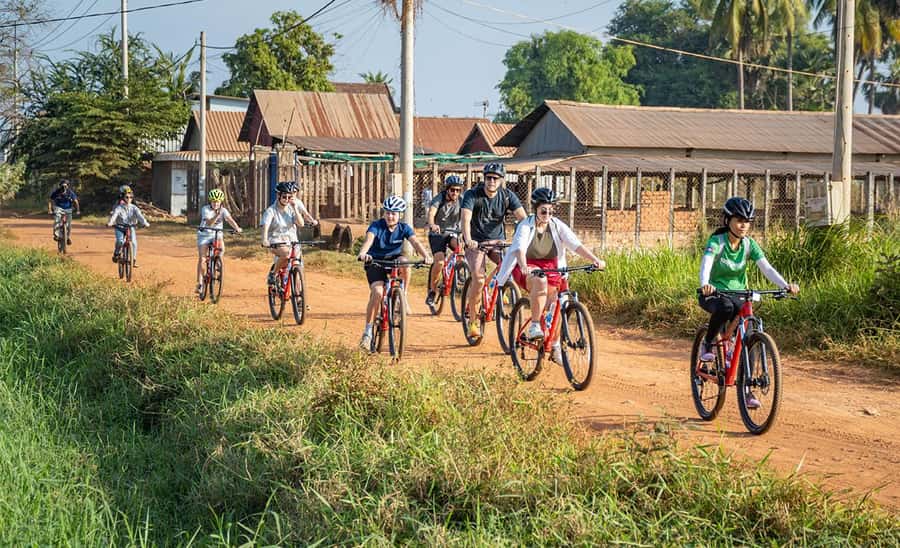
- Small group ride: limited to 12 people, with guides managing the pace and safety.
- Rural stops that feel everyday: farms, village markets, and local craft areas instead of only tourist sights.
- Rice wine distillery visit: a cultural stop tied to how rural families actually earn a living.
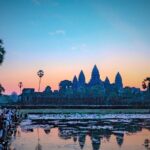
- Back-road cycling beyond Angkor: you’ll spend time outside the usual temple circuit.
- Included snacks and water: bottled water plus fruit and snacks during the morning.
- Well-sized bikes and helmets: provided gear helps you ride more comfortably and safely.
Why a countryside bike tour fits Siem Reap so well
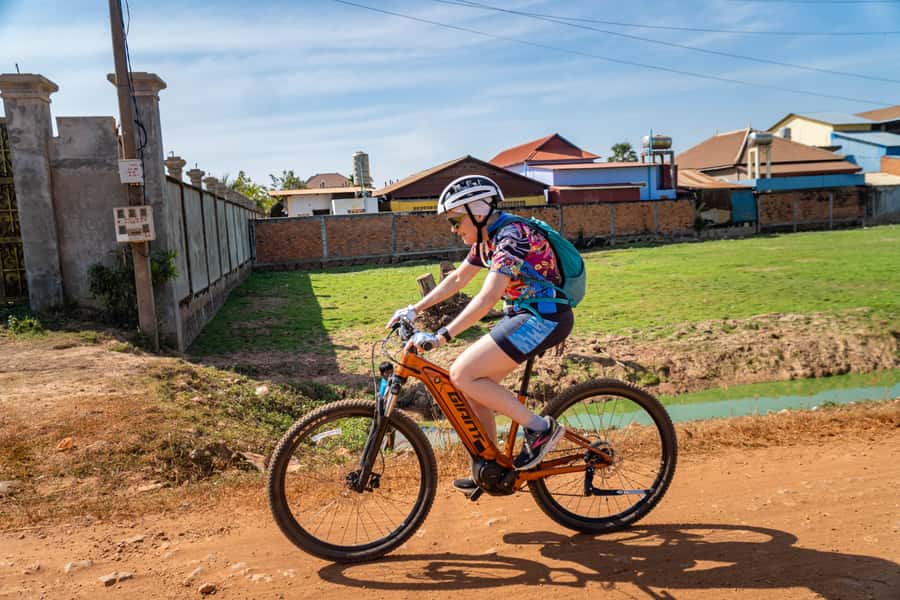
Siem Reap has two speeds: temple crowds and real life in the fields. This tour aims for the second one, and biking is the perfect match. You don’t just watch rural Cambodia from a distance—you move through it, slowly enough to notice routines, carts, animals, and the small details that make daily life feel real.
You also get a guided rhythm. The guide doesn’t rush you through picture stops. Instead, you ride to each area, learn what you’re seeing, then get time to browse markets or pause at farms. It’s a morning that feels like a cultural walk—just faster, and with your legs doing the work.
You can also read our reviews of more cycling tours in Siem Reap
From hotel pickup to bike fitting: the part that makes or breaks it
The tour starts with hotel pickup and drop-off, so you’re not navigating on your own before the ride. Plan to be ready about 15 minutes before your pickup time, and you’ll get moved to the bike shop area where the tour begins.
Then comes the part that quietly matters: bike fitting. You’ll be fitted with a bicycle and helmet, and the plan is to get you rolling comfortably from the start. One review mentioned Trek bikes and sizing being handled in advance. That lines up with what you want here—an actual ride, not a borrowed bicycle that’s too small or too big.
Before you head out, the guide goes over safety rules and tour details. This matters in Siem Reap because roads can be mixed—some quieter rural lanes, and some stretches where you need to ride as part of a group. The best part is you’re not just told what to do; you ride in a way that keeps everyone together.
The morning route: rice fields, farms, and market time
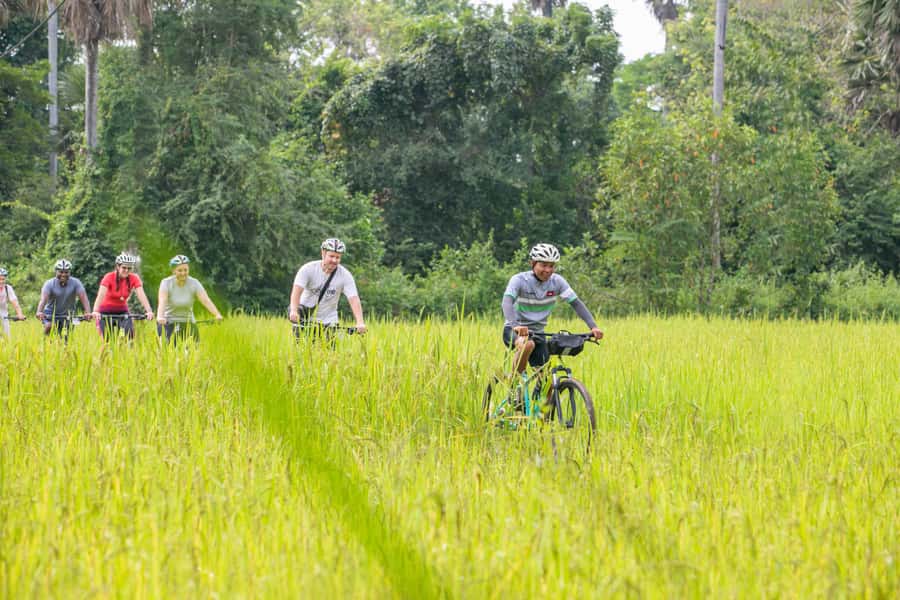
Most of the value in this tour is that you’re not spending all 5 hours at one site. You’re cycling through different kinds of rural spaces, then stopping to connect the sights to food, work, and community.
You can expect a flow like this:
- Rice-field country to set the scene
- An outdoor village market
- Farm areas, including mushroom farms
- A rice wine distillery stop
- Buddhist temples
- Lotus farms
- Village handicrafts and snack breaks on the return
Why this works: each stop explains a different “pillar” of life outside the city. Rice cultivation shows the food base. Markets show the trading and daily needs. Mushroom farms and the distillery show smaller-scale production that supports families. Temples and lotus farms add culture and landscape (in the literal sense—water, plants, and spiritual rhythm).
Market stops are about more than shopping
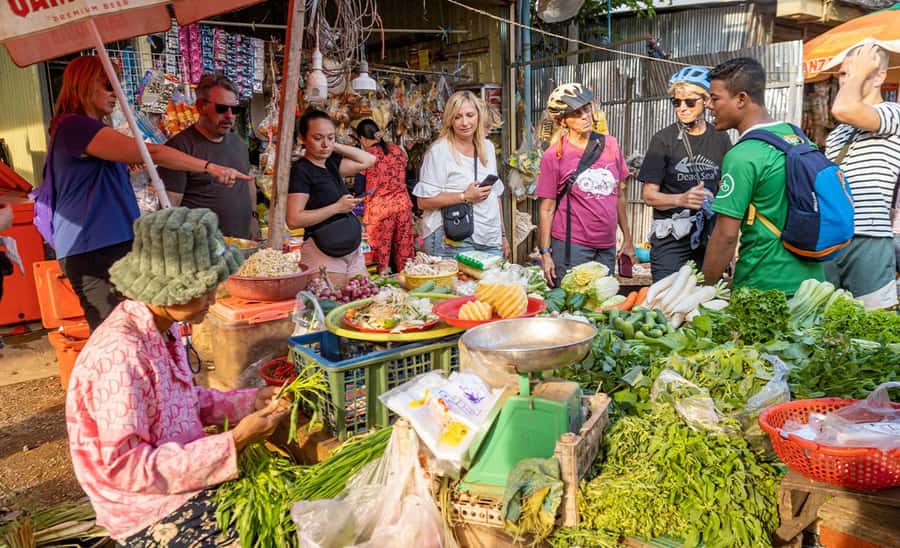
At the outdoor market, you’re not just there to browse souvenirs. You’re there to understand how people buy and sell day to day. The tour also builds in tasting—fruit and snack time—which turns the market into something you experience, not just something you look at.
Bring a bit of cash if you want to buy village handicrafts. The tour includes snacks and fruit, but personal purchases at markets are usually on you.
Mushroom farms and rice wine: the most memorable smell-and-story stops
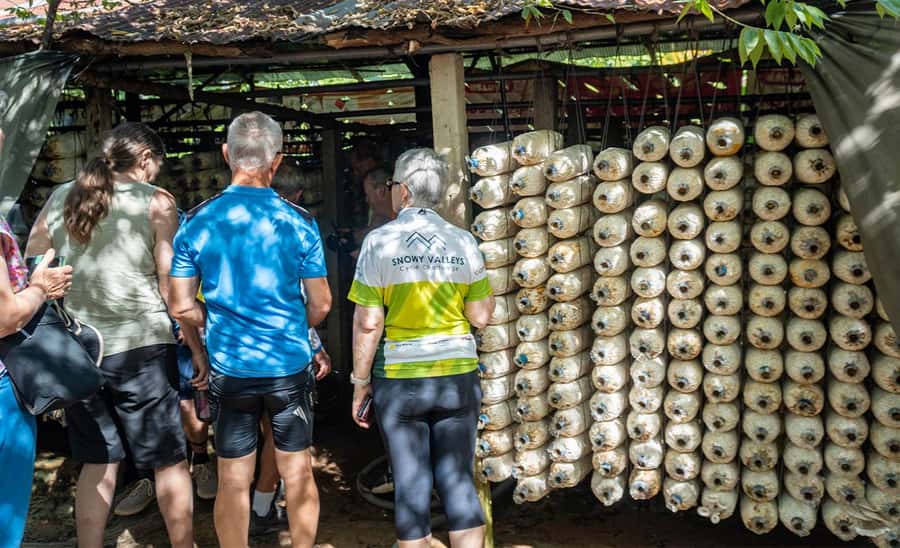
Two of the most talked-about stops are the mushroom farm and the rice wine distillery. These are the kinds of places that don’t fit into a temple-only visit, so they instantly make the day feel different.
At the mushroom farms, you get a closer look at how a food product is grown and prepared. It’s a practical look at production. You’ll typically see why these farms exist where they do, and how the work is organized beyond the idea of agriculture as something distant.
Then you hit the rice wine distillery. The value here isn’t just the fact that rice wine exists—it’s the way rural families turn a staple crop into a product with local meaning. You’ll learn about the process and see the production in a way that feels grounded, not staged.
If you like travel moments that answer real questions—how does this get made, and who does the work?—these two stops do that.
You can also read our reviews of more guided tours in Siem Reap
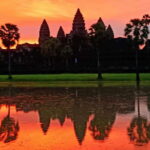
Temples and lotus farms: culture outside the Angkor spotlight
This tour doesn’t ask you to pick between temples and countryside. It gives you both, but in a different order and with a different focus.
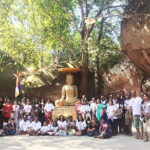
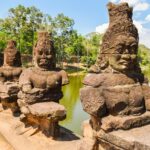
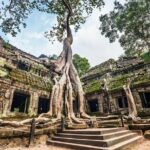
You’ll visit Buddhist temples during the ride. This is valuable because it reframes what “temple time” can be. Instead of only focusing on monumental architecture, you see how temples fit into everyday rural life—something part of the rhythms of a community.
Then there’s the lotus farms stop. Lotus plants connect water, agriculture, and local cultural symbolism. Practically, you’re also getting a calm visual break in the morning flow, after cycling and market noise. One of the big wins of this tour is pacing: you’re not cycling nonstop from stop to stop. You have moments to look, ask, and absorb.
The ride itself: flat most of the way, but not a carpet
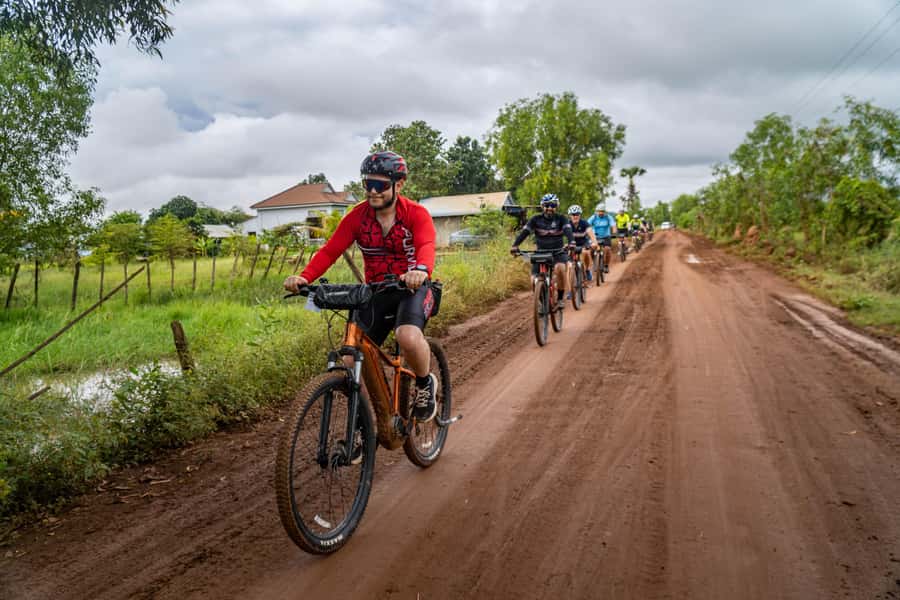
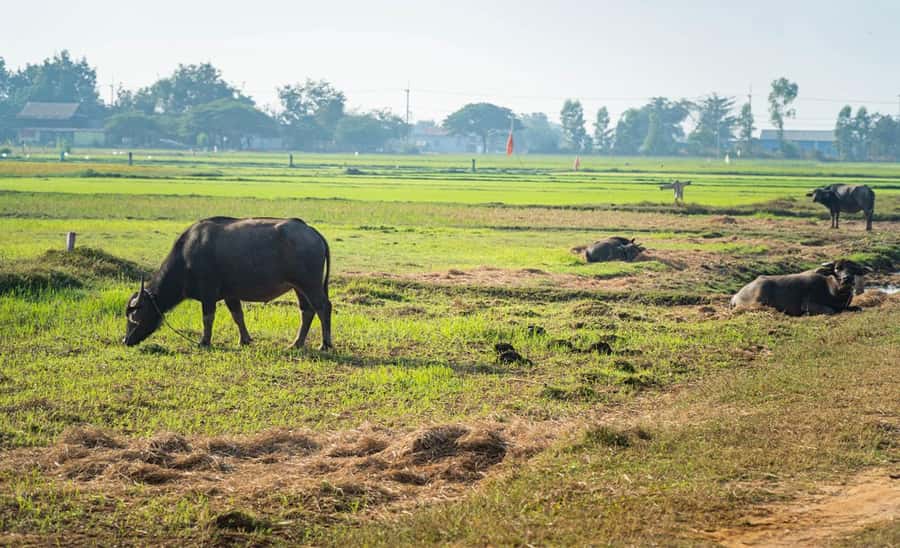
What kind of biking should you expect? The route is described as flat throughout in the sense that there aren’t major hills. That’s a huge plus in Cambodia heat. It’s the kind of ride that encourages you to focus on the stops, not on surviving a climb.
That said, you’re not on a paved bike path the whole time. You’ll go through back roads and unpaved paths beyond the Angkor area. Some sections may be bumpy, and one review specifically mentioned a few kilometers on rougher tracks. It’s manageable, but it’s still cycling on real surfaces.
How long and how far?
The tour is 5 hours total. Distance isn’t consistently stated, but one rider noted about 18–19 km as the total ride. If you’re used to easy rides, you’ll likely feel fine. If you’re new to biking, take it slow, and let the guide’s pace lead.
Seating comfort tip
A single review mentioned saddle discomfort toward the end and suggested padding for the seats. This isn’t a deal-breaker, but it’s worth planning for. Wear cycling clothing and consider bringing comfort-minded gear if you’re sensitive to saddle time.
Guides and group size: where the experience becomes personal
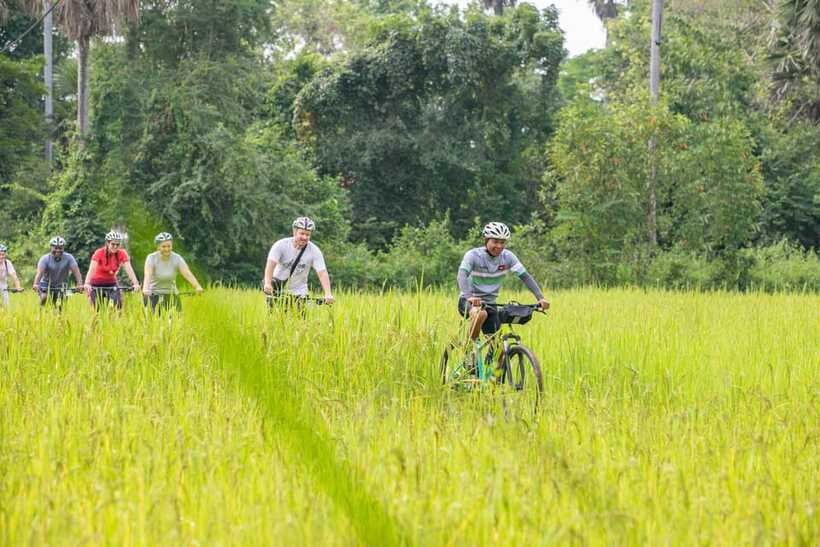
This is a small-group tour limited to 12 participants. That size matters more than it sounds. You don’t get swallowed by a crowd. Guides can check in, manage road crossings, and keep everyone oriented.
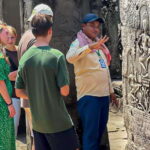
English is available with a live guide. Reviews highlighted guides like Ron and Vandy, plus others such as Jay, Kanika, JR, and Lina. Different personalities, same core approach: clear explanations, attention to safety, and regular stops so you can actually look—not just pass through.
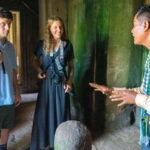
One pattern shows up again and again: guides make time for questions and give you space to explore at stops. That’s what turns a ride into a story you can tell later.
Price and value: $35 for real rural access
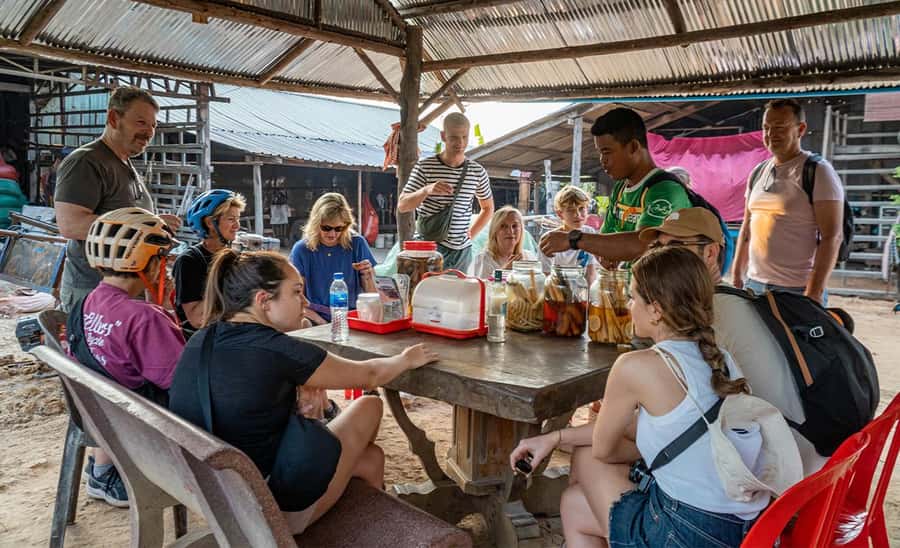
At $35 per person for a 5-hour guided countryside bike tour, the value is strong—mainly because the tour isn’t just transportation. You’re getting:
- Hotel pickup and drop-off
- A guide
- Bike and helmet
- Bottled water
- Snacks and fruit
- A village donation
- Multiple rural stops (market, farms, distillery, temples, lotus farms)
In other words, you’re paying for access and interpretation. Without a guide, it’s hard to stitch together farms, markets, and cultural stops into one smooth morning route, especially beyond the usual temple circuit.
Also, the ride is positioned for a morning window. That matters because Siem Reap heat ramps quickly. Doing this early gives you the countryside experience while you’re still in a better weather window.
What to bring so the morning feels easy
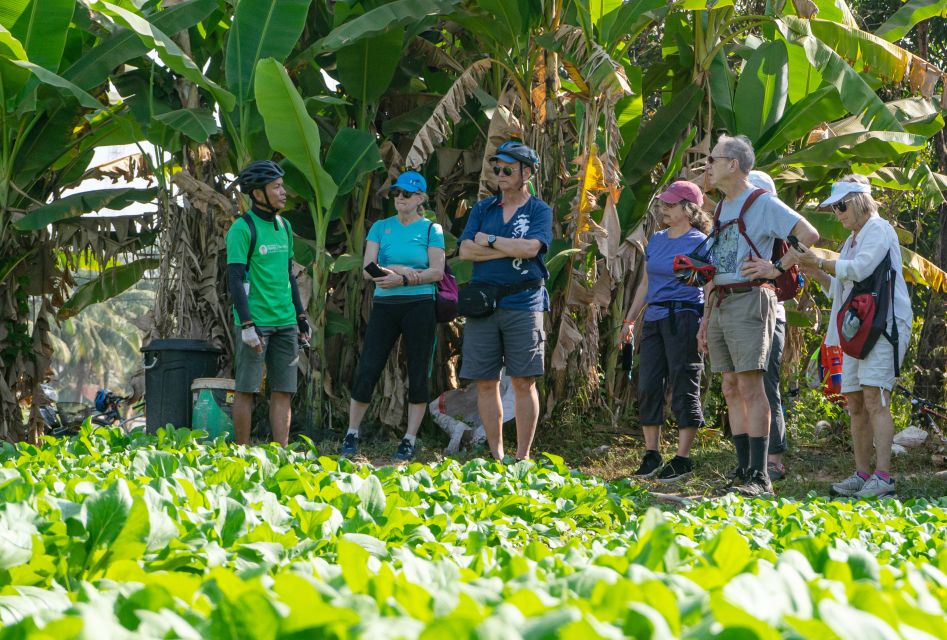
You’ll get water and snacks, but you’ll still want your own comfort kit. Bring:
- Sunglasses
- Camera
- Sunscreen
- Cycling clothing
- Closed-toe shoes
- Cash (useful for market purchases and village handicrafts)
Closed-toe shoes matter because you’re on unpaved or mixed surfaces at times. Sunscreen is non-negotiable if you’re even a little sensitive to sun. And sunglasses help on dusty road stretches.
Who this isn’t for
The tour is clearly not for everyone. It isn’t suitable for:
- Pregnant women
- People who can’t ride a bike
- People with high blood pressure
If you fall into those categories, skip this one and look for an easier option.
Tips to get the most from the day
Here are a few practical moves that help you enjoy this tour more:
- Treat the market as a learning stop, not just a shopping stop. Ask what you’re seeing before you browse.
- Pace yourself on the bike so you arrive at stops feeling curious, not drained.
- Carry cash for handicrafts, since that’s part of what you’ll pass during the morning.
- Stay hydrated even if you feel fine. You’ll have bottled water, but biking plus sun adds up.
Also, lean into the tasting opportunities. Fruit and snacks aren’t random add-ons here—they’re a way to connect the countryside stops to what people actually eat and sell.
Should you book this Siem Reap countryside bike tour?
If you want more than temples—and you like the idea of seeing how people live outside the main tourist zone—this is an excellent pick. The biggest strengths are the small-group feel, the flat-but-real cycling, and the fact that you get multiple working rural stops in one morning: market, mushroom farms, rice wine distillery, temples, and lotus farms.
I’d especially recommend it if:
- You have a free morning in Siem Reap
- You’re comfortable riding a bike on mixed surfaces
- You want authentic everyday culture, not only major sights
- You like learning through food, production, and local routines
If you’re unsure about your biking comfort, be honest about it. This isn’t a leisurely stroll; it’s a real ride with unpaved segments. And if you have any medical concerns like high blood pressure, skip it.
FAQ
FAQ
How long is the Siem Reap guided countryside bike tour?
The duration is 5 hours.
What’s the price per person?
It’s $35 per person.
What’s included in the tour price?
Hotel pickup and drop-off, a guide, bicycle and helmet, bottled water, village donation, and snacks and fruits.
Is lunch included?
No, lunch is not included.
What language is the tour guide?
The tour guide is available in English.
How big is the group?
The group is limited to 12 participants.
Is hotel pickup included?
Yes. You’ll be asked to wait in the hotel lobby 15 minutes before your scheduled pickup time.
Is this tour suitable for people who can’t ride a bike?
No. It’s not suitable for people who can’t ride a bike.
What should I bring?
Bring sunglasses, a camera, sunscreen, cash, cycling clothing, and closed-toe shoes.
Can I cancel and get a full refund?
Yes. Free cancellation is available up to 24 hours in advance for a full refund.