REVIEW · SIEM REAP
Angkor Discovery 2-Days Of Private Tour
Book on Viator →Operated by Asia Private Guide Service · Bookable on Viator
Angkor feels different with a private plan. This two-day Angkor Discovery tour focuses on timing to help you dodge the worst crowds, while keeping the logistics simple with hotel pickup and drop-off. The route mixes the big-ticket names with temples a bit farther off the main flow, so you get contrast instead of a blur of stone.
What I like most is how the day is run end-to-end: a licensed English-speaking guide organizes the Angkor Pass step at the checkpoint before you step into the sites. You’ll also get a strong team setup, including guides like Mr. Lekh and driver Mr. Vet, who are highlighted for clear English and the ability to tailor the experience to your pace.
One thing to plan for is that the big ticket items aren’t bundled into the $150 rate: temples pass/admission tickets aren’t included, and meals are also not included. So you’ll want to budget for the Angkor Pass and decide where you’ll eat between temple blocks.
In This Review
- Key highlights worth paying attention to
- A private Angkor tour that actually respects your time
- Morning logistics: pickup, timing, and your Angkor Pass step
- Day 1: Angkor Wat to Ta Prohm without feeling like you’re racing
- Stop 1: Angkor Archaeological Park (start point and pass handling)
- Stop 2: Angkor Wat (3 hours)
- Stop 3: Angkor Thom South Gate (15 minutes)
- Stop 4: Bayon Temple (1 hour)
- Stop 5: Baphuon Temple (1 hour)
- Stop 6: Terrace of the Elephants (30 minutes)
- Stop 7: Ta Nei Temple (30 minutes, off-road and peaceful)
- Stop 8: Ta Prohm Temple (listed as very short)
- Day 2: Beng Mealea’s wild feel, Pink Banteay Srei, and Preah Khan
- Stop 1: Prasat Beng Mealea (4 hours, 77 km from Siem Reap)
- Stop 2: Banteay Srei (2 hours, Pink temple)
- Stop 3: Preah Khan (4 hours)
- What the guide team really adds (beyond just seeing temples)
- Price and value: is $150 fair for a two-day private Angkor plan?
- Who this tour fits best (and who might want a different style)
- Should you book the Angkor Discovery 2-Days Of Private Tour?
- FAQ
- FAQ
- What’s the price and duration for this tour?
- Where does the tour take place?
- Does the tour include hotel pickup and drop-off?
- What time does Day 1 start?
- What does the tour include?
- Are temple passes or admission tickets included?
- Are meals included?
- Is this tour private?
- Is free cancellation available?
Key highlights worth paying attention to
- Crowd-smart timing: they aim to bring you to major spots at calmer times.
- Private, certified guiding: English-speaking licensed guides with at least 5 years of experience.
- Full hotel pickup and drop-off: makes a long day feel manageable.
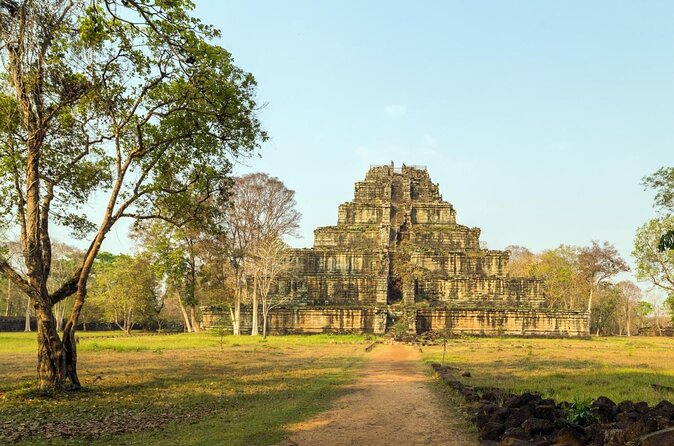
- A mix of icons and quieter ruins: Angkor Wat and Angkor Thom plus off-road temple stops.
- Comfort built in: air-conditioned vehicle and cold bottled water during transfers.
A private Angkor tour that actually respects your time
Angkor is one of those places where the difference between a good day and a great one is often timing and pacing. This tour is built around that reality. You start early (7:30 am on Day 1, and 8:00 am on Day 2 after breakfast), and the promise is clear: the route is designed to take you to the best viewing points at the right time to avoid the heaviest crowds.
I also like that it’s a true private format. Only your group participates, which matters when you have different walking speeds, photo priorities, or just a different tolerance for crowds. In practice, it means your guide can steer you toward the right viewpoints and help you spend time where it counts, not just where the tour buses queue.
And since it’s a two-day plan, you’re not forced to rush everything into one marathon morning. You get enough time to enjoy the texture of the temples—stone details, gateways, and the way the different complexes feel—without feeling like you’re sprinting from one “top spot” sign to the next.
You can also read our reviews of more private tours in Siem Reap
Morning logistics: pickup, timing, and your Angkor Pass step
Day 1 starts with hotel pickup at 7:30 am. You’ll travel in an air-conditioned vehicle with a cold bottled water provided. The day begins at Angkor Archaeological Park, which is where your guide helps you buy the Angkor Pass at the checkpoint before heading into the temples.
This is an important detail. If you’ve ever tried to figure out passes while heat and crowds start building, you know it can turn a “temple day” into an “admin day.” Here, the guide handles the process so you can keep your focus on the sites.
Day 2 repeats the same comfort pattern. After breakfast, you’ll get pickup at 8:00 am for a drive out to Beng Mealea (listed as 77 km from Siem Reap). That second day includes several temple blocks, so having that early start helps you keep the day from feeling like a late-afternoon scramble.
Day 1: Angkor Wat to Ta Prohm without feeling like you’re racing
Day 1 is the classic Angkor day, but it’s organized with room to breathe.
Stop 1: Angkor Archaeological Park (start point and pass handling)
This is your launchpad. You’ll meet your guide at your hotel pickup time, then head to the checkpoint area for the Angkor Pass. Once the pass step is handled, the rest of the morning becomes straightforward: you’re moving into temples, not paperwork.
Even though the pass/admission isn’t included in the tour price, having your guide walk you through it is a real convenience. You’ll also get oriented fast, which matters when you’re going to multiple sites in one day.
Stop 2: Angkor Wat (3 hours)
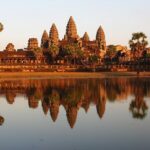
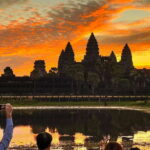
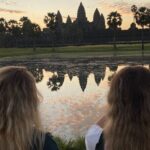
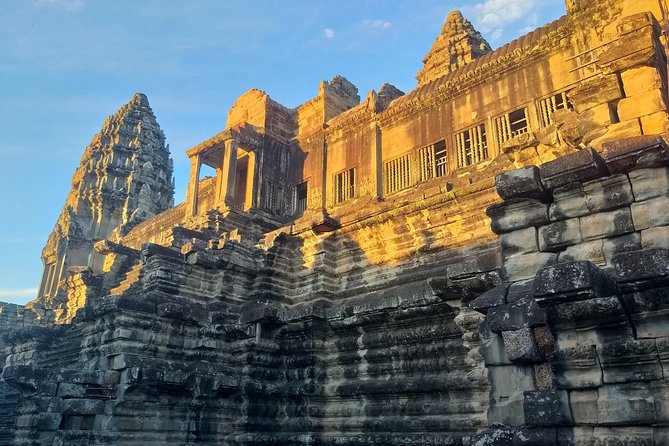
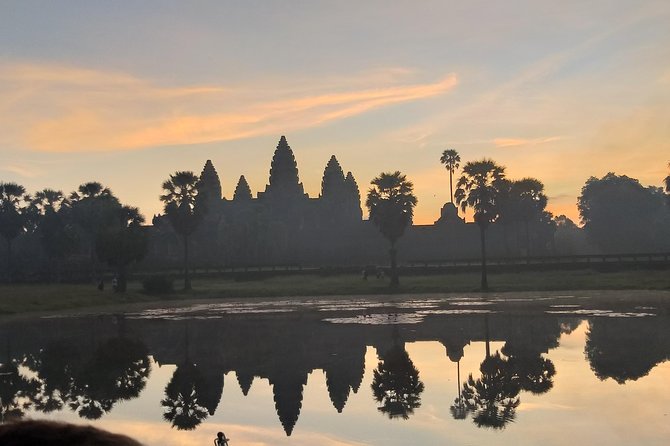
Angkor Wat is the headline for a reason. It’s described here as a 12th-century architectural masterpiece and the biggest religious monument in the world, built as a dedication to Vishnu. You’ll have about 3 hours, which is a good window for taking in both the scale and the structure.
What I’d watch for: the way the temple’s layout guides your movement. Even if you’re not a “temple nerd,” the scale and symmetry hit hard, and it helps to have a guide who can explain what you’re seeing without turning it into a lecture. This is where English-speaking guidance really pays off.
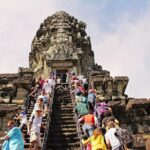
Potential drawback: it’s a long day, and Angkor Wat is one of the busiest stops in any Angkor circuit. This tour’s timing aim helps, but you should still expect crowds at peak moments.
You can also read our reviews of more tours and experiences in Siem Reap




Stop 3: Angkor Thom South Gate (15 minutes)
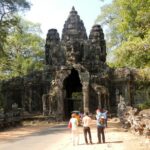
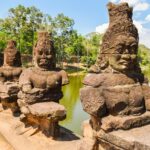
Then you pivot to Angkor Thom’s South Gate, famous for its giant stone faces of Buddha and the stone details at the gateway. This stop is short—about 15 minutes—so you’ll want to treat it as a photo-and-first-impressions stop.
The payoff is that it sets the mood before you reach the dense “face tower” temple center. Even a brief stop can make the later sights hit harder, because you’ll recognize the style and motifs.
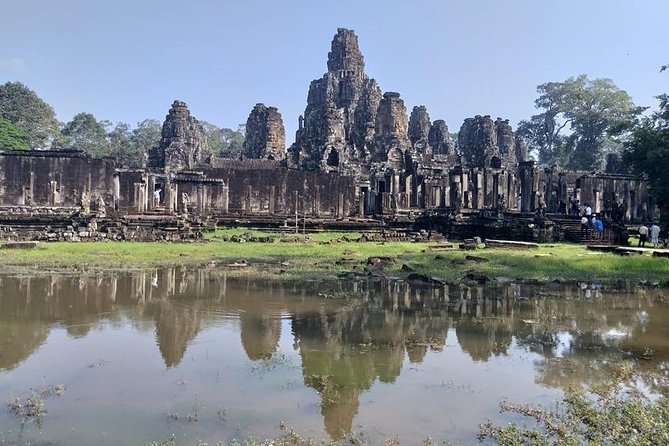
Stop 4: Bayon Temple (1 hour)
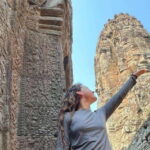
Bayon is the heart-temple moment for many people. Here, you’ll spend about 1 hour at a temple described as having 49 towers with giant stone faces. It was built by Khmer King Jayavarman VII in the 12th century.
What makes Bayon special is how the faces seem to follow you from different angles. A good guide helps you connect the structure to the story, but you can also just enjoy the visual effect. One practical tip: plan to look up and also look across. The faces are the obvious thing, but the spatial design is what makes the place feel coherent.
Stop 5: Baphuon Temple (1 hour)
Next is Baphuon, another major temple within the Angkor complex. You get about 1 hour, with time to wander and take in the impressive structures.
This stop can feel like a “bridge” between the biggest photo icons. It’s a good moment to slow down, because Baphuon isn’t only about one famous detail. The guide can also help you notice how the complex fits into the overall Angkor footprint.
Stop 6: Terrace of the Elephants (30 minutes)
Then comes the Terrace of the Elephants, listed at 30 minutes. It’s described as a beautiful 12th-century structure.
This is one of those places where shorter time can work well. You can spot the key decorative idea, then move on with your momentum. If you linger too long, it’s easy to lose the sense of what the terrace is doing within the flow of Angkor Thom.
Stop 7: Ta Nei Temple (30 minutes, off-road and peaceful)
After that, you shift to Ta Nei, described as an off-road temple with a peaceful feel. You get about 30 minutes here.
I like stops like this because it breaks the pattern. After the gates and towers, the “quiet temple” angle gives you contrast. It’s also the kind of site that benefits from a guide who can help you understand why it’s worth leaving the main cluster.
Stop 8: Ta Prohm Temple (listed as very short)
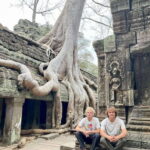
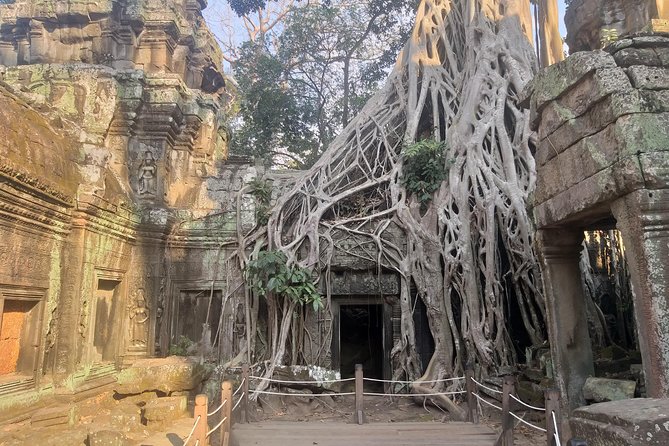
Finally, Ta Prohm finishes Day 1. It’s described as having the famous tree-over-temple atmosphere and as the backdrop for the Tomb Raider/Lara Croft film connection. The listed time here is very short—about 1 minute—so plan this as a quick stop rather than an extended wander.
If you want a longer look, you may need to manage your expectations based on the schedule. Still, even a brief visit can give you the core Ta Prohm look: the feel of trees and stone sharing space.
Day 2: Beng Mealea’s wild feel, Pink Banteay Srei, and Preah Khan
Day 2 is where this itinerary shows its more adventurous side. You go farther out, then return closer to the main area for two temple blocks that feel very different from Ta Prohm and Angkor Thom.
Stop 1: Prasat Beng Mealea (4 hours, 77 km from Siem Reap)
You leave Siem Reap at 8:00 am and drive about 77 km to Beng Mealea. The visit is listed as 4 hours, which tells you this isn’t a quick “check the box” stop.
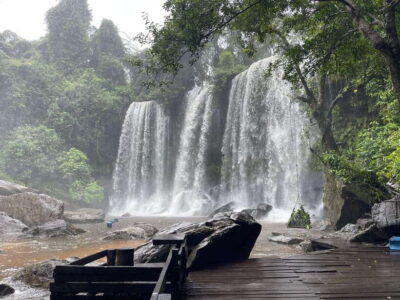
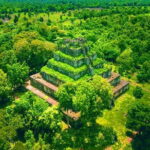
Beng Mealea is described as one of the more mysterious Angkor temples, and it’s portrayed as a titanic-scale ruin experience. What I like about a place like this is that it tends to feel less curated and more raw. You’re not just looking at a single perfect scene—you’re walking through a temple landscape where the scale is the story.
Practical consideration: Beng Mealea takes longer because it’s bigger and more spread out. You’ll want comfortable shoes and patience with uneven ground. With 4 hours, you should be able to pace yourself, but it’s not a “sit and admire” stop.
Stop 2: Banteay Srei (2 hours, Pink temple)
Next up is Banteay Srei, often called the Lady temple or Pink temple. It’s dedicated to Shiva and described as a 10th-century temple built largely of pink sandstone. It’s listed at 2 hours.
This is a great change of texture after Beng Mealea. Beng Mealea’s energy is about scale and rough mystery, while Banteay Srei is about fine temple material and a more “crafted” vibe. If you enjoy stonework and surface details, this stop is the one where you’ll likely feel your attention sharpen.
This stop is also listed as Admission Ticket Free. That can make a noticeable difference in your total day budget, especially since other admissions aren’t included.
Stop 3: Preah Khan (4 hours)
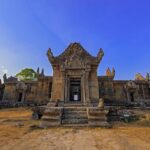
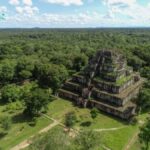
The final temple stop is Preah Khan, built by Jayavarman VII, with a listed visit time of 4 hours.
Preah Khan is a strong closing act because it’s substantial. Four hours gives you enough time to move through the space at a realistic pace instead of doing a hurried lap. If you were a fan of the “how does this complex feel as a whole” part of Angkor Thom, you’ll probably appreciate Preah Khan’s broader temple layout.
What the guide team really adds (beyond just seeing temples)
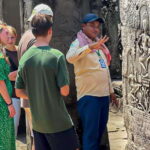
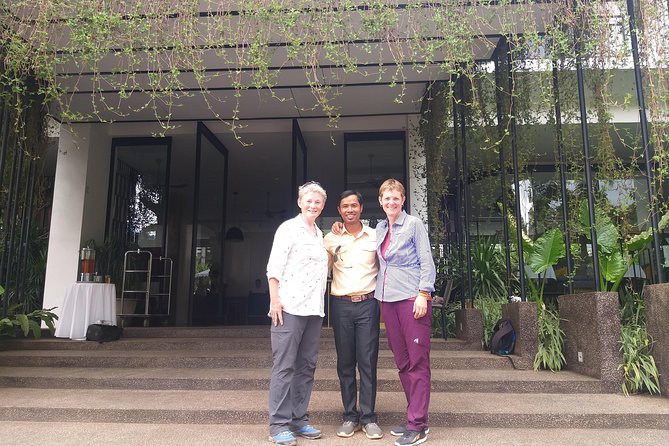
In a place like Angkor, a good guide changes the experience from sightseeing to understanding. This tour specifically calls out licensed English-speaking guides with at least 5 years of work experience, and the standout names shared here—Mr. Lekh and driver Mr. Vet—signal why people rate this so highly.
From the details provided, the common theme is how the guide communicates. Mr. Lekh is highlighted for fluent English and for connecting temple visuals to Cambodian and Angkor background. That matters because many temple sites look like “cool stone shapes” unless someone helps you see what the shapes are doing.
I also like the fact that you’re in an air-conditioned vehicle between temple blocks. Angkor days can drain you fast. Cool down, drink water, and reset your brain before walking into the next scene.
And because it’s private, your guide can likely help you match the day to your group’s interest level. That’s what you want if you’re traveling with a mix of people—one person who wants details, one who just wants great photos, and one who gets tired easily.
Price and value: is $150 fair for a two-day private Angkor plan?
At $150 for about two days, this is positioned as a budget-friendly private option—especially because it includes real on-the-ground costs like hotel pickup/drop-off, an air-conditioned vehicle, and an English speaking licensed guide.
The value question comes down to what’s not included:
- Temples pass / admission tickets are not included.
- Meals (B/L/D) are not included.
So you should think of the $150 as the cost of the guiding + transport package, not the full Angkor entry expense. If you’re budgeting your total trip, add the Angkor Pass and plan meals separately.
One more thing: the tour notes group discounts. That’s useful if you’re traveling with friends and can keep the group compact but split costs.
If you want Angkor without the stress of arranging transport and figuring out the pass step, this rate can make sense. If you already have a driver and guide lined up, you might find a cheaper alternative. But for a private two-day plan that covers major icons and less-crowded spots, this is a solid value framework.
Who this tour fits best (and who might want a different style)
This itinerary is best for:
- First-timers who want Angkor Wat + Angkor Thom highlights and also some quieter temple time.
- People who value English explanations and a guide who can connect details to what you’re seeing.
- Travelers who prefer a private rhythm over joining a larger group.
It might be less ideal if:
- Your group wants to spend extra time lingering at every famous site. The schedule includes shorter blocks for certain stops, and Day 1 includes a temple stop listed as extremely short.
- You’re hoping the $150 covers everything. The pass and admissions are not included, and meals are not provided.
Should you book the Angkor Discovery 2-Days Of Private Tour?
I’d book it if you want a two-day Angkor experience that’s organized, comfortable, and built around timing to reduce crowd stress. The included pickup/drop-off, AC vehicle, and English-speaking licensed guide make it easy to focus on temples instead of logistics. I’d also feel good booking because the guide team is specifically praised—Mr. Lekh and driver Mr. Vet are mentioned as part of what made the trip memorable.
Skip or shop around if you’re traveling on a very tight budget where you want a fully bundled package, since the Angkor Pass/admission tickets and meals aren’t included.
FAQ
FAQ
What’s the price and duration for this tour?
The price listed is $150, and the duration is about 2 days.
Where does the tour take place?
The tour is in Siem Reap, Cambodia, covering Angkor-area temples.
Does the tour include hotel pickup and drop-off?
Yes. Hotel pickup and drop-off are included. You need to let the provider know your hotel location.
What time does Day 1 start?
Day 1 starts at 7:30 am.
What does the tour include?
Included features are an air-conditioned vehicle, cold bottle of water, an English speaking licensed tour guide, and pickup/drop-off at your hotel.
Are temple passes or admission tickets included?
No. Temples pass and admission tickets are not included.
Are meals included?
No. Meals (B/L/D) are not included.
Is this tour private?
Yes. It’s a private tour/activity, so only your group participates.
Is free cancellation available?
Yes, free cancellation is available. You can cancel up to 24 hours in advance for a full refund.