REVIEW · SIEM REAP
Private Tour in Angkor Wat by Tuk Tuk
Book on Viator →Operated by Sok Saroom’s TukTuk Adventures: Explore Siem Reap in Style and Comfort · Bookable on Viator
Sunrise at Angkor hits different. This private tuk-tuk tour is built for early starts and guided temple time, with an English-speaking driver/guide named Sok. I like that the plan includes pickup and a smooth way to hop between major sights without losing hours to slow logistics, though you’ll still need to budget for the Angkor Archaeological Park ticket since park admission isn’t included.
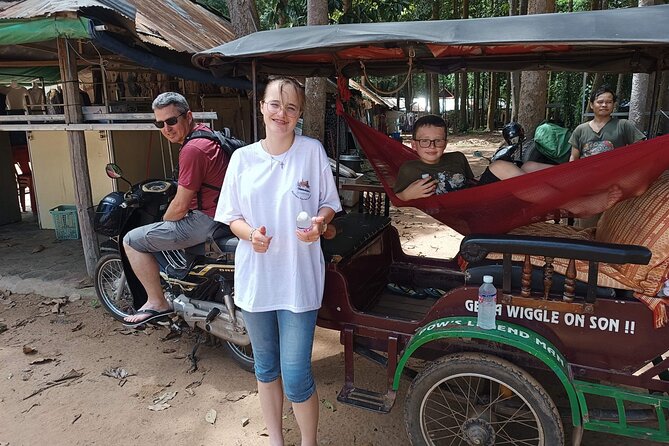
The big comfort win is the tuk-tuk itself: it comes with a large cooler plus bottled water, and you can request beers, soft drinks, and snacks in advance. One consideration: the stated duration is about 5 to 10 hours, so you’ll want to match your energy level (and your heat tolerance) to the day’s temple pace.
In This Review
- Key things that make this private Angkor Wat tuk-tuk tour work
- Why a private tuk-tuk beats guessing your way around Angkor
- Price, park pass, and where the real costs show up
- The morning plan: what the schedule actually feels like
- Stop 1: Angkor Wat in the soft light of sunrise
- Stop 2: Bayon Temple and the shift in belief
- Stop 3: Ta Keo and Khmer architecture turning points
- Stop 4: Ta Prohm and the memory of Jayavarman VII’s family
- Stop 5: Banteay Kdei and its pinkish stone carvings
- The tuk-tuk comfort details that actually matter
- The guide factor: meeting Sok and getting your bearings fast
- Who should book this private Angkor Wat tuk-tuk tour
- Should you book it? My practical take
- FAQ
- How long is the Private Tour in Angkor Wat by Tuk Tuk?
- Is pickup offered?
- What temples are included in the route?
- What’s included in the tour price?
- Do I need to pay for the Angkor Archaeological Park entrance?
- What is the cancellation policy?
Key things that make this private Angkor Wat tuk-tuk tour work
- Sunrise-focused timing gives you the best shot at a memorable first look at Angkor Wat
- Private transportation means you’re not stuck with other groups’ schedules
- Cooler on board plus bottled water helps you stay comfortable during temple hours
- Guide support from Sok with practical recommendations and an English-speaking experience
- A classic five-temple route from Angkor Wat to Bayon, Ta Keo, Ta Prohm, and Banteay Kdei
- Flexible length (5–10 hours) so you can adjust to how fast you want to move
Why a private tuk-tuk beats guessing your way around Angkor
Angkor is spread out, and the difference between a good day and a painful day is usually simple: time on the road vs. time at the ruins. With this tour, you get private transport and a guide who helps you move in the right order, instead of starting each stop by figuring out where to go next.
You’re also not negotiating on the fly. Pickup is offered, and the day runs within the park’s open hours (5:30 AM to 5:00 PM). That matters because Angkor Wat is a place where waiting around can feel like lost opportunity—especially when you’re trying to catch that early-light mood.
There’s another practical advantage: a tuk-tuk keeps the day compact. If you’re traveling with a friend, partner, or family, you can keep the group together and avoid the “meet back here in 20 minutes” chaos that often happens on shared tours.
You can also read our reviews of more private tours in Siem Reap
Price, park pass, and where the real costs show up

The tour price is $45 for a private experience, with private transportation and an English-speaking guide/driver included. Bottled water is included too, which is not a small comfort benefit in Siem Reap heat.
But the important money note is the Angkor Archaeological Park ticket. Entrance to the park is not included, and it runs from US$11 to US$37 for a one-day pass depending on your overall stay situation. So think of this $45 as the guided tuk-tuk and temple time package, while the park ticket is the separate entry cost you must add on top.
In value terms, this tends to make sense if:
- you want flexibility and don’t want to wait for other groups
- you care about sunrise timing
- you’d rather pay for comfort and guidance than risk a patchwork day of taxis and directions
If you’re traveling super light and already confident with park logistics, you might do it independently. Still, paying for a guide and a dedicated tuk-tuk is often what turns a “ticking boxes” day into a “this actually makes sense” day.
The morning plan: what the schedule actually feels like
The pace is set up around major stops, with specific time blocks that add up to roughly a full day if you do everything at a comfortable rhythm.
A typical flow goes like this:
- Angkor Wat: about 3 hours
- Bayon Temple: about 2 hours
- Ta Keo: about 2 hours
- Ta Prohm: about 2 hours
- Banteay Kdei: about 1 hour
That totals around 10 hours, which fits the tour’s stated “5 to 10 hours” range. In other words, you’re not just being rushed through quick photos. You should expect time to look, climb where you can, and reset between temples.
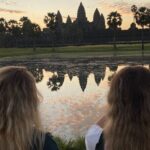
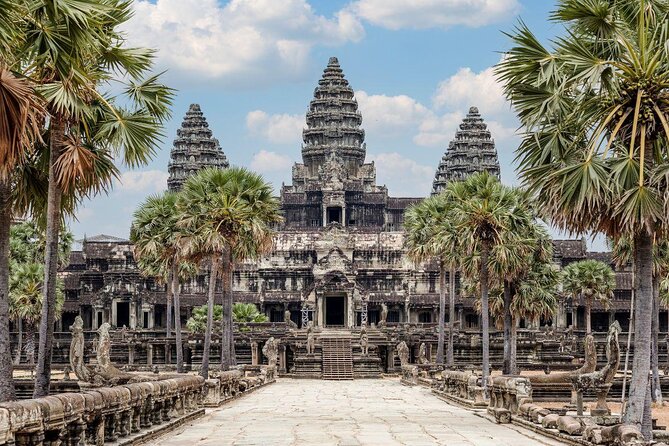
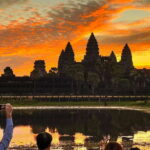
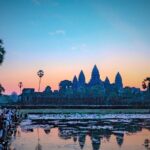
Starting with sunrise over Angkor Wat is the heart of the experience. Even if you’re not a “morning person,” it’s hard to deny the emotional impact of seeing the first big silhouette before the crowds and heat fully land.
Stop 1: Angkor Wat in the soft light of sunrise
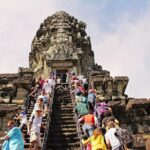
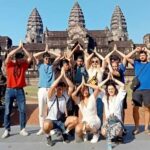
Angkor Wat is the headliner: the largest religious monument in the world, covering about 400 acres. Your time here is built around proper viewing, not just a quick walk-through.
What I like about starting at Angkor Wat is that you get the clearest entry point into Angkor’s story. Once you understand the scale of the site—how immense it is—the rest of the day makes more sense.
Here’s what to watch for while you have the time:
- the way the layout guides your eye across long distances
- how different angles change the mood of the stone
- the contrast between wide views and detailed carvings
A note on admissions: your specific tour time here is listed with admission ticket as free, but the tour itself also clearly states the park entrance fee is not included. In practice, plan on buying your Angkor Archaeological Park ticket so you’re not scrambling at the gate.
Stop 2: Bayon Temple and the shift in belief
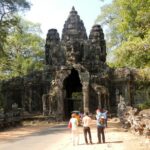
Next up is Bayon Temple, described as a symbol of religious evolution and a record of medieval Cambodian life. Bayon is also tied to the Angkor Empire’s Buddhist presence, and it’s noted as the empire’s single Buddhist temple.
The value of making this stop after Angkor Wat is that Bayon helps you see Angkor as more than a single building style. You get a sense of change over time—how belief and political power shaped temple life.
In the real world, Bayon can also be a great “reset” stop. Angkor Wat can feel huge and ceremonial; Bayon tends to feel more human-scale in how you experience the space as you move around the structures.
Give yourself room to slow down here. Two hours is enough to explore at a not-rushed pace if you’re not sprinting from point to point for photos.
Stop 3: Ta Keo and Khmer architecture turning points
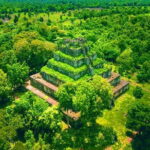
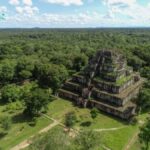
Ta Keo is the monument tied to a major architectural shift: it’s the first temple constructed entirely of sandstone, marking progress in Khmer technology and building methods.
That detail matters because it’s not just trivia. When you know what makes a place important, your eyes start looking differently. At Ta Keo, you’re watching for the logic of materials and form—how sandstone changes the way the structure feels compared with other temple sites.
Two hours is a reasonable slot. It gives you time to:
- take in the overall shape
- study surfaces and stonework
- move at a pace that works for stairs and uneven ground
If your knees are sensitive, you can keep your climb choices flexible and still get plenty out of the views and design.
Stop 4: Ta Prohm and the memory of Jayavarman VII’s family
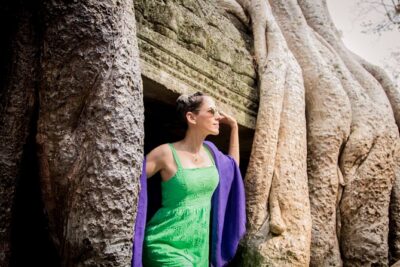
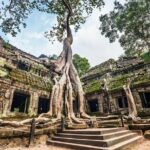
Ta Prohm Temple is tied to a very specific origin story. It was built in 1186 and originally linked to the Buddhist context of Jayavarman VII’s mother, with the site described as Rajavihara, or Monastery of the King.
This stop is a good one if you like your monuments with a story attached. Ta Prohm’s identity isn’t just about architecture; it’s about what it was used for and who supported it.
You get about two hours here, which should feel balanced: enough time to take in the mood of the site and to understand why it remains one of the most talked-about Angkor temples. If you only spend a short time, you’d miss the meaning behind the designation and devotion described here.
Stop 5: Banteay Kdei and its pinkish stone carvings
Finish with Banteay Kdei, often described as epitomizing Angkorian artistry. The tour highlights the temple’s pinkish-hued stone and points out that it has some of the finest stone carvings on the planet, while also noting the site began in 967.
This is the kind of stop that rewards slower viewing. One hour sounds short until you realize Banteay Kdei is a strong “quality over quantity” finale. You’re not trying to cover every angle in depth; you’re choosing highlights and letting the details land.
If your legs are starting to feel it by the last temple, this stop format can be a good match because you can still get a lot by focusing on stonework and key viewing points without trying to force a marathon.
The tuk-tuk comfort details that actually matter
It’s easy to dismiss “comfort” as marketing. In this case, the setup is practical.
You get:
- Bottled water
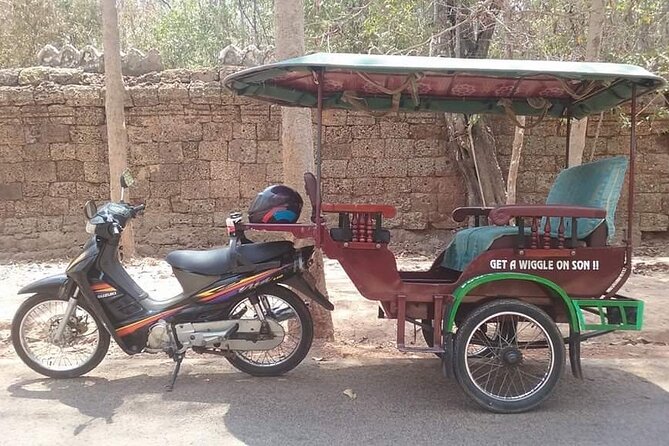
- Private transportation in a tuk-tuk
- A large cooler
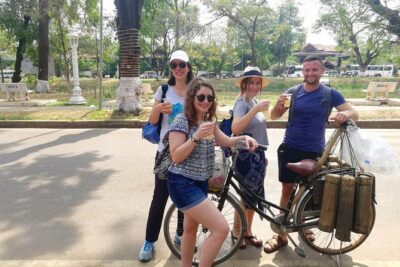
And there’s a smart bonus: you can ask in advance for a customized stock of beers, soft drinks, and snacks. That’s useful because food planning at Angkor can become a stressful scramble, especially when you’re trying to keep your day moving.
If you’re the kind of traveler who likes a drink after walking and climbing, the cooler option means you don’t have to hunt for it at the last minute. It also works for families and groups who want snacks without constant stops.
Another small but helpful detail: the tour provides a mobile ticket, and confirmation happens within 48 hours of booking (subject to availability). That reduces the risk of showing up and realizing you’re missing a key piece of the plan.
The guide factor: meeting Sok and getting your bearings fast
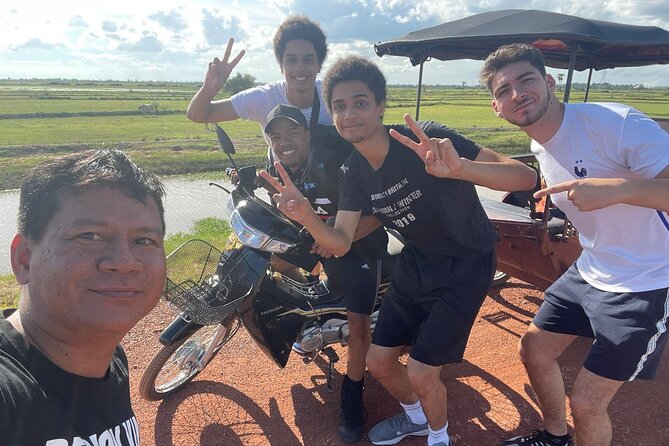
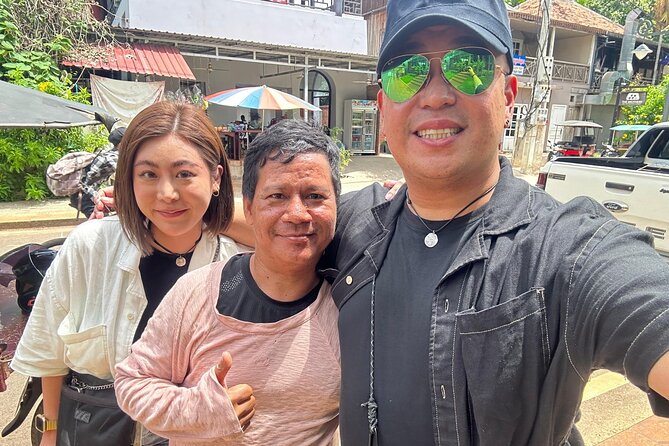
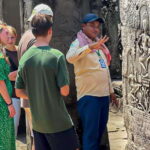
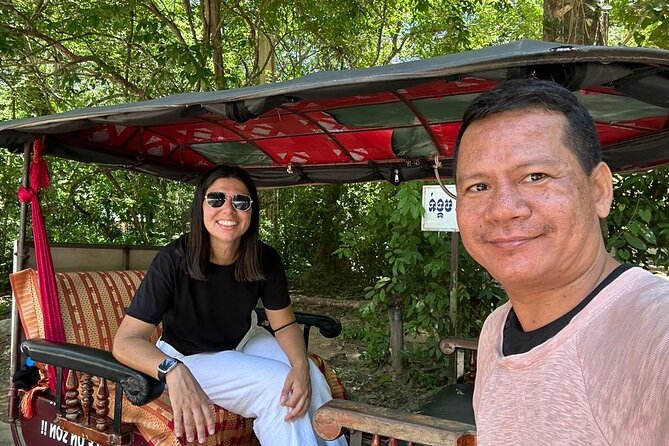
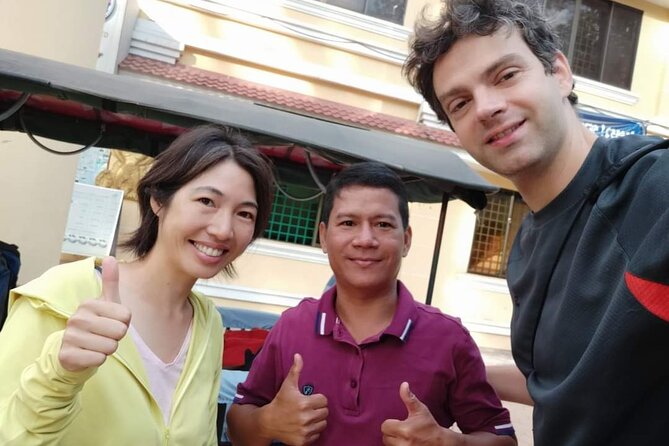
The name Sok comes up as the driver/guide you’ll likely meet for this experience, and the way he’s described is exactly what you want in a first-time Angkor day: friendly, punctual, and ready with recommendations.
What’s valuable here isn’t just language. It’s decision-making support:
- what to see first
- how to structure your stops
- where to spend your time inside the bigger sites
When you have a guide who helps you get your bearings quickly, you spend less time confused and more time actually appreciating what you’re looking at.
If you’re traveling for the photos, that guidance helps too: you don’t just wander into a good angle; you get to the areas that make sense for the day’s flow.
Who should book this private Angkor Wat tuk-tuk tour
This is a strong pick if you want:
- a private, flexible day with a dedicated driver/guide
- a sunrise start with enough time at each temple
- a comfortable way to cover Angkor without complicated transit planning
- support in English so you can understand what you’re seeing
It may be less ideal if you’re determined to do everything independently and don’t want the added cost of a guided private tour on top of the park ticket.
Also consider who this suits best within your group. The tour says most travelers can participate, and service animals are allowed, which is helpful information when you’re planning with accessibility needs. It’s also listed as near public transportation, but since pickup is offered, you likely won’t need that unless you’re meeting independently.
Should you book it? My practical take
I’d book this private tuk-tuk tour if you want a guided Angkor day that feels organized, comfortable, and focused on the big names: Angkor Wat, Bayon, Ta Keo, Ta Prohm, and Banteay Kdei. The added value is the combination of timing, dedicated transport, bottled water, and a guide like Sok who’s described as punctual and friendly.
Just do the math before you commit: the tour price is $45, but you should budget for the Angkor Archaeological Park ticket (US$11 to US$37 depending on your overall stay situation). If you’re already buying the park pass anyway, this becomes a cleaner value decision.
If you want a smooth first Angkor visit without turning the day into logistics homework, this tour makes that easy.
FAQ
How long is the Private Tour in Angkor Wat by Tuk Tuk?
The tour runs about 5 to 10 hours, depending on how your day is paced through the stops.
Is pickup offered?
Yes, pickup is offered.
What temples are included in the route?
The tour includes Angkor Wat, Bayon Temple, Ta Keo, Ta Prohm Temple, and Banteay Kdei.
What’s included in the tour price?
Included are bottled water, private transportation, local tax, and an experienced English-speaking driver and guide.
Do I need to pay for the Angkor Archaeological Park entrance?
Yes. Entrance fee to the Angkor Archaeological Park is not included. A 1-day ticket costs US$11 to US$37 depending on your overall stay.
What is the cancellation policy?
Free cancellation is available. You can cancel up to 24 hours in advance for a full refund. If you cancel less than 24 hours before the experience starts, the amount you paid won’t be refunded.