REVIEW · SIEM REAP
Two Day Angkor Temples Tours
Book on Viator →Operated by Angkor Heritage Tours · Bookable on Viator
Two days can feel like a whirlwind. I like how this private Angkor temples tour gives you flexible guiding and a strong photography focus while still hitting the big names. One thing to plan for: admission tickets and GST are not included, and the schedule packs a lot into two days.
I also appreciate the human side. The guides aim to be honest, reliable, and flexible, and they’ll listen to what you want—whether that means more time on carvings, slower pacing, or practical photo help—while keeping the day moving in a way that makes sense.
In This Review
- Key Highlights Worth Knowing
- Two Days at Angkor: Why This Route Works
- Meeting Your Guide: Flexible, Photo-Ready, and English-Speaking
- Getting Around With Pickup and Air Conditioning
- Timing and Pacing: How the Two-Day Schedule Feels
- Day 1 Temples: Banteay Srei to Pre Rup
- Banteay Srei (the pink-stone beauty)
- Banteay Samre (same era mood, Vishnu focus)
- Preah Khan (maze corridors and lichen-clad stone)
- Neak Pean (small Buddhist temple on an artificial island)
- Ta Som (the smaller sibling of Preah Khan)
- Eastern Mebon (where the water changed the story)
- Pre Rup (temple-mountain with clear tiers)
- Day 2 Temples: Angkor Wat, Angkor Thom, and Ta Prohm
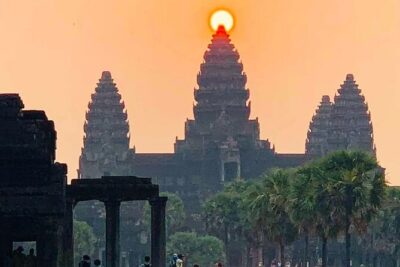
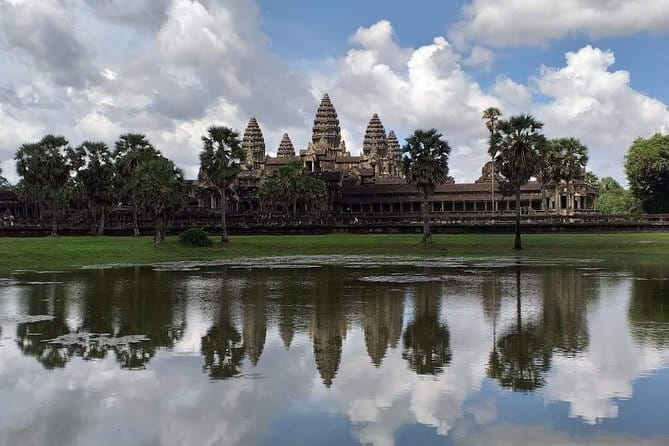
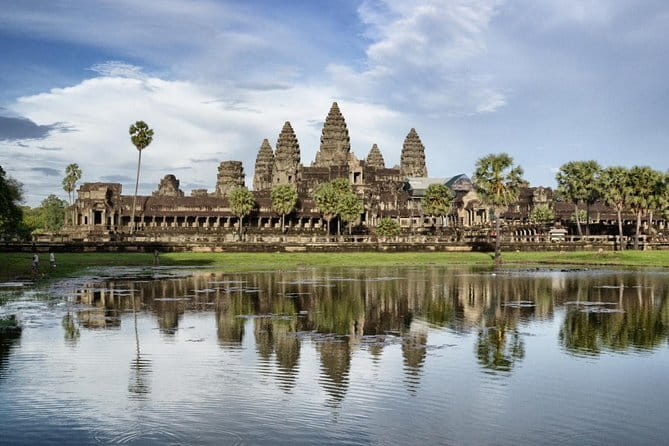
- Angkor Wat (the big one)
- Phnom Bakheng (quick introduction to the temple-mountain idea)
- Angkor Thom (Jayavarman VII and the Bayon centerpiece)
- Ta Prohm (trees on stone, and why it feels different)
- Photographs at Angkor: How to Turn Stops Into Real Keepsakes
- What You’ll Learn: Hindu and Buddhist Layers You Can Spot
- Price and Tickets: Real Value and What’s Not Included
- Who This Fits Best (and the Moderate Fitness Note)
- Should You Book This Two-Day Angkor Tour?
- FAQ
- FAQ
- What temples are included in this two-day Angkor tour?
- Is the Angkor admission ticket included?
- How much does the tour cost?
- What’s included in the tour price?
- Do I get picked up from my hotel area?
- Is this tour private?
- What fitness level do I need?
- Does the tour run in any weather?
- What is the cancellation policy?
- What guides might I work with?
Key Highlights Worth Knowing
- Private group setup means you’re not squeezed into someone else’s pace.
- Air-conditioned vehicle + pickup makes the travel time between sites easier on your day.
- History plus photography skills show up again and again, including iPhone shooting tips.
- Day 1 leans quieter with temples like Banteay Srei, Preah Khan, and Neak Pean.
- Day 2 hits the headlines with Angkor Wat, Angkor Thom, and Ta Prohm.
- Guides are flexible about your interests, including adjusting if you fall in love with a specific ruin.
Two Days at Angkor: Why This Route Works
Angkor is huge. So the trick for a short stay in Siem Reap is not seeing everything—it’s seeing the right things in a smart sequence. This two-day plan is built around contrast: classic standouts on Day 2, then more “pick-your-own-path” temples on Day 1.
On Day 1, you start with Hindu temples and move through sites that feel different in layout and mood. That helps your brain learn what you’re looking at before you get to the biggest icons. Day 2 then switches gears to the major complexes: Angkor Wat, the Bayon-centered Angkor Thom area, and Ta Prohm with its famous tree roots.
If you like your temples with context—what they were built for, how the style shifts between Hindu and Buddhist eras—this route gives you plenty of moments to spot those layers.
You can also read our reviews of more tours and experiences in Siem Reap


Meeting Your Guide: Flexible, Photo-Ready, and English-Speaking
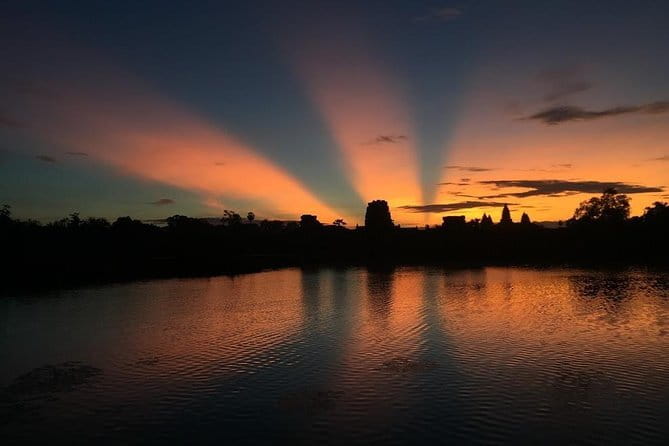
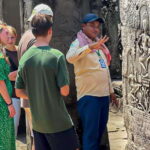
In Angkor, a great guide changes everything. The best part here is how guides work with your priorities instead of forcing a fixed script. You’ll hear history, yes, but you’ll also get hands-on direction for seeing details and taking photos.
This tour is associated with guides such as Borey Hang, Bunleat, Kimhoeun, and Mr. Kim (names shared by past guests). Across those guides, the themes are consistent: strong English, a friendly style, and a willingness to pivot when you get drawn to a particular temple—like spending extra time at Ta Prohm if that’s where your group’s energy goes.
One practical bonus: the guides focus on photo spots and camera help, including specific iPhone photography tips. Even if you’re not a serious photographer, that support helps you avoid the usual problem at Angkor: taking lots of shots that all look the same.
Getting Around With Pickup and Air Conditioning
You get an air-conditioned vehicle, plus pickup offered in Siem Reap. That matters more than it sounds when you’re doing temples back-to-back. Angkor days involve a lot of moving—between compounds, entrances, and viewpoints—and you don’t want to fight the heat or fatigue during transit.
There’s also a meeting point listed at Angkor Enterprise on Apsara Rd in Siem Reap. If you’re staying near central areas, this is usually easy to line up with a morning start.
One small planning thought: the tour is private (only your group participates), so you’ll want to coordinate shoe breaks and water stops with your guide rather than assuming everything will be standardized.
Timing and Pacing: How the Two-Day Schedule Feels
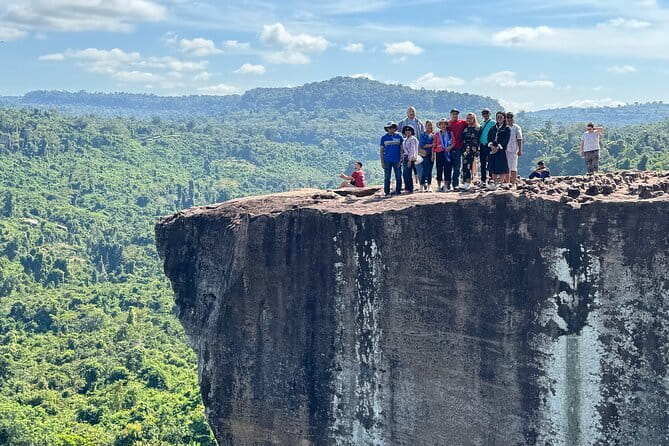
This is a moderate physical fitness type of outing. That usually translates to walking, climbing steps, and spending time on uneven stone. The good news is the stop lengths are planned, with many sites given around 40 to 60 minutes and the big ones longer.
Day 1 follows a steady rhythm: Banteay Srei (~1 hour), Banteay Samre (~1 hour), Preah Khan (~1 hour), then shorter stops at Neak Pean (~40 minutes), Ta Som (~30 minutes), Eastern Mebon (~50 minutes), and Pre Rup (~40 minutes). The flow feels like a warm-up through a full set of “different flavors,” from delicate pink stonework to more maze-like complexes.
Day 2 is heavier on the anchors: Angkor Wat (~2 hours), Angkor Thom (~2 hours), and Ta Prohm (~1 hour). Phnom Bakheng is listed as a very short stop (~1 minute), so think of it as a quick orientation or viewpoint moment rather than a long exploration.
Day 1 Temples: Banteay Srei to Pre Rup
Day 1 has a strong “you’ll notice the details” feel. You’ll start with craftsmanship-heavy sites, then work toward complex layouts and temple-mountain shapes.
Banteay Srei (the pink-stone beauty)
Banteay Srei is often described as a highlight for Angkorian art. It’s a Hindu temple dedicated to Lord Shiva, built in the 10th century, cut from a pinkish stone. What you’ll want to do here is slow down for the carving work. The best experience is when your guide points out what to look for instead of just letting you walk past.
Banteay Samre (same era mood, Vishnu focus)
Next is Banteay Samre, also from the same broad period as Angkor Wat’s era of construction and associated with Suryavarman II in the 12th century. It’s dedicated to Lord Vishnu. The listing notes it’s in fairly healthy preservation, which helps you see the temple’s form without it becoming guesswork.
Preah Khan (maze corridors and lichen-clad stone)
Preah Khan, the sacred sword complex, is one of the largest Angkor areas. Expect maze-like vaulted corridors, fine carvings, and lichen-clad stonework. A nice advantage here is that it generally draws slightly fewer visitors than some other famous ruins, so your photos and your attention tend to breathe more.
Neak Pean (small Buddhist temple on an artificial island)
Neak Pean is described as a petite “perfect” temple built by Jayavarman VII, on an artificial island in the manmade lake Jayatataka (also called north Baray). The Buddhist focus here makes the site feel like a reset in tone after the more intricate Hindu complexes. The location also gives it a distinct setting effect—different from temple fronts that feel like they’re right up against the main road.
Ta Som (the smaller sibling of Preah Khan)
Ta Som is a satellite temple of Preah Khan, built by Jayavarman VII in the late 12th century. It’s small, but it’s worth the quick look—especially the big head at the eastern gate. This is a good stop when you want a shorter, satisfying hit of iconography without committing to a long wander.
Eastern Mebon (where the water changed the story)
Eastern Mebon is a Hindu temple built under Rajendravarman II (r 944–68). It originally would have been on an islet in the middle of Eastern Baray, but now it’s much closer to dry land. That shift gives you a helpful reminder: Angkor isn’t frozen in time. The water system matters, even when it’s not doing what it used to.
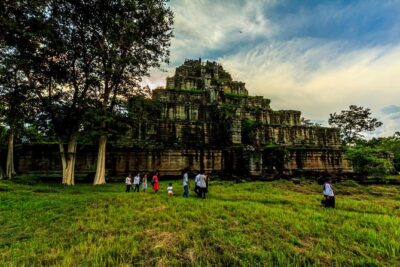
Pre Rup (temple-mountain with clear tiers)
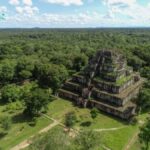
Pre Rup is another Rajendravarman II project from the 10th century and is set about 1 km south of Eastern Mebon. It’s built as a pyramid-shaped temple-mountain with multiple tiers. If you like architecture you can read at a glance, this is the day’s “structure lesson.” Your guide can help you see how the tiers shape the experience as you move.
Day 2 Temples: Angkor Wat, Angkor Thom, and Ta Prohm
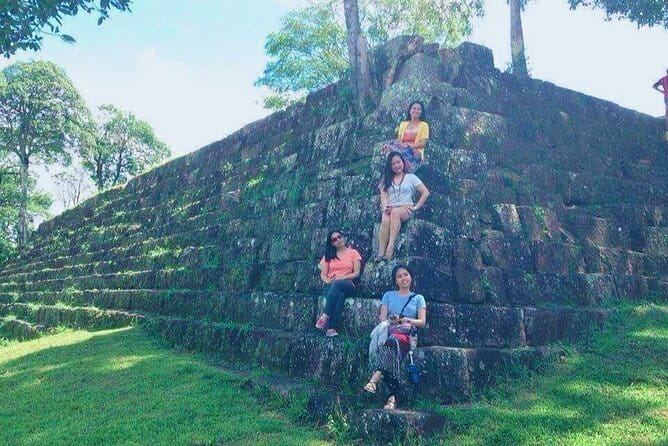
Day 2 is the headline day. It’s where you go from appreciating temple craft to feeling the scale of an entire civilization’s worldview.
Angkor Wat (the big one)
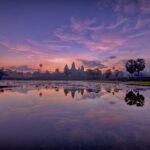
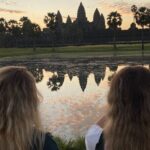
Angkor Wat was built by Suryavarman II in the 12th century to honor Lord Vishnu. It’s the largest and often considered the most breathtaking Angkor monument. With ~2 hours here, you’re not stuck doing the rush version only—you should be able to see the temple’s main features and still stop long enough to understand the layout.
Practical tip: if you’re focused on photos, this is where your guide’s shot planning helps most. The right angle can make a huge difference at Angkor Wat, where many people stand in nearly the same spot and wonder why their pictures look flat.
Phnom Bakheng (quick introduction to the temple-mountain idea)
Phnom Bakheng is built by Yasovarman I in the early 10th century and is tied to the idea of early temple-mountains in the Angkor area. The listing describes five tiers and seven levels. The stop is listed as extremely short (~1 minute), so treat it as a brief orientation moment rather than a deep climb unless your guide builds in extra time based on your group.
Angkor Thom (Jayavarman VII and the Bayon centerpiece)
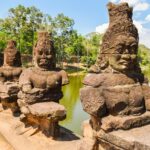
Angkor Thom is described as the last city of Angkor, built by Jayavarman VII. At its height, it may have supported a population of around one million people in the surrounding region. The city is centered on the Bayon, so this is a strong stop if you want to understand Angkor as a living urban plan—not just isolated ruins.
A useful way to approach this area is to focus on how the city layout leads you to the Bayon zone, and then let your guide connect the dots between the urban scale and the religious focus.
Ta Prohm (trees on stone, and why it feels different)
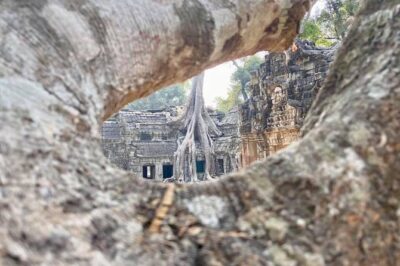
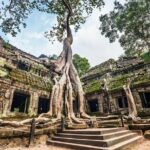
Ta Prohm is described as the most atmospheric ruin at Angkor, and the reason is plain: the structure looks swallowed by trees. The appeal here is partly visual, but also interpretive—your guide can explain how the ruin’s look helps you understand how the site has been experienced over different periods of time.
With ~1 hour, you should get a full loop without feeling like you’re sprinting. It’s also one of the easiest temples to turn into a photo mission, because the visuals are already dramatic—your job is mostly timing and angles.
Photographs at Angkor: How to Turn Stops Into Real Keepsakes
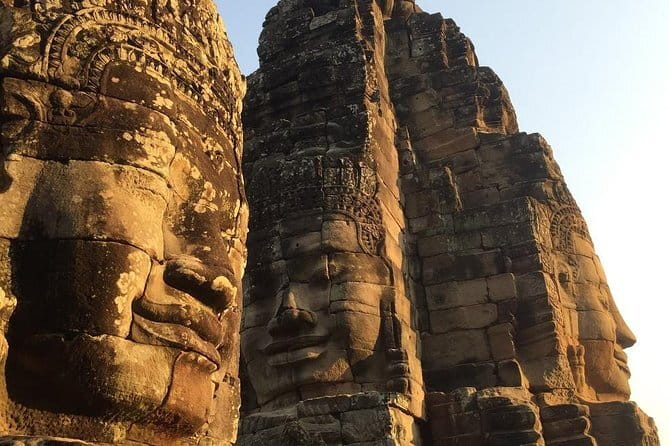
If you care about photos—phone or camera—this is one of the reasons people like this tour. The guides are noted as good with photography and they help with practical spots for pictures.
Here’s what to expect from the photo approach:
- Your guide points you toward photo angles instead of leaving you to guess.
- You get timing help for viewpoints at key temples like Angkor Wat and Ta Prohm.
- You can ask for help with phone settings and framing; past feedback specifically mentions iPhone photography research and tips.
A simple strategy for you: tell your guide what you’re shooting for. Are you making a “temple craft” album with close-ups of carvings, or a “whole complex” album that shows scale? When you say that up front, the guide can steer you toward stops and angles that match your goal.
Also, don’t underestimate the value of moving slower at the right moment. At Banteay Srei, for example, the pink stone and carving details reward patience. At Ta Prohm, it’s the composition of trees against stone that works best when you slow down.
What You’ll Learn: Hindu and Buddhist Layers You Can Spot
Angkor’s temples aren’t just pretty buildings. They’re religious statements, and this tour gives you a clear path through Hindu and Buddhist associations.
On Day 1, you’ll see Hindu-dedicated sites like Banteay Srei (Lord Shiva) and Banteay Samre (Lord Vishnu). Then you move through complexes tied to Jayavarman VII and Buddhist associations like Neak Pean. The result is that you get multiple “styles of meaning” in a single day, which makes it easier to recognize patterns when you look back later.
Day 2 reinforces the big, visible anchors. Angkor Wat’s Vishnu identity helps you understand why its design carries such weight. Then Angkor Thom’s setting around the Bayon connects you to the city-scale story, while Ta Prohm gives a different lesson: how a ruin’s condition and plant growth can shape what you feel when you’re standing there.
And yes, the guides also connect the temples to Cambodian cultural context. From past feedback, they’re comfortable discussing Hinduism and Buddhism in a way that helps you see beyond the stone.
Price and Tickets: Real Value and What’s Not Included
The price is listed at $102.57 per person for the two-day experience. For that amount, you’re getting a private tour setup, pickup offered, and an air-conditioned vehicle.
What you should budget for separately:
- Admission tickets are not included for the stops listed.
- GST is not included.
So the real value question isn’t just the $102.57—it’s what you’re paying for. Here, you’re paying for guide time, a private route, and transport that keeps you from constantly wrestling logistics in the middle of the Angkor site area.
Also note: group discounts are offered, and the tour is often booked about 28 days in advance on average. If you have a tight travel window, that early booking pattern is your cue to lock in sooner rather than later.
Who This Fits Best (and the Moderate Fitness Note)
This tour fits best if:
- You have about two days and want a full Angkor experience without turning every minute into a math problem.
- You like learning as you walk, not just taking in buildings.
- You want a guide who can adjust to what your group enjoys. Names like Borey Hang, Bunleat, Kimhoeun, and Mr. Kim show up repeatedly in feedback for a reason: the guides focus on keeping the day comfortable and meaningful.
The main consideration is physical pace. The tour calls for a moderate physical fitness level, so you’ll want comfortable walking shoes and a willingness to climb and move on uneven surfaces.
If you need a slow, strictly minimal walking day, you might consider a longer stay with fewer temples per day so you can rest more often.
Should You Book This Two-Day Angkor Tour?
Book it if you want a well-paced Angkor hit list with a guide who mixes history, cultural context, and practical photography help. Day 1 gives you the craft and variety; Day 2 gives you the icons and the “how is this even real” moments at Angkor Wat and Ta Prohm.
Skip (or adjust your expectations) if you prefer total independence. This tour runs best when you lean on the guide for direction, timing, and what to look for in the stonework. Also, make sure you plan your temple admission tickets and GST separately so there are no surprise gaps in your budget.
FAQ
FAQ
What temples are included in this two-day Angkor tour?
The tour covers Banteay Srei, Banteay Samre, Preah Khan, Neak Pean, Ta Som, Eastern Mebon, Pre Rup on Day 1, and Angkor Wat, Phnom Bakheng, Angkor Thom, and Ta Prohm on Day 2.
Is the Angkor admission ticket included?
No. Admission tickets are not included for the listed stops.
How much does the tour cost?
The price is $102.57 per person.
What’s included in the tour price?
Included features list an air-conditioned vehicle. Pickup is also offered, and group discounts are available.
Do I get picked up from my hotel area?
Pickup is offered, and the listed meeting point is Angkor Enterprise, Apsara Rd, Krong Siem Reap, Cambodia.
Is this tour private?
Yes. It’s private, and only your group will participate.
What fitness level do I need?
The tour recommends a moderate physical fitness level.
Does the tour run in any weather?
The experience requires good weather. If it’s canceled due to poor weather, you’ll be offered a different date or a full refund.
What is the cancellation policy?
You can cancel up to 24 hours in advance for a full refund. Canceling less than 24 hours before the start time does not receive a refund.
What guides might I work with?
The provided information includes guide names like Borey Hang, Bunleat, Kimhoeun, and Mr. Kim, based on previous experiences.