REVIEW · SIEM REAP
Angkor Wat Highlights and Sunrise Guided Tour from Siem Reap
Book on Viator →Operated by Journey Cambodia · Bookable on Viator
Waking up before dawn changes Angkor. This sunrise-focused Angkor Wat day is built around seeing the temple complex at its most magical, with guided context as the light shifts from dark to gold.
I like the pairing of professional English narration with real temple walking time, not just photo stops. I also like the comfort details for an early start: air-conditioned transport, bottled water, and cool towels.
One thing to consider: the tour starts around 4:30 a.m., so plan on sacrificing sleep and being ready for uneven, temple-stone feet.
Key highlights you’ll care about
- 4:30 a.m. pickup designed to beat the biggest crowds at Angkor Wat
- Licensed English-speaking guides who explain what you’re seeing while you walk
- Small-group (max 15) feel, with space to ask questions and get photos
- Temple pass not included ($37 per person) so budget for that day-of
- Signature stops across Angkor Wat, Ta Prohm, Bayon, and Angkor Thom
In This Review
- The 4:30 a.m. start that makes Angkor feel different
- Pickup comfort: A/C minivan, cool towels, and a guide who talks
- Entering Angkor Wat from the right side of time
- Srah Srang and breakfast: a needed pause before the harder temples
- Ta Prohm: the jungle temple that feels like time travel
- The Terrace of the Leper King and the Terrace of Elephants
- Bayon Temple: over 200 faces and a sudden change in mood
- Angkor Thom south gate: the big-picture finale before you head back
- Price and value: $23 plus a separate temple pass
- What might go wrong (and how to plan around it)
- Who this tour suits best
- What to wear and pack for an early temple morning
- Should you book this Angkor Wat highlights sunrise tour?
- FAQ
- What time does pickup happen for this sunrise tour?
- Is breakfast included?
- Are entrance fees included in the price?
- Which temples are included in the route?
- How long is the tour?
- What’s the dress code and minimum age?
The 4:30 a.m. start that makes Angkor feel different
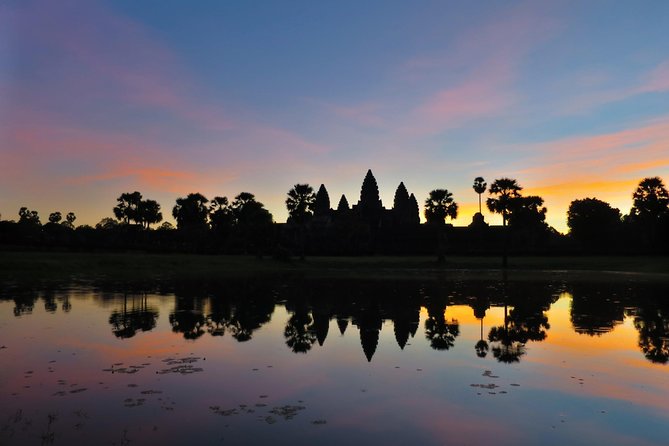
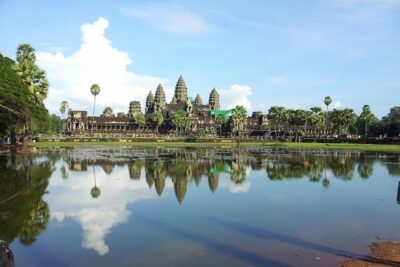
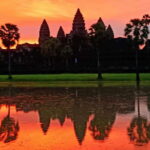
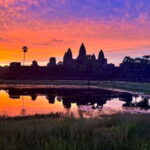
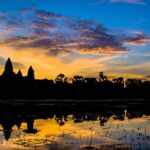
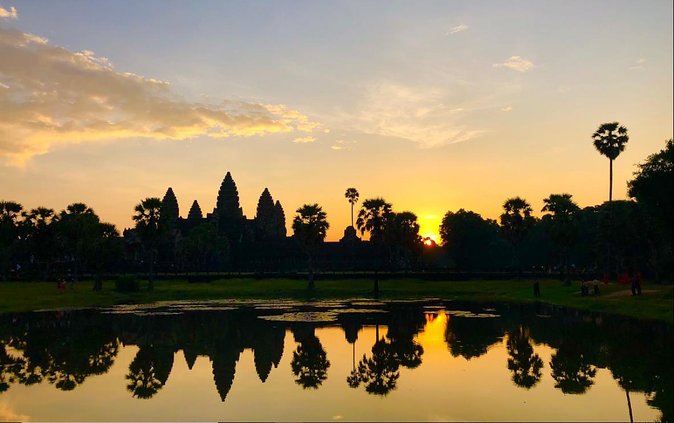
Angkor Wat is famous at sunrise for a reason. When the first light hits the towers and the world is still half-asleep, the place feels less like a tourist checklist and more like an actual living monument.
This tour begins with a pre-dawn pickup from your Siem Reap hotel, typically around 4:30–4:40 a.m. depending on the season. You head to Angkor Wat before most people arrive, which matters because even in low-season, the midday crowds can turn ruins into a slow-moving crowd-control exercise.
A clever detail: the plan includes entering from the eastern side early, so you start touring in lower light and build toward sunrise views outside. That rhythm is what keeps the experience from feeling rushed.
Pickup comfort: A/C minivan, cool towels, and a guide who talks
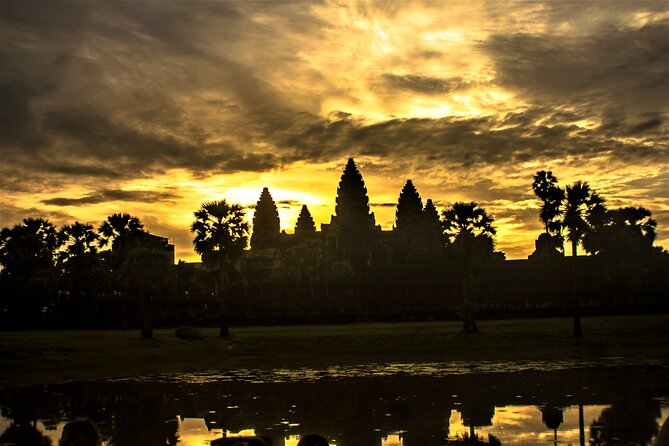
You’ll ride in an air-conditioned minivan, and the day includes complimentary bottled water plus cool towels. Those small comforts matter more than people think—Siem Reap warms up fast, and you’re out well before the sun has fully earned its paycheck.
The group size caps at 15 travelers, which is a big deal at Angkor. With a smaller group, your guide can adjust pacing, find better viewing spots, and keep you moving between highlights without constantly herding everyone into the same crowded choke points.
Guides in this tour style tend to get praise for two things: clear English and practical temple storytelling. Names that come up often in the guide mix include people like Sopheaprath, Sak, Pal, Bun, Chhay, Yot, and Saruon Pal (you won’t know your exact guide until you’re assigned, but the pattern is consistent). You should expect explanation of the carvings, what the sites were used for, and how to think about the Khmer Empire through what’s still standing.
Some guides also use visuals—iPad-style images or short clips—during the walk breaks, which helps you place details faster when you’re standing in front of a bas-relief panel.
You can also read our reviews of more guided tours in Siem Reap

Entering Angkor Wat from the right side of time
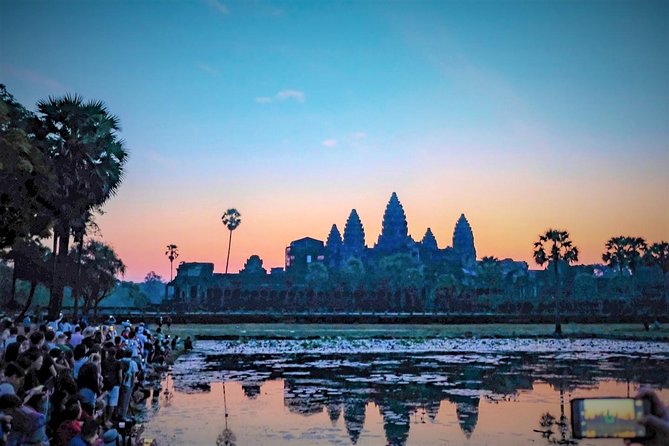
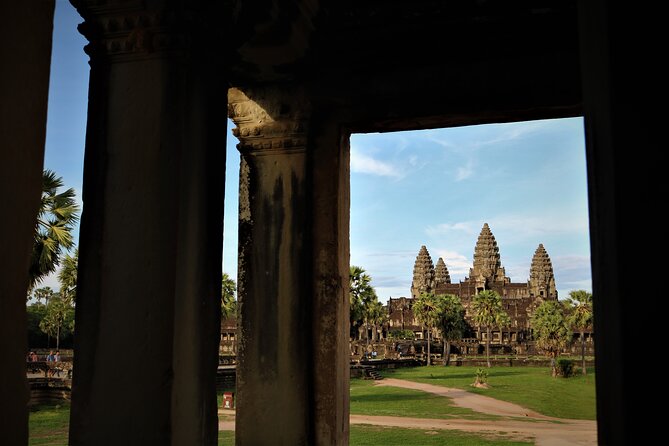
Angkor Wat is the star, and this tour treats it that way. You arrive before sunrise, then you tour while the morning light helps you see depth: shadows in galleries, texture on stone, and the way the complex frames the sky.
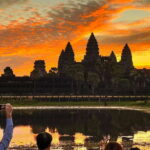
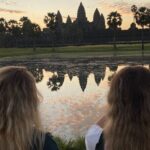
A key moment here is the sunrise outside Angkor Wat. You’re not just dumped into a crowd and told good luck. The early arrival and guided pacing increase your odds of getting a comfortable spot to watch the light change on the temple.
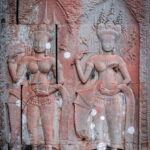
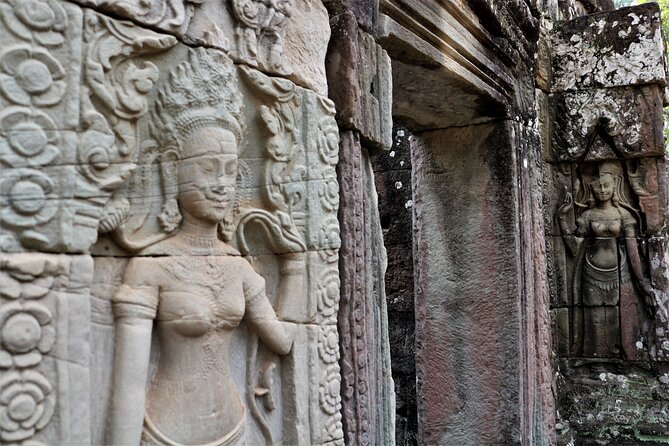
Once the sun is up, the guide’s focus shifts into the “how do I read this place?” mode. You’ll spend time looking closely at the bas-relief carvings—the detailed stone scenes that explain beliefs, daily life, and mythic stories. You’ll also learn about the ancient library pools, which helps you understand that Angkor Wat wasn’t only built for ceremonial spectacle.
One practical note: the tour includes walking inside galleries and through major areas, so it’s not a sit-and-stare experience. If you like learning but also like taking your own photos, this format usually feels fair—you get time to look, then time to snap, then time to move.
Srah Srang and breakfast: a needed pause before the harder temples
After Angkor Wat, you head to Srah Srang, a water feature that fits the broader Angkor layout: temples, reservoirs, and water management were all tied together. Even if you’re not a “water nerd,” it helps to stop here so your brain has a breather between the big architectural hits.
Then comes the breakfast moment. Breakfast is not included in the tour price. Instead, you’ll stop for breakfast at a local Khmer restaurant, and you can pay there. The tour also offers a smart alternative: if your hotel can pack it, ask for a breakfast pack so you can eat after sunrise.
Either way, this stop is useful because it resets your energy before Ta Prohm and Bayon, which are visually intense and physically demanding in their own ways.
Ta Prohm: the jungle temple that feels like time travel
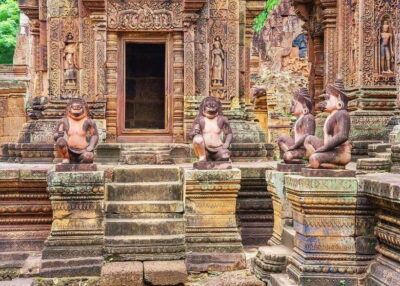
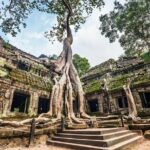
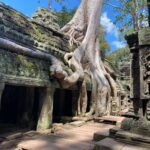
Ta Prohm is where Angkor stops feeling like pure symmetry and starts feeling like a story written in roots and stone. The signature look—overgrown trees and vines wrapping around towers—creates a different kind of atmosphere than Angkor Wat.
The tour highlights what Ta Prohm was like in past centuries, including the fact that it once housed 2,740 monks. It also points out how French explorer Henri Mouhot helped bring the site back into the Western spotlight after it was “rediscovered” in the 1850s. That kind of context makes the site’s ruined-yet-meaningful look land better.
Time here is usually about 90 minutes, which is enough to walk the main sections without feeling like you got dropped into a maze and abandoned. The texture of Ta Prohm rewards slow looking. When you rush, you miss how the trees frame doorways and how the stonework holds up under decades of weather.
The Terrace of the Leper King and the Terrace of Elephants
You’ll pass by the famous Terrace of the Leper King and the Terrace of Elephants on the way through this stretch of Angkor Thom highlights.
These terraces can feel like “extra” stops if you don’t get any context. That’s where your guide’s narration matters. When you understand that these are carved viewing platforms tied to temple movement and ceremonial space, the details become more than just names printed on a sign.
Expect a walk-through and photo opportunities, not a long lingering stop—so don’t treat this segment like a full second dinner.
You can also read our reviews of more tours and experiences in Siem Reap

Bayon Temple: over 200 faces and a sudden change in mood
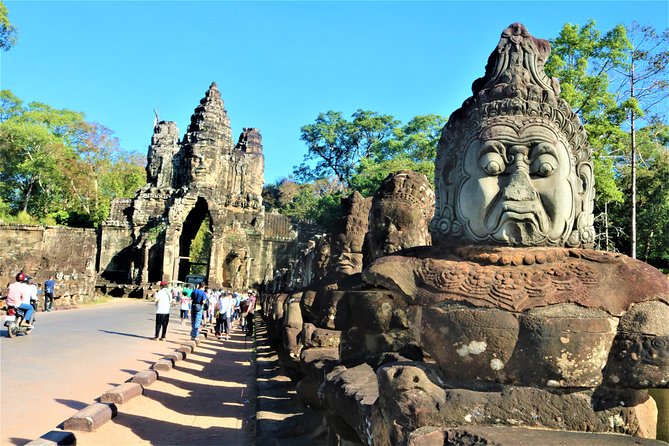
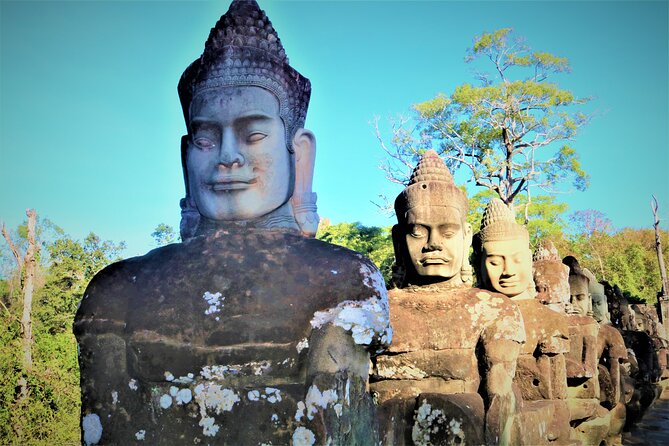
Bayon is the turning point in many people’s Angkor day. Angkor Wat is big and calm. Bayon is busy in stone, with towers crowned by over 200 enormous faces. Even from a distance, the scale feels theatrical.
Inside Bayon, the guide helps you see the structure as more than a “wow, faces” moment. You’re in Angkor Thom, the once-capital city of the Khmer Empire, and Bayon is a centerpiece of that power.
The pacing here matters because Bayon is popular and the paths get narrow. A smaller group helps, and a good guide helps you time the walk so you spend more time looking and less time stuck in a moving crowd.
Angkor Thom south gate: the big-picture finale before you head back
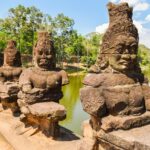
You’ll finish the main loop at the Angkor Thom South Gate, which acts like the day’s grand scale wrap-up. This is where you feel how Angkor Thom worked as a whole—walls, city planning, and temple space all stitched together.
The stop is shorter (about 30 minutes), so use it for one last slow look and a few final photos. Also, it’s a good place to ask any last questions—once you’re back in the vehicle, the best photo spot is whatever you can snap through the window without looking like you’re fleeing.
Price and value: $23 plus a separate temple pass
The tour price is $23 per person, and it covers a lot of the “hard parts” of the day: pickup and drop-off, an air-conditioned vehicle, an English-speaking guide, and the small comfort extras like water and cool towels.
The big line item that isn’t included is the temple pass, which costs $37 per person. That means a realistic day-of budget is closer to $60 total, depending on ticket requirements and any extra items you buy.
Two helpful things to know for budgeting:
- You can pay the temple entrance directly at the sites, and Visa cards are accepted.
- You can purchase right before sunrise, so you’re not stuck waiting days in advance.
Is it good value? For the early start and the guide-led timing across multiple major temples, it usually is—especially if you’d otherwise have to pay for transport and then figure out where to go next in the first hours of the day.
What might go wrong (and how to plan around it)
This tour format is built around one key thing: timing. If the group dynamics change, the guide may adjust pacing to keep the experience smooth for everyone. In small groups, that can mean small schedule shifts—nothing dramatic, but it’s worth knowing you’re not in a private, totally custom day.
The other “watch-out” is physical and emotional, not administrative: early mornings at Angkor mean waking up when you’d normally be asleep. If you hate mornings, this is the part that will get to you first.
Finally, temple touring is uneven. You’ll be walking on stone and dirt paths, so you’ll want footwear that’s grippy and comfortable for a long early day.
Who this tour suits best
This is a strong choice if you:
- Want Angkor highlights with sunrise priority
- Appreciate a guide that explains the carvings and layout as you go
- Like small-group days where you can ask questions and take photos without constant stopping
It might not be ideal if you:
- Want a super slow, unhurried exploration of one temple only
- Prefer very off-the-beaten-route detours that don’t fit a timed circuit
- Struggle with early wake-ups and lots of walking before mid-day
What to wear and pack for an early temple morning
The tour asks for respectful dress with shoulders and knees covered. For women especially, a scarf is practical for covering shoulders. If you show up in sleeveless tops and short shorts, plan on being uncomfortable—and possibly turned away from parts of the experience.
Other useful items:
- Comfortable walking shoes or trainers for uneven ground
- A light layer for early air, then something breathable for later warmth
- If you can, arrange a breakfast pack with your hotel so you’re not making decisions while half-awake
Bring a phone or camera strap you trust. You’ll be moving between light levels, so you want stable shots without fumbling.
Should you book this Angkor Wat highlights sunrise tour?
If you’re choosing just one “best of Angkor” day in Siem Reap, this is the kind of tour that makes sense. The sunrise plan, the guided explanation, and the small-group pacing give you a classic Angkor day without losing the plot at each stop.
Book it if sunrise is your priority and you want a guided route through Angkor Wat, Ta Prohm, Bayon, and Angkor Thom without spending hours figuring logistics. Skip it (or consider a different style) if you’re not a morning person or if you’d rather spend a longer chunk of time lingering in one place instead of moving through several highlights.
If you do book, treat the temple pass as part of your budget and dress for temple rules. Then focus on the fun part: watching Angkor Wat shift from darkness to gold, and letting your guide help you “read” what you’re seeing.
FAQ
What time does pickup happen for this sunrise tour?
Pickup starts around 4:30 a.m., with the early departure from your hotel typically between 4:30 and 4:40 a.m. depending on the time of year.
Is breakfast included?
No. Breakfast isn’t included, but there’s a breakfast stop at a local Khmer restaurant. The tour also recommends asking your hotel for a breakfast pack to eat after sunrise.
Are entrance fees included in the price?
No. The temple pass is not included and costs $37 per person. You can pay directly at the site, and Visa cards are accepted.
Which temples are included in the route?
You visit Angkor Wat (sunrise), Srah Srang, Ta Prohm, Bayon Temple, and the Angkor Thom South Gate. You also pass by the Terrace of the Leper King and the Terrace of Elephants.
How long is the tour?
The duration is approximately 8 hours.
What’s the dress code and minimum age?
You need respectful dress with shoulders and knees covered. A scarf can be used to cover shoulders. The minimum age is 8 years old.