REVIEW · SIEM REAP
Siem Reap Tour Guide: Angkor Wat Sunrise Tour & Beng Mealea
Book on GetYourGuide →Operated by Siem Reap Tour Guide · Bookable on GetYourGuide
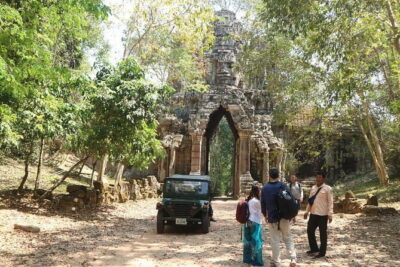
Sunrise at Angkor feels like a curtain rising. This private day strings together Angkor Wat sunrise plus Bayon, Ta Prohm, Banteay Srei, and Beng Mealea, with an English-speaking guide who puts the places into clear context while you move comfortably by AC SUV or minivan. I especially like the hotel pickup and drop-off convenience, and I like how the guide keeps the pacing realistic for a long temple day. One thing to plan for: the required temple pass is extra (it’s $37 per person) and you’ll do plenty of walking.
You’ll get a full morning-to-evening circuit that’s built around the big sights and also leaves room for atmosphere, photos, and short breaks. In particular, the Angkor Wat start with sunrise reflected in the moat is a special way to beat the worst heat and crowd energy, and the later stops (Ta Prohm, Bayon, Banteay Srei, Beng Mealea) give you variety beyond the headline temples. The main drawback is simple: it’s a long day, and it’s not a fit for people with back problems, altitude sickness, or those over 95.
In This Review
- Key highlights you’ll feel fast
- A 10-hour circuit that actually makes sense
- Getting started: hotel pickup, AC comfort, and timed sunrise
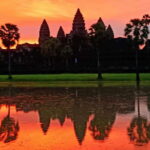
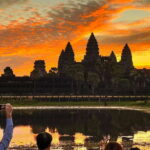
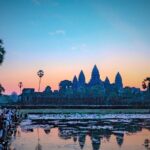
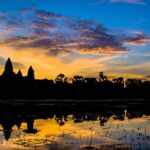
- Angkor Wat sunrise: the moat reflection effect
- Bayon Temple in the afternoon light (and how to pace it)
- Ta Prohm: the tree roots look (and the Lara Croft vibe)
- Banteay Srei: smaller scale, better carvings
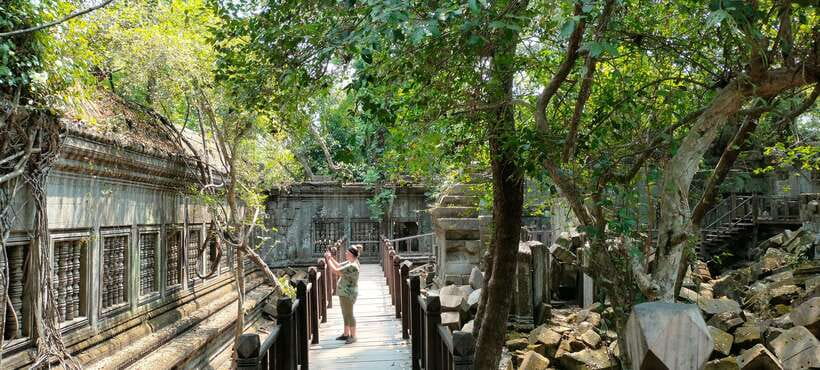
- Beng Mealea: exploration energy when you want something less expected
- The guide matters: Han, Sam, and driver Tha make the day easier
- Price and value: $160 per group plus the $37 pass
- What you’ll actually do at each stop (and where time gets spent)
- What to bring (and what not to bring) for Khmer temples
- Who should book this and who should skip it
- Should you book this Angkor Wat sunrise and Beng Mealea day?
- FAQ
- FAQ
- How long is the Angkor Wat sunrise tour and Beng Mealea experience?
- What is the price for this tour?
- Is the temple admission included in the price?
- Does the tour include hotel pickup and drop-off?
- Which temples are included in the day?
- Is breakfast or lunch included?
- Does the guide speak English?
- Is skip-the-line access included?
- What should I bring to be comfortable?
- What items are not allowed during the tour?
Key highlights you’ll feel fast
- Angkor Wat sunrise with moat reflections so the whole complex shifts tone from dark to golden.
- Private, English-speaking guide who adjusts explanations to what you want to know.
- AC transport + cold towels and water, so the day stays workable.
- Multiple major temples in one loop: Angkor Wat, Bayon, Ta Prohm, Banteay Srei, Beng Mealea.
- Safety briefings at key stops to keep you confident as crowds and pathways mix.
- Flex pickup and drop from Siem Reap hotels, not some vague meeting point.
A 10-hour circuit that actually makes sense
Angkor can feel like a blur of tickets, tuk-tuks, and timing. This tour is designed to reduce that stress. You get a private guide and a safe driver in an AC SUV or minivan, plus pickup from your hotel in Siem Reap town. That matters because the biggest “cost” at Angkor isn’t money. It’s energy, and wasting it on confusing logistics is how a good day turns into a tiring one.
The total duration is 10 hours, so you’re committing to a full day. The schedule still has the right kind of rhythm: sunrise first, then big temples, then more time for carvings and exploration later. You also get repeated photo stops and short walking windows, not just long marches with no pause.
And yes, it’s a temple day, meaning sun, dust, stairs, and uneven ground. The tour includes water and cold towels, but your feet are still doing the work.
You can also read our reviews of more guided tours in Siem Reap
Getting started: hotel pickup, AC comfort, and timed sunrise
Your day begins with pickup from Siem Reap hotels. The experience is set up with multiple pickup options across town, and the driver and guide come with a name sign, so you’re not searching around in the dark. That can be surprisingly calming at Angkor, where early starts and narrow meeting areas can turn into chaos fast.
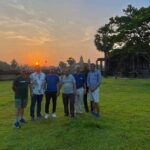
The tour is built around the sunrise window at Angkor Wat, which is typically the moment when the whole complex feels most magical and least frantic. The guide also gives a safety briefing, which is helpful because the temple complex is full of foot traffic, edges, and places where you need to watch your footing.
When you’re heading out early, the AC ride and the provided cold water and towels are practical wins. You won’t feel like you’re arriving already drained. Instead, you’re ready to stand still for a while, take photos, and actually watch the light change.
Angkor Wat sunrise: the moat reflection effect
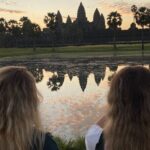
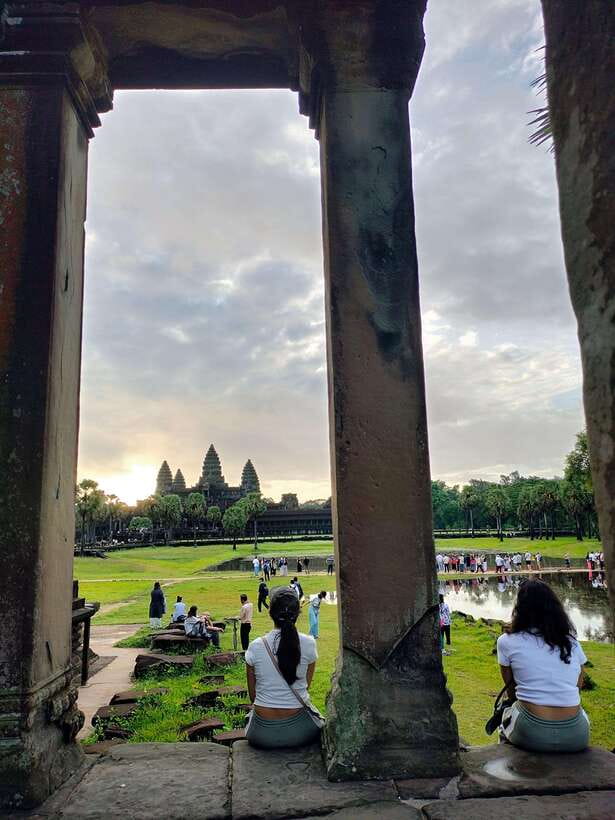
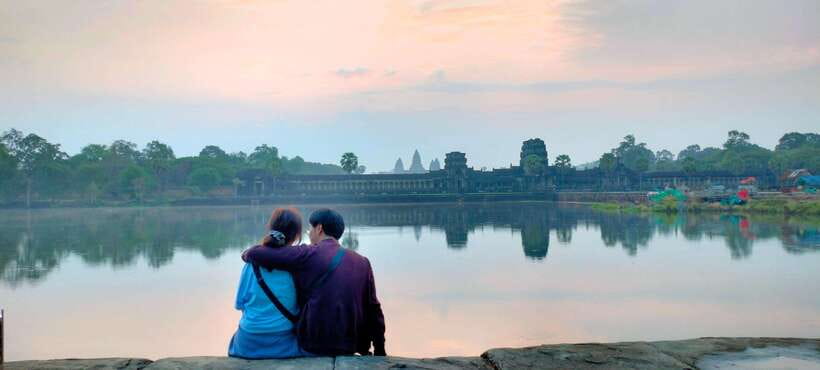
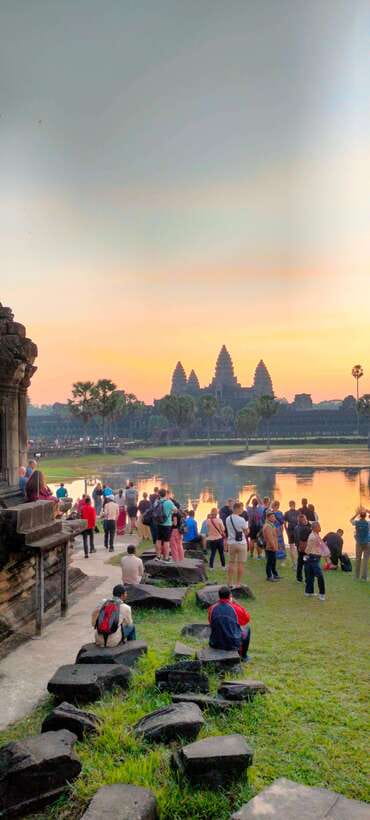
Angkor Wat is the headline, but this schedule treats it like more than a checkbox. The tour includes a sunrise-focused visit and time for walking and scenic viewpoints around the complex. The standout detail here is the sunrise reflected in the moat—a visual that’s hard to recreate if you arrive later.
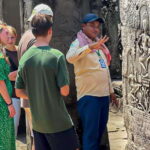
Your guide helps you understand what you’re seeing in a way that fits your interests. This isn’t a one-note lecture. If you want the big story—religion, symbols, why the layout matters—you’ll get it. If you want more practical interpretation—what to notice as you walk—you’ll get that too.
A sunrise visit also helps you photograph differently. You’re not only chasing spires; you’re capturing atmosphere: the way shadows stretch, the way people move around you, and the way the complex looks when it’s not fully overheated by midday sun.
What to watch for: sunrise means you’ll want layers. Cambodia mornings can be cooler than the afternoon, and you’ll likely be standing and walking in a steady rhythm for a bit.
Bayon Temple in the afternoon light (and how to pace it)
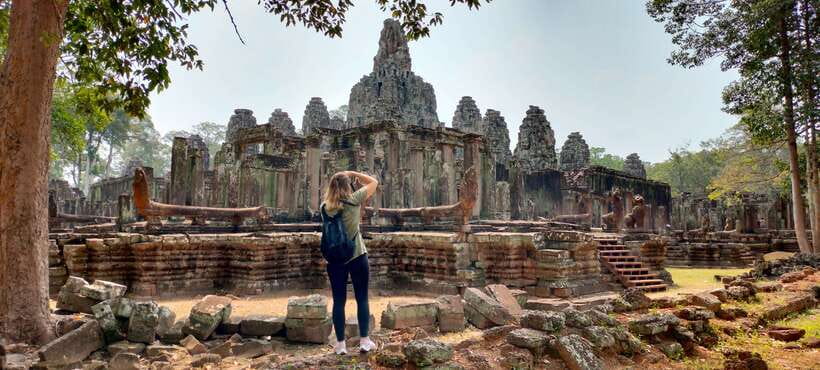
Next comes Bayon Temple, part of Angkor Thom. The schedule includes a break time and a guided visit with a little walking and sightseeing. Bayon is famous for faces—over 200 of them—so the guide’s job is to keep it from becoming just a photo circuit.
I like that this stop is shorter than Angkor Wat. You get enough time to absorb the carvings and faces, but you’re not trapped there until your legs feel like noodles. The included break time helps you reset before Ta Prohm, which can be more intense visually and physically.
If you’re the type who wants to understand symbolism, this is a good moment. The guide can explain what the faces represent and how Bayon fits into the broader Angkor layout. If you’re more focused on photos, you’ll still get help choosing viewpoints and timing for less crowded angles.
Ta Prohm: the tree roots look (and the Lara Croft vibe)
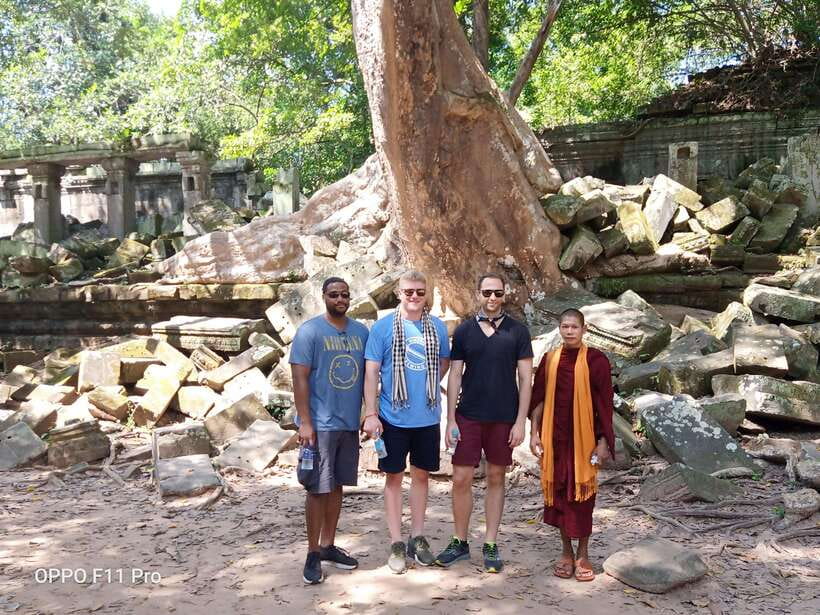
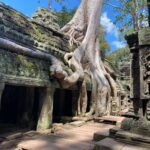
Ta Prohm is where the tour leans into atmosphere. You get a photo stop and a guided visit, plus time for walking and sightseeing. The big visual is the tree roots climbing through the temple structures—the look that’s been popularized in movies, and that people often associate with the Lara Croft vibe.
Your guide’s explanations are a big part of why this stop lands. Instead of only pointing at roots, you learn how the temple environment and restoration story connect to what you’re seeing now. Even if you don’t care about that level, your guide still helps you focus on the details that make Ta Prohm different from the other complexes.
There’s also a safety briefing here. That’s smart, because Ta Prohm involves uneven surfaces, tighter pathways in places, and more people trying to photograph the same areas. You’ll be glad someone is thinking about your footing, not just the shot.
You can also read our reviews of more tours and experiences in Siem Reap

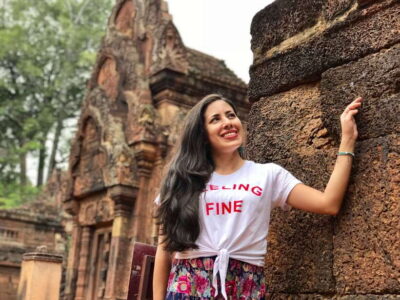
Banteay Srei: smaller scale, better carvings
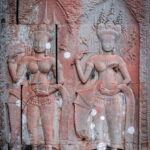
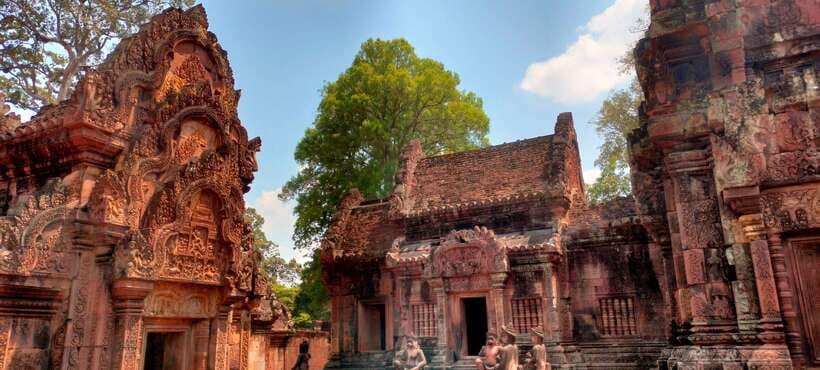
Then you shift to Banteay Srei, with a guided visit and free time. This stop includes break time and photo opportunities, plus time for shopping and sightseeing. Banteay Srei is the temple that often surprises people. It’s not as huge as Angkor Wat, and the mood is different. Instead of overwhelming scale, you get intricate carvings that reward slower looking.
Two things make this portion of the day feel good. First, the tour doesn’t treat it like a rushed transfer. Second, it gives you time to roam a bit and see carvings from more than one angle—something you usually miss when you’re doing temples solo.
The “shopping” time is brief and light, not a forced marketplace trap. Use it if you want a quick souvenir. If you don’t, treat it as extra minutes to breathe in the shade and hydrate before the final leg.
Beng Mealea: exploration energy when you want something less expected
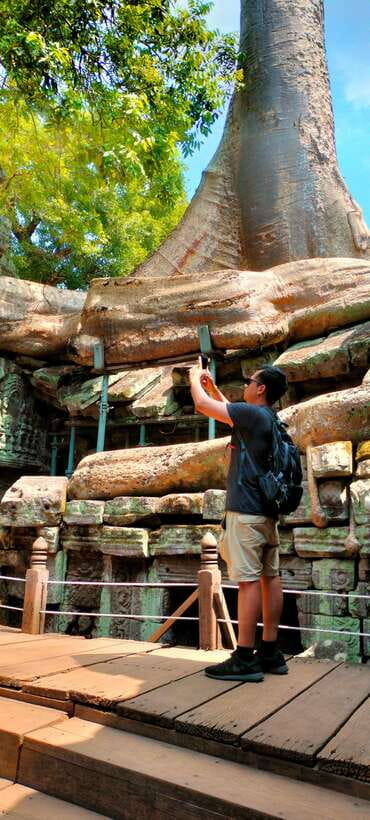
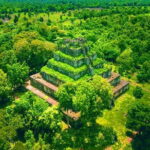
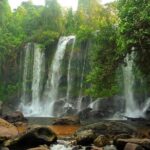
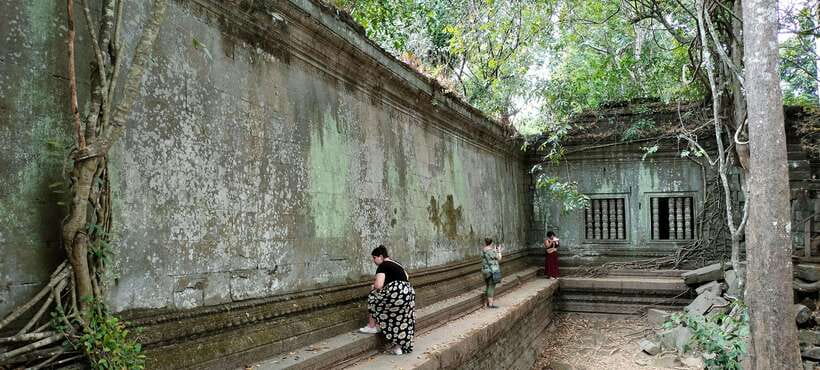
Beng Mealea is the final major temple stop. The schedule includes photo stops, a guided visit, and time for exploring. The tour frames it as a quieter, less polished stop—often described as untouched—and that’s exactly why it’s worth putting at the end of the day.
By the time you arrive, you’ve already seen the big masterpieces in their most famous forms. Beng Mealea gives you contrast: the feel changes, the visuals feel less standardized, and you can slow down to wander and take in how nature and stone interact in a more relaxed setting.
There’s break time here too, plus another safety briefing. You’ll still be walking, and it’s still a temple environment, so good shoes matter. But compared with the flagship complexes, this is where you may find you stop taking pictures just to look and notice textures and shapes.
The day ends with your drop-off back to your hotel or downtown areas, depending on your chosen locations.
The guide matters: Han, Sam, and driver Tha make the day easier
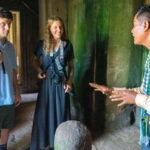
The strongest praise in the experience is consistent: the guides are friendly, professional, and focused on real understanding, not just reciting facts. In particular, Han and Sam show up as named guides in the feedback you have here, and Tha is highlighted as a driver who stays punctual and keeps things comfortable.
What I think you get when a guide is this good: the history and religion explanations are at the right level for you. That means you’re not stuck with a 30-minute monologue you can’t use, and you’re not left guessing what something means. You also get help with practical navigation—where to stand, how to move, when to slow down, and how to pace your walking so you don’t fry yourself before the best light.
Tha’s role is equally important. In a day like this, you don’t want driving that feels chaotic or unpredictable. Punctuality and comfort help you stay mentally present. You’re far more likely to enjoy the temples when you’re not worrying about the van timing every five minutes.
Price and value: $160 per group plus the $37 pass
The price is $160 per group (up to 12 people), and it’s a private group experience. That’s a key detail: you’re not paying for a cramped, mixed crowd setup. Instead, you’re paying for a dedicated guide and vehicle in AC comfort, with water and towels included.
Now the part that trips people up: temple admission is not included in the base price. The temple day pass is $37 per person and covers all temples on the agenda. Think of that as your “ticket layer” that you add on top of the tour service.
So is it good value? For me, yes—because the tour bundles the expensive friction points: guide time across multiple major sites, safe transport, and the sunrise timing that’s hard to nail on your own without waking up way too early and making a mess of your schedule. When you factor in pickup/drop from Siem Reap hotels and the included water/towels, the day becomes a lot easier to execute.
The biggest way to get value is to go in ready. Wear the right shoes. Bring sun protection. Accept that it’s a full-day commitment. Do that, and you’ll feel the money working for you rather than against you.
What you’ll actually do at each stop (and where time gets spent)
Here’s the practical shape of the day, in human terms:
- Angkor Wat (sunrise focus): photo stop, guided visit, walking, and scenic viewpoints. You also get a safety briefing. Expect the longest early-morning portion here.
- Bayon: break time and guided sightseeing with some walking. It’s shorter than Angkor Wat, which helps your stamina.
- Ta Prohm: photo stop, guided visit, walking and sightseeing. You’ll get another safety briefing, and the schedule gives you time to enjoy the famous root-over-structure look.
- Banteay Srei: break time, guided visit, and free time. Includes time for shopping and sightseeing, which can be useful for small purchases or just extra breathing room.
- Beng Mealea: photo stop, guided visit, and exploration time. Another safety briefing before you wander around.
This pacing matters. If a tour tries to cram everything with no breaks, you end up seeing the temples through fatigue. This one builds in pauses, and it keeps your walking windows reasonable.
What to bring (and what not to bring) for Khmer temples
You’ll want comfortable shoes for uneven ground and lots of walking. Bring sunglasses and a hat for sun protection, and use insect repellent—mosquitoes are part of the deal in outdoor areas.
Clothing should cover knees and shoulders, and you might want a scarf handy. Light layers are smart, because temple mornings and afternoons can feel different. Bring a charged smartphone for photos and keep a camera ready if you prefer bigger shots.
The tour suggests bringing cash and a credit card, which makes sense if you want to handle any small purchases during the day (there’s shopping time built in at Banteay Srei).
What’s not allowed: drones, pets, alcohol and drugs, and explosive substances. Nudity is not allowed either. So keep it simple and follow the common temple etiquette.
If you use a child safety seat, bring what you need—this option is noted in the tour’s guidance.
Who should book this and who should skip it
This tour is a strong fit if you want:
- A private guide who can explain history and religion at the level you want
- A sunrise start at Angkor Wat with good timing
- One-day coverage of major Angkor highlights plus a less expected ending at Beng Mealea
- Comfortable logistics, especially pickup and drop from your hotel and AC driving
It’s not the best match if you:
- Have back problems or issues with a lot of walking
- Have problems related to altitude sickness (the tour notes this as not suitable)
- Are over 95
If you’re visiting as a couple, friends, or a small group that wants privacy without building your own schedule from scratch, this is the kind of day that saves you headaches.
Should you book this Angkor Wat sunrise and Beng Mealea day?
If you’re torn, here’s the decision rule I’d use: book it if you value timing, guidance, and comfort more than DIY freedom.
The Angkor Wat sunrise with moat reflections is the big reason to go. Then the rest of the circuit gives you variety: Bayon for the face-filled drama, Ta Prohm for roots over stone, Banteay Srei for finer carvings, and Beng Mealea for a calmer, less famous feeling at the end of the day.
If you’re worried about the extra $37 temple pass per person, budget for it up front and you’ll avoid the last-minute surprise. And if you’re sensitive to long walking days, keep in mind the tour includes safety briefings, break time, and water—but it still isn’t a sit-behind-the-glass kind of visit.
For a day that balances major sights with a quieter finale, this is a practical, well-paced way to experience Angkor without turning your trip into a logistics project.
FAQ
FAQ
How long is the Angkor Wat sunrise tour and Beng Mealea experience?
It runs for 10 hours total.
What is the price for this tour?
It’s $160 per group, up to 12 people.
Is the temple admission included in the price?
No. The temple day pass is $37 per person and covers all temples in the agenda.
Does the tour include hotel pickup and drop-off?
Yes. The driver and tour guide pick you up from any hotel lobby in Siem Reap town with a sign, and they drop you at your hotel or downtown.
Which temples are included in the day?
The itinerary includes Angkor Wat, Bayon, Ta Prohm, Banteay Srei, and Beng Mealea.
Is breakfast or lunch included?
No. Meals (breakfast/lunch/dinner) are not included.
Does the guide speak English?
Yes. The live tour guide is English.
Is skip-the-line access included?
Yes, skip the ticket line is included.
What should I bring to be comfortable?
Bring comfortable shoes, sunglasses, a hat, sunscreen, insect repellent, and clothing that covers knees and shoulders. A charged smartphone and cash can also help.
What items are not allowed during the tour?
Drones, pets, alcohol and drugs, and explosive substances are not allowed.