REVIEW · SIEM REAP
Angkor Wat Sunrise tour with Small – Group and Guide tours
Book on Viator →Operated by Angkor Wat Shared Tours · Bookable on Viator
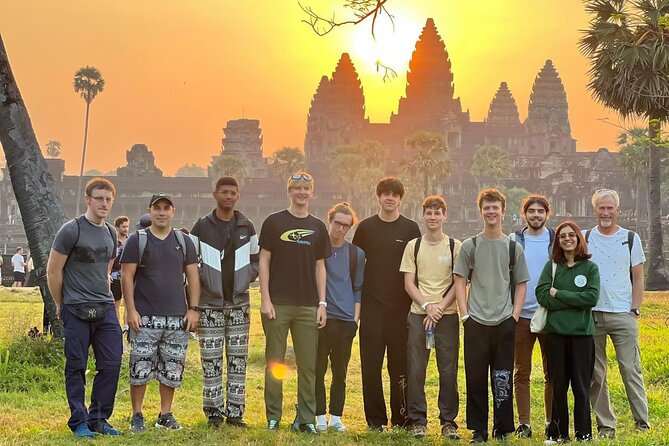
Waking up at 4:30am is painful, but Angkor Wat sunrise is magic you can actually time right. This small-group tour is built for an easier, more human pace, with hotel pickup, an English-speaking guide, bottled water, and a cool towel. My favorite part is the guide-led walk through the big symbols and carvings while the site is still calm. One thing to consider: you’ll need a temple pass (not included) and the schedule can feel tight if you’re hoping for hours of totally free roaming.
You get four major stops across the Angkor complex—starting with Angkor Wat, then Ta Prohm, Ta Keo, and Angkor Thom (Bayon in the center). I also like the way the tour is set up for photos: guides have been seen helping people find good spots and even taking pictures. The main drawback I’d flag is that some guides may be harder to follow if English pacing isn’t your thing, so it helps to ask questions and speak up if you need clarity.
In This Review
- Key highlights at a glance
- Why this Angkor Wat sunrise tour feels worth the early wake-up
- Meeting point, timing, and what to expect at 4:30am
- Angkor Wat at sunrise: what you’ll really be doing for that first hour
- Ta Prohm: Tomb Raider vibes, but bring your patience for jungle light
- Ta Keo: the unfinished temple that looks different for a reason
- Angkor Thom and Bayon: the capital city route and the South Gate moment
- What the guide actually adds (and why some tours depend on English clarity)
- Price and value: $14 is the deal, but the temple pass is the real cost
- Comfort, clothing, and temple rules you’ll actually notice
- Photo strategy: how to get the shots without losing the experience
- Who this tour fits best (and who might want something different)
- Should you book this Angkor Wat sunrise tour?
- FAQ
- What time does the Angkor Wat sunrise tour start?
- How long is the tour?
- Which temples are included in the route?
- Is the temple pass included in the price?
- What’s included besides the guide?
- What is not included?
- Do I need to buy a ticket for each temple?
- What’s the dress code for the temples?
- How big is the group?
- Is hotel pickup available?
Key highlights at a glance
- Sunrise timing at Angkor Wat helps you beat the worst crowds and catch shifting light
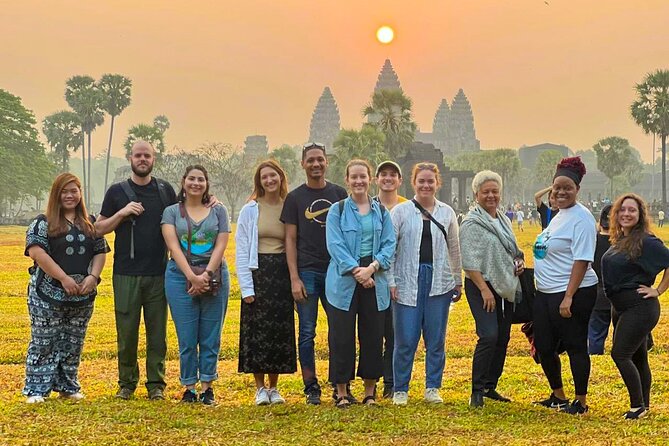
- Max 12 people keeps the group easier to manage through stairs and tight spaces
- Four temples in one morning means you get variety without a full-day grind
- AC minivan + water + cool towel makes the early start and heat more bearable
- Guide help with photos and carvings turns the ruins from scenery into context
Why this Angkor Wat sunrise tour feels worth the early wake-up
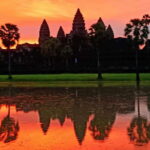
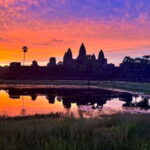
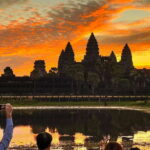
Angkor Wat at sunrise isn’t just pretty. It’s a moment when the whole site feels slower, quieter, and more intentional. When you arrive early, you get the best chance for that first sweep of light across the stone without getting swallowed by the biggest crowd tide. This tour is designed around that exact idea: you’re at the temples before most people have even rubbed the sleep out of their eyes.
What I like most is the structure. You’re not just dropped at a viewpoint and left to figure everything out. The guide is there to connect what you’re seeing—temple layout, symbolism, and the reasons these places matter—to the real person-scale experience of walking through it. With four stops (not just one), you also avoid the common disappointment of seeing only the headline attraction.
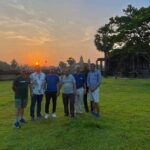
Small group matters here, too. Angkor’s paths, doorways, and stairways can be awkward. With a group capped at 12, it’s much easier to keep track of where you are and what you’re waiting for, compared with giant buses.
One more practical plus: the tour includes a/c transport and comfort touches like bottled water and a cool towel. That may sound minor until you remember you’re doing this before sunrise and then moving around in the Cambodian heat.
You can also read our reviews of more guided tours in Siem Reap
Meeting point, timing, and what to expect at 4:30am
The tour starts at 4:30am, and that early departure is a big part of the value. You’ll either be picked up from select hotels or meet at the Siem Reap Pub Hostel area behind the Angkor Night Market (the listed meeting point details are near there). The day ends back at the meeting point, and in real-world reports it often returns to the hotel area by early afternoon.
Go in knowing the first phase is dark and busy in a different way. You’re stepping into a coordinated flow of people heading to the sunrise viewpoint. One tip that comes up repeatedly in firsthand experiences: guides often use phone flashlights to help you see where you’re going in the pre-dawn scramble, then get you to your location with clear direction.
You should also plan for weather. Sunrise tours don’t control the sky. If it’s cloudy, you might miss the dramatic sun flare, but you can still get atmospheric light and photos with better contrast than you’d expect. And yes—there can be occasional showers on the way or later in the morning, so keep a light layer or small rain plan.
Angkor Wat at sunrise: what you’ll really be doing for that first hour
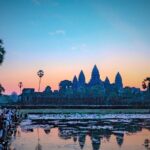
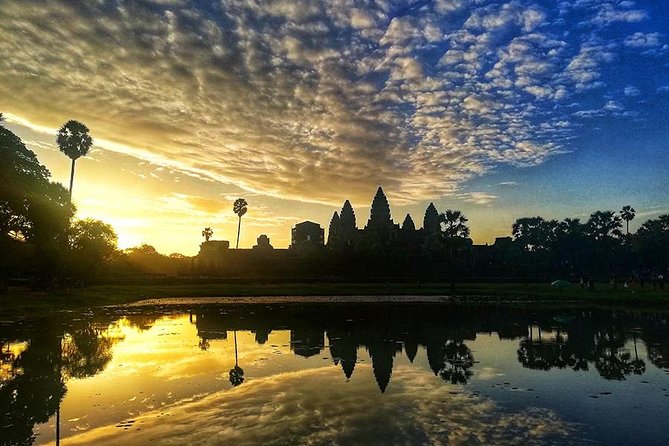
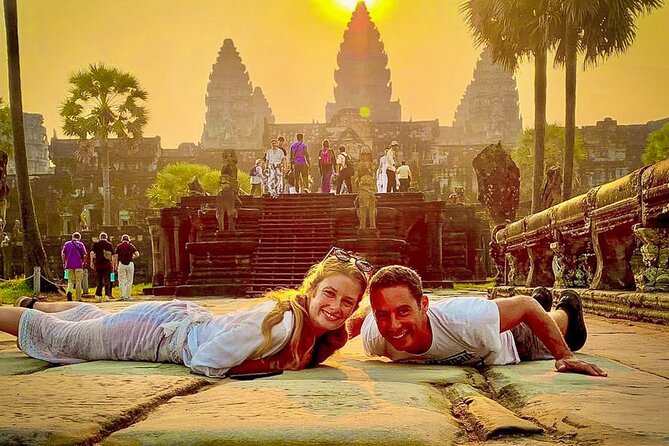
Angkor Wat is the largest religious monument in the world, and it’s known worldwide for sunrise. In this tour, you get about 1 hour at the temple complex at the start of the day. That timing is short by museum standards, but it’s exactly why the tour is priced like it is: you’re paying for access, guidance, and an efficient route during the most time-sensitive part of the experience.
Here’s what makes that first stop special:
- You’re there when light changes fast, so shadow lines and reliefs start to pop.
- You can move through the complex before the heaviest crowd pressure builds.
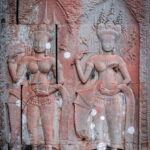
- Your guide can point out the carvings and layout details while everything is still calm.
Also, the sunrise area can feel touristy—huge numbers show up—but Angkor’s scale helps. Even when it looks busy at the main viewpoint, there’s still room to find angles and get decent photos because the complex is massive.
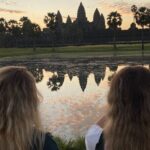
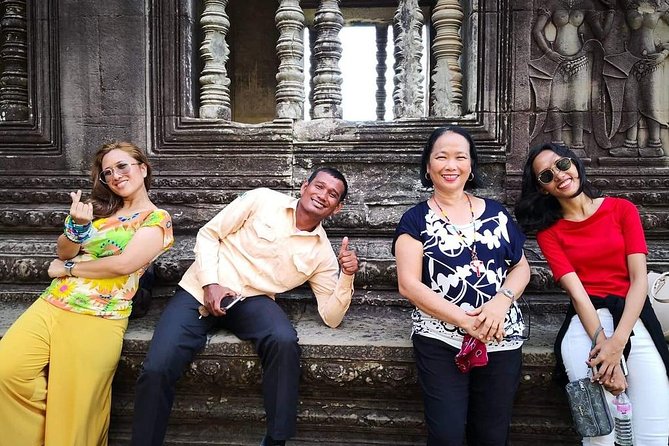
If you care about photos, don’t just aim at the obvious reflection shots. Ask your guide to show you alternate angles of towers, gates, and corridors. Several guides on similar tours have been noted for helping people line up shots and even taking pictures for couples and families.
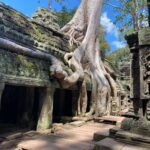
Ta Prohm: Tomb Raider vibes, but bring your patience for jungle light
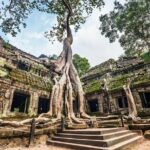
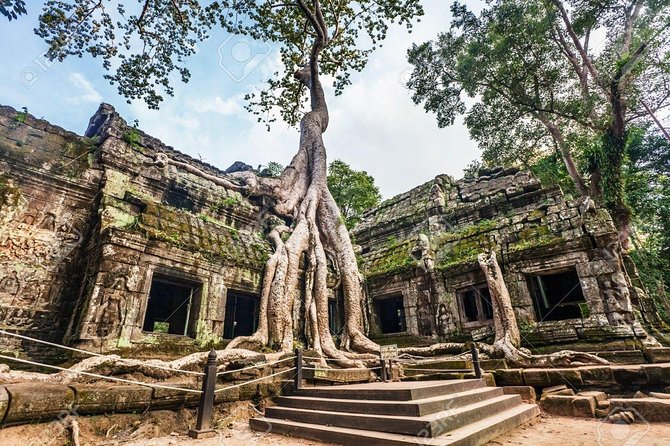
Next is Ta Prohm, the famous ruin partly reclaimed by jungle and popularly called the Tomb Raider temple after the 2001 film. You get about 1 hour here.
What makes Ta Prohm worth the stop is how it breaks the “perfect symmetry” feeling of some other temples. The roots, broken stone, and layered growth create visual texture that’s hard to fake. But the downside is practical: Ta Prohm can be visually chaotic. If you arrive without context, you may end up taking lots of photos of cool trees and missing the bigger story.
A good guide fixes that. With an English-speaking guide (and many guides have been praised for explaining symbolism and carvings clearly), you can understand what you’re looking at and why the jungle-influenced look is part of Ta Prohm’s modern identity.
Photo note: the lighting can be mottled under the canopy. If your phone camera struggles, you might find yourself relying on the steadiness of a guide’s directions and timing—when to step into brighter openings and when to frame around root shadows.
Ta Keo: the unfinished temple that looks different for a reason
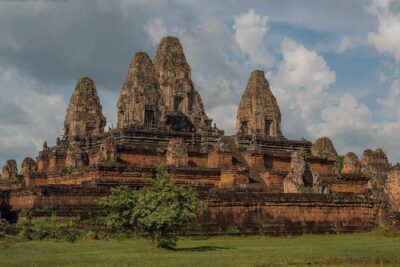
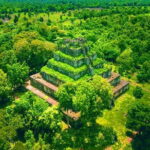
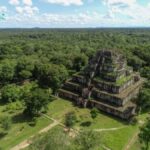
After Ta Prohm, the tour heads to Ta Keo, also about 1 hour. Ta Keo stands apart because it was never finished. That lack of completion gives it a different visual rhythm than many fully formed Angkor temples.
You’ll notice the temple’s square, layered-pyramid shape, which can feel dramatic in a way that’s more geometric than the jungle mess of Ta Prohm. This is a stop where a guide’s explanation matters because the “unfinished” detail turns into a practical cue: you’ll interpret what looks odd or incomplete as intentional history, not just decay.
Also, expect steps. Reviews highlight that you should have a reasonable level of fitness to make the most of the temples—some stairs can be step and narrow. Ta Keo is a place where taking your time pays off.
You can also read our reviews of more tours and experiences in Siem Reap

Angkor Thom and Bayon: the capital city route and the South Gate moment
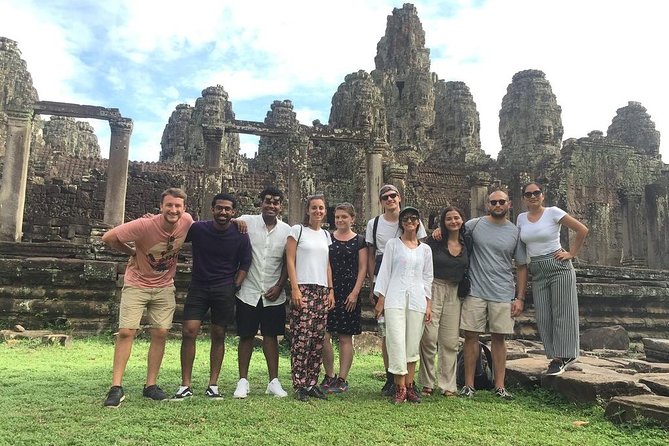
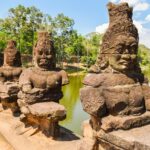
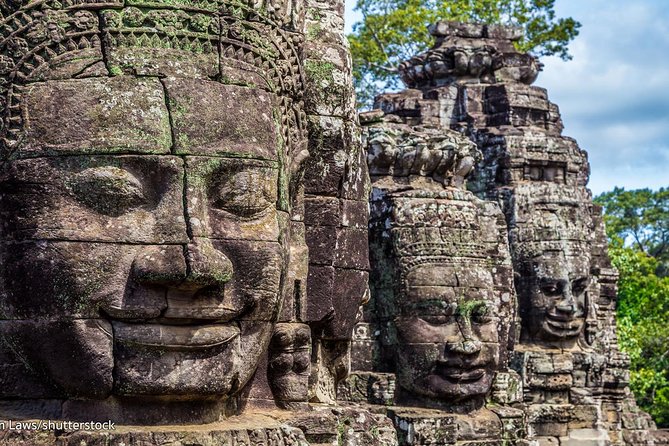
The last major stop is Angkor Thom, about 1 hour, with the central highlight being Bayon. Angkor Thom was the later capital of the Angkor Empire, and the approach includes the famous South Gate lined with gods and demons locked in an eternal tug-of-war.
This is where the tour’s pacing earns its keep. By the time you reach Angkor Thom, your brain has already learned how Angkor temples “work” structurally—so the Bayon face towers start to feel less like random faces and more like a deliberate visual system.
Bayon can be crowded depending on timing, but sunrise tours often arrive early enough to keep it manageable. Your guide can help you move through the areas that make the biggest difference, instead of wandering in circles.
What the guide actually adds (and why some tours depend on English clarity)
One of the most consistent themes is guide quality. Many people have praised guides like Sok, Vone, Sam, Ho Heang, John, Pheap, Heann, Fab, Sary, Sayon, Vin Sary, and Nick for being friendly, patient, and fun while explaining history and religion in a way that clicks.
That matters because Angkor can feel overwhelming fast:
- Stone carvings look impressive but don’t automatically translate into meaning.
- Temple layouts can be confusing without someone pointing out axis lines, doorways, and the story behind the forms.
- Even the act of moving between temples benefits from a guide who keeps everyone together and helps with timing.
The one concern to plan for: a smaller number of experiences mention English clarity or speaking too fast for comprehension. If you’re the type who needs details and you find yourself straining to follow, I’d recommend picking a guide with strong communication when possible, and don’t be shy about asking the guide to repeat or slow down.
Price and value: $14 is the deal, but the temple pass is the real cost
The headline price is $14.00 per person, and that’s low for a tour that includes transport, an English-speaking guide, bottled water, and four temple visits. The catch is that you’ll also need the temple pass (listed as $37), and food/drinks are not included.
So the realistic budgeting looks like:
- Tour price: $14
- Temple pass: $37
- Food and drinks: extra (varies by your habits)
That’s still decent value for a sunrise itinerary because you’re paying for time-sensitive access plus guided interpretation. If you were to visit on your own, you’d still be paying for a pass and transport, and you’d lose the time-saving benefit of a guide steering the route and helping with photo spots.
One more value angle: the comfort inclusions. Bottled water and cool towels may seem small, but when you’re walking under early heat, it’s the difference between powering through and feeling wrecked by mid-morning.
Comfort, clothing, and temple rules you’ll actually notice
The dress code is straightforward and worth following early rather than scrambling at the last minute: pants that cover the knee and a T-shirt that covers the shoulder for the temple sites. Khmer temples aren’t casual about this, and it can slow you down if you show up underdressed.
Also, plan for stairs and uneven ground. Reviews point out that some areas require a reasonable fitness level, with narrow and steep steps. If you have mobility concerns, consider bringing shoes with good grip and taking your time. This tour moves efficiently, but it’s not a flat stroll.
Finally, bring a small towel mindset. A cool towel is included, but you’ll still want to stay hydrated. Bottled water is provided, and reviews often call out multiple water top-ups during the day.
Photo strategy: how to get the shots without losing the experience
A good sunrise tour helps you photograph without turning your morning into a frantic checklist. With this kind of itinerary, your best photos come from:
- arriving early (less crowd clutter),
- using the guide’s suggested angles and timing,
- and remembering that carvings often look better with side light than with direct overhead brightness.
Several experiences describe guides taking lots of photos for couples, and some mention direct photo help at key temples. So instead of worrying that you’ll miss something because you’re holding the camera, use that moment to ask where to stand for the next set of shots.
If it’s cloudy, don’t treat it like a failure. Even on dull days, you can still capture dramatic shadows and texture. Keep your expectations flexible and focus on the stone details and faces, not only the sun itself.
Who this tour fits best (and who might want something different)
This Angkor Wat sunrise + 4 temples format fits best if you:
- want a guide so the carvings and layout make sense,
- prefer a small group over a massive bus crowd,
- like early starts when the sites are calmer,
- and want to see more than just the one headline temple.
It might not fit as well if you:
- need long stretches of total free time at one location,
- get frustrated by a tight schedule,
- or struggle with stairs and uneven temple terrain.
One review noted the pace felt rushed at Angkor Wat for some people, and another found the restaurant break too long. That’s the trade-off of fitting four major temples into one day. If your heart says Angkor Wat should be half your day, this may feel fast.
Should you book this Angkor Wat sunrise tour?
Book it if you want the best mix of early access, guided meaning, and practical comfort without paying for a private driver for the entire morning. The small-group cap (max 12) and the focus on Angkor Wat sunrise before the crush are the core reasons this is a strong value.
Consider a different option if you’re chasing uninterrupted downtime at just one site. This tour is built for movement and interpretation across four temples, and the total time at each stop is limited.
FAQ
What time does the Angkor Wat sunrise tour start?
The tour starts at 4:30am.
How long is the tour?
It runs about 8 to 9 hours (approx.).
Which temples are included in the route?
You visit Angkor Wat, Ta Prohm, Ta Keo, and Angkor Thom (including Bayon).
Is the temple pass included in the price?
No. The temple pass is listed separately at $37.
What’s included besides the guide?
Transport by air-conditioned minivan, hotel pickup and drop-off from select hotels, an English speaking tour guide (and driver/guide), bottled water, and a cool towel.
What is not included?
Food and drinks are not included.
Do I need to buy a ticket for each temple?
Temple admission tickets are not included, and the temple pass is listed as $37.
What’s the dress code for the temples?
You’ll need pants that cover the knee and a T-shirt that covers the shoulder.
How big is the group?
This tour has a maximum of 12 travelers.
Is hotel pickup available?
Yes, hotel pickup and drop-off are offered from select hotels, and you can also meet at the listed meeting point near the Siem Reap Pub Hostel area behind the Angkor Night Market.