REVIEW · SIEM REAP
Ultimate Angkor Wat Sunrise, Bayon, Ta Prohm Temple
Book on Viator →Operated by Angkor Pro Travel · Bookable on Viator
That 4:20 am start changes everything. I like how this run hits the big wow moments in one morning—Angkor Wat sunrise plus Bayon’s smiling faces and the jungle-clawed Ta Prohm—while you’re carried around in air-conditioned transport with a professional English guide.
The big thing to plan for is cost at the gate: the Angkor Pass (and your Srah Srang breakfast) are not included, so your final spend is higher than the $13 price tag.
In This Review
- Key points that matter before you go
- 4:20 am Arrival for Angkor Wat Sunrise
- Angkor Thom and Srah Srang: A Royal Bath Reset
- Bayon Temple: 200+ Smiling Faces and 54 Towers
- Ta Prohm: The Jungle Temple With Tree Roots Everywhere
- Price and Logistics: How $13 Becomes a Real-World Budget
- Getting There Smoothly: Pickup, English Guide, and Air-Conditioned Comfort
- What This Tour Feels Like Day-to-Day
- Should You Book This Angkor Wat Sunrise, Bayon, Ta Prohm Tour?
- FAQ
- What time does the tour start?
- How long is the tour?
- Are hotel pickup and drop-off included?
- Do I need the Angkor Pass?
- Are the temple admission tickets included?
- Is breakfast included?
- What transportation is provided?
- Is this tour private?
- Is there a mobile ticket?
- Is the booking refundable?
- Is the tour guide English-speaking?
- Are service animals allowed?
Key points that matter before you go
- 4:20 am departure means real sunrise time, not a late start and a photo scramble
- Hotel pickup and drop-off reduces stress in Siem Reap, especially before dawn
- Bayon Temple timing lets you see the 54 towers and 200+ smiling stone faces with a guide’s context
- Ta Prohm’s tree roots are the main event here, and the pacing keeps you moving without feeling rushed
- Angkor Pass not included: budget for it, or you’ll be stuck at the entrance
4:20 am Arrival for Angkor Wat Sunrise
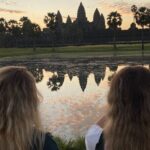
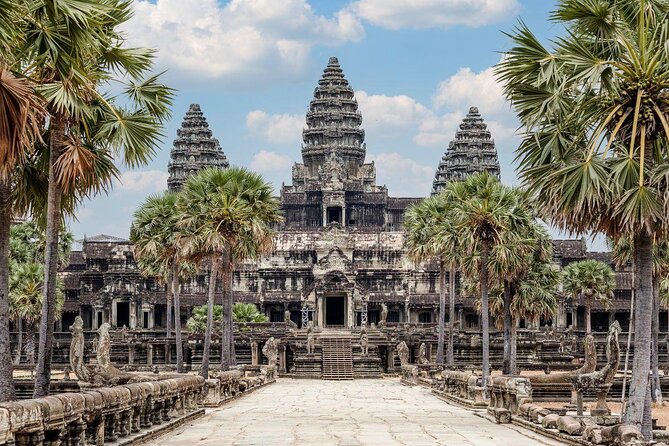
This tour is built around one simple idea: go early enough to see Angkor Wat in the cool, quiet hours. The schedule kicks off at 4:20 am, and you’ll be heading to the sunrise at Angkor Wat Temple, a massive religious monument from the early 12th century. That timing matters. If you roll in later, the experience can turn into a crowd-and-camera competition. Here, you’re set up for the main scene first, when the park is more manageable and the light is doing what it does.
What I like about this setup is that it’s not just sunrise for sunrise’s sake. You’re also getting a day’s worth of key Angkor sights—Angkor Thom, Srah Srang, Bayon, and Ta Prohm—within about 7 hours total. That makes the morning efficient, especially if you don’t want to spend your whole day in tuk-tuks and ticket lines.
One practical consideration: admission tickets aren’t included, so you’ll still need the right pass for the sites. More on that when we talk value, because the math matters.
You can also read our reviews of more tours and experiences in Siem Reap


Angkor Thom and Srah Srang: A Royal Bath Reset
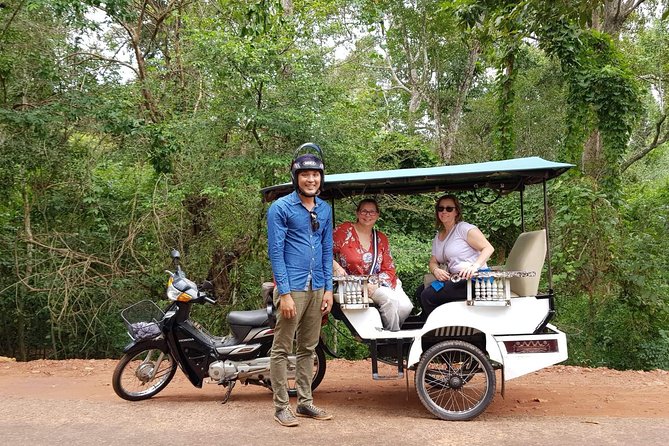
After the sunrise stop, you’ll shift into Angkor Thom, the old walled city area tied to King Jayavarman VII’s era. Even though sunrise is the headline, I find the Angkor Thom zone works as a strong second act because it’s packed with recognizable architectural moments and easy-to-follow sight lines with your guide.
Then comes Srah Srang, a spot known as the Royal Bath. The tour builds in time here, and you’ll have a chance to grab a breakfast at a local restaurant nearby, but it’s on your own account. That’s not a bad thing. Early mornings can make packaged breakfast feel sad. Buying breakfast locally can be a more satisfying reset, and it gives you a moment to slow down after the cold early start.
If you’re the type who likes a clean plan, this is where the tour gives you one. You’re not stuck wondering where to eat or how to get your bearings in the dark hours. You’re pointed to a breakfast option, you eat at your pace, and then you move on to Bayon.
Bayon Temple: 200+ Smiling Faces and 54 Towers
Bayon is the signature contrast to Angkor Wat. Angkor Wat is grand and symmetrical. Bayon feels more intimate. You’ll visit the temple associated with over 200 smiling stone faces and 54 towers, representing King Jayavarman VII. This is the late 12th-century Buddhist masterpiece people remember because it’s not subtle. You walk through it and the stone faces keep meeting your eyes from different heights and angles.
A guide really helps here because the architecture can look like a maze when you’re moving quickly with other visitors around. With a professional English tour guide, you get the practical context of what you’re seeing and why those faces matter, instead of just snapping photos and hoping you got it right.
This stop is scheduled for about 1 hour, which is enough time to walk the main areas without turning Bayon into a long slog. If you’re a slow photographer, you might want to keep an eye on your timing so you don’t miss the best viewpoints while you’re fiddling with settings.
Ta Prohm: The Jungle Temple With Tree Roots Everywhere
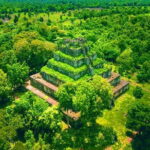
Next is Ta Prohm, famous for the natural takeover effect—massive tree roots wrapped around the stones. People often call it the Tomb Raider Temple, and that nickname fits the vibe: it looks like the jungle is part of the structure, not just in the background.
You’ll have about 1 hour here. That’s a good length for Ta Prohm because it’s an optical experience. You don’t just look at one wall or one statue. You constantly find new shapes where roots cross beams, where pathways lead to unexpected views, and where the ruins look alive. If you stay too long, you can lose the magic to repetition. If you leave too early, you miss the parts where the roots make the whole place feel cinematic.
The key is pacing. This tour’s schedule keeps Ta Prohm in the middle of the overall highlights run so you don’t feel like you’ve been wandering without a plan all day. When it’s done, you’ll head back toward your hotel with unforgettable memories and the sense you actually covered the essentials.
Price and Logistics: How $13 Becomes a Real-World Budget
Let’s talk money, because this is where the tour can surprise you—in a not-awful way, if you plan for it.
The headline price is $13.00 per person. That price is low, and it’s not because the experience is cheap. It’s because the big variable cost—admission—is extra. The tour clearly lists the Angkor Pass at $37.00 per person. Admission fees for the individual stops also aren’t included.
So your real baseline cost is closer to:
- $13 tour price
- plus $37 Angkor Pass per person
That’s roughly $50 total before food and personal spending.
Now the value question: what are you paying for with the $13? You’re getting hotel pickup and drop-off, an air-conditioned vehicle, and a professional English guide, plus private transportation. Those are the comforts that turn a difficult logistics day into a workable morning. If you’ve ever tried to organize dawn temple routes on your own, you know how fast it turns into a coordination headache.
Also note: there’s a mobile ticket mentioned. That can reduce friction at the start of the day if your operator confirms everything ahead of time.
Finally, the tour is described as commonly booked about 12 days in advance on average. If you’re traveling in peak season or on a tight schedule, I’d book ahead so you can lock in the sunrise timing.




Getting There Smoothly: Pickup, English Guide, and Air-Conditioned Comfort
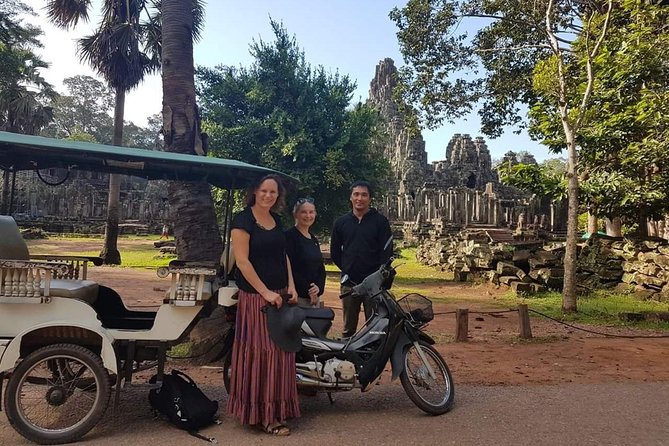
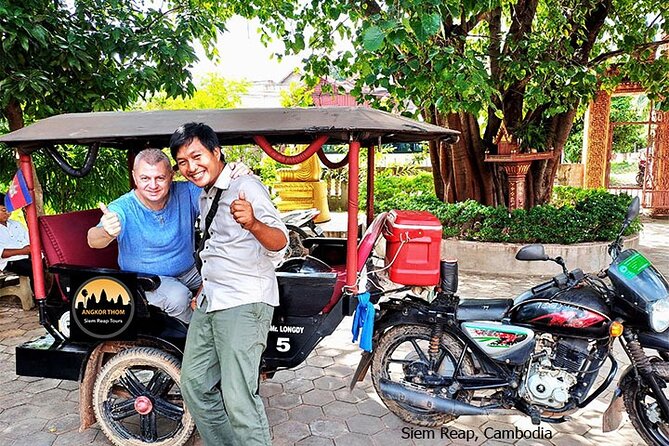
This is a “start-to-finish” style tour. You begin in Krong Siem Reap, Cambodia, and it ends back at the same meeting point. You also get hotel pickup and drop-off, which is more than convenience. It’s one less part of the day where things can go wrong.
The vehicle is air-conditioned, which matters in Cambodia heat and humidity. Even though sunrise is early, the day doesn’t stay cool. Having AC transport between temple clusters is a genuine quality-of-life upgrade, and you’ll notice it by stop two or three.
A pro English guide is included. That’s the difference between looking at ruins and understanding what you’re looking at. Even if you’re not a temple expert, a good guide can point out the logic of the site, the era connections, and the reason certain details matter—especially in places like Bayon where the faces and towers can blur together.
One practical takeaway: with an early start, the tour operator coordination needs to be tight. In at least one instance, the operator met the group as the guide arrived slightly late and then got things moving promptly once the ride was confirmed. That kind of handling matters. You want calm logistics at dawn, not scrambling.
What This Tour Feels Like Day-to-Day
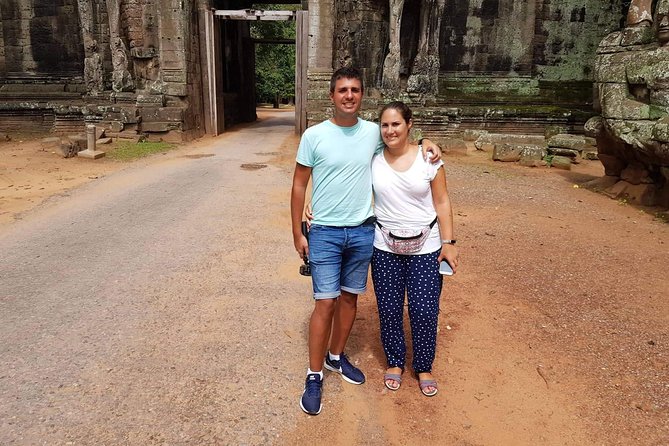
On paper, the schedule looks straightforward. In real life, you’ll feel the rhythm:
- Cold early hours for sunrise
- A breakfast and reset
- Dense sightseeing at Bayon
- A more atmospheric, slow-walk feeling at Ta Prohm
- Back to your hotel
It’s a focused highlights run. You’re not trying to map every corner of Angkor National Park. You’re trying to leave with the three most memorable visuals people chase: the sunrise icon, the smiling faces, and the jungle-overgrown stones.
That makes it a good fit if you:
- have limited time in Siem Reap
- want a guided plan instead of DIY route math
- care about sunrise timing enough to handle an early start
- prefer comfort between stops (AC transport)
It might be less ideal if you:
- want maximum time at each temple for slow wandering
- hate early mornings and would rather start later
- aren’t willing to budget for the Angkor Pass on top of the tour price
Should You Book This Angkor Wat Sunrise, Bayon, Ta Prohm Tour?

If you’re in Siem Reap for a short stay and you want the classic Angkor trio without the logistics headache, I think it’s an easy yes—as long as you plan for the Angkor Pass. The tour’s strength is practical: pickup, air-conditioned transport, a professional English guide, and smart sequencing around sunrise and the main anchors of Angkor Thom and Ta Prohm.
Book it if:
- you want sunrise at Angkor Wat rather than a late compromise
- you’d rather pay for guidance and comfort than coordinate everything
- you like structured timing that still gives you time to look
Skip or reconsider if:
- you’re trying to keep costs super tight (because the pass is the big extra)
- you want long, unhurried time at each site
FAQ
What time does the tour start?
The adventure starts at 4:20 am.
How long is the tour?
It runs about 7 hours (approximately).
Are hotel pickup and drop-off included?
Yes. Hotel pickup and drop-off are included.
Do I need the Angkor Pass?
Yes. The Angkor Pass is not included, and it’s listed at $37.00 per person.
Are the temple admission tickets included?
No. Admission fees are not included for the stops listed.
Is breakfast included?
Breakfast is not included. You’ll have time to enjoy breakfast at a local restaurant near Srah Srang at your own account.
What transportation is provided?
You’ll travel in an air-conditioned vehicle, and private transportation is included.
Is this tour private?
Yes. It’s a private tour/activity, and only your group participates.
Is there a mobile ticket?
Yes. A mobile ticket is listed as included.
Is the booking refundable?
The experience is non-refundable and cannot be changed for any reason.
Is the tour guide English-speaking?
Yes. A professional English tour guide is included.
Are service animals allowed?
Yes, service animals are allowed.