REVIEW · SIEM REAP
Angkor Temples Private Full-Day Tour from Siem Reap (Free Child)
Book on Viator →Operated by K-YORK TRAVEL SERVICE CO.Ltd · Bookable on Viator
Angkor feels different with a private day. This full-day tour from Siem Reap strings together Angkor Thom, Ta Prohm, and Angkor Wat, with a private guide helping you make sense of what you’re seeing as you go, plus an air-conditioned ride with bottled water and wet tissues to keep you comfortable. I especially like the finish at sunset over Angkor Wat, because the temples look totally different when the light softens.
The main thing to plan for is money and rules: the $37 Angkor archaeological park entrance fee isn’t included, and Cambodia’s temple dress code can require a change of clothes before you enter.
In This Review
- Key Highlights Worth Your Time
- A Private Angkor Day You Can Actually Enjoy
- Price and Value: $54 Plus the Real Entrance Cost
- Hotel Pickup and the Rhythm of a 9-Hour Temple Day
- Stop 1: Angkor Thom South Gate Sets the Fortress Mood
- Stop 2: Bayon Temple and Its 54 Towers of Faces
- Stop 3: Baphuon Temple for That Tricky, Human Scale
- Stop 4: Terrace of the Elephants for a Big Architectural Stretch
- Stop 5: Ta Prohm Jungle Temple and Its Photo Magic
- Stop 6: Angkor Wat Hours Enough to See It Properly
- Sunset Over the Angkor Complex: The Day’s Best Mood Shift
- Dress Code, Sun, and Rain: The Stuff That Makes the Day Easy
- Camera Rules: What You Can Bring Without Headaches
- Who This Private Tour Fits Best
- Should You Book This Private Angkor Temples Full-Day Tour?
- FAQ
- How long is the private Angkor temples tour?
- Is hotel pickup and drop-off included?
- What is included in the tour price?
- What is not included?
- Which temples and areas are visited during the day?
- Do I need to buy the Angkor archaeological park entrance ticket separately?
- Are meals included?
- What dress code is required for temple entry?
- What should I bring for weather and comfort?
- Can I bring a professional camera or video equipment?
- Is there free cancellation?
Key Highlights Worth Your Time
- Private guide + private vehicle so you can set a comfortable pace
- Air-conditioned transport with bottled water and wet tissues for long temple walks
- Big-ticket sights in one day: Angkor Thom, Ta Prohm, and Angkor Wat
- Sunset viewing over the UNESCO-listed Angkor complex
- Photo-friendly routing with guidance on where to stand and when to slow down
- Park fee is separate so you should budget $37 more per person
A Private Angkor Day You Can Actually Enjoy
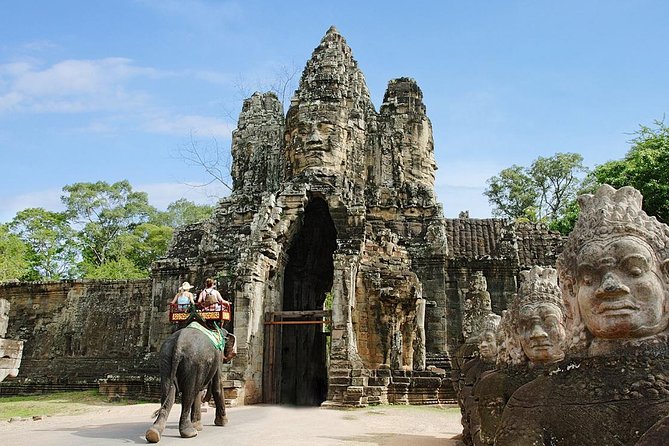
Angkor Wat can turn into a marathon if you’re in the wrong setup. This is a private format, meaning you’re not squeezed into a rigid group rhythm. You’ll have a guide who can steer your day toward the spots that matter most, and you’re not stuck waiting while other people bargain for snacks at the same stall.
What I like most is how practical the comfort is. You ride in an air-conditioned vehicle, and the tour includes bottled water plus wet tissues. That sounds small until you’re walking under strong sun and humidity. It helps you keep your energy for the carvings and the climb-worthy angles rather than saving yourself for a midday crash.
Also, the day is structured so you don’t just hit the highlights. You get time at major temple zones, plus a sunset finish. That matters because Angkor is not one mood. Morning light, harsh midday light, and sunset light all make the stone look like three different places.
You can also read our reviews of more private tours in Siem Reap
Price and Value: $54 Plus the Real Entrance Cost
The tour price is $54 per person, with hotel pickup and drop-off included. For a private full-day with a guide and an air-conditioned vehicle, that can be solid value—especially compared to piecing together separate drivers and ticket lines.
But there’s one “don’t get surprised” line item: the Angkor archaeological park entrance fee is $37 per person and is not included. So your real per-person day cost is closer to $91 total, before meals.
That separation is actually helpful if you like clear planning. You know what you’re paying for the guide and vehicle, and you know exactly what the park requires for entry. Just add the $37 early so your day doesn’t feel more expensive later.
One more value note: the tour lists group discounts as a feature. Since this is private, ask how that discount works if you’re traveling as a small group together. Sometimes it simply means better pricing when you book multiple spots under one booking.
Hotel Pickup and the Rhythm of a 9-Hour Temple Day
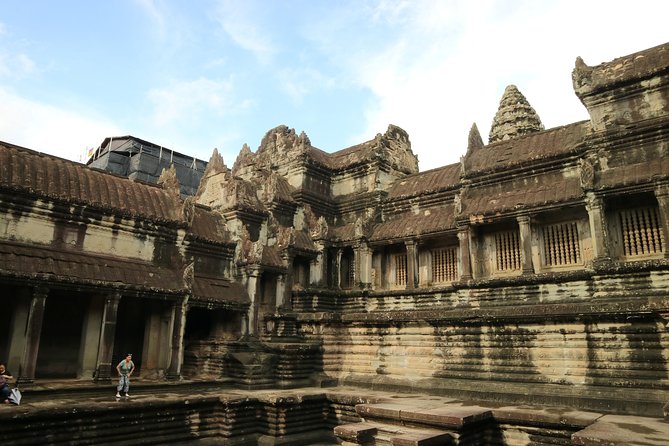
This is listed as about 9 hours total. In practice, that’s enough time to see big monuments without turning it into a blur, as long as you don’t try to sprint through every staircase.
Your day starts with hotel pickup and ends with hotel drop-off. That matters at Angkor because travel time is part of the experience. You’re not losing your day negotiating transport or hunting for meeting points after a long morning walk.
The tour uses a mobile ticket. For you, that usually means less paper and fewer chances to misplace something before you reach the gate.
Stop 1: Angkor Thom South Gate Sets the Fortress Mood
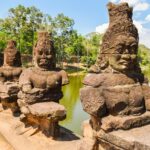
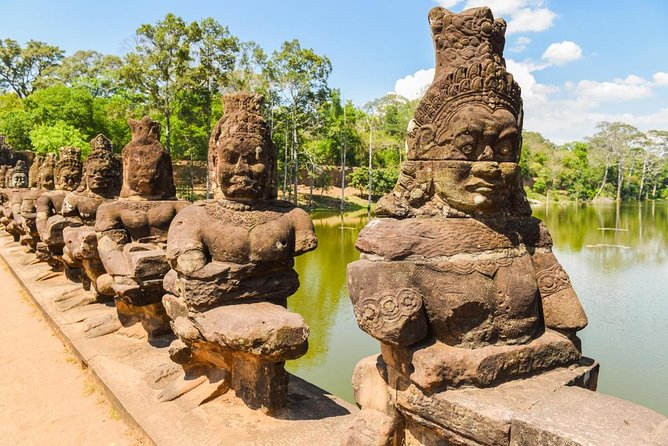
You begin at the South Gate of Angkor Thom, one of the most dramatic entry points to the ancient city. Angkor Thom was a walled quadrangle that once protected the Khmer capital—walls totaling about 12 kilometers. You’re stepping into a place designed to control movement, not welcome visitors in slow motion.
This stop is about 30 minutes. That’s a good length: long enough to get your bearings and feel the scale, short enough that you don’t burn time before the more detailed stonework later.
Tip for enjoying this stop: take a few minutes to look at the gate structure and surrounding geometry, not just the most obvious photo angle. A lot of the “wow” here is in how the city layout makes you feel enclosed.
Stop 2: Bayon Temple and Its 54 Towers of Faces
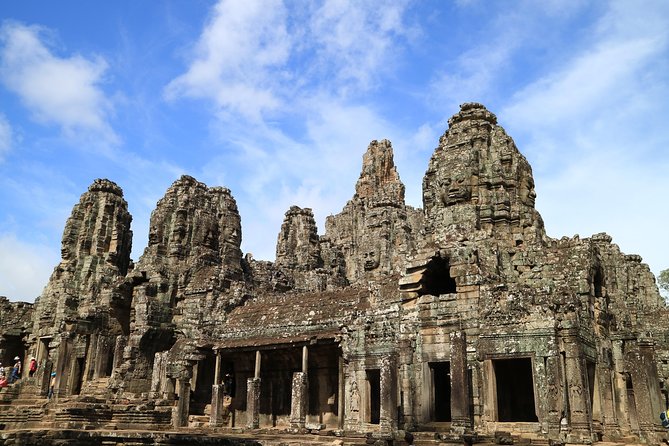
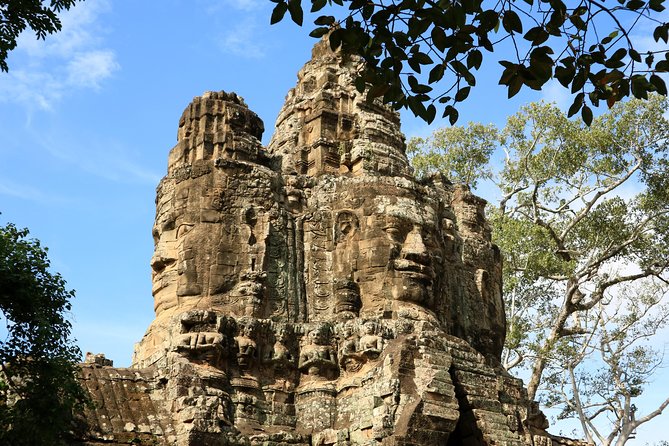
Next comes Bayon Temple, built by King Jayavaraman VII. The most eye-catching detail is the network of 54 towers, each featuring four huge faces that reflect both Buddhist and Hindu influence.
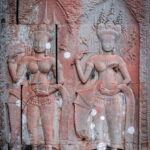
You’ll also see intricate bas-reliefs—carvings that show scenes from life and battles. That blend is one reason Bayon can feel busy in the best way. It’s not just one sculpture. It’s layers of storytelling across walls.
You’re allotted about 1 hour 30 minutes here. Use it for a slow walk. If you rush, you’ll miss the depth in the carvings and the way the faces align with sightlines as you move.
Potential drawback to keep in mind: this area can attract crowds. Having a guide helps you spot better photo positions and reduce time waiting around the most popular angles.
You can also read our reviews of more tours and experiences in Siem Reap
Stop 3: Baphuon Temple for That Tricky, Human Scale
Baphuon Temple is about an hour. It was built in the middle of the 11th century by Udayadityarvarman II. The tour notes that it was the most poorly constructed of all the temples in Angkor—an unusual detail, and it hints at why this temple can feel different from the others.
What you’ll like here is the contrast. Some temples at Angkor impress with their symmetry and clean grandeur. Others make you think more about engineering, rebuilding, and the limits of stonework. Baphuon fits that second category.
This stop is shorter than Bayon, so it works well as a mental break: you still get history and character, but you keep moving toward the visually wild parts of the day.
Stop 4: Terrace of the Elephants for a Big Architectural Stretch
The Terrace of the Elephants is a classic “pause and appreciate scale” stop. It was constructed in the late 12th century by King Surayvarman VII. The terraces are about 4 meters high and 15 meters wide along their entire length.
You’re there for about 30 minutes. That’s enough time to walk the perimeter and notice how this grand platform functions as a stage—an area meant for processions and ceremonies. It’s not just a backdrop.
Photo and walking strategy: if you can, use this stop to reset your pace. You’ll do heavier walking at Ta Prohm and Angkor Wat, so treat Terrace of the Elephants as a chance to catch your breath.
Stop 5: Ta Prohm Jungle Temple and Its Photo Magic
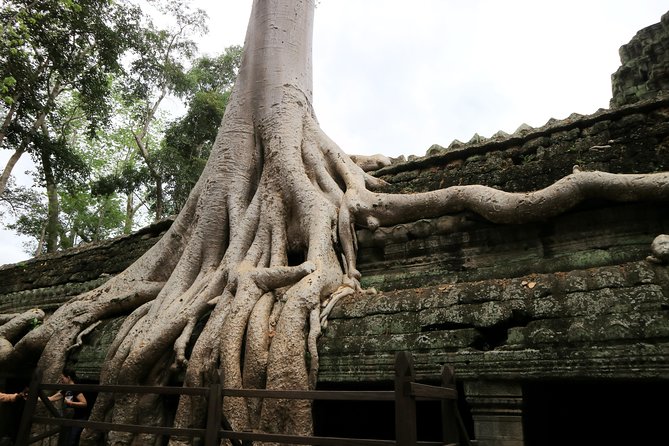
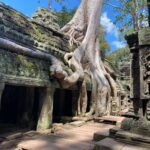
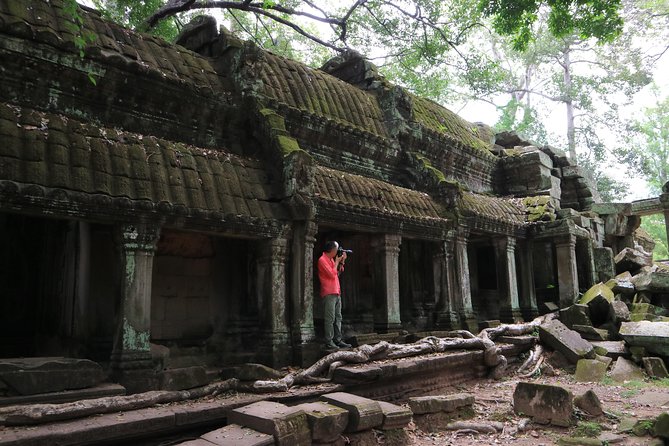
Then comes Ta Prohm, usually the favorite for people who like a “temples swallowed by nature” look. Ta Prohm was built by King Jayavarman VII, in 1186, and it was dedicated to his mother. The tour describes it as one of the jewels of Angkor, largely because it’s overtaken by jungle trees.
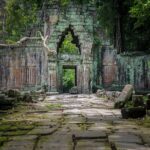
You’ll spend about 1 hour 30 minutes here. That time is important. Ta Prohm is all about details: tree roots gripping stone, doorways framed by leaves, and those moody corners that look like they were designed for a movie scene.
It’s also hot. If you time it right, you’ll find pockets of shade as you walk. In rainy months, you might find the stone slick, so go slow on steps.
Photo tip: don’t chase only the most famous angles. Ask your guide where the best photo spots are for fewer people and better light. Many guides are practiced at getting you into positions that avoid the worst congestion.
Stop 6: Angkor Wat Hours Enough to See It Properly
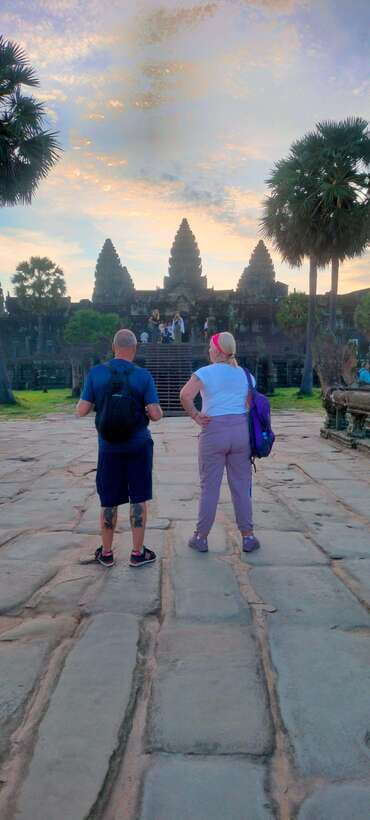
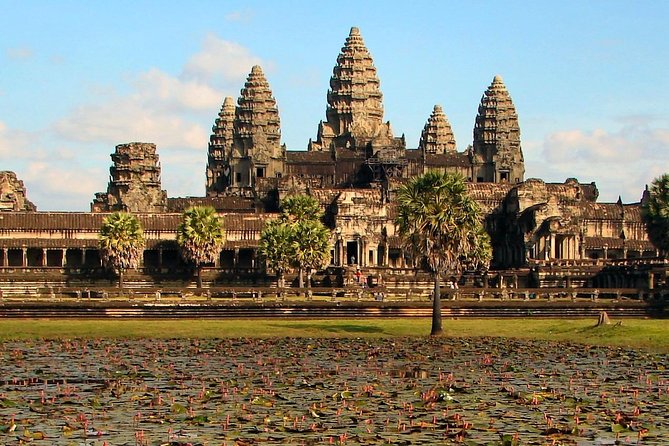
Angkor Wat gets the biggest chunk of time: about 4 hours 30 minutes. That’s a strong plan, because Angkor Wat rewards patience. You’re not only looking at towers; you’re also taking in bas-reliefs and the temple’s long, deliberate lines.
The tour frames Angkor Wat as one of the most inspired monuments ever built, with soaring towers and extraordinary carvings. You’ll feel that “planned for eternity” vibe as you walk along the main areas.
There’s also a big practical point: Angkor Wat has rules about going up towers when it’s raining. One traveler’s day note said they couldn’t go up the tower due to rain, but the rest of the visit still worked. If weather turns ugly, your guide should help you focus on what’s still open and worth seeing.
Sunset Over the Angkor Complex: The Day’s Best Mood Shift
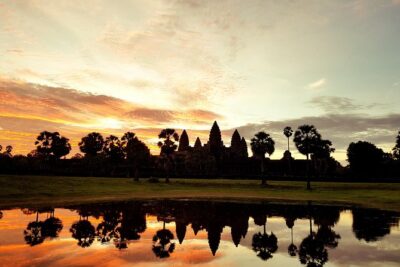
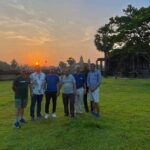
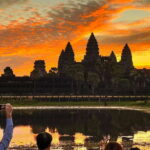
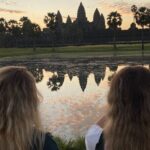
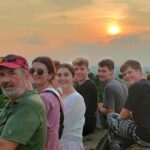
After the main temple time, you end with sunset over the UNESCO-listed Angkor complex. This is where the stone changes. Shadows lengthen. Details soften. And the whole place stops feeling like a checklist.
Your viewing setup can vary based on what’s accessible. In at least one day, sunset happened from Phnom Bakheng, which is a common viewpoint idea around Angkor. If you’re hoping for a specific viewpoint, ask your guide ahead of time what spot is likely to work best for your day.
Even if clouds roll in, sunset can still be worth it. The light tends to make Angkor feel more human, less like a giant museum floor.
Dress Code, Sun, and Rain: The Stuff That Makes the Day Easy
Cambodia’s temples are sacred, and entry requires a respectful dress code. You need pants or a skirt long enough to cover your knees, plus a shirt with sleeves that cover your shoulders. Singlets and tank tops aren’t allowed. Mini skirts and short pants aren’t allowed. Sleeveless shirts don’t get you in.
It’s not about being fussy. It’s about avoiding delays. If you show up underdressed, you might spend time at the last minute figuring out a fix.
For footwear, wear comfortable sport shoes. You might get dusty paths and uneven ground, so clean sneakers you can live with are the move.
For weather, Cambodia’s UV can be strong year-round. Bring sunscreen (cream), sunglasses, and a hat. And in rainy season (May–November), bring an umbrella or raincoat. One practical bonus from the tour setup: umbrellas may be supplied by the driver when it rains, but don’t count on it as your only plan.
Camera Rules: What You Can Bring Without Headaches
This tour flags an important media rule: professional commercial cameras or video require an approval letter from the authority. Without that, you may not be allowed to bring or use your gear as you planned.
If you’re traveling with a normal camera or phone, you’re usually fine, but the moment your setup is clearly “professional commercial,” it’s smart to confirm what you’re carrying.
Who This Private Tour Fits Best
This is a private tour, so it fits couples, friends, and families who don’t want to move on anyone else’s schedule. It also works well if you’re traveling with a child, since at least one family note included a guide adjusting the day to accommodate a 2-year-old.
If you like structure but also want room to breathe, this is a good match. You get a planned route through Angkor’s top areas, but the private car and guide mean you can slow down or cut short your day if you’re tired.
If you’re a hardcore history nerd who wants every carving line-by-line, this tour’s guide focus helps. Guides highlighted in real experiences, like Mr. Sothy, Te (Hean), Tip, Raksa, Soapan, Sampat, and James Bon Thai, are praised for English ability and for handling pace well. That’s exactly what you want when the day is long and your brain is starting to melt in the humidity.
Should You Book This Private Angkor Temples Full-Day Tour?
Book it if you want an Angkor day that’s organized, comfortable, and not stuck in a crowd shuffle. The combination of Angkor Thom, Ta Prohm, and Angkor Wat, plus a sunset finish, is a strong “one day, big payoff” mix. The air-conditioned transport and included water and wet tissues are the kind of small comforts that make the difference at Angkor.
Skip it or reconsider if you know you hate spending extra at the gate, because the $37 park entrance fee is not included. Also, if you’re not prepared for the dress code, you might lose time fixing clothes right before entry.
If you book, do this: budget the full cost (tour + $37 entrance), pack sun and rain basics, and plan to wear respectful temple attire. Then let your guide handle the pacing and photo positioning. That’s where this private format earns its keep.
FAQ
How long is the private Angkor temples tour?
It’s listed at about 9 hours.
Is hotel pickup and drop-off included?
Yes. Hotel pickup and drop-off are included.
What is included in the tour price?
The tour includes a private guide, air-conditioned private transport, bottled water and wet tissues, and hotel pickup/drop-off.
What is not included?
The Angkor archaeological park entrance fee is not included ($37 per person), and meals are not included.
Which temples and areas are visited during the day?
The tour includes Angkor Thom South Gate, Bayon Temple, Baphuon Temple, Terrace of the Elephants, Ta Prohm Temple, and Angkor Wat.
Do I need to buy the Angkor archaeological park entrance ticket separately?
Yes. The park entrance fee is $37 per person and is not included in the tour price.
Are meals included?
No. Lunch and other meals are at your own expense.
What dress code is required for temple entry?
You need clothing that covers your knees and shoulders. Pants or a skirt long enough to cover your knees and a shirt with sleeves that cover your shoulders are required. Singlets/tank tops, mini skirts, short pants, and sleeveless shirts are not allowed at some places.
What should I bring for weather and comfort?
Sun protection is important (sunscreen, sunglasses, hat). In rainy season (May–November), bring an umbrella or raincoat. Comfortable sport shoes are recommended.
Can I bring a professional camera or video equipment?
Professional commercial camera or video requires an approval letter from the authority. Without it, it’s not allowed to bring in.
Is there free cancellation?
Yes. You can cancel up to 24 hours in advance for a full refund. If you cancel less than 24 hours before the start time, the amount paid is not refunded.