REVIEW · SIEM REAP
Preah Khan, Ta Prohm, Bayon Off Beaten Track
Book on Viator →Operated by ANGKOR CAB-OFF BEATEN TRUCK · Bookable on Viator
Three temples, fewer crowds, real Khmer detail. This private 8-hour Siem Reap outing pairs Preah Khan and Ta Prohm with a local guide, starting at 9:00am. I like the calm pacing and the focus on Jayavarman VII-era details instead of standing shoulder-to-shoulder. One thing to plan for: temple entrance fees are not included.
You’ll be traveling as a true small group (up to 3 people), and the tour is set up with pickup offered plus a mobile ticket for confirmation. We’re talking a straightforward day: a driver and license tour guide, bottled water in the car, and the tour ending back at the meeting point.
This is a temple day, so you’ll want a moderate fitness level—think uneven ground and lots of walking—especially at Preah Khan and Ta Prohm. If you like your Angkor days organized, not chaotic, this style fits.
In This Review
- Key highlights you’ll actually feel during the day
- A 9:00am start that helps you keep control of the day
- Preah Khan: the Royal Sword temple near Jayatataka baray
- Ta Prohm and its earlier name, Rajavihar
- Bayon: Jayavarman VII’s state temple of Mahayana Buddhism
- Why this off-the-beaten-track style feels better than a bus circuit
- Price and budgeting: where $159 per group is a good deal (and where it isn’t)
- What you should be ready for during an 8-hour Angkor day
- Should you book this Preah Khan–Ta Prohm–Bayon tour?
- FAQ
- Is pickup included for this tour?
- Are temple entrance fees included?
- How long is the tour?
- What group size is this tour for?
- What do I receive as part of the tour?
- Can I cancel for a full refund?
Key highlights you’ll actually feel during the day
- Private tour for up to 3: your guide can set the pace and keep the day from turning into a stampede.
- Preah Khan + Ta Prohm + Bayon, in one run: you hit three major stops without crisscrossing the whole complex all day.
- Designed to avoid the worst crowd moments: the focus is on a quieter feel rather than a bus-circuit checklist.
- Local, licensed tour guide: you get a real person to connect the temple names, eras, and meanings as you go.
- Bottled water included: small comfort, but it matters over an 8-hour temple circuit.
- Entrance fees are separate: you control the ticket purchase timing while keeping the tour itself good value.
A 9:00am start that helps you keep control of the day
In Siem Reap, temple fatigue is real. A big part of enjoying Angkor is timing—how long you’ll tolerate crowds, waiting, and heat before your brain goes offline.
This tour starts at 9:00am, which often feels like a sweet spot for getting temples done before the day’s biggest crush. You also return to the same meeting point afterward, so you’re not left negotiating transport at the end when everyone’s tired.
The meeting point is Prince Angkor Hotel & Spa (Sivutha Boulevard B05). Pickup is offered, but even if you’re using the hotel meeting spot, it keeps logistics simple: fewer surprises, fewer detours.
You’ll be in an air-conditioned vehicle with a driver and guide, and your group stays small. That’s a big deal because the Angkor complex can turn into a game of follow-the-leader fast—here, you stay in charge.
You can also read our reviews of more tours and experiences in Siem Reap.
Preah Khan: the Royal Sword temple near Jayatataka baray
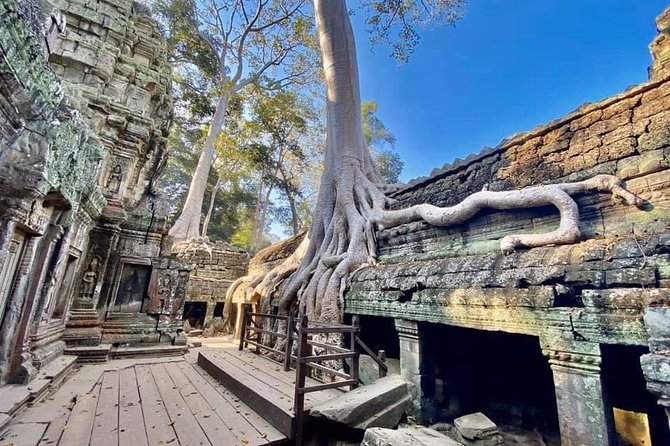
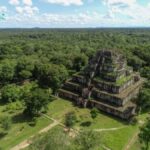
Stop 1 is Preah Khan, which means Royal Sword. It was built in the 12th century for King Jayavarman VII, honoring his father. That royal backstory matters because it changes how you read the temple: you’re not just looking at ancient stone, you’re walking through a decision made at the top of the Khmer world.
Preah Khan is located northeast of Angkor Thom and just west of the Jayatataka baray. Even if you don’t memorize directions, your guide can help you orient the site in your mind—where it sits in the greater Angkor plan, and why it’s placed where it is.
You get about 2 hours here, which is a good length for Preah Khan. Short stops tend to turn every ruin into generic photos. A longer block helps you notice patterns: the way the temple functions as a composed space, not a random collection of corridors.
One practical note: admission tickets are not included. So you’ll want to factor in that extra cost for Preah Khan at the start of the day. (The upside is you’re not paying entrance fees inside the tour price—you’re paying the tour for the guide, transport, and time.)
Ta Prohm and its earlier name, Rajavihar
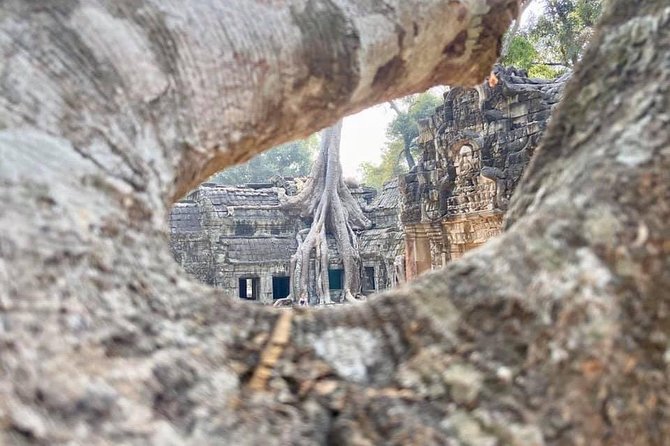
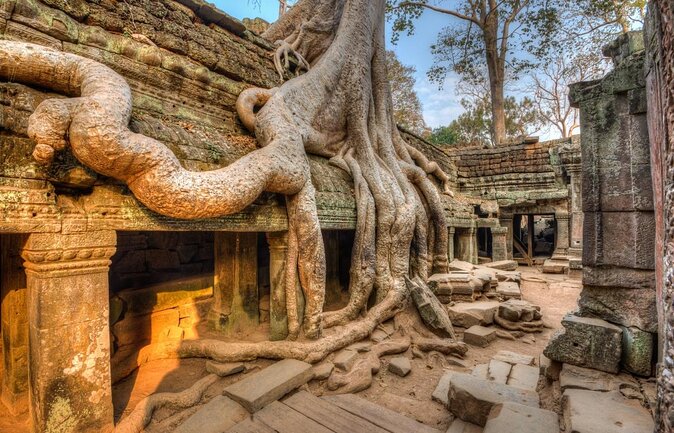
Stop 2 is Ta Prohm, the modern name (it traces back to the ancestor of Brahma). It was originally called Rajavihar and built largely in the late 12th and early 13th centuries in the Bayon style.
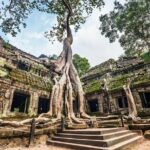
This is one of those temple names you’ve probably heard before. But what I like about structuring your day here is that you’re not treating Ta Prohm like a single-famous photo spot. You’re treating it like a real chapter in the Khmer story—connected to the reign when Jayavarman VII shaped so much of Angkor’s temple-building.
You get about 2 hours at Ta Prohm. That time is important because Ta Prohm rewards slower attention. Even without getting stuck in exacting details, you’ll have the chance to look, pause, and then look again with a clearer sense of style and period.
As with Preah Khan, entrance fees are not included, so budget for your own tickets for this stop too. The tour does include bottled water, which helps you keep moving without turning the day into an energy crash.
If you care about avoiding peak crowds, this route pairing helps. You’re not only going to the biggest, most universally photographed stop—you’re splitting the day across temples that feel like they have their own rhythm.
Bayon: Jayavarman VII’s state temple of Mahayana Buddhism
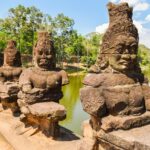
Stop 3 is Bayon, also referred to as Prasad Bayon. It’s described as a richly decorated Khmer temple at Angkor, built in the late 12th or early 13th century.
Here’s the key context your guide can bring to life: Bayon was built as the state temple of the Mahayana Buddhist King Jayavarman VII. That explains a lot about why Bayon feels different from a simple ceremonial monument. It’s tied to state identity and religious worldview, not just a personal memorial.
You only have about 1 hour at Bayon in this plan. One hour sounds short until you remember how visually intense Bayon can be. In practice, it’s enough time to get oriented, see the main features, and leave before your brain starts treating everything as one blur of stone carvings.
Again, entrance fees aren’t included, so Bayon adds to your total temple-ticket cost. But you’re not paying extra for “extra time”—you’re paying for a tight day that fits 8 hours (approx.) overall.
Why this off-the-beaten-track style feels better than a bus circuit
The tour description is clear about the goal: avoid the tourist crowds. Even if you can’t erase crowds at Angkor entirely, you can still avoid the worst bottlenecks by how you schedule and how your guide moves you through the day.
This plan is built for that: Preah Khan and Ta Prohm take the bulk of your time (2 hours each), while Bayon is shorter (about 1 hour). That naturally prevents you from spending the least interesting hours in long lines. It also helps you keep your attention on the temples instead of on logistics.
The other big advantage is the private setup. With only your group participating, you’re not forced to sync with strangers who move at a different speed. You can pause, ask questions, or take a breather without the awkward feeling of holding up a queue.
I also like that the tour includes a license tour guide and a driver. At Angkor, that combination matters. Your guide can explain why these temples were built when they were built, and your driver keeps the road plan straightforward so you’re not wasting your temple hours in traffic or detours.
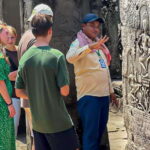
And yes—based on the pattern of support from this operator’s guides, punctuality and flexibility are a big part of the experience. If your guide brings the same attitude as Panha (often noted for being on time and easy to work with), the day feels smoother from minute one. It’s the difference between figuring things out while tired versus having someone keep the train on the tracks.




Price and budgeting: where $159 per group is a good deal (and where it isn’t)
The price is $159 per group (up to 3) for about 8 hours. That’s a private-tour price, not a per-person bus ticket. So your value depends on how you travel.
If you’re traveling solo, you’re paying for privacy yourself. If you’ve got two friends or family members, splitting the cost makes it much easier to justify. In either case, you’re getting the parts that are hard to do well on your own: the driver, the licensed guide, and a smooth plan that fits the time you have in Siem Reap.
What’s included:
- Bottled water
- Private tour
- License tour guide
- Driver
What’s not included:
- Lunch
- Entrance fees
So the smart budgeting approach is: count $159 as your transport + guide cost, then add temple entrance tickets for Preah Khan, Ta Prohm, and Bayon. If you’re price-sensitive, entrance fees will be the variable that changes your final total the most—but that’s normal for Angkor days.
Also: lunch not being included isn’t automatically a bad thing. It often gives you the freedom to choose food that matches your day and your tastes, rather than being rushed through a meal at a fixed time.
What you should be ready for during an 8-hour Angkor day
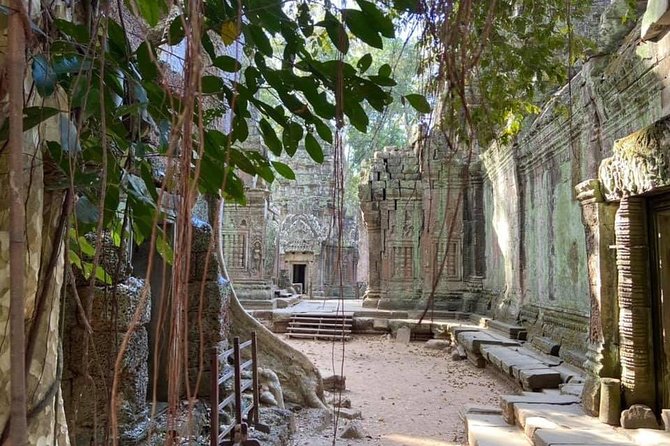
This experience is listed for travelers with a moderate physical fitness level. That’s the right warning. Temple days in Angkor typically involve more walking than you think, plus uneven surfaces.
Plan around that in two simple ways:
- Wear comfortable shoes you can trust on stone and steps.
- Keep expectations realistic for your energy. The tour includes 2-hour blocks for Preah Khan and Ta Prohm, so you’ll be moving more than a quick hit.
You’ll also want to be mentally ready for contrast. Preah Khan has its own identity, Ta Prohm has a different stylistic era (Bayon style), and Bayon lands you with a state-temple feel tied to Mahayana Buddhism under Jayavarman VII.
With a private guide, you can make those connections as you go. That’s what turns a photo day into a meaningful day.
Should you book this Preah Khan–Ta Prohm–Bayon tour?
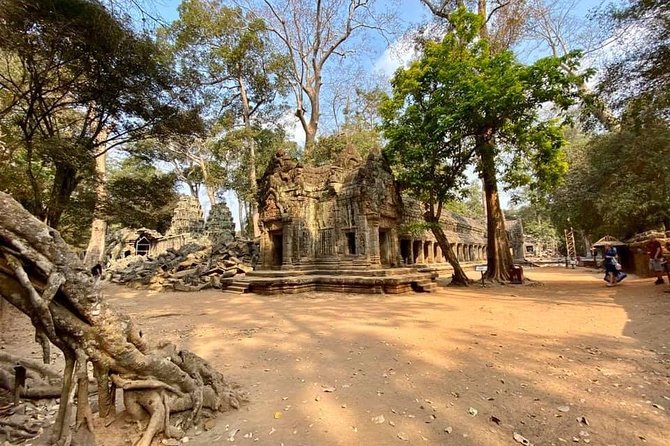
Book it if you want a small-group, private Angkor circuit that focuses on three major temples tied to Jayavarman VII’s era, with a plan designed to help you skip the most painful crowd pressure. It’s especially good value if you’re traveling with up to two other people and you’d rather pay for a guide than wrestle with timing on your own.
Skip it (or rethink the fit) if entrance fees are a deal-breaker for your budget, since tickets are not included and you’ll need to pay for each temple stop. Also consider whether your schedule truly has room for an 8-hour day. If you only have a short Angkor window, you might feel rushed.
If you do book, keep one goal in mind: use those scheduled hours to slow down just enough to understand what you’re seeing—Preah Khan as the Royal Sword temple, Ta Prohm as Rajavihar in Bayon style, and Bayon as a richly decorated state temple tied to Mahayana Buddhism.
FAQ
Is pickup included for this tour?
Pickup is offered. The start point listed is Prince Angkor Hotel & Spa in Siem Reap, and the tour ends back at the meeting point.
Are temple entrance fees included?
No. Entrance fees are not included for Preah Khan, Ta Prohm, or Bayon, so you’ll need to pay separately.
How long is the tour?
The duration is about 8 hours.
What group size is this tour for?
It’s a private tour/activity, and only your group will participate. The price is for up to 3 people.
What do I receive as part of the tour?
Included items are bottled water, a private tour, a license tour guide, and a driver. You’ll also receive a mobile ticket.
Can I cancel for a full refund?
Yes. You can cancel up to 24 hours in advance for a full refund, and cancellations less than 24 hours before the start time are not refunded.