REVIEW · SIEM REAP
Angkor wat and Small group temples Full day tours
Book on Viator →Operated by Bayon Tabi Tour · Bookable on Viator
Angkor Wat first, then the rest of the story. This full-day small-group Angkor plan is a smart way to see the big names without feeling swallowed by a giant crowd. I especially like the licensed English-speaking guide approach: you get context for what you’re looking at, not just photos. One thing to plan for up front: Angkor Wat’s entrance fee and your lunch are extra.
I also like the pace. With about nine hours total and hotel pickup, you’re not spending your day figuring out tuk-tuk logistics, and the day is structured around the main temple hits. The group stays small enough to ask questions and adjust when you need a breather.
In This Review
- Key Things You’ll Like About This Small-Group Angkor Day
- A Full Day at Angkor Without the Big-Group Grind
- Price and Value: What the $19 Really Means
- Pickup, Air-Conditioning, and the Timing Reality
- Angkor Wat: Your First 2 Hours and the Best Way to Start
- Angkor Thom and the Bayon Faces: City-Scale in About 2 Hours
- Ta Prohm: Jungle Roots, Ruin Details, and Smart Timing
- Terrace of the Elephants and the Leper King: Short Stops, Big Meaning
- Terrace of the Elephants (30 minutes)
- Terrace of the Leper King (30 minutes)
- Baphuon Temple: The Smaller Stop That Makes the Day Click
- The Guide Factor: Marin and Chum Nak Make the Difference
- How to Plan Your Day So You Don’t Feel Crushed
- Should You Book This Angkor Small-Group Tour?
- FAQ
- How long is the Angkor Wat and Small group temples full day tour?
- Does the tour include hotel pickup and drop-off in Siem Reap?
- Is an English-speaking guide provided?
- Are entrance fees included?
- Is lunch included?
- What vehicle will I travel in?
- How large is the group?
- Can I cancel and get a full refund?
- Is a mobile ticket provided?
Key Things You’ll Like About This Small-Group Angkor Day
- Up to 15 people means you get real attention, not just a headset and a schedule
- A licensed English-speaking guide who can explain Khmer temple design and history in plain terms
- Hotel pickup and drop-off plus an air-con vehicle saves energy for temple walking
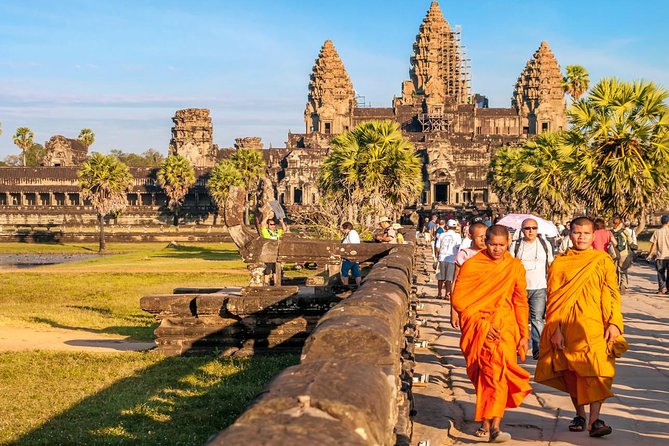
- A route that covers major sights: Angkor Wat, Angkor Thom, Ta Prohm, and more
- Short timed stops (some 30 minutes) that still cover the essentials
- Mineral water included, which matters when the heat is doing the heavy lifting
A Full Day at Angkor Without the Big-Group Grind
Angkor can feel like a theme park if you show up with no plan. This kind of small-group day fixes that by building a clear path: start at Angkor Wat, then move through Angkor Thom, and keep going to the standout jungle-and-stone scenes. You’re seeing a UNESCO site, but you’re also being guided through how the place works—religiously, architecturally, and historically.
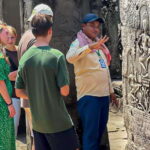
What you gain with a small group is simple: you can actually understand what you’re looking at while you’re there. With a max of 15 people, the guide can slow down when questions pop up, and you can step back for a better photo angle without feeling like you’re holding up a parade.
The day lasts about nine hours, and the stops are sized for real life: two hours at Angkor Wat, two at Angkor Thom, and then shorter segments for the terraces and additional temples. That helps you avoid the most common mistake at Angkor—doing everything, then retaining nothing.
You can also read our reviews of more tours and experiences in Siem Reap
Price and Value: What the $19 Really Means
The headline price is $19, which is a great entry point for a full-day guided outing with pickup. But you should read the fine print with your wallet brain switched on: the tour does not include entrance fees, and your lunch isn’t included.
The big cost to budget for is Angkor Wat admission ($37 per person). If you’re coming from Siem Reap, that ticket is the one you can’t ignore. So your real day cost is closer to $56 plus any food you buy. Still, that can be strong value because you’re getting:
- a licensed English guide
- an air-con vehicle (van or bus)
- hotel pickup and drop-off within Siem Reap
- mineral water
- a structured route across multiple key sites
In other words, you’re paying for transportation, planning, and interpretation. If you tried to do the same temple sequence on your own, you’d likely spend more time (and money) coordinating rides, guiding yourself, and chasing the right entrances.
Pickup, Air-Conditioning, and the Timing Reality
You’ll be picked up from your hotel in Siem Reap and dropped back afterward. That saves time and helps you stay focused on the temples instead of logistics. The vehicle is air-conditioned, and you’ll also get mineral water, which sounds small until you’ve been walking in the heat.
The day’s internal rhythm is built around short “look and learn” blocks. Here’s how the time typically breaks down:
- Angkor Wat: about 2 hours
- Angkor Thom: about 2 hours
- Ta Prohm: about 1 hour
- Bayon Temple: about 1 hour
- Terrace of the Elephants: about 30 minutes
- Terrace of the Leper King: about 30 minutes
- Baphuon: about 30 minutes
Those durations suggest a practical promise: you’ll see the main sights without burning the whole day standing in line. There will still be travel time between sites, which is why the tour lands at roughly nine hours total.
Angkor Wat: Your First 2 Hours and the Best Way to Start
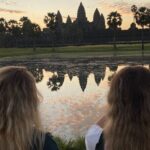
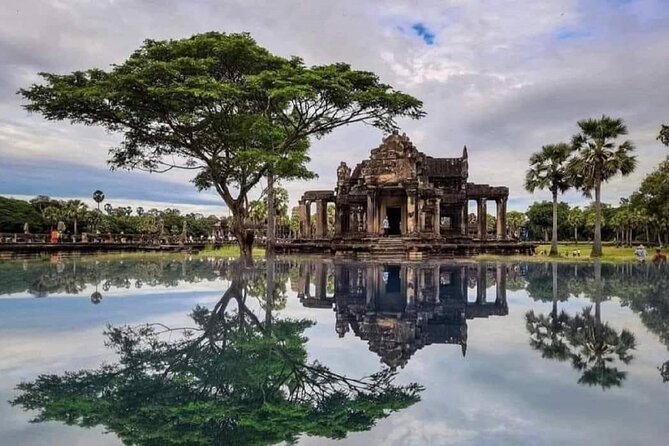
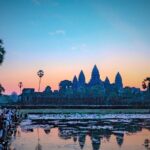
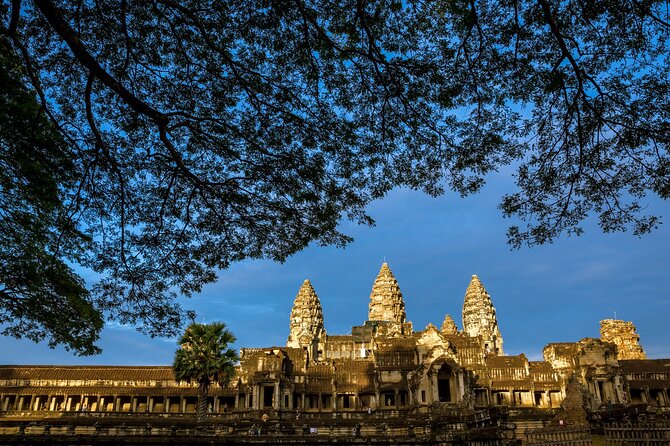
Angkor Wat is a Hindu-Buddhist complex and the best first stop for most first-timers. You get a huge temple space, clear symmetry, and lots of architectural details to study. The tour gives you about two hours here, which is the right length to do more than a quick wander.
What I love about starting at Angkor Wat is that it sets your visual vocabulary. Once you’ve seen the layout—how the main structures relate to each other—you’ll notice more in every other temple you visit. You’ll also get a better sense of why people keep returning to this site. It’s not just impressive in a postcard way; it’s designed.
A practical note: your Angkor Wat entrance ticket isn’t included, so you’ll want to plan that cost in advance. Also, because this is the first and most famous stop, it’s worth staying alert for the small photo-window moments when lighting and crowds shift.
Angkor Thom and the Bayon Faces: City-Scale in About 2 Hours
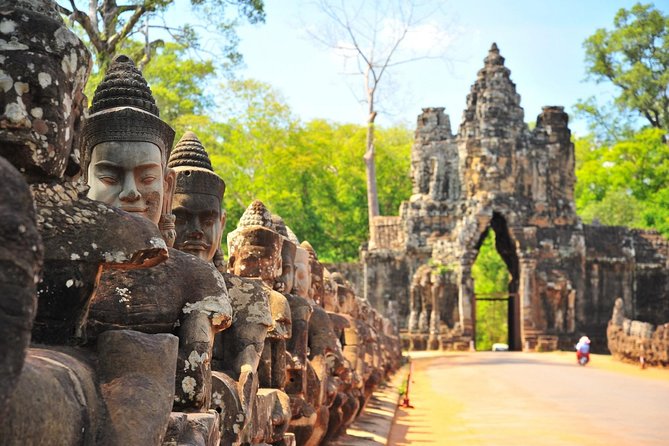
Angkor Thom is the “great city,” built as the Khmer capital, and it’s where the scale starts to feel unreal. In the day plan you get about two hours here, which usually covers the major portions you’ll want to understand without feeling rushed.
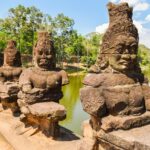
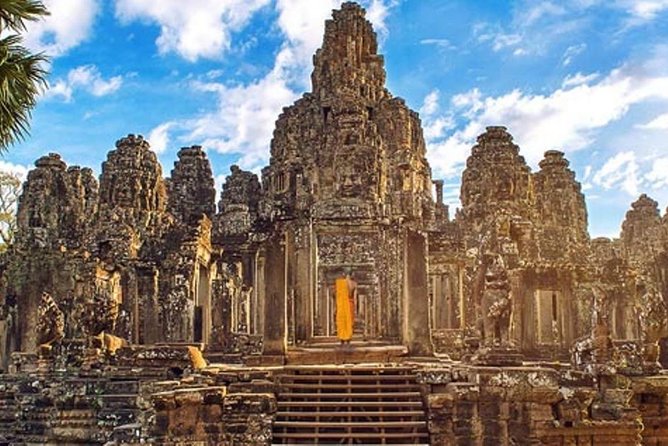
This is also where the temple world becomes more human. The Bayon is described as the state temple of King Jayavarman VII and is built as a mountain temple representing Mount Meru. The famous faces give you instant recognition, but the guide context is what helps you connect the dots: why a city like this was built, and what the design is trying to express.
Then you’ll spend another hour specifically at Bayon. If that sounds repetitive, it isn’t—Bayon is one of those places where a second pass lets you notice details you missed the first time. The best use of that extra hour is to look for the carvings and temple layout, not just the face images.


Ta Prohm: Jungle Roots, Ruin Details, and Smart Timing
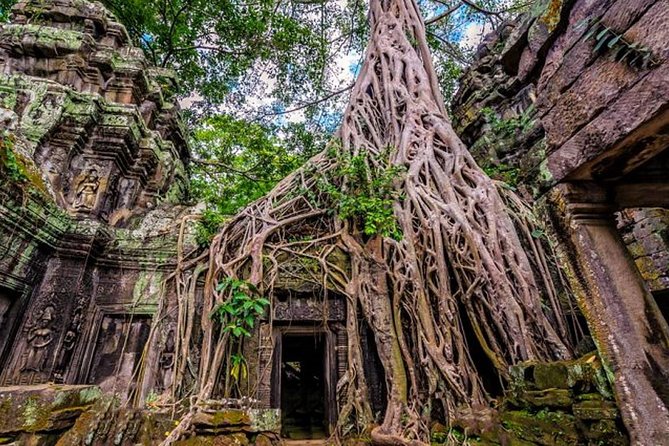
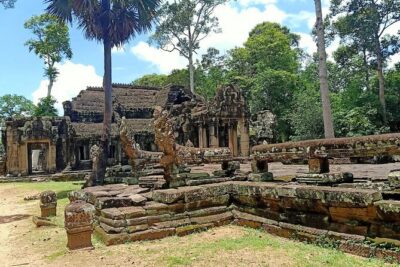
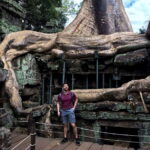
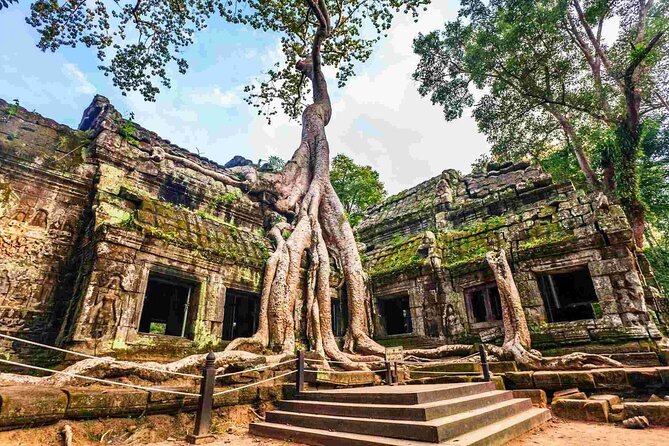
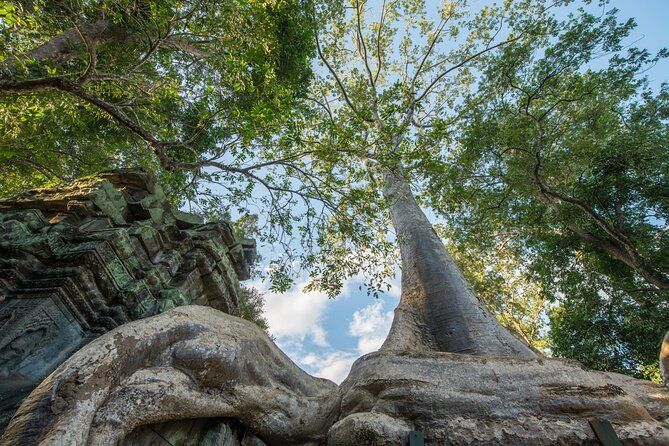
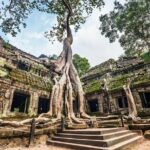
Ta Prohm is the temple most people recognize as part ruin, part jungle story. The day plan gives you about one hour, and that’s a good amount of time because you’re balancing two things: the visual spectacle and the need to keep moving.
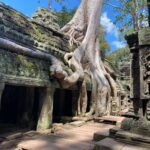
The special thing about Ta Prohm is how the vegetation and stone interact. You get a view of how ruins can remain part of the living environment, not just cleaned-up museum pieces. It’s also a temple where you’ll likely want to slow down for photos, so the guided timing helps you fit it in without turning the day into one long pause.
One consideration: Ta Prohm can be crowded, and it’s easy to get stuck in bottlenecks. A good guide matters here—especially if you want photo angles that avoid the most congested spots. The licensed guides on this tour are set up to help you find those better angles while keeping the pace reasonable.
Terrace of the Elephants and the Leper King: Short Stops, Big Meaning
These terraces are easy to underestimate because they’re shorter time blocks—30 minutes each—but that’s exactly why they work on a full day. You’re not trying to “finish” everything. You’re getting the key carvings and understanding what they are for.
Terrace of the Elephants (30 minutes)
This is one of the most visited spots in Angkor Park. It was created as a viewing platform to welcome back victorious armies. The practical value of this stop is that it reframes your visit from pure aesthetics to social function. You start reading the temple as a stage for ceremonies and public display, not just a place to look at stones.
Terrace of the Leper King (30 minutes)
Just north of the Terrace of the Elephants, this platform dates from the late 12th century and is described as a seven-meter-high structure. What you’ll get from the guide here is the ability to connect the terrace carvings to the larger temple complex you’re already walking through.
If you’re trying to choose only a few “extra” stops besides the biggest temples, these terraces are among the best bets because the time cost is low and the story payoff is high.
Baphuon Temple: The Smaller Stop That Makes the Day Click
Baphuon is a shorter visit—about 30 minutes—but it’s placed so you can carry what you learned from the bigger sights into a final stop. It’s located in Angkor Thom, northwest of the Bayon area, and the temple is described as a three-tiered structure built in the mid-11th century.
This is the kind of temple where context helps. By the time you reach it, you’re already seeing how the Khmer built, layered, and used temple space. That’s why a brief stop can feel satisfying instead of rushed: you’re not just ticking it off. You’re connecting it to the bigger picture you just learned across the day.
The Guide Factor: Marin and Chum Nak Make the Difference
This kind of tour lives or dies on the guide. And here, you have real examples that show what you should hope for.
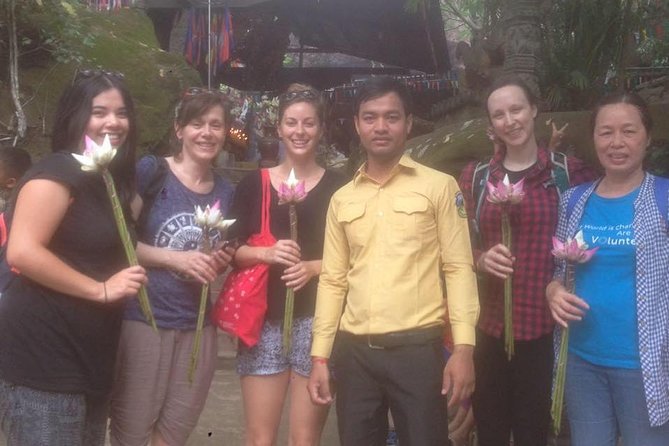
One guide named Marin is described as extremely informative about history and architecture. What stands out is not just the facts, but the way he manages the group: he lets you explore at your own pace even if you’re slower than you thought you’d be, and he still keeps the day on track. He also knows photo spots and takes great pictures. That matters at Angkor, where one wrong turn can cost you the angle you wanted.
Another guide, Chum Nak, is described as a disrobed monk who studied history during that time. That background is the kind of detail that often translates into better explanations in plain language. The best part in the description is that people learned a lot, and even a history buff felt the day added real understanding—not just sightseeing.
If you have a choice when booking, you can ask for a specific guide by name. At minimum, you should look for this style of guiding: clear explanations, flexibility for your pace, and help with where to stand for photos.
How to Plan Your Day So You Don’t Feel Crushed
Angkor is walking-heavy. Even with timed stops, you can feel tired if you treat it like a casual stroll.
Here are smart, low-effort habits that fit this exact style of tour:
- Wear comfortable shoes you can trust. Terraces and uneven stone aren’t the place for new sandals.
- Bring water if you have a sensitive stomach about heat. Mineral water is included, but your body might ask for more.
- Use the guide’s pacing. If the guide says you can explore for a few minutes, take it. That’s where the enjoyment happens.
- For photos, don’t just shoot from the main path. A good guide will point you toward better angles, and it saves time.
This tour’s shorter segments at places like the terraces and Baphuon are actually a feature. You’re getting variety without spending half the day stuck in one spot.
Should You Book This Angkor Small-Group Tour?
Book it if you’re a first-timer and you want structure. It’s built for people who want to see major temples across Angkor Archaeological Park without trying to manage every decision alone. The small group size and licensed guide support make it easier to understand what you’re seeing, not just capture it.
I’d be a little cautious if your main goal is a super-long, slow “stay forever” experience at one temple. This is a packed day with a lot of variety, and while your guide can be flexible, you still have time limits at most stops.
If you can handle extra costs for Angkor Wat admission and you’re fine eating on your own since meals aren’t included, this tour looks like a strong value way to get your bearings quickly and learn the temple stories as you walk them.
FAQ
How long is the Angkor Wat and Small group temples full day tour?
It runs for approximately 9 hours.
Does the tour include hotel pickup and drop-off in Siem Reap?
Yes. Pickup and drop-off from your hotel stay in Siem Reap are included.
Is an English-speaking guide provided?
Yes. The tour includes an English speaking, licensed guide.
Are entrance fees included?
No entrance fee is included. The Angkor Wat entrance fee is listed as $37.00 per person.
Is lunch included?
No. Meal (Lunch/Dinner) is not included.
What vehicle will I travel in?
You travel by an air-conditioned vehicle (van or bus).
How large is the group?
The maximum group size is 15 travelers.
Can I cancel and get a full refund?
Yes. You can cancel up to 24 hours in advance for a full refund.
Is a mobile ticket provided?
Yes. A mobile ticket is included.