REVIEW · SIEM REAP
Siem Reap: Full Day Angkor Wat Temple Experience with Sunset
Book on GetYourGuide →Operated by ASEAN ANGKOR GUIDE · Bookable on GetYourGuide
You can feel Angkor calling in every stone. This full-day loop strings together Angkor Thom, Ta Prohm, and Angkor Wat, ending with sunset from Phnom Bakheng.
What I love most is the day is paced so you spend real time at the sights, not just rushing between them, and the drive is built for heat with cold water and cool towels.
Second, the guides bring the temples down to earth. English is clear, and guides like Mony, Raman, Seila, and Dara are praised for sharing practical context and even helping with photos at the best angles. The only real drawback to plan for is the Angkor pass isn’t included (it’s a separate $37 per person), plus you’ll be walking and climbing in the sun.
In This Review
- Key points worth knowing before you go
- Getting started in Siem Reap: pickup, A/C comfort, and pass setup
- Angkor Thom: the royal city route from the South Gate to Baphuon
- Bayon Temple’s stone faces: why this stop lands so well
- Royal terraces in Angkor Thom: Elephants, Phimeanakas, and Leper King
- Srah Srang break and lunch: refuel without losing the day
- Ta Prohm and the village stop: roots, roots, and palm sugar
- Angkor Wat late afternoon: the main icon at your pace
- Phnom Bakheng sunset: classic views with stairs to earn them
- Price and value: how the $25 tour really plays out
- Who this tour is best for (and who should skip)
- Small-group details that actually help
- What to bring (so the day doesn’t beat you)
- Should you book this full-day Angkor Wat with sunset tour?
- FAQ
- Do I need an Angkor pass for this tour?
- How long is the full day tour?
- What is the pickup time from my hotel?
- Which temples and sites are included?
- Is lunch included, and do you offer vegetarian options?
- What’s the sunset part like at Phnom Bakheng?
- What should I bring for the day?
- Are there dress code rules?
- Is the group private or small group?
Key points worth knowing before you go
- Small-group feel (up to 14), which helps you move at a human pace and get questions answered.
- Cold towels, bottled water, and an A/C vehicle keep you sane through the Cambodian heat.
- A smart mix of big icons and quieter corners, with timing help so you’re not trapped in the thickest crowds.
- Local lunch at a restaurant with a vegetarian option, plus a village stop for palm cake and palm sugar.
- Sunset at Phnom Bakheng gives you a classic finish, but bring comfy shoes for the walk and steps.
Getting started in Siem Reap: pickup, A/C comfort, and pass setup
Your day starts early-ish, with hotel pickup from about 8:00 a.m. to 8:30 a.m. in Krong Siem Reap. The operator asks you to wait in the lobby a little before pickup, and the team will be holding a sign with your last name.
Once you’re on the road, you’ll first handle the Angkor pass purchase before you enter the Angkor area temples. This matters because it avoids the worst-case scenario: arriving with the wrong ticket and losing time at the gate.
A practical plus from many recent guests: the vehicle is A/C and comes with water and cool towels during the day. People also note extra comfort details like USB/USB-C charging in the van, which is helpful when you’re using your phone for maps and photos all day.
You can also read our reviews of more evening experiences in Siem Reap
Angkor Thom: the royal city route from the South Gate to Baphuon
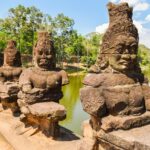
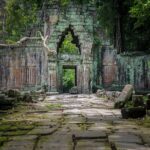
Angkor Thom is where the Angkor story starts to feel like a living fortress. You’ll visit the main circuit’s key points, including the South Gate, which features a large statue of Avalokiteshvara. That face-forward moment is the same kind of imagery people recognize from pop culture, including the Tomb Raider connection mentioned in the tour description.
From there, the route moves through several important structures inside the walled city. You’ll stop at Bayon Temple, then later continue through other royal-era temples like Baphuon, the Terrace of the Elephants, Phimeanakas, and the Terrace of the Leper King (Preah Ponlea Sdach Komlong).
What this portion gives you is context. Angkor Thom isn’t just a random cluster of ruins—it’s the “Great Royal City” built in the 12th century by King Jayavarman VII. Walking this route with a guide helps you see why these spaces were arranged the way they were: ceremonial routes, power displays, and places built for rulers to be seen.
What to consider: the circuit involves stair climbing and uneven steps in places. If you’re not used to heat plus stone steps, wear shoes with grip and go slow through the climbs.
Bayon Temple’s stone faces: why this stop lands so well
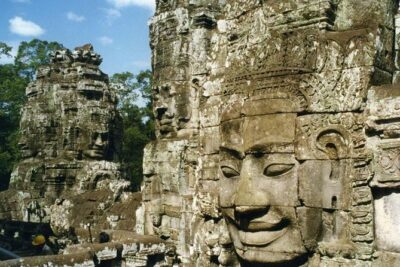
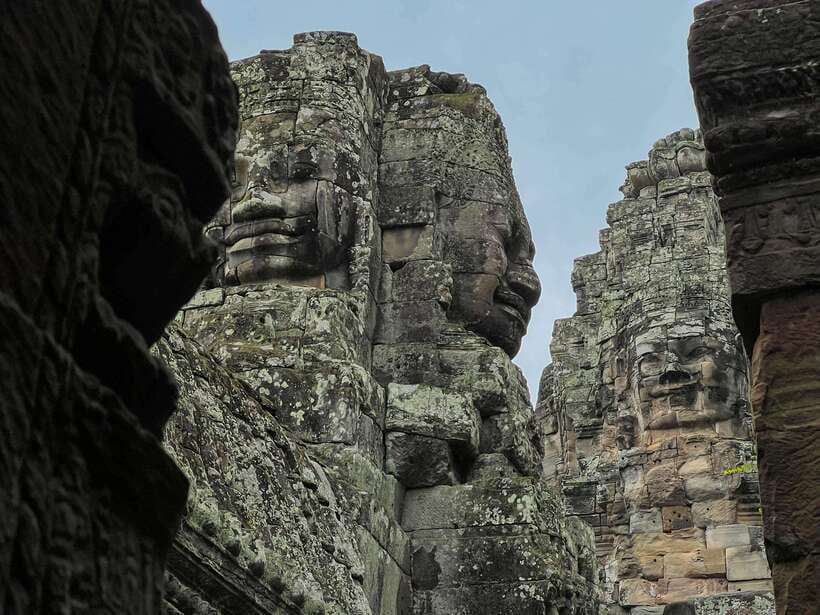
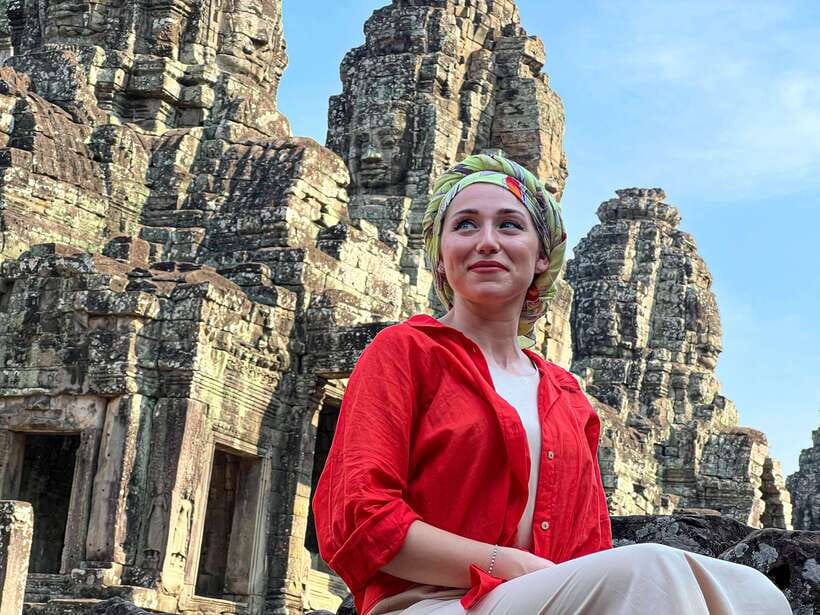
If Bayon is one of the main reasons you booked, you’re not alone. The temple is famous for its hundreds of carved faces, and the experience is usually what people remember most.
This isn’t only about the wow factor. With a good guide, the faces become a clue to the temple’s meaning and the religious blending you see across the Angkor period. Several guests specifically praised guides like Mony and Raman for explaining what you’re looking at and pointing out details you’d likely miss on your own.
Time-wise, you’ll spend about one hour here, which is enough to do the basics and still pause for photos. If you care about picture angles, this is a stop where the guide’s help can save you time, especially if they know where the light and foot traffic tend to be kinder.
Royal terraces in Angkor Thom: Elephants, Phimeanakas, and Leper King
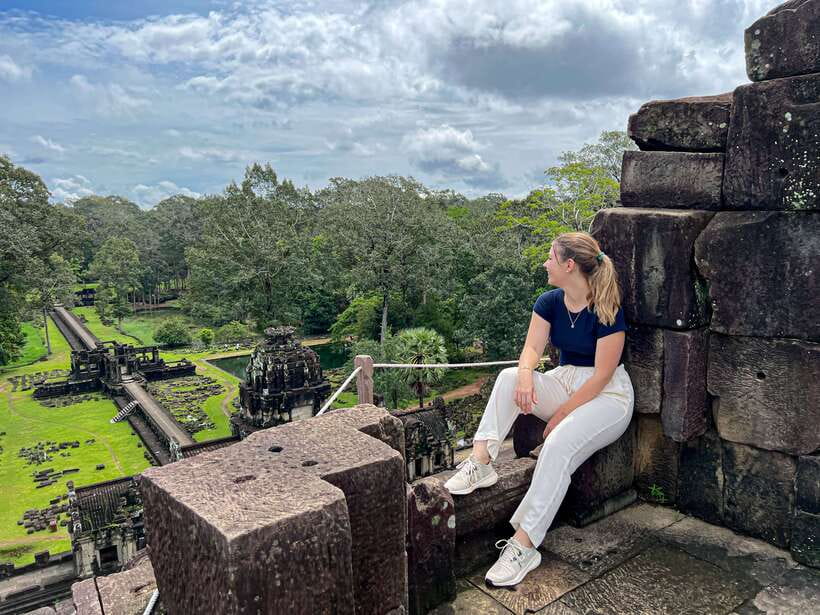
After Bayon, you’ll continue through the royal-territory highlights. The tour includes multiple terraces and temples that are smaller than Angkor Wat but packed with story.
- Terrace of the Elephants: This is tied to the royal palace setting and is a great place to imagine ceremony and procession.
- Phimeanakas: Another major palace-era temple, worth stopping at even if you feel you’ve already seen a lot of faces and towers.
- Terrace of the Leper King (Preah Ponlea Sdach Komlong): You’ll hear the traditional name often, and the stop is short but memorable because it feels like stepping into a named space with specific functions.
Then you’ll also visit Baphuon, described as the largest Hindu temple inside the Angkor Thom city. You’ll see why the Angkor world includes both Buddhist and Hindu imagery depending on the site and the era.
The drawback here is simple: there’s no escaping that you’re moving through multiple stops in one walled complex. If you hate “template tourism,” you may want to slow down at the stops you care about most and let the rest be a faster scan.
Srah Srang break and lunch: refuel without losing the day
You’ll have a break at Srah Srang and then move into lunch. Lunch is at a local restaurant and the tour description notes a vegetarian option, so you don’t have to guess.
People also mention specific menu choices like Fish Amok as a win. Even if you pick something else, the idea is solid: you need a real sit-down meal so you can keep going through Ta Prohm and Angkor Wat.
If you’re heat-sensitive, this is the moment to pace yourself. Take your time with the break, hydrate before the afternoon temples, and don’t treat lunch as a quick stop.
You can also read our reviews of more tours and experiences in Siem Reap
Ta Prohm and the village stop: roots, roots, and palm sugar
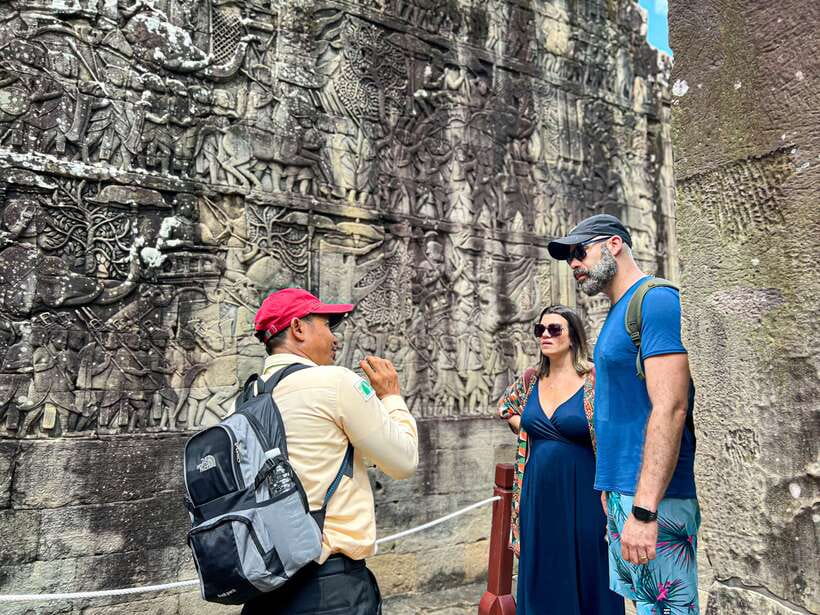
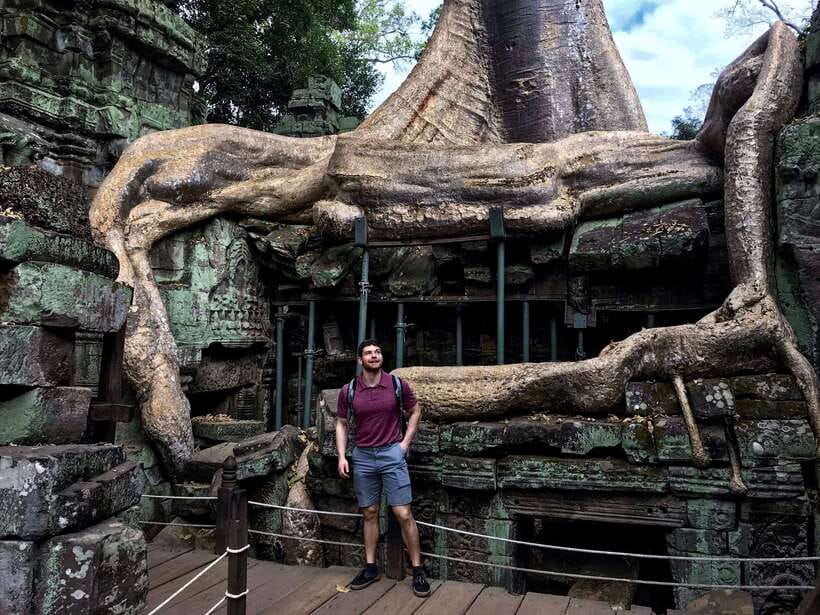
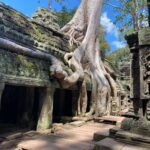
After lunch, the plan shifts to a different mood. Ta Prohm is left in its original state, partly overgrown with massive trees and exposed roots. This is one of those places where photos don’t feel like postcards; the textures and scale keep grabbing your attention.
The Tomb Raider link is also part of why people feel drawn to this temple. But the real value is seeing the contrast between human-built stone and the way nature quietly takes over. It’s a different kind of storytelling than the face-carvings of Bayon.
Then comes a stop that’s often the highlight for people who want something beyond only temples: an authentic village visit called Phum Preah Dak. Here, you can learn how local people make palm cake and palm sugar. It’s a short detour from Angkor’s stone world, and it adds a reminder that Cambodia’s living culture is right next to the ruins.
What to consider: this section adds time walking around temple grounds and then moving through the village. Bring a hat and use insect repellent as suggested, especially if your day includes outdoor time before the air clears.
Angkor Wat late afternoon: the main icon at your pace
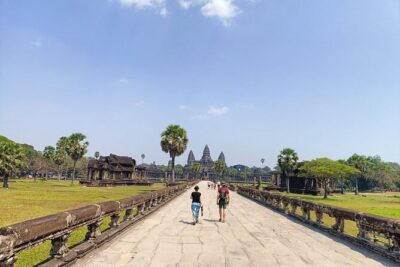
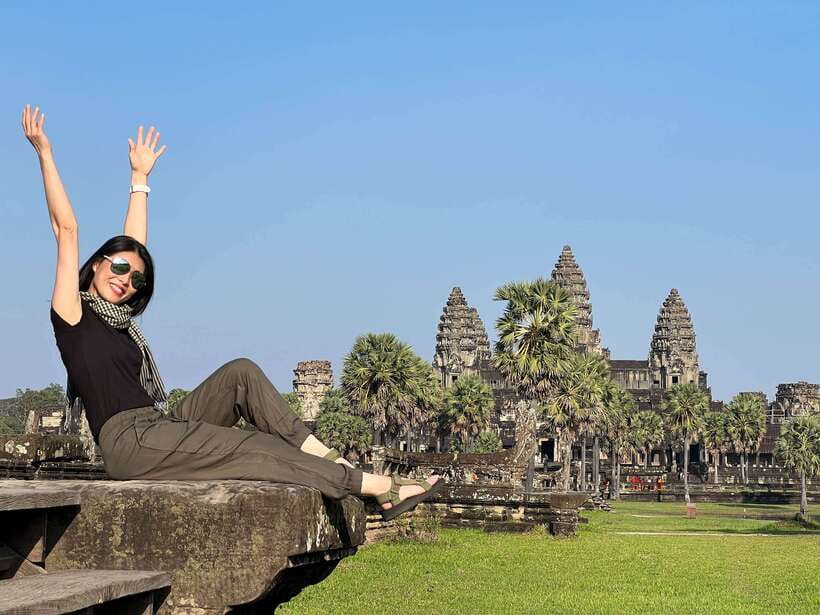
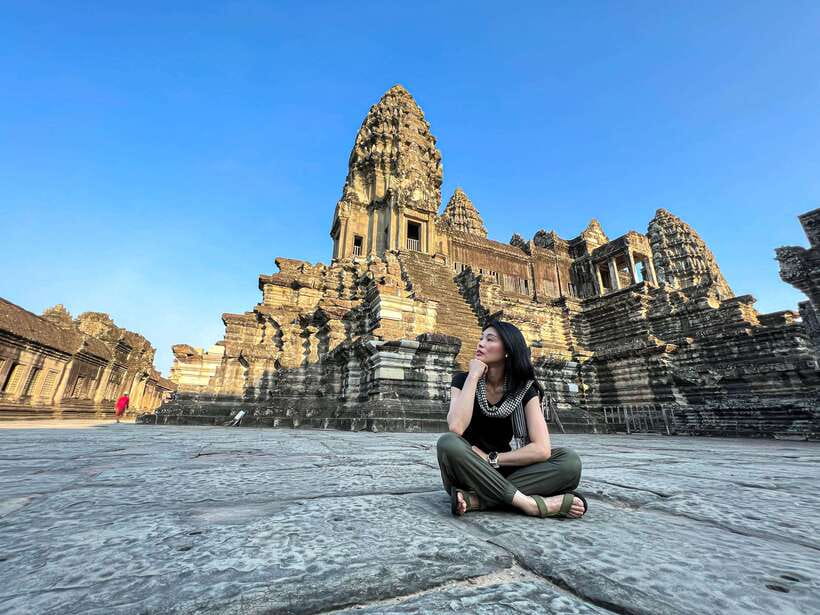
Angkor Wat is the centerpiece, and the tour gives it the time it deserves: about two hours. You’ll see it in the afternoon, with the guide timing the day so the light isn’t just harsh glare.
Angkor Wat is described as the largest sacred building on the planet and an icon of Khmer civilization. The tour notes it’s dedicated to Vishnu and covered with hundreds of wall decorations, plus the longest bas-relief in the world. Even if those facts don’t mean much to you on paper, you’ll feel it once you walk the corridors and look up at the details.
This is also a good moment to learn what you’re actually looking at. A strong guide will connect the layout—moat, causeways, and five towers tied to the Cambodian flag—to the way the temple functioned as a symbol, not just a structure.
Practical tip: wear breathable clothes with covered shoulders and knees, because you’ll be outdoors longer than you think.
Phnom Bakheng sunset: classic views with stairs to earn them
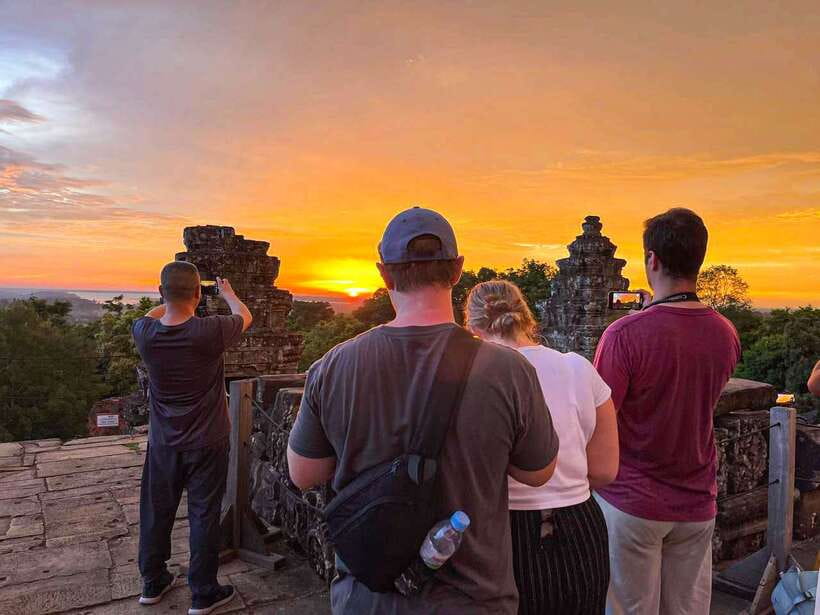
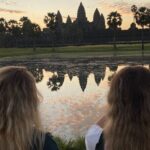
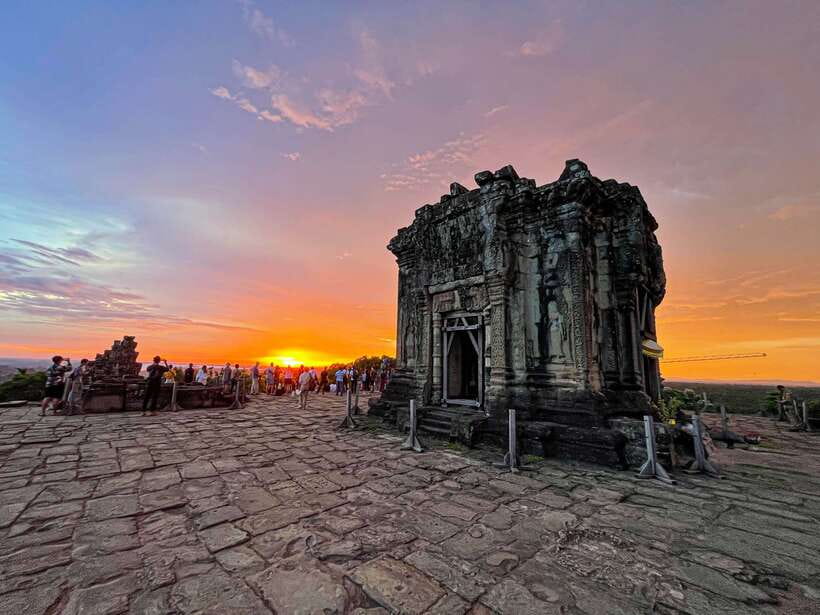
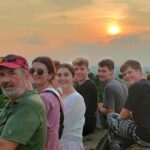
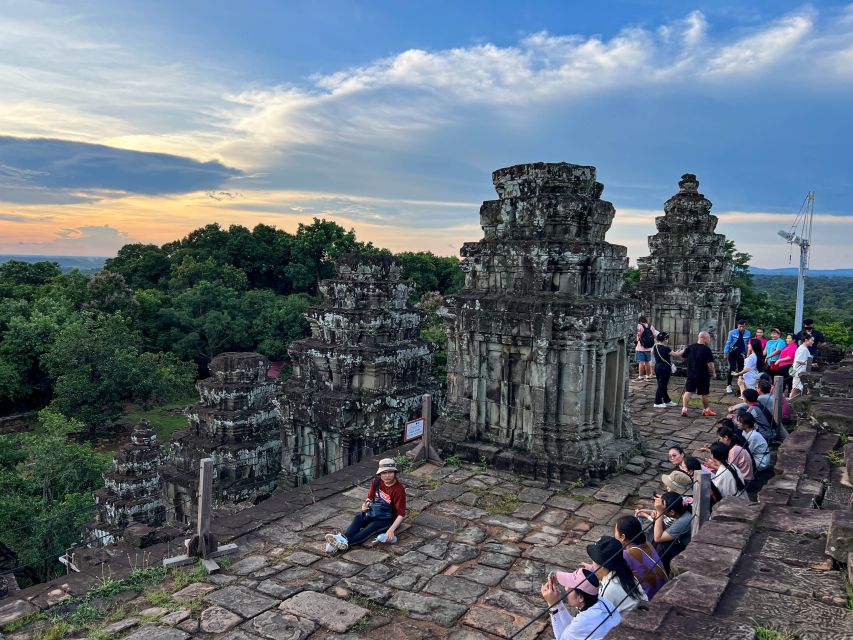
The day ends with a sunset climb at Phnom Bakheng. The tour includes a walk and sunset time of about 1.5 hours, and this portion is where timing matters most.
Many guests specifically praise the way the schedule gives you time to get the view before the biggest crowd surge. That’s valuable because Phnom Bakheng can get packed, and getting into position earlier makes the experience more relaxed.
Consideration: sunset at Bakheng means stairs and uneven paths. If you’re not steady on your feet, slow down and take breaks. The air can feel cooler at sunset, but you’re still coming from a hot day.
Price and value: how the $25 tour really plays out
The tour price is $25 per person, but the Angkor pass is extra at $37 per person. That makes your basic total about $62 per person, before any soft drinks (not included).
Is it worth it? For most people doing a full Angkor day, the value isn’t only the temples—it’s the time saved and the reduction in stress:
- You’re not trying to coordinate transport across multiple sites on your own.
- You get professional English speaking guiding through several major stops in one loop.
- You get A/C transport plus repeated cooling breaks, which can make or break an Angkor day.
If you were going to rent a vehicle and pay for guides separately, you’d likely end up spending more than $25 in effort and coordination. The extra “local culture” piece (Phum Preah Dak palm sugar) is also a bonus many temple-only tours skip.
Who this tour is best for (and who should skip)
This works especially well if you want:
- A full-day Angkor highlights tour without doing sunrise schedules.
- A guided path that helps you understand what you’re seeing, like why Bayon’s faces matter and how the royal terraces fit together.
- A day built around heat management: water, cool towels, and A/C between stops.
It may not be ideal if:
- You prefer to wander completely on your own with no structure.
- You’re traveling with luggage or need lots of gear. The tour notes no luggage or large bags are allowed.
- You’re hoping to dress in shorts and tank tops. The dress code requires shoulders and knees covered.
Small-group details that actually help
A lot of tours say small-group, but here the limit is up to 14 participants for the small-group option, and private options are available. That size is big enough to meet people but small enough that the guide can adjust pace.
Also, several guides are praised for handling photo moments. People mention guides acting as a kind of on-the-spot photographer, taking pictures at good angles and being patient while you work through stair steps and photo stops.
One more useful detail: the tour includes unlimited bottle water and cool towels during the excursion. In Siem Reap heat, that’s not a luxury—it’s basic support.
What to bring (so the day doesn’t beat you)
Bring what the tour requests:
- Sunscreen and sunglasses
- Hat and insect repellent
- Camera and comfortable walking shoes
- Light breathable clothing with covered knees and shoulders
If you’re planning for sunset climbing, also expect some wind and dust near viewpoints, so bring something you’ll be comfortable with during that final walk.
Should you book this full-day Angkor Wat with sunset tour?
If you want a classic Angkor day with the big names—Angkor Thom, Bayon, Ta Prohm, Angkor Wat—and a proper sunset finish at Phnom Bakheng, this tour is a strong choice. It’s priced like a value option once you factor in A/C transport, repeated cooling breaks, a structured route across multiple sites, and a guide to help you make sense of what you’re seeing.
I’d book it if you’re okay paying the Angkor pass separately and you can handle a long hot day with stairs. If you want temples without walking and without rules about shoulders and knees, you’ll probably feel annoyed. But for most first-timers, the balance of temples plus palm-sugar culture, plus the way the day is paced, makes this a good bet.
FAQ
Do I need an Angkor pass for this tour?
Yes. The Angkor temple pass is not included. You’re required to have it before the tour starts, and the pass purchase is handled early in the day.
How long is the full day tour?
It runs for about 10 hours.
What is the pickup time from my hotel?
Pickup is included and typically happens between 8:00 a.m. and 8:30 a.m. The guide will wait in the lobby, and you should be ready about 10–15 minutes before pickup.
Which temples and sites are included?
The tour includes Angkor Thom areas, Bayon Temple, Baphuon, Terrace of the Elephants, Phimeanakas, Terrace of the Leper King, Srah Srang, Ta Prohm, Angkor Wat, and sunset at Phnom Bakheng.
Is lunch included, and do you offer vegetarian options?
Lunch is included, and the tour notes a vegetarian option is available if you tell the operator in advance.
What’s the sunset part like at Phnom Bakheng?
You’ll visit Phnom Bakheng for a walk and sunset, with about 1.5 hours allocated. Be ready for walking and stairs.
What should I bring for the day?
Bring sunscreen, a hat, and insect repellent. It also helps to have a camera and sunglasses since you’ll spend a lot of time outdoors.
Are there dress code rules?
Yes. You need shoulders and knees covered. The tour states that short skirts and sleeveless shirts aren’t allowed.
Is the group private or small group?
Both are available. For the small-group option, the tour limits group size to up to 14 participants. Children under 10 are not suitable for the small-group option.