REVIEW · SIEM REAP
Angkor Wat 2 Days and a Half Temples & Tonle Sap-Small Group Tour
Book on Viator →Operated by Journey Cambodia · Bookable on Viator
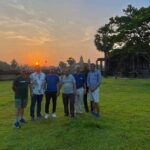
Angkor is best before sunrise. This tour lines up an early sunrise run at Angkor Wat and an evening sunset over the ruins, and my favorite part is how guides Sak and Mao explain what you’re seeing in clear, well-informed English. One catch: the temple pass is not included, so you’ll need an extra $62 per person paid directly at the sites.
With a max 15 person group, hotel pickup, and an air-conditioned van, you spend less time stuck and more time moving. It is also a long, active schedule, so plan for dusty mornings and lots of walking on uneven stone and roots.
In This Review
- Key Highlights You’ll Care About
- Why This 2.5-Day Angkor and Tonle Sap Plan Works
- Price and Temple Pass: The Real Cost Picture
- Meet Sak and Mao: What Small-Group Guidance Adds
- Day 1 Temple Circuit: Pre Rup, Banteay Srei, Neak Pean, Preah Khan
- Pre Rup
- Banteay Srei
- Neak Pean
- Preah Khan
- Sunset Over Ancient Ruins: The Emotional Shift
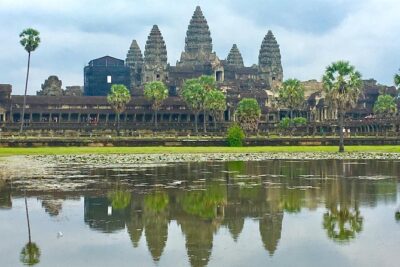
- Day 2: Pre-Dawn Angkor Wat Sunrise and the Torch-Lit Start
- Srah Srang Break
- Ta Prohm
- Angkor Thom and Bayon: Eastern Gate to the Faces
- Day 3 Tonle Sap: Kampong Phluk Floating Village by Boat
- Phare Circus Seat C (Dry Season Bonus)
- Practical Tips That Make the Whole Trip Easier
- Should You Book This Tour?
- FAQ
- What’s the duration of the Angkor Wat 2 Days and a Half Temples & Tonle Sap tour?
- What time does the tour start?
- Is hotel pickup and drop-off included?
- What’s included in the price?
- Do I need to buy a temple pass?
- Are meals included?
- How many people are in the group?
Key Highlights You’ll Care About
- Pre-dawn Angkor Wat sunrise with a torch-lit start and time on the eastern side
- Sunset views on Day 1 that give you a different mood from the mornings
- Small group size (up to 15) for a calmer pace than big buses
- Kampong Phluk Tonle Sap boat cruise plus entrance fee included
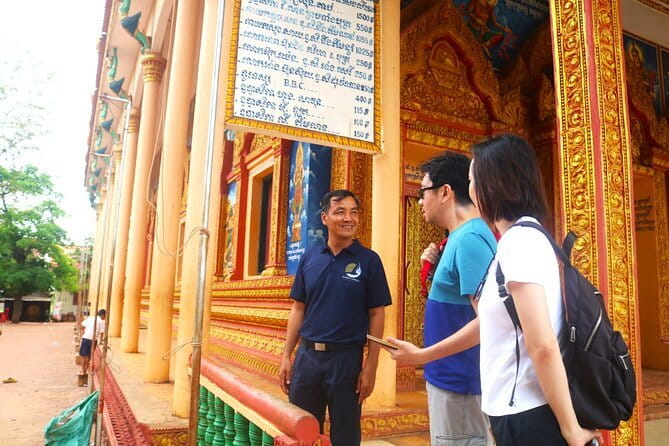
- English guide team (Sak and Mao) with temple history and Cambodian culture context
- Temple pass not included in the base price ($62 per person paid on-site)
Why This 2.5-Day Angkor and Tonle Sap Plan Works
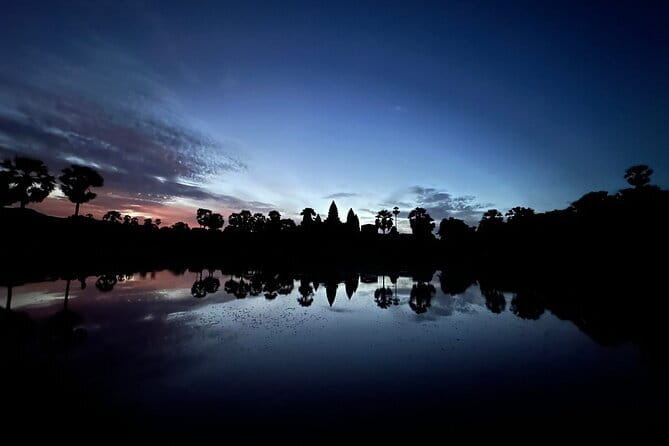
Angkor Wat in the dark is a different world. You’re not dealing with the usual day-time crowds first—you’re easing into the site at pre-dawn, when the stones feel cooler and the temple shapes are easier to read. This tour also doesn’t treat Angkor like one long line of monuments. It splits your time between the big icons and the less-clichéd stops that help you understand how the Khmer empire built and reused sacred space.
What I like most for your planning is that it balances the “wow” moments with breathing room and smart sequencing. You get a sunrise spotlight at Angkor Wat, then a day that moves through several temples with a rhythm that keeps you from burning out too fast. And then you switch gears to real life on Tonle Sap at Kampong Phluk, which is a strong contrast to carved stone.
The group size matters too. Up to 15 people means you usually have less waiting around at each stop, and questions are actually possible without shouting over 50 other voices.
You can also read our reviews of more tours and experiences in Siem Reap


Price and Temple Pass: The Real Cost Picture
The tour price is $79 per person, and that’s the part you can compare quickly. For that, you get an air-conditioned vehicle, an English-speaking guide, hotel pickup and drop-off, plus the sunrise and sunset experiences. You also get bottled water and a cool towel, which sounds small until you’re sweating in temple heat. Tonle Sap entrance and the boat cruise are included too—so you’re not piecing together extra tickets on your own.
Then there’s the part that often surprises first-timers: the temple pass. You’ll pay $62 per person directly to the site (temple pass not included). That means your likely total for the core experience becomes about $141 per person before meals.
Meals are listed as not included. That’s normal for Cambodian temple touring, where you’ll pause at local spots but you should budget on your own. The good news is you do have scheduled breaks, and the guide can usually point you toward practical options.
My advice: budget like you’re adding the temple pass immediately. If you do, you avoid the last-minute scramble and you can focus on photos instead of paperwork.
Meet Sak and Mao: What Small-Group Guidance Adds
This is the kind of tour where the guide can make or break the day. The standout in the feedback I’ve seen for this experience is the guide partnership: Sak as the tour guide and Mao as the driver. The praise is consistent—English is clear, and the explanations connect temple features to Cambodian culture instead of just listing names.
That difference shows up in how you’ll look at carvings. For example, when the guide explains why a structure was built a certain way or what a temple’s layout was meant to represent, the stones stop being decorative and start behaving like a map. You’ll also feel the timing more: where to stand, what to notice first, and when to move so you’re not stuck in the worst light.
The driver side matters too. Good driving isn’t glamorous, but in Siem Reap traffic it can be the difference between arriving fresh and arriving tired. An English-speaking guide with a steady driver team helps the whole day keep its pace.
Day 1 Temple Circuit: Pre Rup, Banteay Srei, Neak Pean, Preah Khan
Day 1 is built like a sampler, but not a random one. You start outside the main Angkor Thom core, which helps you feel like you’re exploring the region rather than only circling the same blocks.
Pre Rup
Your first stop is Pre Rup, a Hindu state temple. It’s described as a mountain temple made from combined brick, laterite, and sandstone. The value here is the perspective shift. Instead of starting with the most famous skyline silhouettes, you begin with a temple designed for climbing and viewpoint energy.
Why it’s worth your attention: Pre Rup is a solid introduction to how these structures were meant to be approached—movement upward, then reward with views and temple geometry.
Possible drawback: it’s a first-stop that still asks you to walk early, so wear footwear you trust. If you’re expecting a gentle start, plan on some uneven ground.
Banteay Srei
Next is Banteay Srei, famous for its detailed reliefs and for being one of the better-preserved temple structures. It’s smaller, but the craftsmanship focus is the point. This stop is where many first-timers finally slow down and realize the Angkor story isn’t only about scale—it’s also about precision.
Tip: if you like close-up details, Banteay Srei is your kind of stop.
Neak Pean
Then you’ll see Neak Pean, an artificial island with a Buddhist temple on a circular island. The layout is unusual, and that’s the advantage. It helps you recognize that Angkor-era religious life wasn’t one-note.
If you care about how spiritual spaces were built into water and geometry, Neak Pean gives you a different lens.
Preah Khan
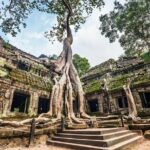
Your day closes at Preah Khan, a ruined but atmospheric temple where tree roots and crumbling stone create a strong sense of place. This is the stop that often becomes emotional for people because it shows what time does to human effort.
For photos, you’ll likely want to move carefully—roots and broken stone can be slippery and uneven. Take your time and let the guide direct you.
Sunset Over Ancient Ruins: The Emotional Shift
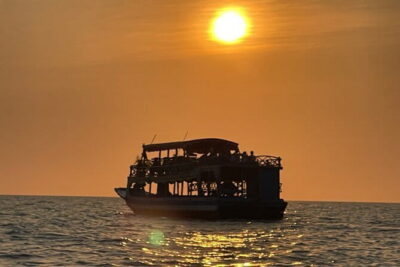
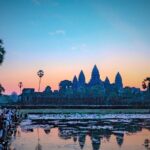
The tour includes a sunset experience on Day 1, and it’s not just a nice extra. Sunset at Angkor changes how you read the carvings and edges. Morning light can flatten detail. Evening light brings shadows back, and shadows are what make reliefs feel three-dimensional.
Practically, sunset timing also gives your day a natural ending point. You’ve already visited several temples—then you get a scenic break before your energy drops completely. That pacing helps more than you’d think.
My advice: don’t treat sunset as a quick photo stop. Give it a few minutes where you just look. Even if you’re not a “temple person,” the mood at that hour helps it all click.
Day 2: Pre-Dawn Angkor Wat Sunrise and the Torch-Lit Start
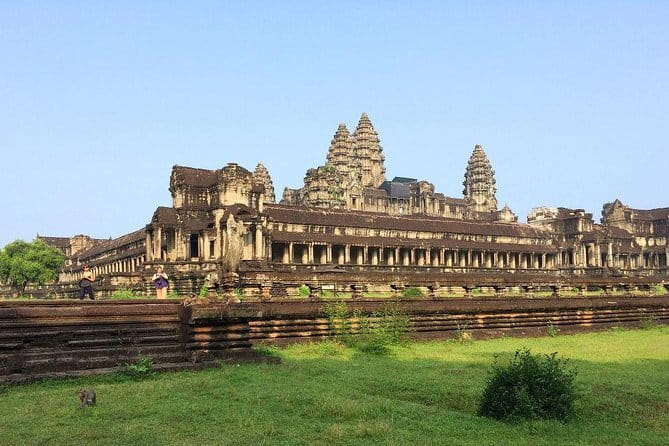
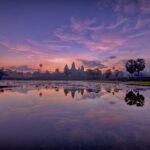
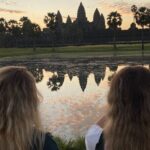
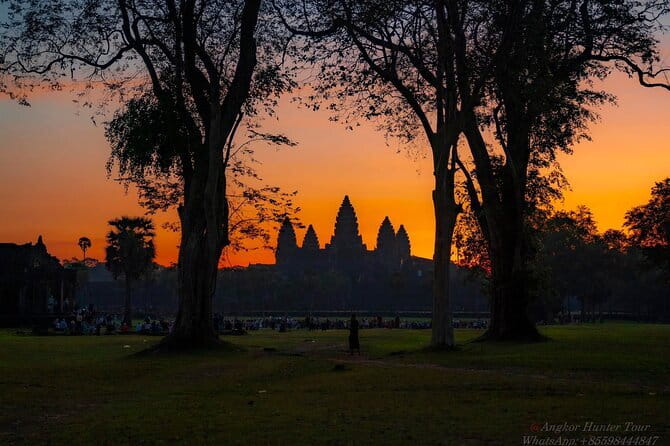
If you do Angkor once, this is the day-shaper that matters. Day 2 begins with pre-dawn departure from your hotel to see the sunrise at Angkor Wat. You enter the great temple in darkness and with the light from a torch, then walk through the eastern side that many people don’t see.
That torch-lit start is more than a gimmick. It forces you to pay attention to structure and alignment before the sun does the work. It also changes the feel of the site. You’re walking through the temple without the usual daytime clutter of attention and noise.
What to expect: you’ll have an early wake-up and a slow, deliberate entry. This is not the time for a heavy breakfast or an outfit you can’t move in comfortably.
Srah Srang Break
After the sunrise focus, you’ll enjoy a break and a breakfast stop at a Khmer local restaurant at Srah Srang area. Your main goal here is reset—water, a bit of food, and time to catch your breath before more temples.
One note: meals are listed as not included overall. So treat it as a scheduled stop rather than a guaranteed free meal unless your confirmation says otherwise.
Ta Prohm
Then it’s Ta Prohm, the jungle-enveloped temple many people instantly recognize. The value isn’t just the famous look—it’s how the roots frame the stone. This stop makes Angkor feel alive, like nature is still editing the ruins.
Keep your expectations realistic. Ta Prohm gets busy. Your best strategy is to move with the group, let the guide show you angles, and avoid stopping in the middle of paths when you want pictures.
Angkor Thom and Bayon: Eastern Gate to the Faces
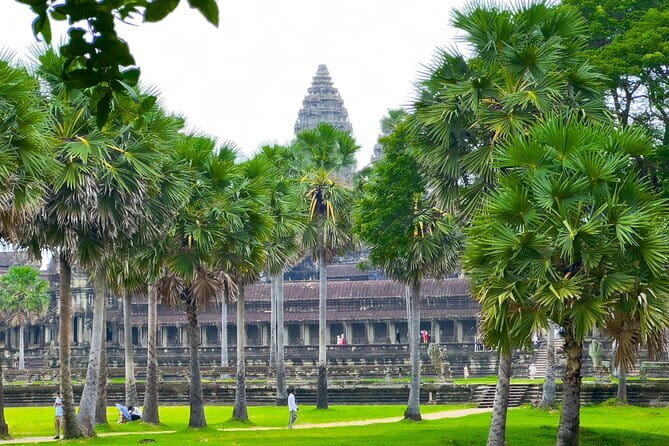
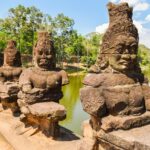
After Ta Prohm, you head to Angkor Thom, starting with the eastern gate. The tour time here is shorter (about 20 minutes), which means it’s more of a clear landmark pass than a long exploration.
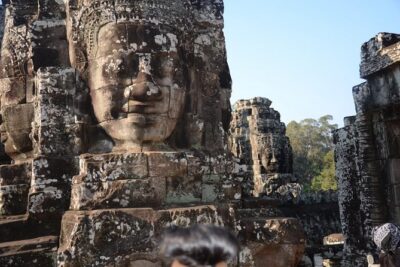
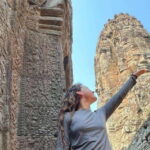
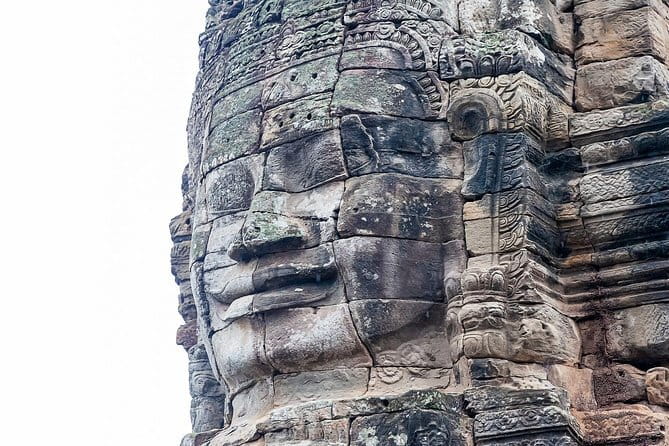
Then you visit Bayon Temple, known for its central towers covered in more than 200 enormous faces. This is one of those stops where the guide’s interpretation helps. Once you understand the intent of the design—how those faces function as symbols and orientation points—you stop seeing it as only “cool art” and start seeing it as a system.
Practical note: Bayon has a lot going on visually, so plan for a few minutes where you walk slowly rather than power-walking. The faces shift with your position, and that movement is part of the experience.
Day 3 Tonle Sap: Kampong Phluk Floating Village by Boat
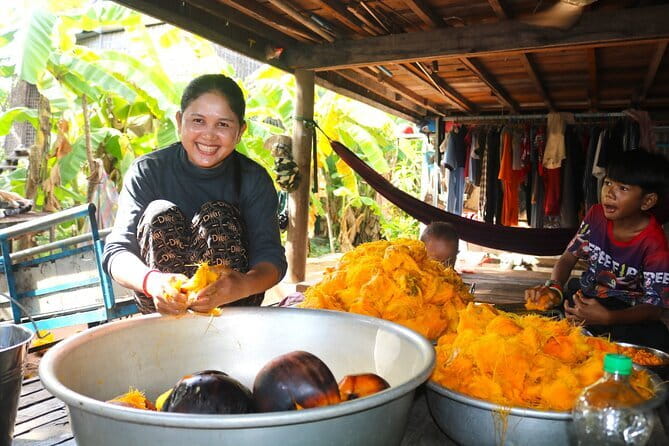
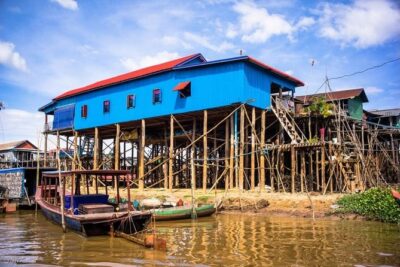
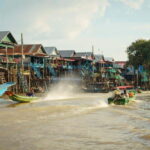
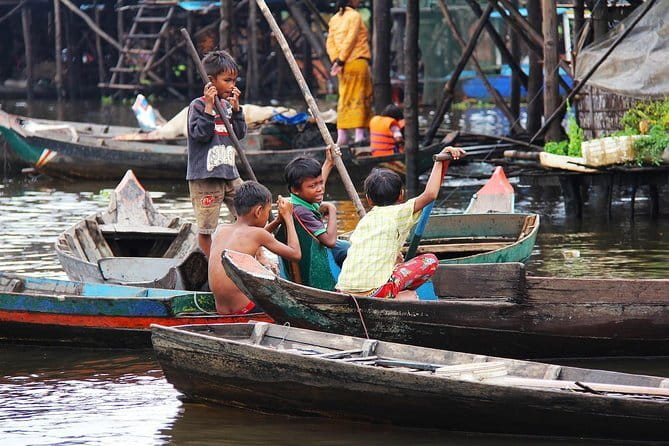
On Day 3, you trade stone for water. You’ll head to Tonle Sap Lake (the world’s second-largest freshwater lake) and then take a boat trip to Kampong Phluk—a set of three small fishing villages.
The boat cruise is included along with the entrance fee, which makes this day feel simpler financially. It’s also a different kind of sightseeing. Instead of stepping onto temples, you’re reading daily life on the water: homes, work, and movement tied to the lake’s rhythm.
What makes this stop valuable for your trip: it gives context. Angkor is impressive, but it’s easy to treat it like an isolated museum piece. Tonle Sap pulls the experience back toward present-day Cambodia.
Possible drawback: it’s boat time. If you’re sensitive to sun, water spray, or uneven boat movement, bring what you need to stay comfortable. Also remember that this is still a hands-on day with walking and waiting around the dock area.
Phare Circus Seat C (Dry Season Bonus)
In the dry season, the tour includes Cambodia Phare circus (Seat C). This is a practical add-on if you want something cultural in the evening that isn’t more temples.
Since it’s seasonal, check your travel dates against that dry-season note. If it’s not dry season when you go, you’ll likely still have free evening time—just not the circus ticket.
Practical Tips That Make the Whole Trip Easier
Here’s how I’d plan your body and your brain for this kind of Angkor-focused schedule.
Wear shoes you can trust for uneven stone and roots. You’re moving between sites with different footing. Sandals might work for some people, but if you want fewer slips, close-toe shoes are the safer play.
Bring a light layer. Cambodia mornings can feel cooler before the sun is up, especially on pre-dawn starts. Then you’ll warm up fast later in the day.
Use a simple photo strategy: plan your must-shots first, then let the rest happen. With sunrise and multiple temples, you can get photo tunnel vision and miss the bigger details the guide points out.
Stay hydrated. The tour includes bottled water and a cool towel, which helps. Still, you should drink before you feel thirsty.
Last practical point: budget for the temple pass ($62 per person). If you treat that as part of the trip cost from day one, you’ll have a smoother experience and fewer stress moments.
Should You Book This Tour?
I’d book this if you want a well-timed mix of famous Angkor stops and less-expected temples, plus a real-world day at Tonle Sap. The small group size (up to 15) is a real quality boost, and the guide team—Sak for the temple storytelling and Mao for driving—comes through as a strong selling point.
Skip it or compare alternatives if you hate early mornings. Pre-dawn sunrise means you’ll be awake very early, and that’s not negotiable. Also, if you’re trying to keep costs ultra-low, remember the temple pass is separate at $62 per person, and meals aren’t included.
If you like thoughtful guidance, sunrise magic, and a contrast day that isn’t more ruins, this is a solid value for Siem Reap.
FAQ
What’s the duration of the Angkor Wat 2 Days and a Half Temples & Tonle Sap tour?
It’s listed as about 3 days.
What time does the tour start?
The start time is 8:00 am.
Is hotel pickup and drop-off included?
Yes, hotel pickup and drop-off services are included.
What’s included in the price?
Included items are air-conditioned transportation, an experienced English-speaking tour guide, hotel pickup/drop-off, sunset and sunrise, bottled water and a cool towel, Tonle Sap entrance fee and boat cruise, and Cambodia Phare circus (Seat C) in the dry season.
Do I need to buy a temple pass?
Yes. The temple pass is not included and costs $62.00 per person, paid directly to the site.
Are meals included?
Meals are not included, and you’ll choose meals on your own.
How many people are in the group?
The maximum group size is 15 travelers.