REVIEW · SIEM REAP
Small-Group Explore Angkor Wat Sunrise Tour with Guide
Book on GetYourGuide →Operated by Pitt Angkor Tour · Bookable on GetYourGuide
That early start pays off. This Small-Group Angkor Wat Sunrise Tour strings together the biggest hits of Angkor in a smart order, with an English-speaking guide like MR T who shares culture and temple details as you go. I really like the way the morning focuses on Angkor Wat’s sunrise first, then keeps you moving through the core sites without wasting time. I also like that the group stays small (max 10), so questions don’t get lost. The one thing to plan for: the Angkor 1-day pass and your meals aren’t included, so your real day cost is pass + food on top of the $20 tour price.
If you want a guided Angkor day that feels organized but not rushed, this fits. You’ll get early-light views, guided stops at Bayon, Ta Prohm, and Angkor Thom, plus visits tied to Pre Rup and Pink Temple. Just keep your expectations realistic: at this hour, you’ll feel the cold, and you’ll be up before most of Siem Reap is awake.
In This Review
- Key highlights worth getting out of bed for
- Angkor Wat sunrise at 4:20 am: why this timing matters
- The Srah Srong breakfast break: quick fuel near the Royal Bath
- Bayon Temple and King Jayavarman VII’s smiling stone faces
- Ta Prohm, the Tomb Raider Temple: roots, stone, and the feeling of time
- Angkor Thom: the last capital of the Khmer Empire
- Pre Rup and Pink Temple: brick, contrast, and good momentum
- Small-group comfort: max 10 people, English guide, and A/C transport
- Price and logistics: what $20 covers, and what you’ll still pay
- Who this tour suits best (and who should pick something else)
- Should you book this sunrise small-group Angkor tour?
- FAQ
- What is the duration of the Small-Group Explore Angkor Wat Sunrise Tour?
- Where does hotel pickup happen for this tour?
- What is included in the tour price?
- What is not included?
- Do I need an Angkor pass for this tour?
- Is the guide English-speaking?
- What time does the sunrise part start?
- How large is the group?
- What transportation will I use during the tour?
- Are children allowed on this tour?
- Can I cancel for a refund?
Key highlights worth getting out of bed for
- Sunrise at Angkor Wat starting around 4:20 am, with guided time inside the complex
- Srah Srong breakfast stop near the Royal Bath area to refuel after the early walk
- Bayon Temple’s 54 towers and 200 smiling stone faces linked to King Jayavarman VII
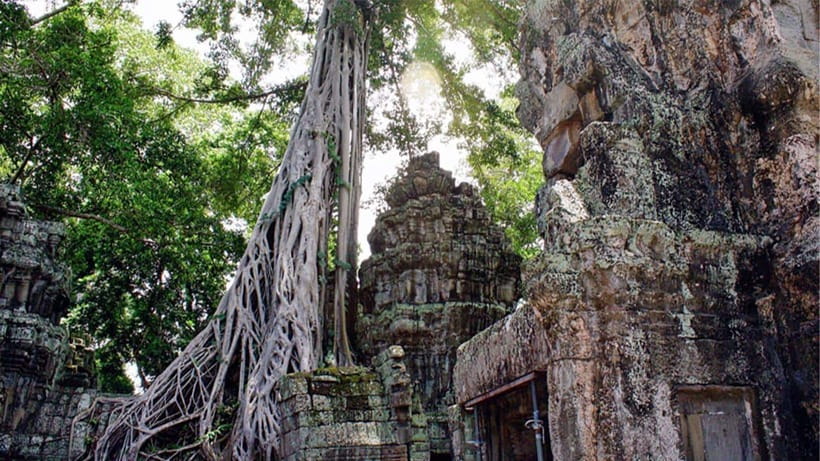
- Ta Prohm, the Tomb Raider Temple, where huge tree roots wrap the stones
- Angkor Thom, the last capital of the Khmer Empire, with a guided walkthrough
- English-speaking guide MR T providing anecdotes and temple-by-temple explanations
Angkor Wat sunrise at 4:20 am: why this timing matters
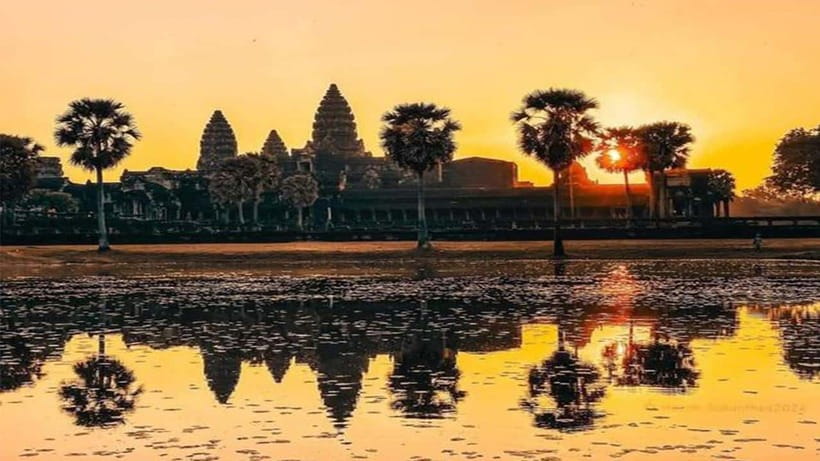
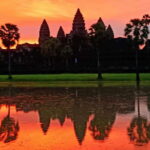
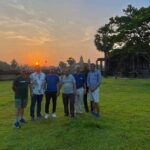
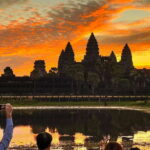
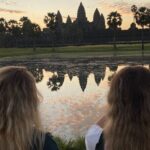
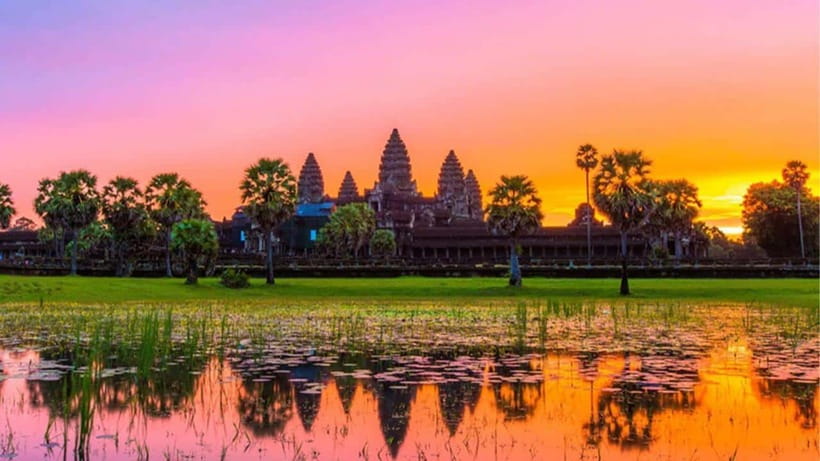
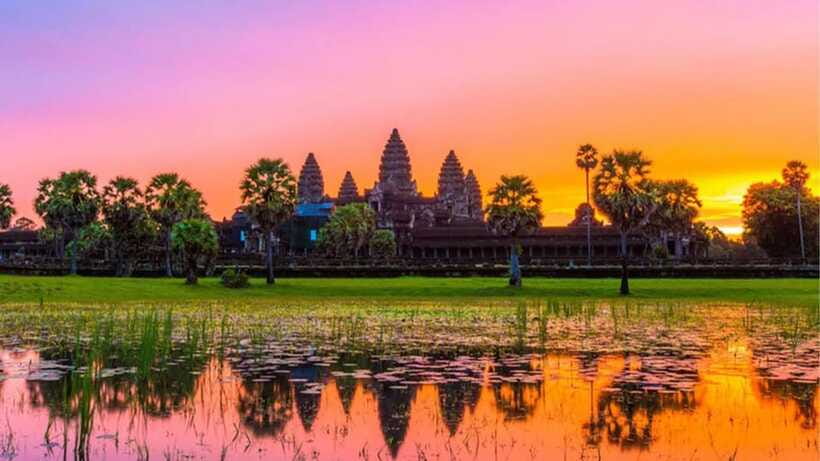
Angkor Wat looks impressive any time of day, but sunrise changes the whole vibe. This tour starts at 4:20 am, which means you’re watching the sky shift while the temple is still calm. The guided sunrise portion is about 2 hours, and that’s important: you don’t just get a quick photo and run. You get time to take in the symmetry, the carvings, and the way the light sweeps across the stone surfaces.
You’re also looking at one of Cambodia’s most recognizable monuments: Angkor Wat is the world’s largest religious monument, built in the early 12th century. That matters because you’ll notice the structure is designed to read almost like a story—levels, gateways, and carvings that reward a slower pace. With a guide speaking English, the experience becomes less about guessing what you’re seeing and more about understanding what those details were meant to communicate.
Practical note: early-morning temple visits are cold and the ground can be uneven. Wear shoes you trust. Bring a layer even if you expect warm afternoons. And give yourself a few minutes to get your bearings before you start hunting for the perfect sunrise angle.
You can also read our reviews of more guided tours in Siem Reap
The Srah Srong breakfast break: quick fuel near the Royal Bath
After sunrise, you get a break for breakfast at a local restaurant near Srah Srong, known as the Royal Bath. This is scheduled as a 30-minute break, so it’s not a long sit-down meal. Think of it as refueling so you can keep walking through the next set of temples without turning the day into a blur.
One thing to watch: the tour description highlights breakfast, but food and drinks are listed as not included. So you should budget for your breakfast when you’re there. That’s a small trade-off, because the tour price still covers the guide and transport. It also means you can choose what you actually want to eat instead of being locked into one fixed menu.
If you’re a first-timer at Angkor, this pause also helps you reset mentally. Sunrise makes your brain go into camera mode. Breakfast lets you come back to normal human speed before the next stone faces and massive root systems start stealing your attention.
Bayon Temple and King Jayavarman VII’s smiling stone faces
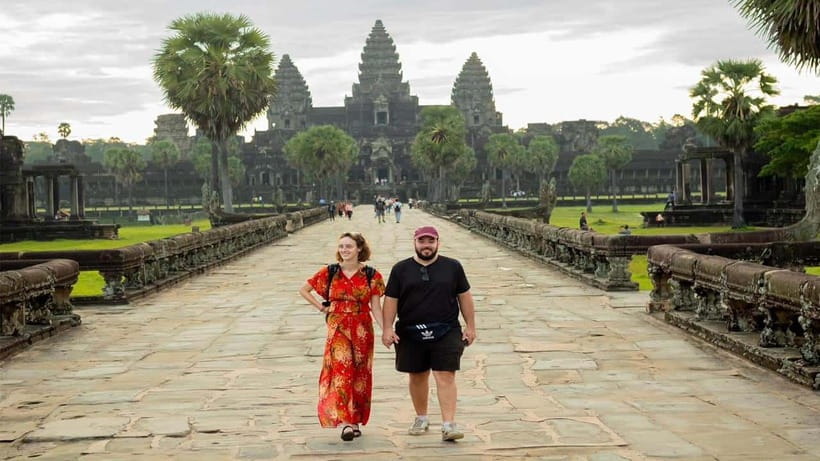
Next up is Bayon Temple, the late 12th-century Buddhist masterpiece with 54 towers and over 200 smiling stone faces. This stop is one of the most famous in the whole Angkor circuit for a reason: the towers feel like you’re being watched from every angle, and the expressions are oddly soothing and strange at the same time.
What makes Bayon work on a guided tour is context. You’re not just looking at faces—you’re learning how these faces relate to King Jayavarman VII, and how the temple’s design ties to the shift toward Buddhism in that era. When MR T (and other English-speaking guides like this) shares temple-by-temple stories, you start noticing patterns: where the carvings sit, how the towers crowd your viewpoint, and why the architecture feels so dense.
The practical downside is crowds and motion. Bayon draws people at all hours, and sunrise doesn’t mean you’ll be alone forever. The solution is simple: stay calm, move when the group moves, and use the guide’s pacing to reduce stop-and-start frustration.
Ta Prohm, the Tomb Raider Temple: roots, stone, and the feeling of time
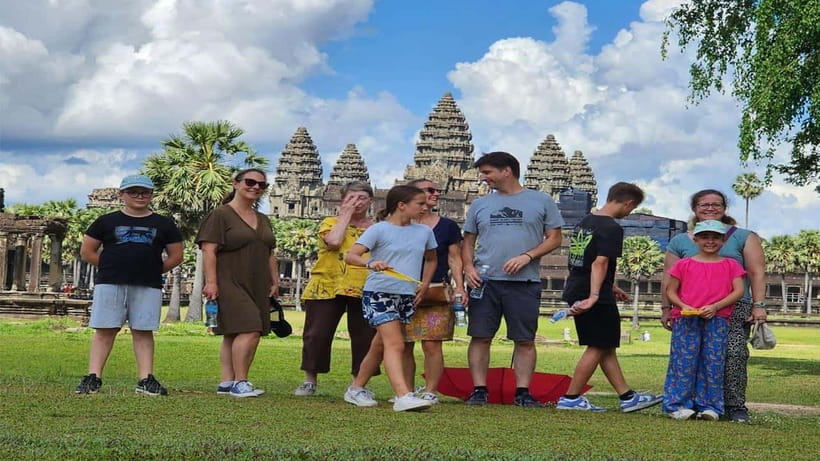
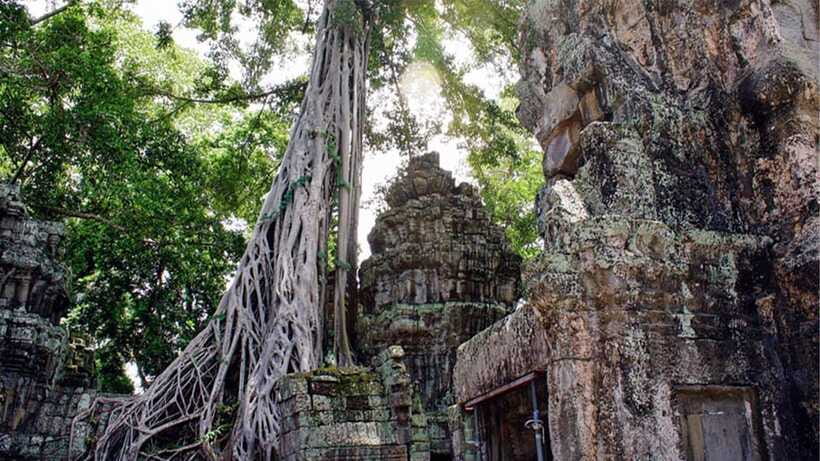
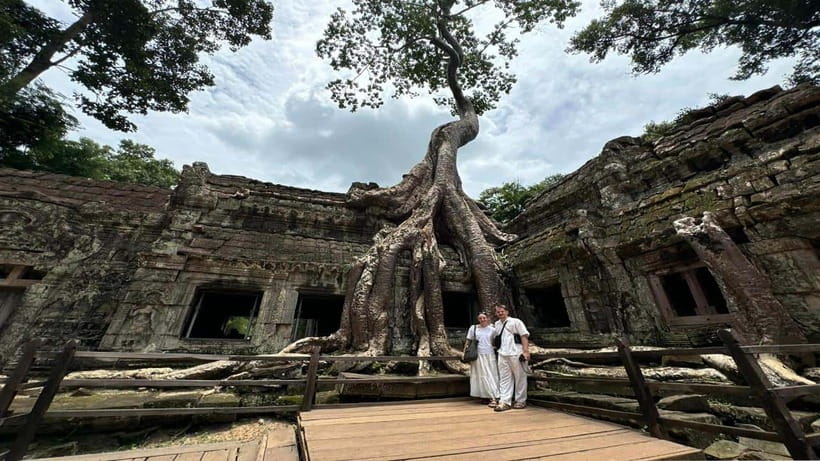
Then you go to Ta Prohm, often called the Tomb Raider Temple because of its famous on-screen look. Here, the star of the show is the way massive tree roots have taken over parts of the temple walls and corridors. The effect is dramatic: geometry meets chaos, and it’s easy to imagine centuries of growth shaping what you see today.
The guided visit is about 1 hour, and that’s the right length. Ta Prohm is visual overload in the best way. If you rush, you miss the details—how the roots split around doorways, how the stone blocks sit at angles, and how the lighting changes as you move deeper into the structure.
Also, Ta Prohm is where you’ll feel the physical reality of walking inside a living ruin. Keep an eye on your footing and don’t stand too close to rough edges. It’s one of those places where you want great photos, but safety and respect matter more than the perfect shot.
Angkor Thom: the last capital of the Khmer Empire
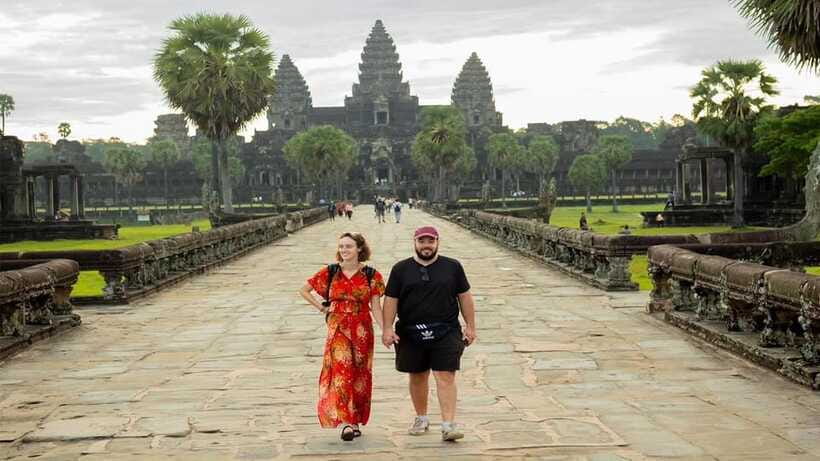
After Ta Prohm, the tour heads to Angkor Thom, described as the last capital of the Khmer Empire. This is a key contrast from Angkor Wat and Ta Prohm. Instead of the single iconic monument, you’re now dealing with a bigger political and urban setting—space that makes you understand Angkor as more than just temples.
The guided time here is about 1 hour. You get enough structure to know what you’re looking at, without turning it into a marathon. And because this is a guided visit in English, you’ll get the kind of explanations that help you connect the dots: why Khmer builders used certain alignments, how later religious changes shaped what people chose to highlight, and what “capital” means when you’re walking through it.
A gentle caution: Angkor Thom can feel like a lot of stone in a short time, especially if you’re already tired from sunrise. That’s where a good guide helps. MR T-style commentary tends to slow you down at the right moments so you actually absorb the site instead of just passing through it.
You can also read our reviews of more tours and experiences in Siem Reap

Pre Rup and Pink Temple: brick, contrast, and good momentum
The tour also includes Pre Rup and Pink Temple. Pre Rup is highlighted as the largest brick Hindu temple of the Angkor area, and Pink Temple rounds out the day with another distinctive stop.
Why this pairing works: Pre Rup gives you a different building material story. Brick temples can look different in color and texture compared to the stone you see at other major sites, and the atmosphere can feel more grounded and less polished. Pink Temple adds contrast, giving you another visual theme to follow as the day progresses.
Timing matters here, because late morning and afternoon light can change how ruins look. If your goal is photos, plan to keep your camera ready and your expectations flexible. Weather and clouds will shift quickly, and temples respond to light in surprising ways.
Small-group comfort: max 10 people, English guide, and A/C transport
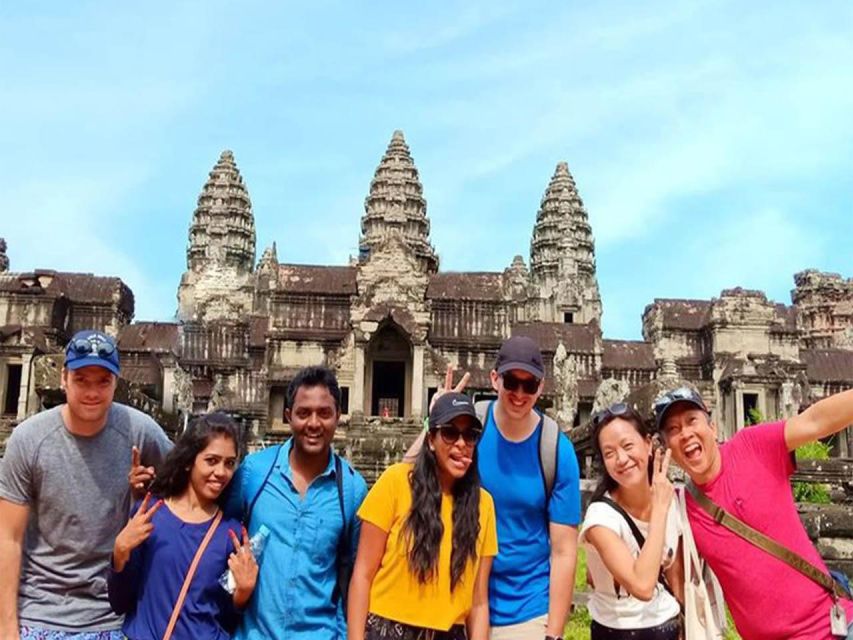
This is the part that makes the difference between an ok day and a smooth day. The tour keeps the group small—maximum 10 travelers—and it’s a private group setup. That usually means less jostling and more room for questions.
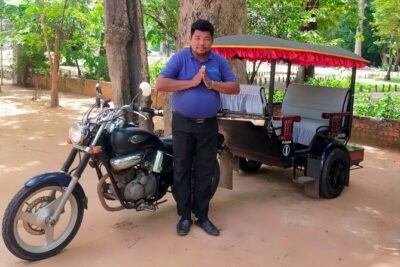
Transport is also handled smartly. For 1–2 people, you’ll ride by tuk tuk. For 3 people or more, it’s a minivan. The highlights specifically mention air-conditioned transportation, which matters in Cambodia once the sun climbs. Between temples, that A/C ride is like a reset button.
Included with the tour are a cool bottle of water and towels, plus hotel pickup and drop off. You’re told to wait in the lobby about 10 minutes before pickup, and the driver should hold a sign with your last name. That’s not just convenience; it reduces the stress of trying to meet the wrong person in a crowded lobby at a very early hour.
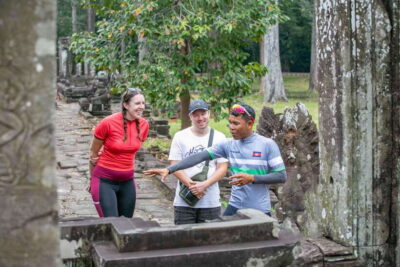
And the guide component is where the reviews’ praise makes sense. MR T is described as the correct company, present at each temple, with comments and details you can actually use. When you have an English-speaking guide, you’re not stuck translating temple signs yourself for the whole day.
Price and logistics: what $20 covers, and what you’ll still pay
The headline price is $20 per person for a 7-hour guided experience. For many visitors, that’s the attraction: you’re paying for the structure—guide, pickup/drop-off, transport, and basic comfort items like water and towels—rather than paying separately to stitch together an early-morning plan.
But you should budget for the two big add-ons listed:
- Angkor 1-day pass: USD 37 per person (not included)
- Food and drinks (breakfast, lunch, dinner, snacks, beer, wine, soft drinks) are not included
So your real spend is usually: tour price + Angkor pass + whatever you eat and drink. The value here is that the tour handles the order and timing so you’re not figuring out routes while half awake.
Also remember: there’s an appreciation tip that’s not included. If you think you’ll want to tip, keep a little extra cash ready. When the guide is genuinely helpful with anecdotes and cultural context, it’s easy to justify.
Who this tour suits best (and who should pick something else)
This tour is best for:
- First-time visitors who want core Angkor highlights in one day
- People who like guided storytelling as much as they like photos
- Anyone who appreciates early access and a plan that starts before the biggest crowds hit
- Travelers who want English support and small-group pacing
It may be less ideal if:
- You hate very early starts. This one is scheduled for 4:20 am sunrise.
- You’re trying to keep costs extremely tight, since the Angkor pass and food add on quickly.
- You want a long, slow exploration of fewer temples rather than a packed highlights route.
Children can join, with an adult, and the tour notes that most travelers can participate. If you’re traveling with kids, you’ll want to bring patience for the early wake-up and the walking pace.
Should you book this sunrise small-group Angkor tour?
I’d book it if you want a guided, efficient Angkor day where the big moments happen in a logical flow: Angkor Wat sunrise, a reset with breakfast near Srah Srong, then Bayon, Ta Prohm, Angkor Thom, and the additional temple stops like Pre Rup and Pink Temple. The small group size and an English guide like MR T are the quality boosts here.
Hold off or compare options if early mornings and additional on-site costs (especially the Angkor 1-day pass) will stress your budget. Also check your comfort with a day that’s active and photo-heavy.
If you want the best chance of an organized first Angkor experience without feeling like you’re winging it, this tour is a strong bet.
FAQ
What is the duration of the Small-Group Explore Angkor Wat Sunrise Tour?
The tour lasts about 7 hours.
Where does hotel pickup happen for this tour?
Pickup is from Krong Siem Reap.
What is included in the tour price?
The tour includes an English-speaking guide, hotel pickup and drop-off, transportation (tuk tuk for 1–2 pax or minivan for 3+), cool bottle of water, and towels.
What is not included?
The Angkor 1-day pass (USD 37 per person) and food and drinks are not included, and appreciation tips are not included.
Do I need an Angkor pass for this tour?
Yes. The Angkor 1-day pass is not included and costs USD 37 per person.
Is the guide English-speaking?
Yes, the live tour guide speaks English.
What time does the sunrise part start?
The sunrise experience starts at around 4:20 am.
How large is the group?
It’s a maximum of 10 travelers.
What transportation will I use during the tour?
For 1–2 people, transportation is by tuk tuk. For 3 people and up, it’s by minivan.
Are children allowed on this tour?
Children must be accompanied by an adult.
Can I cancel for a refund?
Yes. You can cancel up to 24 hours in advance for a full refund.