REVIEW · SIEM REAP
Angkor Wat Sunrise & 3 Main Temples with Breakfast – Small Group
Book on Viator →Operated by Siem Reap Shuttle · Bookable on Viator
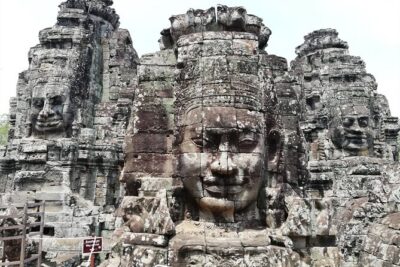
Waking up before dawn for Angkor feels serious. This small-group tour lines you up for sunrise at Angkor Wat and then keeps you moving between the big sights with air-conditioned transport. You also get a guide who talks history and symbolism, including the 200 Lokeśvara faces at Bayon.
I love how efficiently it covers the core temples in one morning. You get hotel pickup early (around 4:20–4:50am), cold towels and water, and a plan that saves you from overheating and shuttling on your own.
One thing to consider: Angkor is popular even at 5am. You’ll likely deal with a crowd and some waiting time before key moments, so wear comfy shoes and keep your patience hat on.
In This Review
- Key things to know before you go
- How a 4:30am Angkor start changes everything
- Small-group comfort: pickup, mini-bus hops, and practical touches
- Price and logistics: what that $15 covers (and what it doesn’t)
- Stop 1: Angkor Wat sunrise on the towers (crowds, timing, and focus)
- Stop 2: Srah Srang for breakfast (what’s included and what you should expect)
- Stop 3: Bayon Temple and the faces of Lokeśvara
- Stop 4: Ta Prohm for photos and temple charm
- Guide quality: how to ask better questions in Angkor
- Heat and crowd management: the biggest real-world challenge
- Who this tour is best for
- Should you book this Angkor Wat Sunrise & 3 Temples tour?
- FAQ
- What time does the tour start, and what time do I get back?
- Is breakfast included, and is the drink included?
- Are temple admission tickets included in the $15 price?
- How big is the group?
- What should I wear to visit the temples?
- Does the tour run in bad weather?
- Can I cancel and get a full refund?
Key things to know before you go
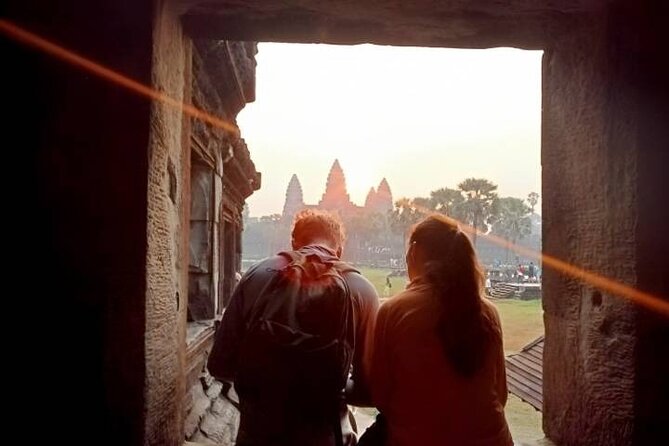
- Start early for sunrise at Angkor Wat, when the towers are the main event
- Max 10 travelers, so your guide can answer questions without a megaphone vibe
- Air-conditioned mini-bus between temples, a big comfort win in the heat
- Breakfast included at Srah Srang, with the guide choosing a local spot based on quality, hygiene, and price
- Bayon Temple’s 200 Lokeśvara faces are a standout moment your guide can interpret
- Temple admission passes are extra, so factor them in before you book
How a 4:30am Angkor start changes everything
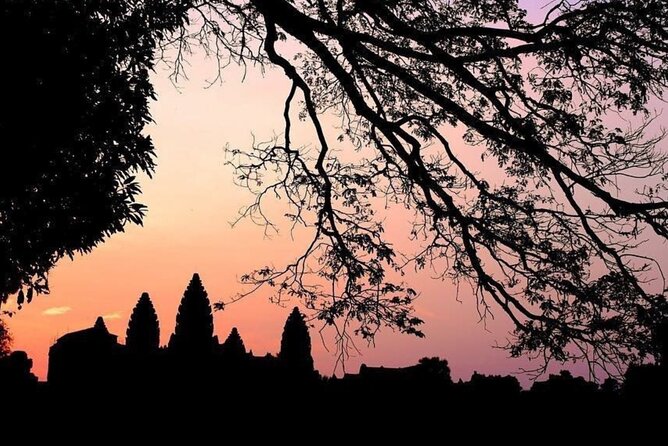
The tour starts at 4:30am, with hotel pickup typically between 4:20am and 4:50am. That early departure matters because Angkor Wat is not a site you want to meet for the first time at midday. You’ll be walking earlier, seeing the sky shift, and getting the best chance at a calmer rhythm than later in the morning.
You’re also not just arriving for photos. The experience is built around the moment of sunrise from the temple towers. That means you’re paying attention to light, stone, and symmetry before the day gets hot and crowded.
If you’re in town around March 20–23, the tour description notes an equinox celebration. Even if that’s not your exact travel window, the early schedule is what makes the rest of the day feel manageable.
You can also read our reviews of more tours and experiences in Siem Reap

Small-group comfort: pickup, mini-bus hops, and practical touches
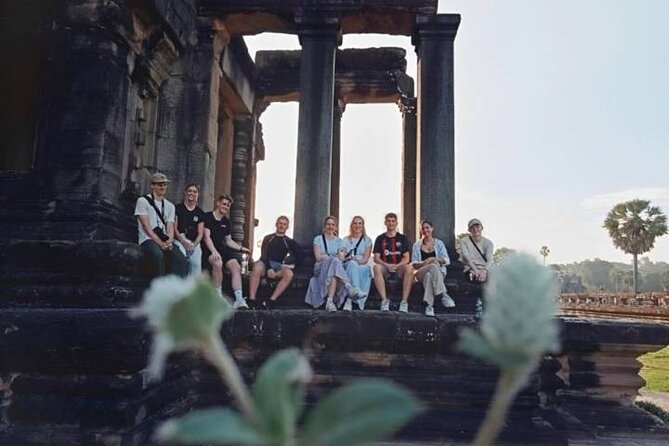
This is a shared tour capped at 10 travelers, which keeps the morning from turning into a slow-moving herd. I like that the logistics are designed for comfort first: cold towels and water are provided, and the transport is an air-conditioned mini-bus.
Between temples, that transport is more than convenience. Angkor’s heat can sneak up fast after sunrise, so having rides between stops helps you stay focused on what you’re seeing instead of counting minutes until shade.
The tour is also built around a guide who can keep the pace moving without rushing you into “just take a picture and go.” You’ll have time at each stop (about an hour at Bayon and Ta Prohm, plus breakfast time at Srah Srang), with the guide steering you through what to notice.
Price and logistics: what that $15 covers (and what it doesn’t)
The tour price shown is $15 per person, and that’s for the guided experience plus transport and included touches. What you must budget separately is temple admission.
Temple passes are not included. The current prices listed are:
- 1-day pass: USD 37
- 2-day pass: USD 62
So the “real” cost depends on how many days of temple access you plan to buy. If you’re doing only the main highlights once, a 1-day pass usually fits best for this kind of morning tour.
One more practical note: the tour uses a mobile ticket option, and you receive confirmation at booking time. That helps you avoid last-minute scrambling when you’re trying to get through early morning gates.
Stop 1: Angkor Wat sunrise on the towers (crowds, timing, and focus)
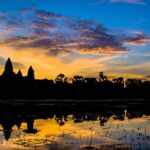
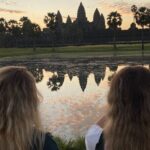
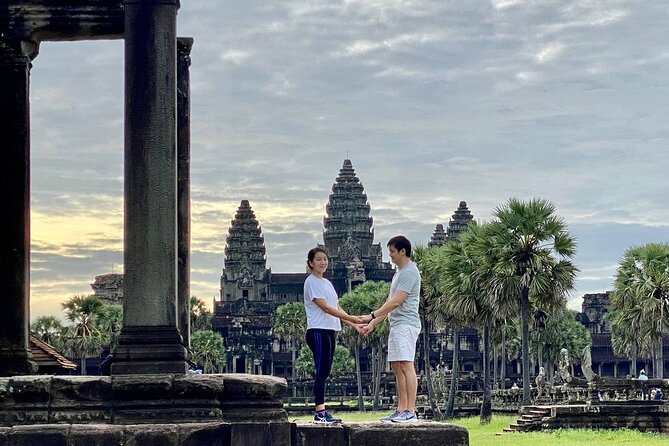
The morning’s centerpiece is Angkor Wat. You wait for sunrise at the top area of the temple towers, and the experience is clearly built around watching the sky and stone come alive in sequence.
Here’s the practical reality: sunrise does not mean empty. Even at very early hours, there are plenty of people. You may spend time standing, then moving through the main areas once entry timing works out. That’s why comfortable shoes and a calm plan matter more than perfect timing.
To get more out of this stop, I recommend you mentally separate two goals:
- First, watch the sunrise and the temple lines. Let your eyes adjust.
- Second, when the crowd begins to flow, follow your guide’s cues about history and symbolism instead of just trying to locate the best photo spot.
The tour description also references guided explanation of architecture and art, so don’t treat this as a sightseeing sprint. The value is in learning what you’re seeing while the morning is still cool enough to enjoy it.
If you’re the type who loves details, ask a question. The guide is there for that: symbolism, layout, and what elements mean.
Stop 2: Srah Srang for breakfast (what’s included and what you should expect)
After sunrise, the tour moves to Srah Srang, where breakfast is part of the plan. Breakfast is included, and the guide picks a local restaurant based on food quality, hygiene, and prices compared within the area.
This stop is valuable because it keeps you from needing to hunt for food right after temple walking. You also get a built-in reset: eat, rehydrate, then gear back up for more ruins.
One small detail in the tour info matters for your budget. It says the breakfast drink is not included. So if you’re someone who orders coffee, juice, or other drinks at breakfast, plan for extra costs.
Time here is about an hour. That means you’ll want a straightforward order and not linger too long if you tend to chat or browse menus.
Stop 3: Bayon Temple and the faces of Lokeśvara
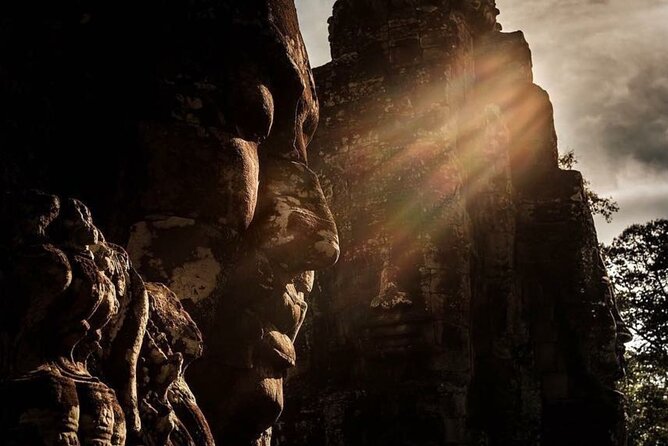
Bayon Temple is where the guide’s storytelling has something concrete to grab onto. The tour highlights the 200 faces of Lokeśvara carved into the stone, and this is exactly the kind of feature that benefits from a guide who can explain meaning beyond what you can see at a glance.
You’ll have about one hour for this stop, which is long enough to walk the main areas and still stop when the guide points out a key detail. The tour focus here is on understanding the site’s history and symbolism through your guide’s explanations.
If you like architecture and religious art, Bayon is a strong pick. The faces are visually striking, but the real payoff comes when your guide connects the carving style and placement to larger ideas.
A good way to make this hour feel “worth it” is to pick one question ahead of time. For example: what does the guide say about why this face design shows up so often? Then you’ll feel like the guide is not just talking, but answering your curiosity in real time.
Stop 4: Ta Prohm for photos and temple charm
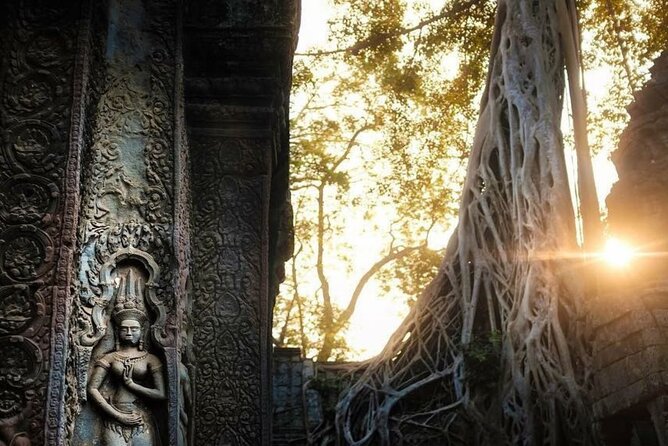
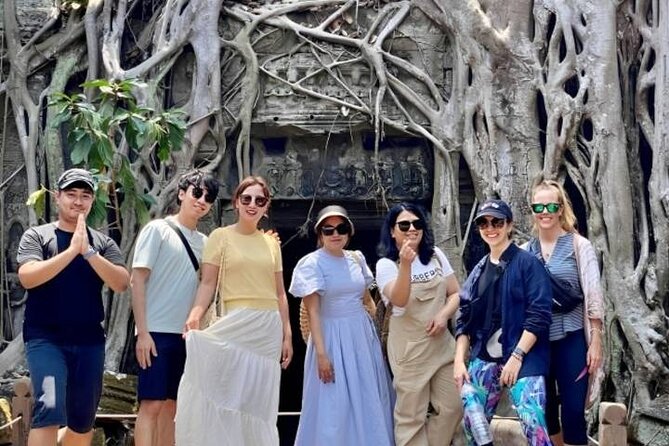
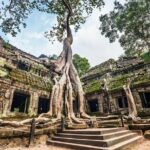
Ta Prohm is the final temple stop, and the tour gives you about an hour here. The emphasis is on exploring the temple with your guide and taking photos, with a focus on the site’s charm.
This is a good balance after Bayon. Bayon is faces and meaning. Ta Prohm is more about atmosphere and visuals. You’ll want to pay attention to how the structure frames the scene and how the light changes across stone surfaces as you move.
Since you’ll likely be leaving early afternoon (hotel drop-off is listed at 12:30pm), don’t plan on using Ta Prohm as a slow, all-day photo session. Use your hour intentionally: pick a few angles you care about and let the rest be discovery.
Your guide can help here too, especially when it comes to timing for photos and where to stand for better views without constantly repositioning in front of other people.
Guide quality: how to ask better questions in Angkor
This tour leans hard on the guide as the product. You’ll have a professional English-speaking guide, and your guide is described as APSARA authorised / certified for this kind of Angkor experience.
From the tour descriptions and guide names that come up in past outings, I’ve learned to expect a few distinct guide styles. Some are very funny. Some are more structured. The common thread is that the best guides can explain symbols and architecture without turning it into a lecture.
Here’s how you can get the most out of any guide on this route:
- Ask one question early, then follow up when something clicks.
- When you see a major feature (like the faces at Bayon), ask what to look for next.
- If your guide is moving fast, ask for a slower moment at one key spot so you can actually absorb it.
Also, keep in mind that different people want different pacing. If you want more story and less waiting, say so. A good guide will read the room.
Heat and crowd management: the biggest real-world challenge
This is the consideration that matters most. Angkor can be crowded even at dawn, and the morning flow can include waiting time, especially before you reach the most important viewpoints or entry points.
So plan like a realist:
- Wear long, breathable clothing that respects temple rules (more on dress below).
- Bring your best walking shoes. You’ll be on foot early.
- Use the cold towels and water, but don’t assume they’ll cover everything. You’ll still sweat.
I also suggest a simple mindset shift: treat waiting as part of the experience, not an interruption. You can use it to observe the temple edges and lighting rather than staring at the clock.
Who this tour is best for
This tour fits best if:
- You want the big highlights in one morning without building a route yourself
- You like learning the meaning behind the art, not just collecting photos
- You value hotel pickup, air-conditioned transport between stops, and a small group cap
- You have limited time in Siem Reap and want an organized half-day plan that feels complete
If you’re the type who wants total freedom to wander for hours at each temple, you might find the schedule a little tight. But if your goal is to see a lot and understand what you’re looking at, this plan is set up for you.
Should you book this Angkor Wat Sunrise & 3 Temples tour?
Book it if you want a structured, small-group morning that gets you to sunrise at Angkor Wat, then hits Bayon and Ta Prohm while staying comfortable with mini-bus transport and included water and towels. The best part is that you’re not only looking, you’re also getting explanation—especially around Bayon’s Lokeśvara faces.
Skip or reconsider if you’re extremely sensitive to crowds and waiting, or if you don’t want to factor in temple pass fees on top of the tour price. Also, if you dislike guided pacing, keep in mind this is intentionally guided and time-managed.
For most first-time Siem Reap visitors with limited time, it’s a smart way to do the essentials without burning your day.
FAQ
What time does the tour start, and what time do I get back?
The tour starts at 4:30am, with hotel pickup typically between 4:20am and 4:50am. Hotel drop-off is listed for about 12:30pm.
Is breakfast included, and is the drink included?
Breakfast is included at the Srah Srang stop. The breakfast drink is noted as not included.
Are temple admission tickets included in the $15 price?
No. Temple admission and passes are not included. The listed prices are USD 37 for a 1-day pass and USD 62 for a 2-day pass.
How big is the group?
The tour has a maximum of 10 travelers.
What should I wear to visit the temples?
Dress smart casual and be respectful of religious grounds. Wear a shirt that can cover your shoulders, plus trousers or knee-length pants/skirts. Bring comfortable walking shoes.
Does the tour run in bad weather?
Yes, it operates in all weather conditions, so dress appropriately.
Can I cancel and get a full refund?
Yes. Free cancellation is available, and you can cancel up to 24 hours in advance for a full refund. If you cancel less than 24 hours before the experience starts, you don’t get a refund.