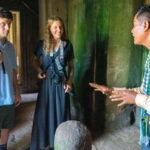
Seeing Angkor before the crowds hits different. This private sunrise run from Siem Reap is built around that early light, with an English-speaking guide who connects the stones to the stories, plus a smooth air-conditioned pickup so you’re not wrestling tuk-tuks in the dark.
What I like most is the pacing for sunrise: you’re there early enough to catch the best color and reflections at Angkor Wat. I also like the variety after the first temple—South Gate, Bayon’s faces, and Ta Prohm’s tree-and-stone scene keep the morning from feeling like one long look at ruins.
One thing to consider is the early timing. If pickup is late, the sunrise viewing spots shrink fast and your guide’s English may feel uneven depending on who you get.
In This Review
- Quick take: what makes this tour worthwhile
- The 4:30am sunrise run from Siem Reap
- Angkor Wat at dawn: reflections, crowds, and the best angles
- Angkor Thom South Gate and Bayon’s faces
- Angkor Thom South Gate
- Bayon Temple
- Ta Prohm’s jungle roots: the mood you came for
- Rural NW Cambodia add-ons: orange farm, grape wine, and hilltop views
- Orange farm tasting and grape wine
- Wat Damrei Sor pagoda
- Phnom Banan hilltop temple
- Bamboo train ride
- Battambang route: why the drive matters
- Price and logistics: private comfort for $49, but plan for add-on costs
- How early start and guide quality can affect your day
- Who this sunrise private tour is best for
- Should you book this sunrise private tour?
- FAQ
- What time does the sunrise tour start?
- How long is the tour?
- Is the Angkor entrance fee included?
- Does the tour include hotel pickup and drop-off?
- What transportation do you use?
- Is there an English-speaking guide?
- How big is the private group?
- What else is included besides temple visits?
- What is the cancellation policy?
Quick take: what makes this tour worthwhile
- Sunrise-first timing means you’re not walking in when the best light is already gone.
- Private tour format (minimum 1, max 15) lets your group move together on your schedule.
- Big temple variety: Angkor Wat, Angkor Thom South Gate, Bayon, and Ta Prohm.
- Extra rural stops include an orange farm tasting and grape wine.
- Panoramic views at Wat Damrei Sor pagoda and Phnom Banan hilltop temple.
- Bamboo train ride is included in the overall experience plan.
The 4:30am sunrise run from Siem Reap
Start time is 4:30am, with pickup from your Siem Reap hotel. The whole point is to beat the daytime swell and arrive while the sky and temple surfaces still have that soft early glow.
This is not a quick grab-and-go. With an approximate 6-hour duration and hotel pickup/drop-off, you should treat it like a full-mission morning: dress for cool early temps, bring water, and plan on being awake long before you want to be.
Practical tip: ask your hotel to have you ready at least 10 minutes before pickup. With an early start, even a small delay can shift you from prime viewing to shoulder-to-shoulder positioning.
You can also read our reviews of more private tours in Siem Reap
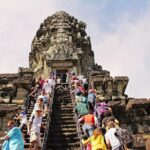
Angkor Wat at dawn: reflections, crowds, and the best angles
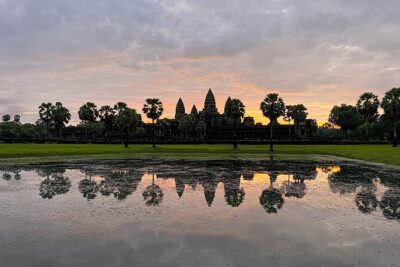
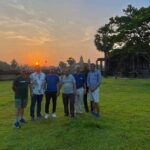
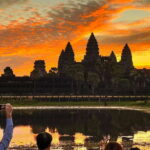
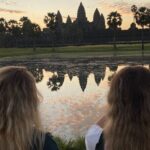
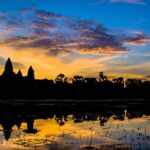
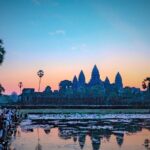
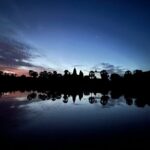
Angkor Wat is the headline, and sunrise is the way to do it. At first light, the stone takes on warm tones and the water/reflective surfaces can look almost like a mirror when conditions cooperate.
This tour schedules Angkor Wat first for about 2 hours, so you’re not spending your most valuable morning minutes rushing between photo stops. It’s also a smart use of a guide: sunrise at Angkor is beautiful, but it can also be confusing if you don’t know what you’re looking at.
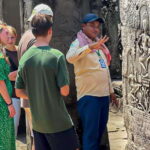
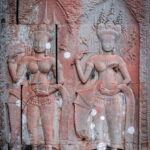
A key value here is the guide’s storytelling. The temple complex was a major Khmer-era power center, then later tied into shifting provincial rule and later eras. When your guide points out what you’re seeing—gate layout, axes, and the meaning behind key carvings—the place stops being just a backdrop.
One consideration from the real world: the sunrise viewing is time-sensitive. If the pickup is late, you may not get a great spot, and the crowds can make it harder to move for reflections and angles. If sunrise is your priority, confirm pickup timing the day before and stay flexible about where you’ll stand once you arrive.
Also note: entrance fees are not included. Budget for your Angkor ticket on top of the tour price.
Angkor Thom South Gate and Bayon’s faces
After Angkor Wat, you head to Angkor Thom South Gate, then Bayon. This sequence helps because Angkor Wat’s symmetry sets your mental map, and then Angkor Thom’s scale and gates feel even more dramatic right after.
Angkor Thom South Gate
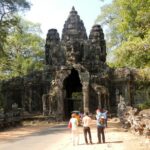
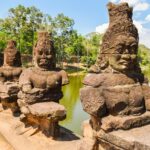
You’ll spend about 1 hour here. The South Gate is famous for the guardian figures—Deva and Asura—and the strong walls built to protect the city and gate area. You’ll also see the four-faced Buddha motif, which is one of those details that looks “surprisingly personal” from different angles.
What makes this stop valuable is context. A guide can explain why the gate matters in the larger city layout, not just as a photo wall. It turns the gate from an ornament into part of the city’s defense and symbolism.
Bayon Temple
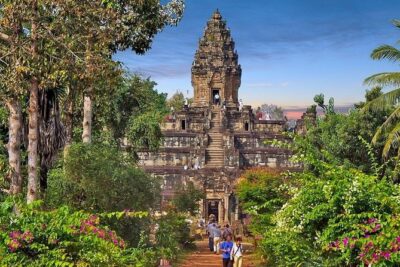
Then comes Bayon, often called the Mountain of Victory, with about 49 towers and over 200 faces of Buddha. You get around 1 hour at Bayon, which is enough time to slow down at different vantage points without feeling like you’re being marched.
Bayon can be disorienting if you only look straight ahead. With a guide, you can understand why the faces appear in so many places and why people keep finding new angles as they move through the structure.
Drawback to plan for: Bayon is visual from almost everywhere, but that also means people pack in. Wear shoes you can stand in, and don’t expect silence—this is one of the most photographed areas.
You can also read our reviews of more tours and experiences in Siem Reap
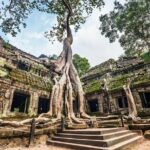
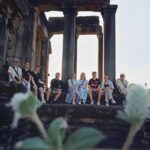
Ta Prohm’s jungle roots: the mood you came for
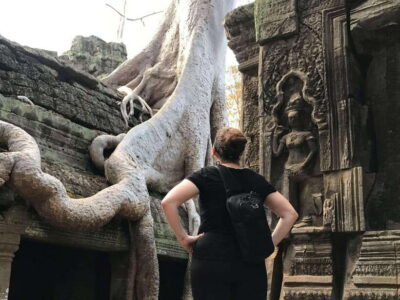
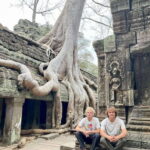
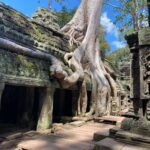
Next is Ta Prohm, the temple often linked with the Jungle temple look, famous for trees and roots growing over the structures. You’ll have about 1 hour here.
Ta Prohm is different from the other big stops because it feels less “perfectly restored” and more like nature wrote its own layout over the stone. That’s why it’s such a crowd favorite: you get a feeling of time passing, not just a museum display of ancient architecture.
What you should know: Ta Prohm’s magic is visual, but it rewards patience. If you rush, you miss the way roots wrap columns, or how the shadowed corridors shift during the day. With only an hour, you’ll want to move with purpose: pick a couple of anchor photo areas, then scan for details as you pass.
Entrance fees are not included, so your ticket needs to cover Ta Prohm as well.
Rural NW Cambodia add-ons: orange farm, grape wine, and hilltop views
The experience doesn’t stop at temples. You also get countryside-style stops that add texture to the day and make it feel more like Cambodia outside the main ruin circuit.
Orange farm tasting and grape wine
One highlight is a stop at an orange farm where you can taste locally-produced Cambodian grape wine. This is a nice change of pace when you’ve been dealing with stone and crowds since morning.
This kind of stop is valuable because it keeps your day from being all ruins, all the time. You get a human-scale view of how food and drink are made locally, not just a “look and leave” photo moment.
Wat Damrei Sor pagoda
Another planned stop is Wat Damrei Sor pagoda, chosen for views. Hill and elevation points are great on a day like this because you get a different visual horizon than the temple courtyards.
Even if you’re not a “views person,” these stops help you rest your eyes. After dense stone carvings, a wider scene gives your brain somewhere to reset.
Phnom Banan hilltop temple
The day also includes Phnom Banan hilltop temple for panoramic views. This is the kind of stop that can feel slow on paper, but in practice it breaks up the heavy walking and gives you a clear sense of scale—Cambodia’s countryside is part of the story.
Tip: bring water and plan for some sun exposure depending on the time you reach the hilltop areas.
Bamboo train ride
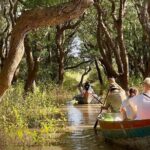
Finally, the broader tour plan includes a bamboo train ride. If you’ve never tried it, it’s one of those experiences that’s simple in concept but feels totally unique in motion. It’s also a good “Cambodia moment” that isn’t tied to a ticketed site.
Your timing may affect how long the ride feels, but if bamboo is on your personal must-do list, this inclusion is a real selling point.
Battambang route: why the drive matters
The tour is set up for the northwest route from Siem Reap and ties into Battambang in the experience overview. Even if your time in the city isn’t the main event, that drive is part of why this isn’t only another temple loop.
Why it matters: you’re not just chasing monuments. You’re also seeing the wider geography and the day’s travel rhythm—morning temples, then countryside stops, then the chance to include something like the bamboo train.
If you’re someone who hates long rides, keep your expectations realistic. A half-day-style duration means you’ll be moving fairly steadily, with limited downtime between stops.
Price and logistics: private comfort for $49, but plan for add-on costs
The price is $49 per person for a private tour, with hotel pickup/drop-off, a licensed guide, air-conditioned vehicle, and cold drinking water.
That’s decent value on paper because you’re paying for convenience plus interpretation. Many budget tours leave you to guide yourself; here you’re buying a person who can connect what you see to what it meant.
Where value can dip: entrance fees and meals are not included. At Angkor, ticket costs can be a meaningful portion of your total. Also, the sunrise timing means you may spend extra on quick breakfast items if you didn’t eat before you left.
Group size matters too. Private tours often feel pricey, but this one lists up to 15 people, which can change the feel. In a small group, you get more flexibility; in a larger private group, the experience can feel more structured even though it’s still “private.”
One more real-world detail: the tour description includes a mobile ticket and group discounts. Those perks help if you’re coordinating with family or friends, but your biggest cost driver is still the entrance fee.
How early start and guide quality can affect your day
This is the part worth taking seriously. Sunrise tours live or die on timing and communication.
A downside to watch: early pickup issues. If your driver is late, you lose the best chance for a great spot. That doesn’t just affect photos—it affects your ability to enjoy the temple calmly before it gets busy.
The other variable is English level. The tour is positioned as English-speaking with a licensed guide, but quality can still vary. If you care a lot about detailed explanations, message the provider after booking and ask for a stronger English guide, or at least confirm what level your guide communicates at.
I’d also plan to ask a couple of questions when you arrive. Even if English isn’t perfect, a few clear questions—what you’re looking at, what a certain carving symbolizes, why Bayon’s faces are positioned where they are—can make the morning feel much more satisfying.
Who this sunrise private tour is best for
This tour fits you if you want:
- Sunrise Angkor Wat without the stress of booking and coordinating on your own.
- A private format with pickup, comfortable transport, and planned temple stops.
- A break from ruins with orange farm tasting, wine, hilltop views, and a bamboo train ride.
It may not be your best fit if:
- You hate early mornings and want a slower start.
- You’re picky about guide language clarity and explanation depth.
- You want a long, relaxed day with lots of free time. This is structured, with about six hours total.
Should you book this sunrise private tour?
Yes, if sunrise is the priority and you’ll value having a guide plus smooth transport. At $49 per person, you’re getting private logistics, licensed guidance, and extra rural stops that go beyond the standard temple checklist.
Before you book, do two things: confirm pickup timing with your hotel and provider, and budget for entrance fees and meals so the final cost doesn’t surprise you. If you’re especially sensitive to guide English, ask for a guide with strong communication before the morning of travel.
In short: it’s a smart, efficient way to see Angkor Wat at dawn and still get countryside color later.
FAQ
What time does the sunrise tour start?
The start time is 4:30am.
How long is the tour?
The duration is about 6 hours.
Is the Angkor entrance fee included?
No. Entrance fees are not included.
Does the tour include hotel pickup and drop-off?
Yes. Hotel pickup and drop-off are included.
What transportation do you use?
You travel by an air-conditioned vehicle.
Is there an English-speaking guide?
Yes, the tour includes a licensed tour guide and it’s described as an English-speaking guide.
How big is the private group?
It’s private with a minimum of 1 person and a maximum of 15 people.
What else is included besides temple visits?
The plan includes stops such as an orange farm tasting with Cambodian grape wine, Wat Damrei Sor pagoda, Phnom Banan hilltop temple, and a bamboo train ride.
What is the cancellation policy?
You can cancel for a full refund up to 24 hours before the experience’s start time, based on local time.