REVIEW · SIEM REAP
2-Days Private Tour Discovery Angkor Wat , Waterfall and Beng Mealea Temple
Book on Viator →Operated by Siem Reap Experience · Bookable on Viator
Angkor looks different when you arrive before the crowds. I love the private pacing through the temples, and I love the sunrise start that keeps crowds smaller and temperatures comfortable. One thing to weigh: temple tickets and meals aren’t included, so you’ll need to plan your budget.
On some departures, the experience is powered by guides like Praim or Sen Prourng, who focus on moving you efficiently and explaining what you’re seeing as you go. You also get practical extras like cold water and cold towels, which matter when your day starts at 4:30am.
This is a tight 2-day combo, built for big sights plus a break in nature. You’ll ride in an air-conditioned vehicle between stops, but you should still expect long days and early mornings, especially on Day 2.
In This Review
- Key highlights worth your attention
- Why the 4:30am Angkor Wat start is worth waking up for
- Day 1 temples: Angkor Wat sunrise, Bayon faces, and Ta Prohm tree roots
- Angkor Wat first, for a reason
- Bayon at the South Gate: 54 towers and 216 faces
- Ta Prohm: the jungle temple with giant roots
- Banteay Kdei in the late-day slot: calm Khmer carvings with context
- Day 2 in Phnom Kulen National Park: waterfalls and 1000 linga carving
- Prasat Beng Mealea: the lost temple feeling, about 70 km out
- What’s included vs what you pay for (and how it affects value)
- The guide factor: private pacing and why it changes your day
- Temple timing and etiquette tips that keep the day smooth
- Who this 2-day Angkor + nature combo is best for
- Should you book this private Angkor Wat and temples tour?
- FAQ
- What time does this tour start?
- Is pickup included?
- How many days is the tour?
- Is this tour private?
- Is an English guide included?
- Are temple tickets included in the price?
- Are meals included?
- What locations are visited on Day 1?
- What locations are visited on Day 2?
- What is the cancellation policy?
Key highlights worth your attention
- 4:30am pickup and Angkor Wat sunrise timing for smaller crowds and comfortable temperatures
- Private routing that helps you avoid large-group bottlenecks inside the temples
- Day 1 temple line-up: Bayon faces, Ta Prohm tree roots, and Banteay Kdei
- Phnom Kulen National Park with waterfall time and 1000 linga carving
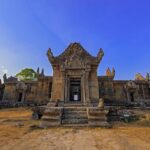
- Beng Mealea’s lost-temple feel at about 70 km from Siem Reap
Why the 4:30am Angkor Wat start is worth waking up for
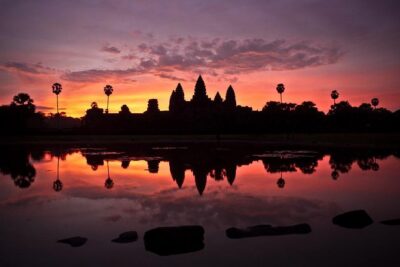
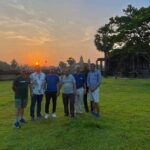
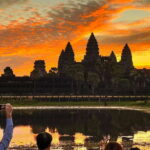
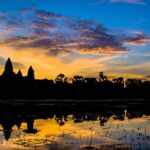
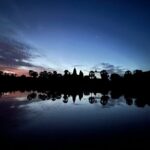
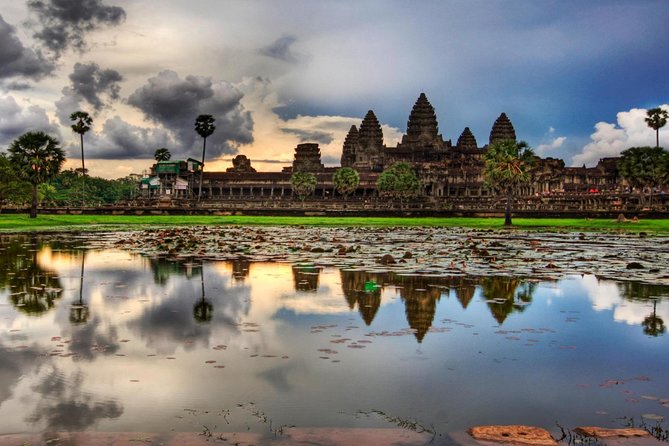
If you want Angkor Wat to feel magical instead of chaotic, the timing is the whole game. This tour kicks off at 4:30am, and that means you reach the main entrance for sunrise when the crowds are smaller and the heat hasn’t really landed yet.
The payoff is not just the light. Sunrise also changes how you read the site: you can look at the temple’s silhouette, then slowly understand how the surrounding ruins connect in space. You get a full 3 hours at Angkor Wat, which is enough time to climb to the main entrance and take in the big picture without feeling like you’re sprinting.
Caution: sunrise days can be chilly early, then warm fast. Pack a light layer if you tend to get cold in the morning, and bring water even though cold water is included.
You can also read our reviews of more private tours in Siem Reap
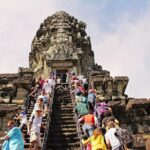
Day 1 temples: Angkor Wat sunrise, Bayon faces, and Ta Prohm tree roots
Day 1 is where you get the classic Angkor sequence, paced for a smaller group. Your guide leads you through the temples to help you avoid large group pressure, which is a real quality-of-life upgrade when you’re paying attention to details and not just trying to stay upright.
Angkor Wat first, for a reason
You’ll spend about 3 hours at Angkor Wat, starting at the main entrance. The tour is built around the sunrise view over Angkor Wat and the surrounding temples, and the site’s importance isn’t treated like background noise. You’ll learn it was built by Khmer King Soriyavaraman II in the early 12th century and dedicated to Vishnu in Hindu tradition—so you’re not just taking pictures, you’re placing the temple in context.
Drawback to consider: admission tickets are not included, so if you’re traveling on a tight schedule, plan time for ticketing before the first entry.
Bayon at the South Gate: 54 towers and 216 faces
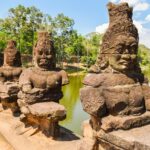
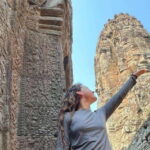
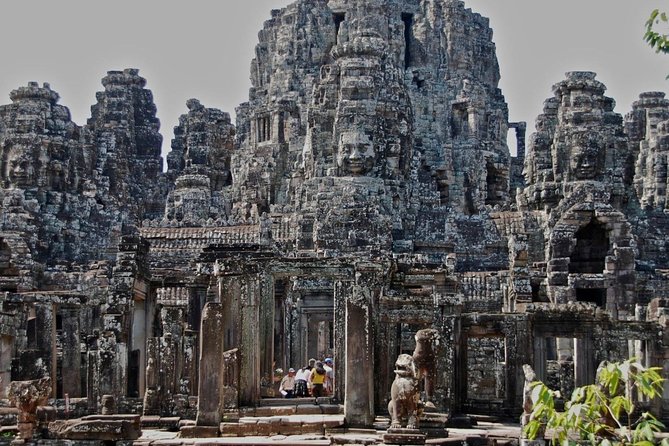
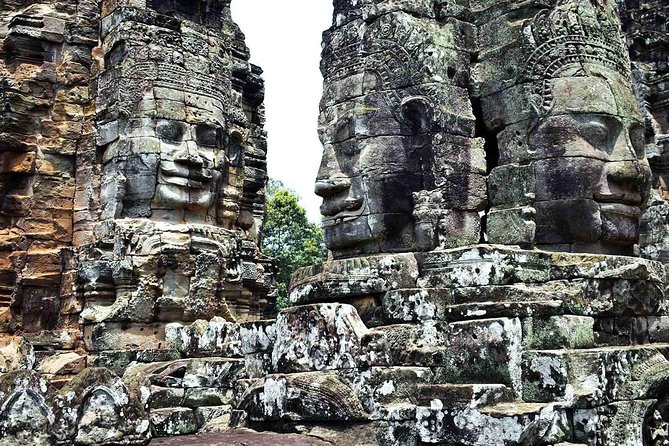
After Angkor Wat, the next stop is Bayon Temple at the South Gate of Angkor Thom. This is one of those places where the temple tells you what it wants you to notice. You’ll see the famous 54 towers and the 216 faces of Buddhisatva Avalokesvara, and your guide will explain the key historical facts as you move through.
You get about 2 hours, which is important. The temptation at Bayon is to rush and treat it like a backdrop. With time, you can step back, understand the scale, and then come close to read the faces in layers.
Consideration: crowds can still build as the day warms up. The private guide approach helps, but you should still expect some congestion in the busiest spots.
Ta Prohm: the jungle temple with giant roots
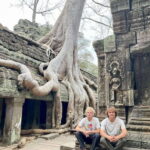
Next is Ta Prohm, often called the “jungle temple” or “tree temple” because of the lush trees and the massive roots wrapping around the stone ruins. This is one of the most atmospheric stops on the route, and it works best when you slow down and let the scene unfold.
You’ll have about 2 hours here, which you can use for calm viewing. The roots don’t just look dramatic in photos; they change the feel of the architecture. It’s like the temple is sharing the stage with nature.
One practical note: if your walking shoes are on the wrong side of broken-in, Ta Prohm can test them. The tour gives you structure and timing, but it can’t erase uneven surfaces.
You can also read our reviews of more tours and experiences in Siem Reap

Banteay Kdei in the late-day slot: calm Khmer carvings with context
The first day closes with Banteay Kdei, built by King Jayavarman VII in the late 12th century. This temple is a good end-point because it’s less of a one-style spectacle than the earlier stops. You still get the Khmer temple experience, but with a slightly calmer tempo.
Your time here is about 1 hour. That short stop can feel tight, but it fits the rhythm of the day: enough time to see the temple, absorb the context from your guide, and then not exhaust yourself before the next long outing.
Ticket note: like the other temple entries on Day 1, admission isn’t included. Budget for it so you don’t start the day with stress.
Day 2 in Phnom Kulen National Park: waterfalls and 1000 linga carving
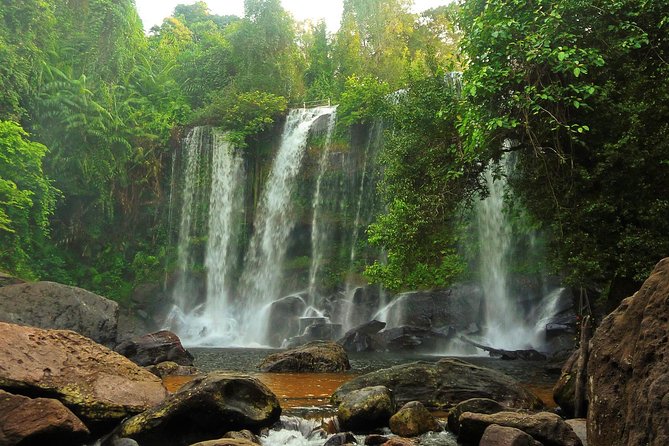
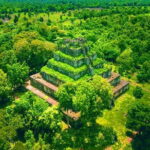
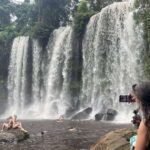
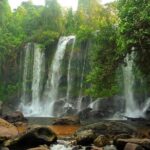
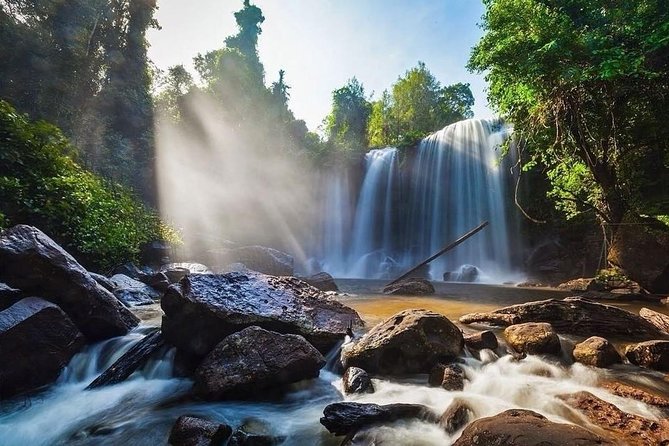
Day 2 is the “get out of the main cluster” day. You’ll spend around 6 hours at Phnom Kulen National Park, and it’s the kind of stop that helps Angkor feel less like one huge museum and more like a lived landscape.
Your key attractions here are the waterfalls at the top of Kulen Mountain, plus the 1000 linga carving. Phnom Kulen also carries a local meaning—it’s “Mountain of the Lychees”—and it’s described as a playground for locals. That’s a helpful clue for how to approach the day: treat it like a place used by people, not just something to check off.
The tour also frames it as a great picnic spot. Even though meals aren’t included, the idea is clear: you’ll likely want to have your own food options ready, or plan to buy something on-site once you’re there (without assuming the tour provides it).
Possible drawback: a 6-hour nature day after a sunrise temple day can be tiring. You’ll likely feel it most if you’re not used to early starts or heat. The air-conditioned vehicle helps during transfers, but you’ll still want to pace yourself once you’re up at the waterfall area.
Prasat Beng Mealea: the lost temple feeling, about 70 km out
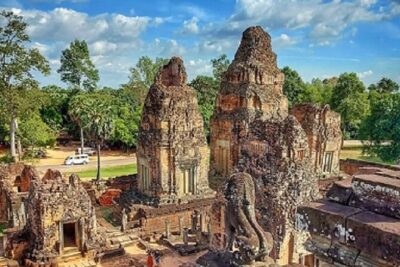
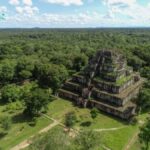
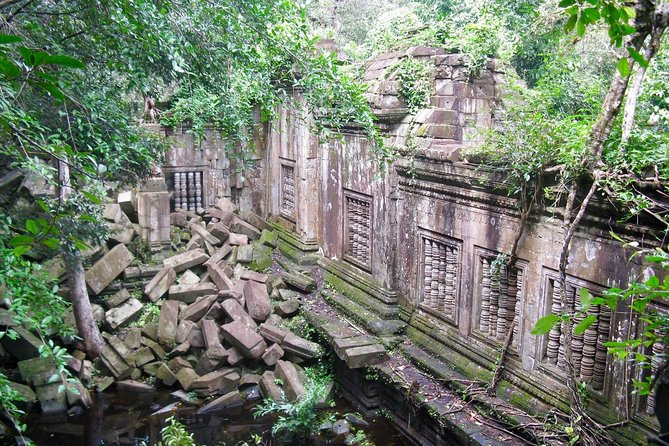
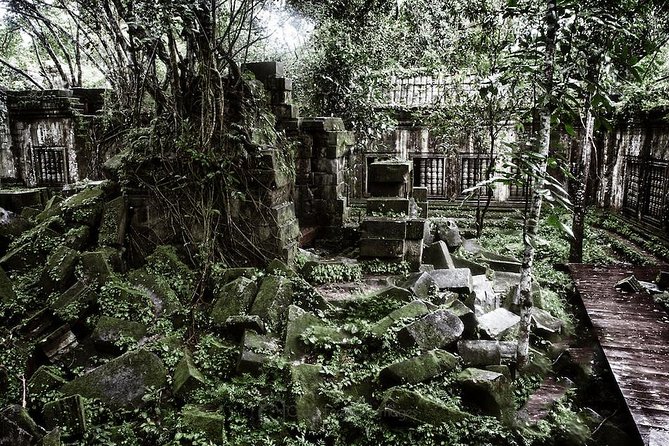
The second day’s final stop is Prasat Beng Mealea, located about 70 kilometers north-east of Siem Reap. This is the “lost temple of Angkor” style experience: secluded, exploration-like, and a bit less performative than some of the headline sites.
You get about 3 hours here, which is a smart amount of time for a place like this. You’re not just viewing from a fixed angle—you’re there for the sense of discovering something off the main track. The tour description emphasizes that secluded location can make you feel like you’re finding a lost world, and that’s exactly why people love this kind of stop.
Ticket note: temple admissions are not included, so plan for that cost in advance.
Practical consideration: because it’s farther out, you’ll spend more time traveling than on Day 1. Build in patience. The included air-conditioned vehicle is a real help, and the cold water and towel give you a small reset when you’re between sites.
What’s included vs what you pay for (and how it affects value)
This tour is priced at $154 for approximately 2 days, and what you get included is the kind of stuff that makes a difference in comfort and clarity.
Included:
- Air-conditioned vehicle
- English tour guide
- Cold water & cold towel
Not included:
- All temple tickets
- All meals (breakfast, lunch, dinner)
That matters for value. The $154 isn’t “everything package” pricing—it’s paying for the guide, the vehicle, and the comfort layer that helps you handle an intense sightseeing schedule. If you travel hungry or you prefer not to plan meals, you’ll need to add meal costs on top. If you’re comfortable eating on your own and handling tickets, this still looks like a solid deal for a private-style two-day itinerary.
Also: the tour mentions a mobile ticket feature and pickup offered. In practice, those two things often reduce friction at the start, which is exactly what you want when your day starts at 4:30am.
The guide factor: private pacing and why it changes your day
Private tours can turn into big promises, so I focus on what actually helps your experience. Here, the big one is pacing. The description says your tour guide leads you through the temple to avoid large group crowds. That means you’re less stuck in the slow-moving, crush-to-the-front moments.
The guide also adds meaning. Names you may encounter include Paim and Sen Prourng (with Jamesbone mentioned as a driver in at least one experience). Even if the exact team differs by day, the point is consistent: an English-speaking guide can explain the key details—like Avalokesvara faces at Bayon and the 12th-century royal connections—while you’re standing in front of the stones.
Humor aside, this is where the tour earns its keep. Angkor can overwhelm you if you only have time for photos. A guide helps you look in the right order and notice the patterns.
Temple timing and etiquette tips that keep the day smooth
You’ll start early, and you’ll spend hours moving through sacred sites. The tour itself recommends taking time to learn about the culture before visiting so you don’t unintentionally offend locals. I agree with that approach because it’s an easy way to make the visit more respectful and more enjoyable.
Here are a few practical habits that fit what this tour is aiming for:
- Plan for a long morning. Your first stop is sunrise, and Day 1 is packed.
- Bring layers. Mornings can feel cooler than the midday sun.
- Walk with patience at the faces and roots. Those are the spots people linger, and the crowd flow can slow down.
One more tip from the guidance style you’ll likely feel on this route: if you love Angkor Wat that much, consider doing a separate sunset visit on another night. The tour is built for sunrise, but there’s also value in seeing the same temple under different light.
Who this 2-day Angkor + nature combo is best for
This tour fits best if you want:
- A private experience rather than a bus ride
- To see the major Angkor highlights in one efficient loop
- A second day that adds waterfalls and carving instead of repeating temple after temple
It’s also a good match if you’ll enjoy some structure from an English guide while still having time at each site (3 hours at Angkor Wat, 2 hours at Bayon, 2 hours at Ta Prohm, then 1 hour at Banteay Kdei).
If you’re traveling with someone who loves history and someone who just wants views, this itinerary makes both sides happy. Angkor Wat covers the big story element, and Ta Prohm delivers the dramatic visual moment, then Phnom Kulen and Beng Mealea shift the mood toward nature and exploration.
Should you book this private Angkor Wat and temples tour?
Book it if you’re clear about what you’re buying: private pacing, air-conditioned transport, an English guide, and smart timing for sunrise. The $154 price makes sense when you value a guided route and fewer crowd headaches.
Skip or reconsider if you want a fully costed trip with meals and temple admissions handled for you. Since tickets and meals aren’t included, you’ll have to add them yourself, and that can change how “easy” the trip feels.
If sunrise is your priority and you want Day 2 to feel like a break—waterfalls, local vibe, then the lost-temple adventure out at Beng Mealea—this tour hits that sweet spot.
FAQ
What time does this tour start?
The tour start time is 4:30am.
Is pickup included?
Yes, pickup is offered.
How many days is the tour?
It’s listed as 2 days (approx.).
Is this tour private?
Yes. It’s described as a private tour/activity, with only your group participating.
Is an English guide included?
Yes. An English tour guide is included.
Are temple tickets included in the price?
No. All temple ticket(s) are not included.
Are meals included?
No. All meals (breakfast, lunch, dinner) are not included.
What locations are visited on Day 1?
Day 1 includes Angkor Wat, Bayon Temple, Ta Prohm Temple, and Banteay Kdei.
What locations are visited on Day 2?
Day 2 includes Phnom Kulen National Park (waterfall and 1000 linga carving) and Prasat Beng Mealea.
What is the cancellation policy?
You can cancel for a full refund if you cancel up to 24 hours in advance of the experience’s start time. If you cancel less than 24 hours before, the amount paid is not refunded.