REVIEW · SIEM REAP
Siem Reap Sunrise Private Tour
Book on Viator →Operated by Chuop Tour Guide & Travel · Bookable on Viator
Sunrise at Angkor Wat is a moving alarm clock. This private plan is built around that golden-hour start, and I really like how the route keeps you moving with Chuop guiding and explaining what you’re seeing. You also get real comfort extras—drinking water and a cold towel—so the early hours feel less brutal. The main thing to budget for: temple tickets are not included, so you’ll need to add the ticket cost on top of the tour price.
What makes this tour work well is its balance: big wow moments first (sunrise at Angkor Wat), then a steady loop through Angkor Thom highlights without turning it into a stampede. It’s priced as a private experience, with a car and an English-speaking guide, and that matters because Angkor can feel confusing if you’re doing it on your own. It runs about 7 to 9 hours total, which is a lot, but the stop lengths are paced (for example, a long stretch at Angkor Wat and shorter segments for the other temples).
One more plus for planning: you receive a mobile ticket, and it’s a private tour, meaning it’s just your group. That usually makes it easier to ask questions, adjust photo stops, and keep the day feeling personal instead of assembly-line.
In This Review
- Key Highlights You’ll Actually Notice
- Sunrise at Angkor Wat: Why the Morning Timing Pays Off
- Getting Into Angkor Thom: South Gate to Bayon Without the Chaos
- The Inner Loop: Baphuon, Phimeanakas, and the Smarter Photo Stops
- Terraces of the Elephants and the Leper King: Stories in Stone
- Ta Keo: The Pyramid That Demands Patience
- Ta Prohm for an Hour: When Trees Take Over the Stage
- Banteay Kdei: A Quieter Finish With Real Character
- Price and Value: What $70 Buys (and What It Doesn’t)
- Who This Sunrise Private Tour Suits Best
- Should You Book This Siem Reap Sunrise Private Tour?
- FAQ
- How much does the Siem Reap Sunrise Private Tour cost?
- How long is the tour?
- Are temple tickets included in the price?
- Does the tour include hotel pickup?
- What’s included with the tour fee?
- Which temples are included on the route?
- What is the cancellation policy?
Key Highlights You’ll Actually Notice
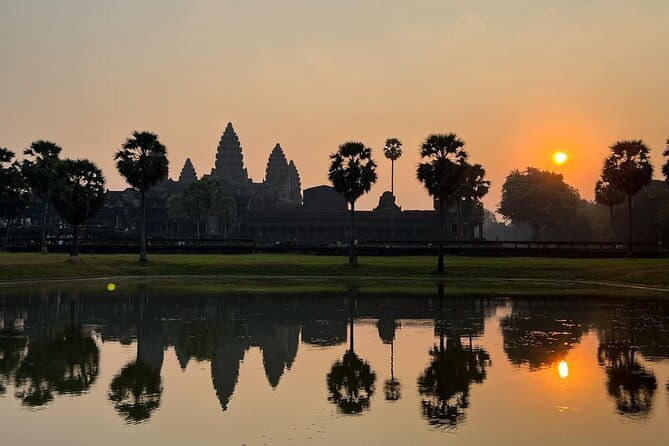
- Sunrise-focused Angkor Wat time (about 4 hours) so you’re not just rushing in for one photo.
- Angkor Thom circuit built for variety, from South Gate to Bayon and the terraces.
- Terraces with strong character: Elephants and the Leper King add texture beyond the usual main stops.
- Ta Prohm gets a full hour, enough time to watch the stone-and-tree drama from more than one angle.
- Comfort included: drinking water, a cold towel, and hotel pickup by car.
Sunrise at Angkor Wat: Why the Morning Timing Pays Off
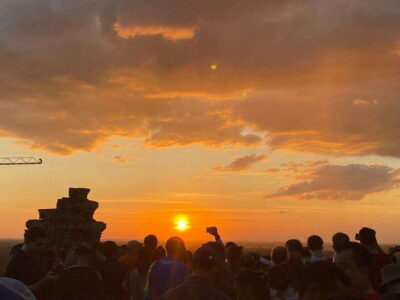
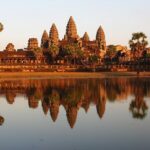
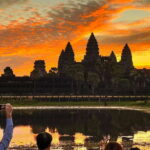
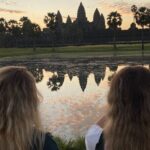
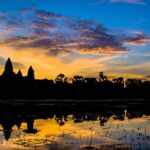
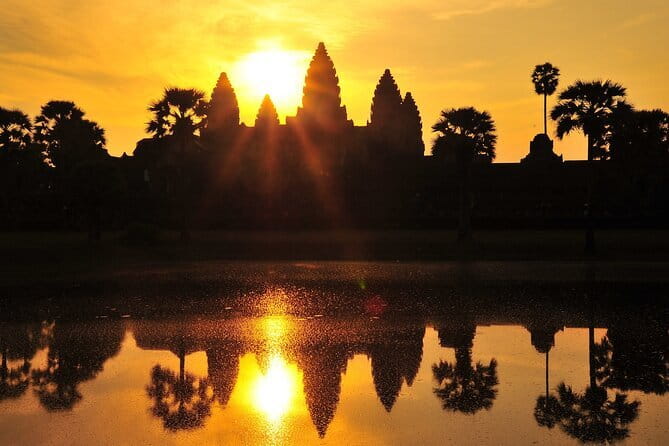
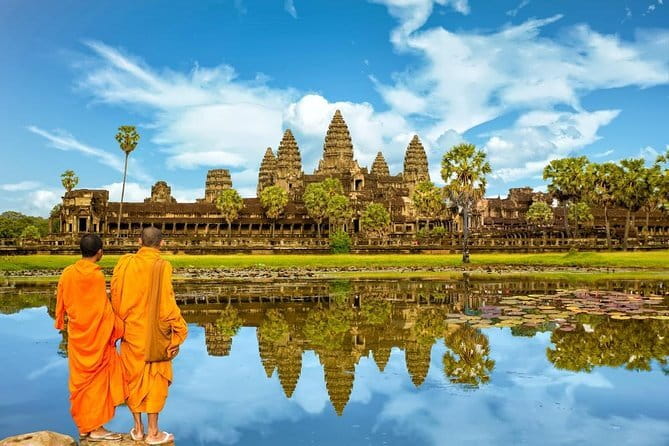
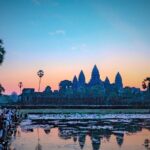
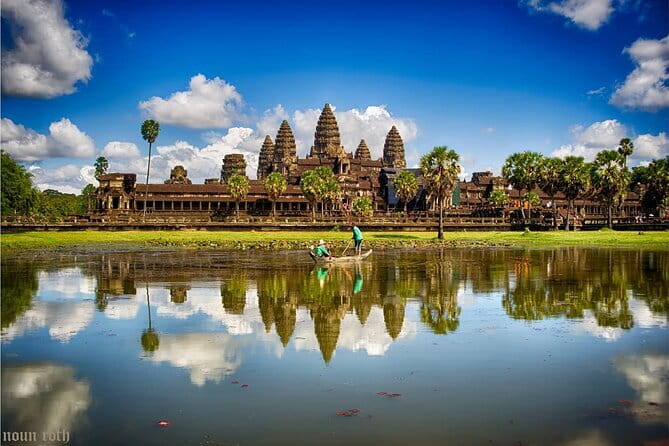
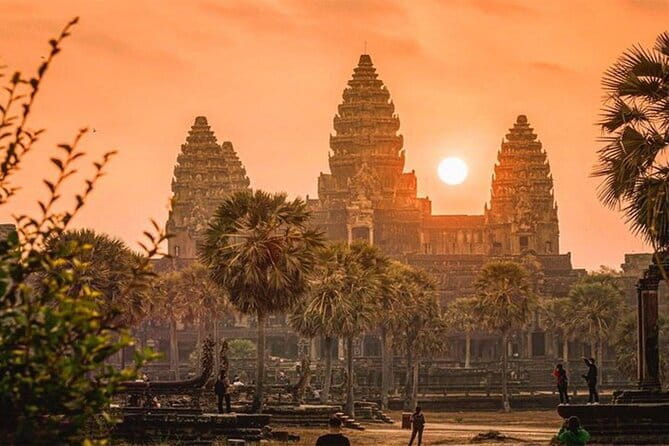
Angkor Wat at sunrise is the headliner for a reason. The sky shifts through pinks, oranges, and gold, and the stone starts looking like it has warmth in it instead of just age. This tour starts there early, which is exactly what you want if your goal is to experience the temple at its most atmospheric.
You get about 4 hours at Angkor Wat. That long window is one of the best parts of the day because it gives you options. You can watch the sunrise itself, then slow down for the details after the first wave of energy. You also get time to ask questions and understand what you’re looking at, instead of treating the place like a checklist.
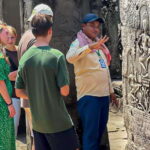
One practical benefit: if you’re someone who worries about getting lost at major sites, a guide helps you keep your bearings fast—where to go first, what matters most, and when to pause for better views. In reviews, Chuop is repeatedly praised for clear explanations and for taking lots of photos of the group, which is a big deal at Angkor where everyone wants to be in pictures, not only behind the camera.
Cost note: Angkor Wat is not included in the tour price by itself. Temple tickets cost $37 per person per day, and those are listed as not included. So the sunrise wow moment comes with a separate ticket line item—plan that in from the start.
You can also read our reviews of more private tours in Siem Reap
Getting Into Angkor Thom: South Gate to Bayon Without the Chaos
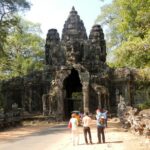
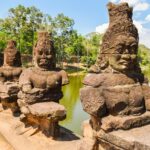
After Angkor Wat, the tour shifts into Angkor Thom, starting with the South Gate. This is your entry into the walled city feeling, with big stone guardians and an immediate sense of power. The stop is short—about 20 minutes—but it’s a smart length because you want to take it in, grab a few key photos, and keep the day flowing.
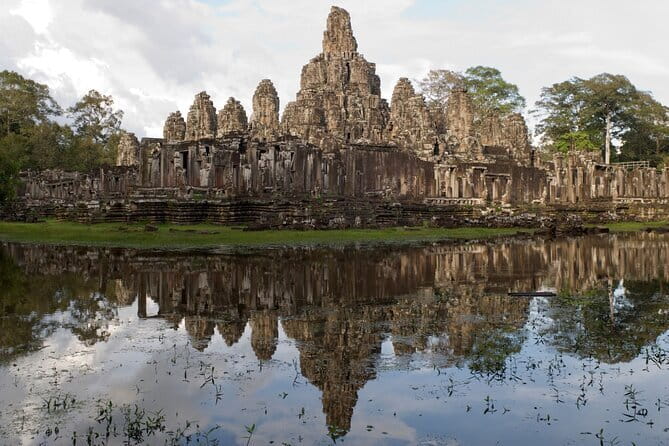
Then you head to Bayon Temple for about 30 minutes. Bayon is famous for its smiling faces, and the effect is different depending on your angle and how the light lands. A 30-minute block can sound “brief,” but in practice it’s often just right at Bayon: long enough to walk the main areas, short enough to avoid fatigue.
A big value of having an English-speaking guide is not only translation—it’s context. When you understand the symbolism and the layout, the temple stops feel like random walls and starts feeling intentional. Reviews highlight Chuop’s storytelling and ability to explain things clearly, and that’s exactly the kind of help that can turn a crowded temple into a calmer experience.
Tip for your mindset: Angkor Thom can feel like a lot of stone in a short time. Instead of trying to remember every carving, I’d focus on a few themes you see repeatedly—faces, gateways, terraces, and the way the city is organized around movement. A guide can help you lock onto those patterns.
The Inner Loop: Baphuon, Phimeanakas, and the Smarter Photo Stops
From Bayon, the tour continues with Baphuon (about 30 minutes). Baphuon is another heavyweight in the Angkor Thom group, with its massive sandstone form and the sense of scale that hits hardest when you’re standing close to the stones. This stop tends to work well for people who want “monument energy” after Bayon’s distinctive faces.
Next comes Phimeanakas for about 30 minutes. This one has a more hidden, almost mysterious feel compared to the big-ticket face towers. You get enough time here to see the structure clearly and notice how it fits into the surrounding layout, rather than treating it like a quick photo moment.
From a practical standpoint, these mid-day 30-minute temple blocks are where a guide really helps. Reviews specifically mention Chuop knowing where to place tourists based on interests and pointing out the best picture angles. That means you’re not only looking at temples—you’re also learning how to look at them.
Also, remember you’ll be walking. Even when stops are short, the Angkor circuit adds up fast. If you feel heat or tiredness building, that’s where included comfort items matter: drinking water and a cold towel can genuinely reset you before the next temple jump.
Terraces of the Elephants and the Leper King: Stories in Stone
This tour includes two of the most memorable stops in Angkor Thom’s terrace sequence.
First is the Terrace of the Elephants for about 30 minutes. The stone elephants along the platform are eye-catching on their own, but the bigger payoff is seeing how the terrace functions as a dramatic stage within the city complex. It’s the kind of stop that makes you slow down because it’s visual and detailed, even if you’re not chasing every carving.
Then you go to the Terrace of the Leper King, also about 30 minutes. This terrace tends to feel more eerie and symbolic. Even if you don’t memorize every figure, you’ll notice that the carvings carry a different mood than the more “celebratory” elephant imagery. It’s a good contrast after the weight and motion of elephant carvings.
Here’s the value for your planning: these terraces give you variety. Not every stop is a tower or faces. You get horizontal, intimate detail work. That variety helps break the day into chapters, which makes it easier to enjoy without feeling like you’re just speed-walking through stone.
One more reason I like these two stops together: if you’re traveling as a couple or small group, terraces are good “together time.” You can take photos, compare what you each notice, and let the carvings spark questions. A guide’s explanations can turn those questions into something you understand quickly.
Ta Keo: The Pyramid That Demands Patience
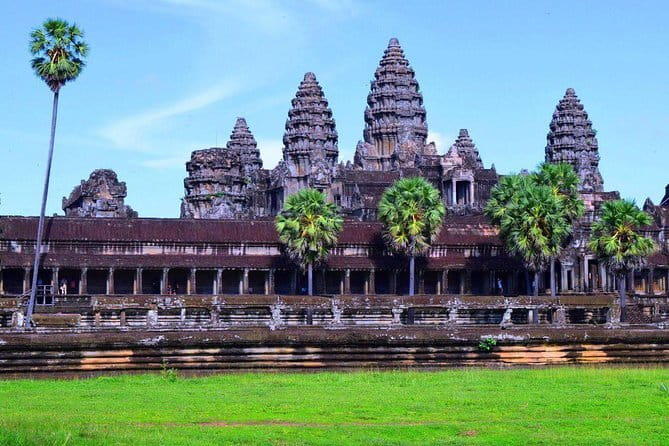
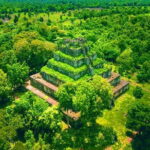
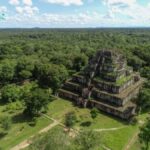
After the terrace stops, the tour moves to Ta Keo for about 30 minutes. Ta Keo is an imposing pyramid rising from the surrounding area, and it can feel especially striking because it’s about shape and structure as much as it is about decoration.
This is a good stop when you want a breather from the most intricate carving-heavy areas. It’s also an easy one to photograph because the pyramid lines guide your eye. If you like architecture more than portraits or faces, Ta Keo can become a personal favorite.
If you’re thinking about energy levels, this is a sensible point in the day for 30 minutes. You’ve already had a strong rhythm of stops, and Ta Keo helps you shift from “finding the details” to “reading the form.”
You can also read our reviews of more tours and experiences in Siem Reap

Ta Prohm for an Hour: When Trees Take Over the Stage
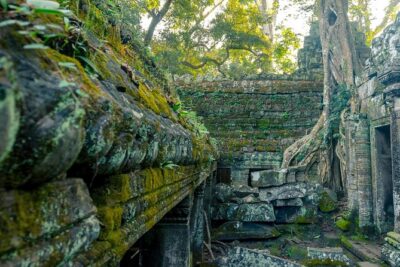
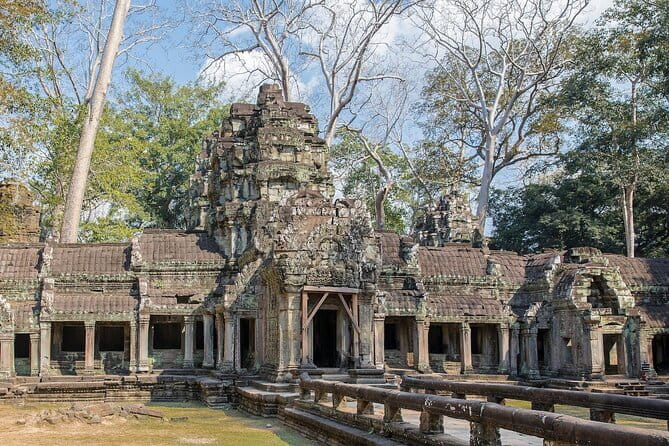
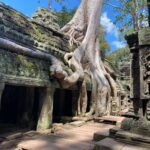
Then the tour reaches Ta Prohm for about 1 hour. That extra hour is well chosen because Ta Prohm is not a one-look temple. The stone-and-tree feel changes as you move around, and light can make the roots look different from one section to another. If you only had 20 or 30 minutes, you’d feel like you rushed the effect.
This is the stop where many people slow down without realizing it. The place has a cinematic vibe—stone remains, roots, and openings where nature looks like it’s doing the holding. It’s also one of those temples where you’ll likely want more photos than you expected, and that fits well with Chuop’s reputation for taking great pictures of the group.
A practical note: Ta Prohm is popular, so you’ll likely encounter busy movement at certain points. Having a guide helps you choose where to pause so you aren’t constantly blocked. It also helps if your group has different interests—one person might want the classic view, while another might care more about the structure’s textures.
Banteay Kdei: A Quieter Finish With Real Character
The last temple stop on the listed route is Banteay Kdei for about 30 minutes. This one brings a calmer, more understated feel compared to some of the louder icons. You still get detailed stonework, but the atmosphere is more relaxed, which helps at the end of a long day.
A 30-minute stop is a good size here because you’ll be tired by then. You don’t need to force yourself through a big “must-see” marathon. Instead, you can enjoy the carvings and the mood, then head back.
This end-cap matters. When a day is 7 to 9 hours, your last stop can decide whether the tour feels satisfying or exhausting. A quieter temple finish can make the overall day feel like a complete arc—from dramatic sunrise, to intense highlights, to a softer landing.
Price and Value: What $70 Buys (and What It Doesn’t)
The tour fee is $70 per person, and it’s structured as a private experience with English-speaking tour guidance, transportation by car, drinking water, and a cold towel. That’s a lot included for one price, especially because Angkor days are long and logistics-heavy if you’re trying to coordinate on your own.
But here’s the math you should do before booking:
- Tour fee: $70 per person
- Temple tickets: $37 per person per day (not included)
- Meals and tips: not included
So you should expect the all-in base total to land around $107 per person, before you add meals and tips. If you’re comparing value, that’s the key point: the temple ticket is a separate fixed cost, and you’ll pay it no matter which guide you choose.
Where the $70 really earns its keep is in time and attention. The day isn’t just a route—it’s a paced sequence with a guide who helps you interpret what you’re seeing, plus transport that reduces hassle between widely spaced locations.
Also, note the “small tour” feel. The route is loaded with big sites, yet the stop lengths are structured—4 hours at Angkor Wat, then timed blocks across Angkor Thom and the final two temples. That structure tends to work for people who want highlights without sprinting the whole day.
One last pricing consideration: if you’re traveling as a single person versus a group, private tours can feel more expensive per person. If your group is two or more, the private setup tends to feel more rational.
Who This Sunrise Private Tour Suits Best
This tour fits best if you want:
- A sunrise start at Angkor Wat with time to actually experience it
- An English-speaking guide who explains and helps with photos
- A structured Angkor Thom loop plus Ta Prohm and Banteay Kdei without getting lost
- Comfort extras like water and a cold towel
It’s also a strong match if you like travel days that feel personal. It’s a private tour, so it’s your group only. Reviews about Chuop often mention flexibility and photo help, and that kind of attention is exactly what people usually want from a private guide.
If you hate early mornings or you’re hoping for a super relaxed, no-walking day, this may feel like too much. The itinerary is full, and you’ll be on the move for most of the day.
Should You Book This Siem Reap Sunrise Private Tour?
I’d book it if you want the classic Angkor highlights in a day with a plan that gives sunrise its proper time. The combination of 4 hours at Angkor Wat, a thoughtfully paced Angkor Thom circuit, and an hour at Ta Prohm makes it feel like a complete greatest-hits route—without turning every stop into a 10-minute photo sprint.
I’d think twice if your budget is tight and you don’t want to add on the $37 per person per day temple tickets. Also, if you want meals included, you’ll need to plan your own breaks since meals aren’t part of the package.
If you’re comfortable doing a full temple day and want the value of a guide who helps with clarity and pictures, this is an easy one to recommend.
FAQ
How much does the Siem Reap Sunrise Private Tour cost?
It costs $70.00 per person.
How long is the tour?
The duration is about 7 to 9 hours.
Are temple tickets included in the price?
No. Temple tickets are not included and cost $37 per person per day.
Does the tour include hotel pickup?
Yes, pickup is offered.
What’s included with the tour fee?
You get an English-speaking tour guide, transportation by car, drinking water, and a cold towel.
Which temples are included on the route?
The tour includes Angkor Wat, Angkor Thom South Gate, Bayon, Baphuon, Phimeanakas, Terrace of the Elephants, Terrace of the Leper King, Ta Keo, Ta Prohm, and Banteay Kdei.
What is the cancellation policy?
You can cancel for a full refund if you cancel up to 24 hours in advance of the experience’s start time.