REVIEW · SIEM REAP
Siem Reap: Kulen Waterfall and Banteay Srei Exploration
Book on GetYourGuide →Operated by Angkor Buddy · Bookable on GetYourGuide
Kulen Mountain changes the mood fast. This day pairs big views with sacred stone carving and a real chance to get wet at Kulen Waterfall. You also end with Banteay Srei’s tiny, detailed temple work and a stop at Preah Dak village for palm cake and fruit.
I love the mix of scale and texture: the panorama from Poeng Ta Kho (Amazing Cliff) feels wide open, while Preah Ang Thom’s 8-meter reclining Buddha feels close-up and human. I also love the hands-on “Cambodia in action” feeling—sharing worship spots and local routines with Cambodian visitors, not just photographing ruins.
One thing to plan for: the day has extra costs you pay separately (Kulen National Park entrance and Banteay Srei’s Angkor Pass), and the waterfall/1000 Lingas can look different depending on rain and river flow.
In This Review
- Key highlights worth waking up for
- Kulen and Banteay Srei: the best kind of break from Angkor crowds
- How the day is paced (and why the timing matters)
- Poeng Ta Kho (Amazing Cliff): a viewpoint that feels earned
- Preah Ang Thom: the 8-meter reclining Buddha and real worship
- Anlong Pong Phkay: the River of 1000 Lingas in a water-and-stone setting
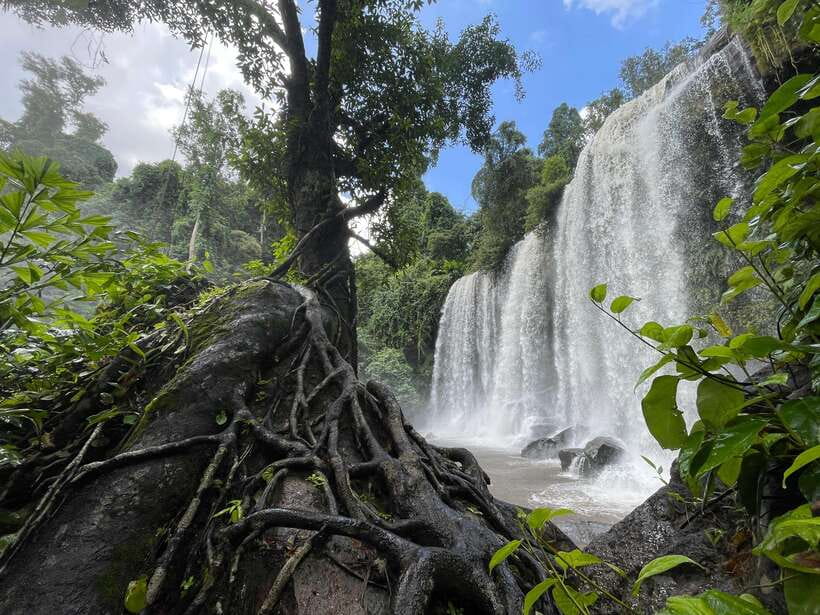
- Kulen Waterfall: two falls, and time to swim when it’s safe
- Lunch stop: palm cake and fruits that taste like Cambodia
- Banteay Srei: the Citadel of Women and red-sandstone precision
- Preah Dak village: steamed palm cakes and community pride
- Price and value: what you pay for at around $46
- Who should book this (and who might want private)
- Should you book it?
- FAQ
- How long is the tour?
- What time do you get picked up in Siem Reap?
- What’s included in the $46 price?
- Do I need an Angkor Pass for Banteay Srei?
- How much is the Kulen Mountain National Park entrance fee, and how do I pay?
- Can I swim at Kulen Waterfall?
- How big is the group?
Key highlights worth waking up for
- Poeng Ta Kho cliff ridge views with a calm, not-too-busy feel
- Preah Ang Thom reclining Buddha carved into a single sandstone boulder
- River of 1000 Lingas with visible carvings of lingas, yonis, and Vishnu themes
- Two Kulen Waterfalls with time to bathe/swim when conditions allow
- Banteay Srei’s red-sandstone detail (the Citadel of Women)
- Preah Dak village palm cakes plus local solar and cleanliness efforts
Kulen and Banteay Srei: the best kind of break from Angkor crowds
If Angkor Wat has you thinking about temples all day, this tour is a smart pivot. It takes you out toward Kulen Mountain and loops in Banteay Srei, so you get variety: cliff views, riverbed carvings, Buddha sculpture, waterfall water time, then one of the prettiest small temples in the region.
What makes the experience feel practical is that it’s not just “drive, stop, snap.” Between stops you’re moving through different kinds of places—worship areas where people actually pray, a riverbed you can walk across in sections, and a national-park swim stop. You’ll also be on a small-group style day (up to 12), which matters when you’re going to places that can get busy.
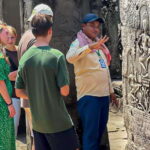
This is also one of those days where the guide’s rhythm helps. English-speaking guides like Tann and Sam (and drivers such as Pan or Ton) are often praised for keeping the schedule moving without turning it into a race. That gives you enough time to look, ask questions, and still get to the next stop with energy.
You can also read our reviews of more tours and experiences in Siem Reap.
How the day is paced (and why the timing matters)
You’re typically picked up between 7:30 and 8:00 AM from your Siem Reap hotel, with exact pickup confirmed the day before. The pace is built around daylight and early-site access, which is key for two reasons.
First, you’ll be outside for multiple stops, so starting early helps you beat heat and crowds. Second, the look of Kulen changes with weather. Rain can make things greener and stronger, but it can also change what you can see (for example, the 1000 Lingas may be harder to spot after heavy rain, and the waterfall current can run fast).
Expect a full, packed day—about 8 to 9 hours—with short visits at each main site. That’s not a criticism. It’s how you cover five distinct “wow moments” without turning the day into a six-hour walking tour.
Poeng Ta Kho (Amazing Cliff): a viewpoint that feels earned
The first big stop is Poeng Ta Kho, often described as an Amazing Cliff viewpoint on the Kulen ridge. It’s reached early, before the day gets more crowded, and it’s framed as a small, quieter side of Kulen Mountain rather than a major attraction with endless lines.
You’ll have about 25 minutes at this stop. That might sound short until you realize what you’re really there for: a panoramic view and the chance to reset your sense of distance. From a ridge you understand how wide the Kulen area is, and you’ll also see why the region’s spiritual sites were placed where they were—water, stone, and sky all connect.
Practical tip: wear comfortable shoes and keep your hat handy. This is a viewpoint, so plan for exposed sun and uneven ground around the viewing points.
Preah Ang Thom: the 8-meter reclining Buddha and real worship
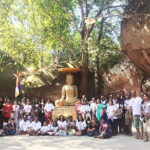
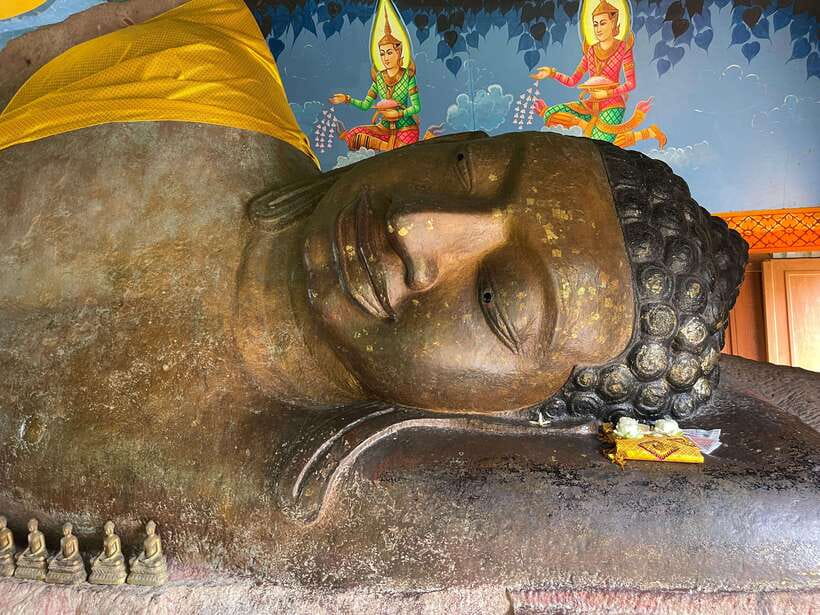
Next comes Preah Ang Thom (Wat Preach Angthom), where you’ll see a reclining Buddha carved into a giant sandstone boulder. The Buddha carving is about 8 meters long, which is the kind of scale you can only fully appreciate when you stand in front of it.
This site is special for a simple reason: it’s not only a “see it” ruin. People come here for spiritual practice and blessings, so the mood is different than a temple complex made mainly for tourists. A staircase and shelter have been added for easier access, which helps you focus on the carving instead of fighting the terrain.
You get about 1 hour here. In that time, you can look from multiple angles and take your time reading the place visually—especially the way the sculpture sits inside the stone form rather than being separate from it.
If you’re sensitive to crowds, note that certain Khmer public holidays can swell visitor numbers at sacred sites. Early timing helps, but you can still expect more people on peak travel days.
Anlong Pong Phkay: the River of 1000 Lingas in a water-and-stone setting
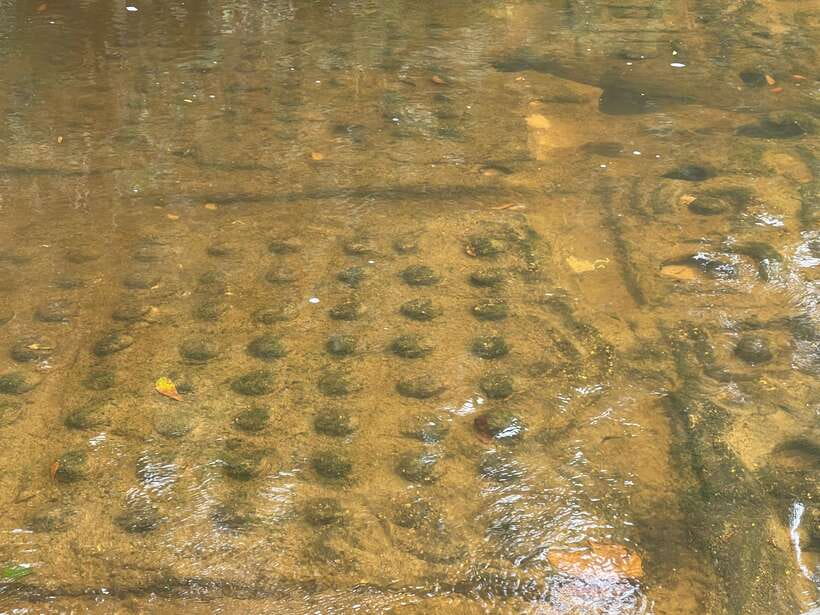
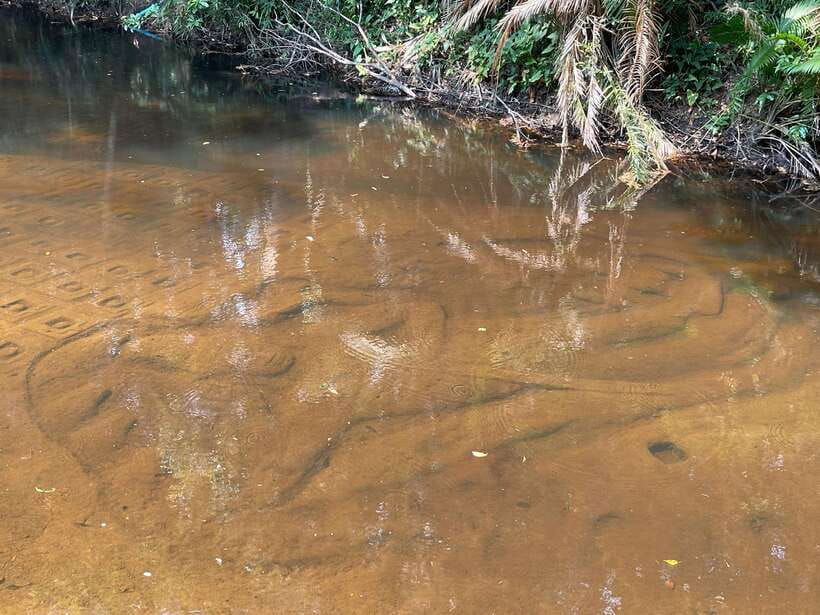
The River of 1000 Lingas is one of those sites where context matters. You’re not walking through a museum display. You’re moving along a riverbed area where carvings show up across rocks and surfaces—lingas and yonis, plus a large image connected with Vishnu themes.
The big variable here is water. Depending on the season and recent rain, carvings may be easier or harder to see. In heavier rain, the riverbed can look more covered, and the carvings might be less visible. In calmer conditions, they can stand out more clearly.
You’ll have about 25 minutes at this stop, which is enough if you know what you’re looking for. I recommend you slow down and focus on the carvings you can actually see, not the myth-like number in the name. The real value is spotting how the stone work relates to water, fertility symbolism, and Khmer-era religious thinking.
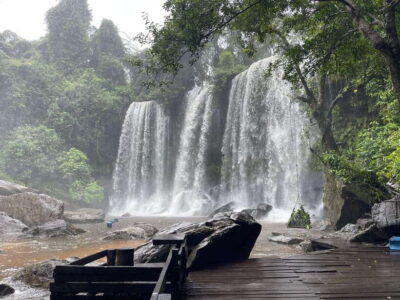
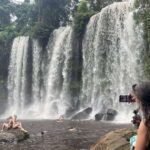
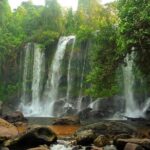
Kulen Waterfall: two falls, and time to swim when it’s safe
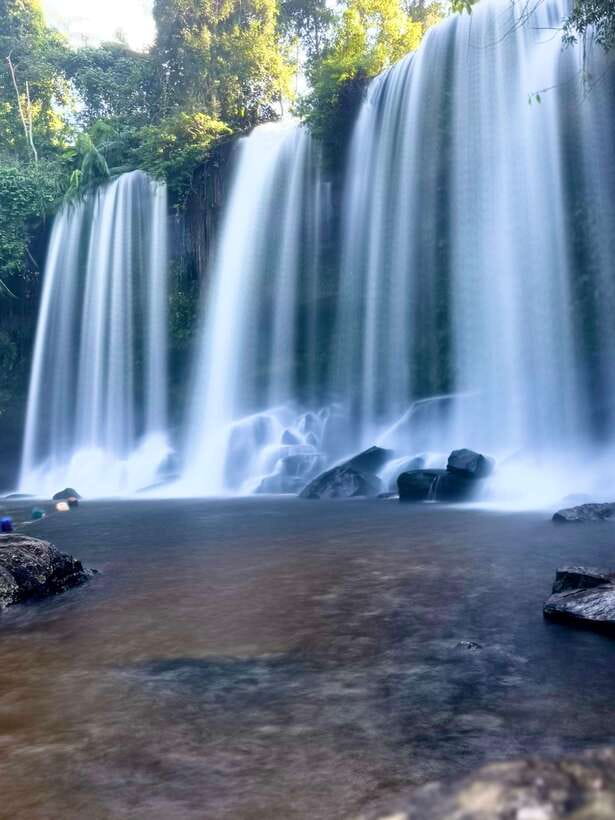
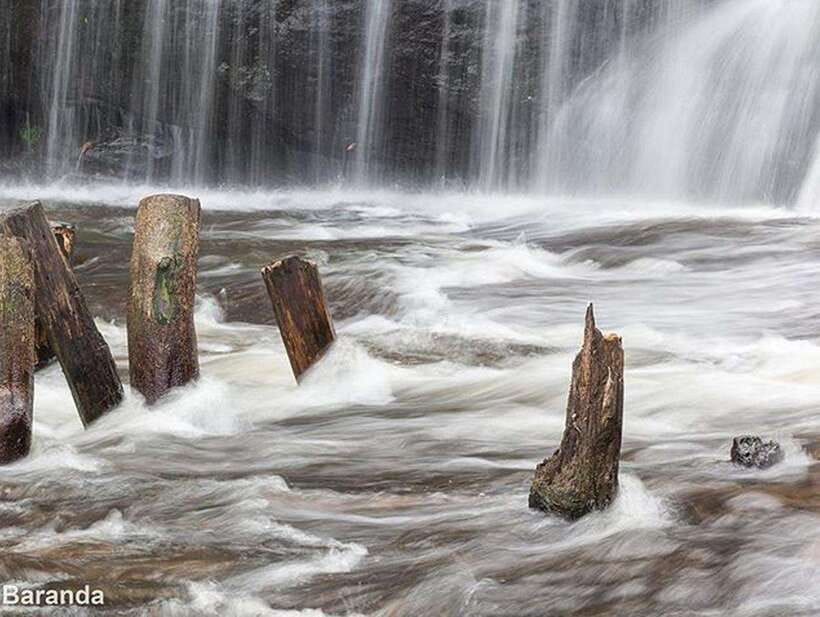
Kulen National Park is where the day turns from stone to water. You’ll visit two main waterfalls:
- The first is roughly 4–5 meters high and about 25 meters wide during the rainy season.
- The second is taller, about 15–20 meters high and around 15 meters wide.
You’re given about 1 hour for the waterfall portion, and this is where you may get to bathe and swim in cool, clear water. Changing rooms are available on-site, so you can actually make it a real “water break,” not just a quick splash photo.
Here’s the practical consideration: the waterfall look and swim conditions depend on recent rain. If it’s been stormy, the flow can be strong, and you might decide not to swim even if water is available. That’s not a waste of time. Fast water still looks dramatic, and it’s part of the Kulen experience.
What to bring:
- swimwear
- towel
- insect repellent
- and comfortable shoes for slippery or uneven footing
Lunch stop: palm cake and fruits that taste like Cambodia
After the waterfalls, you’ll stop for lunch at a local restaurant. Lunch isn’t included, so treat it as your flexible moment: you can buy a meal and soft drinks on-site based on what you feel like after a swim.
What is included is a taste of local snacks and produce:
- local palm cake
- seasonal fruits like palm, banana, and mango
The palm cake is worth paying attention to because it’s not a generic “dessert” stop. It connects you to how people use local ingredients in everyday food. I like this part of the day because it slows you down after exertion and gives you a sense of place beyond temples.
If you’re hungry, plan to eat what’s easiest for your stomach. You’ll have walked, stood in sun, and possibly soaked in water, so keep it simple.
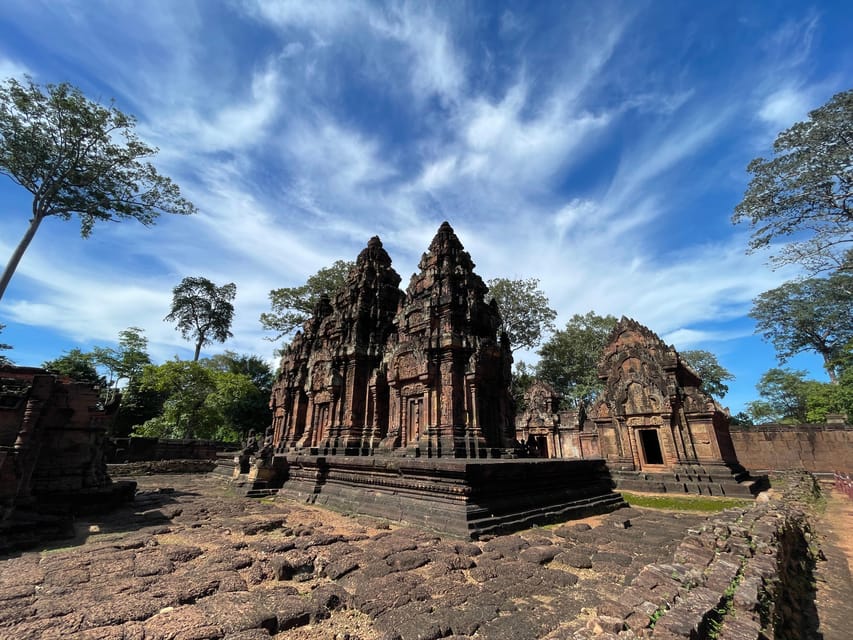
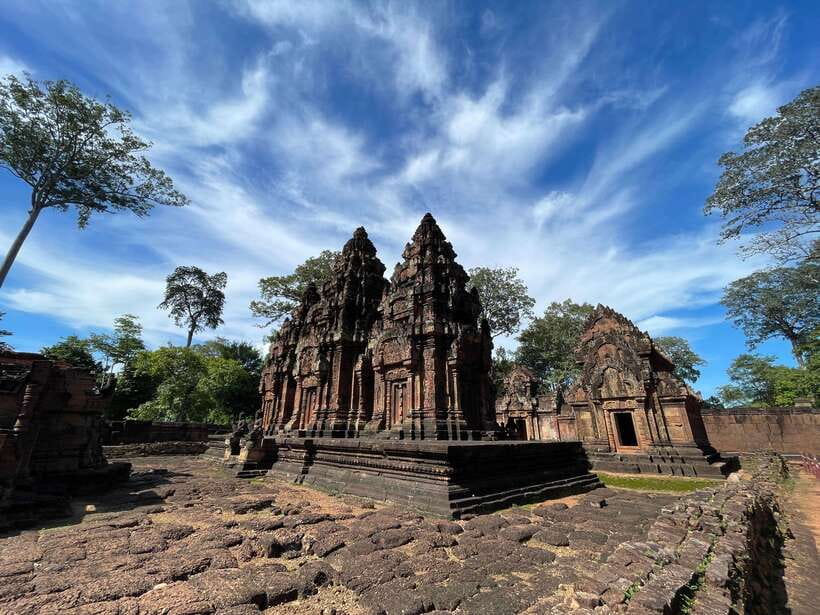
Banteay Srei: the Citadel of Women and red-sandstone precision
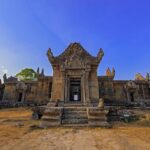
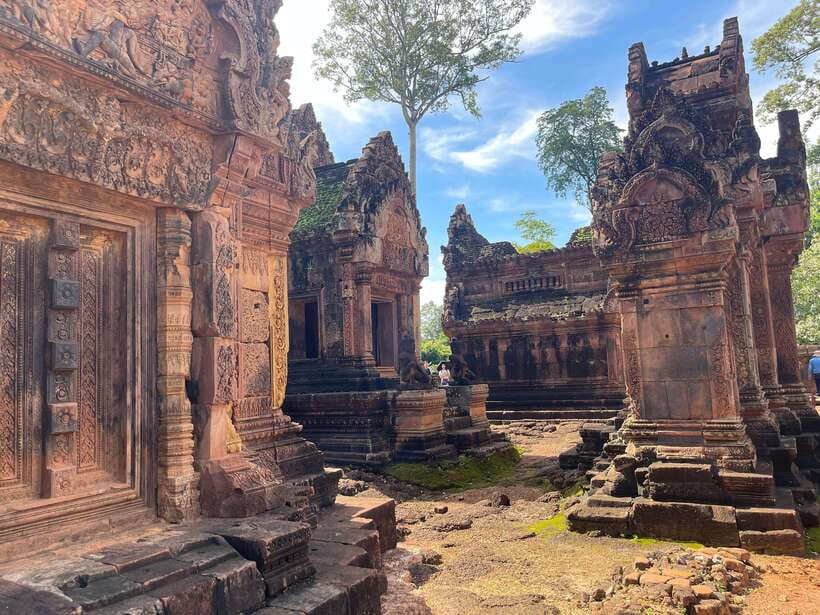
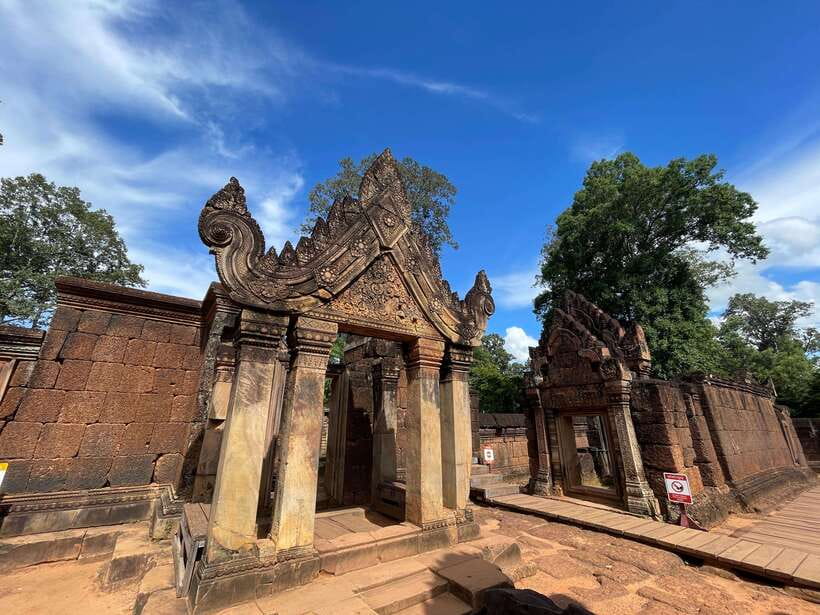
Now for the temple that many people consider a highlight: Banteay Srei. This 10th-century temple is dedicated to Shiva and is nicknamed the Citadel of Women, partly because of the delicate, refined carving style people associate with the temple.
What you’ll feel here is the difference between “big ruin energy” and “fine-detail craftsmanship.” Banteay Srei’s carvings are famous for being some of the most intricate and delicate in Khmer architecture, carved in red sandstone.
The visit is about 1 hour, which is the right amount of time. You can’t rush the details, and you don’t want to spend so long that you lose the sense of the temple’s overall composition. Look for patterns in the stone work and let your eyes adjust to the small scale.
Important cost reality: Banteay Srei requires an Angkor Pass. If you’re using a 1-day pass, it’s listed as $37. This isn’t just a detail—it affects whether you already have what you need before you go.
Preah Dak village: steamed palm cakes and community pride
The final stop is Preah Dak village, close to Banteay Srei. Instead of noodles, you’ll get a taste of the village’s famous steamed palm cakes. It’s a neat contrast to the temple day: the focus shifts from ancient stone to current local life.
This village has also gained recognition for environmental efforts, including its One Village, One Light Bulb solar power project and a strong push toward cleanliness and recycling. You’re not just seeing a craft snack—you’re seeing a place trying to improve daily living in practical ways.
You’ll have about 20 minutes here. Don’t expect a long cultural performance. Think of it as a friendly stop that rounds out the day and adds an everyday Cambodia angle.
Price and value: what you pay for at around $46
At $46 per person for an 8–9 hour day, the value comes from the structure and the coverage. You’re getting:
- hotel pickup and drop-off
- air-conditioned vehicle
- professional English-speaking guide
- bottled water and a towel
- curated sightseeing time at multiple major stops
- included tastings (palm cake and seasonal fruit)
But the “true cost” story includes two separate add-ons:
- Kulen Mountain National Park entrance: $20/pax, cash only (credit cards aren’t accepted)
- Banteay Srei entrance via Angkor Pass (1-day pass listed as $37)
So my way to think about the price is this: the base tour fee is what buys the day’s organization and guidance. The extra fees are what you still need to access the sites once you arrive.
You can come out feeling like you got your money’s worth because the day hits several high-impact locations that are harder to stitch together smoothly on your own—especially with early pickup and a small-group pace.
Who should book this (and who might want private)
This tour is a good fit if you want:
- a break from focusing only on Angkor temples
- nature time plus sacred sites in one day
- a guide who helps you understand what you’re seeing (and often helps with photos)
From the experience style shared by guides and drivers on this route, the day tends to work well for people who care about photos. English guides such as Tann are frequently praised for practical picture-taking help—making sure you get angles and video clips you’ll actually want later.
Who might not love it:
- If you have lower physical fitness, the group format isn’t recommended because of the day’s walking and site movement. In that case, ask about a private tour so you can match the pace to your comfort level.
Also, if you travel during Cambodian public holidays, expect more people at sacred stops. The early start helps, but you’ll still feel crowds.
Should you book it?
Yes—if you want a full-day combo of Kulen nature and Khmer spirituality without the hassle of planning multiple far-flung stops. I’d especially recommend it if you’re staying in Siem Reap and you already have some Angkor pass setup or you’re ready to handle the separate fees.
Book it if:
- you’re okay with a tightly paced schedule (short visits, multiple highlights)
- you want waterfall time and might swim if conditions allow
- you like learning with a guide and sharing sites with Cambodian visitors
Think twice if:
- you’re trying to minimize extra cash spending for entrance fees and park access
- heavy rain makes you expect a “picture-perfect” 1000 Lingas day (water flow can change visibility)
- you prefer long, slow visits over a packed route
FAQ
How long is the tour?
It runs about 8–9 hours total.
What time do you get picked up in Siem Reap?
Pickup is scheduled between 7:30 and 8:00 AM from your hotel, and the exact details are confirmed the day before.
What’s included in the $46 price?
It includes bottled water and a towel, free hotel pickup and drop-off, an English-speaking guide, transportation in an air-conditioned vehicle, sightseeing as listed, plus palm cake tasting and seasonal fruit tasting.
Do I need an Angkor Pass for Banteay Srei?
Yes. Banteay Srei requires an Angkor Pass (a 1-day pass is listed as $37). This is not included in the tour price.
How much is the Kulen Mountain National Park entrance fee, and how do I pay?
The entrance fee is listed as $20 per person and it’s cash only. Credit cards are not accepted.
Can I swim at Kulen Waterfall?
The tour includes time at the waterfalls where you have the chance to bathe and swim in the cool, clear water. Bring swimwear and a towel. Conditions can vary with rain.
How big is the group?
It’s limited to a maximum of 12 participants, with private or small-group options available.