REVIEW · SIEM REAP
Siem Reap: Angkor Wat Private Tour by Tuk Tuk
Book on GetYourGuide →Operated by Tour Guide Team in Siem Reap · Bookable on GetYourGuide
Angkor Wat is the reason most people come to Siem Reap. What I like most is the private tuk tuk for moving between temples without fighting traffic, and the service mindset from drivers like Rachou, who arrives early, waits patiently, and keeps things easy with cold water. The one thing to plan around is that temple tickets and meals aren’t included, so you’ll add those costs and you’ll be walking outdoors for hours.
This tour is built as a full-day “greatest hits” circuit inside the Angkor World Heritage Site: Angkor Wat, then Angkor Thom (South Gate, Bayon, Baphuon, Phimeanakas), then the terraces and smaller sanctuaries, finishing with Ta Prohm. You get a licensed English-speaking driver, a 100% private setup (no sharing), and skip-the-line entry via a separate entrance.
If you value flexibility—pausing for photos, moving at your own pace, and getting help like Pholla taking photos when someone is traveling solo—this format is hard to beat for the price.
In This Review
- Key highlights I’d prioritize
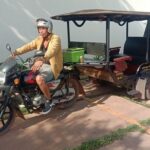
- Entering Angkor by Tuk Tuk: Why Private Changes the Day
- Angkor Wat First: Vishnu’s Temple, Khmer Symmetry, and Iconic Scale
- Into Angkor Thom Through the South Gate: 8-Meter Walls and the Bayon Faces
- Baphuon and Phimeanakas: A Rebuilt Buddha and a Jungle View
- Terraces and Smaller Temples: Preah Palilay, Leper King, and Elephants
- Thommanon and Chau Say Tevoda: Two Hindu temples in an Angkor Wat period world
- Ta Prohm After Lunch: Movie-Famous, But Still Worth the Stone and Roots
- Price and logistics: How the value works at $13 per person
- Who should book this private Angkor tuk tuk day
- Should you book this private Angkor Wat tuk tuk tour?
- FAQ
- How long is the Siem Reap Angkor Wat private tour?
- Is this tour private or shared?
- What’s included in the tour price?
- Are temple tickets included?
- Are meals included?
- Does the driver speak English?
- Do you skip the line at the temples?
- Which temples are covered during the day?
- Is hotel pick-up and drop-off included?
- What is the cancellation policy?
Key highlights I’d prioritize
- 100% private tuk tuk transport: Your own ride and your own time.
- Skip-the-line entrance: Less waiting at the temples.
- Cold drinking water included: A practical detail that matters all day.
- Angkor Wat + Angkor Thom + Ta Prohm: The three temple zones most people want most.
- English-speaking, licensed driver: Clear communication and smooth logistics.
- Optional extra time for what you like: Some drivers will adjust if you want an additional stop.
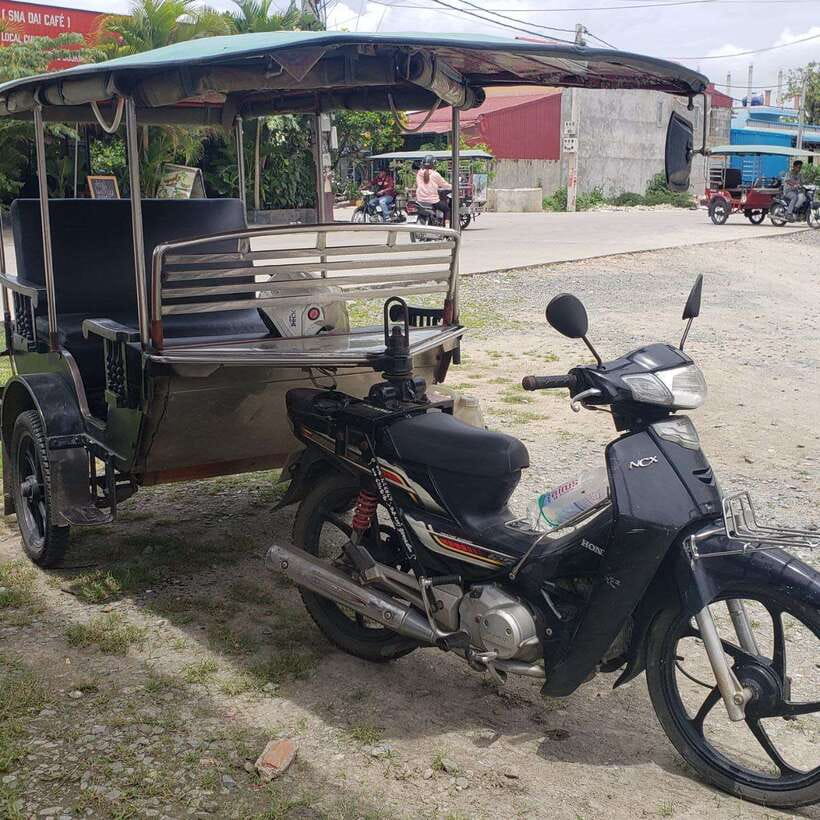
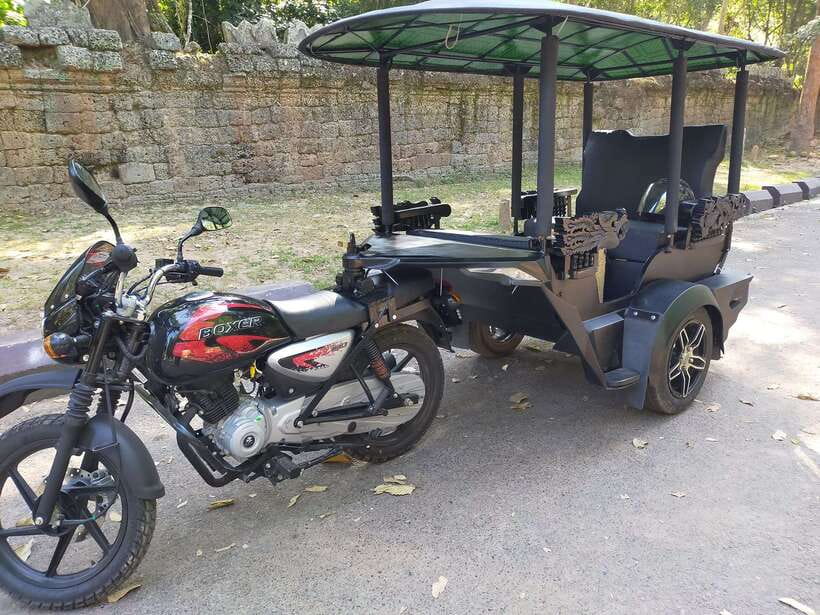
Entering Angkor by Tuk Tuk: Why Private Changes the Day
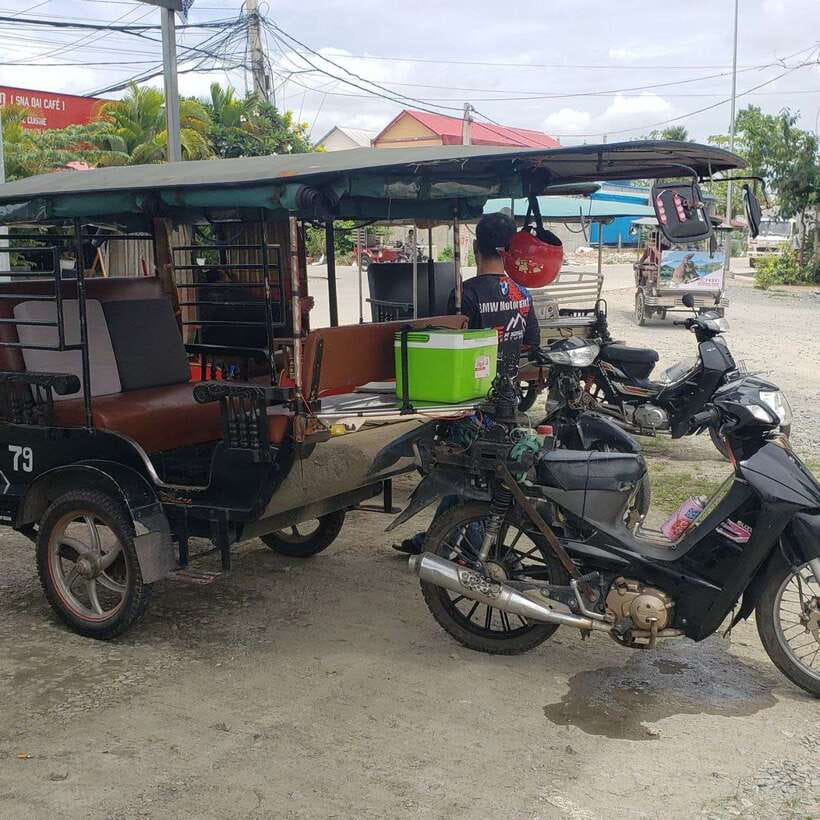
A tuk tuk might sound like a fun detail, but it’s more than that here. In Angkor, the difference between a smooth day and a stressful one is usually logistics: getting from the right gate to the right entrance, finding a practical place to park, and not losing time while everyone scrambles.
With this private setup, you start with hotel pick-up in Siem Reap and move through the temple circuit as a single group. That means you can keep your rhythm: linger at a carving, take a slow walk through a courtyard, or step out for quick photos without feeling like you’re holding up a larger group.
I also like that the tour includes toll roads and parking, plus gasoline. Those small “invisible” costs often surprise people on day tours. Here, the transport side is handled, so your day stays focused on the temples instead of spreadsheets.
The driver experience is a big part of why people rate this so highly. Examples from the real world: Rachou is described as accommodating and attentive with cold water; Sona and Pholla are described as clear on meeting points and helpful with photos; Mr. Vannak is described as helpful. That adds up to a calmer day, especially if you’re traveling solo.
You can also read our reviews of more private tours in Siem Reap
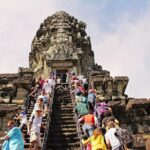
Angkor Wat First: Vishnu’s Temple, Khmer Symmetry, and Iconic Scale
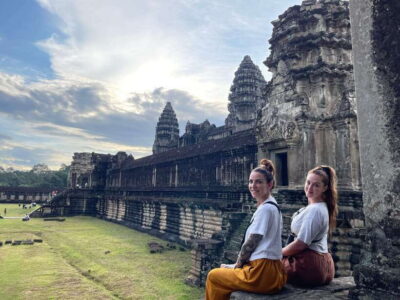
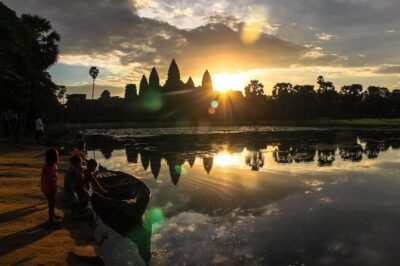
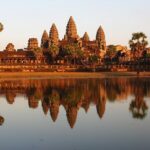
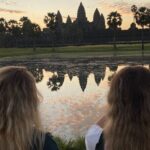
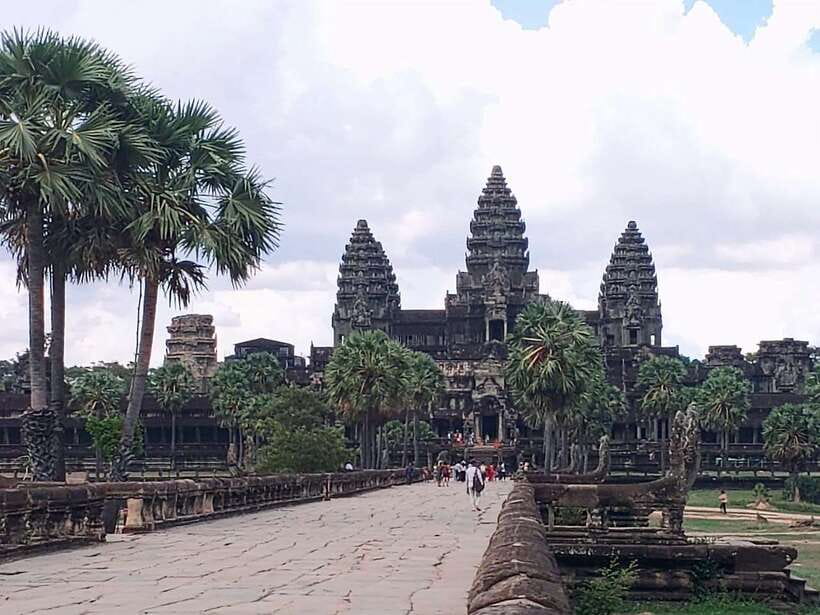
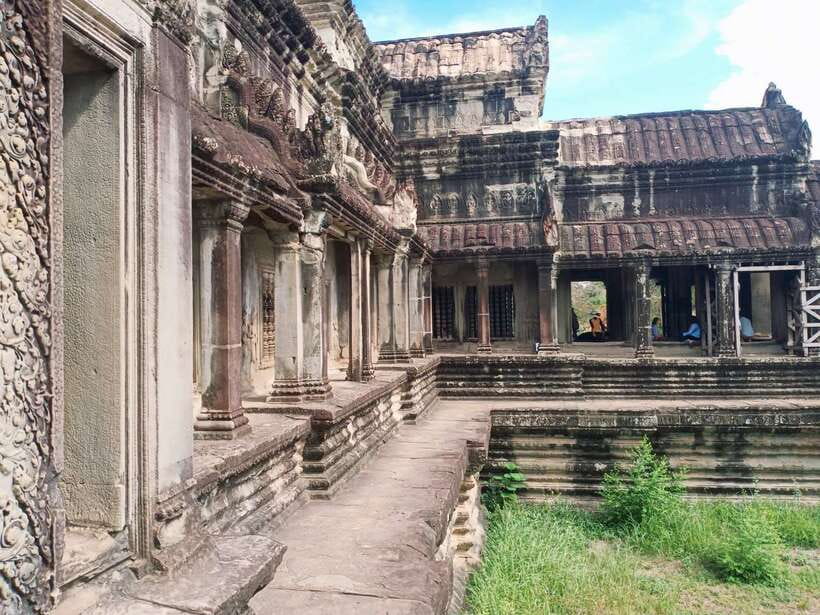
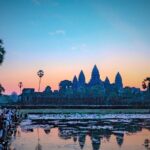
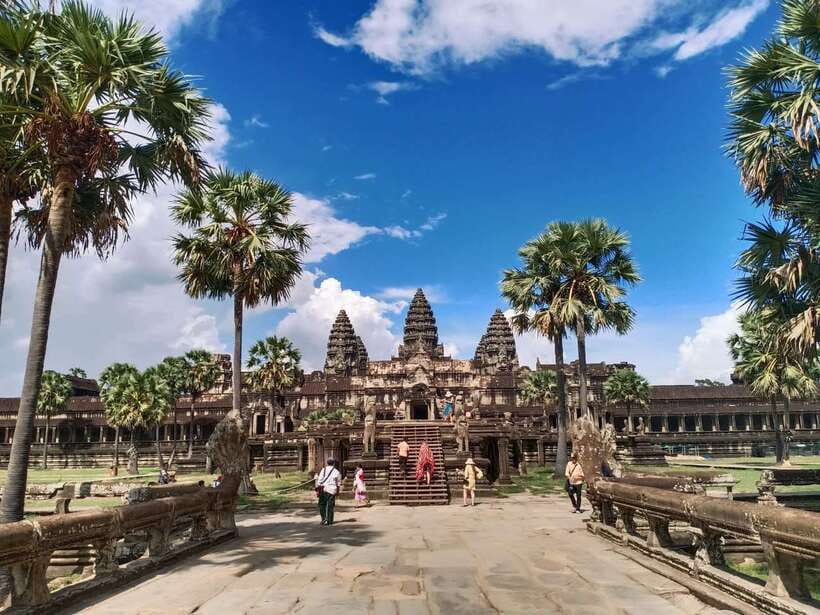
Angkor Wat is the anchor stop for most Angkor days, and this tour gives it first priority. You’ll head to Angkor Wat, which was built in the early 12th century by Khmer King Suryavarman II. It started as a Hindu temple, then later developed strong Buddhist significance—one of those places where layers of belief show up in the stone.
What makes Angkor Wat special isn’t just that it’s famous. It’s also that it’s unusually well-preserved compared to other temple complexes. It’s dedicated to Vishnu and represents the Khmer “high classical” style—so when you’re standing there, you’re seeing the architecture at its most confident.
A few practical ways to experience it well:
- Give yourself time to walk the main areas before rushing to the biggest photo spots.
- Look for the way the structure guides your eye—symmetry is everywhere here.
- If you want “less crowd, more stone,” a private day gives you more control over where you pause and when.
You’ll also appreciate the fact that the tour includes skip-the-line through a separate entrance. Even a short delay can derail a day when you’re moving across multiple sites, and Angkor Wat is the one place where waiting is most likely.
Into Angkor Thom Through the South Gate: 8-Meter Walls and the Bayon Faces
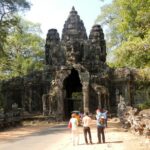
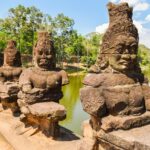
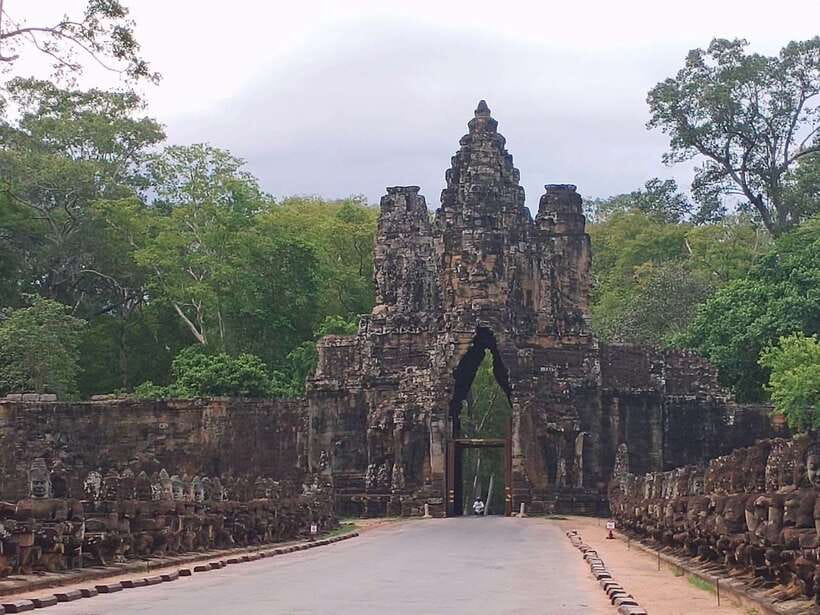
After Angkor Wat, you move to Angkor Thom, entering through the South Gate. This isn’t a random stop. The gate leads you into a walled city space, and the scale is part of the awe.
Here are some details you can keep in mind while you’re walking:
- The wall rises 8 meters high.
- It’s a 3 x 3 km laterite wall system around the city.
- There’s a moat that’s still flooded today, which helps explain why the fortifications feel so dramatic when you reach the central core.
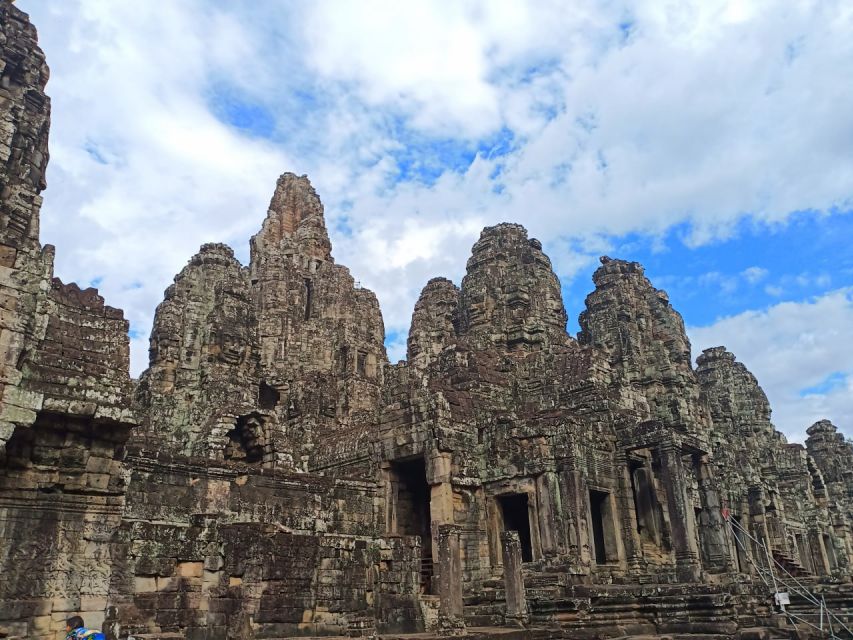
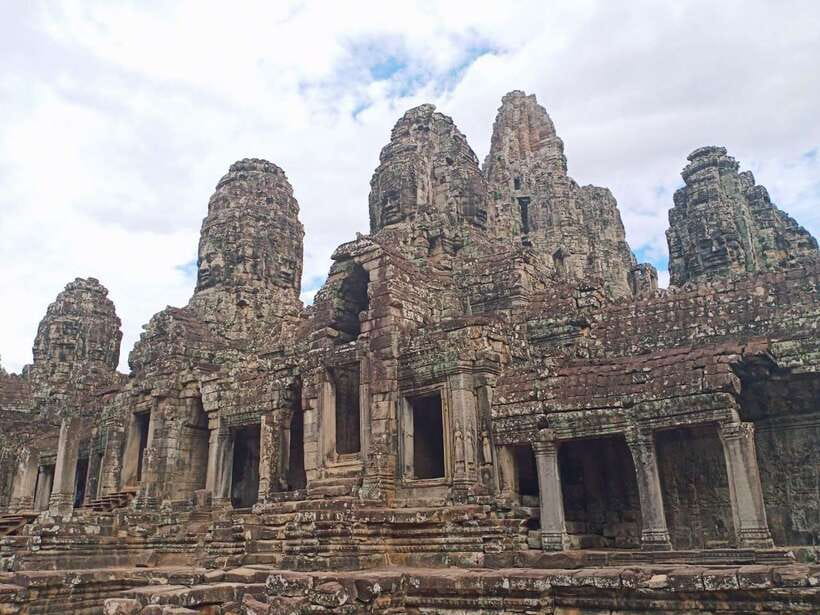
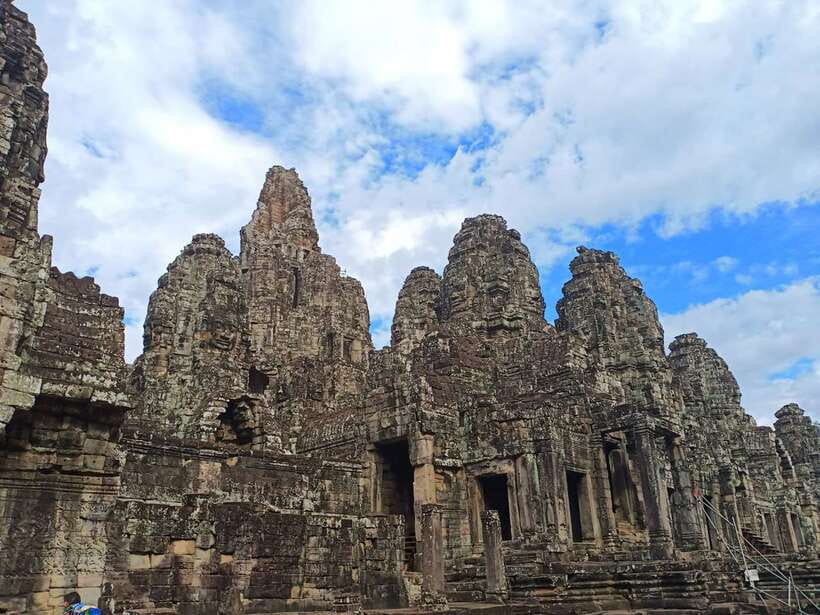
From the South Gate, your route lands in the center at the Bayon Temple. Bayon is famous for its 216 stone faces, watching from multiple towers. The effect is quiet but unsettling—in a good way. You’re not just looking at art; you’re watching a whole viewpoint aimed outward across the complex.
Bayon also works as a “breather stop” in a tough day. Compared to Ta Prohm’s chaotic photography energy, Bayon feels more like contemplation: you can stand, rotate your perspective, and see how the faces frame light and distance.
Expect a decent chunk of time here so you can actually walk rather than just point and shoot.
Baphuon and Phimeanakas: A Rebuilt Buddha and a Jungle View
Next comes Baphuon, known for its long causeway and a giant Reclining Buddha. The most interesting angle here is the story of restoration: the Buddha was only put back together in 2011 after a 37-year disruption caused by war. When you see it, the restoration context helps you understand why people often treat Baphuon as both a monument and a recovery project.
Timing matters a lot at Baphuon. If your day feels rushed, it’s easy to walk right past what makes it compelling. In a private setting, you can take your time on the causeway and then slow down once you’re in position for the Buddha view.
Then you move to Phimeanakas, a temple partly hidden in shaded jungle areas. It’s a steep climb compared to some other stops, but the payoff is the view concept: it’s a viewpoint for people willing to do the steps. If you’re trying to plan around energy, this is the stop to decide whether you want the climb right away or pace yourself for it after lunch.
Terraces and Smaller Temples: Preah Palilay, Leper King, and Elephants
The middle part of the day is where many temple tours start to feel repetitive. This itinerary keeps it interesting by mixing several terrace-based sites and smaller temple areas, each with a different “why it matters” feeling.
You’ll visit:
- Prasat Preah Palilay, known for being in shaded jungle, which can make it a relief from harsher sun exposure.
- Preah Ponlea Sdach Komlong, often called the Terrace of the Leper King. Even if you don’t know the name’s meaning beforehand, the terrace-style experience is worth it because it changes how you move through the complex. You’re not just climbing; you’re pacing along stone corridors and vantage points.
- Terrace of the Elephants, also called the Esplanade of the Royal Palace. This is one of those places where the architecture acts like a stage. You get a sense of how ceremonial processions might have flowed through the space.
And then there’s Phimeanakas again as your “high note” viewpoint before you drop back into the later circuit. Together, these stops build a more complete picture of Angkor Thom beyond the big-ticket Bayon moment.
One key practical point: because these are terrace and courtyard areas, you’ll likely be walking between points in short bursts. Private transport helps keep those transitions efficient, so you don’t spend your time moving slowly through crowds.
Thommanon and Chau Say Tevoda: Two Hindu temples in an Angkor Wat period world
After the main Angkor Thom core, the route shifts toward two temples tied to the Angkor Wat period during Suryavarman II’s reign.
You’ll visit Thommanon Temple first. It’s part of a pair of Hindu temples built in that era at Angkor. The name traces back to Pali words: Dhamma (Buddhist teachings) and Nanda (supreme wisdom). Even if you don’t go deep into language, you’ll feel the significance in the temple’s layout and the way it sits within the wider Angkor complex.
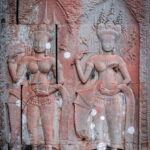
Then comes Chau Say Tevoda, a Hindu temple just east of Angkor Thom and south of Thommanon across the Victory Way. This one is dedicated to Shiva and Vishnu, and it’s notable for the female devata sculptures. If you like details—faces, figures, small variations in carvings—this is a stop where you can slow down and actually “read” the stone.
These two temples aren’t always the first reason people book Angkor. But in a private day, they add depth without forcing you to spend the whole day repeating the main monuments.
Ta Prohm After Lunch: Movie-Famous, But Still Worth the Stone and Roots
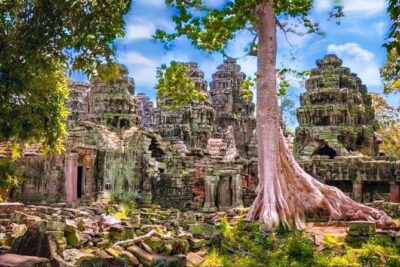
The afternoon stop is Ta Prohm, the temple that gained huge modern fame from the Tomb Raider movie. Even if you’re not chasing movie memories, Ta Prohm is still a standout because of the relationship between nature and ruins.
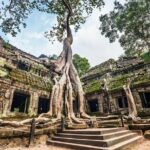
The big visual idea: many corners show Spung tree roots (Tetrameles nudiflora) growing around ancient stones, with moss-covered surfaces adding that “time caught in motion” feeling. This is a photographer’s temple for a reason. It’s not just grand scale; it’s texture, angles, and patterns.
A practical tip: if you like photos, Ta Prohm is where you should spend extra time making sure you’ve captured the shots you care about. In a private tour, you can do that without worrying about losing your place in a group schedule.
And when you’re done? You’ll drive back to your hotel for drop-off, so you don’t have to fight the “end of day” logistics.
Price and logistics: How the value works at $13 per person
At $13 per person for a full day, this is best understood as a value in transportation and guidance, not as a budget temple ticket package.
Here’s what you’re paying for (the useful part):
- Private tuk tuk for the day
- A licensed driver with English communication
- Hotel pick-up and drop-off
- Toll roads and fee parking
- Gasoline
- Cold bottled water during the tour
- Temple ticket handling is not included, but the tour includes skip-the-line entry via a separate entrance
Not included:
- Temple tickets
- Meals
That matters. If you only compare “$13 vs other tours,” you might miss the fact that you’ll still add temple access costs and choose lunch yourself. But transport and driver time can be the majority of the day’s real cost in Angkor. By including private transport details and water, this package keeps the experience consistent from start to finish.
Also, private matters when you’re tempted to rush. If you want to take your time at Bayon faces, pause at the Baphuon causeway, or spend longer around Ta Prohm’s roots, private transport is what allows that behavior.
Who should book this private Angkor tuk tuk day
This is a strong match if you:
- Want the classic Angkor temples in one day without sharing a vehicle or getting dragged along.
- Prefer a driver who can answer questions in English and keep the day moving smoothly.
- Like photos and would rather take your time rather than constantly catch up.
- Travel solo or in a small group and want a calm setup. (Multiple drivers are described as helping with photos, which is a real bonus.)
It might be less ideal if you:
- Want a deep, scholarly guide-style explanation at every stop. This tour is driver-guided and site-focused; the data here emphasizes movement, key temples, and a smooth route.
- Hate walking. You’ll cover several temple zones and terraces in one day.
Should you book this private Angkor Wat tuk tuk tour?
I’d book it if your main goal is a smooth, private day through Angkor’s biggest temple highlights with a competent English-speaking driver and cold water ready when you need it. The $13 price works because so much of the practical stuff is included: private transport, parking, toll roads, and the comfort details that keep the day from feeling chaotic.
Before you click confirm, do two simple checks:
- Budget for temple tickets and lunch, since those are separate.
- Pick comfy shoes and plan for a full day of walking outdoors across several sites.
If you want an Angkor day that feels organized, flexible, and photo-friendly—without jumping between shared groups—this tuk tuk private tour is a very sensible choice in Siem Reap.
FAQ
How long is the Siem Reap Angkor Wat private tour?
The tour duration is 1 day.
Is this tour private or shared?
It’s a 100% private tour with the number of people you book, so you are not joining other guests.
What’s included in the tour price?
It includes a private tuk tuk, a private licensed driver (English), hotel pick-up and drop-off, toll roads, fee parking, gasoline, and cold drinking water.
Are temple tickets included?
No. Temple ticket costs are not included.
Are meals included?
No. Meals are not included, though there is a lunch break during the day.
Does the driver speak English?
Yes. The driver is listed as English-speaking.
Do you skip the line at the temples?
Yes. The tour includes skip-the-line entry through a separate entrance.
Which temples are covered during the day?
You’ll visit Angkor Wat; Angkor Thom areas including Bayon and South Gate entry; Baphuon; Phimeanakas; Prasat Preah Palilay; Terrace of the Leper King (Preah Ponlea Sdach Komlong); Terrace of the Elephants; Thommanon; Chau Say Tevoda; and Ta Prohm.
Is hotel pick-up and drop-off included?
Yes. The tour includes hotel pick-up and drop-off in Krong Siem Reap.
What is the cancellation policy?
Free cancellation is available up to 24 hours in advance for a full refund.