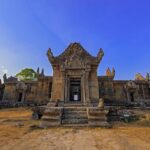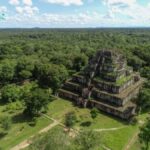
Angkor Wat is bigger than your photos. This premium day is built to cut the main-crowd feel by using a personal driver and route choices that go past the obvious spots. You also get a proper temple stack plus a calmer village-style stop.
I like two things most: first, the focus on off-the-main-route temple moments through forests and quieter paths, so the ruins feel human-sized instead of theme-park loud. Second, the guiding seems to really land, with clear explanations and friendly energy, including guides like Benoît and Kim (and a chef’s-touch interest in Khmer food).
One thing to plan for: the big temple admission is not included in the $94 rate, so you’ll need to budget the Angkor pass on top.
In This Review
- Key things to know before you go
- Premium Angkor Wat: How This Tour Beats the Big-Bus Feel
- Price and Value: What the $94 Covers (and What It Does Not)
- Pickup, Timing, and Group Size: Your Day Starts at 8:00
- Angkor Wat First: Forest Paths, Key Temples, and Ticket Planning
- Angkor Thom South Gate, Bayon Faces, and the Elephant Terrace
- Ta Prohm: Trees, Ruins, and the Quiet Moments That Make It Stick
- Srah Srang Village Calm and the Gate of the Dead
- Guides and Food: The Human Touch That Improves the Temple Photos
- Who This Tour Fits Best (and Who Might Want Something Else)
- Should You Book This Angkor Wat Premium Tour?
- FAQ
- What time does the Angkor Wat Premium Tour start?
- Is pickup offered from my hotel?
- How long is the tour?
- How many people are in the group?
- Is temple entrance included in the price?
- Are meals included?
- Which parts of the day include admission fees?
- Do I get a mobile ticket?
- Can I cancel for a full refund?
Key things to know before you go
- Small group size (max 8): more time to ask questions and less time waiting.
- A personal driver and quicker routing: you spend more daylight at temples, not sitting in traffic.
- Major temples plus side stops: Angkor Wat, Bayon, Ta Prohm, plus quieter add-ons like Srah Srang.
- Food and drinks included: you can pace the day without constantly hunting for snacks.
- Guides matter here: standout reviews mention guides like Benoît, Benedict, and Kim, with strong storytelling.
Premium Angkor Wat: How This Tour Beats the Big-Bus Feel
This is the kind of Angkor day that respects your time and your patience. Instead of hanging around with the slow churn of large groups, you’re set up for quicker movement between key sites, while still getting to see the big names.
The biggest win is the route approach. Angkor is famous for being busy, but this tour leans into quieter paths and countryside-style scenery, including stretches through forest or jungle. Even when you’re still seeing top temples, the pace and access feel more personal.
I also like the balance. You don’t just sprint through the highlights. The day includes both famous faces and detailed carvings, plus a calmer break at Srah Srang, so your brain gets a rest from stone and sun.
You can also read our reviews of more tours and experiences in Siem Reap.

Price and Value: What the $94 Covers (and What It Does Not)
The price is $94 per person for roughly 7.5 hours, which is pretty straightforward for a guided Angkor day with transport. What makes it feel more “worth it” is that the tour includes food and drinks, so you’re not spending half the day budgeting quick meals around the park.
The catch is the temple entrance. The tour does not include the one-day temple admission, listed as $37/person, and that pass covers access to all the temples. So if you only compare the $94 number, you’ll miss the real total.
A smart way to think about it: you’re paying for the guided route, the transport (and likely some flexibility in how you move through sites), plus meals. Then the temple pass is the separate government fee you add on.
Pickup, Timing, and Group Size: Your Day Starts at 8:00
You start at 8:00 am, and pickup is offered. That matters in Angkor because the day is long, and the heat ramps up fast. A morning start also gives you a better chance to enjoy the first major stop without feeling like you’ve arrived after the stampede.
This is capped at 8 travelers, which keeps the group feeling manageable. In practice, that usually means more time at each viewpoint, fewer “wait while we regroup” moments, and more room for questions.
There’s also a mobile ticket involved for the tour, and you get confirmation at booking time. That makes it easier than scrambling for paper right before you go, especially when you’re juggling multiple days in Siem Reap.
Angkor Wat First: Forest Paths, Key Temples, and Ticket Planning
Angkor Wat is the anchor, and the day builds around it. You’ll spend time exploring Angkor Wat and also rotate through other major temples in the Angkor zone, including Bayon, Ta Prohm, and Preah Khan. The tour’s style is to connect sights with travel time that feels more like a route through landscape than a long waiting game.
The “local feel” comes from the way you move. The description highlights secret paths through forest or jungle areas and off-the-beaten-track routes. That’s not just marketing. When you’re walking a quieter approach, the atmosphere changes. The ruins feel less staged, and you get more time to notice details in carvings and stone textures.
One practical note: Angkor Wat is where you’ll want to lock in your temple ticket plan. Since entrance is not included in the $94 rate, make sure you have that one-day Angkor admission ($37/person) ready before you expect to go inside. Also, because the tour includes food and drinks, you can pace your energy across multiple stops rather than saving hunger for later.
Angkor Thom South Gate, Bayon Faces, and the Elephant Terrace
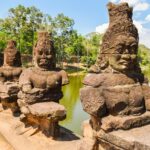
After Angkor Wat, you shift into Angkor Thom territory with the South Gate of Angkor Thom. It’s short (about 15 minutes), but it’s a strong “set the scene” moment. This is one of those places where you can see how the Khmer capital was meant to be approached: grand entry, strong stone symbolism, and a sense of ceremonial scale.
Then you go to Bayon Temple, the centerpiece of Angkor Thom. You’ll spend around 1 hour here. The standout detail is the 216 stone Brahma faces, each carved into towers in a way that makes the temple feel watchful. Beyond the faces, Bayon is known for bas-reliefs that show mythology and scenes of daily life, which is exactly why a guided explanation helps. Without context, you might admire the art but miss what it’s trying to say.
Next is the Terrace of the Elephants for about 30 minutes. This is one of the places where scale hits you. Khmer kings used this area to watch processions, and the carvings make it feel like a stage built for power and ceremony.
A small consideration: this part of the day stacks multiple major ruins close together. If you’re sensitive to heat or long stone walking, plan to take the short shade breaks you can, and use the included drinks to stay ahead of thirst.




Ta Prohm: Trees, Ruins, and the Quiet Moments That Make It Stick
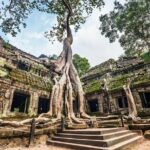
Ta Prohm is the stop most people think of when they hear Tomb Raider temple. It’s famous for the way trees grow out of the structure, turning the ruins into something half-stone, half-forest. You’ll have about 2 hours here, which is a good amount of time to slow down rather than just get your classic photo and move on.
What makes Ta Prohm work on this tour is the rhythm. Instead of treating it like a quick bucket-list stop, the day’s pacing gives you enough time to look at how the roots and masonry interact. If you enjoy atmosphere, this is where you’ll feel it most.
The other thing I’d watch for is crowd density. Angkor can get loud, but the tour style is built around finding quieter paths where possible. That tends to make Ta Prohm feel more like a living ruin than a checkpoint.
If you’re traveling with someone who cares about history but also loves scenery, Ta Prohm is one of the best “both worlds” temples: dramatic look, plus enough carved detail to keep your imagination grounded.
Srah Srang Village Calm and the Gate of the Dead
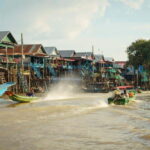
Not every Angkor tour gives you a break from temples, and that’s why Srah Srang works. You’ll spend about 30 minutes here at the reservoir area, described as a peaceful settlement near Sra Srang. It’s a calmer stop compared to the temple maze, and it helps you reset your focus.
This is one of the few places where the admission is noted as included in the tour information. So while you still budget the Angkor pass for the main temples, you may find this stop is a little easier to manage on the day.
Finally, there’s the Gate of the Dead for about 15 minutes. It’s part of the broader Angkor Thom complex and known for stone carvings of divine beings. It’s short, but it’s a nice contrast to the heavier spectacle moments, like Bayon’s faces or Ta Prohm’s tree towers.
This final sequence also works psychologically. By the time you get to the Gate of the Dead, the day feels complete but not rushed, like you’re walking away with a fuller picture of the place rather than only the postcard hits.
Guides and Food: The Human Touch That Improves the Temple Photos
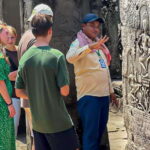
Angkor Wat can become a memory blur unless someone slows you down and gives you the story behind the stones. The tour’s strongest praise centers on guide quality: people like Benoît, Kim, and Benedict get singled out for being kind, helpful, and good at explaining what you’re seeing.
In the same spirit, the tour includes food and drinks, and that matters more than it sounds. When you’re out for about 7.5 hours, a meal break helps you keep your attention. It also gives you a chance to try Khmer flavors without making the day about finding a restaurant.
One small detail that comes up in the experience style: there’s mention of scented wipes with jasmine water in VIP-style versions. Even if your exact comfort kit varies, it signals the intent: make the heat and dust feel less annoying, so you can focus on the ruins.
Who This Tour Fits Best (and Who Might Want Something Else)
I’d book this if you want the classic Angkor temples with a small-group feel and you care about avoiding the heavy bus-tour crowd energy. It’s also a great match if you like practical storytelling: you want to understand what you’re looking at, not just take pictures.
It’s also good for couples and friends who want to stay flexible. With a max of 8 travelers, it’s easier to manage pacing and questions without the “watch your step and keep up” vibe you can get elsewhere.
If you’re the type who loves a totally unstructured day to roam on your own schedule, this might feel more structured than you’d like. And because the temple admission is separate, you’ll want to plan for that cost upfront so there are no surprises mid-day.
Should You Book This Angkor Wat Premium Tour?
Yes, if your priority is a smoother Angkor day with a personal driver, a small group, and a route that tries to find quieter moments through forests and off-the-beaten paths. The $94 rate feels reasonable once you factor in the included food and drinks, the guided temple flow, and the fact you’re seeing major sites plus a calmer stop at Srah Srang.
I’d book it especially if you value guide personality and clear explanations, since that’s where the experience seems to score highest. Just budget the $37/person one-day temple admission, and you’ll be set for a strong, varied Angkor day without feeling like you’re stuck in a crowd all morning.
FAQ
What time does the Angkor Wat Premium Tour start?
The start time is 8:00 am.
Is pickup offered from my hotel?
Yes, pickup is offered.
How long is the tour?
It runs for about 7 hours 30 minutes.
How many people are in the group?
The maximum group size is 8 travelers.
Is temple entrance included in the price?
No. Temple entrance is not included. A 1-day temple pass is listed as $37 per person and covers all temples.
Are meals included?
Yes. Food and drinks are included.
Which parts of the day include admission fees?
The temple entrance fee is not included for the main temples, but admission for Srah Srang is noted as included.
Do I get a mobile ticket?
Yes, the tour includes a mobile ticket.
Can I cancel for a full refund?
Free cancellation is available up to 24 hours before the experience starts for a full refund.