REVIEW · SIEM REAP
2-Day Angkor Wat with Temples On Small Circle & Kulen Waterfall
Book on Viator →Operated by Happy Angkor Tour · Bookable on Viator
Angkor hits hard early and late. This two-day route pairs the Small Circle temples with a full day at Kulen National Park, so you see more than just the postcard hits. I especially like the double timing flex: a sunrise start at Angkor Wat and a sunset climb at Phnom Bakheng.
I also like that you’re not stuck in a long checklist of random stops; the day 1 flow moves through Angkor Thom’s key landmarks (Victory Gate, Bayon, Baphuon, and the terraces) and then finishes with that hilltop view. The one thing to consider is simple: you’ll be up very early and out most of the day, so bring patience for crowds at sunrise and wear good walking shoes for temple steps.
In This Review
- Key Highlights You’ll Actually Feel
- Two Sunrises and One Sunset: How the Timing Works
- Day 1 Small Circle Plan: From Angkor Wat to Phnom Bakheng
- Angkor Wat: Start With the Main Stage
- Ta Prohm: Tree Roots and That Movie Connection
- Ta Nei: A Quieter Temple Break
- Angkor Thom Core: Victory Gate to Bayon Faces
- Baphuon, Phimeanakas, and the Royal Enclosure Wall
- Terraces: Elephants and the Leper King
- Phnom Bakheng: Sunset Payoff on the Hill
- Day 2 Early Morning: Sunrise at Angkor Wat, Then Kulen
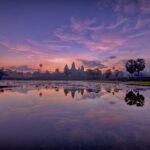
- Sunrise at Angkor Wat: Worth the Wake-Up
- Phnom Kulen National Park: 1000 Lingas, Reclining Buddha, Waterfall
- Banteay Srei, Banteay Samre, and Pre Rup: Pink Stone and Stone Meaning
- Banteay Srei (Lady Temple): Pink Sand in Half of the 10th Century
- Banteay Samre: Architecture With Less Obvious Clues
- Pre Rup: The Turn the Body Temple
- Guide and Comfort: Private A/C, Hotel Pickup, and Photo Help
- Price and Value: What You Pay, Plus What’s Extra
- Who This Tour Fits Best (and Who Might Want Another Plan)
- Should You Book This 2-Day Angkor Wat Small Circle + Kulen Tour?
- FAQ
- FAQ
- How early do I need to be picked up?
- Does the tour include entrance fees to Angkor temples?
- Is Phnom Kulen National Park included in the price?
- What time length is the tour?
- What does the tour cost, roughly, all-in?
- Is it a private tour or shared group?
- What if I need to cancel?
Key Highlights You’ll Actually Feel
- Two big light shows: sunrise at Angkor Wat and sunset at Phnom Bakheng, with the option to skip waiting if you want.
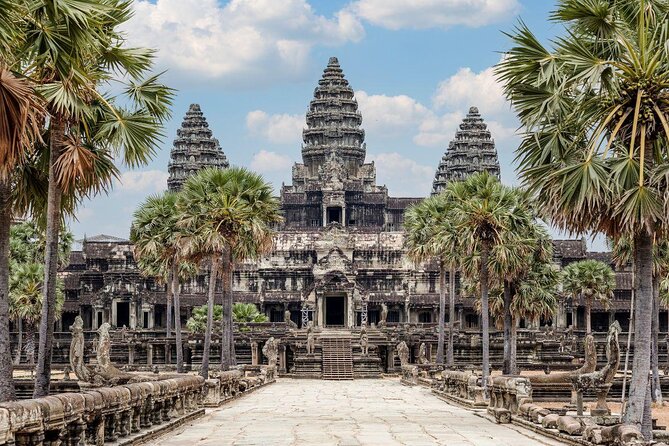
- Real temple variety on day 1: Angkor Wat, Ta Prohm’s tree roots, and the denser Angkor Thom core with Bayon’s face towers.
- Kulen isn’t another temple stop: you get the riverbed carvings called 1000 Lingas, a large reclining Buddha, and a waterfall.
- Pink sandstone and smaller sites after lunch: Banteay Srei (Lady Temple) plus quieter follow-ups like Banteay Samre and Pre Rup.
- Private, A/C comfort with hotel pickup/drop: water and wet towels keep the heat more manageable.
- Chhay as an example of the guide quality: one review notes he’s informative and friendly and helps with photos, which matters if you’re traveling solo.
Two Sunrises and One Sunset: How the Timing Works
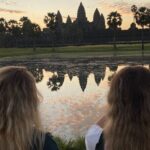
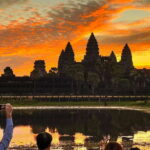
This tour is built around light, not just location. Day 2 starts at 5:00am so you can catch sunrise at Angkor Wat, and day 1 ends with a climb to Phnom Bakheng for sunset. That means the pacing is intense, but it’s also why the trip feels like more than a sightseeing bus ride.
On day 1, your pickup is at 8:00am. You’ll move through the Small Circle temples and end with Phnom Bakheng, which is the kind of payoff that makes early starts feel worth it. If you don’t want to wait for the exact moment, the plan even notes you can skip the sunset waiting—useful if you hate standing around.
On day 2, plan for a very early morning again. A sunrise tour can feel chaotic if you’ve never done one in Angkor, but this schedule gives you a chance to see the temple in softer light before the day crowd fully ramps up.
You can also read our reviews of more tours and experiences in Siem Reap


Day 1 Small Circle Plan: From Angkor Wat to Phnom Bakheng
Day 1 is the classic temple day, but the order matters. You start with Angkor Wat, then work your way through a mix of larger, iconic structures and smaller, more atmospheric ruins—ending at the best viewing spot on the itinerary.
Angkor Wat: Start With the Main Stage
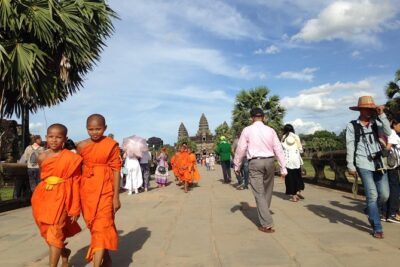
After breakfast, you’re picked up from your hotel or guest house at 8:00am. Along the way, you’ll also buy your temples pass (the Angkor pass is extra, details later). Then you begin at Angkor Wat, which sets the tone for everything that follows: big geometry, dramatic scale, and those famous towers that look different depending on where the sun lands.
A practical tip: because you’re starting at a reasonable time compared to sunrise tours, you can take your time here without feeling like you’re sprinting.
Ta Prohm: Tree Roots and That Movie Connection
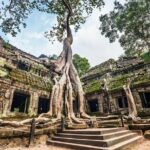
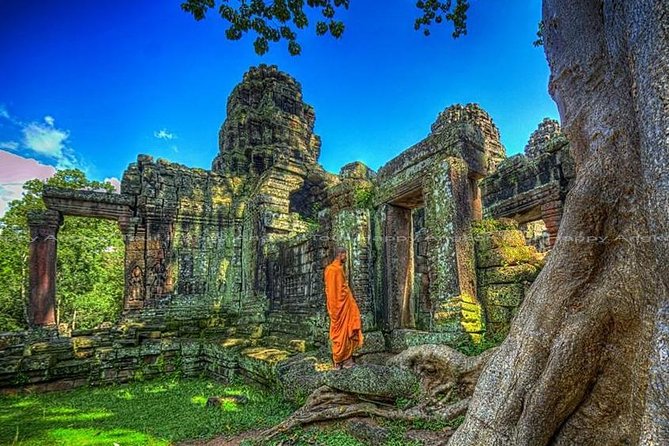
Next up is Ta Prohm. This is the temple people remember because massive tree roots wrap around ruins in a way that feels almost unreal. The itinerary even points out the Tomb Raider movie connection, which is exactly why Ta Prohm is often a first-time favorite.
The downside? Ta Prohm is also one of the most photographed spots on this route. If you like slow wandering, give yourself permission to step out of the main photo flow and look for details in the stone and root patterns.
Ta Nei: A Quieter Temple Break
After Ta Prohm, you stop at Ta Nei, described as smaller and with less restoration. It’s a good change of pace if you’re feeling temple-fatigue. Being surrounded by big trees also means it tends to feel cooler and more shaded than the open areas.
If you want fewer people, this is one of the places to enjoy the break.
Angkor Thom Core: Victory Gate to Bayon Faces
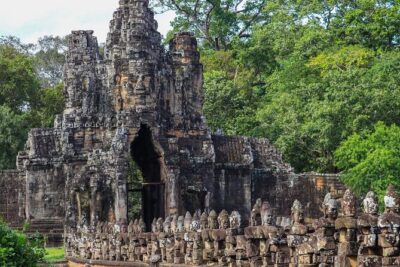
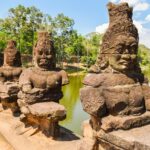
Then you pivot into the Angkor Thom area. You begin with a quick stop at the Victory Gate on the east side. It’s short, but it works as a photo and orientation moment—use it to get your bearings before the big interior spaces.
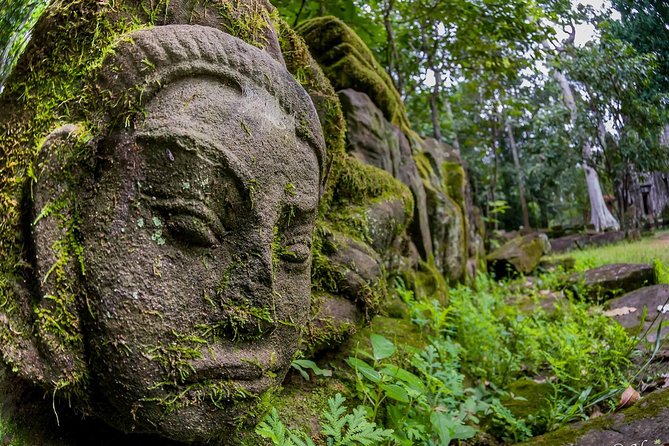
From there you go to Bayon Temple, which is the emotional center for many visitors. The important detail here is the math: 49 towers, each with four faces, totaling 196 faces of the bodhisattva Avalokiteshvara. That’s a lot of stone faces, and the effect grows the longer you stay.
In practical terms, Bayon rewards patience. If you only walk past quickly, you’ll miss the way the different face carvings line up as you move around.
Baphuon, Phimeanakas, and the Royal Enclosure Wall
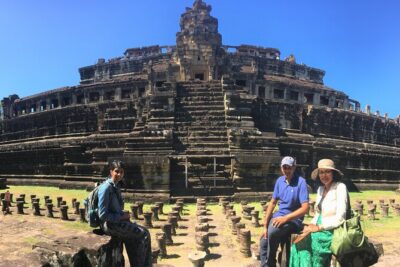
After Bayon comes Baphuon Temple, a Hindu temple built earlier than Angkor Wat. The itinerary notes the big reclining Buddha behind it was built in the 16th century. It’s one of those moments where you realize different eras layered onto the same cultural footprint.
Then you visit Phimeanakas, a pyramid Hindu temple located at the center of the old royal palace area in Angkor Thom. The stop is short, but it’s a useful connector to understand that these weren’t just isolated temples—they were part of a wider royal layout.
Terraces: Elephants and the Leper King
Two more platforms follow: Terrace of the Elephants and Terrace of the Leper King. The first is known for elephant carvings and was used by kings as a viewing platform for returning armies. The second is another nearby platform and includes carvings that people often find memorable precisely because they’re different from the main temple towers.
These terrace stops are quick, but they’re a smart use of time because they shift you from pure temple structures to storytelling stone.
Phnom Bakheng: Sunset Payoff on the Hill
Your last stop on day 1 is Phnom Bakheng. This is where you climb for sunset. The itinerary is honest about the timing: you can wait for sunset, but you can also skip the waiting if you don’t want to spend extra time there.
This part is the most physically demanding on day 1 because you’re climbing late in the day. Wear shoes with real grip, and don’t rush—temple steps don’t forgive.
Day 2 Early Morning: Sunrise at Angkor Wat, Then Kulen
Day 2 is where the tour expands beyond Angkor Park. After sunrise at Angkor Wat, you head out to Phnom Kulen National Park, which is more than 60 km from the Angkor temple area. That distance is a big part of the value: you get a full change of scenery rather than a second Angkor-only day.
Sunrise at Angkor Wat: Worth the Wake-Up
Your pickup on day 2 is 5:00am. This is for the sunrise viewing at Angkor Wat, which is arguably the most famous light moment in the entire region. Sunrise also makes the temple feel more human—less like a stage, more like something you’re watching come to life.
Bring something for your comfort. The tour includes bottled water and wet towels, but it doesn’t mention other gear—so if you’re sensitive to cold mornings, plan accordingly.
Phnom Kulen National Park: 1000 Lingas, Reclining Buddha, Waterfall
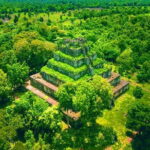
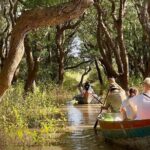
At Kulen, you’re not only seeing temples. The itinerary describes a sculpted riverbed covered with carvings of Lingas, called the 1000 Lingas, tied to Shiva. Even if you’ve seen lots of Angkor stones before, this carving-in-nature idea feels different because it’s literally in a landscape feature rather than a single building.
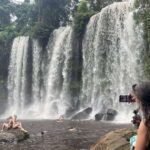
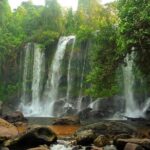
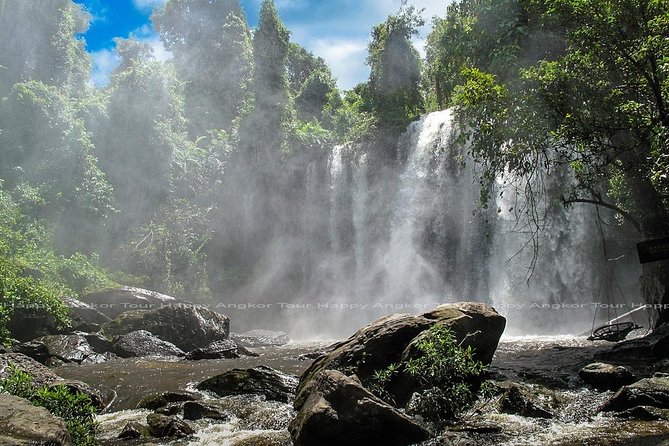
You’ll also see a Big Reclining Buddha built from a large stone. Then the plan includes time for a waterfall visit. This is the part that turns your day from stone structures into something more alive and moving.
One practical note: Kulen takes longer than an in-park stop. The itinerary lists about 5 hours here, so expect a solid chunk of the day. If you’re the type who wants quick “check and go” sightseeing, you might find this full stretch slower paced than the temple day—but it’s exactly why it’s included.
Banteay Srei, Banteay Samre, and Pre Rup: Pink Stone and Stone Meaning
After lunch, the tour returns to temple focus with three stops that feel like a step down in crowd intensity compared to the biggest Angkor icons.
Banteay Srei (Lady Temple): Pink Sand in Half of the 10th Century
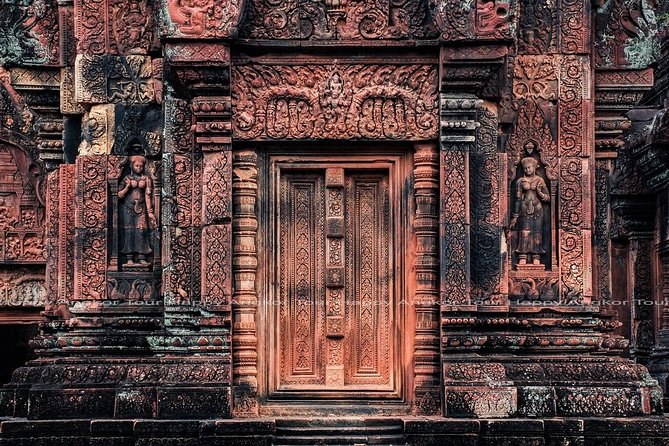
The headline here is Banteay Srei, also called Lady Temple. The itinerary calls it the pink sandstone temple built in the half of the 10th century by Hindu King Rajendravarman II, dedicated to trinity gods in Hinduism with a focus on Shiva.
This is the kind of temple where color matters. Pink sandstone can look subtle in harsh midday sun and more special when light hits the stone at an angle—so arriving after the earlier heat of the day is still a good plan.
Banteay Samre: Architecture With Less Obvious Clues
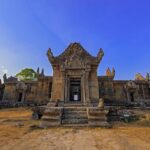
Next is Banteay Samre, a 12th-century Hindu temple. The key detail in the itinerary is that the architecture doesn’t show many clear markers, even though locals believe it follows a similar model to Angkor Wat.
So treat it as a “read the stones” stop. You won’t get the same wow factor as the largest sites, but it can be satisfying if you like comparing styles.
Pre Rup: The Turn the Body Temple
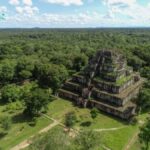
Finally, you visit Pre Rup, constructed in the late 10th century, dedicated to Hindu gods. The itinerary explains the name as turn the body, and it ties the temple to a local belief that funerals were conducted at the temple at a distant junction.
That’s a lot of meaning for a relatively short visit (about 30 minutes). If you only have time for one “story temple” on day 2, Pre Rup is a good candidate because the name itself points you toward interpretation, not just sightseeing.
Guide and Comfort: Private A/C, Hotel Pickup, and Photo Help
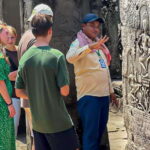
This tour includes a private A/C vehicle with a driver, plus an English-speaking guide with a licensed guide (as stated). It also includes cool drinking water and wet towels, which is not glamorous, but it can make the difference between enjoying the day and feeling wrecked by heat.
Pickup and drop-off are built around your lodging. You start from your hotel or guest house and finish back at your hotel. That saves time and avoids the usual “meet at a random point” stress.
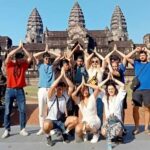
A real-world detail from the feedback: the guide Chhay is described as informative and friendly, and he’s happy to take photos—especially helpful if you’re traveling alone. For this kind of itinerary, where you’re moving through many signature viewpoints, that matters more than people expect.
Price and Value: What You Pay, Plus What’s Extra
The tour price is $181.75 per person for the 2-day experience, with an average booking window of about 60 days in advance. It’s also described as private, so you’re not sharing an A/C vehicle with a bunch of strangers.
Here’s the key value math. The price includes:
- private A/C vehicle with driver
- licensed English-speaking guide
- parking fees and road tolls
- cool drinking water and wet towels
- hotel pickup and drop-off
What’s not included:
- Angkor pass + all temples: $62 per person
- Phnom Kulen National Park fee: $20 per person
- Lunch: around $5 per person (depends on the menu)
If you follow the given numbers, your rough total lands near $268.75 per person, excluding drinks outside the lunch. That’s still fairly reasonable for two mornings (including a 5:00am start), a full day at Kulen, and a guide plus transport that handles the long day spacing.
One more practical note: this tour mentions a mobile ticket. That can make entry easier if it’s set up correctly on your device. Just make sure you have battery and data access.
Who This Tour Fits Best (and Who Might Want Another Plan)
This is a strong match if you want to cover a lot of ground without managing logistics. You get a tight Angkor day, a full Kulen day away from the main temple area, and sunrise/sunset timing that you’d have to plan carefully on your own.
You’ll likely enjoy it if:
- you’re okay with early mornings and active walking
- you want both Angkor and Kulen in the same package
- you like a guide who can explain what you’re seeing, not just point
You might consider a different option if:
- you dislike steep temple climbs (Phnom Bakheng is part of the deal)
- you want a slower pace with more free time in each area
- you’re sensitive to crowded sunrise moments, since sunrise at Angkor Wat tends to be busy by nature
Should You Book This 2-Day Angkor Wat Small Circle + Kulen Tour?
I’d book this if you’re trying to make the most of limited time in Siem Reap and you want a “best of” mix that goes beyond the Angkor Park bubble. The balance is the key: day 1 gives you the Small Circle and the emotional Angkor Thom core, and day 2 gives you a meaningful change of scenery with Phnom Kulen National Park plus Banteay Srei and Pre Rup.
But don’t pretend it’s a relaxed stroll. You’re starting early twice, moving between multiple sites, and doing a hill climb for sunset on day 1. If that sounds like your style, you’ll probably come away feeling like you saw both the famous and the more specific stone-and-landscape angles Cambodia is known for.
FAQ
FAQ
How early do I need to be picked up?
On day 1, pickup is at 8:00am. On day 2, pickup is at 5:00am for sunrise at Angkor Wat.
Does the tour include entrance fees to Angkor temples?
No. The Angkor pass plus all temples is listed as $62 per person and is not included in the tour price.
Is Phnom Kulen National Park included in the price?
No. The Phnom Kulen National Park admission fee is listed as $20 per person and is not included.
What time length is the tour?
The duration is listed as about 2 days.
What does the tour cost, roughly, all-in?
The tour price is $181.75 per person, and the itinerary lists extra costs for the Angkor pass ($62), Kulen fee ($20), and lunch (about $5 per person, depending on the menu). Totals can vary if you eat more than the included lunch arrangement.
Is it a private tour or shared group?
It is described as private, meaning only your group participates.
What if I need to cancel?
Free cancellation is offered. You can cancel up to 24 hours in advance for a full refund, and changes within 24 hours are not accepted.