REVIEW · SIEM REAP
2-Day Angkor Wat Tour with Banteay Srei and Floating Village
Book on Viator →Operated by Asean Angkor Guide · Bookable on Viator
Sunrise and floating villages in one trip sounds unreal, but it works. This 2-day Angkor tour is built for big icons and efficient touring, with a private guide, air-conditioned rides, and a full temple run from Bayon to Ta Prohm and on to Banteay Srei. You’ll also get a late-day view from Phnom Bakheng when conditions cooperate, plus (on day two) the chance to see life around the water at Kampong Phluk.
I especially like two things: the mix of crowd-pullers and smaller, more satisfying stops, and the fact that you move between them in comfort with cold towels and water that make the heat manageable. One drawback to plan around is the cost of key extras: major admission and the Tonle Sap boat add-ons are not included in the base price, so your final total will be higher than $130.
The schedule is intense in the good way. It’s ideal if you want your Angkor time to feel complete without guessing the route yourself, but it does mean early mornings and a lot of stone-and-sun time.
In This Review
- Key things to know before you go
- Angkor in two days: the best way to cover a lot without feeling lost
- Sunrise at Angkor Wat and sunset at Phnom Bakheng: your timing advantage
- Angkor Thom’s major stops: Bayon, Baphuon, and the king-made viewpoints
- Angkor Archaeological Park and Angkor Wat: the big stage, done efficiently
- Day two’s jungle and temple circuit: Ta Prohm to Preah Khan
- Banteay Srei: small footprint, big craft
- Kampong Phluk and Tonle Sap: the floating village boat ride, plus real-world season changes
- Price and logistics: what $130 really covers, and what to budget for
- The guides make or break it: what to watch for
- What to bring: the small kit that saves your day
- Who this Angkor tour fits best
- Should you book this 2-day Angkor Wat and floating village tour?
- FAQ
- What’s included in the tour price?
- What isn’t included?
- How much are the extra costs for the floating village?
- How early do you get picked up for sunrise on day two?
- Does the tour include hotel pickup?
- Is this a private tour?
- Are tickets for Angkor Thom included?
- Do you visit Banteay Srei, and is it free?
- Do you stop for lunch?
- When is the floating village experience best for photos?
Key things to know before you go
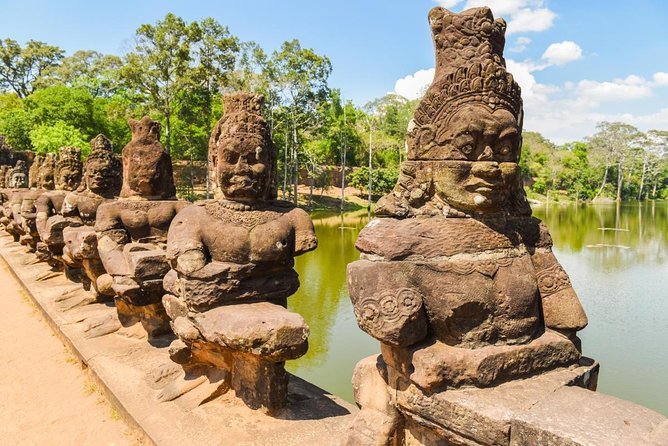
- Private feel, flexible pace: It’s set up for only your group, so your guide can adjust timing and photo stops.
- Sunrise is the headline: Day two starts with pickup at 4:40 AM, aimed at Angkor Wat before the crowds.
- Banteay Srei is the craft showpiece: You’ll hit it on day two when light and timing can be easier to manage.
- Floating village depends on season: Dry-season conditions from late March to late July change the look and boat access.
- Comfort is not an afterthought: Air-conditioned car/minivan, plus cool towels during the day.
- Budget for entrances and boats: Angkor Thom South Gate admission and the Tonle Sap pass/boat are extra.
Angkor in two days: the best way to cover a lot without feeling lost
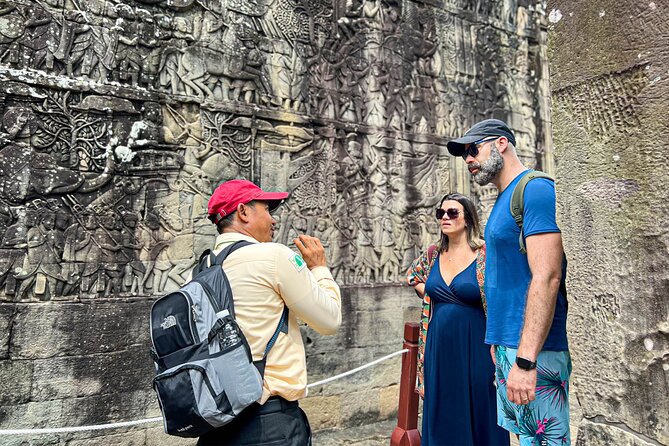
This tour is designed for people who want the main Angkor hits, but also want context. The guide isn’t just ticking boxes. They connect the dots between the Khmer rulers, the purpose of each temple, and the changes you see as you move from one zone to another.
What I like from a value-and-planning angle is that the tour doesn’t treat temples like identical photo backdrops. You’ll start in the political heart of Angkor Thom, then pivot to the signature religious architecture at Angkor Wat, and later go temple-hopping through the jungle and water-adjacent sites.
You’re also not stuck on a single long day with nothing but walking. The breaks are built into the flow: there’s time allocated for lunch around the Angkor area and for shifting from heavy morning sights to the afternoon highlights.
You can also read our reviews of more tours and experiences in Siem Reap


Sunrise at Angkor Wat and sunset at Phnom Bakheng: your timing advantage
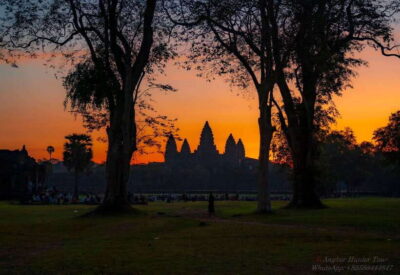
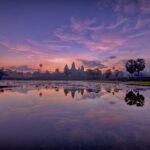
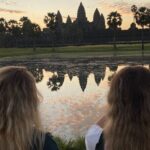
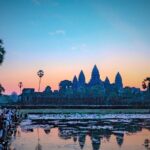
Angkor rewards early starts. If you’ve ever tried to navigate temple crowds in daylight, you already know how much your experience can suffer. This tour targets the early hours with a day two 4:40 AM hotel pickup for Angkor Wat sunrise.
That early departure helps you get something you can’t recreate later: calmer viewing, better light, and the feeling of being there as the site wakes up. Even if you’re not chasing perfect photos, sunrise at Angkor Wat is one of the most memorable ways to understand its scale.
Day one adds another atmospheric moment: a possible sunset stop at Phnom Bakheng. The plan says it depends on the weather and your energy level. In practical terms, it’s a good “maybe” that can turn an already strong day into something extra—just don’t schedule the rest of your evening around it.
Angkor Thom’s major stops: Bayon, Baphuon, and the king-made viewpoints
Angkor Thom is where the Khmer kings made a point. It’s not just pretty stone; it’s a statement about power and religion, packed into a walled city format that still shapes how you walk today.
You’ll focus on several of the best-known monuments in the Angkor Thom complex:
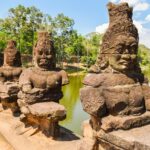
Bayon Temple: This is the face-recognition stop—towering features and lots of visual detail. The timing in the day helps you see it before heat gets too intense, and your guide’s explanations typically make the carvings feel less random.
Baphuon Temple: Located northwest of Bayon, this is a multi-tier temple mountain. It’s a helpful change of pace from the denser Bayon look because you can study the structure and its levels more easily.
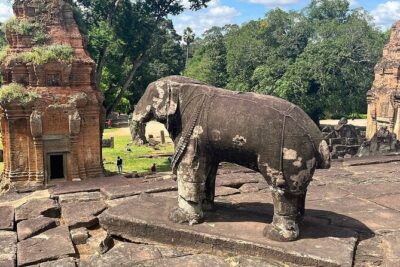
Terrace of the Elephants: This terrace is described as part of the Angkor Thom walled city and connected to Jayavarman VII’s use of it as a viewing platform. It’s short, but it’s meaningful—this is where you get a sense of how rulers observed events and ceremony.
Terrace of the Leper King: Also in the Royal Square area, built in the Bayon style under Jayavarman VII. The modern name comes from later associations, but the core value for you is how it sits in the Bayon-style world of symbols, style, and stone storytelling.
Practical note: these stops come in a tight sequence, so bring shoes you can trust. The ground can be uneven, and you’ll appreciate stability more than you’ll appreciate stylish footwear.
Angkor Archaeological Park and Angkor Wat: the big stage, done efficiently
After Angkor Thom, you’ll move into the Angkor Archaeological Park zone for lunch time (45 to 60 minutes). Food and drinks are on you there, so bring cash and plan to keep meals simple and quick. In hot weather, a slower sit-down meal can steal energy you need later for Angkor Wat and beyond.
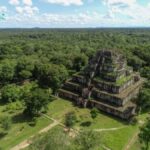
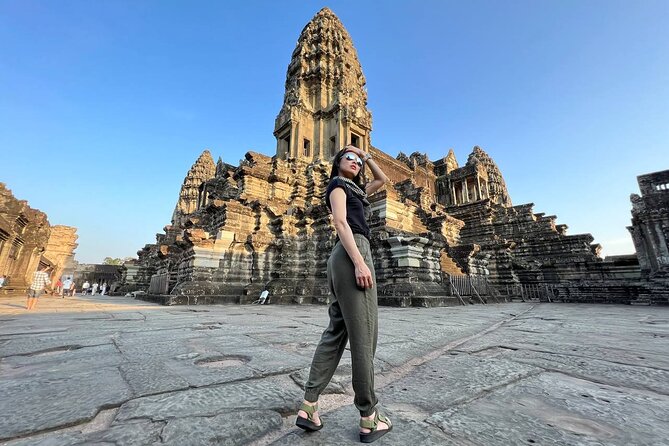
Then comes Angkor Wat, the headline temple of the whole complex. It’s described as the largest religious monument in the world on a massive site area, originally built as a Hindu temple dedicated to Vishnu. Even if you don’t care about religious history, this site’s size and symmetry are what get you. It’s easy to feel small next to it in a way you don’t get at smaller temples.
Your time here is allotted about 1 hour 30 minutes. That’s a good length because it lets you do more than just the first viewpoint. You can also take a pause, find a spot to let the architecture sink in, and then continue rather than rushing.
If the day allows it and you’re not too tired, day one can also include the Phnom Bakheng sunset angle. Even when you don’t make it, the day’s sequencing still makes sense: you end with a big emotional beat after you’ve already gathered the architectural context at Angkor Wat.
Day two’s jungle and temple circuit: Ta Prohm to Preah Khan
Day two is where the tour shifts tone. It becomes more about atmosphere—trees, ruins that feel paused in time, and temples that look like they’re sharing space with nature.
You’ll start after the sunrise at Angkor Wat, then move to:
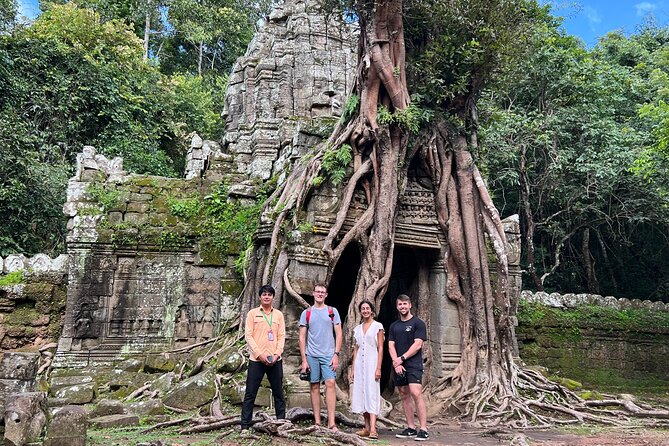
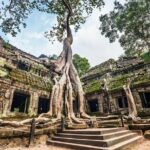
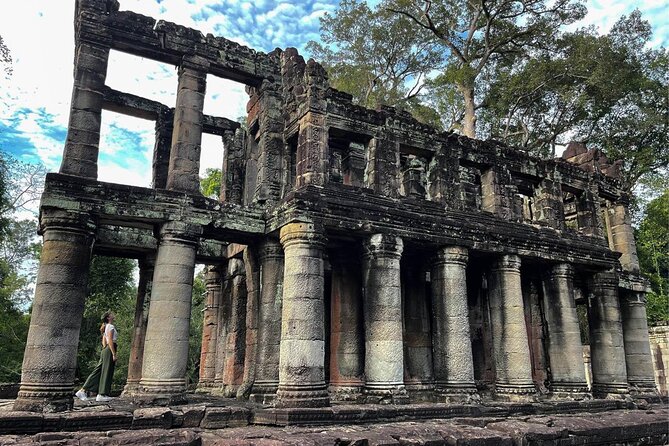
Ta Prohm: This is the jungle temple left in an original state, partly overgrown with huge roots. The key value here is that it doesn’t try to look polished. You’re seeing Angkor’s relationship with the forest, which changes how you read the stone.
Pre Rup: A Hindu temple with its own distinctive layout. This stop is shorter (about 40 minutes), and that’s okay because it keeps the day moving while still giving you a real look.
Eastern Mebon: A 10th-century temple on what was an artificial island in the middle of the East Baray reservoir. Even though the water is gone now, the “island” concept can help you picture how these sites connected to water management and power.
Ta Som: Built in the late 12th century during Jayavarman VII’s reign and tied to the worship of Lord Svara (as described). This is a good stop for people who want variety after the more famous names.
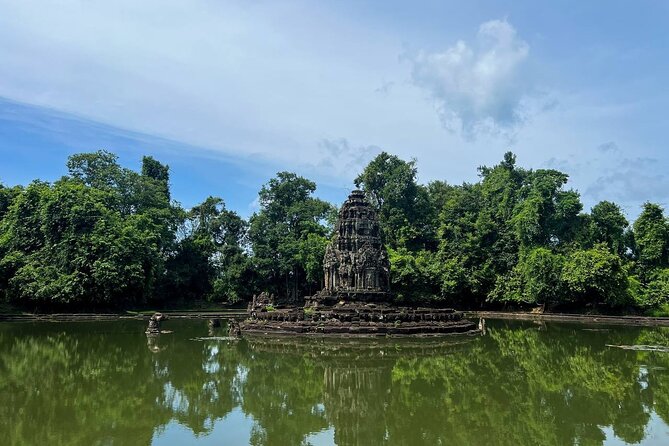
Neak Pean: Connected to Jayavarman VII and described as being built in 1191. It’s also positioned as part of a broader temple landscape, so it tends to feel like a piece in a bigger system rather than a random stop.
Preah Khan: A 12th-century temple built by Jayavarman VII to honor his father. It also lands before lunch, which matters because it breaks up the day with a more structured rhythm—see, then recover, then keep going.
Here’s the practical reality: day two stacks a lot of temple variety. If you get motion-sick or you’re sensitive to heat, pace yourself. Use shade when you find it. Drink water regularly. Your guide’s job is to keep you moving; your job is to keep your body comfortable enough to actually enjoy what you’re seeing.
Banteay Srei: small footprint, big craft
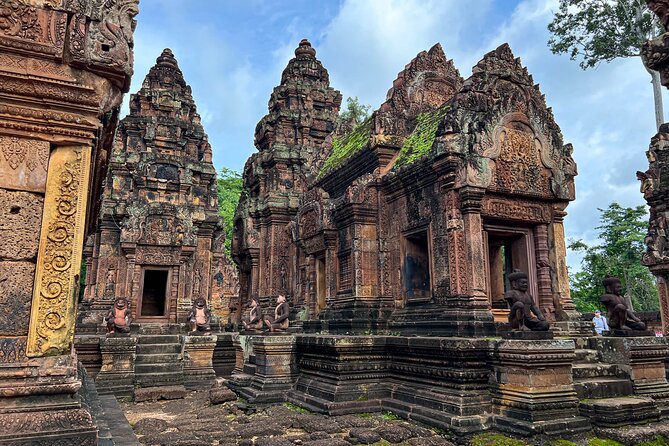
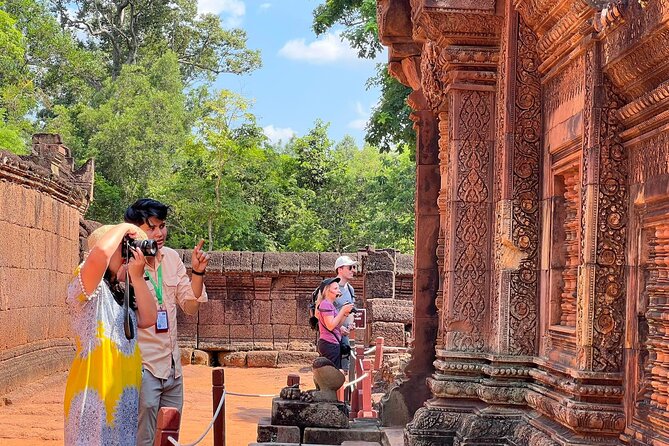
Banteay Srei is where the tour slows down and turns more delicate. It’s described as intricately carved and well-preserved, and the material—sandstone relief work—is part of why people get excited about it.
You’ll visit it in the early afternoon, and the tour lists the Banteay Srei admission as free. That alone makes it a smart value stop: you’re spending time at a high-impact site without adding another entrance fee on top.
The bigger point is how Banteay Srei changes your perspective. After seeing massive complexes with towering structures, this one’s about detail. You’ll be able to look longer without feeling like you’re walking across an endless courtyard. It’s also a good site for photography, since the carved surfaces can hold interest even when the overall light isn’t perfect.
Kampong Phluk and Tonle Sap: the floating village boat ride, plus real-world season changes
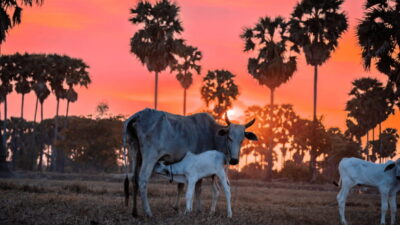
The floating village part is what turns this tour from temple-heavy into something you’ll talk about long after the stone is forgotten.
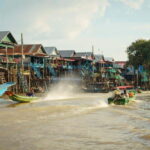
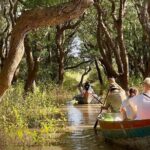
You’ll head to Kampong Phluk, a flooded and fishing village on Tonle Sap Lake about 21 kilometers from Siem Reap. Once you reach the lake port, you take a local boat ride. The Tonle Sap pass and the private boat ride cost is listed as $15 per person, and that’s not included.
This is also where timing matters more than you’d expect. The tour information notes that from end of March to end of July, water levels start to recede. That can change what you see: some boats may get stuck, and smaller canoes might not navigate the jungle forest as easily. The look might not be as postcard-perfect, but you may get a different view of daily life in the drier season.
That’s the trade-off I’d plan for:
- If you want maximum “floating on water” visuals, you may prefer months when the water is higher.
- If you want a more grounded snapshot of how life shifts as the lake changes, the drier-season window can be more meaningful.
Either way, go with the mindset that you’re visiting a working community. Keep expectations flexible. The best experience comes from curiosity, not from chasing a specific photo setup.
Price and logistics: what $130 really covers, and what to budget for
The base price is $130 per person for a 2-day private guided format. For your money, you get professional English-speaking tour guidance and a private air-conditioned vehicle (car/minivan), plus cool towels and water during the day.
Day two also includes breakfast. That’s a real help because sunrise touring means you don’t want to wait until later to eat.
What you should budget extra for:
- Angkor Thom South Gate admission: listed as $62 per person (not included).
- Tonle Sap pass and private boat ride: $15 per person (not included).
- Food and soft drinks at lunch stops: not included, and you’ll pay by yourself.
So is it good value? Yes, if you want a guided plan that covers multiple high-demand zones without the stress of figuring out timing, ticket types, and driving yourself. The private transport is also a big deal at Angkor, where the distances are part of the challenge.
It’s not value if you’re a strict penny-counter and you plan to self-tour anyway. But if you’d rather pay to remove friction, this structure makes sense.
The guides make or break it: what to watch for
The strongest pattern across guide performance is clarity and pacing. Guides like Veesna, Phanne, Sean, Saylor, Sei La, Mony, Raman, Makara, and Kamsan Sreng are repeatedly associated with smooth coordination, strong English, and practical photo guidance.
You’ll feel that in small ways: the right viewing positions, helpful explanations that connect what you’re seeing, and quick adjustments when someone needs a pause. You also tend to get practical care in the vehicle, like cold water and cool wash cloths timed to your return.
When you book, pay attention to the guide you’re assigned. For this kind of trip, a great guide is what turns a list of temples into an experience with flow.
What to bring: the small kit that saves your day
For a tour like this, you want protection, comfort, and stable feet. The tour’s own packing tips are solid:
- Insect repellent
- Sunscreen
- Sun hat
- Comfortable shoes
I’d add one mindset item: treat your morning like a real expedition. Early sunrise means cooler air at first, then quick heat later. If you only pack for one weather mood, you’ll feel it by midday.
Also, plan for hydration. Even with AC and cool towels, you’ll still walk on uneven surfaces and spend time in sun.
Who this Angkor tour fits best
This one is a great match if you:
- Have limited time in Siem Reap and want a “see the highlights” plan.
- Prefer private comfort over group logistics.
- Want both the famous temples and a distinct extra experience with the Tonle Sap floating village.
- Like learning as you go, especially around Khmer temple purpose and royal connections.
It might feel like a lot if you’re traveling super slowly or you hate early mornings. The day two pickup at 4:40 AM is non-negotiable in the experience design.
Should you book this 2-day Angkor Wat and floating village tour?
Book it if you want a clear plan that hits Angkor Thom, Angkor Wat sunrise, Ta Prohm, Banteay Srei, and Kampong Phluk without you doing route math. The private air-conditioned transport, cool towels, and guide-led pacing are real quality-of-life upgrades in a place where heat and distance can turn a dream trip into a slog.
Pass or compare if your budget is tight once you add entrance fees and the Tonle Sap boat costs, or if you know you won’t handle two intense temple days with early wake-up time.
If you’re on the fence, think about what you’re really buying: time, comfort, and context. In Angkor, that combination is the difference between seeing temples and actually understanding what you’re looking at.
FAQ
What’s included in the tour price?
You get a professional English-speaking tour guide and driver, private air-conditioned transport, free cool towels during the tour, and breakfast on day two only.
What isn’t included?
Admission fees are not included, and food and soft drinks are on you. The Tonle Sap pass and the private boat ride are also not included.
How much are the extra costs for the floating village?
Tonle Sap pass and a private boat ride are listed as $15 per person.
How early do you get picked up for sunrise on day two?
Pickup is before sunrise at 4:40 AM on day two.
Does the tour include hotel pickup?
Yes, pickup is offered.
Is this a private tour?
Yes. It’s private, and only your group participates.
Are tickets for Angkor Thom included?
No. Angkor Thom South Gate admission is listed separately at $62 per person and is not included.
Do you visit Banteay Srei, and is it free?
Yes, Banteay Srei is included, and the stop lists admission as free.
Do you stop for lunch?
Yes. The schedule includes a lunch break in the Angkor area on both days, but you pay for food and drinks yourself.
When is the floating village experience best for photos?
The tour info notes that from end of March to end of July water levels recede, so views may be less postcard-perfect then. If you want different daily-life conditions instead of maximum water visuals, that season can still be a good fit.