REVIEW · SIEM REAP
2-Day Angkor Wat and Banteay Srei with Countryside Exploration
Book on Viator →Operated by Asean Angkor Guide · Bookable on Viator
Angkor starts in the dark. This 2-day tour hits Angkor Wat sunrise plus Banteay Srei with an English guide and practical support like cold water and towels. I also like that you’re fed well with local breakfast and a included Day 2 lunch. The main thing to think about: the schedule is intense—especially Day 1—so you’ll want to be ready for early mornings and lots of walking.
One of the best parts is how the day’s temples connect: big monuments first, then quieter stops, then smaller, more detailed sites. Guides such as Sam and Sareik are often praised for keeping explanations clear even at 4:30 am, which matters when your brain is still waking up. Just note that most temple entry costs are not included, so you’ll need to plan your Angkor pass and budget the Landmine Museum ticket.
In This Review
- Key highlights you’ll feel right away
- Sunrise at Angkor Wat: the 4:30 am payoff
- Morning temples: Srah Srang, Pre Rup, and Ta Prohm’s roots
- Angkor Thom South Gate and Bayon’s face towers
- Day 2 countryside temples: Preah Khan to Eastern Mebon
- Banteay Srei and the Landmine Museum: fine carving and a hard stop
- Price and tickets: what $160 really buys
- Guides, pacing, and why the small-group style matters
- Who this tour suits best (and who might feel strained)
- Should you book this 2-day Angkor Wat and Banteay Srei tour?
- FAQ
- What time is pickup on Day 1 for Angkor Wat sunrise?
- Is the Angkor pass included in the tour price?
- What meals are included?
- Is Angkor temple admission included?
- How much is the Landmine Museum ticket?
- Does the tour include hotel pickup and drop-off?
- What’s the dress code?
- Can I request a vegetarian option?
- Is this a private tour?
- Is there water and a comfort setup during the tour?
- Can I get a full refund if I cancel?
Key highlights you’ll feel right away
- Angkor Wat sunrise timing with pre-dawn hotel pickup (typically 4:30–5:00 am)
- Local breakfast at a family spot plus a market-style feel along the route
- Jungle atmosphere at Ta Prohm with the roots-and-stone look left visible
- Two very different Angkor styles: large famous faces (Bayon) then fine-detail carving (Banteay Srei)
- Countryside temples on Day 2 that feel less rushed than the main Angkor circuit
- Practical comfort: A/C transport, cool water, and towels during the tour
Sunrise at Angkor Wat: the 4:30 am payoff
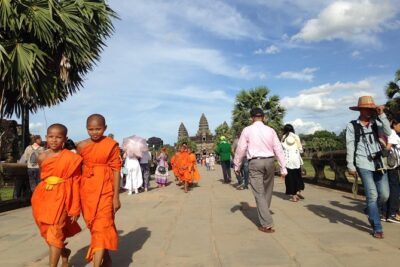
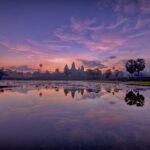
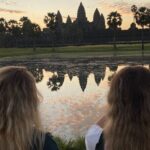
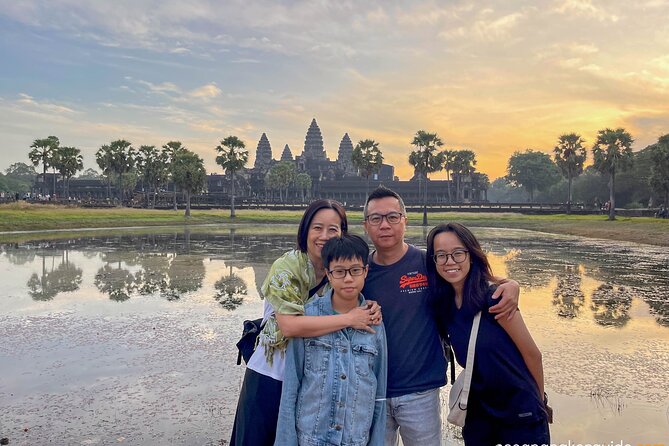
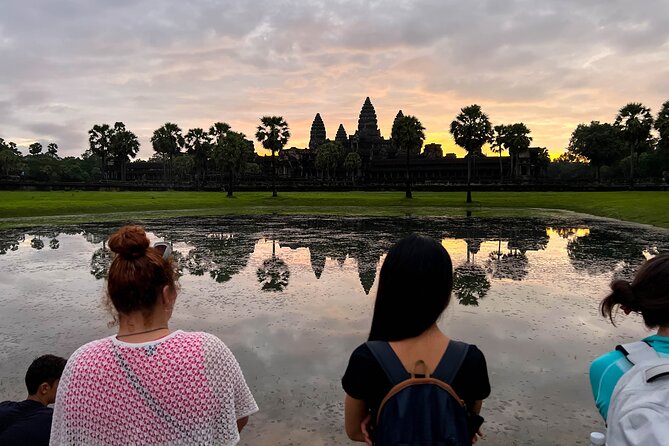
Day 1 starts before most people are even dreaming. You’ll get picked up from your hotel lobby around 4:30 am to 5:00 am, then head out to catch sunrise at Angkor Wat. This is not the kind of stop where you want to arrive late and hope for the best. The whole point is being in the right place when the light changes and the temple shifts from silhouette to something more detailed.
Angkor Wat is the big magnet, so expect crowds—but in the most manageable way possible if you’re there early. When the day is still cool and the sky is doing its morning thing, the scale hits harder. The experience also feels more grounded because you’re starting with one “must see,” instead of trying to cram it between other sites later.
Here’s the practical catch: the Angkor temple pass (2-day pass) is required for this tour, and it’s not included. You’ll want to sort it ahead of time so you’re not stuck at the gate while everyone else is watching the sky.
A small logistics note that saves headaches: the tour operator says they need participants to have the pass before the start of sunrise so you won’t miss it. In other words, get your pass ready before pickup.
You can also read our reviews of more tours and experiences in Siem Reap


Morning temples: Srah Srang, Pre Rup, and Ta Prohm’s roots
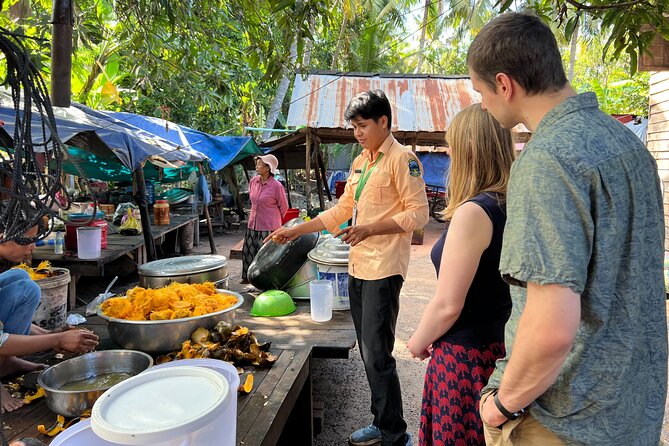
After sunrise, the tour doesn’t send you straight into temple overload with no fuel. You’ll stop at Srah Srang and enjoy breakfast at a local family restaurant in Siem Reap. This is one of those smart moves that feels like a genuine break—not just a quick snack. It also shifts you from the big-ticket monument vibe into something more local and normal.
Srah Srang works well as a morning reset because it’s tied to water and calm angles of Angkor. You’ll also get a chance to pace yourself before the next stretches.
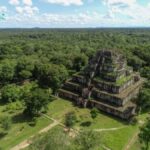
Next up is Pre Rup, known here as the largest brick Hindu temple in the Angkor park area. Pre Rup is a favorite type of temple stop for me because the structure tends to feel more “hands-on” than purely decorative. You get good chances to see how temple tiers guide your eyes upward—especially when you’re already mentally switched on from sunrise.
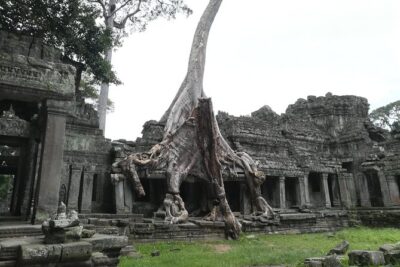
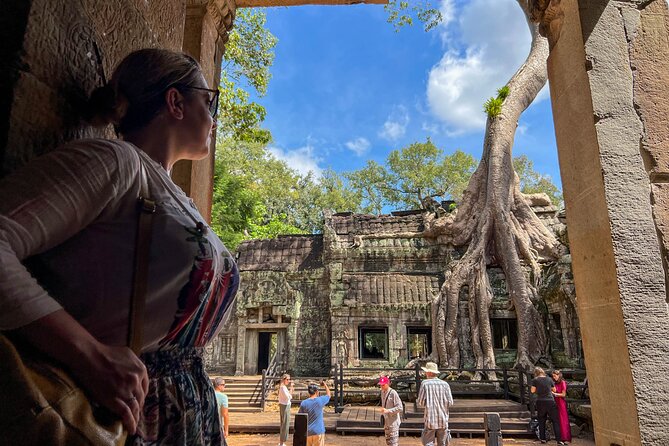
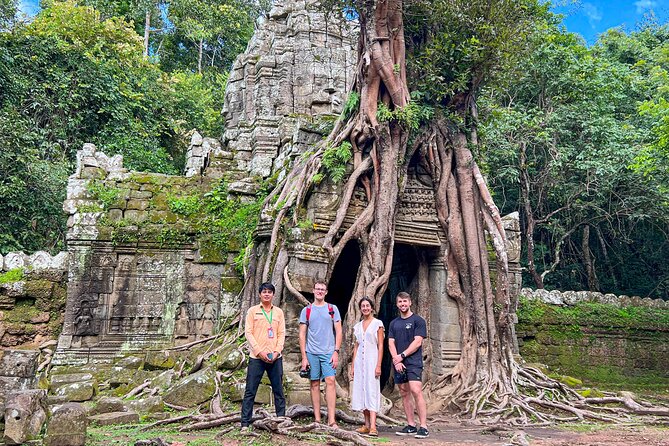
From there, the tour moves into Ta Prohm, the jungle temple famous for being left in its more natural, partially overgrown state. This stop is all about texture: stone, roots, and the feeling that nature is actively in conversation with the architecture. The pace matters here. If you rush, you miss the most interesting views—like where huge roots climb and then disappear into cracks and corners.
If you’re the type who likes photos, Ta Prohm rewards patience. If you prefer history without stopping at every wall detail, you’ll still get something out of it because the atmosphere tells a story on its own.
Angkor Thom South Gate and Bayon’s face towers
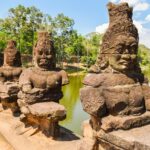
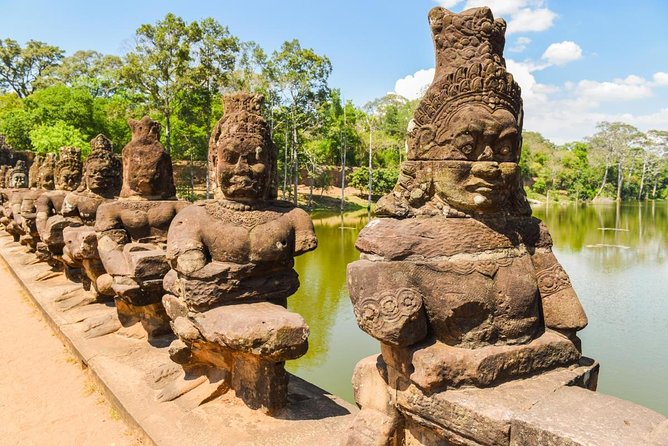
After Ta Prohm, you step into a more iconic Angkor section: Angkor Thom South Gate, also described as Victory Gate, decorated with statues of demon and god figures. You only spend about 15 minutes here, so think of it as a strong “arrival moment” rather than a deep wander.
Then comes Bayon Temple, the smiling-face temple. This is the part of Angkor that many people remember because the carvings are instantly recognizable. Here you’ll see more than 200 Buddha faces carved on towers—so many that your eyes keep finding new expressions as you move.
Bayon is also where a good guide really helps. Even if you’ve seen pictures, you’ll understand the layout and symbolism better with someone explaining what you’re looking at and where to stand for the best perspectives. You also get a sense of how Angkor’s temples were meant to be experienced as movement—approaching, circling, and watching how faces shift from angle to angle.
Once Bayon wraps up, you’ll be transferred back to Siem Reap. The timing tends to be fairly early compared with how long sunrise tours feel in your bones, so you can still plan a real afternoon in town.
Day 2 countryside temples: Preah Khan to Eastern Mebon
Day 2 is where the trip widens beyond the most famous cluster of sights. You’ll start with pickup around 8:00 am after breakfast, and then you head outside the city center for a morning of Siem Reap countryside exploration with your guide.
The first temple is Preah Khan, described as a major Buddhist temple in the area you reach by driving out of town. It’s a smart choice for Day 2 because it doesn’t just repeat the Day 1 pattern. Instead, it leans into a calmer feel—temple spaces that feel less like a photo line and more like an actual site you’re walking through.
Then you move to Neak Pean, an artificial island with a Buddhist temple on a circular island in Jayatataka Baray. This is a “think with your eyes” stop. Even though your time is shorter, you’ll get why the design is linked to water and ritual spaces.
After that comes Ta Som, a smaller late-12th-century temple connected with King Jayavarman VII. Smaller sites can sound like a downgrade, but in Angkor they often do the opposite: you get quieter corners and more chance to absorb carving and layout without constantly negotiating crowd flow.
Next is Eastern Mebon, a 10th-century temple built during the reign of King Rajendravarman. It stands on what was an artificial island at the center of the now-dry East Baray reservoir. This stop is valuable because it gives you an Angkor lesson beyond temples alone: the landscape engineering mattered. Water management and sacred geography were part of the design, not just decoration.
Lunch comes during this section at Angkor Archaeological Park at a local restaurant. You’ll order from a menu. This matters for value: you’re not just eating something random to keep moving. You’re getting a proper meal in the middle of a temple day.
Banteay Srei and the Landmine Museum: fine carving and a hard stop
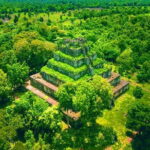
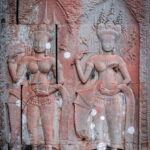
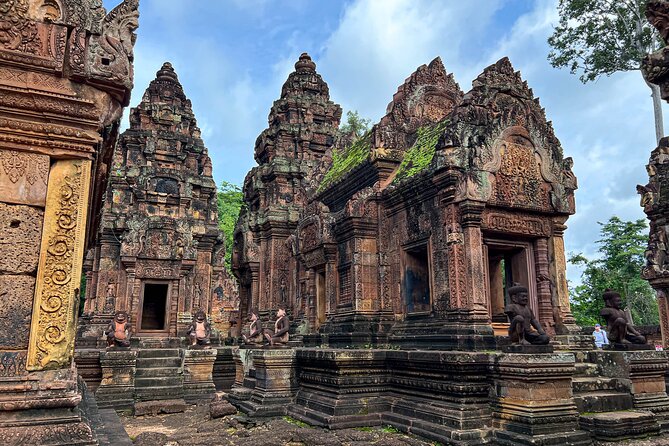
The afternoon brings you to Banteay Srei, one of the most praised sites on this trip because it’s smaller but incredibly detailed. You’ll spend about 2 hours here, and the key idea is the focus on intricate sandstone reliefs. Even if you’re tired, this is the kind of place where the details pull you back in.
Banteay Srei also balances the Angkor “big scale” feeling from earlier. Where Bayon and Angkor Wat shout with size and symbolism from far away, Banteay Srei works more like close-up craftsmanship. If you enjoy carving, patterns, and the way stonework can feel almost delicate, you’ll appreciate the pace and time here.
Then, on the way back to Siem Reap, you’ll visit the Cambodia Landmine Museum. This is a short stop—about 20 minutes—and it’s not a typical tourist temple moment. You can expect to see different types of mines used during the civil war in Cambodia, and it adds a necessary reality check to a trip focused on ancient civilization.
The museum ticket is not included and costs $5 per person. I like that this cost is small, but the impact is big. It gives you context beyond ruins and keeps your trip from staying in pure fantasy mode.
Price and tickets: what $160 really buys
At $160 per person for a 2-day tour, the value is mostly in the combination: early transport, an English-speaking guide, air-conditioned minivan/minibus support, and included meals. The tour is also set up as private (only your group participates), which can make the experience feel less chaotic even when you’re moving with other visitors outside.
What makes it feel even more reasonable is the included comfort extras: cool water and towels during the tour. In Cambodia’s heat, those details matter more than people think before they’re there.
But you should budget for the add-ons clearly, because they’re the part that can surprise you:
- Angkor pass (2-visit pass) is not included and is listed as $62 per person.
- Temple admission tickets are generally not included beyond the meals.
- Landmine Museum ticket is $5 per person and is not included.
So your true spend is more like: tour price + the Angkor pass + the museum ticket (plus any personal drinks/snacks, since soft drinks aren’t stated as included). If you already plan to buy the pass for other Angkor days, this tour still makes sense because your guide and tight routing save you time.
One more small “value” point: pickup timing is arranged so you don’t lose your day trying to DIY transport at odd hours. That’s hard to replicate cheaply, especially for sunrise.
Guides, pacing, and why the small-group style matters
This kind of tour can go two ways: you either get rushed through temples like checkboxes, or you get an actual learning rhythm that makes the ruins stick in your mind.
The tour’s strongest theme is the guide experience. Past groups have highlighted guides like Sam (keeping energy up starting at sunrise) and Sareik (patient explanations and making the trip enjoyable). Another guide mentioned is Sinan, described as more serious and respectful while explaining. What I take from that is simple: you’re not just paying for transport. You’re paying for someone to give the temples a thread, even when the schedule is long.
Pacing is also part of comfort. Day 1 can feel like a long day because it starts before sunrise. One review noted the tour could be done in one day, but the two-day structure makes it more manageable. In practice, two days gives you the chance to switch gears: Day 1 hits the iconic cluster; Day 2 expands into the countryside and fine-detail Banteay Srei without trying to do everything in one exhausting push.
And since this is private to your group, you tend to have more flexibility with your walking pace, questions, and photo stops than you’d have on a huge bus.
Who this tour suits best (and who might feel strained)
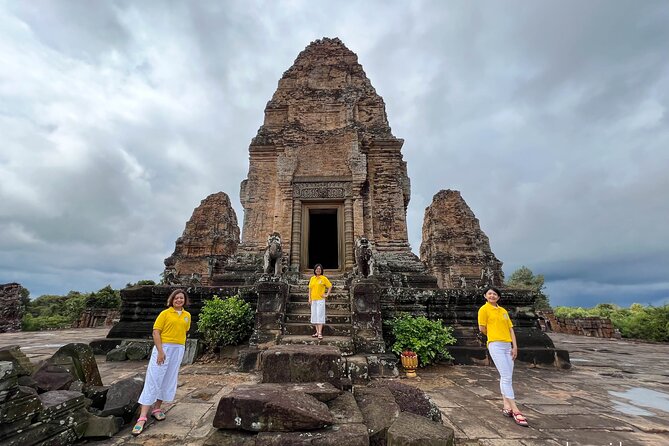
This works really well if you:
- Want sunrise at Angkor Wat without dealing with transport timing stress
- Like guided interpretation so the temples make sense, not just look impressive
- Want both major icons and smaller, detail-rich sites like Banteay Srei
- Enjoy countryside temple stops rather than only the most famous Angkor names
It may feel like a lot if you:
- Hate early mornings (pickup is around 4:30–5:00 am on Day 1)
- Don’t want to manage separate ticket costs (Angkor pass not included; museum ticket is extra)
- Prefer totally relaxed sightseeing with minimal walking
Also plan your clothing for temple rules. The tour states a dress code: no shorts and knees and shoulders must be covered. That’s easy to fix, but it’s one of those rules you’ll feel fast when you’re standing in lines at temples.
Should you book this 2-day Angkor Wat and Banteay Srei tour?
If you’re choosing between doing Angkor on your own and joining a guided plan, I’d lean toward booking this one. The mix of sunrise timing, included breakfast/lunch, and A/C transport makes it a strong value for the effort. It also gives you a second day that’s not just more of the same, with countryside temples and Banteay Srei’s detailed relief work.
Before you book, do two quick checks:
- Confirm you’ll buy the Angkor 2-day pass in time for sunrise.
- Make peace with the early start and temple walking—this is a productive schedule, not a slow stroll.
If that sounds like your kind of Cambodia trip, this is a very solid way to see Angkor with less friction and more meaning.
FAQ
What time is pickup on Day 1 for Angkor Wat sunrise?
Pickup is typically between 4:30 am and 5:00 am from your hotel lobby.
Is the Angkor pass included in the tour price?
No. The Angkor temple pass (2-day/2-visit pass) is not included and is required to enter for sunrise and temple visits.
What meals are included?
Breakfast is included on Day 1 (local food). Lunch is included on Day 2 (ordering individual dishes from a menu).
Is Angkor temple admission included?
Temple admission tickets are generally not included. You’ll need your Angkor pass for the visits.
How much is the Landmine Museum ticket?
The Cambodia Landmine Museum ticket costs $5 per person and is not included.
Does the tour include hotel pickup and drop-off?
Yes. Hotel pickup is included and you are also transferred back to Siem Reap at the end of Day 1.
What’s the dress code?
Visitors are not allowed to wear shorts. Your knees and shoulders must be covered.
Can I request a vegetarian option?
Yes. Tell the operator in advance if you’re vegetarian so they can offer vegetarian options for Day 1 breakfast and Day 2 lunch.
Is this a private tour?
It’s described as private, meaning only your group participates.
Is there water and a comfort setup during the tour?
Yes. You’ll receive free cool water and towels during the tour.
Can I get a full refund if I cancel?
Free cancellation is offered up to 24 hours in advance for a full refund, based on the experience local time.