REVIEW · SIEM REAP
Angkor Wat: Highlights and Sunrise with Spanish Guide
Book on GetYourGuide →Operated by Journey Cambodia · Bookable on GetYourGuide
Watching Angkor wake up changes your pace. This 8-hour tour mixes sunrise, expert Spanish narration, and temple walking before the heat ramps up.
I especially like the way you start in the dark, enter the temple early, and get guided context so the carvings actually mean something. The route also includes less-frequent access from the east, which helps you get that first look with fewer people around.
Two big wins for me: you get a professional Spanish guide who explains the stories behind the reliefs and answers questions as you go, and the tour includes free hotel pickup and drop-off in Krong Siem Reap so you’re not wrangling tuk-tuks at dawn. Plus, you’re cared for along the way with cold water and damp towels when the day heats up.
A realistic consideration: temple entrance fees are not included (you’ll pay $37/person for all temples), and you’ll also need a flashlight because you enter Angkor Wat before sunrise.
In This Review
- Key Highlights I’d Prioritize
- Sunrise at Angkor Wat: Eastern Entry Before the Crowds
- What the Spanish Guide Actually Adds to Angkor
- Inside Angkor Wat: Corridors, Chambers, and Upper Terraces
- Srah Srang Break: Poolside Rest Without Losing Momentum
- Ta Prohm: The Jungle Temple That Still Looks Like It Did After Rediscovery
- Angkor Thom: Bayon’s Faces and the Fortified City Loop
- Terrace of the Leper King and Terrace of the Elephants
- Bayon Temple: Over 200 Face Towers
- Tonle Om Gate (South Gate): Gods and Demons on the Approach
- Timing and Logistics That Affect Your Enjoyment
- Price: The Real Value vs What You Still Pay
- Who This Tour Is Best For
- Should You Book It?
- FAQ
- What time does the tour end?
- Where do I get picked up?
- Is breakfast included?
- Are temple entrance fees included?
- What language is the guide?
- Do I need a flashlight?
- What’s included in the comfort items?
- Is hotel pickup and drop-off included?
- Does the tour skip the ticket line?
- Is the tour suitable for everyone?
Key Highlights I’d Prioritize

- Eastern-side dawn entry into Angkor Wat: you’ll enter from the rarely visited eastern side and move through the cloistered corridors in early light.
- Guided “story time” inside Angkor Wat: about two full hours exploring corridors, central chambers, and upper terraces with expert explanation.
- Sunrise photos with a calm viewing spot: you’ll have time at sunrise from the edge of one of the library’s ancient pools.
- Jungle drama at Ta Prohm: see the temple that still looks like it did after Henri Mouhot’s early 1850s rediscovery, including the scale of its monastic past.
- Angkor Thom’s classic hits: Leper King Terrace, Elephants Terrace, and Bayon’s more than 200 face towers.
- Skip-the-ticket-line included, but tickets cost extra: convenience helps, but you still budget the $37/person temple entrance.
Sunrise at Angkor Wat: Eastern Entry Before the Crowds
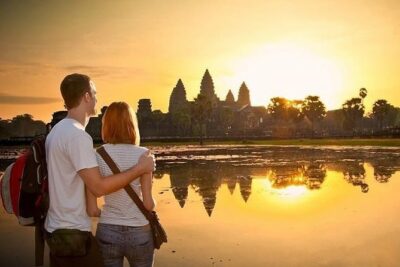
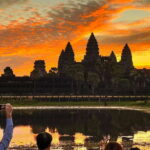
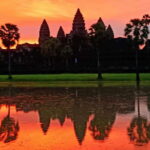
If you’ve only seen Angkor in daytime photos, this tour changes the picture fast. The day starts before dawn, with you leaving your hotel in the dark so you can be at Angkor Wat for sunrise—when the temple looks solemn, not just impressive. Expect cold-morning vibes at the start, then a quick shift into warm tropical sun as the hours go on.
What makes this sunrise plan more than just a standard early photo stop is the entrance route. You enter the great temple in the dark from the eastern side—described as rarely visited—then you work your way down through the ancient cloistered corridors. That matters because you’re not just arriving to look outward. You’re walking through the temple while you’re still seeing it the way stone used to be framed: dim, quiet, and full of shape before the light fully hits the walls.
Also bring a flashlight. The tour instructions are clear about it, and you’ll feel smarter (and less stressed) having one. This is one of those simple items that turns “I hope I can see” into I’m ready.
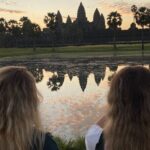
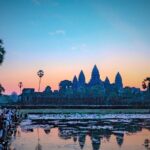
And yes, you’ll get that sunrise moment. You’ll soak up the atmosphere at the edge of one of the library’s ancient pools—one of the most satisfying ways to watch light spread across Angkor’s geometry. If you’re the type who likes photos, you’ll appreciate how calm this part feels before the crowd energy fully builds.
You can also read our reviews of more guided tours in Siem Reap
What the Spanish Guide Actually Adds to Angkor
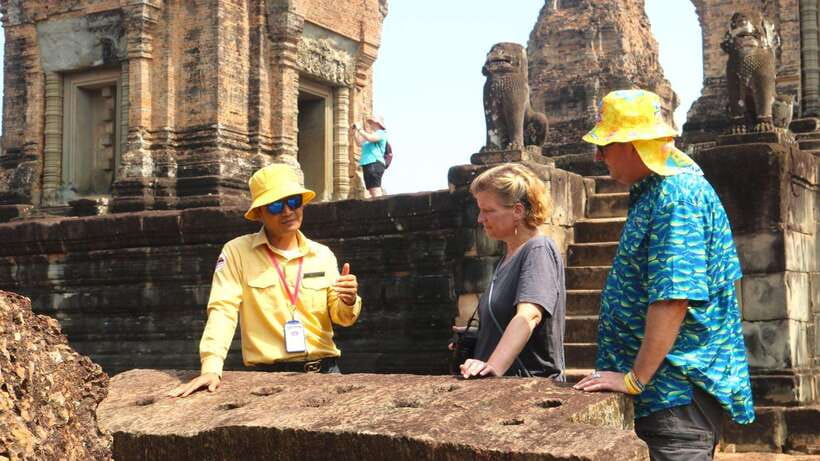
Angkor is full of details—carvings, symbols, temple layouts. The easy mistake is to look without understanding. This is where a Spanish guide can make a big difference, especially if you’re not already reading about Khmer art and empire history.
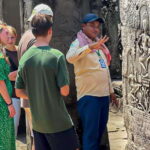
This tour is built around professional Spanish narration. You spend long, guided time inside Angkor Wat, and the guide unravels the stories hidden in the reliefs. The practical payoff is that you won’t be stuck guessing what you’re seeing. You’ll move through corridors and central chambers with context, then recognize recurring themes rather than treating everything like random decoration.
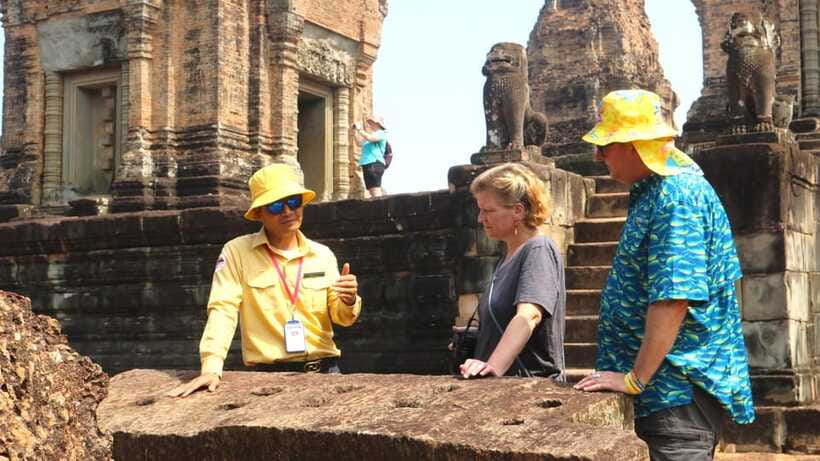
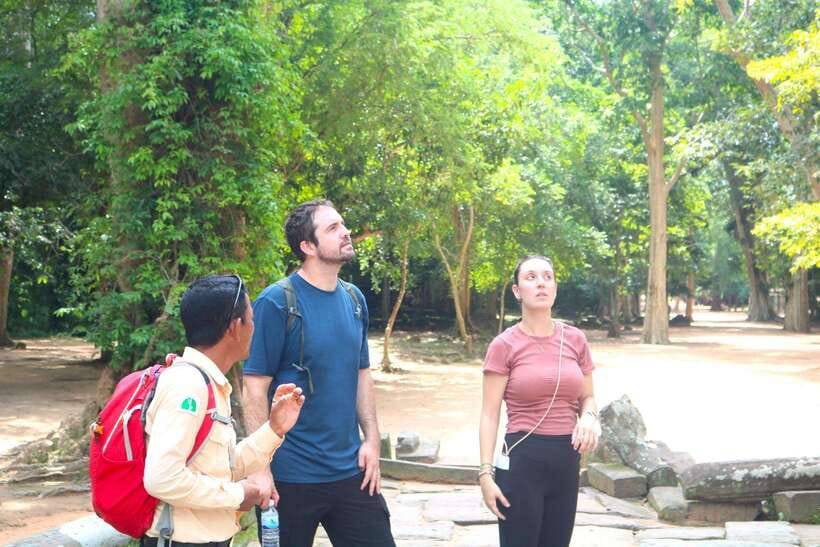
I also like that the guide experience feels interactive. One example from a Spanish guide named Sokha is how he’s described as very attentive and able to explain clearly—and even help you find the best views while taking photos that look like they were done with more skill than you’d expect on a temple day. Another common theme is that the guide is on time and ready to talk through what’s coming next. At Angkor, that reliability matters because you don’t want to lose precious morning time.
So if your priority is understanding (not just speed-walking from one “must see” photo angle to the next), this tour’s guide-led approach is the backbone of the value.
Inside Angkor Wat: Corridors, Chambers, and Upper Terraces
After sunrise, the pace becomes more temple-focused. You’ll explore the interior of Angkor Wat for about two full hours, moving through corridors, central chambers, and up onto upper terraces. This is where the tour shifts from “wow, sunrise” into “okay, now I get it.”
The route through the ancient cloistered corridors you start in early morning ties into what you’ll do later. The reliefs and carving scenes are often easiest to understand when you’re walking within the architectural logic rather than just looking from a distance. The tour specifically points to the longest stretch of bas-reliefs in the world, and that detail is not there to sound dramatic. It’s there because you’ll actually spend time in a continuous wall-story environment.
Here’s the helpful part for your planning: you’ll see a lot of stone work, so bring comfortable shoes and expect some steps and uneven surfaces. The tour includes walking, sightseeing, and guided exploration, and the duration inside Angkor Wat is long enough that you’ll want to be steady on your feet.
If you like your photos but also like learning, this is a good combination. Sunrise gives you atmosphere and light. The guided interior gives you meaning. Together, they make Angkor Wat feel less like a checklist item and more like a place you can actually read.
Srah Srang Break: Poolside Rest Without Losing Momentum
Between major temples, the tour builds in a break. You’ll stop at Srah Srang, which includes time for coffee, tea, and breakfast. Breakfast is listed as a break time component here, but it’s also noted that breakfast isn’t included—so plan to treat food at this stop as something you’ll need to pay for or choose on-site.
This stop is useful even if you’re not hungry. In the early morning, your body is often running on adrenaline. By the time you reach this break, you’ve walked and focused for hours. A short rest helps you keep your energy steady for the rest of the route. And with the humidity that tends to show up later in the morning, stopping before Ta Prohm and Angkor Thom is a smart timing choice.
Ta Prohm: The Jungle Temple That Still Looks Like It Did After Rediscovery

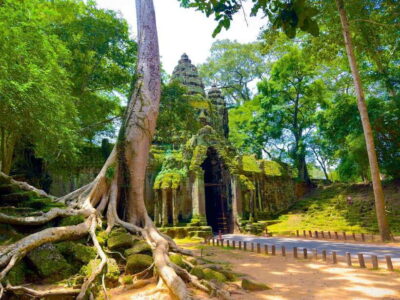
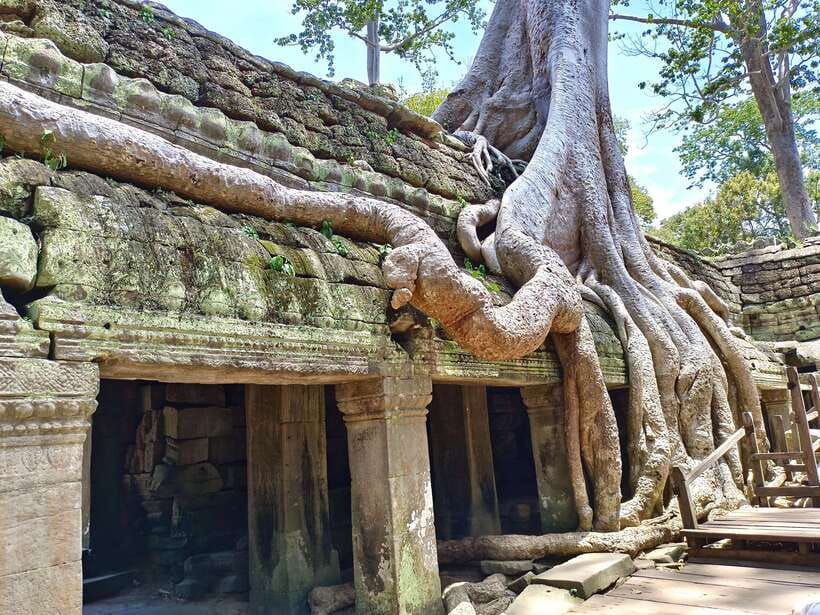
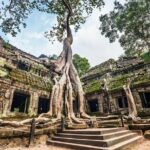
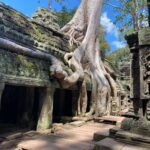
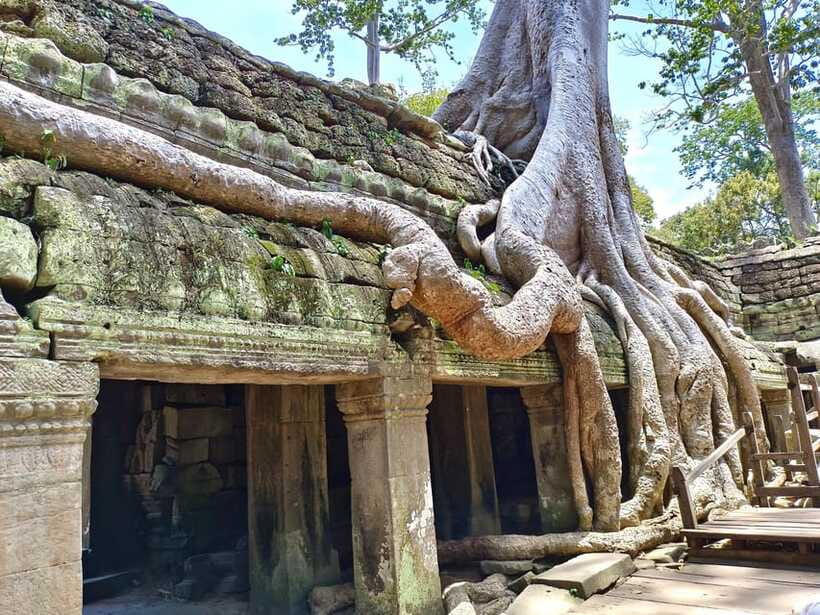
Next up is Ta Prohm, one of the most symbolic Angkor temples covered by jungle. If you’ve seen famous photos where tree roots grip stone walls, this is the temple that shaped that image. The tour time here is about one hour with a photo stop and guided sightseeing/walk.
What I like about including Ta Prohm after Angkor Wat is contrast. Angkor Wat feels perfectly planned and monumental. Ta Prohm feels like time got messy on purpose—stone and roots in a constant battle, with the ruins still dramatic even from a short walk.
The tour includes a specific piece of context that helps you “read” the scene: Ta Prohm once housed 2,740 monks, and it looks much the same as it did after French explorer Henri Mouhot’s early 1850s rediscovery. That’s a memorable connection because it anchors what you’re seeing to a timeline rather than just calling it ruined and moving on.
Practical note: jungle temples can mean uneven ground and more humidity. Wear breathable layers if you can, and don’t skip sunscreen. You’ll have water and a damp towel from the tour, but sun protection still matters.
You can also read our reviews of more tours and experiences in Siem Reap

Angkor Thom: Bayon’s Faces and the Fortified City Loop
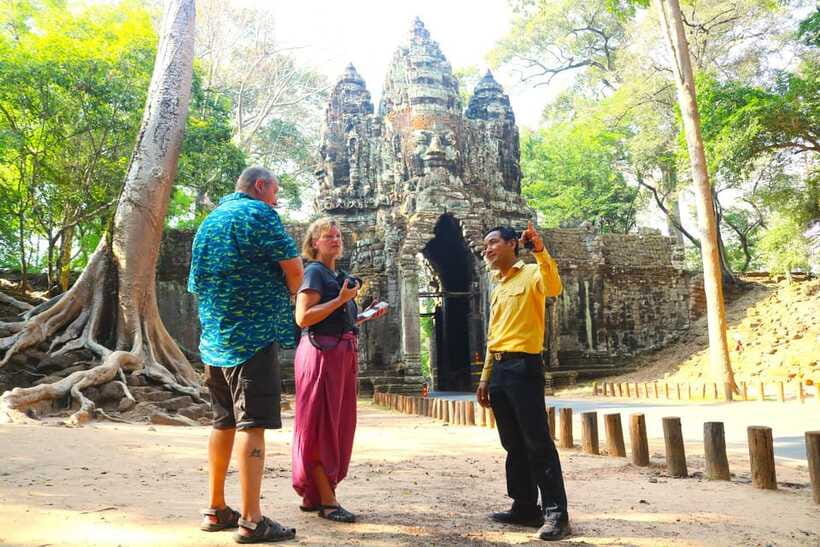
After Ta Prohm, the itinerary shifts into Angkor Thom, which is basically the grand walled city area inside the greater Angkor complex. You’ll pass a sequence of iconic stops, each with a different “kind” of attraction.
Terrace of the Leper King and Terrace of the Elephants
You’ll pass the Terrace of the Leper King and the Terrace of the Elephants before heading to Bayon Temple. These are often photographed because they’re recognizable and cinematic. But with a guide, they become more than photo-bait. The tour’s narration is meant to connect what you see to Khmer-era symbolism and how the space was used and understood.
Bayon Temple: Over 200 Face Towers
The core stop here is Bayon Temple, where you’ll see beautifully carved central towers covered with more than 200 enormous faces. This is the moment where Angkor stops feeling architectural and starts feeling like theater. The faces are everywhere, and the guide’s explanations help you understand why they’re there and how they relate to the temple’s role.
The time at Bayon is about one hour, with photo stops and guided walking. That’s a realistic amount: long enough to orient yourself and notice details, not so long that you’re completely worn out before lunch.
Tonle Om Gate (South Gate): Gods and Demons on the Approach
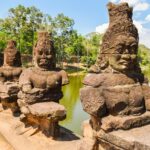
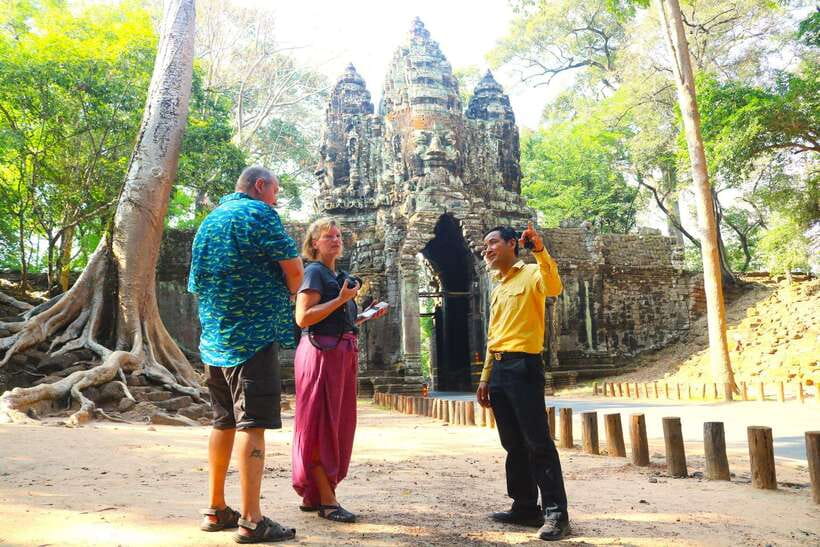
After Bayon, you’ll head toward the South Gate of Angkor Thom. The tour notes the gate flanked by a row of 54 stone figures on each side: gods on the left and demons on the right. This is one of those details that’s easy to miss if you’re rushing. With a guide, you can slow down at the right moment and actually look at the symmetry and the character of each side.
Then you’ll enjoy the rest of the tour in the relaxed surroundings of the Angkor Archaeological Park before returning to the hotel. The tour visit ends between 12:30 and 1:30 p.m., which is a helpful finish time if you still want the afternoon for pool time, shopping, or a low-key meal.
Timing and Logistics That Affect Your Enjoyment
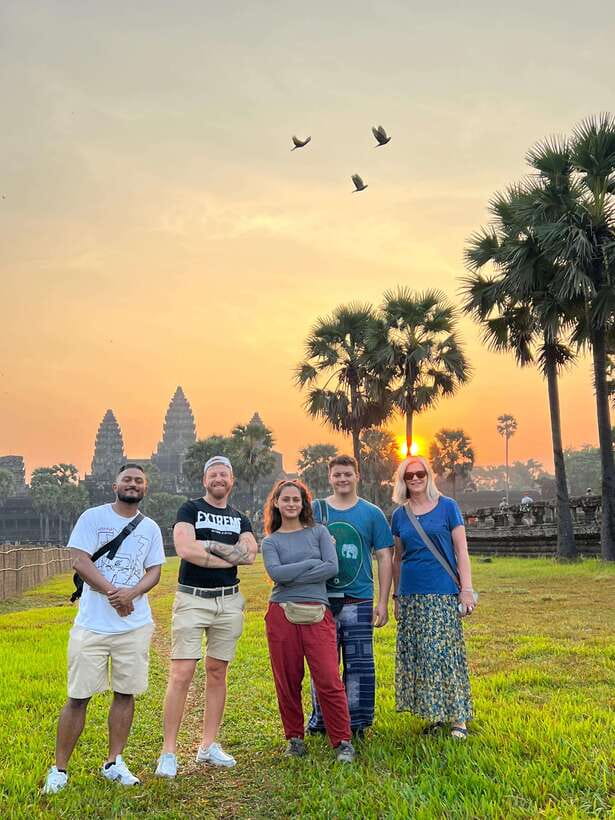
This tour is set up for a full morning temple sprint with a sunrise launch. That’s great for maximizing what you see, but it does mean you’ll feel the early start.
You’ll start before dawn, spend sunrise viewing time, then do two hours inside Angkor Wat, followed by Ta Prohm and Bayon/Angkor Thom. After all of that, you still get back to your hotel between 12:30 and 1:30 p.m.—so you avoid the late-day fatigue many people get when tours run until evening.
Transportation is also handled for you. You’ll ride in an air-conditioned vehicle and get complimentary hotel pickup and drop-off. In Siem Reap, that can be the difference between arriving feeling ready versus arriving already annoyed. Here, you skip that stress.
Two small “don’t forget” items that matter:
- Bring a sun hat, sunglasses, and sunscreen.
- Don’t leave the flashlight at home if you’re using the provided pre-sunrise entry plan.
Also, note what the tour doesn’t fit: it isn’t suitable for wheelchair users and it’s not for people over 95 years, and pets and baby strollers aren’t allowed. If any of those apply to your group, you’ll want a different format.
Price: The Real Value vs What You Still Pay
The price is listed as $29 per person for about 8 hours. On its face, that’s low for an early sunrise tour plus multiple major temples and a Spanish guide. The reason it can still be fair is that several “hidden costs” are separated out:
- Temple entrance tickets are not included. You’ll pay $37/person for all temples.
- Food is not included.
So your real budget is closer to about $66 per person once you add tickets, plus any breakfast or drinks you choose. Still, you’re getting a lot for that: sunrise at Angkor Wat, skip-the-ticket-line support, a Spanish-speaking guide, air-conditioned transport, and practical comfort items like bottled water and damp towels.
For most people, the best value angle is time. You’re covering Angkor Wat, Ta Prohm, and Angkor Thom efficiently, with a guide to make the carvings and face towers understandable—not just visible. If you tried to do this on your own, you’d likely spend more time organizing transport, buying tickets, and trying to interpret reliefs without narration.
Where the value can feel less great is if you strongly want freedom to linger. This tour keeps a set pace, especially at Bayon and Ta Prohm where the stops are about one hour each. If you love slow photography marathons, you might need extra personal time after the tour ends.
Who This Tour Is Best For
This is a smart choice if you want:
- Guided storytelling in Spanish, especially inside Angkor Wat.
- A sunrise start that gives you the early-day feel without spending the whole day there.
- A compact loop that still includes the major emotional stops: sunrise Angkor Wat, jungle Ta Prohm, and Bayon faces.
It’s less ideal if:
- You need full mobility support (the tour isn’t for wheelchair users and involves walking).
- You’re traveling with a stroller or pets.
- You don’t want to pay temple fees on top of the tour price.
The fact that the visit ends around midday is a big plus for travelers who want to continue exploring afterward without burning daylight.
Should You Book It?
I’d book this tour if your main goal is a strong Angkor introduction with the right amount of structure. The combination of sunrise entry, a Spanish guide who explains what you’re seeing, and the classic temple circuit (Angkor Wat → Ta Prohm → Angkor Thom/Bayon) is exactly how to avoid the common “I saw it, but I don’t know it” problem.
If you’re on a tight schedule or you’d rather not coordinate transport and tickets yourself, this format is built for convenience with pickup, air-conditioning, and skip-the-ticket-line support. Just go in expecting that you’ll pay the $37/person temple entrance and you’ll need your flashlight for the pre-dawn temple entry.
If you want to maximize your morning and still have the afternoon free, this is a solid yes.
FAQ
What time does the tour end?
The tour visit ends between 12:30 and 1:30 p.m.
Where do I get picked up?
Pickup is from Krong Siem Reap.
Is breakfast included?
Breakfast is mentioned as part of the Srah Srang break, but it’s also stated that breakfast is not included, so you should plan on paying for food if you want it.
Are temple entrance fees included?
No. Entrance to the temples is not included and costs $37 per person for all temples.
What language is the guide?
The live tour guide speaks Spanish.
Do I need a flashlight?
Yes. You enter Angkor Wat in the dark from the eastern side, and the instructions ask you to bring a flashlight.
What’s included in the comfort items?
The tour includes a complimentary bottle of water and a damp towel to stay cool.
Is hotel pickup and drop-off included?
Yes. There is complimentary hotel pickup and drop-off service.
Does the tour skip the ticket line?
Yes, skip-the-ticket-line is included.
Is the tour suitable for everyone?
It’s not suitable for wheelchair users and it’s not suitable for people over 95 years. Pets and baby strollers are also not allowed.