REVIEW · SIEM REAP
1-Day private Angkor Temple Tour by Tuk Tuk from Siem Reap
Book on Viator →Operated by Journey2 Angkor · Bookable on Viator
Angkor feels different with a private tuk tuk. This 1-day tour from Siem Reap is designed for flexibility and smart pacing, with an English-speaking guide and pickup/drop-off so you’re not fighting a big group. I especially like that you get to hit the big sights plus a few short detours your guide likely keeps for people who book early and move efficiently.
Two things I really like: first, you enter Angkor Wat from the less-frequented eastern side and then walk toward the North ancient library pool on foot, which makes the morning feel less rushed. Second, your guide keeps the day moving enough that you can spend real time at places like Bayon and Ta Prohm, not just stand in lines and bake in the sun.
One consideration: the tour price is $30 per person, but Angkor Wat entrance isn’t included. Also, Cambodia temple dress rules apply at some sites, so plan for shoulders and knees covered and bring comfortable flat shoes.
In This Review
- Key things to notice before you go
- How a Private Tuk Tuk Day Works in Siem Reap
- Price and Tickets: What You Actually Pay
- What to Wear and Bring for Angkor Temple Comfort
- Morning at Angkor Wat: Eastern Entry, Bas-Reliefs, and a Walk You’ll Remember
- Angkor Thom’s South Gate: Fortifications and Scale
- Bayon Temple: The Smiling Faces and the Two Layers of Story
- Baphuon and the Royal Palace Enclosure: Temple Mountain with Context
- Short Detours in Angkor Thom: Where Your Guide Changes the Day
- Phimeanakas (Vimeanakas): Celestial Temple Inside the Royal Walls
- Terrace of the Leper King and Terrace of Elephants: Ceremonial Theater in Stone
- Terrace of the Leper King
- Terrace of the Elephants
- Ta Prohm in the Afternoon: Jungle Drama and UNESCO Impact
- Lunch Break and Cold Drinks: Keeping You Functional Through the Day
- Who This Tour Fits Best
- Should You Book This Private Angkor Tour?
- FAQ
- Is Angkor Wat admission included?
- How long is the private tour?
- What’s included besides the guide and tuk tuk?
- Do I need to buy tickets in advance?
- What should I wear to the temples?
- Is this tour really private?
Key things to notice before you go
- Private tuk tuk agility: you can change pace and routes without waiting on a bus schedule.
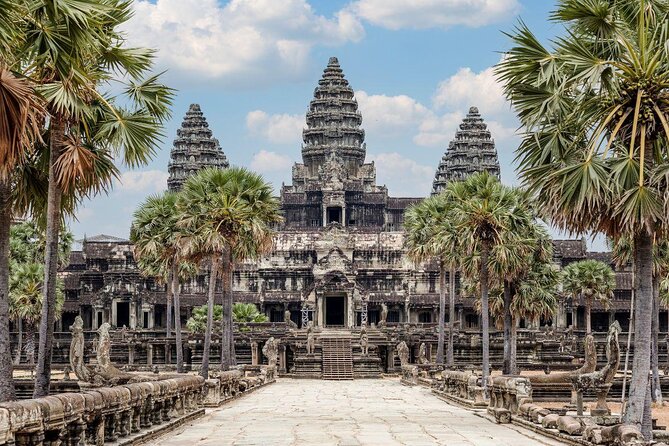
- Angkor Wat from the eastern approach: a quieter entry route that makes the first highlight feel more special.
- Two “secret” style stops in Angkor Thom: you’ll get quick detours to less-typical angles and spots.
- Morning-to-afternoon variety: from major carvings at Angkor Wat to jungle drama at Ta Prohm.
- Cold drinks and lunch during the day: you get a practical break, not just a sightseeing sprint.
- English-speaking guide with real context: expect myths, bas-reliefs, and site explanations, not just directions.
How a Private Tuk Tuk Day Works in Siem Reap
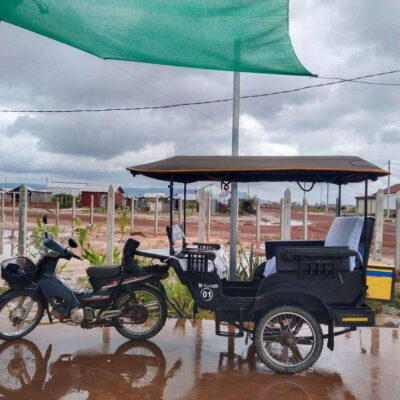
This tour is built around a simple idea: you see more when you’re not trapped in a big, slow group. You’ll have hotel pickup, then ride the day in a private tuk tuk, with bottled water provided. One review note that stuck with me was how well kept the tuk tuk felt, including cold towels, which is the kind of small comfort that matters when the humidity hits.
The day is also flexible. That doesn’t mean chaos. It means your guide can adjust timing so you can linger where you care most, and speed up when you’re walking between temple zones. If you’re the type who likes photos but also wants to understand what you’re looking at, this format usually clicks.
You can also read our reviews of more private tours in Siem Reap
Price and Tickets: What You Actually Pay
At $30 per person for about 8 hours, the tour itself is a solid deal—especially because it’s private. The bigger “real cost” question is admissions. On this route, Angkor Wat has an entrance fee not included, while the other listed stops are marked as admission free.
Here’s the practical way to think about value:
- You’re paying for guide time, private transport, pickup/drop-off, and water.
- You’re likely paying less overall than a bundle that includes every ticket, because only Angkor Wat’s admission is flagged as extra here.
- You’re also paying for time efficiency. A private tuk tuk helps you avoid long delays and get to the next stop without waiting around.
Also note the tour guide sends you a link to purchase the temple entrance e-ticket days in advance. If you like a smoother start, do that ahead of time so you’re not scrambling at the gates.
What to Wear and Bring for Angkor Temple Comfort
This day involves a lot of walking. Even when some stops are short, you’re still moving across ancient stone surfaces, through shaded paths, and between major temple compounds.
Plan on:
- Dress code: some temples require covering knees and shoulders. Casual clothing is fine as long as it meets that rule.
- Shoes: wear flat, comfortable shoes for walking. There’s no point in bringing “temple photos” shoes that you hate by noon.
- Heat strategy: bottled water is provided, and the tour is set up to help you escape the worst crowds and heat—but you’ll still sweat. Bring a hat if you can.
Morning at Angkor Wat: Eastern Entry, Bas-Reliefs, and a Walk You’ll Remember
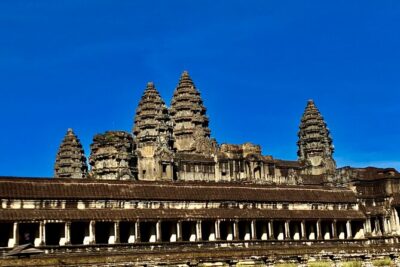
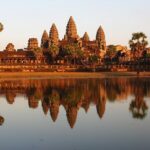
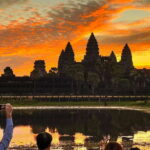
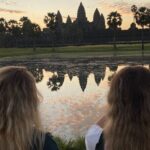
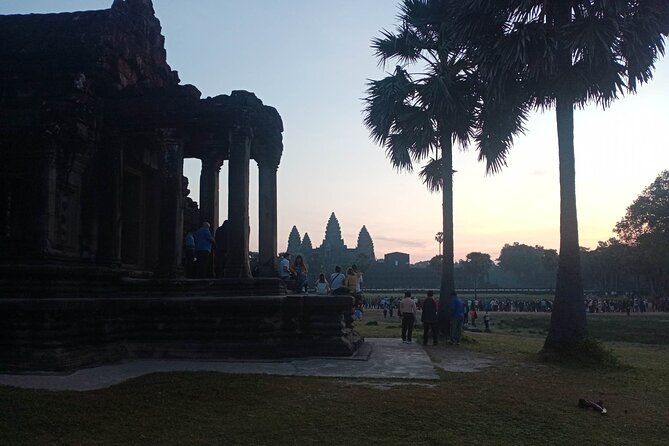
Angkor Wat is the anchor of the whole day, and the approach matters. Here, you enter from the eastern side, which is described as the little-visited route. That immediately changes the feeling: instead of only seeing the postcard front, you get a more gradual arrival.
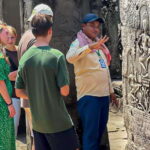
After entry, you’ll go on foot along a jungle path toward the North ancient library pool. This is where the tour earns its keep, because it’s not just a drive-by. Your expert guide explains what you’re seeing—then you move into the central chambers for history, myths, and stories carved into the stone bas-reliefs.
Two details I think you’ll appreciate:
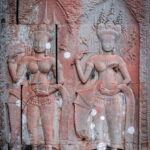
- The guide focuses on the stone carvings, including the claim that this is the longest stretch of bas-relief carvings in the world. Even if you don’t measure it in your head, you’ll feel the scale.
- You get time in the central areas rather than a quick loop. That’s the difference between seeing Angkor and actually understanding Angkor.
Downside? Angkor Wat’s admission fee is extra, and this is the stop where you’ll likely want to manage your ticket timing well since it’s the “money” one.
Angkor Thom’s South Gate: Fortifications and Scale
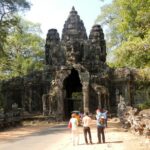
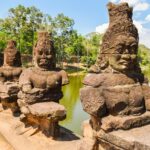
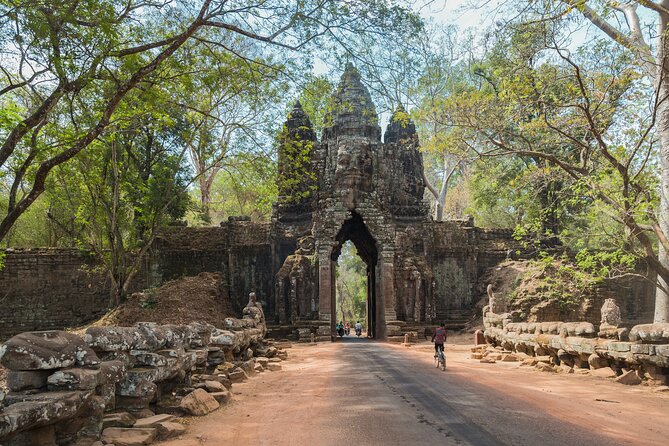
After Angkor Wat, the tour moves into Angkor Thom territory. The South Gate is the entrance to the fortified capital city of the Khmer Empire. It’s flanked by rows of 54 stone figures on each side, which makes the gateway feel more like a statement than an entry point.
Your time here is short, but meaningful—about 20 minutes. This works well because the South Gate is the kind of place where you need a quick moment to orient yourself. You’re standing in the middle of an ancient city scale that’s hard to picture, including the claim that at its height Angkor Thom had a population of more than one million.
Practical note: this is also one of the popular zones in the Angkor Wat complex area, so you’ll benefit from the guide’s pacing and timing to reduce crowd time.
You can also read our reviews of more tours and experiences in Siem Reap
Bayon Temple: The Smiling Faces and the Two Layers of Story
Bayon is one of those sights that looks like it’s speaking to you. The signature is the multitude of serene and smiling stone faces—over 200 huge expressions—clustered around towers centered on the peak.
You’ll spend about 50 minutes at Bayon, and that longer stop is important. Bayon isn’t only about the faces. It also has two sets of bas-reliefs, mixing mythological, historical, and everyday scenes. If you’re paying attention, you’ll start noticing patterns: the faces draw you in, and the carvings make you stay.
A possible drawback: the same area that makes Bayon famous also makes it visually intense. If you’re prone to photo fatigue, ask your guide to point out a few “best angles” so you don’t waste time shooting everything instead of watching the details.
Baphuon and the Royal Palace Enclosure: Temple Mountain with Context
Next is Baphuon, located in Angkor Thom just northwest of Bayon. It’s a three-tiered temple mountain built in the mid-11th century. The scale details are part of the story here: it measures about 120 meters by 100 meters at the base and rises 34 meters without its tower.
What I like about this stop is that it connects the temple to its royal setting. Baphuon adjoins the southern enclosure of the Royal Palace. Your guide can help you see it as more than an isolated ruin.
There’s also a historical anecdote tied to the site: an envoy named Chou Ta-kuan, visiting in 1296 to 1297, compared Bayon to a Tower of Gold and Baphuon to a Tower of Bronze. That kind of context turns “temple shapes” into meaning.
Short Detours in Angkor Thom: Where Your Guide Changes the Day
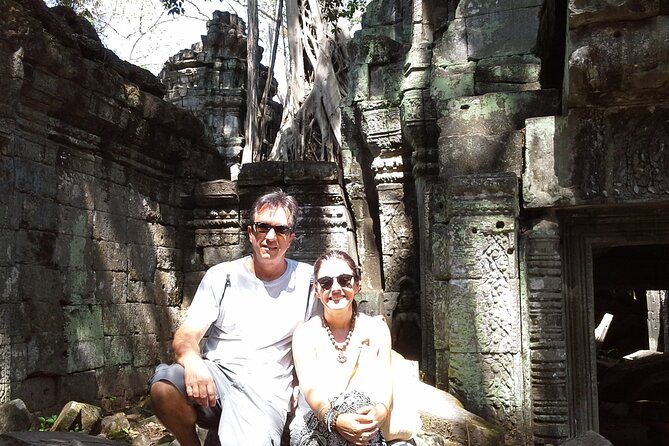
You’ll have a couple of quick stops labeled as hidden/secret experiences inside Angkor Thom. These are brief (around 10 minutes each), but they’re exactly the kind of moment that makes a private guide worth it.
Instead of only sticking to the most obvious viewpoint, your guide will take you to places most tourists don’t typically see. Even if the detours are short, they help break up the day so you don’t feel like you’re on rails from one famous platform to the next.
Tip: if you care about photos, treat these mini-stops as your “setup and compose” time. Use them to reset your camera, change lenses if you have them, and then go into the next temple ready to shoot and look.
Phimeanakas (Vimeanakas): Celestial Temple Inside the Royal Walls
Phimeanakas is sometimes called the celestial temple, built at the end of the 10th century and shaped in a three-tier pyramid form. It’s tied to the reign of Rajendravarman (941–968) and was completed by Suryavarman I, according to the tour description.
This stop is inside the walled enclosure of the Royal Palace area, which gives it a different feeling than temples out in the open. You’re not just moving through space—you’re stepping into a royal zone designed for ceremony and power.
Time here is around 35 minutes. That’s enough to spot how the structure works: pyramidal tiers, galleries at the top platform edge, and the temple tower that once stood above.
Terrace of the Leper King and Terrace of Elephants: Ceremonial Theater in Stone
The tour then hits two famous terraces that feel like stages.
Terrace of the Leper King
This U-shaped structure is from the 13th century under King Jayavarman VII. The modern name comes from a 15th-century sculpture discovered at the site that depicts the Hindu god Yama, the god of death.
It’s suggested by some that it was used as a royal cremation site. Whether you accept that interpretation or just enjoy the symbolism, what matters is that this terrace isn’t only decorative. It reads like a place with ceremony built into the architecture.
You’ll have about 30 minutes here, which is long enough to walk the edges and pick out carving details.
Terrace of the Elephants
Then comes the 350 m long Terrace of Elephants. This was a giant reviewing stand for public ceremonies and served as a base for the king’s grand audience. Some local Khmer residents call it the Ancient Khmer Stadium, which is a fun way to remember the purpose: spectators, speeches, and a crowd energy—even if the crowd is gone now.
You’ll spend around 30 minutes, and it helps to look for how the terrace lines guide your eye. It’s one of those spots where a guide’s context makes it easier to picture the original scene.
Ta Prohm in the Afternoon: Jungle Drama and UNESCO Impact
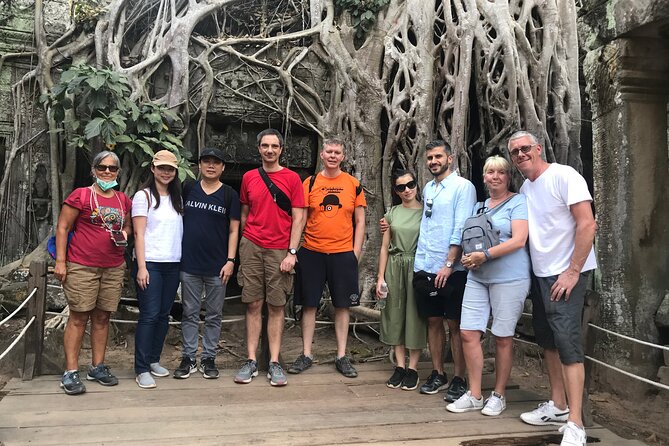
Late in the day you’ll visit Ta Prohm, the jungle-enveloped temple often connected with Tomb Raider imagery. It’s one of the most atmospheric sites in Angkor because it sits in the same condition it was found, with trees and roots growing through the ruins.
You’ll get about 1 hour here. That hour matters because Ta Prohm rewards patience. If you rush, you only see the big tree-and-stone photo. If you slow down, you notice how the light changes between branches and window openings, and how the layout guides your wandering paths.
A few facts that make Ta Prohm more than a photo stop:
- It was built in the 13th century.
- It was UNESCO listed in 1992.
- The tour description also notes Ta Prohm served as a religious temple located at the center of the Ancient Khmer University during the 12th and 13th centuries.
If you like learning what daily life might have looked like in ancient settings, this is the stop where that idea clicks.
Lunch Break and Cold Drinks: Keeping You Functional Through the Day
One of the more practical perks is lunch with cold drinks at a local restaurant at a 12th-century temple complex. I like this because it reduces the “where are we eating?” problem that can derail a temple day. It also keeps the schedule tight enough to protect your energy.
Because the day runs about 8 hours, plan to treat lunch as a reset, not an extended meal. You’ll want strength for Ta Prohm’s walking, plus enough energy to keep your attention on carvings and views.
Who This Tour Fits Best
This tour is a strong match if you:
- Want a private day with your own pace.
- Like learning stories behind the stones, not just taking pictures.
- Prefer moving between temples without the friction of a large group.
- Appreciate value: $30 for private transport and an expert guide, with only Angkor Wat admission marked as an extra fee.
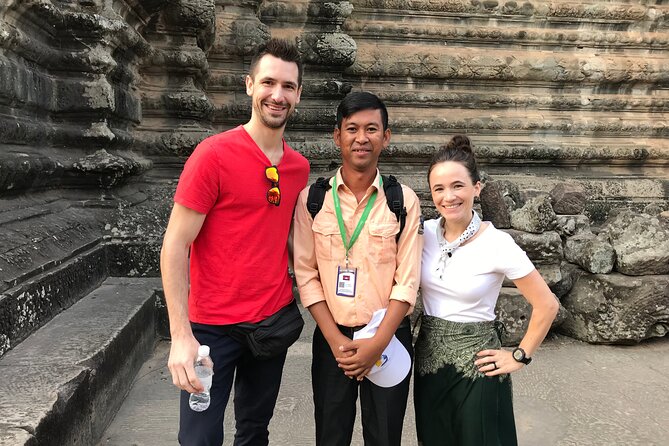
It’s also ideal for couples and small families who want flexibility. One review specifically praised the experience with exceptional service—mentioning a guide named Sim and a clean, comfortable tuk tuk setup with cold towels and bottled water.
Should You Book This Private Angkor Tour?
Yes, if you’re choosing between a basic group day and a more intentional Angkor visit, this private format gives you better control. For the price, you’re getting guide explanations, pickup/drop-off, bottled water, and a well-paced route that balances major icons with shorter detours that add variety.
Book it if:
- You want to avoid wasting time in crowds and heat.
- You care about understanding Angkor Wat and Bayon, not just checking boxes.
- You’ll handle the one extra ticket cost for Angkor Wat and dress appropriately for temple rules.
Skip it or ask questions first if:
- You’d rather not plan around separate temple admissions.
- You’re expecting every stop to be a long, slow wander. Some terraces and “secret” detours are brief by design.
FAQ
Is Angkor Wat admission included?
No. The tour notes that Angkor Wat has an entrance ticket that is not included, while the other listed stops are marked as admission free.
How long is the private tour?
It runs about 8 hours (approx.).
What’s included besides the guide and tuk tuk?
You get an English-speaking guide, a private tuk tuk vehicle, hotel pickup and drop-off, and bottled water. The tour also includes lunch with cold drinks.
Do I need to buy tickets in advance?
Your guide sends a link to purchase the temple entrance e-ticket days in advance.
What should I wear to the temples?
Bring clothing that covers knees and shoulders for temples where that rule applies. Wear flat, comfortable shoes for walking.
Is this tour really private?
Yes. It’s a private experience, and only your group participates.