REVIEW · SIEM REAP
Siem Reap Cooking Class
Book on Viator →Operated by Angkor Wat Shared Tours · Bookable on Viator
Cooking a Khmer meal beats another temple day. This Siem Reap Cooking Class turns your Angkor-day fatigue into a hands-on food mission: you shop for ingredients, learn Khmer techniques with a chef, then eat what you make. It’s built around simple, doable lessons—no experience needed—and it runs on a tight 3-hour schedule.
I love the way the class starts with a market tour led by a local guide, so you understand what you’re buying and why it matters. I also like the practical teaching style—Chef Dee breaks things down clearly and even works with ingredients grown from her own garden, so the flavors feel real, not generic. If you want the “I can cook this at home” outcome, this setup is made for you.
One consideration: the experience can be weather-dependent. If rain or heat affects conditions at the garden pavilion, your plan may shift to a different date or a full refund, so it’s smart to build this into your itinerary with some breathing room.
In This Review
- Key things to know before you go
- Why this Khmer cooking class makes sense in Siem Reap
- The market tour: where Khmer ingredients stop being mysterious
- Meet Chef Dee and learn in a purpose-built kitchen garden
- What you’ll actually cook: 3 dishes with Khmer flavor focus
- How the class flows step by step (so you can plan your day)
- Pickup and meeting point details: small logistics, big comfort
- Price and value: getting more than a “demo” for $35
- Who should book this class (and who might not love it)
- Tips to make the experience easier and more useful
- Should you book the Siem Reap Cooking Class?
- FAQ
- How long is the Siem Reap cooking class?
- What’s the price per person?
- Do I need cooking experience to join?
- What’s included in the class?
- How many dishes will I cook?
- Can I choose what dishes I cook?
- Is pickup offered from my hotel?
- How big is the group?
- What if the weather is poor?
- What is the cancellation policy?
Key things to know before you go
- Market tour first: See common Khmer ingredients up close before you start cooking, with a local guide guiding the “what and why.”
- Choose your dishes: Pick three items from the Khmer menu (starter, main, dessert), which keeps the class from feeling scripted.
- Hands-on Khmer cooking in a garden pavilion: You cook with a chef at a purpose-built spot designed for interactive lessons.
- Chef Dee teaches the basics: Clear explanations and step-by-step process help if you’re a beginner or cooking with mixed experience levels.
- Small group size (max 8): More time to ask questions and get help while you cook.
- You eat your results: The food isn’t just for show—you get to tuck into the meal you make.
Why this Khmer cooking class makes sense in Siem Reap
Siem Reap is built around big sights, especially Angkor. But after a day of temples, you often want something that’s hands-on and grounded—something that gets you out of photo mode and into real life. That’s where this class shines. You trade temple heat and temple crowds for a market-and-kitchen rhythm that feels more local than touristy.
The class also respects your time. You’re not signing up for a half-day of wandering. It’s about 3 hours, with the meal anchored in the middle—shop, cook, then eat. For a lot of people, that’s the ideal slot between temple mornings and evening plans.
Another quiet win: it’s designed for different comfort levels. You don’t need prior cooking skills, and the format works well when a group has people with different experience levels. That matters because the worst cooking classes are the ones where beginners fall behind or more confident cooks get bored.
You can also read our reviews of more cooking classes in Siem Reap
The market tour: where Khmer ingredients stop being mysterious
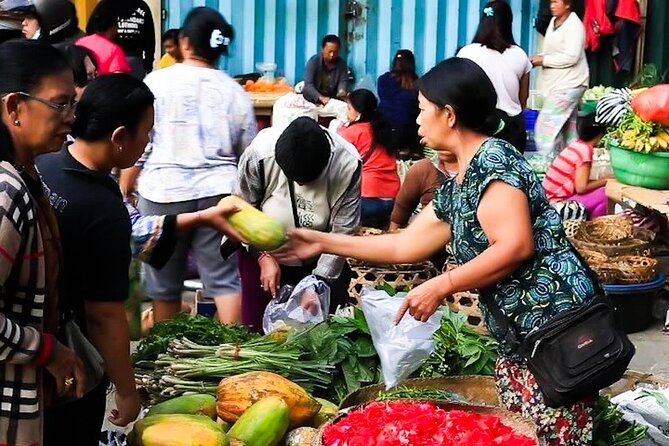
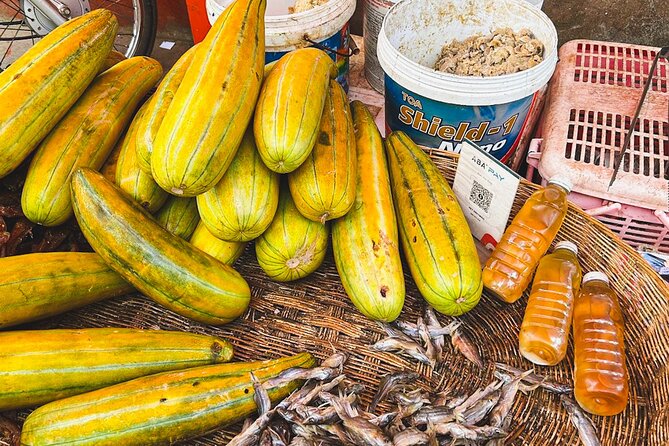
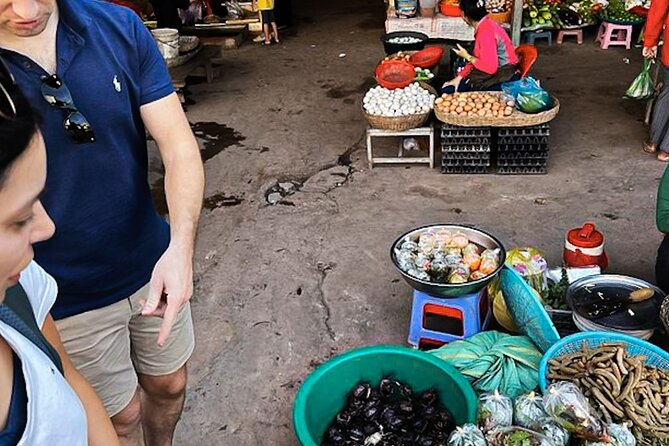
The day starts with pickup offered (you just need to tell the organizer where you’re staying and provide a contact number). Then you head out to a local market with a local guide. This part is more than a photo stop. You’ll see fruits, vegetables, fish, and meats for sale, and you’ll learn what you’re looking at and how it connects to Khmer dishes.
Why this matters: once you understand ingredient categories—aromatics, herbs, proteins, fruit-based flavor ideas—everything you cook later makes more sense. Even if you forget names, you’ll remember the logic of the menu.
Chef Dee’s approach also gives the experience extra credibility. In past sessions, she’s shown ingredients separately and highlighted some items coming from her own garden. When you know where something grows or how it’s commonly used, the dish tastes more intentional, and you’re more likely to recreate it at home.
Meet Chef Dee and learn in a purpose-built kitchen garden
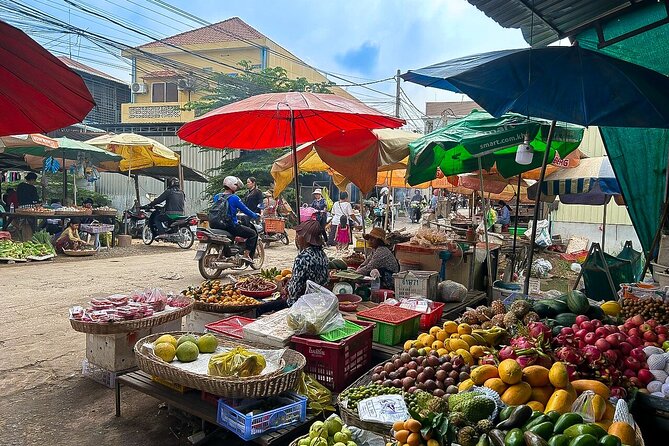
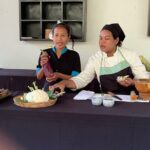
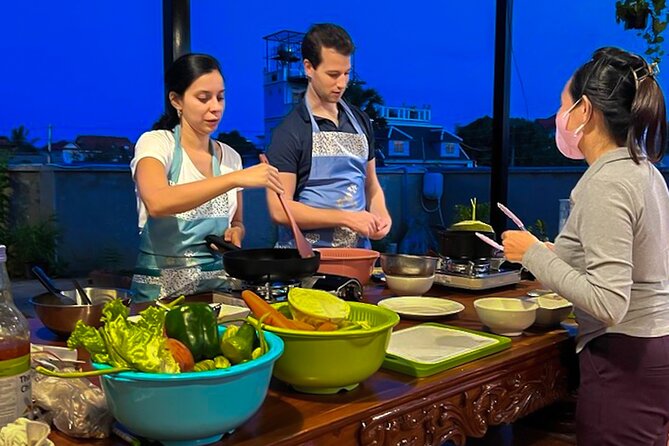
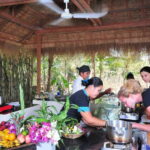
After the market, you go to a purpose-built garden pavilion for the cooking lesson. This is where the class shifts from “watch and learn” to “hands-on and make.”
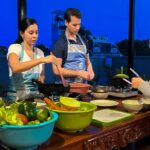
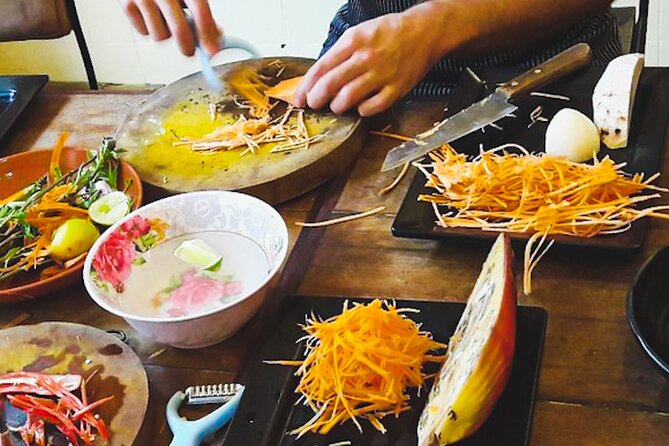
The structure is simple: you’ll cook three Khmer dishes with guidance from the chef. The class teaches the basic processes behind Khmer cooking, not just one recipe. That gives you the real skill, not just the outcome.
The kitchen setup gets practical praise too. Clean workspace matters when you’re handling fresh ingredients, and it helps you relax. Cold water being available during the activity is also a small detail that makes a big difference in Cambodia heat.
If you’re cooking with a partner or a family group, the teaching style helps. The class format is friendly for groups and supports adapting recipes (there’s at least one instance of vegetarian adjustment). So if you have dietary needs, it’s worth flagging them when you book.
What you’ll actually cook: 3 dishes with Khmer flavor focus
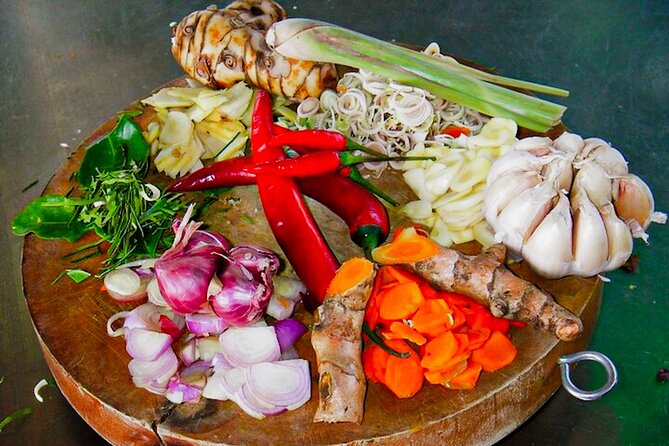
You get to choose 1 starter, 1 main course, and 1 dessert from the Khmer menu. That “choose your trio” feature keeps the class personal. It also means you’re more likely to end up with dishes you genuinely want to recreate later.
Here are dishes the class may include, based on the menu examples:
- Fish Amok (served with steam rice)
This is a classic Khmer-style fish dish. The key detail for you is the pairing: you’ll learn it in the context of a meal, with steam rice included rather than treating it like a standalone experiment.
- Spring rolls (vegetable or meat)
This is a flexible option—so your “main” can fit your preferences. Learning spring rolls also teaches practical basics about filling and rolling, which is the kind of skill that travels well to your home kitchen.
- Bananas in palm sugar with coconut juice
This dessert choice is perfect if you want a Khmer flavor profile that isn’t just sweet—it’s sweet with depth. It’s also a great way to see how coconut and palm sugar work together.
The class description emphasizes “basic processes,” so don’t expect a single rigid technique. Expect a guided flow from ingredient handling to cooking steps, with you actively involved.
How the class flows step by step (so you can plan your day)
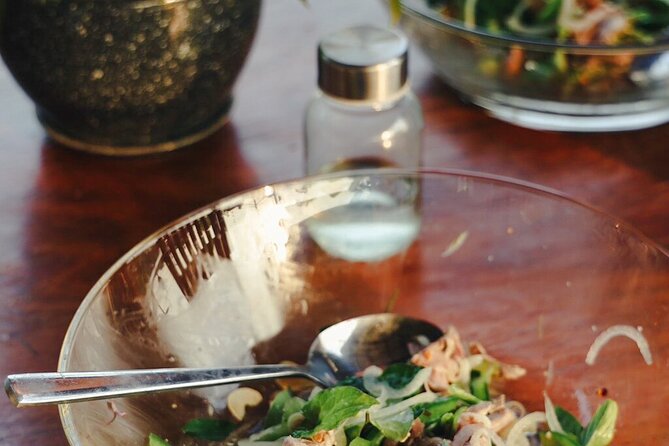
Here’s the practical order you can expect:
- Pickup and start point: The activity includes pickup offered from your accommodation. If you’re not using pickup, the meeting start point is listed at Siem Reap Pub Hostel behind Angkor Night Market area.
- Market tour: You visit a local market with a guide and see the ingredients that make Khmer cooking what it is—produce, herbs, proteins.
- Go to the garden pavilion: You move from shopping mode to cooking mode at a purpose-built setup.
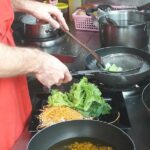
- Hands-on cooking for three dishes: You cook your starter, main, and dessert with the chef’s instruction.
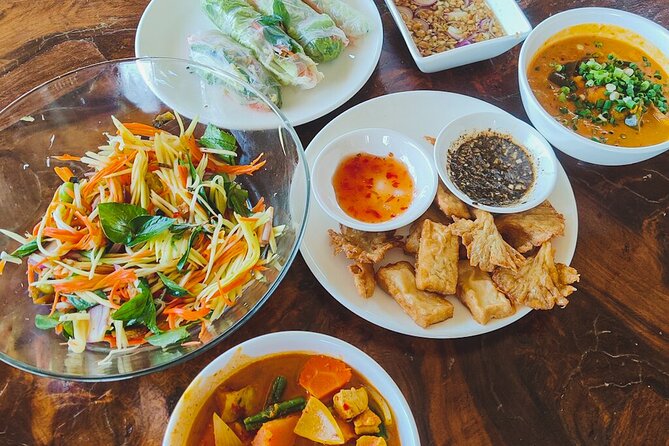
- Eat what you made: The class is designed so you sit down and enjoy the meal, not just pack it up.
Timing matters because you’ll likely feel hungry once you start. The “cook then eat” structure keeps the experience from dragging.
Also note the group size: maximum 8 travelers. That usually means less waiting around, more direct attention, and fewer “watch other people cook” moments.
You can also read our reviews of more tours and experiences in Siem Reap
Pickup and meeting point details: small logistics, big comfort
Pickup is offered, and you’re expected to share where you’re staying when you book, along with a contact number. That’s not just convenience—it helps the day run smoothly, especially if you’re navigating Siem Reap streets.
If you don’t want pickup, the class starts at Siem Reap Pub Hostel (near Angkor Night Market). The activity ends back at the meeting point.
Because it’s close to public transportation, you’re not trapped if something runs late. Still, the most stress-free move is giving the organizer accurate pickup details early.
Price and value: getting more than a “demo” for $35
At $35 per person for about 3 hours, the value is mainly about what you get beyond the cookbook idea. You’re not paying just for recipes. You’re paying for:
- A market tour with ingredient context
- Hands-on instruction from a chef
- Three dishes (starter + main + dessert)
- Time to eat your own cooking
If you’ve done restaurant cooking classes elsewhere, you might have noticed the ones where you chop for 10 minutes and spend the rest watching. This one is designed to put you at the center of the work. And because it’s small-group (max 8), the chef has a better chance of helping when you hit a snag.
It also helps that the class is beginner-friendly and family-friendly. A class that costs $35 but only works for advanced cooks is poor value. This one aims for the opposite.
One more signal: it’s commonly booked about a month ahead on average. Popular means it tends to run often—but it also means you should reserve early if your schedule is tight.
Who should book this class (and who might not love it)
This is a great fit if you:
- Want a break from temple days and want something hands-on
- Enjoy food markets and ingredient learning
- Like the idea of cooking dishes you can make again at home
- Travel with a mixed group of skill levels (beginner to curious-but-confident cooks)
- Need an activity that works for groups and is child-friendly
You might skip it if you:
- Only want a passive activity (this is active cooking)
- Are very short on time and need something under 2 hours
- Prefer a totally indoor experience regardless of weather (the class can be weather dependent)
Tips to make the experience easier and more useful
Here are a few practical moves that help you leave with skills, not just memories:
- Tell them your pickup location clearly when booking. The better the details, the fewer “where are we meeting?” moments.
- Choose your dishes with tomorrow in mind. Pick items you actually want to cook again. Fish Amok with steam rice and the palm sugar banana dessert are strong “at home” candidates because they’re distinct and teach a flavor system.
- Watch for ingredient cues. The market portion is where the chef’s logic becomes understandable. Even if you don’t memorize names, you’ll remember categories and how flavors build.
- Ask for swaps if you need them. There’s precedent for vegetarian adaptation, so communicate your preferences early rather than waiting until you’re in the kitchen.
Should you book the Siem Reap Cooking Class?
If you want a Siem Reap day that’s not just scenic, this is an easy yes. For $35, you get a market tour, hands-on Khmer cooking, and a meal built from three dishes—not a quick demo. The small group size (up to 8) and the teaching style led by Chef Dee make it feel practical, not performative.
Book it if you’re craving a learnable skill and a genuinely local food focus. Skip it if you hate any chance of weather disruption or you’re looking for a strictly passive activity.
If your plan includes Angkor temples, this class is a smart counterbalance: one day you walk through stone history, the next you learn how Khmer flavors come together in a kitchen garden pavilion setting.
FAQ
How long is the Siem Reap cooking class?
It’s about 3 hours.
What’s the price per person?
The price is $35.00 per person.
Do I need cooking experience to join?
No experience is necessary.
What’s included in the class?
You’ll go on a market tour, cook three Khmer dishes (a starter, a main course, and a dessert), and eat what you make.
How many dishes will I cook?
You’ll cook 3 dishes total: 1 starter, 1 main course, and 1 dessert.
Can I choose what dishes I cook?
Yes. You choose three dishes from the Khmer menu.
Is pickup offered from my hotel?
Yes, pickup is offered. You need to tell the organizer where you’re staying and share a contact number when you book.
How big is the group?
The tour has a maximum of 8 travelers.
What if the weather is poor?
This experience requires good weather. If it’s canceled due to poor weather, you’ll be offered a different date or a full refund.
What is the cancellation policy?
Free cancellation is available up to 24 hours in advance for a full refund. If you cancel less than 24 hours before the start time, the amount paid is not refunded.