REVIEW · SIEM REAP
Cambodian Village Cooking Class
Book on Viator →Operated by beyond. unique escapes · Bookable on Viator
Your lunch starts at the market.
This Cambodian Village Cooking Class in Siem Reap links a guided stop at Psar Chaa (Old Market) to a hands-on session at a rural garden pavilion, so you’re learning Khmer cooking as you go, not just following directions. You’ll travel by tuk-tuk, shop for ingredients, cook three dishes, and then eat your own meal with a local beer or soft drink.
I love how easy the logistics are, thanks to hotel tuk-tuk pickup and drop-off, and I love the human touch from guides and chefs such as Sophia and chefs like Sunat or Prey, who make the steps feel doable. The one drawback to plan for: it runs on a tight ~3-hour schedule, so arrive on time at the meeting point to avoid cutting into the market or cooking time.
In This Review
- Key takeaways before you go
- Why this market-first cooking class feels worth your time
- Psar Chaa (Old Market): where the ingredients become real
- Tuk-tuk ride to the garden pavilion with a calm, local feel
- Cooking Khmer dishes: spring rolls, curry, and palm sugar bananas
- Fresh rice paper spring rolls
- Cambodian curry
- Bananas in palm sugar
- Eating what you made: the meal, the drink, and the take-home recipes
- Small-group attention, staff personalities, and comfort details
- Price and value: why $32 can make sense here
- Should you book this Cambodian Village Cooking Class in Siem Reap?
- FAQ
- Where does this cooking class take place?
- How long is the experience?
- What’s included in the price?
- Will I visit a market before cooking?
- How many dishes will I cook?
- Is the group small?
- Do I get anything to drink with the meal?
- Can dietary needs be accommodated?
- What if I need to cancel?
- Is there a recipe book included?
Key takeaways before you go
- Psar Chaa (Old Market) ingredient hunt with a local guide
- Three-course, hands-on menu: rice paper spring rolls, Cambodian curry, palm sugar bananas
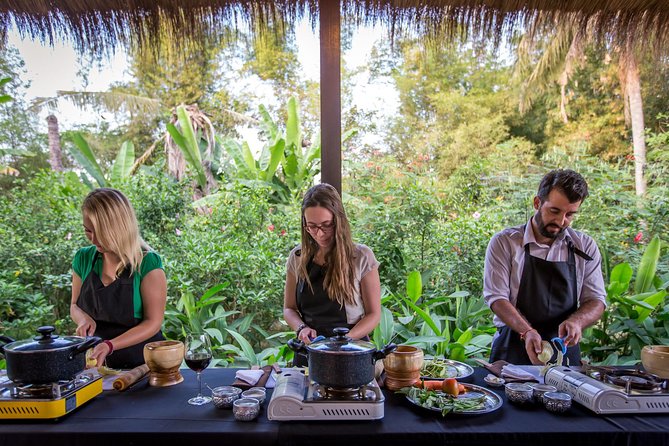
- Rural garden pavilion by a lake with an outdoor-friendly setup
- Max 8 people so you get real attention during cooking
- Take-home recipe book plus cold towel, bottled water, and a meal you made yourself
Why this market-first cooking class feels worth your time
In Siem Reap, it’s easy to pack your days with temples and leave “food” for whatever you find later. This class flips that. You start in the market, learn what ingredients are used and why, then you cook those exact ingredients within the same half-day rhythm.
The best part is how practical it is. You’re not just tasting Khmer cuisine. You’re building muscle memory for the dishes: assembling fresh rice paper spring rolls, learning the rhythm of a Cambodian curry, and finishing with bananas in palm sugar. If you like cooking at home, the class gives you a clear recipe path rather than vague instructions.
The format also helps you relax. It’s a small group (up to 8), and you’re surrounded by people who want to learn, not just collect photos. In the past, even people worried about cooking in heat have said the setup felt manageable—especially because the pavilion is designed for cooking outdoors.
You can also read our reviews of more cooking classes in Siem Reap
Psar Chaa (Old Market): where the ingredients become real
Your morning (or afternoon) begins with a guided tour of Psar Chaa, also called the Old Market. This is where the class earns its keep. You walk through stalls and see the produce and everyday Khmer ingredients up close, including local fruits and items you might not recognize from a supermarket back home.
A good guide makes these stops more than a quick photo lap. Sophia is one name that shows up often in feedback for clear explanations—what something is, how it’s commonly used, and what to look for when you’re cooking. You may also sample a few items along the way, which helps you understand flavors before you cook.
What to watch for: ask questions if you see an ingredient you don’t understand. Even if you don’t cook it later, you’ll start noticing what makes Khmer flavors “Khmer,” like how sweet, salty, sour, and aromatic notes get balanced across dishes.
Possible snag: if you show up late, the whole group loses time. With small numbers, there’s no easy way to “catch up” once the market portion slips.
Tuk-tuk ride to the garden pavilion with a calm, local feel
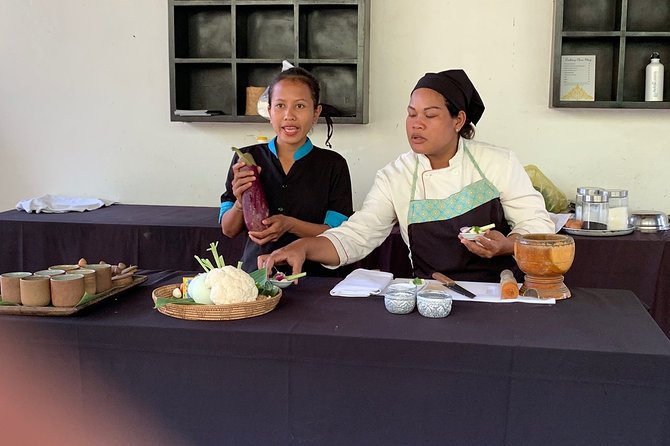
After the market, you head out to a rural cooking location by tuk-tuk. The drive matters more than you might expect. It’s part of the shift from tourist Siem Reap into a calmer countryside setting, and it helps you feel like the lesson is actually anchored in daily life.
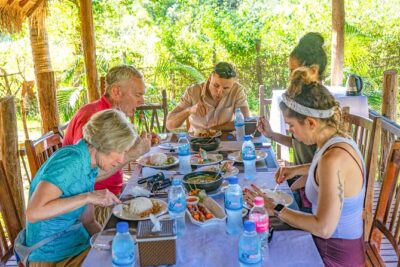
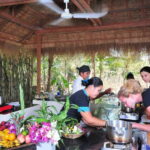
The class is held in a purpose-built garden pavilion, and multiple accounts highlight the setting’s peaceful vibe—often described as open-air and close to water. That matters for comfort. You’ll likely be less stressed about temperature than you’d expect in Cambodia, since the cooking area is set up for this kind of workshop rather than a cramped indoor room.
You’ll also get small comforts that make the whole experience easier: bottled water and a cold towel are provided. Those are the kind of details that don’t feel flashy, but they keep energy up when you’ve been walking and cooking.
Cooking Khmer dishes: spring rolls, curry, and palm sugar bananas
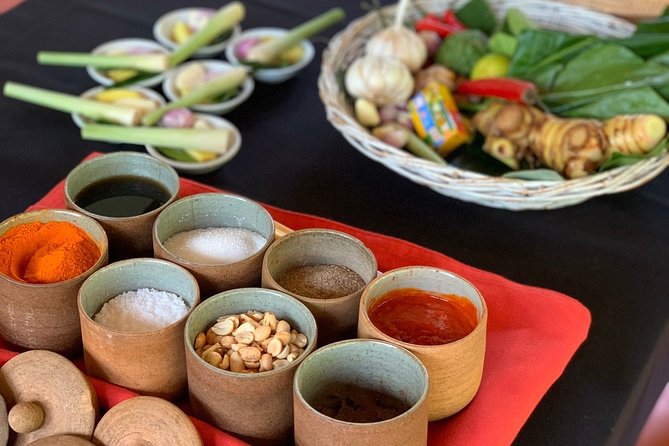
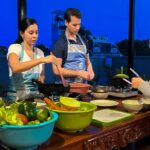
Now comes the core of the class: the hands-on teaching. You’ll work with a chef who guides you through making three dishes, step by step, at a station where you can actually participate rather than watch from a distance.
Fresh rice paper spring rolls
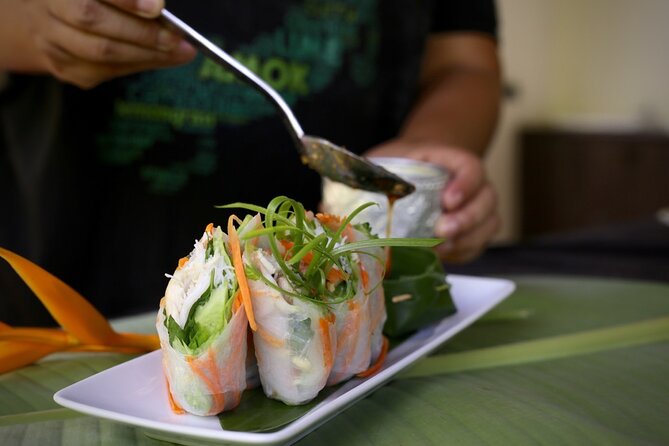
These start with the basics: handling rice paper, preparing fillings, and assembling rolls. What I like about this dish in particular is that it’s a skill you can reuse. Even if you never make curry again, you can often recreate spring rolls at home with a simpler ingredient list.
During the lesson, pay attention to how the instructors talk about texture and timing. Rice paper is one of those ingredients where the “feel” matters as much as the recipe.
You can also read our reviews of more tours and experiences in Siem Reap
Cambodian curry
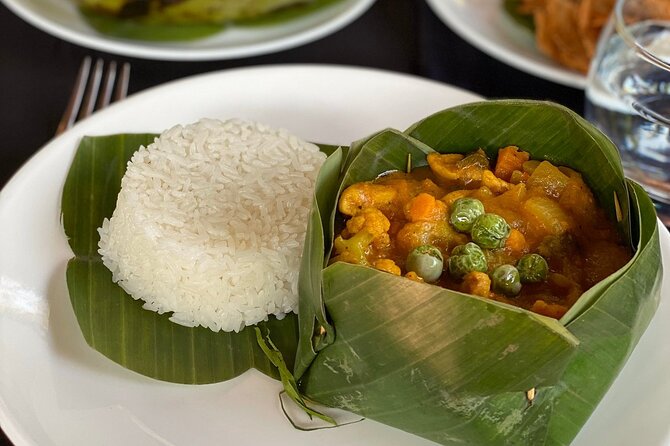
Next is Cambodian curry—a dish that builds your understanding of how Khmer cuisine layers flavors. Expect guidance on how ingredients come together and how the curry’s balance is achieved through the ingredients you choose.
This is also a good chance to ask about substitutions. If you know what’s available locally back home, you’ll be able to map Khmer pantry staples to what you can find.
Bananas in palm sugar
Finish with something sweet: bananas in palm sugar. It’s a great way to end a class because you learn a dessert technique that’s simple in concept but specific in flavor.
And if you’re the type who worries about cooking classes being mostly “work” with no payoff, this portion is a reminder that the meal you make will include a satisfying sweet finish—not just a few bites.
What makes it work: multiple instructors are praised for patient, clear step-by-step direction. People also call out the support of assistants and the team approach, meaning you’re less likely to get stuck.
Eating what you made: the meal, the drink, and the take-home recipes
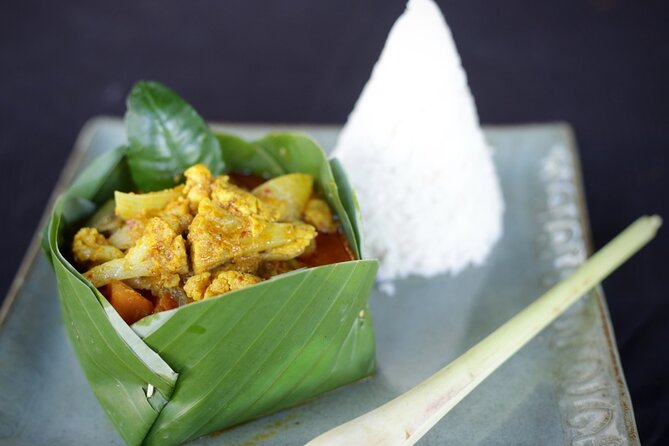
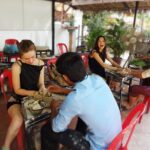
After cooking, you sit down and eat a 3-course meal you prepared yourself. This is included, and it’s served in the same calm outdoor setting that makes the cooking area feel like more than a classroom.
You’ll also enjoy a local beer or soft drink with the meal. That’s a nice touch because it gives you something to relax with while you digest what you just learned.
Most classes like this end with you eating and leaving. This one adds value by sending you home with a detailed recipe book. That’s important. If you’ve ever cooked something great while on vacation and then couldn’t recreate it later, you know why take-home recipes matter.
Practical advice: before you leave, scan the recipe book for the ingredients that might be hard to find at home. If you do that now, you’ll know what to plan for when you cook again.
Small-group attention, staff personalities, and comfort details
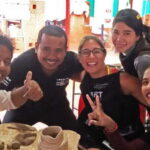
This class caps at 8 travelers, and that small size shapes the experience. You’re more likely to get a quick check on your technique, and you won’t be waiting in line for help while the timer moves on.
In feedback, the guide Sophia shows up as a standout for market explanations and overall hospitality. Chefs named Sunat and Prey also get highlighted for hands-on teaching and patience. There are even mentions of chef assistants like Sophai, which signals you’re being taught by a team, not a single person trying to do everything at once.
You’ll also appreciate the “small gear” support: hotel pickup and drop-off by tuk-tuk, cold towel, bottled water, and a guided flow that takes you from shopping to cooking to eating without confusion.
Heat check: if you’re worried about cooking in Cambodia’s sun, you’ll likely feel better once you’re at the pavilion. The setup and the provided refreshments help people manage discomfort. Still, wear breathable clothes and plan to stay hydrated.
Price and value: why $32 can make sense here
At $32 per person, this class isn’t just “paying for lunch.” You’re paying for a full package:
- Hotel tuk-tuk pickup and drop-off
- A guided market visit at Psar Chaa (Old Market)
- Hands-on cooking with instruction
- A 3-course meal you made
- A recipe book to take home
- Extras like water and a cold towel
The value is in the combination. Many cooking experiences give you the meal, but skip the market learning. Others give you the market, but keep the cooking too hands-off. Here, you get both, in a format that stays manageable time-wise at about 3 hours.
For couples and solo travelers, it’s a low-stress way to add something memorable beyond temples. It’s also a good pick if you want to leave with skills, not just photos.
Should you book this Cambodian Village Cooking Class in Siem Reap?
If you like food, cooking, or simply learning how locals shop and cook, I think this is a strong yes. The market-to-menu-to-meal flow makes the whole half-day feel connected, and the small group size helps you actually participate.
Book it if:
- You want a practical Cambodian food experience that you can repeat at home
- You’d rather learn from a chef than chase restaurant recommendations all week
- You like formats where you do the work and then eat the results
Skip it if:
- You’re hoping for a totally relaxed, watch-only experience (this is hands-on)
- You know you won’t enjoy cooking in a workshop setting, even if it’s designed for comfort
If you time it right and show up a few minutes early, this class is one of those rare tours where the food experience keeps giving after you leave Siem Reap.
FAQ
Where does this cooking class take place?
It’s in Siem Reap, Cambodia. The class starts with a visit to Psar Chaa (Old Market) and continues to a rural cooking location outside the city.
How long is the experience?
It runs for about 3 hours.
What’s included in the price?
Hotel pickup and drop-off by tuk-tuk, an experienced local host/guide, the 3-course meal you prepare, a recipe book to take home, bottled water, and a cold towel.
Will I visit a market before cooking?
Yes. You tour Psar Chaa (Old Market) with your guide and learn about ingredients before heading to the cooking area.
How many dishes will I cook?
You’ll cook three dishes: fresh rice paper spring rolls, Cambodian curry, and bananas in palm sugar.
Is the group small?
Yes. The tour has a maximum of 8 travelers, which helps with hands-on teaching and attention.
Do I get anything to drink with the meal?
Yes. You’ll enjoy a local beer or soft drink along with your 3-course meal.
Can dietary needs be accommodated?
Most dietary requirements and allergies can be catered for. You should advise your needs at the time of booking.
What if I need to cancel?
You can cancel for free up to 24 hours in advance for a full refund. Changes within 24 hours aren’t accepted, and cancellations inside that window aren’t refunded.
Is there a recipe book included?
Yes. You receive a detailed recipe book to take home.