REVIEW · SIEM REAP
Siem Reap: Bike the Angkor Temples – Full-Day 30km Tour
Book on GetYourGuide →Operated by Discova Southeast Asia · Bookable on GetYourGuide
Pedaling through Angkor feels free. This full-day Siem Reap bike tour puts you on the temples’ quieter lanes and forest tracks, so you see the Khmer Empire at a human pace instead of from inside a crowd. I especially like how the route mixes the headline sites with real countryside—farms, stilt houses, and villages—so the day feels like part history lesson, part local life. I also love that you get proper mountain bikes with helmets and a guide who can steer you onto hidden paths (I’ve heard names like Soun Chen and Tu praised for making the story make sense). One drawback to plan for: it’s a long, warm day that includes off-road riding, so you need a decent fitness level and the right clothes.
You’ll start early, meet at Pte Kru Café, and roll out at 7:30 AM along the Siem Reap River before the Angkor crowds really crank up. The first major payoff is Angkor Wat’s morning light, followed by Angkor Thom and Bayon, then a break at the Elephant Terrace area before finishing with Ta Prohm and the jungle-root atmosphere. A possible consideration: the pace is active, and there’s a final stretch back toward town that can feel like a “last push” if you’re not used to cycling.
In This Review
- Key things I’d zoom in on
- Why riding Angkor instead of touring Angkor is the point
- Meeting point and the early river start (7:15 AM setup)
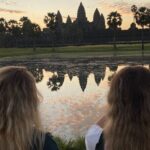
- Angkor Wat at morning light, with a bike ride rhythm
- Angkor Thom gate to Bayon: shifting from wide views to close faces
- Elephant Terrace lunch break: a real rest in the middle of the day
- Ta Prohm through jungle corridors and red-earth tracks
- The ride itself: what 30 km feels like in practice
- Price and value: $35 for temples, guide time, and gear
- Who this tour suits best (and who should skip it)
- Practical tips so you don’t feel rushed or miserable
- Should you book the Siem Reap bike tour to Angkor?
- FAQ
- How much does the Siem Reap: Bike the Angkor Temples tour cost?
- How long is the tour?
- What’s included in the price?
- Do I need an Angkor Pass for this tour?
- Where do I meet the guide?
- What time does the tour start?
- Is lunch included?
- What should I bring?
- Are sleeveless shirts allowed?
- Is the tour suitable for kids or pregnant travelers?
Key things I’d zoom in on
- Small group limit (up to 8), which usually means more room for questions and better photo stops
- 30 km of mostly non-main-road riding, including forest paths and red-earth tracks
- Top temples, but via back routes, so you’re not always lining up with the same bus groups
- Quality bikes + helmet + support, so the day stays fun instead of stressful
- Lunch option at a local restaurant, plus snacks, fruit, and bottled water
- Guide storytelling that connects Khmer symbols to what you’re seeing (names like Moon, Lem, Seng, and Pat come up often)
Why riding Angkor instead of touring Angkor is the point
Angkor’s famous for being crowded. This tour’s basic idea is simple: use a bike to get a different angle on the place. You’re still visiting the big names—Angkor Wat, Bayon, Ta Prohm, and the Elephant Terrace—but you’re doing it with quiet roads, shaded forest sections, and side tracks that cars and tuk-tuks can’t touch as easily.
That change matters. On foot, you’re stuck with the crowds’ flow. In a car, you miss the small stuff—dusty lanes, daily routines, and the way the countryside frames the temples at different distances. With this ride, the temples feel like the center of a living region, not just a ticket booth you pass through.
This is also one of the more thoughtful formats if you want history without getting stuck in a lecture. The guide’s job isn’t just to point. You stop, look, and connect details—what certain faces or carvings might mean, and why specific areas matter in the Khmer timeline. People consistently mention guides like Chen, Mr Ta, and Thou for explaining the story clearly while still keeping the day moving.
You can also read our reviews of more cycling tours in Siem Reap
Meeting point and the early river start (7:15 AM setup)
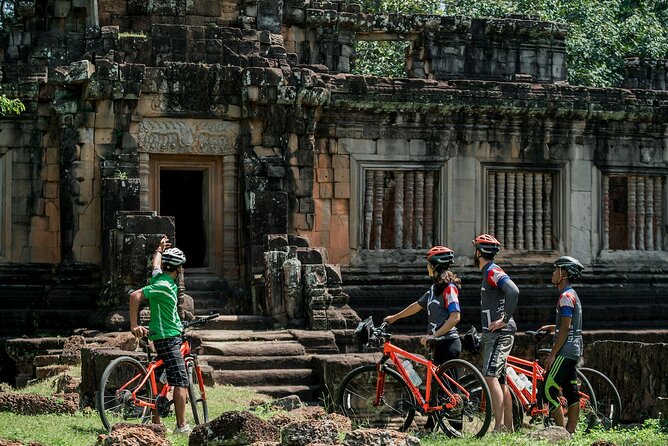
You meet at Pte Kru Café (ផ្ទះគ្រូ Café) in Siem Reap. The guide is there at 7:15 AM, and you actually get cycling at 7:30 AM. If you’re the kind of person who shows up late to everything, set an alarm. You’ll want time to check your bike, helmet, and ride feel before you’re pushing into the morning pace.
One important update: starting 05 February, the meeting point shifts to Gingold Coffee on Sivutha Boulevard. Don’t guess. Confirm which meeting point applies to your date so you’re not sprinting around central Siem Reap with a helmet on your arm.
The first ride segment follows a peaceful road alongside the Siem Reap River. It’s a smart warm-up. You’re not yet at the heavy temple walking. You’re getting your legs moving, settling into the group rhythm, and building momentum for Angkor Wat.
Angkor Wat at morning light, with a bike ride rhythm
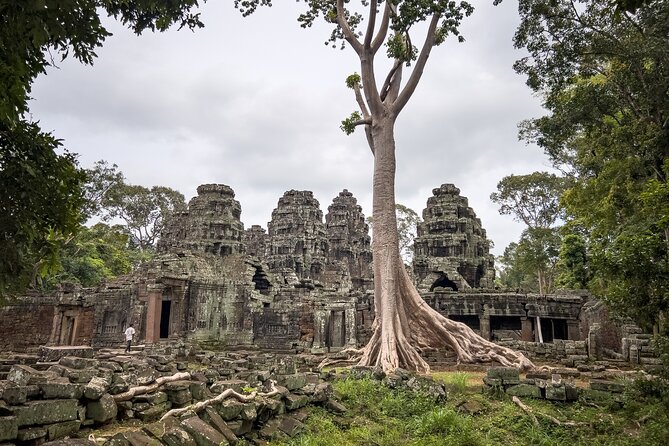
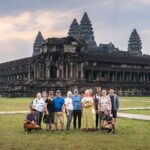
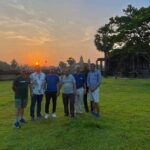
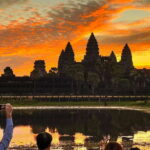
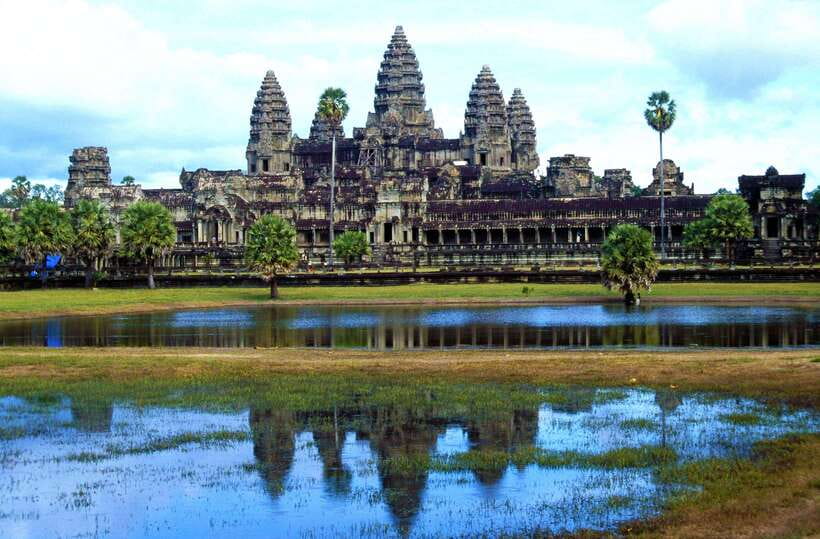
Angkor Wat is the one most people come for. Doing it early changes the experience. When you arrive, the light is softer and the mood is calmer. You can take in the scale without feeling like you’re constantly being pushed.
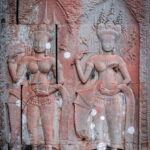
You’ll spend time exploring the main features—especially the galleries and bas-reliefs. The bike format helps because you’re not just marching between photo spots. You ride into the area, then slow down for the details, then ride on again. That rhythm keeps your brain from burning out before you’ve even seen the best carving lines.
A small practical note: Angkor is big, and you’ll be mixing cycling and temple exploring. Wear sunscreen, and bring your sunglasses. The morning sun can still hit fast, even if the air feels good.
Angkor Thom gate to Bayon: shifting from wide views to close faces
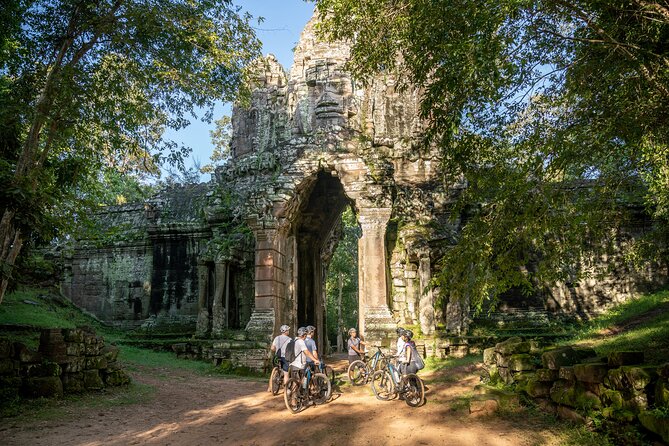
After Angkor Wat, you head toward Angkor Thom, the ancient walled city. The tour includes a stop at the gate area, then you leave the main road and slip onto secluded paths. That’s one of the most-loved parts of the day: fewer mainstream entrances, more tree cover, and that slightly secret feeling when you’re on a track that most visitors never see.
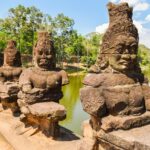
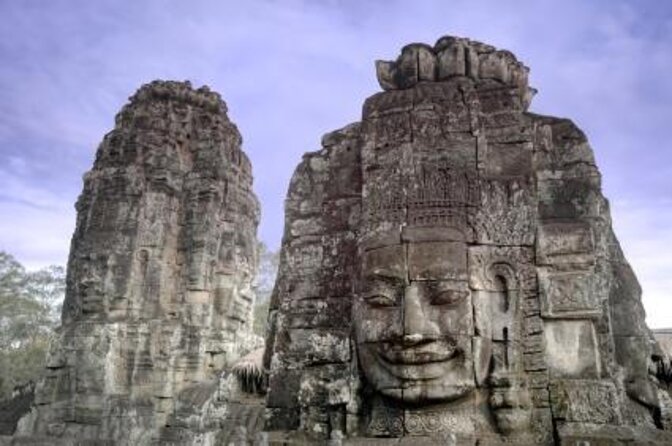
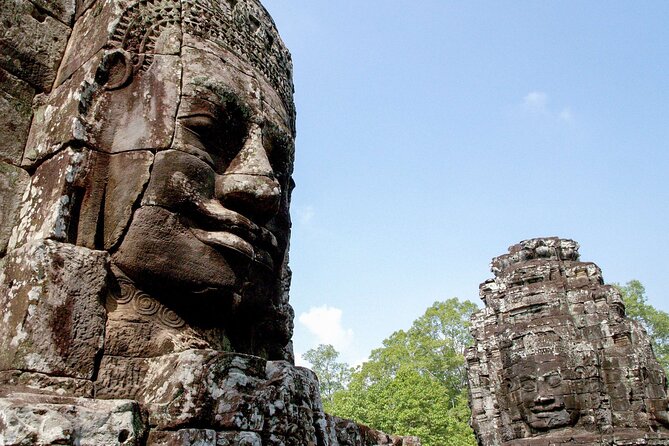
The Bayon Temple segment is where the day turns emotionally. Bayon is famous for its stone faces, and your guide’s job here is to make you look past the obvious. The goal isn’t to memorize names. It’s to connect what you’re seeing—angles, placement, repetition—to the bigger meaning of the site.
If you’re planning photos, this is a good time to stay flexible. People often mention guides helping with the best photo positions, which matters because Bayon’s face views change with your angle and distance. A bike route also gives you options: you can pause, reposition, and keep moving without feeling trapped.
Elephant Terrace lunch break: a real rest in the middle of the day
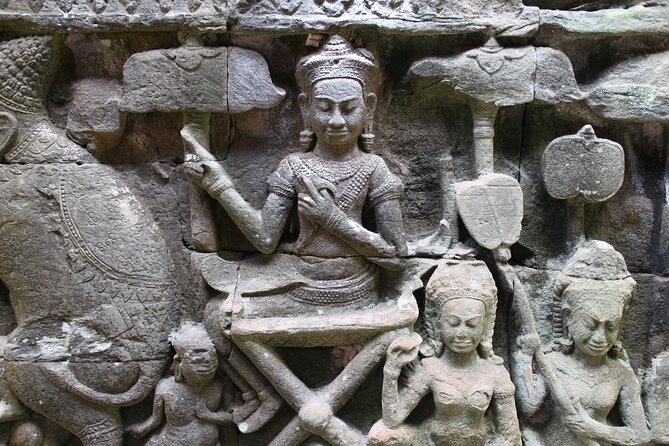
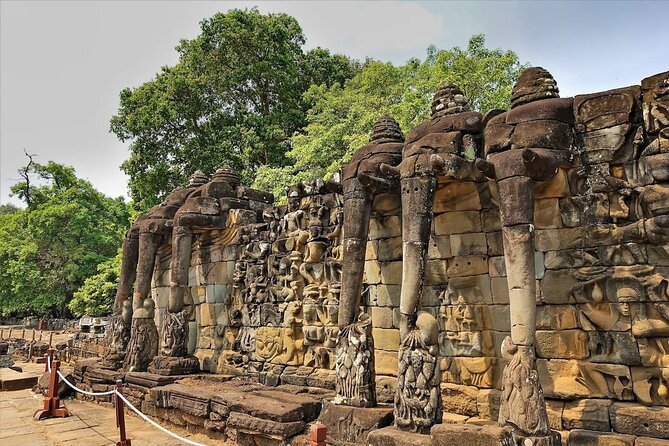
Elephant Terrace isn’t just another stop. It’s a chance to reset while still staying in the Angkor zone. This is where the tour builds in a lunch break.
If you choose the lunch option, the meal is arranged in advance at a local restaurant. If you skip lunch, you get free time to explore or eat independently before regrouping. Either way, you’re building in recovery time during the hottest part of the day, which is important because this tour is longer than a half-day temple circuit.
One thing I like about this format: you’re not dragged into a lunch plan that feels like a tourist factory. The day includes snacks, fruit, and bottled water, so you’re not running on fumes until lunch either.
You can also read our reviews of more tours and experiences in Siem Reap
Ta Prohm through jungle corridors and red-earth tracks
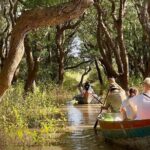
In the afternoon, the tone shifts. You move through more jungle corridors and forest trail sections. This is where the ride becomes more than a transfer method. It’s part of the scenery.
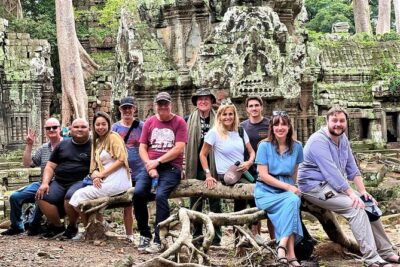
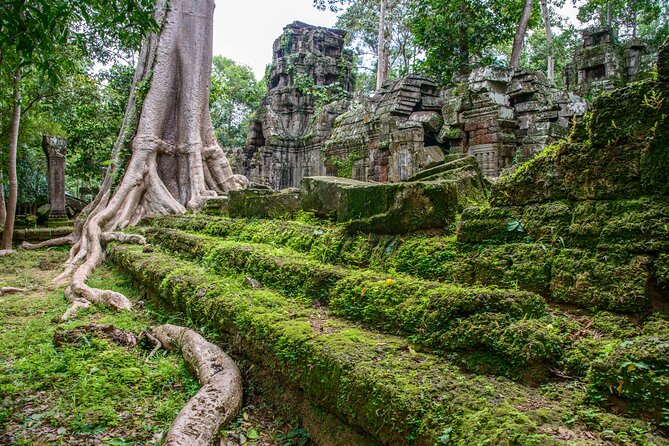
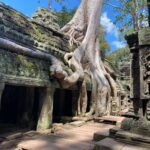
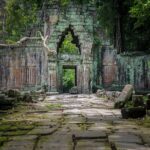
Ta Prohm is the headline here—the temple wrapped in twisting tree roots and mossy stones. It looks dramatic from the main paths, but the bike route helps you feel less herded. Your guide shares stories and symbolism at each stop, which turns Ta Prohm from just a photogenic backdrop into a place with real meaning tied to Khmer construction and landscape.
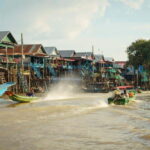
Expect more off-road elements in parts of the route. You’ll also find yourself riding through village areas and quiet stretches of forest on the way back. That’s when you start seeing Angkor as a region you cycle through, not just a site you visit and leave.
The ride itself: what 30 km feels like in practice
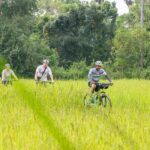
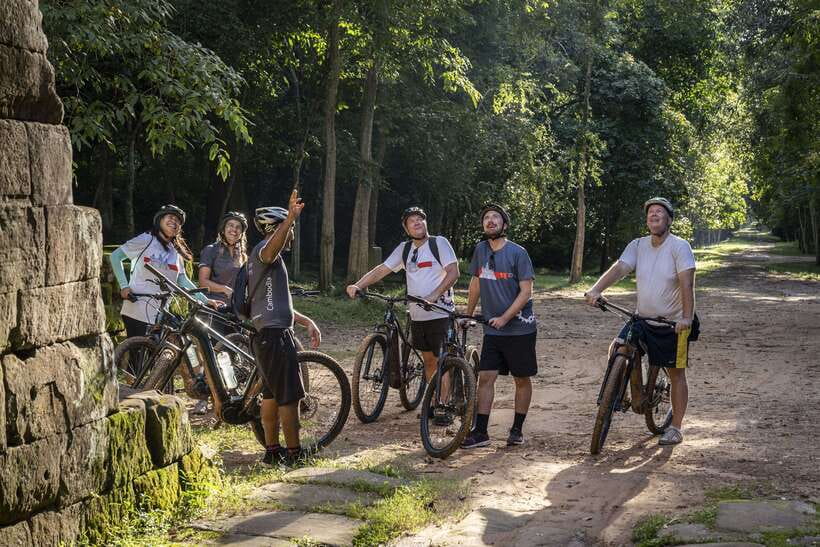
This isn’t an extreme mountain expedition. It’s a 30 km full-day ride with active temple stops. The terrain is a mix of quiet roads and off-road tracks, and many people mention shade from tree cover making a big difference.
Still, plan for these realities:
- Off-road means the bike can kick up dirt, and you might end up with mud and sand on your clothing. Wear something you don’t mind getting dusty.
- There can be a “last push” feeling on the ride back. Some riders mention roughly 9 to 10 km as the final stretch back to base, which will feel longer if you’ve gone hard earlier in the day.
- You don’t want to be casual-bike-level unprepared. Reviews repeatedly point out that you need a minimum fitness level, and you should be comfortable riding in mixed conditions.
Good news: people consistently praise the bikes. They’re described as quality mountain bikes that are easy to ride and fit properly. The helmet is included, and there’s vehicle support keeping things safer and smoother than you might expect.
If you’re bringing kids, this is also a strong option—but read the limits carefully. Children’s bikes, baby seats, and tag-along trailers are available on request. The baby seat fits up to 14 kg, and you’ll need to provide height info so the operator can set up the right-size bike.
Price and value: $35 for temples, guide time, and gear
At $35 per person for about 7.5 hours, the value is mostly about what’s bundled. You’re not paying just for temple admission. You’re paying for:
- the bike and helmet
- an English-speaking cycling guide
- snacks, fruit, and bottled water
- and lunch if you pick the lunch option
- plus the routing effort that’s usually the hardest part—finding quieter lanes and tracks and keeping the group together
The main extra cost is the Angkor Pass, which isn’t included. You need that pass for the Angkor Zone. The tour operator tells you that you can buy it on the morning of the tour at entry to the Angkor Zone, using the official Angkor Enterprise site.
So the true “all-in” comparison depends on whether you already have your Angkor Pass. If you don’t, factor that into your budget. But even then, this tour tends to feel like good money because the bike day is the product—not just a second way to see the same temples.
Also, you don’t have hotel pickup or drop-off included. That’s normal for this style of tour, but it’s worth planning for so you don’t accidentally add pricey tuk-tuk rides to your day.
Who this tour suits best (and who should skip it)
This tour fits best if you want a mix of exercise, history, and local scenery. If you like being outside, riding at a steady pace, and stopping often for photos and questions, you’ll probably love it.
It also suits families who can handle a long active day. The operator offers options for kids: kids bikes, tag-alongs, and baby seats by request. Many riders point out that the day is long in hot weather, so bring water habits and use sunscreen like it’s your job.
You should skip it if you don’t enjoy cycling or you’re dealing with constraints that make active movement hard. The tour notes it’s not suitable for pregnant women. It also isn’t a casual “sit and roll” outing—off-road sections and the distance mean you’ll be engaged the whole time.
Practical tips so you don’t feel rushed or miserable
Here’s how I’d prep if you want the day to feel smooth:
- Bring a sun hat and sunglasses. Early shade helps, but sun still finds you.
- Use sunscreen before you leave and consider a quick reapply mid-day.
- Wear a shirt you can ride in. The tour says no sleeveless shirts, so pack accordingly.
- Pack a camera, but also be ready for changing light between forest shade and open temple areas.
- Mention dietary requirements when booking if you’re choosing lunch.
- If you’re with kids, include height and age/weight details so the right bike setup happens without last-minute chaos.
And one more thing: arrive 15 minutes early to the meeting point. A good day starts with a calm start, not with sprinting after the guide.
Should you book the Siem Reap bike tour to Angkor?
If your goal is to see Angkor Wat, Bayon, and Ta Prohm while also getting countryside riding and calmer moments away from bus traffic, I think this is a smart booking. The combination of small-group size, quality bikes, shaded tracks, and guide storytelling makes the temples feel connected to the place they grow out of.
I wouldn’t book it if you want a purely relaxed temple walk, or if you’re expecting a light, easy loop with no off-road at all. This is active. It’s meant for people who like moving through a destination, not just looking at it.
If you’re the right fit, you’ll come back with two kinds of memories: the iconic temple views—and the quieter stretches in between that make Angkor feel human.
FAQ
How much does the Siem Reap: Bike the Angkor Temples tour cost?
It costs $35 per person.
How long is the tour?
The duration is about 7.5 hours.
What’s included in the price?
Included are a bike and helmet, an English-speaking cycling guide, snacks, fruits, bottled water, and lunch if you select the lunch option.
Do I need an Angkor Pass for this tour?
Yes. An Angkor Historical Park Pass is required for this tour, and it is not included. You can purchase it on the morning of the tour at entry to the Angkor Zone.
Where do I meet the guide?
You meet at Pte Kru Café (ផ្ទះគ្រូ Café) on Preah Sihanouk Ave in Siem Reap. Starting 05 February, the meeting point is Gingold Coffee on Sivutha Boulevard.
What time does the tour start?
The guide is waiting at 7:15 AM, and the ride begins at 7:30 AM.
Is lunch included?
Lunch is included only if you choose the with lunch option. If you don’t choose lunch, you’ll have free time to explore or eat independently before regrouping.
What should I bring?
Bring sunglasses, a sun hat, a camera, and sunscreen.
Are sleeveless shirts allowed?
No. Sleeveless shirts are not allowed.
Is the tour suitable for kids or pregnant travelers?
Child options are available by request (children’s bikes, baby seats, and tag-along trailers). The baby seat can accommodate a child up to 14 kg. The tour is not suitable for pregnant women.