REVIEW · SIEM REAP
Siem Reap: Angkor National Museum Admission Ticket
Book on GetYourGuide →Operated by SARUS CO., LTD · Bookable on GetYourGuide
Step into Khmer art before the temples.
This admission ticket is a simple, flexible way to explore the Angkor National Museum at your own pace in Siem Reap. I especially like two things: you get skip-the-ticket-line convenience, and the collection helps you connect what you’ll see later at Angkor with Khmer history, religion, and daily life. One thing to keep in mind: the museum audio guide is not included, so budgeting an extra fee can be smart if you want extra context.
You’ll be looking at eight galleries that show how Khmer art, culture, and religion evolved, plus standout finds like over a thousand Buddha statues, ancient inscriptions, and artifacts excavated from Angkor archaeological sites. The experience works well for both history nerds and casual visitors, because you can slow down with the wall info or speed through the galleries. Plan for comfortable time on your feet, because a quick walk-through usually turns into a longer, more satisfying visit.
In This Review
- Key Things That Make This Ticket Worth Your Time
- A Self-Paced Museum Ticket That Fits Your Angkor Day
- What You’ll See in the Museum’s Eight Galleries
- The Star Finds: 1,000+ Buddha Statues and Ancient Inscriptions
- How Long It Takes and How to Pace Yourself
- Audio Guide Timing: When That Extra $5 Makes Sense
- Price and Value: Is $15 a Good Deal Here?
- Practical Tips Before You Go: Tickets, Transport, and What to Bring
- Who This Ticket Suits Best (and Who Might Want More Help)
- Should You Book This Angkor National Museum Ticket?
- FAQ
- How much is the Angkor National Museum admission ticket?
- How long is the ticket valid?
- Is a guide included with the admission ticket?
- Is an audio guide included?
- Do I need to arrange my own transportation to the museum?
- What should I bring to the museum?
- Do I need to provide a WhatsApp number to get the ticket?
- Can I cancel, and is there a refund?
Key Things That Make This Ticket Worth Your Time
- Skip the ticket line so you can start looking fast, not waiting
- Eight galleries that frame Khmer art, culture, and religion in a clear flow
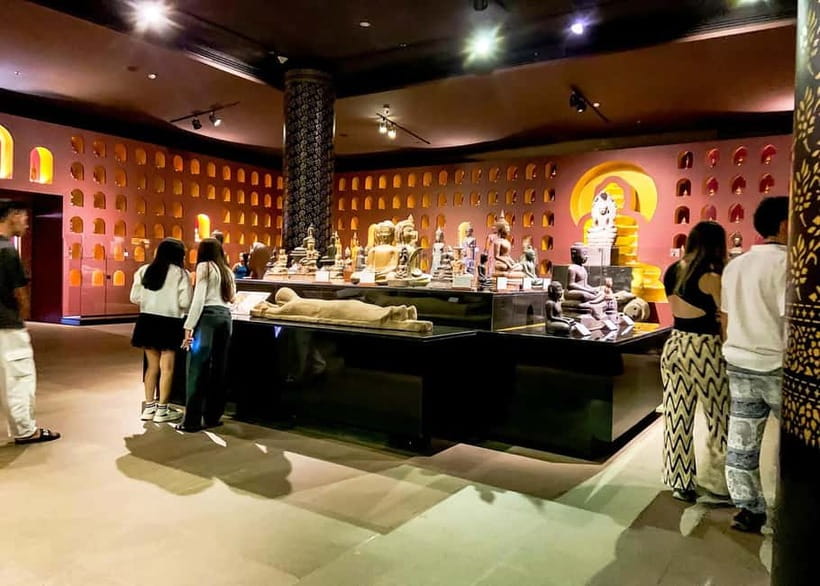
- Over 1,000 Buddha statues plus inscriptions that make the era feel real
- Self-paced entry so you decide what to read and what to skim
- Audio guide available but extra if you want guided explanations
A Self-Paced Museum Ticket That Fits Your Angkor Day
If your Angkor day feels packed, this ticket is a nice pressure valve. The museum is built for wandering. You choose your pace, and you don’t need to coordinate a full guided tour to get value.
I like that it’s practical. This is admission only, not a complex itinerary. That matters in Siem Reap, where traffic, weather, and temple crowds can throw off your day. With this ticket, you can plan around your energy level and still get meaningful context before or after Angkor temple time.
You also get something that’s hard to recreate later: a museum that explains the civilization behind the stones. Angkor Wat is amazing, but it can also feel like you’re staring at architecture without the full story. Here, you’re in a place designed to connect dots—Khmer art, religion, and the long arc of the Khmer Empire.
You can also read our reviews of more tours and experiences in Siem Reap


What You’ll See in the Museum’s Eight Galleries
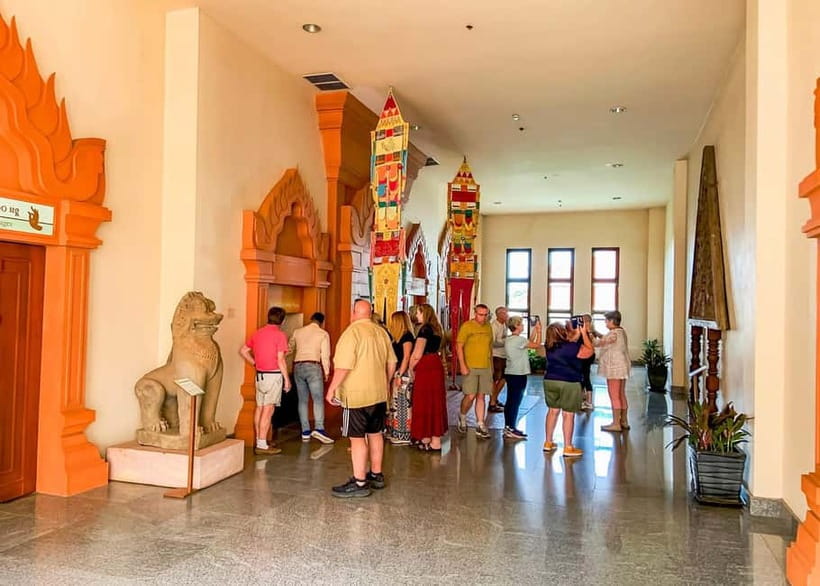
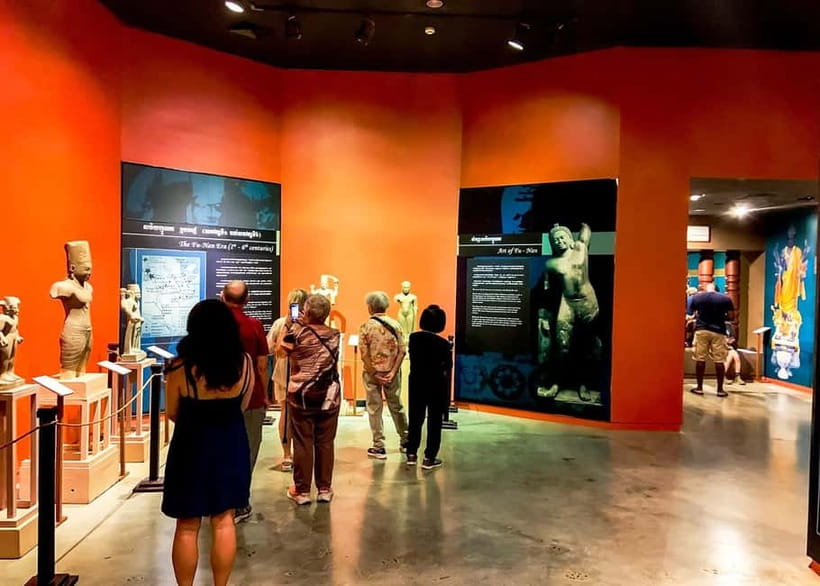
The ticket gives you access to eight galleries focused on the evolution of Khmer art, culture, and religion. You’ll move from room to room, with exhibits and display pieces that connect style, meaning, and belief. Even if you don’t read every label, the overall structure helps you understand what you’re looking at.
One of the most useful parts is how the museum handles progression. Instead of just listing artifacts, it shows an evolution—how artistic styles and religious ideas develop over time. That makes the later temple experience easier to interpret. You start noticing patterns and themes you might otherwise miss.
You’ll also find excavated materials from Angkor’s archaeological sites. That detail is important. Seeing items that came from the region’s historic layers helps you feel grounded in the actual discoveries, not just polished copies or generic descriptions.
The tradeoff? You’re responsible for your own momentum. There’s no guide included with the ticket, so if you want someone to steer you through the highlights in a tight order, you’ll either need to read a lot of signage or consider renting an audio device once you’re there.
The Star Finds: 1,000+ Buddha Statues and Ancient Inscriptions

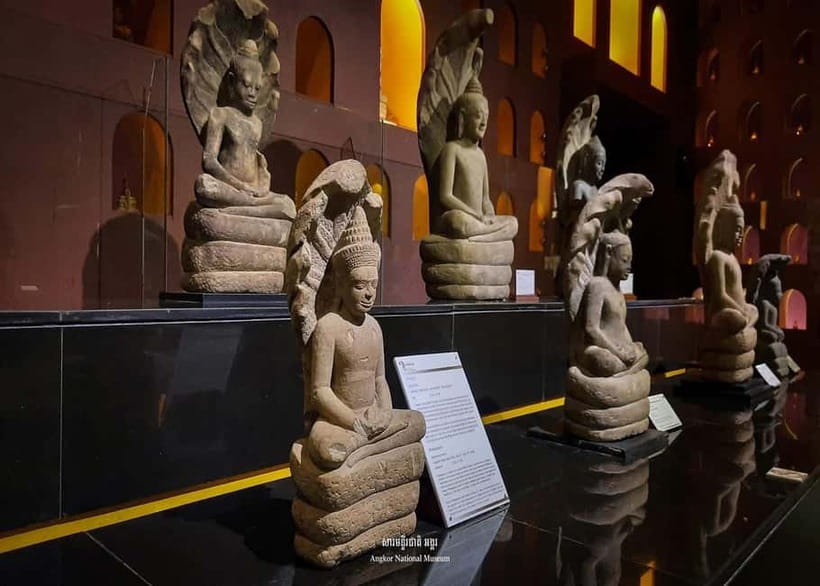
Let’s talk about the wow items. This museum is known for its massive statuary collection—over a thousand Buddha statues—along with ancient inscriptions. That combination does something special: it adds both visual weight and historical evidence.
Statues can be easy to treat like decoration, especially when you’re used to the big Angkor temple structures. Here, the scale of the collection changes the experience. You’re not just seeing one sculpture. You’re seeing a huge range of forms and details that suggest how worship and artistic representation worked in different periods.
Inscriptions are the other half of the value. When you pair images with text-like evidence, the story stops being purely aesthetic. You get clues about language, chronology, and the way meaning was preserved in stone. Even if you can’t read everything yourself, the museum’s explanations and the surrounding display context can help you connect the inscriptions to the culture that made them.
Then there are artifacts excavated from Angkor sites. That means you’re looking at objects pulled from the ground that once belonged to a living religious and cultural landscape. It turns the archaeological feel of Angkor into something you can process indoors, without sun glare or time pressure.
How Long It Takes and How to Pace Yourself
A lot of people expect museums to be short. In this case, you’ll likely spend between 1.5 and 2 hours if you do a focused walk-through and read enough labels to stay oriented.
If you love details, you can easily stretch it. One practical approach is to treat it as two passes. First, walk through all eight galleries to get the overall shape of the story. Then circle back to the rooms that grabbed you. This is an easy way to avoid feeling like you missed the best pieces.
Here’s the pacing trick I’d suggest: don’t try to read every line in every room. Pick a few themes you care about—religion, art style, or inscriptions—and let those guide where you slow down. The wall information boards do a lot of the heavy lifting, so you’ll still feel like you learned something even if you only “deep read” in a couple of areas.
Comfort matters. Wear comfortable shoes. You’ll be on museum floors for a while, and Siem Reap heat can make even indoor walking feel like work if you’re dressed for sightseeing photos instead of comfort.
Audio Guide Timing: When That Extra $5 Makes Sense
The ticket itself does not include an audio guide in the museum. You may see an option to rent one on-site, and it comes with an added cost.
So is it worth it? For me, the answer is usually yes if any of these apply:
- You want help interpreting what you’re seeing, not just viewing artifacts
- You prefer guided context so you don’t have to guess at meaning
- You plan to spend more time in the galleries and want every hour to pay off
If you’re more of the self-guided type, the museum’s information boards can still carry you. But the audio guide can be especially useful in a museum like this, where you’re looking at a long cultural timeline and religious symbolism.
If you’re trying to keep costs tight, you can do it both ways. Start without audio. If you hit a gallery where you’re thinking, Wait, what exactly am I looking at, that’s your signal to consider the audio device.
You can also read our reviews of more museum experiences in Siem Reap




Price and Value: Is $15 a Good Deal Here?
At $15 per person, this is priced like an admission ticket, not a full-day tour. That matters because you’re buying access to galleries, artifacts, statues, and inscriptions—then steering your own route.
What makes the price feel fair is that you’re not only paying for entry. You’re also getting context that can improve how you experience Angkor later. A museum that helps you understand Khmer art and religion often saves time and confusion when you hit the temples. In practical terms: less guessing, more meaning.
There are a couple of cost add-ons to remember. The audio guide is extra, and you should have cash on hand as part of your “museum ready” kit. Also, transportation is on you—there’s no pickup or drop-off included—so factor in tuk-tuk or other rides to and from the museum.
If you’re planning only a single museum day in Siem Reap, I think this ticket is a strong use of time. It’s a calmer, clearer introduction to the Khmer Empire than jumping straight into temple visits.
Practical Tips Before You Go: Tickets, Transport, and What to Bring
The biggest practical detail is how you receive your ticket. You’ll need to provide a WhatsApp number to get the ticket before your visit. Once your booking is confirmed, the operator will contact you to reconfirm. They also accept contact methods like Telegram or Viber, so use a number you can actually reach.
One important note: the ticket may not be instant. Plan a little breathing room so you’re not rushing while trying to get to the museum. If you’re heading straight there, messaging promptly after booking helps.
Getting there is also on your schedule. The museum ticket doesn’t include pickup or drop-off. That’s normal for admission tickets, but it does affect how you plan your day. Build in time for tuk-tuk waits and traffic, and don’t stack the museum too tightly between temple time slots.
Bring:
- Comfortable shoes
- A camera
- Comfortable clothing for warm weather
- Cash
Not allowed:
- Pets
- Alcohol and drugs
Wheelchair access is available, which is helpful if you need step-free routes. And if you’re going with small group needs, private or small groups are available as an option, though the core experience here is still self-paced admission.
Who This Ticket Suits Best (and Who Might Want More Help)
This is an excellent fit if you want control. You’ll like it if you prefer a museum where you can stop for what grabs you and move on when you’re done. It also works well if you want to build context around Angkor Wat without committing to a long, structured guide schedule.
It’s also a great choice for photography fans and curious readers. The massive statuary collection and the inscriptions make it easy to spend time looking closely. The information boards help connect the dots even when you’re traveling on your own.
Who might want a guide instead? If you know you’ll get impatient with reading walls and you want someone to explain the symbolism fast, you might feel more satisfied with an add-on guide or a different guided experience. Since the ticket does not include a service guide, you’ll be relying on signage and possibly the audio guide.
If your travel style is flexible and you like learning at your own pace, this ticket is a smart, low-stress way to get more out of Cambodia’s Angkor heritage.
Should You Book This Angkor National Museum Ticket?
Yes, you should book this if you want an efficient, self-paced way to understand the Khmer Empire before or after temples. The combination of eight galleries, over a thousand Buddha statues, and ancient inscriptions gives you more than a pretty museum stop—you get context you can carry into Angkor.
Book it now especially if:
- You want to skip the ticket line and start sooner
- You like reading and want to slow down with the exhibits
- You’re pairing museum time with temple time and want the story to make more sense
Skip or reconsider if:
- You strongly prefer guided commentary and don’t want to rely on boards or an audio device
- You’re trying to spend almost no time on indoor exhibits and would rather do temples only
If you’re on the fence, my practical advice is simple: plan for 1.5–2 hours, wear comfortable shoes, and be ready to read. This is one of those stops where the time feels earned.
FAQ
How much is the Angkor National Museum admission ticket?
It costs $15 per person.
How long is the ticket valid?
The ticket is valid for 1 day.
Is a guide included with the admission ticket?
No. A service of tour guide is not included.
Is an audio guide included?
No. An audio guide in the Angkor museum is not included.
Do I need to arrange my own transportation to the museum?
Yes. You are responsible for arranging your own transportation to the museum.
What should I bring to the museum?
Bring comfortable shoes, comfortable clothes, a camera, and cash.
Do I need to provide a WhatsApp number to get the ticket?
Yes. You must provide a WhatsApp number to receive the ticket before the visit, and the operator will contact you to reconfirm.
Can I cancel, and is there a refund?
Yes. You can cancel up to 24 hours in advance for a full refund.