REVIEW · SIEM REAP
Angkor Wat Admission Ticket
Book on Viator →Operated by Green Era Travel · Bookable on Viator
Sunrise at Angkor starts with less waiting. Buying the pass in advance means hotel delivery and sunrise-ready entry without ticket-office stress. The catch is the service fee can feel high compared with the base ticket price, especially if you’re okay queuing.
I like how the whole process turns a chaotic morning into something you can actually manage. The pass is delivered under your name, and you’ll need to keep it (and show it) each time you enter a temple, often with the help of a lanyard.
In This Review
- Key things I’d plan around
- Why pre-buying the Angkor pass changes your whole day
- What you actually get: pass delivery, lanyard checks, and validity dates
- Angkor Wat at sunrise: the stop that sets the mood
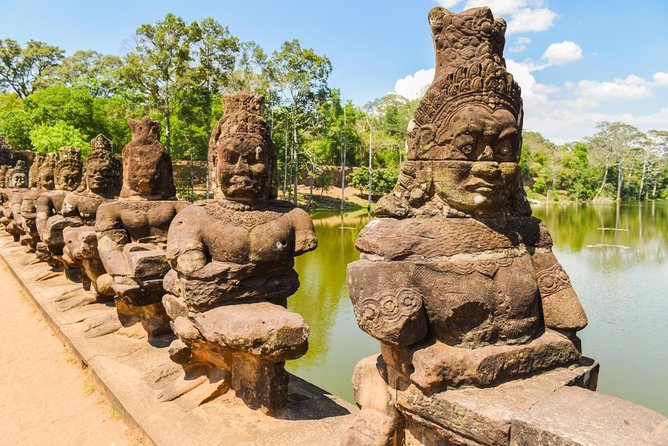
- Angkor Thom and the Bayon: where the faces catch you off guard
- Ta Prohm: the temple where trees steal the show
- Smaller temples that make the hours feel short
- The far sites: Phnom Krom, Phnom Bok, and what needs separate tickets
- Price and value: where the $59+ makes sense (and where it doesn’t)
- Getting the best day without burning out
- Who this is best for (and who should skip it)
- Should you book this Angkor Wat admission ticket service?
- FAQ
- How much is the Angkor pass?
- When will my ticket be delivered to my hotel?
- Do I need to send photos after booking?
- Is this ticket refundable or changeable?
- Can I transfer my pass to someone else?
- Is the pass valid after the printed dates?
- Does the ticket include transportation or a guide?
- Does this include Phnom Kulen and Koh Ker?
- Are drones and professional filming allowed?
- Are there rules I need to follow at temples?
Key things I’d plan around
- Hotel delivery the night before so you can start temples straight away
- 1-, 3-, or 7-day access lets you match Angkor to your schedule
- Skip ticket-office lines so sunrise doesn’t become a gamble
- Photo-verified pass (not transferable) keeps entry smooth when controlled
- Strict visitor rules like covered shoulders and not touching carvings
Why pre-buying the Angkor pass changes your whole day
Angkor rewards early starts, not late ones. If you want to catch Angkor Wat around sunrise, the last thing you want is to spend that pre-dawn time hunting for the right line at the ticket office. Pre-buying gives you a calmer plan: you arrive, you walk in, and you get to focus on the temples instead of the paperwork.
What makes this approach worth considering is the timing. The pass is delivered to your hotel in the evening (listed as 6 pm for the next-day visit), so you’re not stuck waiting for offices to open. When people describe the service as simple and efficient, it’s usually because it removes the one big point of uncertainty—access—before your day begins.
My one caution: if you’re traveling on a tight budget and you don’t care about sunrise, you might decide the extra fee isn’t worth it. If lines are manageable when you go, you can save money by buying on-site.
You can also read our reviews of more tours and experiences in Siem Reap


What you actually get: pass delivery, lanyard checks, and validity dates

This isn’t just a PDF on your phone. You’re getting an Angkor National Park ticket that you keep and show when requested by the ticket controller. The pass also has your photo, and the rules are clear that it’s not transferable and not valid outside the printed dates.
The delivery detail matters more than it sounds. You get the ticket one day before your visit, which means it becomes usable the next day after drop-off. If your plan is extremely tight—like arriving and wanting immediate entry the same calendar day—this timing can be a mismatch.
You should also expect a photo step after booking. They ask you to email passport photos for everyone in the booking, and if they don’t get them, you won’t be issued a ticket. In real-life timing, that can happen quickly—communication often shows up via WhatsApp or email—so set aside a minute to send the photos right away.
Angkor Wat at sunrise: the stop that sets the mood

Angkor Wat is the headline for a reason. It’s the largest religious monument in the world and the whole area feels different before the crowds fully wake up. With a prepared pass, you can structure your morning so you’re not still dealing with entry logistics when the first light hits the towers.
Even if you don’t obsess over sunrise, Angkor Wat is still a “go at your best time” temple. Early hours give you better light for photos and less harsh heat later. Plan roughly a couple of hours for the core experience, then decide if you want to linger for the details (bas-reliefs, courtyards, and viewpoints) or move on to keep the day balanced.
If you’re pairing this with a driver for an early start, you may see pickup times like the very early 4:30 am window mentioned in guide-and-driver experiences. That’s not a promise—but it shows how sunrise planning typically looks in practice.
Angkor Thom and the Bayon: where the faces catch you off guard
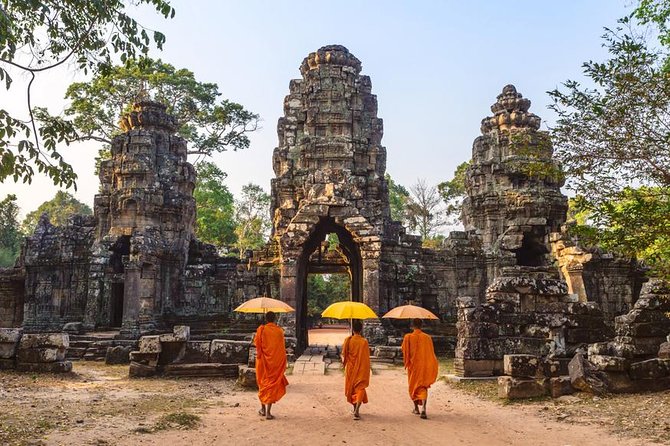
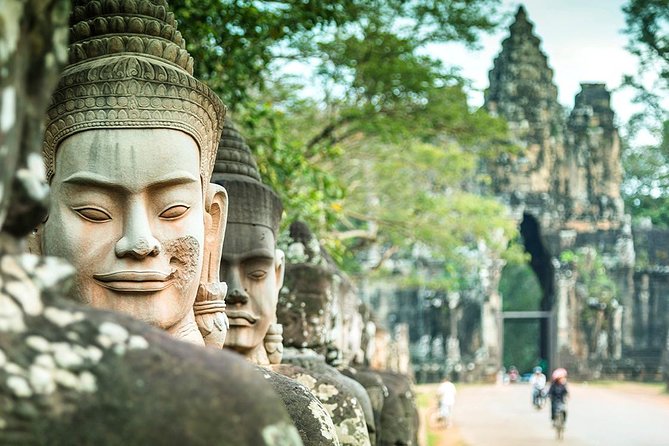
After Angkor Wat, the common next move is Angkor Thom, the last and enduring Khmer capital city from the late 12th century. It’s not just big walls and gates—the highlight is the Bayon Temple, famous for its towers with carved faces. This is where the complex starts to feel less like a set of ruins and more like a living place of worship and power from centuries ago.
Expect about an hour for Angkor Thom itself, then treat Bayon as the moment you slow down. One practical trick: don’t rush from gate to gate. Give yourself a few short pauses to take in the layout, because Bayon is visually busy and it rewards a “watch, then walk” rhythm.
If you hire a guide (not included with the ticket service), this is one of the best places to do it. Guides who are strong at Khmer temple symbolism can help you read the site faster, especially around what you’re seeing on the stones and why it’s arranged the way it is.
Ta Prohm: the temple where trees steal the show

Ta Prohm is the famous one people recognize from the movie look—giant roots, broken stone, and a feel that nature and architecture reached a truce. It’s often shorter in scheduled time (around an hour in a typical route), but it’s the kind of place that tempts you to linger. The temple’s Bayon style and the “Tomb Raider” fame are real, but the emotional impact is the roots gripping the structures.
If you’re trying to fit a lot into one day, Ta Prohm is where you’ll need to manage your own pacing. In cooler morning light, the roots and stone look dramatic. Later in the day, the textures stay interesting, but you’ll likely feel the heat and glare more.
Also: be mindful of the rules about carvings. Don’t touch what you see. It may feel tempting when you’re up close, but those stones have to last longer than your memory.






Smaller temples that make the hours feel short

This pass gives you the chance to mix big iconic stops with smaller places that are easier to enjoy at a relaxed pace. A few worth planning for:
- Banteay Srei (Ladies Temple): about an hour in a typical route. It’s known for its ornate Shiva dedication and it often feels less “touristed” than the core circuit.
- Preah Khan: planned at about 1 hour 20 minutes. It’s tied to King Jayavarman VII and the story can feel more grounded if someone helps connect the dots.
- Bakong: roughly an hour. It’s an early temple mountain style that gives you a sense of where the later grand complexes come from.
- Neak Pean and Baksei Chamkrong: short blocks (around an hour and 30 minutes). These are great “in-between” stops when you need a break from the busiest paths.
Then there are the “small circuit” style temples like Ta Keo, Pre Rup, Ta Som, Srah Srang, and Prasat Kravan. These can be quick, but they’re where you’ll notice patterns—brick vs. laterite vs. sandstone, different levels of restoration, and changing styles across centuries.
If you want the day to feel manageable, treat these stops as checkpoints. Don’t let them turn into a race.
The far sites: Phnom Krom, Phnom Bok, and what needs separate tickets

Angkor isn’t only one cluster of temples. Some sites sit farther out, and that can help you avoid repeating the same scenery all day. A few that appear in common plans:
- Prasat Phnom Krom (about 2 hours 20 minutes): best spot is often associated with views, and the hill setting makes it feel like a detour with payoff.
- Phnom Bok Temple (about 2 hours): another hill temple option that can feel different from the flat temple-mountain style.
- Kbal Spean: listed as an archaeological site on the slopes of the Kulen Hills, and it appears with longer time blocks in sample pacing.
- Prasat Beng Mealea: shown with admission notes as free in a sample stop list and commonly considered a more adventurous-feeling ruin.
But here’s the key limitation to know: visits to Phnom Kulen and Koh Ker require a separate ticket. So if you’re dreaming about those specific sites, don’t assume your Angkor pass covers them. Plan that extra step before you commit your day.
Price and value: where the $59+ makes sense (and where it doesn’t)

The headline price shown is $59 per person, but the real cost depends on which validity you choose. The base ticket prices listed here start at:
- 1-day: $37 + service and promo fees
- 3-day: $62 + service and promo fees
- 7-day: $72 + service and promo fees
So you’re paying a premium for a few practical benefits: hotel delivery, advance readiness, and avoiding the ticket-office hassle that can mess up a sunrise plan. If your schedule is tight, that premium often pays for itself because you buy back time and reduce stress.
I’d think about it this way:
- If Angkor is your main event and you care about sunrise or multiple days, paying extra for delivery is usually smart.
- If you’re going casually, your schedule is flexible, and you don’t mind waiting, you might prefer buying directly.
Also, keep the timing rules in mind. Passes aren’t refundable and can’t be changed, so if your dates shift at the last minute, you don’t have much wiggle room.
Getting the best day without burning out
Even with perfect tickets, Angkor can beat you up if you show up unprepared. One standout practical tip from real-world experience is simple: wear safe, comfortable shoes. You’ll be walking a lot, and some paths can be uneven.
Plan clothing that follows the visitor code: shoulders and knees should be covered. You’ll want to carry a light layer too, because temple visits can mean long stretches in sun and humidity. Bring water and basic sun protection, and remember: don’t litter.
The ticket itself needs to stay with you. You’ll likely show it often, and having the lanyard helps keep the process orderly instead of digging through a bag every time someone checks.
And while you’re enjoying the ruins, treat them with care. Don’t touch carvings. Respect monks. And don’t give money or candy to children. Those are easy rules, and they keep the experience respectful.
Who this is best for (and who should skip it)
This setup is best for you if:
- You have limited time in Siem Reap and want fewer moving parts.
- Sunrise is on your plan, and you don’t want your schedule at the mercy of ticket lines.
- You want the pass ready at your hotel so you can walk straight into the day.
- You’d rather spend effort on temples than on offices.
It may be less appealing if:
- You’re purely price-focused and don’t care about sunrise timing.
- Your trip dates are uncertain.
- You’re comfortable doing your own ticket purchase process on-site.
If you do add a guide, you’ll get more out of the temples—especially places like Bayon—because interpretive context makes the carvings and layouts click faster. Names that come up in real experiences include guides like Sok Piseth, Vantha, Bob, and Bunthang Lim, which is a reminder that pairing a strong guide with the ticket can make the day feel effortless.
Should you book this Angkor Wat admission ticket service?
Yes, if you’re optimizing for time and peace of mind. The value isn’t the temple part—it’s the access part. Pre-buying with hotel delivery turns a stressful morning into a smooth start, especially for sunrise at Angkor Wat.
If you’re willing to queue and you’re traveling with lots of buffer time, you might be able to save money by buying on-site. But if your Angkor day is the one you’ll remember for the rest of your trip, paying extra to reduce risk is a reasonable trade.
My final advice: choose your validity length based on how you actually move. If you’re doing sunrise and multiple circuits, don’t underbuy your days. The pass is your ticket to pacing.
FAQ
How much is the Angkor pass?
The service lists base ticket prices as $37 for a 1-day option, $62 for a 3-day option, and $72 for a 7-day option, plus service and promo fees.
When will my ticket be delivered to my hotel?
The ticket is delivered one day before your visit, and it’s described as being delivered in the evening at 6 pm for the next-following days in the hotel front desk.
Do I need to send photos after booking?
Yes. You’re asked to email passport photos for all travelers after booking, and if photos aren’t received, you won’t be issued a ticket.
Is this ticket refundable or changeable?
No. Passes are not refundable and the experience is non-refundable and cannot be changed for any reason.
Can I transfer my pass to someone else?
No. Passes are not transferable and the pass contains a photo of the visitor.
Is the pass valid after the printed dates?
No. Passes are not valid after their validity date, and they’re only valid from and to dates printed on the pass.
Does the ticket include transportation or a guide?
No. Transportation and tour guide are not included. Foods and drinks and travel insurance are also not included.
Does this include Phnom Kulen and Koh Ker?
No. Visits to Phnom Kulen and Koh Ker Temples require a separate ticket.
Are drones and professional filming allowed?
Flying drones and filming with professional equipment for commercial purposes require a permit from the APSARA National Authority.
Are there rules I need to follow at temples?
Yes. The visitor code of conduct includes respecting monks, wearing respectful clothing with shoulders and knees covered, not touching carvings, not littering, and not giving money or candy to children.