
REVIEW · SIEM REAP
Siem Reap: Angkor Wat Admission Ticket
Book on GetYourGuide →Operated by SARUS CO., LTD · Bookable on GetYourGuide
Angkor Wat gets crowded fast, so your morning plan matters. This express Angkor Archaeological Park admission ticket is built to keep you out of ticket-office lines by arranging your pass in advance and delivering it to your hotel. The two best parts for me are the e-ticket setup and the practical promise to skip the queue so you can spend time at temples instead of standing around.
One thing to consider: you must provide a photo after booking, and the local team contacts you through WhatsApp/WeChat/Viber to finalize the ticket. If that message doesn’t reach you quickly, you’ll want to chase it early so you don’t lose your best sunrise hours.
In This Review
- Key things to know before you book
- Why this Angkor ticket service feels smarter in Siem Reap
- Choosing your pass length: 1 day, 3 days, or 7 days
- After booking: photo, messaging apps, and getting your pass to your hotel
- Using the skip-the-line benefit on temple days
- A practical Angkor plan that fits your ticket days
- If you have 1 day
- If you have 3 days
- If you have 7 days
- Price and value: is $99 per person worth it
- Transport and guides: what’s included and what’s optional
- What to bring (and what will slow you down)
- Who this works best for
- The small print that affects your day
- Should you book this Siem Reap Angkor Wat admission ticket service?
- FAQ
- What is included in the Angkor Wat admission ticket service?
- How long is the pass valid?
- Do I need a tour guide or transportation?
- How do they finalize my ticket?
- Which messaging apps are used to contact me?
- Will I receive the ticket electronically?
- Can I cancel for a full refund?
- Is food or drinks included?
- What should I bring to the temple?
- Who is this not suitable for?
Key things to know before you book
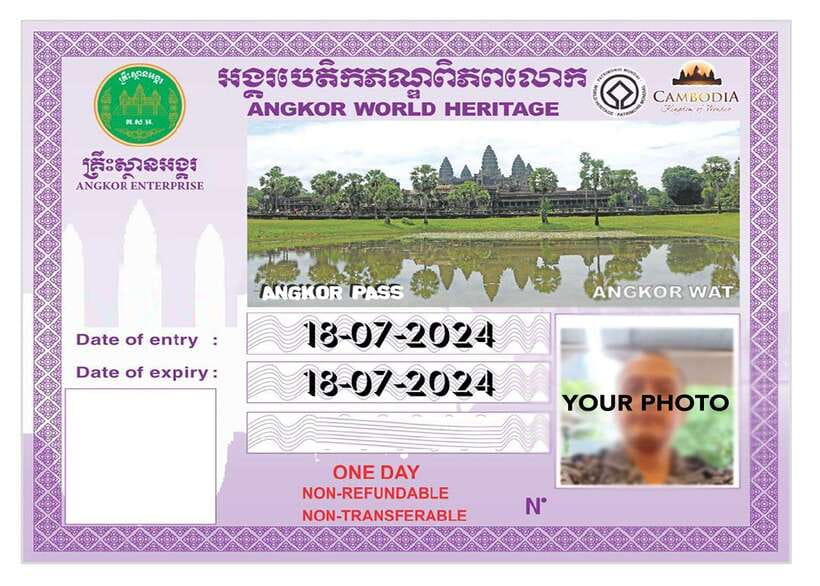
- Skip-the-line admission designed to save you time on temple days
- 1-, 3-, or 7-day options so your pass matches your trip length
- Photo required for ticket purchase after confirmation, sent via WhatsApp/WeChat/Viber
- Hotel delivery of your pass so you don’t have to manage paperwork at the gate
- Private group service with an optional pickup choice
Why this Angkor ticket service feels smarter in Siem Reap

Angkor Wat is the kind of place where timing changes everything. When you arrive early, you get that softer light and fewer crowds. When you arrive late, you still get the wow factor, but your day can feel rushed because you’re stuck waiting for access paperwork.
This service targets that exact pain point. Instead of walking over to the ticket counter and negotiating lines, you set up the pass ahead of time and get an E-ticket that’s prepared with your details. The practical win is simple: you spend your energy on temples, not on queue management.
It also helps that the communications are meant to be fast and direct. People often get replies quickly on messaging apps, and you can send what they need (like your photo) without mailing documents or hunting down office hours. That matters in Siem Reap, where your best window for temples is usually the one where you’re already up and ready.
You can also read our reviews of more tours and experiences in Siem Reap



Choosing your pass length: 1 day, 3 days, or 7 days

The big decision here is how many days you want your Angkor access to cover. You can choose a 1-, 3-, or 7-day option, which is useful because Angkor isn’t one temple. It’s a cluster of sites, some close together and some that feel far even when they’re not.
Here’s how I’d think about each option:
1-day pass (best for a tight schedule)
- You’ll likely focus on Angkor Wat and nearby highlights.
- The day can be intense, especially if you’re trying to catch sunrise and still cover multiple stops.
- Good if you’re treating Angkor as the anchor moment of your trip.
3-day pass (best balance for most people)
- You can spread visits out and avoid the “see everything, feel nothing” problem.
- You’ll have a buffer for heat, rain, or just taking your time to walk and photograph.
- This is a strong fit if you want both iconic views and slower pacing.
7-day pass (best if you like flexibility)
- You can handle bad weather, jet lag, or rearranging plans without stressing about the clock.
- It’s also the better choice if you’re the type who wants to return to a favorite spot at a different hour.
- The downside is you’re paying for time you may not fully use if Angkor is your only big attraction.
One more timing note: the pass is described as valid for 3 to 7 days, with starting times depending on availability. So when you plan, don’t just count days on a calendar—match your dates to when you actually want to be at the temples.
After booking: photo, messaging apps, and getting your pass to your hotel

Here’s the part that makes or breaks the experience: the ticket requires a photo. Once your booking is confirmed, the local operation contacts you to collect that photo and complete your ticket details. They specifically note that you should book with a contact number you can reach via WhatsApp, WeChat, or Viber.
What you should do after you book:
- Watch for a message and reply quickly with your photo.
- Keep your phone on you before your temple day.
- Double-check that the messaging number you used is the one you actually carry daily.
Why this matters: the whole point is to remove friction. If you delay the photo step, you may scramble later. When everything goes smoothly, you get an updated ticket PDF via messaging and you can go straight into your temple day with less hassle.
The service also states that a team member will work out the temple pass and bring it back to you at your hotel. That’s a surprisingly big deal on vacation. You’re not trying to coordinate transport plus paperwork plus lines. You’re just going.
Using the skip-the-line benefit on temple days

The headline benefit is clear: you’re guaranteed to skip the lines at the ticket office. In practical terms, that means less time waiting outside, less time dodging heat, and less time wondering whether you’re holding the right documents.
But to get the most from it, I’d treat it like this:
- Plan your arrival to temples for the time of day you actually want, not based on where a ticket counter queue might be.
- If sunrise is on your list, protect that morning. Sunrise at Angkor is a huge part of the draw, and waiting for passes can steal your momentum.
- If it starts raining or the sun is brutal, your “saved time” becomes “saved energy.” You can adjust your walking route and still keep a full day.
A useful reality check: the service handles the ticket pass so you can enter faster, but it doesn’t magically change the fact that temples have crowds. You’ll still see people. You’re just choosing to spend your time in the right places instead of being stuck in a queue.
A practical Angkor plan that fits your ticket days

This isn’t a guided “route tour” from start to finish; it’s an admission pass service. Still, you can use the time you bought to build an itinerary that makes sense on the ground.
Here’s a sample way to structure it depending on your day count:






If you have 1 day
- Start with the early Angkor Wat moment if sunrise is your priority.
- After that, plan a second block of temple time later in the day when you can slow down and walk at your pace.
- Keep it simple. With only one day, you’re better off covering fewer areas well than trying to sprint through everything.
If you have 3 days
- Day 1: Icon priority, including Angkor Wat at a time that matches your energy.
- Day 2: A follow-up circuit of other temple areas, with time to pause for photos and shade.
- Day 3: Flex day. Use it for whichever area felt best to you, or swap if rain or heat shifts your mood.
If you have 7 days
- Treat Angkor like a collection of experiences, not one checklist.
- Repeat a favorite viewpoint at a different hour.
- Use extra days to pace yourself. Angkor rewards slow walking, and the ability to return makes the place feel less like a rush-through stop.
If you’re adding an English guide and private tuk-tuk (pickup optional), your itinerary becomes even smoother because you can rely on someone local to help you interpret what you’re seeing while you still follow your chosen schedule.
Price and value: is $99 per person worth it

At $99 per person, this is not the cheapest way to buy an Angkor ticket. But it’s also not aiming for “lowest cost.” It’s aiming for “less time wasted.”
Here’s what you’re really paying for:
- Time savings by avoiding the ticket-office queue on temple day.
- A ready-to-use E-ticket created with your personal details.
- Convenience: the team contacts you to finalize your ticket and delivers it back to your hotel.
This tends to be good value if:
- You’re on a schedule and want to protect sunrise or your only full day.
- You don’t want to manage lines, documents, and logistics while on vacation.
- You prefer a smoother start to the day so you can actually enjoy what you came to see.
It’s less compelling if:
- You’re totally fine with waiting, and you enjoy the spontaneity of buying on arrival.
- You plan to visit only during times when queues are less of a problem for you.
One more angle: Angkor tickets can be easy to buy, but “easy” doesn’t always mean “efficient.” This service is for the part of your day you can’t get back—especially the morning.
Transport and guides: what’s included and what’s optional

Important baseline: the included part is your Angkor temple pass (E-ticket provided) and the skip-the-line benefit.
Not included:
- A tour guide service
- Transportation
- Food and beverage
- Parking fee
That said, there’s an optional pickup described. When pickup is chosen, an English guide can meet you at your hotel and take you on a private tuk-tuk for the tour. You’ll find that people who add this piece often talk about the guide experience and the friendly, practical support from drivers.
If you do add transport and a guide, it becomes much easier to turn your ticket into a full day instead of a semi-planned day. You still control pacing, but you’re not stuck trying to figure out timing between sites.
What to bring (and what will slow you down)
You’ll have a better day with the right basics ready before you step out:
Bring:
- Comfortable shoes
- Sunglasses
- Camera
- Sunscreen
- Comfortable clothes
- Cash
Avoid:
- High-heeled shoes
- Pets
- Alcohol and drugs
These aren’t just rules; they affect how quickly you can move. Temple days often involve a lot of walking and stairs, and the wrong shoes can turn a “great morning” into a pain day fast.
Also, expect heat. Even if you’re only walking for a few hours, sunscreen and shade habits matter.
Who this works best for

This service is especially useful if you:
- Want a smoother entry and less queue time
- Prefer advance organization but still want flexibility during your trip
- Are planning sunrise or a multi-temple schedule and don’t want ticket logistics to steal time
It’s not suitable for people over 95 years, based on the provided information. If that applies to you or someone in your group, it’s worth considering a different approach that fits mobility needs.
The small print that affects your day
Two items deserve your attention because they directly influence how “hassle-free” your day feels:
1) Photo requirement
After booking confirmation, you’ll send a photo so the ticket can be purchased with your details.
2) Reachability via messaging
They ask you to use a contact number reachable by WhatsApp, WeChat, or Viber. If you swap SIM cards or turn off notifications, you may delay the ticket process.
If you handle those steps quickly, the experience is meant to be straightforward: your pass is created, you get your updated ticket via messaging, and then you’re set for your temple day without ticket-office chaos.
Should you book this Siem Reap Angkor Wat admission ticket service?
Book it if you value time on temple day and want a ticket setup that reduces friction. This is a strong choice for first-timers, sunrise lovers, and anyone who doesn’t want to spend their precious morning stuck in a queue.
Skip it (or compare alternatives) if you’re comfortable buying tickets yourself, you have plenty of time to wait, and you don’t mind managing the paperwork on arrival.
My practical take: if Angkor Wat is the centerpiece of your trip, paying extra to avoid wasted time usually makes the day feel better. You bought entry anyway; this is about buying back your morning.
FAQ
What is included in the Angkor Wat admission ticket service?
You get the Angkor temple pass (E-ticket provided), and the service is guaranteed to skip the lines.
How long is the pass valid?
The pass is described as valid for 3 to 7 days, with availability and starting times depending on your selection. You can choose a 1-, 3-, or 7-day option.
Do I need a tour guide or transportation?
No. A tour guide and transportation are not included. Pickup is optional, depending on the package you choose.
How do they finalize my ticket?
You must provide a photo after booking. The local operation contacts you to collect it and complete your ticket details.
Which messaging apps are used to contact me?
They ask that you can be reached via WhatsApp, WeChat, or Viber for the photo and ticket updates.
Will I receive the ticket electronically?
Yes. An E-ticket is provided, and you receive the updated ticket details via messaging.
Can I cancel for a full refund?
Yes. Free cancellation is available if you cancel up to 24 hours in advance.
Is food or drinks included?
No. Food and beverage are not included.
What should I bring to the temple?
Bring comfortable shoes, sunglasses, a camera, sunscreen, comfortable clothes, and cash.
Who is this not suitable for?
It is not suitable for people over 95 years, based on the provided information.