REVIEW · SIEM REAP
Siem Reap: 2-Days Angkor Wat with Sunrise Small-Group Tour
Book on GetYourGuide →Operated by Tourme ANGKOR · Bookable on GetYourGuide
Sunrise at Angkor Wat feels like a switch flips. This 2-day plan pairs early access, temple variety, and real on-the-ground guidance—plus AC rides and cool towels after the walking. Day 1’s quieter carved sites like Banteay Srei and atmospheric Preah Khan are a great warm-up, and Day 2’s sunrise setup is timed for the best viewing. One thing to think about: the days are long and hot, and you’ll be climbing stairs and walking more than you’d do on a typical city tour.
I especially like the way the itinerary balances the big-name stuff with temples that don’t get the same crowds. The guide focus also matters here: I’ve seen how guides like Sak, Pal, and Bun point out specific details in inscriptions and the meaning behind what you’re seeing, not just where to stand for photos. The possible drawback is simple—your temple pass is extra, and sunrise depends on weather, so you’re paying for an experience that can’t be fully controlled.
In This Review
- Key things that make this 2-Day Angkor tour worth your time
- How this 2-day Angkor Wat plan fits together (without feeling chaotic)
- Day 1: Banteay Srei, Neak Pean, and Preah Khan in the Grand Circuit spirit
- Pre Rup: stepped pyramid vibes
- Banteay Srei: small temple, serious stonework
- Neak Pean: a Buddhist temple on a man-made island
- Preah Khan: large, atmospheric, and worth the time
- Day 2: Sunrise at Angkor Wat and why the early start matters
- Inside Angkor Wat: corridors, chambers, and terraces
- Breakfast just outside, then a controlled reset
- Ta Prohm: jungle roots, tree overgrowth, and photo patience
- Angkor Thom’s Eastern Gate and Bayon faces: the classic “fortified city” feeling
- Bayon Temple: carved faces that catch you off guard
- Terraces: Elephants and the Leper King
- The temple pass and the real cost: why $16 isn’t the whole story
- AC rides, cold water, and that towel trick that saves the day
- Who the guide makes the difference for (and how it shows in your photos)
- Timing, swapping days, and what to expect from the daily schedule
- What to pack for Angkor temple steps and humid mornings
- Group size: small on day one, bigger on day two (but still manageable)
- Who this tour suits (and who should skip it)
- Should you book this Sunrise + Grand Circuit style tour?
- FAQ
- Is the temple pass included in the tour price?
- What time does the sunrise day start?
- What temples are included over the two days?
- Does the tour help with skipping lines?
- Is food included?
- What’s provided for comfort during the day?
- Is this tour suitable for kids or wheelchair users?
Key things that make this 2-Day Angkor tour worth your time

- Sunrise timing at Angkor Wat with early pickup and guidance on where to stand for photos
- Small-group comfort that keeps the pace human even with a lot of stops
- AC vehicle + cold water and towels so the heat doesn’t run the whole day
- Day 1 temple mix: Banteay Srei reliefs, Neak Pean setting, and Preah Khan atmosphere
- Day 2 Angkor Thom loop: Eastern Gate, Bayon faces, and the Terraces
- Guide help with practical stuff like ticket handling and photo spots
How this 2-day Angkor Wat plan fits together (without feeling chaotic)
Angkor is huge. If you try to DIY it with scooters or taxis, you spend more time negotiating than looking closely. This tour gives you a clear rhythm: one full day of temples outside Angkor Thom, then an early start for the sunrise highlights and the classic fortified-city sights.
I like that the tour doesn’t treat your time like a checklist. You get explanations for the major monuments, but you also get space to walk, look, and take pictures. People consistently rate the guide style and the organization, and that’s usually where tours win or lose.
The flip side: it’s still Angkor. Even with breaks and cool-down moments, you should expect heat, steps, and plenty of foot traffic.
You can also read our reviews of more tours and experiences in Siem Reap


Day 1: Banteay Srei, Neak Pean, and Preah Khan in the Grand Circuit spirit
Day 1 starts with an earlier pickup window in the morning and ends around mid-afternoon, so you’re not trapped in temples until night. The program leans into “don’t miss” temples that feel different from Angkor Wat’s scale, and that variety helps.
Pre Rup: stepped pyramid vibes
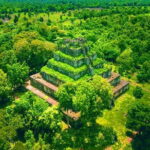
Pre Rup is a late 10th-century Hindu temple with a stepped-pyramid style. It’s the kind of site where the structure alone tells you what was important—levels, views, and an intentional climb. If you’re new to Angkor, this is a good primer because it’s readable before it gets overly complex.
Practical tip: wear shoes with grip. Stone can be slick, and you’ll be moving around more than you expect.
Banteay Srei: small temple, serious stonework
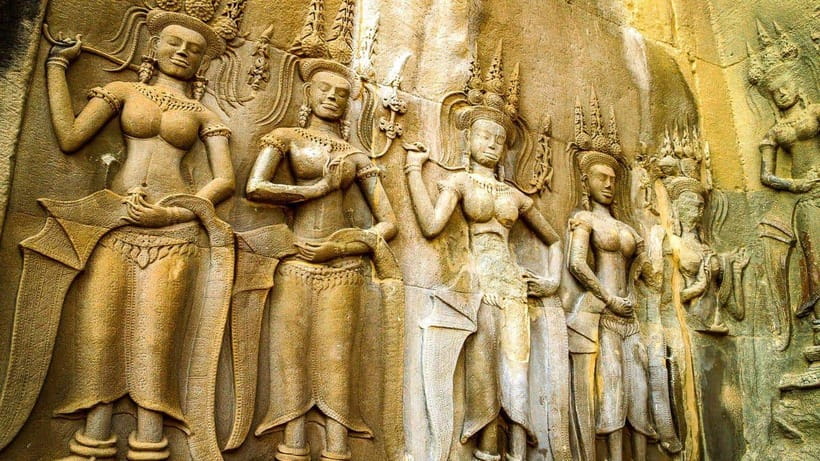
Banteay Srei is smaller than the headline temples, but it’s famous for intricate sandstone carvings. This is one of the best places on any Angkor loop to slow down and look at details, because the reliefs reward close viewing.
If you’ve only seen temple photos that look like big silhouettes, Banteay Srei is where your brain shifts gears. You start noticing how patterns repeat, how figures are framed, and how ornament creates meaning.
Neak Pean: a Buddhist temple on a man-made island
Neak Pean sits on a man-made island, which gives it a calmer mood than the busier complexes. It’s also a nice contrast to the more fortress-like feeling of other sites.
Even if you don’t know the symbolism yet, the setting helps. You’re not just walking among stones; you’re reading a place designed for reflection.
You can also read our reviews of more tours and experiences in Siem Reap




Preah Khan: large, atmospheric, and worth the time
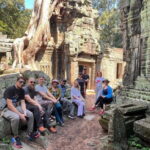
Preah Khan is big and atmospheric—more than one zone of ruins, with a feel that’s easy to get lost in (in a good way). It’s the sort of temple where your guide’s context makes a real difference, because the layout can look confusing until someone points out what you’re looking at.
Day 1 is long, but it’s also a great chance to learn how Angkor’s temples connect to shifting beliefs over time—without turning your head into a map.
Day 2: Sunrise at Angkor Wat and why the early start matters
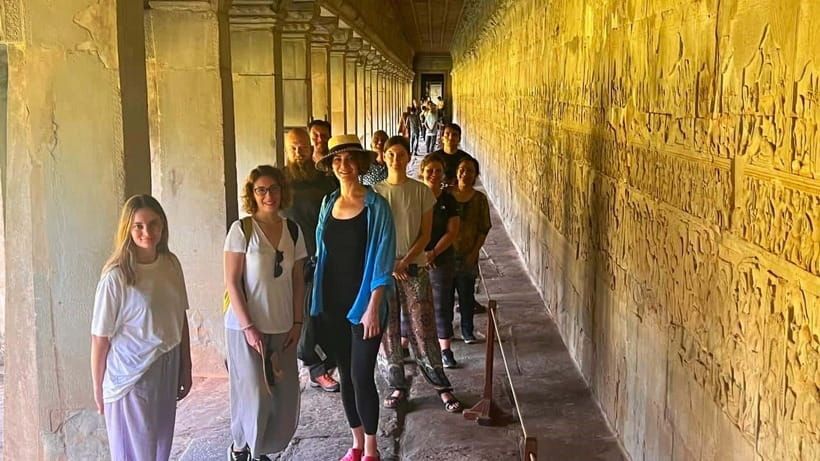
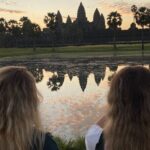
Day 2 is the star. Your pickup is very early—around 4:20 to 4:35am—and the return lands around early afternoon. That early schedule sounds intense, but it’s the only way to experience Angkor Wat in the way it’s meant to be seen.
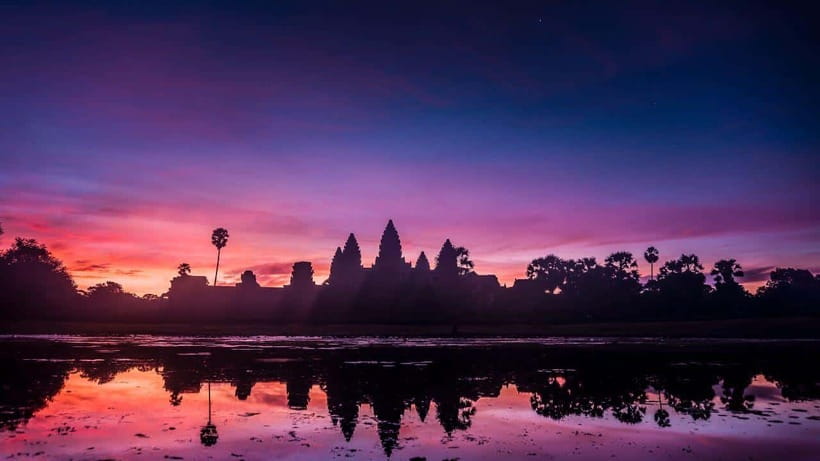
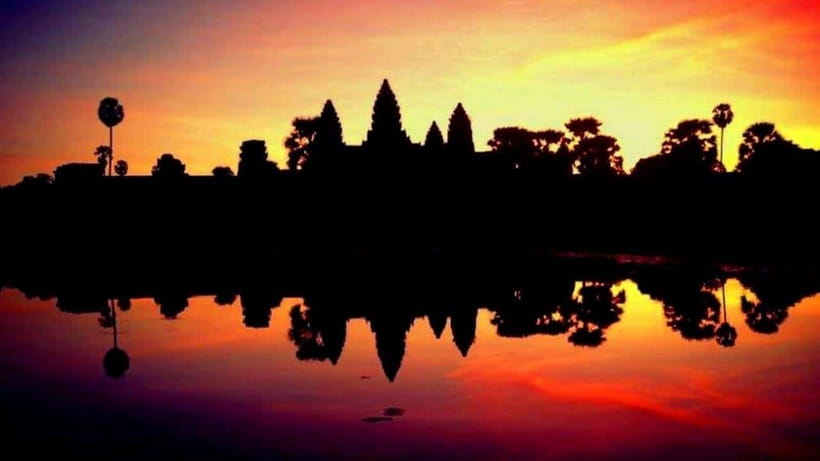
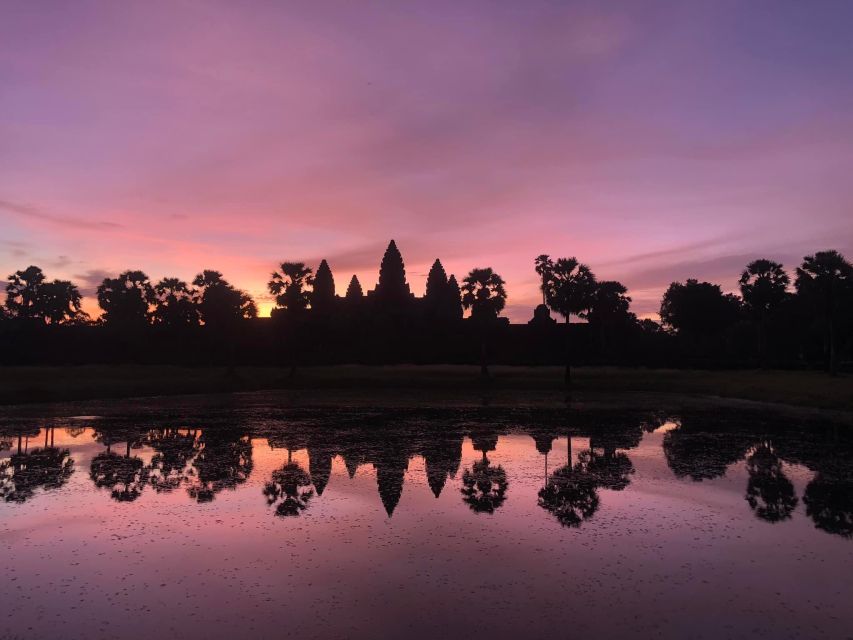
The sunrise experience here isn’t just a time stamp. The tour plan is set up so you arrive when the viewing situation is still controlled, and your guide helps you find a spot for the view and photos. One of the most repeated highlights is how the guide gets the timing right and doesn’t leave the group stuck waiting in the wrong place.
Important reality check: sunrise depends on weather. If the sky is cloudy, the light changes, and the vibe won’t match the perfect-weather photos. Still, the early morning atmosphere and temple geometry are impressive even without dramatic skies.
Inside Angkor Wat: corridors, chambers, and terraces
After sunrise viewing, you’re guided to explore the interior areas—corridors, central chambers, and upper terraces. This matters because Angkor Wat isn’t only the silhouette and moat reflections. The interior layout is part of the story, and having a guide helps you understand what each section is meant to communicate.
Practical tip: bring water, take breaks, and don’t rush the stairs. You’ll get better photos if you’re not out of breath and sweating through your camera strap.
Breakfast just outside, then a controlled reset
One smart element in this plan is the built-in breakfast stop just outside Angkor Wat, followed by downtime before moving on. That keeps Day 2 from turning into a constant grind.
If you skip breakfast on a sunrise tour, you’ll feel it later. This tour handles the energy problem up front.
Ta Prohm: jungle roots, tree overgrowth, and photo patience
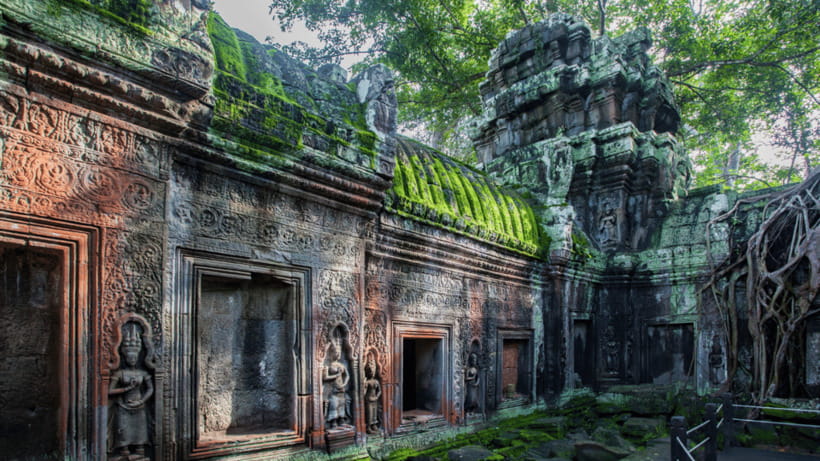
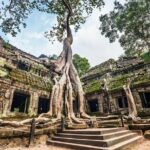
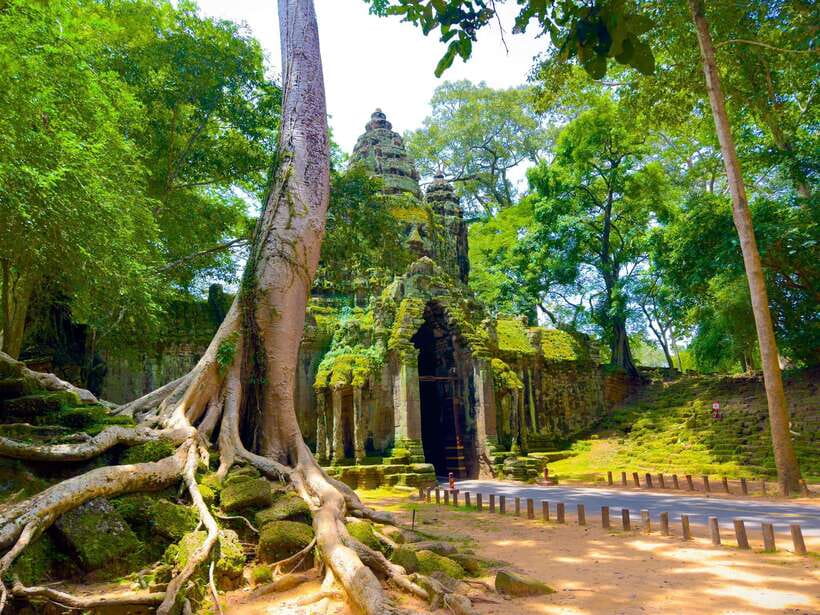
Next comes Ta Prohm, famous for its jungle-enveloped ruins. This is the temple where you’ll notice how nature takes over: roots, trunks, and stonework locked together like time froze mid-sentence.
I like Ta Prohm because it slows you down in a different way. You’re not just hunting for angles. You’re trying to frame a whole scene—ruins, trees, and the light that cuts through.
The one drawback: it’s easy to wander too far trying to get the perfect shot. A guide helps keep you in the right flow so you don’t lose time and end up rushing the best spots.
Angkor Thom’s Eastern Gate and Bayon faces: the classic “fortified city” feeling
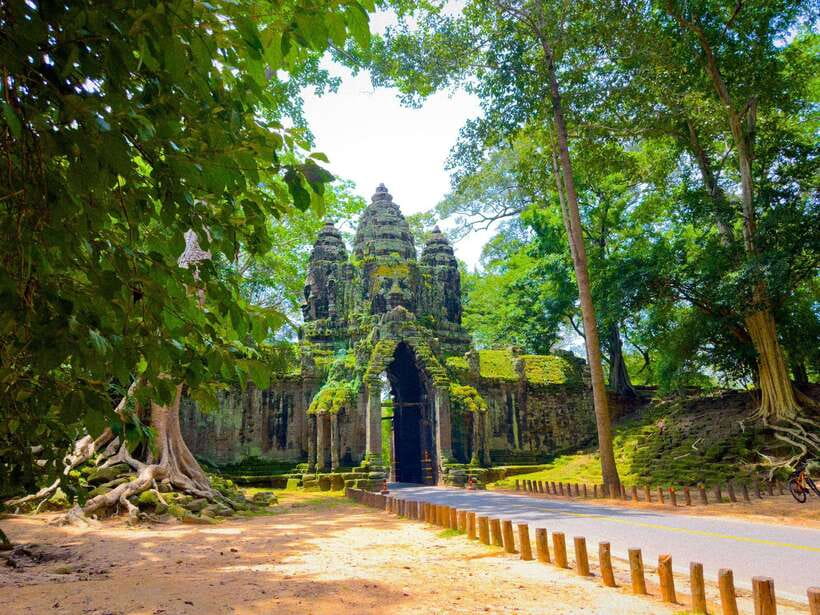
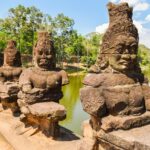
After Ta Prohm, you’ll head to the Eastern Gate of Angkor Thom, where stone gods and demons line the route. This entrance creates momentum. You can feel it as you walk in—this is where the complex starts to feel like a planned world, not just scattered temples.
Bayon Temple: carved faces that catch you off guard
Bayon Temple is the moment where Angkor really looks theatrical. The many carved faces create a repeating pattern across the structure, and it’s one of those sights that keeps working no matter how many photos you’ve seen.
Here, a guide’s role matters. With the right context, the faces stop being just decoration and start feeling like a political and spiritual statement.
Terraces: Elephants and the Leper King
You’ll also pass major landmarks inside Angkor Thom: the Terrace of the Elephants and the Terrace of the Leper King. These stops are less about one single view and more about how Angkor used public space—processions, storytelling, and power displayed in stone.
Wear something breathable and plan for short walking bursts. You’ll get the best experience if you take brief pauses and let your eyes adjust.
The temple pass and the real cost: why $16 isn’t the whole story
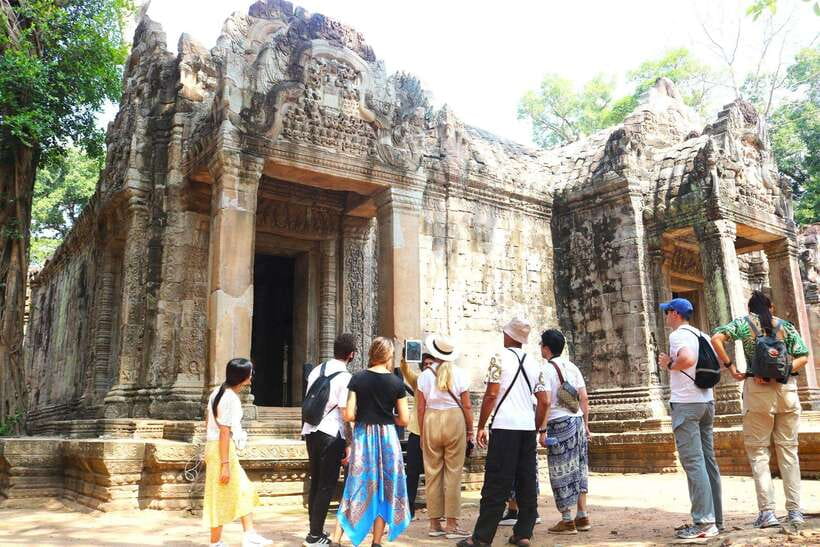
The tour price is listed at $16 per person, which feels like a steal. But the temple pass is not included, and that’s the big line item most people forget to count.
Plan on paying for the temples pass separately (the tour information states $62 per person for a 2–3 day pass). Food and additional drinks are also not included. So the real comparison isn’t $16 versus other tours. It’s this package’s transport and guide value versus the cost of doing Angkor on your own with tickets, timing headaches, and route planning.
Why this still can be good value: you get hotel pickup and drop-off, an air-conditioned vehicle, a live English guide, and bottled water plus cool towels. That’s not just convenience; it’s also heat management. In Angkor, comfort can be the difference between enjoying the day and feeling miserable by mid-morning.
AC rides, cold water, and that towel trick that saves the day
This is one of the strongest practical perks in the tour. You’ll travel in an air-conditioned vehicle between sites, and you get complimentary bottled water and cool towels.
That might sound like basic service, but it’s a big deal at Angkor. Warm weather plus stone steps equals a lot of sweat. Multiple guides and drivers get praised for handing out water and towels right when you need it—after walking segments, not hours later.
It also affects your pace. When you’re cooled down, you can actually pay attention to the carvings and layout instead of just counting down to the next stop.
Who the guide makes the difference for (and how it shows in your photos)
This tour isn’t only about seeing monuments. It’s about understanding what you’re looking at—at least enough to make the stones meaningful.
Guides like Sak and Pal are praised for explaining inscriptions and specific details, including the meaning behind carvings. Bun is mentioned for giving cultural context beyond the temples themselves, and Chhay gets attention for running the day smoothly while also helping with photo timing.
A lot of people also mention the guide as a photo helper—choosing good spots at the right moment and taking pictures for the group. That’s huge on sunrise day, when you don’t want to spend ten minutes figuring out where to stand.
Small-group pacing matters here too. Your day can be full, but it shouldn’t feel like a cattle line.
Timing, swapping days, and what to expect from the daily schedule
Pickups are clearly scheduled. Day 1 pickup is between about 7:45am and 8:00am, with drop-off between 4:00pm and 5:00pm. Day 2 pickup for sunrise is between about 4:20am and 4:35am, with drop-off between 12:30pm and 1:30pm.
One useful option: these two days can be swapped if you request it. That helps if your hotel plans, local bookings, or other activities make one of the early mornings harder.
Also note: you’ll be out for a long chunk of the day. Even when the tour breaks are solid, you need a “walkable mindset.”
What to pack for Angkor temple steps and humid mornings
This tour specifically suggests bringing comfortable shoes, sunglasses, a sun hat, sunscreen, and insect repellent. Add one more reality item: plan for stairs. Some temples involve climbing and uneven steps, so cushy, grippy shoes are not optional.
Bring water mindset even with bottled water provided. If you’re sensitive to heat, you’ll want to sip regularly and avoid getting stuck in a long section without a chance to cool down.
If you wear lightweight layers, you’ll stay more comfortable through sun exposure and then shade transitions.
Group size: small on day one, bigger on day two (but still manageable)
The tour is described as a small-group experience, and your group size can vary by day. One pattern from the experience: day one may feel very small, while day two can be larger while still staying within a manageable range (around ten or so).
What you should care about: this kind of size affects how quickly you move, how easy it is to hear your guide, and whether you can break away for a few minutes of personal exploration.
Here, you should expect short guided stops, time to explore on your own for photos and looking, and frequent re-gathering so you don’t miss key viewpoints.
Who this tour suits (and who should skip it)
This is a good fit if you want a guided, time-efficient Angkor visit with the must-sees plus enough variety to avoid monotony.
It’s not suitable for wheelchair users, and it’s not suitable for children under 8. The walking and stairs are part of the experience, not optional add-ons.
It also suits people who want sunrise at Angkor Wat but don’t want to plan around it on their own. Early pickup and photo spot guidance remove the biggest headaches.
Should you book this Sunrise + Grand Circuit style tour?
Book it if you want a practical two-day plan that covers major highlights without turning your trip into constant route planning. The best reasons are sunrise logistics on day two and the heat-friendly routine: AC transport, cool towels, and bottled water right when you need them.
Skip it (or consider another format) if you hate early mornings, you have mobility limits that make stairs hard, or you’re trying to keep your total budget to the tour price alone. When you add the temple pass and optional food stops, the cost is more than $16, even if the overall value can still be strong.
If you go, set your expectations like this: you’ll trade comfort for experience, but the tour reduces the worst pain points.
FAQ
Is the temple pass included in the tour price?
No. The tour includes pickup, a guide, and transport, but the temples pass is not included. The information provided lists a $62 per person pass for 2–3 days.
What time does the sunrise day start?
Pickup for the Angkor Wat sunrise day is between 4:20am and 4:35am. You’re also returned between about 12:30pm and 1:30pm.
What temples are included over the two days?
Day 1 includes Pre Rup, Banteay Srei, Neak Pean, and Preah Khan. Day 2 includes Angkor Wat (including interior areas), Ta Prohm, the Eastern Gate of Angkor Thom, and key sights in Angkor Thom such as Bayon Temple plus the Terrace of the Elephants and the Terrace of the Leper King.
Does the tour help with skipping lines?
Yes. The activity notes that it helps you skip the ticket line.
Is food included?
No. Food and additional drinks aren’t included in the tour package.
What’s provided for comfort during the day?
The tour includes bottled water and cool towels, plus an air-conditioned vehicle for travel between temple stops.
Is this tour suitable for kids or wheelchair users?
No. It’s not suitable for children under 8, and it’s not suitable for wheelchair users.