REVIEW · SIEM REAP
Exploring the Ancient Wonders of Angkor Wat with sunset backheng
Book on Viator →Operated by Marvel Angkor Tours · Bookable on Viator
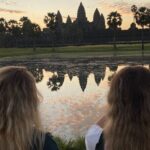
Sunset at Angkor Wat feels like a movie. This Angkor Wat sunset day packs the big names—Angkor Thom, Bayon, Ta Prohm—then ends with Phnom Bakheng Hill for the golden-hour view, plus a complimentary massage to cool down your day.
I like that you get a professional photographer and a strong English-speaking guide—people specifically rave about guides such as Mr. Pich and Davann for history and crowd management. I also like the convenience: round-trip hotel transfers in a luxury private van mean you spend less time negotiating and more time seeing.
One heads-up: food and drinks aren’t included, and the schedule includes walking plus an ascent to the viewpoint, so plan for comfort (water, breaks, and shade).
In This Review
- Key things to know before you go
- Angkor Wat sunset: the route that makes the timing feel worth it
- Angkor Thom and Bayon’s giant faces: your first jaw-drop moment
- Ta Prohm and Banteay Kdei: when the temples look alive
- Phnom Bakheng Hill: the classic sunset payoff (and the climb to earn it)
- The Siem Reap day beyond temples: markets, studio work, silk, and a blessing
- Your guide and the included photographer: better explanations, better photos
- Custom stops you can add: National Museum or Night Market
- Price and value: what $60 covers, and what you still handle
- Comfort and pacing: how to make a long day feel easier
- Who this tour suits best (and who might want a different fit)
- Should you book this Angkor Wat sunset with massage?
- FAQ
- FAQ
- How long is the Angkor Wat sunset tour?
- Is pickup from my hotel included?
- Is this tour private?
- Does the tour include a professional photographer?
- Is food included?
- Where does the sunset viewpoint happen?
- Can I customize the day with extra stops?
- Do I need to bring tickets or a printed ticket?
- Is there an included massage at the end?
- What is the cancellation policy?
Key things to know before you go
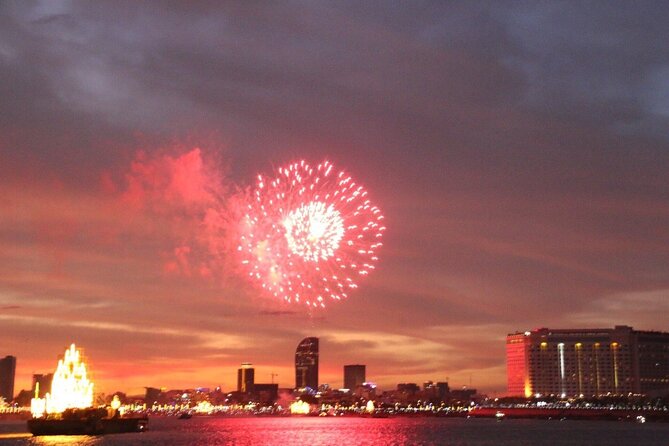
- Sunset timing + a crowd-smart route: you’re guided through major temples and viewpoint timing is built around the light change.
- Pro photos are included: a professional photographer travels with you, so you’re not hunting for the perfect selfie angle.
- Phnom Bakheng Hill is part of the plan: expect a climb and a classic sunset payoff over the Angkor Wat complex.
- Siem Reap doesn’t get ignored: the day can include markets, a traditional art studio, a silk farm, and a Royal Park pagoda blessing.
- Massage at the end: roughly an hour-long complimentary massage helps your body recover before the next day.
Angkor Wat sunset: the route that makes the timing feel worth it
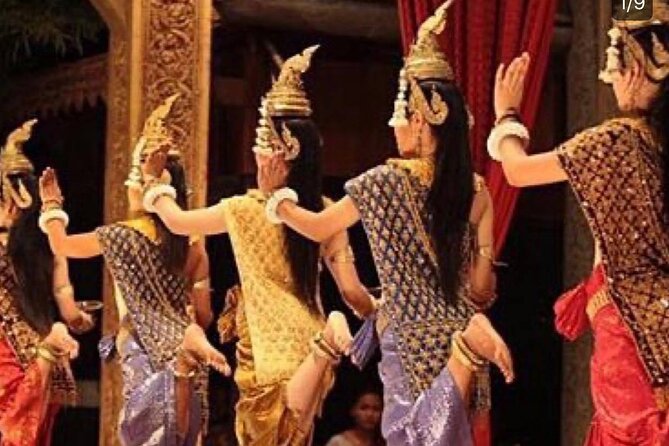
Angkor Wat sunsets can turn into a scramble—lines, noise, and people in your space. The best part of this tour setup is that it’s built as a full evening run, not just a late drop-off at the gate. You’re moving through key temple stops as the light changes, and then you’re set up for the big moment at Phnom Bakheng Hill.
The itinerary is temple-forward: you start with Angkor Wat itself during sunset time and you’re guided through other iconic sites on the same evening arc. Expect the kind of pacing where you get photos, explanations, and enough time to look without feeling like a conveyor belt.
A practical bonus: guides in this company’s orbit (like Mr. Pich and Davann) are repeatedly praised for beating crowds and keeping things moving. That matters here, because Angkor Wat is at its most crowded exactly when everyone wants the same view.
You can also read our reviews of more evening experiences in Siem Reap
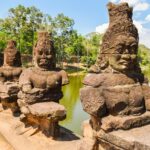
Angkor Thom and Bayon’s giant faces: your first jaw-drop moment
Before the sunset view hits, you get the warm-up that makes Angkor feel instantly real. Angkor Thom is the setting, and Bayon is the showpiece, with its famous face towers. This stop works well because it gives you a sense of scale before you’re surrounded by more intricate stone detail.
Here’s why I think this order helps: Bayon’s faces are a strong visual anchor. You can orient yourself fast, then when Ta Prohm starts pulling you in with its tree roots, you’ll recognize what kind of architecture you’re actually looking at.
Also, a good guide changes this from sightseeing into understanding. People highlight how guides like Davann explain the history and culture clearly, and that tends to make Bayon and its symbolism stick in your memory.
Ta Prohm and Banteay Kdei: when the temples look alive
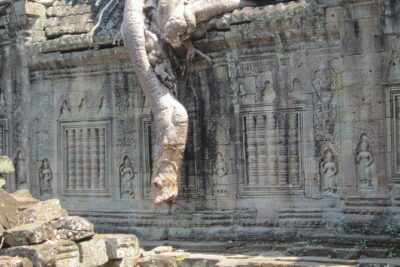
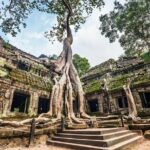
Ta Prohm is the temple people picture before they ever land in Siem Reap. The plan here includes Ta Prohm specifically, and that’s a smart choice because it has that dramatic mix of stone and nature. It’s also one of the most photographic locations in the Angkor region, so having a pro photographer along helps you get better angles without wasting your energy.
Then you shift to Banteay Kdei. This site is less of the global-famous headline than Ta Prohm, but that’s exactly why it’s valuable. It gives you a breather from the densest crowds and a chance to notice carvings and structure without feeling like you’re fighting for a spot.
If you’re sensitive to heat, it’s worth knowing the tours here are not rigid. Reviews mention guides being patient and taking frequent breaks when it’s hot. That’s not guaranteed for every moment, but it’s a good sign that the team takes comfort seriously.
Phnom Bakheng Hill: the classic sunset payoff (and the climb to earn it)
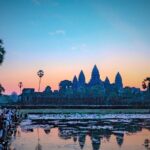
Phnom Bakheng Hill is where the evening tightens. The tour includes ascending for a sunset vista over the Angkor Wat complex, and that’s the part you came for—the view that looks like layers of time stacked under the sky.
Just be honest with yourself about the physical side. This is a climb, and Cambodia in the late day can still feel warm even when the sun drops. Bring your water discipline seriously. The tour includes mineral water, but you’ll still want to pace your body like you mean it.
I also appreciate that this isn’t billed as a quick photo and run. The route includes multiple temples before you reach the hill, which means you’re already in the mindset—and if timing is good, the crowds will feel less chaotic than if you show up at the last second.
The Siem Reap day beyond temples: markets, studio work, silk, and a blessing
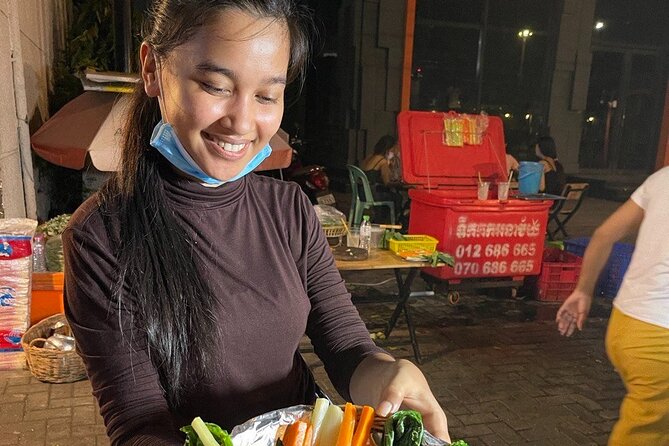
Not all of your day is about Angkor stone. The tour description also points to a more everyday Siem Reap slice, which I genuinely like for first-time visitors. It keeps the day from being only monuments on repeat.
You can expect visits connected to daily life and local craft: local markets, a traditional art studio, and a silk farm. This is where your guide’s explanations can really earn their keep. When someone can connect what you see—tools, materials, process—to local culture, the experience becomes more than sightseeing.
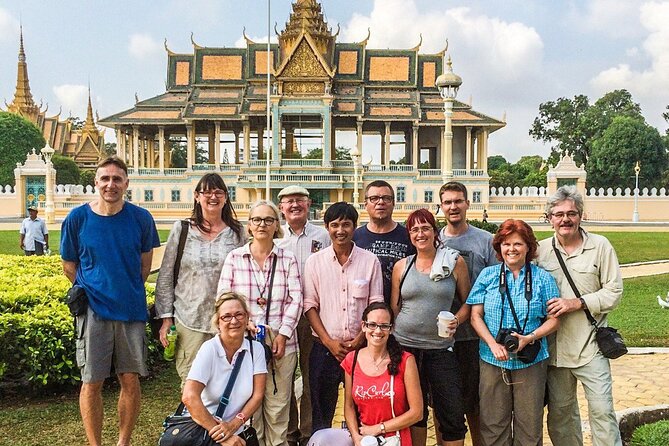
The plan also includes a blessing at Preah Ang Chek Preah Ang Chorm pagoda in Siem Reap’s Royal Park. That’s a calmer, more spiritual contrast to the temple rush. It also gives you a different kind of photo subject: not grand vistas, but people, ceremony space, and atmosphere.
One more angle: the tour is described as private, and that usually means you can move at a comfortable pace. You’re not trapped behind a big bus group, which helps if you need a break or want a slower look at the details.
Your guide and the included photographer: better explanations, better photos
This is where the tour earns a lot of its near-perfect ratings. A big chunk of the praise is about guides being excellent in English and strong on history and culture. Names that come up in reviews include Mr. Pich, Davann, and Mr. Phairom—people call them patient, funny, and able to explain the sites in a way that makes sense.
There’s also a practical reason to bring a guide: navigating Angkor is not just about finding the temples. It’s about timing, routes, and where to stand for sunset. Reviews mention guides helping with crowd control and finding good spots for sunset viewing.
Then there’s the photography. This tour includes a professional photographer, and reviews call out how guides went beyond by taking lots of photos and capturing good shots. If you care about getting images that actually look like you had it together, this is a worthwhile add-on built into the package.
Small bonus: tissue and mineral water are included, which sounds basic until you’re sweating and the day has a lot of walking. It’s the kind of comfort that lets you stay focused.
Custom stops you can add: National Museum or Night Market
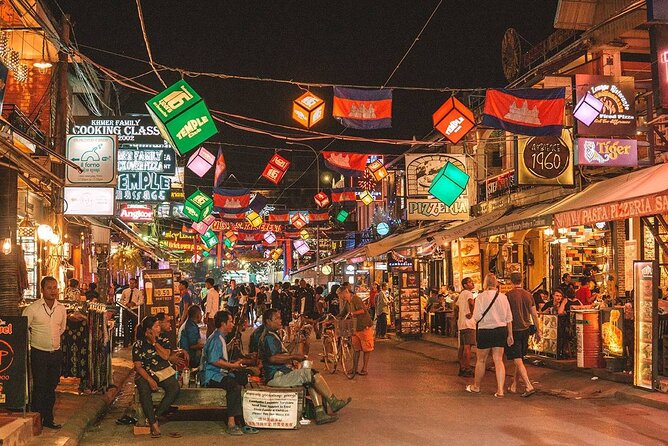
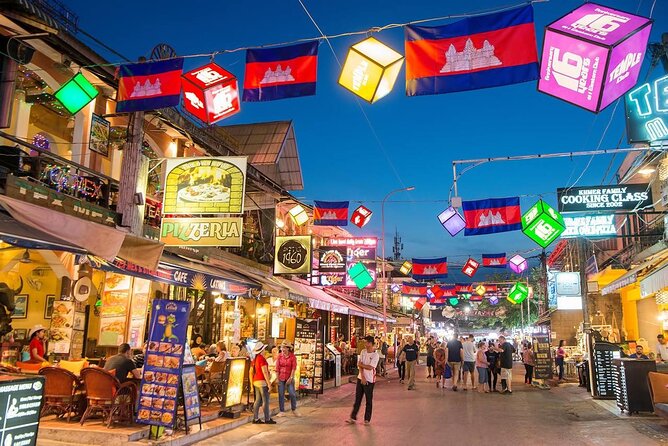
One of the nicer things here is flexibility. The tour description says you can customize your day by adding extra stops such as the National Museum or the Night Market.
This matters because Angkor can swallow your schedule if you let it. If you want a bit more context about Cambodian history (museum) or a more local evening vibe (night market), you can shape the end of your trip around what you like rather than what the itinerary forces.
If you add stops, just remember the day is already packed with sunset travel and temple time. Choose one meaningful addition rather than stacking everything just because it’s available.
Price and value: what $60 covers, and what you still handle
At $60, this is positioned as strong value for an Angkor-focused day, especially because it includes several things that usually cost extra.
From the included list, you get:
- an English-speaking professional guide
- a professional photographer
- a luxury private car/van with round-trip hotel transfers
- mineral water and tissue
- natural fruits on tours
- a mobile ticket
- a complimentary, roughly hour-long massage at the end
- an Angkor Wat admission ticket listed as free in the tour details
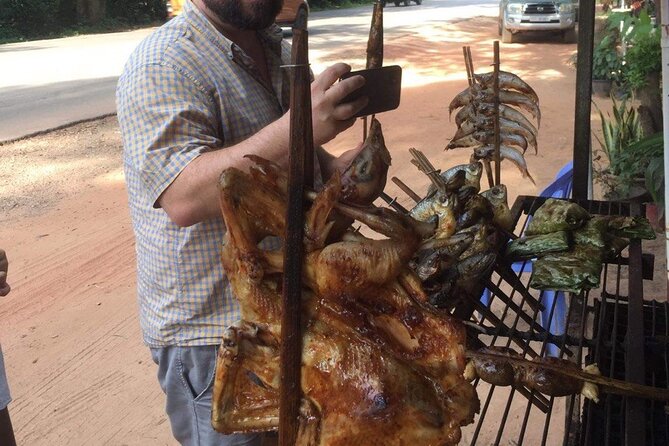
What you do not get: food and drinks. That’s the main budget watch. You’ll want to plan for a simple dinner or snacks on your own, especially because temple days can stretch longer than you expect.
A quick value reality check: what makes this worth it is not the temples alone. It’s the bundle of guide + transportation + photo help + massage recovery. That’s the part that reduces stress and increases the chance you’ll walk away with great photos and a calmer body.
Comfort and pacing: how to make a long day feel easier
Even when a tour is well-run, Angkor is still Angkor. Here’s how to make this day feel smoother with what’s already built in.
Use the included water and fruits early, not just when you’re already tired. Since food and drinks aren’t included, you’ll benefit from eating at predictable times. If you’re the type who forgets to drink until you’re thirsty, set a reminder.
Also, take your breaks. Reviews mention guides assisting with frequent pauses when it’s hot, and that’s a sign they’ll handle comfort needs. You don’t want to “push through” and then miss the sunset moment because you’re wiped out.
Finally, think about footwear. The climb to Phnom Bakheng Hill and the temple walking can be uneven. Comfortable shoes matter more here than fashion.
Who this tour suits best (and who might want a different fit)
This tour is a great fit if you want:
- a sunset-centered Angkor Wat plan
- a guide who can explain history and culture in clear English
- included pro photography so you spend less time scrambling for angles
- private comfort with hotel transfers
- and an end-of-day massage so you don’t spend the evening feeling wrecked
It might be less ideal if you strongly prefer totally self-guided temple hopping with no schedule. Also, if you have limited mobility or you know climbs and longer walking are a challenge, you should be cautious about the Phnom Bakheng Hill ascent. The tour is private, so you can ask about pacing, but the viewpoint part is still part of the experience.
Should you book this Angkor Wat sunset with massage?
If you want an Angkor Wat sunset that feels managed rather than chaotic, I’d book it. The mix of major temples (Angkor Thom/Bayon, Ta Prohm, Banteay Kdei), the Phnom Bakheng Hill sunset plan, and the included photographer is a strong combination for first-timers and people who want great photos without doing the work.
I’d book it especially if you like the idea of ending with a complimentary roughly hour-long massage. Temple days can be intense, and this is one of the few packages that treats recovery like part of the itinerary.
Just don’t forget the one big catch: food and drinks are on you. If you plan for that—simple meal timing, some snacks you can buy nearby, and smart water use—you’ll get a day that’s memorable, not stressful.
FAQ
FAQ
How long is the Angkor Wat sunset tour?
The tour is listed as about 1 day and 30 minutes (approx.). The Angkor Wat portion is described with an 8-hour duration.
Is pickup from my hotel included?
Yes. The tour includes round-trip hotel transfers, and pickup is offered.
Is this tour private?
Yes. It’s described as a private tour/activity, so only your group participates.
Does the tour include a professional photographer?
Yes. A professional photographer is included.
Is food included?
No. Food and drinks are not included, though mineral water and natural fruits are included on the tour.
Where does the sunset viewpoint happen?
The tour includes ascending Phnom Bakheng Hill for a sunset vista over the Angkor Wat complex.
Can I customize the day with extra stops?
Yes. You can customize the tour with additional stops such as the National Museum or the Night Market.
Do I need to bring tickets or a printed ticket?
A mobile ticket is included, so you likely won’t need to rely on printed maps or paper tickets.
Is there an included massage at the end?
Yes. There is a complimentary massage at the end of the day, roughly an hour long.
What is the cancellation policy?
Free cancellation is available up to 24 hours in advance of the experience start time for a full refund. If you cancel less than 24 hours before, the amount paid is not refunded.