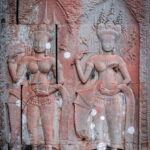
REVIEW · SIEM REAP
Siem Reap: 1 Day Angkor Wat + Sunrise Private Tour with Tuk-Tuk
Book on Viator →Operated by Siem Reap Angkor Airport Taxi transfer ( from airport to hotel ) · Bookable on Viator
Sunrise at Angkor Wat changes your whole pace. This private 1-day tour lets you choose a sunrise start time (or later morning), then sets you up for a full day inside Angkor’s main temple circuit. I like that the plan is built around your schedule, with hotel pickup and a private tuk-tuk/car/van that keeps the day feeling easy.
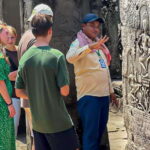
The second thing I like is the English-speaking driver setup, which means you can still ask questions without being forced into a strict group-tour script. I also appreciate the little comforts that make long temple hours more manageable, like cold drinking water (and in at least one memorable day with driver Bun Chhoeun, cold wet towels). One possible drawback: temple entrance fees are not included, so you’ll need to factor in the Angkor 1-day pass cost, plus be ready for substantial walking on uneven stone.
In This Review
- Key reasons this Angkor Wat day feels worth it
- Sunrise or a later start: how the timing works
- Private tuk-tuk comfort (and why it changes the day)
- Budget reality: temple tickets are the main extra cost
- Angkor Wat at sunrise: the payoff stop
- Ta Keo and Ta Prohm: the contrast that keeps the day interesting
- Ta Keo (about 1 hour)
- Ta Prohm (about 1 hour)
- Banteay Kdei and Srah Srang: where the day slows down
- Banteay Kdei (about 1 hour)
- Srah Srang (about 30 minutes)
- Bayon Temple in Angkor Thom: the final big set piece
- How to pace yourself inside a 6–8 hour day
- Who this tour fits best (and who might want a different style)
- Should you book this private Angkor Wat sunrise day trip?
- FAQ
- What is included in the tour price?
- Are temple entrance tickets included?
- Does the tour include a tour guide?
- Can I choose a sunrise departure?
- How long is the tour?
- How many people can be on the tour?
- What if weather affects the tour?
Key reasons this Angkor Wat day feels worth it

- Sunrise option (4:30–5:00 AM) so you can arrive before peak crowds for the iconic first light
- Private tuk-tuk or car/van for a small group (up to 4 per group booking)
- English-speaking driver, not a guide for a more budget-friendly, self-paced feel
- Route covers the big names plus the quieter stops like Srah Srang and Banteay Kdei
- Long time in the park (about 7–8 hours at temples) with flexibility to slow down
- Cold water included, which you’ll genuinely appreciate during a long morning
Sunrise or a later start: how the timing works
This is a one-day Angkor Wat plan, but you get to choose when your day begins. If you want sunrise, you pick a departure window around 4:30 to 5:00 AM. If sunrise isn’t your priority, you can start later after breakfast—still early enough to get good temple time without feeling like you’re fighting the whole day.
Why this matters: Angkor is huge, and the most popular areas fill up fast. Arriving at Angkor Wat early means you see the place in calmer light and with more breathing room for photos and walking. Starting later can work too—it just shifts the experience from dawn-magic to daytime energy.
The tour runs about 6 to 8 hours total, and you’ll spend a big chunk of that in the archaeological park, described as 7–8 hours of temple time once you’re in. In other words, you’re not doing a quick drive-by. You’re doing a real day of temple viewing, with time to stop, look, and come back for another angle if something grabs you.
Practical tip: if sunrise is your goal, plan your sleep the night before like you mean it. An early start is the trade for a calmer Angkor Wat. If you’re not an early-morning person, a later departure can still feel satisfying—just set expectations accordingly.
You can also read our reviews of more private tours in Siem Reap
Private tuk-tuk comfort (and why it changes the day)
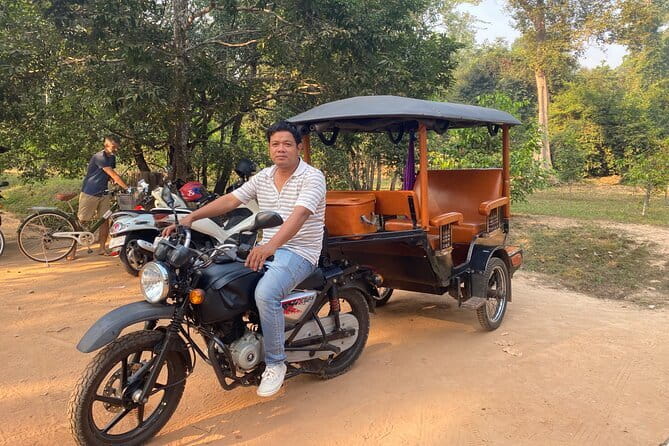
You’re not stuck waiting for a bus load of people. This tour is private, meaning only your group rides together. That matters at Angkor, where every minute between temples adds up—and where you’ll want the freedom to adjust your pace.
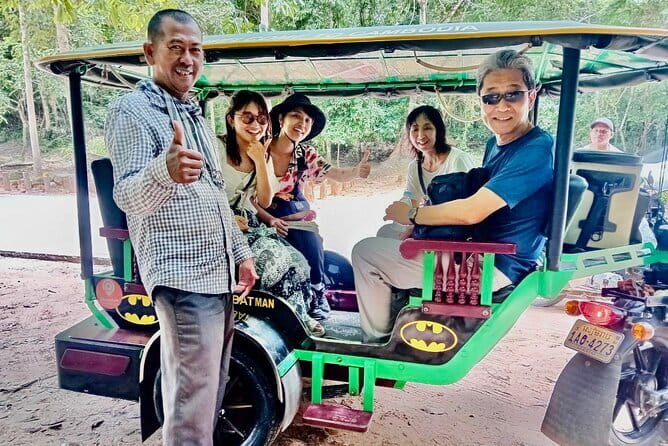
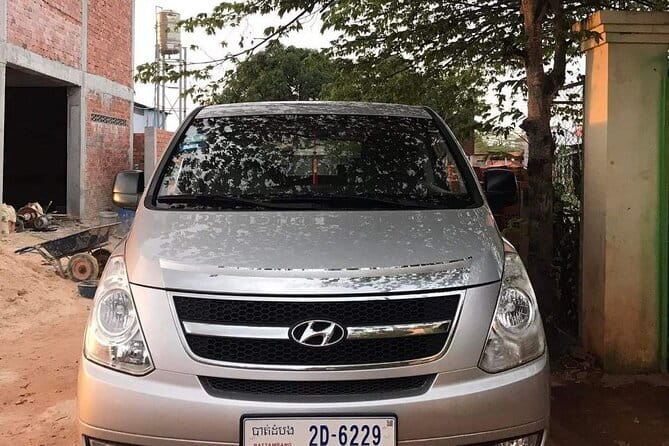
Transport is handled by a private vehicle, with options listed as tuk-tuk / car / van. Tuk-tuk is the classic Siem Reap way to do Angkor, and it’s also great for getting around the site efficiently. A car or van can feel easier if you’re more sensitive to bumpy roads or you simply want a smoother ride.
The driver experience is also a big part of the value. You get an English-speaking driver, plus cold drinking water and local items included like parking, gas, and local taxes. That’s helpful because it means you’re not constantly thinking about logistics while you’re trying to focus on temples.
What I’d watch for: the tour does require a strong physical fitness level. Angkor isn’t just pretty buildings; it’s stairs, stone surfaces, and walking between different temple areas. If mobility is an issue, you may want to consider a slower pace or a tour that specifically highlights fewer stops.
Budget reality: temple tickets are the main extra cost
The price you pay for the tour covers transport and the driver, but temple entrance tickets are not included. The tour info lists an Angkor 1-day pass at $37.00 per person.
Here’s how to think about value: if you’re traveling as a small group, the tour fee can look surprisingly low per person, but the ticket fee is the real baseline cost you’ll pay either way on most Angkor temple days. So your total budget isn’t just the tour price—it’s tour + entry pass.
Also note that the ticket format is described as mobile ticket, which can make the day less annoying at the entrance. You’ll want to keep your phone charged and have your details ready.
My advice: once you’ve decided on 1-day vs longer, do the math early. If your group is set on a full day of the main temples, this kind of private route can be cost-effective because you’re not paying for a separate guide service on top of transportation.
Angkor Wat at sunrise: the payoff stop
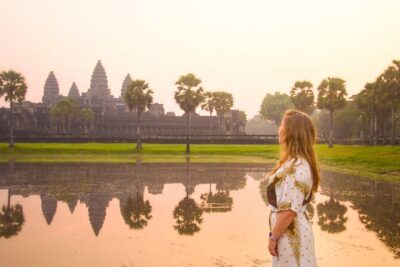
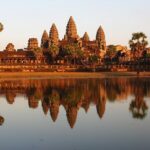
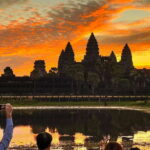
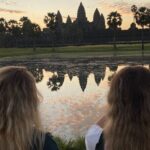
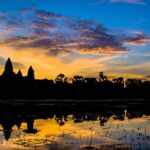
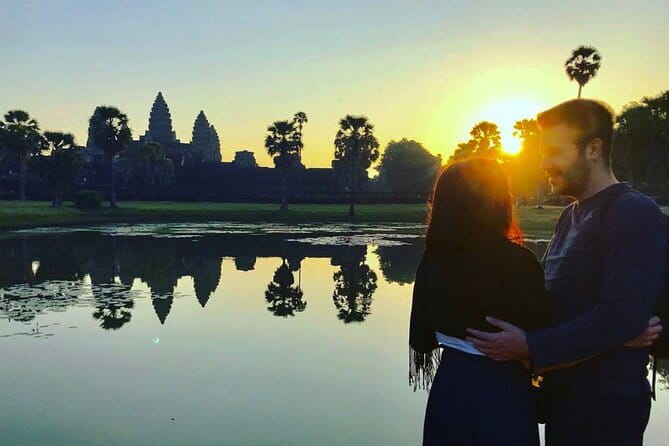
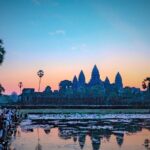
Angkor Wat is the headline temple, and this tour puts it first. You get about 2 hours at Angkor Wat, and the tour is designed to match either sunrise timing or a morning start.
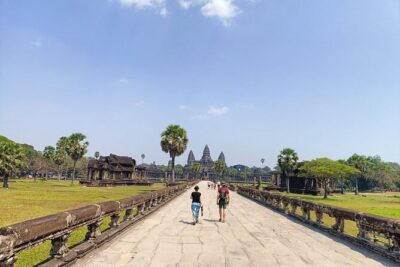
What makes Angkor Wat special on an early tour: the light. Dawn light changes how the stone reads—textures show up differently, and you can often walk and pause without feeling rushed. Even if you’ve seen photos before, standing in the place you recognize from every brochure hits differently when the site is calmer.
What you can realistically do in around 2 hours:
- Walk the main approach and take in the temple’s scale
- Spend time looking at key carvings and architectural details
- Pause for photos without sprinting to the next stop
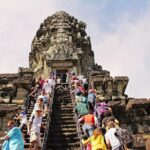
A possible drawback: sunrise can mean short nights and big crowds of a different kind. Sunrise often draws visitors from all over, even when it’s calmer than later. If you want quiet more than iconic light, a later departure might suit you better.
Ta Keo and Ta Prohm: the contrast that keeps the day interesting
After Angkor Wat, the route adds temples that make the day feel like more than just one big famous stop.
You can also read our reviews of more tours and experiences in Siem Reap

Ta Keo (about 1 hour)
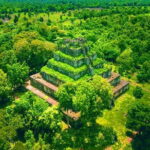
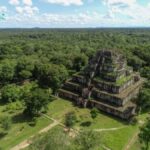
Ta Keo is described as one of the tallest monuments of Angkor, and it’s positioned near Angkor Thom. It’s a mountain temple built under Jayavarman V, and it carries that classic “step pyramid” feeling—big lines, strong symmetry, and lots of visual momentum as you climb or look upward.
In a half-hour or rushed visit, Ta Keo can feel like scenery you pass through. With an hour, you get time to actually notice what the structure is doing and how it frames the surroundings.
Drawback to keep in mind: the height and steps mean you’ll feel the climb. If your legs are already tired from an early start, pace yourself.
Ta Prohm (about 1 hour)
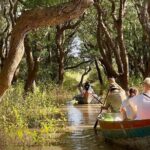
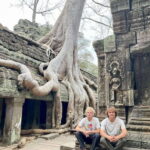
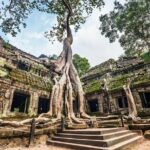
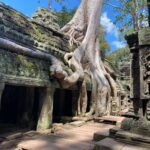
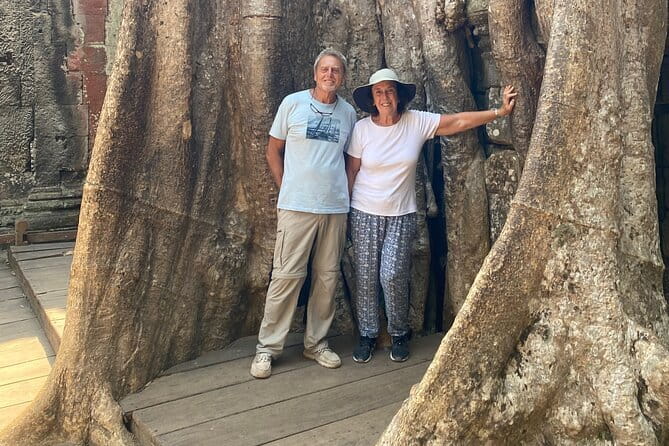
Ta Prohm is famous for a very specific vibe: it’s often called the Tomb Raider temple because of movie filming. The attraction isn’t just history; it’s the visual drama—tree roots and stone creating a kind of wild, tangled atmosphere that feels alive.
This is the stop where many people suddenly understand why they needed more than a single temple. Ta Prohm plays like a scene: you look up, look around, then look again because the framing keeps changing.
Potential consideration: popular temples can get busy, and Ta Prohm is one of them. If you prefer calm, go a little slower at the edges—don’t only center your time on the most photographed spots.
Banteay Kdei and Srah Srang: where the day slows down
These two stops can be your reward for seeing the “big three” first. They’re still important, but the vibe is more relaxed.
Banteay Kdei (about 1 hour)
Banteay Kdei is described as the Citadel of Monks’ cells and is a Buddhist temple located southeast of Ta Prohm and east of Angkor Thom. What I like about including it is contrast. After the movie-famous drama of Ta Prohm, Banteay Kdei feels more like an architectural walk—less of a single iconic image and more of a place to observe layouts and details.
In practice, an hour is a good amount of time. Long enough to notice the structure, short enough that you don’t end up exhausted before the final major stop.
Srah Srang (about 30 minutes)
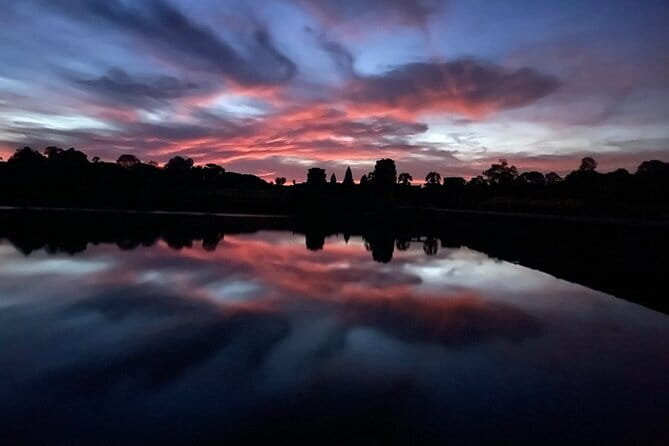
Srah Srang is a reservoir area called the Royal Bath, surrounded by greenery. This stop works as a breather. It gives your feet a rest while your eyes reset to open space and reflective surfaces rather than stone corridors and stairways.
Because your time here is about 30 minutes, treat it as a pause stop: walk the area at an easy pace, look for the pool reflections, then rejoin the temple circuit.
Bayon Temple in Angkor Thom: the final big set piece
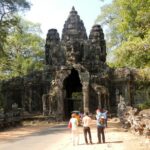
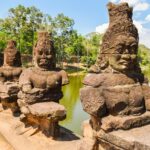
Bayon Temple is where many people feel the “full Angkor” experience click into place. You’re going to Angkor Thom, described as the capital city, and Bayon is richly decorated and tied to Buddhism. It’s built in the late 12th to early 13th century as a state temple.
You get about 2 hours here, which is exactly right. Bayon is not a single photo moment. You’ll want time to walk around and look at how the faces and carvings repeat across the structure. Two hours also helps if you’re taking breaks, because Bayon often invites slower viewing.
Practical expectation: Bayon is one of the most demanding temples in terms of time-on-stone—stairs, uneven surfaces, and lots of turning. The extra hour compared to some other stops can make the difference between rushing and enjoying.
How to pace yourself inside a 6–8 hour day
A day like this can feel like a lot on paper, but it works when you treat it as a flow rather than a checklist. The tour is set up so you’re hitting major sites, but you’re not limited to frantic minute-by-minute transitions.
Here’s how I’d make the timing feel good for you:
- Start with Angkor Wat (especially if sunrise), then move on while your energy is highest
- At Ta Prohm and Bayon, slow down. Those are the places where looking longer actually improves the experience
- Use Banteay Kdei and Srah Srang as natural “cool-down stops” in your day
- Keep an eye on hydration. Cold bottled water is included, so drink regularly rather than waiting until you feel overheated
Also, remember the tour’s physical requirement. Strong fitness is recommended, which usually means you should expect steady walking. If you need to take frequent rests, build that into your plan by not trying to sprint from spot to spot.
Who this tour fits best (and who might want a different style)
This is a great fit if you want:
- A private day with your own transport, not a group bus feel
- An English-speaking driver to handle route and logistics while you explore
- A route that covers Angkor Wat plus several core stops like Ta Prohm and Bayon
- A budget-friendly approach that does not require paying for an extra tour guide
It’s less of a fit if you:
- Want a full, guided temple lecture at each site (the tour explicitly does not include a tour guide)
- Need an itinerary with fewer stairs and less walking than a typical Angkor circuit
- Prefer to pay only a single flat price and avoid the extra temple pass step (because the tickets are not included)
One more thought: the tour offers flexibility in the itinerary, and it’s set up so you can spend time at the temples as much as you can. That’s ideal if you like to linger where your eyes land. If you like being led, timed, and explained constantly, you might find a guided option better.
Should you book this private Angkor Wat sunrise day trip?
I think you should book it if you want a classic Angkor day with the freedom of a private vehicle and the option to catch sunrise. The route makes logical sense: Angkor Wat first, then Ta Keo and Ta Prohm for contrast, followed by Banteay Kdei and Srah Srang for a slower rhythm, and ending with Bayon for that big Angkor Thom feeling.
You might hesitate if you dislike early mornings, don’t want the extra $37 per person temple pass cost, or you need a gentler pace. And because there’s no separate tour guide included, it’s best for people who are comfortable exploring at their own speed.
For many people, this is the sweet spot: you pay for transport and time, then you spend your day looking at temples—without turning the day into a lecture.
FAQ
What is included in the tour price?
The tour includes an English-speaking driver, hotel pick-up and drop-off, cold bottled drinking water, local taxes, parking, gasoline, and private travel by tuk-tuk, car, or van. Temple entrance tickets and food and beverages are not included.
Are temple entrance tickets included?
No. Temple entrance tickets are not included. The tour info says the 1-day pass covers all the temples and costs $37.00 per person.
Does the tour include a tour guide?
No. The tour includes an English-speaking driver, but it does not include a tour guide.
Can I choose a sunrise departure?
Yes. If you want sunrise, you should select a departure time between 4:30 and 5:00 AM.
How long is the tour?
The tour is listed as about 6 to 8 hours. You’ll spend about 7 to 8 hours exploring the temples during the tour time.
How many people can be on the tour?
This is a private tour for your group, and the pricing is listed as $23.00 per group up to 4 people.
What if weather affects the tour?
The tour requires good weather. If it’s canceled due to poor weather, you’ll be offered a different date or a full refund.