REVIEW · SIEM REAP
Angkor Wat: Tuk Tuk and Walking Tour
Book on GetYourGuide →Operated by Journey Cambodia · Bookable on GetYourGuide
Temples can feel overwhelming. This day blends private tuk-tuk comfort with on-foot temple time, so you can actually enjoy Angkor instead of just sprinting through it. I like how it keeps the focus on the Khmer story as you move from Angkor Thom to Bayon and then onto the famous jungle setting of Ta Prohm. One thing to keep in mind: the walking adds up fast.
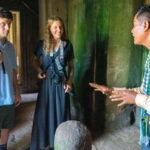
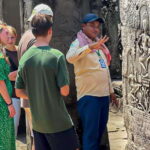
What I like most is the combination of an English-speaking local guide and the chance to see the Angkor ruins at a human pace. Guides such as Sam, Monirom, Poleak, and Bun have been praised for explaining not just temple details, but also Khmer culture and everyday life in a way that makes the stones feel less random. The tour also includes bottled water and soft drinks, so you’re not scrambling for basics mid-day.
The main consideration is physical: you’ll cover a lot on foot, with estimates around 9 miles total. If your legs are fragile, plan on going slower than you might at home.
In This Review
- Key points at a glance
- Why a private tuk-tuk makes Angkor feel manageable
- Eastern Gate to Angkor Thom: switching from rides to real temple sightlines
- Bayon Temple: giant faces, emotional scale, and smart pacing
- The Dead Gate climb and city-wall walking
- Victory Gate: where the Khmer Empire story gets physical
- Ta Prohm: the jungle temple effect without the chaos
- Hidden forest tracks and the value of letting time breathe
- Lunch reality: plan for a real break, not a quick bite
- Price and value: $49 is the tour engine, not the full ticket bill
- What to wear and bring for an Angkor day that lasts
- Walking distance and who should book (and who should skip)
- Guide quality: what makes the difference between seeing and understanding
- Should you book this Angkor Wat tuk-tuk and walking tour?
- FAQ
- How long is the Angkor Wat tuk-tuk and walking tour?
- Does the tour include hotel pickup and drop-off?
- What’s included in the $49 per person price?
- Are entrance fees included?
- Is lunch included?
- Is the tour guide available in English?
- What should I bring and wear?
- Is this tour suitable for people with mobility impairments?
Key points at a glance
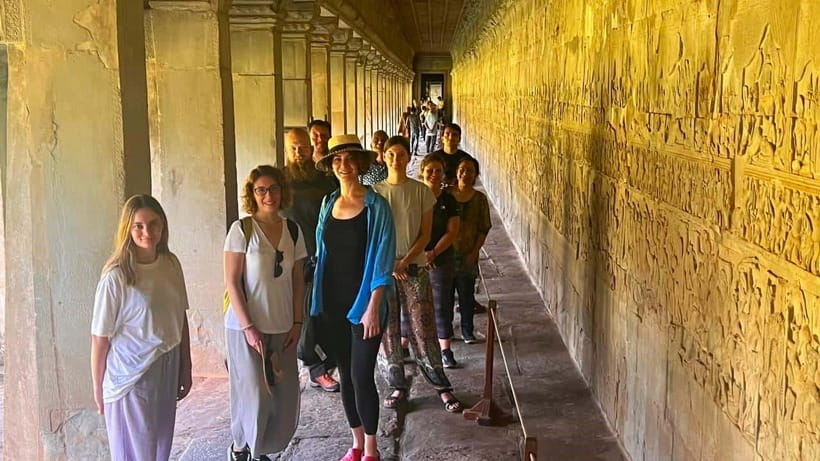
- Private tuk-tuk pickup from your Siem Reap hotel, with guided temple time in between
- Angkor Thom on foot: Bayon, the Dead Gate climb, and city-wall walking
- Ta Prohm jungle atmosphere with that signature root-through-stone look
- Skip-the-ticket-line entry approach so you spend more time inside ruins
- English live guide who can connect temple history to daily Khmer life
Why a private tuk-tuk makes Angkor feel manageable
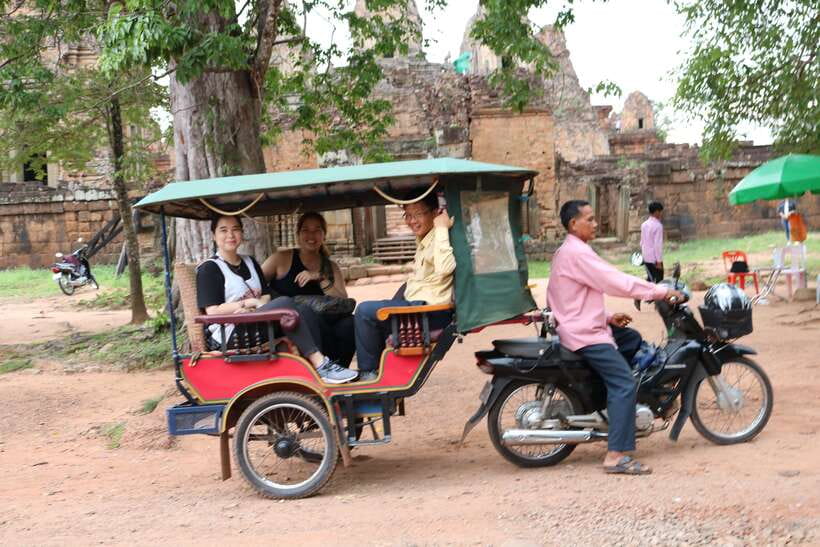
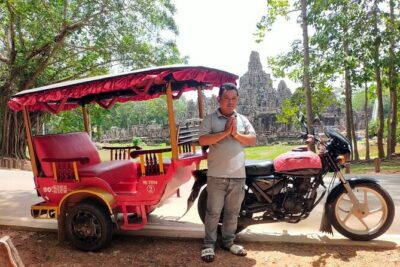
Angkor is huge, and it’s easy to burn the whole day in transit and ticket lines. This tour smartly uses a private tuk-tuk to move you between major zones, then switches to walking when it matters most.
That mix is the difference between seeing Angkor as a checklist and seeing it as a place. When you arrive by tuk-tuk, you can start earlier in the day’s light and energy, and you spend your legs where you get the best views and the most atmosphere. It also helps you avoid the most frustrating parts of temple days: long waits and random routing.
You’ll also get practical comfort built in. Bottled water and soft drinks are included, and since you’re not driving yourself, you can focus on the ruins instead of the logistics.
You can also read our reviews of more walking tours in Siem Reap
Eastern Gate to Angkor Thom: switching from rides to real temple sightlines
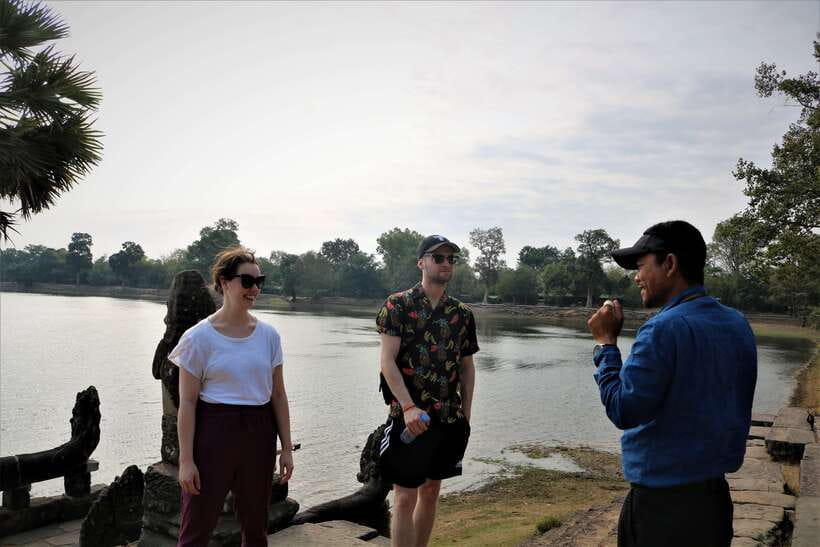
Your day begins with pickup from your Siem Reap hotel, then a tuk-tuk ride toward Angkor’s eastern gate. That first approach matters. The eastern gate sets the tone: grand, ceremonial, and clearly meant to funnel people into the ancient city’s big ideas.
From there, the tour keeps you moving on foot through Angkor Thom, which is the city area people most associate with the Khmer imperial power phase. Walking here helps because the scale changes as you go. Up close, the stonework stops being “old” and starts being specific: carved faces, doorways that force you into certain sightlines, and paths that feel intentionally designed.
The guide’s job during this section is to connect what you see to the Khmer Empire’s world. You’re not just looking at rocks—you’re learning what the spaces were for and why the city was laid out the way it was. Guides like Poleak and Monirom have been specifically praised for covering Khmer culture and everyday life, which I think is key for Angkor. Without context, temples can feel like scenery. With context, they feel like lived architecture.
Bayon Temple: giant faces, emotional scale, and smart pacing
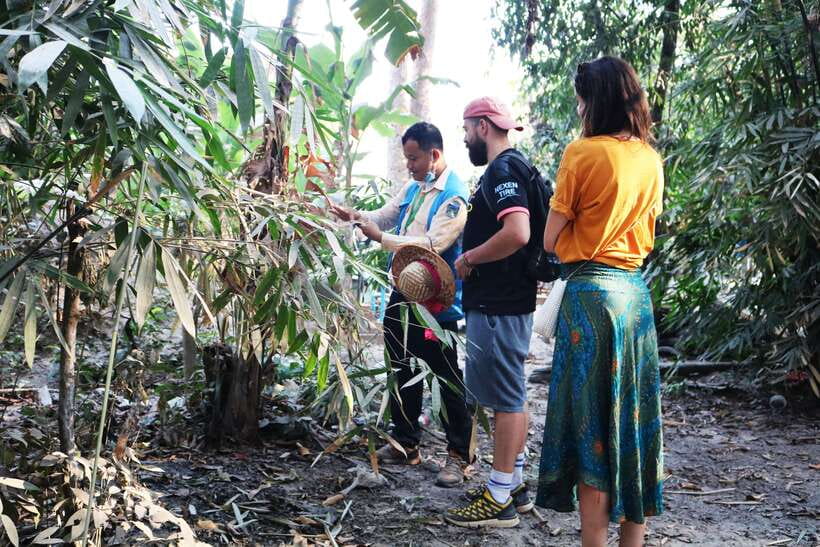
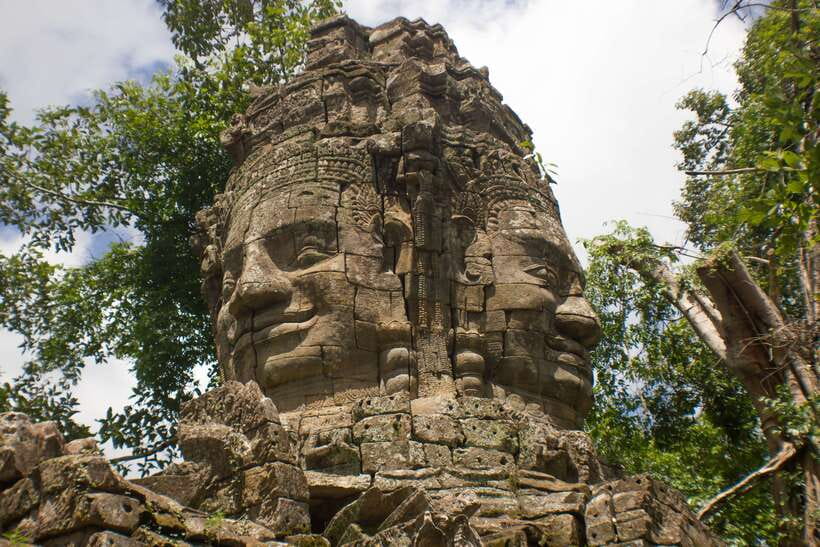
Bayon is famous for a reason: those giant stone faces are instantly recognizable. What you want on a day like this is time to look without rushing, because the faces show different expressions depending on your angle and where the light hits.
On this tour, Bayon sits in the sequence right after you’ve entered the Angkor Thom zone. That timing helps. You’ve already learned how the city works, so Bayon feels like the centerpiece rather than a random stop.
What makes Bayon special for many people is not just the famous faces. It’s how the temple layout funnels you through a maze of passageways and sight points. The guide’s explanations help you interpret the stone scenes around you, which makes the complex feel less confusing. You also learn to notice details you might otherwise miss in the crowd noise—doorways, changing elevations, and the way the stone carvings relate to the rest of the complex.
The Dead Gate climb and city-wall walking
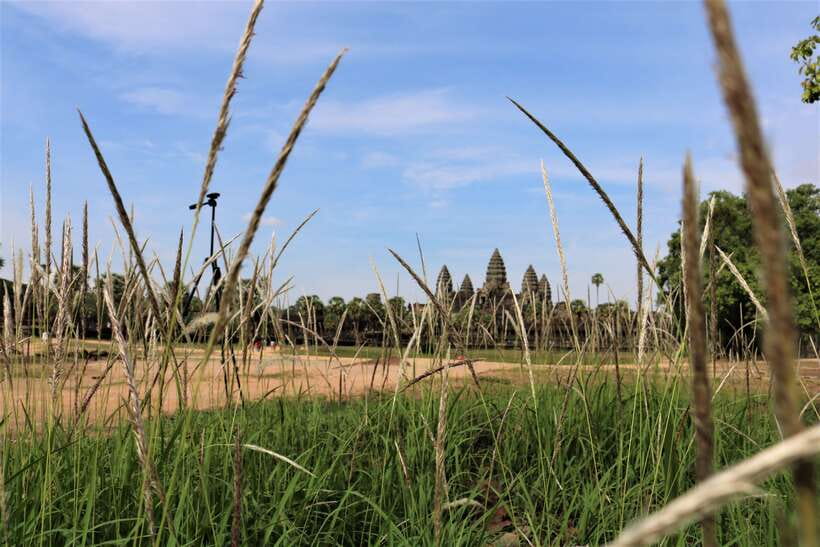
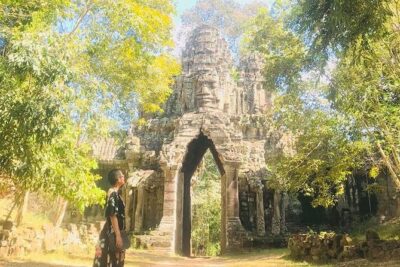
After Bayon, the tour includes climbing the Dead Gate and then walking along old city walls, with the Victory Gate in the story mix.
This part is worth paying attention to because it changes the experience from “temple inside” to “city overview.” When you’re up higher on the walls, Angkor’s scale becomes real. You can see how the city was designed for control, movement, and ceremony—things the casual photo angle can’t explain.
The Dead Gate is also a great lesson in the way Angkor used thresholds. Dead Gates and major gateways aren’t just decorative; they’re part of the city’s symbolic flow. With a live English guide, you get the meaning behind the names and what kinds of visitors and warriors would have moved through spaces like these.
If you’re someone who likes stories, this section gives you plenty: gates that sound dramatic because they were in real life, paths that were meant to be taken in a certain order, and walls that make the city feel like a plan rather than a pile of ruins.
Victory Gate: where the Khmer Empire story gets physical
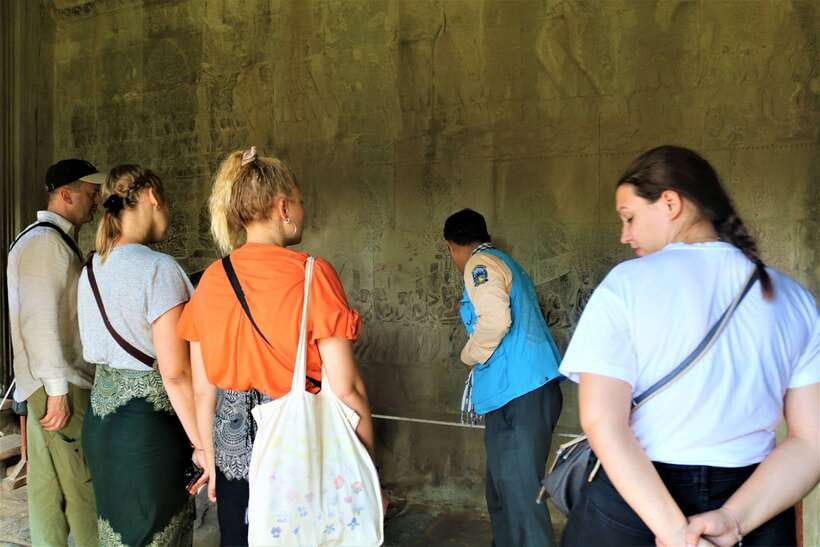
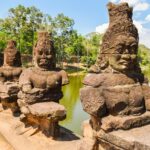
The tour doesn’t treat Victory Gate like a quick photo stop. It places it inside the larger narrative of brave warriors marching and the imperial mindset behind the design.
That matters because Angkor’s best moments aren’t only architectural. They’re emotional. You feel something different when you understand that the stone route you’re walking was once part of public life and power display. Even if you don’t know the exact Khmer dynastic timeline, the guide should help you grasp the city’s purpose.
I like that this tour sequence keeps you from jumping randomly between temples. You’re essentially walking through a living story: enter the city, see the symbolic center (Bayon), climb and move through gates, then enjoy elevated viewpoints on walls. It makes the whole Angkor Thom area more coherent.

Ta Prohm: the jungle temple effect without the chaos
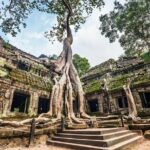
After lunch, the tour heads to Ta Prohm, the famous jungle temple where trees grow right through the ruins. This stop is usually why people book Angkor in the first place, because it looks like the rediscovery chapter of history is still happening right in front of you.
Ta Prohm’s magic is visual and slow. Roots grab attention, stones look softened by time and weather, and the shadows can change minute by minute depending on tree cover. The guide’s job here shifts toward interpretation: what the jungle setting does to your understanding of the site, and how it relates to Angkor’s real timeline.
One practical note: Ta Prohm can feel like an obstacle course if the ground is slippery. I’d still come prepared to walk carefully. Comfortable shoes are not optional. You’ll get the best experience by moving at a steady pace and letting the place “show itself,” rather than trying to cover every corner in one sprint.
Hidden forest tracks and the value of letting time breathe
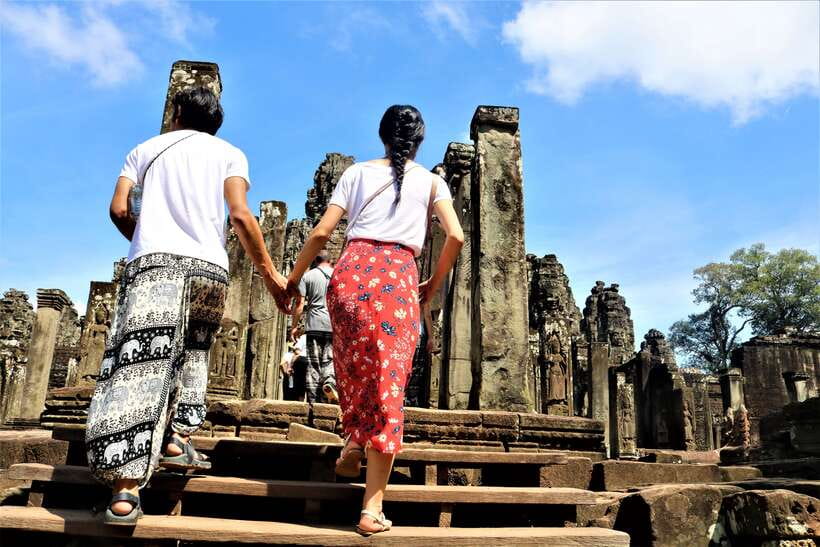
The highlights mention exploring ruins and hidden forest tracks of Angkor temple. That’s the part people often don’t plan for mentally. Most Angkor visitors arrive thinking the day is temples plus photos. Here, you also get some in-between walking—paths that feel more like wandering through an ancient setting than touring a museum.
That changes how the day feels. You get a break from the main viewing areas and the constant crowd noise. It also gives you time to reset your brain, which helps because the day is long and the walking is real.
When I’m choosing an Angkor tour, this is a big value marker. You want the day to include at least a few moments where you’re not always fighting for position in front of the next viewpoint.
Lunch reality: plan for a real break, not a quick bite
Lunch is not included, but your guide usually coordinates a proper stop. In past departures, lunch has been described as delicious at a local restaurant. That’s a good sign because Angkor day tours often rush the meal, which can lead to bad food and even worse timing.
You also should know that weather can affect how the day flows. One guide reportedly adjusted the plan when rain turned paths muddy, skipping a village walk and returning to the tuk-tuk quickly. That kind of flexibility matters in Siem Reap. If the ground gets slick or messy, you’ll enjoy the day more if your guide can make smart calls.
Price and value: $49 is the tour engine, not the full ticket bill
The tour price is $49 per person for a 7-hour experience with hotel pickup/drop-off, a professional local guide, bottled water, soft drinks, and private tuk-tuk transportation.
Temple entrance fees are separate at $37 per person for a 1-day visit, and lunch is not included. So a realistic all-in expectation is that your final total is higher than $49. Still, you’re paying for structure: transportation time saved, a guide to interpret what you’re seeing, and a private tuk-tuk that keeps the day moving.
For many people, Angkor is expensive once entrance fees and meals stack up. In that context, this tour’s base price is appealing because it’s focused on what you can’t easily DIY at a comfortable pace: guided storytelling plus convenient transport between key zones.
If you’re the type who wants to see Bayon and Ta Prohm with meaning (not just photos), the guide component is where the value shows.
What to wear and bring for an Angkor day that lasts
This day works best when you treat it like active travel. Here’s what you should bring:
- Comfortable shoes you trust on uneven, sometimes slick stone
- Insect repellent, because the ruins and jungle areas are not bug-free
- Clothing that fits temple rules: no shorts (you’ll want something that covers enough to feel respectful and comfortable)
- A plan for warmth and shade: the temples are open-air, and the weather can shift quickly, so light layers can help
Also, follow the simple behavior rules listed for the tour. Feeding animals is not allowed, and that’s worth respecting even if you see people doing it elsewhere.
Walking distance and who should book (and who should skip)
This is a tour for people who can handle a full day on foot.
Reviews and planning estimates put the walking around 9 miles total, with temple stairs, gates, and wall segments that can slow you down even if you’re fit. If you have mobility challenges, the tour is not suitable for people with mobility impairments.
If you’re generally healthy and you like history, you should be fine with preparation. The tuk-tuk helps, but you still need to be ready for the main temple legs, especially around Angkor Thom’s varied terrain and the Dead Gate section.
A good strategy is to start the day calm. Don’t walk fast for the first hour. You’ll thank yourself later at Ta Prohm, when the mood is slower and the paths can get tricky.
Guide quality: what makes the difference between seeing and understanding
One reason this tour earns high marks is the guide line-up. Names like Sam, Monirom, Poleak, Bun, and Bob show up in reviews as examples of how different guides deliver the same solid structure with strong English and strong temple context.
What matters most is not just the language. It’s how the guide connects the dots:
- why Bayon’s layout feels the way it does
- what gate names mean in a bigger story
- how the Khmer Empire’s thinking shaped the city design
- how Khmer culture shows up in everyday life, not only in ruins
I especially like the idea of a guide who can explain daily Khmer life alongside the big stone monuments. It makes the day feel more human, which is where Angkor becomes memorable beyond photos.
If you care about photos, it’s also reasonable to ask your guide to pause for pictures at the best angles. One review mentioned wanting more guide help for capturing shots at Angkor Wat’s main temple, which is a fair note if photography is a priority for you.
Should you book this Angkor Wat tuk-tuk and walking tour?
Book it if you want a well-paced Angkor day that mixes private transport with the kinds of walking sections that actually matter for seeing the site’s structure. It’s a strong fit if you like history you can understand on the move, and you prefer a guided story over solo wandering.
Skip it if your legs don’t handle long days. The walking is extensive, and the experience is built around being on foot through Angkor Thom and into the Ta Prohm jungle atmosphere.
If you’re deciding between doing Angkor alone or with a guide, I’d choose guided. Paying for interpretation is often the best way to make sure the day turns into understanding, not just snapshots of stone.
FAQ
How long is the Angkor Wat tuk-tuk and walking tour?
The tour duration is 7 hours.
Does the tour include hotel pickup and drop-off?
Yes. Pickup is included at your hotel in Siem Reap, and you’re brought back at the end of the day.
What’s included in the $49 per person price?
The tour includes bottled water, soft drinks, a professional local guide, hotel pickup and drop-off, and transportation by private tuk-tuk.
Are entrance fees included?
No. Entrance fees at temples are not included, and the listed cost is $37 per person.
Is lunch included?
No. Lunch is not included.
Is the tour guide available in English?
Yes. The live tour guide speaks English.
What should I bring and wear?
Bring comfortable shoes and insect repellent. Shorts are not allowed.
Is this tour suitable for people with mobility impairments?
No. It is not suitable for people with mobility impairments.