REVIEW · SIEM REAP
Angkor Sunrise Expedition Cycling Through Serene Backroads
Book on Viator →Operated by Journey Cambodia · Bookable on Viator
Angkor at sunrise has a way of grabbing your attention fast—then you’re back on a bike instead of stuck in foot traffic. I especially like the early start that lets you experience Angkor Wat with fewer people around, and the serene backroads style of cycling that keeps the day feeling more personal than tour-bus hopping. One thing to plan for: the temple pass fee is not included, so your total cost isn’t just the $69 booking price.
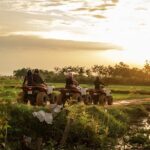
The basic idea is simple. A small group meets around 4:30am, you catch sunrise at Angkor Wat, eat and reset, then pedal about 15–25 km on easy routes through Angkor’s lesser-walked areas. This is an active day (longish hours, early wake-up), but the pace is meant to feel manageable.
In This Review
- Key things I’d mark on your map first
- Why an Angkor Wat sunrise by bike beats the usual crowd chase
- From hotel pickup to the first pedals: what happens around 4:30am
- Stop 1: Angkor Wat at first light (and what to do with the time)
- Breakfast and Srah Srang: why this stop feels calmer on a bike
- Ta Prohm and the back roads: roots, villages, and less time stuck
- Angkor Thom walls: the moat-and-jungle feeling on two wheels
- Bayon faces and the ride back: finishing with a clear payoff
- Price and logistics: is $69 good value for this kind of day?
- What the ride feels like (pace, route choices, and comfort)
- Who should book this Angkor sunrise cycling tour
- Should you book this Angkor Sunrise Expedition in Siem Reap?
- FAQ
- What time does the Angkor Sunrise cycling tour start?
- Is the temple entrance fee included in the $69 price?
- How long is the tour?
- How far do you cycle during the tour?
- Does the tour include a bicycle and helmet?
- Will I have transportation during the day?
- What happens if weather conditions are bad?
- How many people are in the group?
Key things I’d mark on your map first
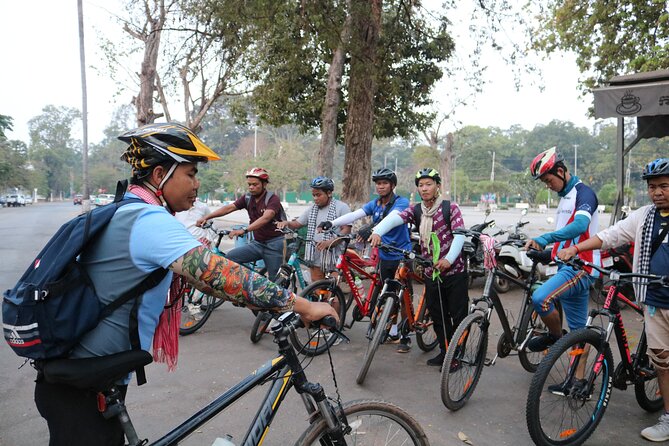
- Small group size (max 9) keeps the ride calm and easier to steer.
- 4:30am pickup window means you’ll be moving before the main crowd energy arrives.
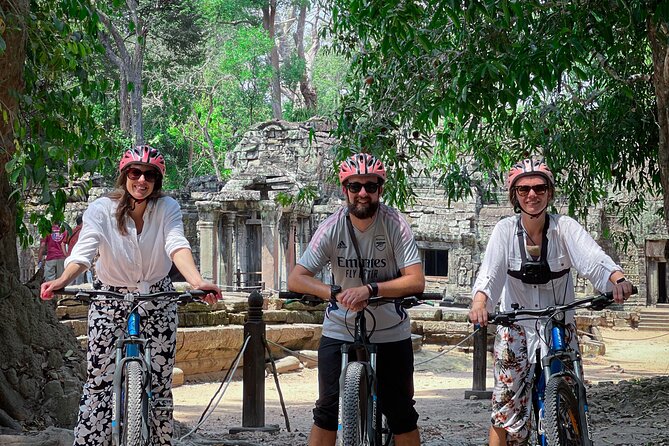
- 15–25 km easy cycling lets you see more without turning your day into a workout marathon.
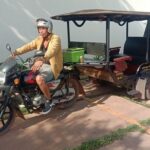
- Support van/tuk tuk follows along, so there’s a safety net if you need help.
- Helmet, bottled water, and a cool towel keep you comfortable in the heat later.
- A guide like Chayy may offer route choices, such as road versus single-track for extra temples.
Why an Angkor Wat sunrise by bike beats the usual crowd chase
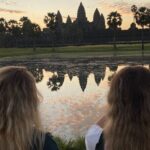
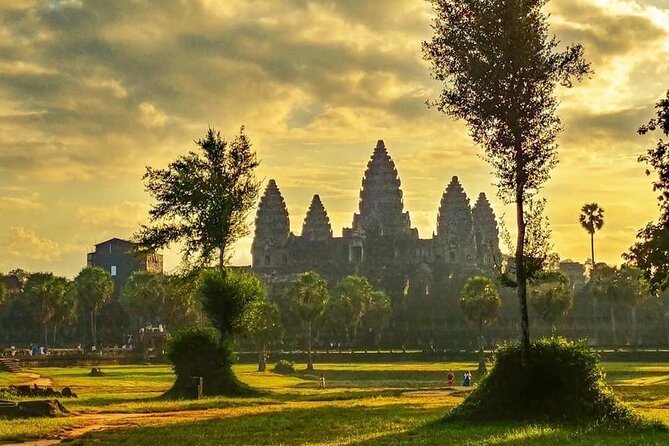
Angkor Wat is famous for a reason, but the best part of sunrise is the mood. Everything looks sharper when the light is low, and the temple grounds feel more like a quiet ritual than a sightseeing sprint. Starting early also sets you up to get the core sites done before the crowds fully stack up.
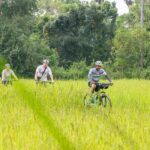
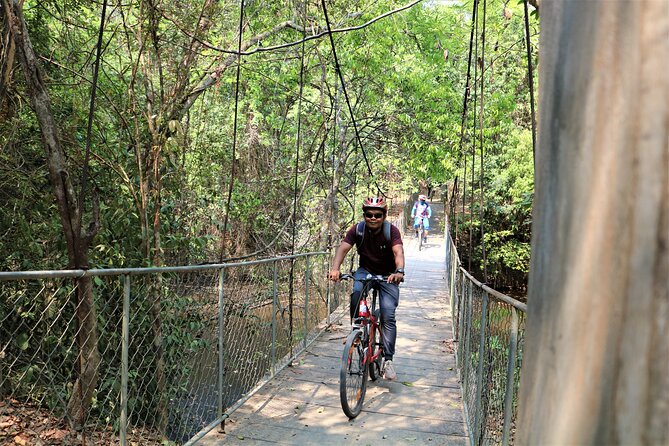
The cycling angle matters here. You’re not just walking from one highlight to another. You’ll cover ground on bike paths and quieter lanes, including stretches that help you avoid much of the walking crowd. That changes the feel of the day: more motion, less stopping, and more time looking closely.
Your day won’t be slow. Expect a long early schedule and several temple visits. If you hate early mornings or long days on your feet at ancient sites, this may feel like a lot.
You can also read our reviews of more cycling tours in Siem Reap
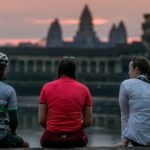
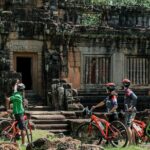
From hotel pickup to the first pedals: what happens around 4:30am
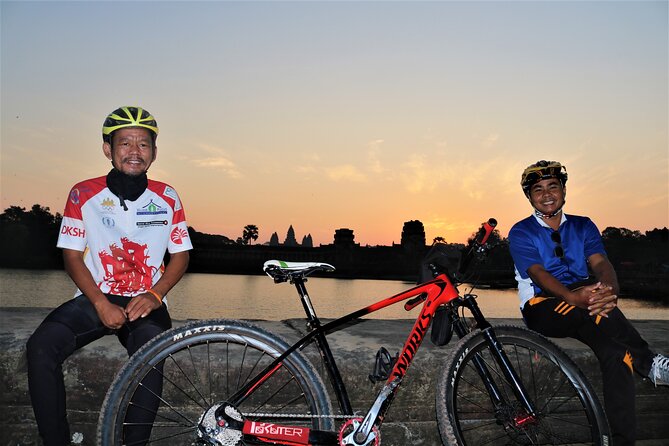
Your morning kicks off with pickup from your Siem Reap hotel between 4:30 and 4:40am. Depending on group size, you’ll ride to Angkor Wat by tuk tuk or mini-van. You’ll also get the practical essentials that make the ride smoother: bicycle and helmet, bottled water, and an air-conditioned vehicle, plus a first-aid kit in support.
This kind of setup is more than comfort. It matters because the day is front-loaded. Sunrise is early, and the temples have set entry timing and basic rules. Having transport handled means you’re not juggling tuk tuk bargaining at night or trying to find your way in the dark.
Once you’re done with the sunrise and breakfast, that’s when the cycling starts. The tour is planned around about 8 hours total, so you can expect a steady flow rather than long breaks.
Stop 1: Angkor Wat at first light (and what to do with the time)
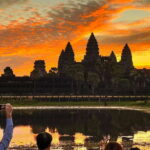
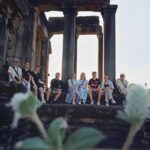
Angkor Wat is the headline, and the tour gives it a generous block of time—about 3 hours. Admission is not included, so you’ll need to buy the temple pass directly at the site.
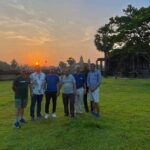
What you’ll want to focus on at first light is timing and angles. Sunrise light changes fast. If you’re taking photos, give yourself a few minutes to find a spot that works before the sky fully warms. If you’re just there for the atmosphere, keep it simple: look upward as the first light hits carvings and towers, then look outward as people start gathering.
This is also when you’ll appreciate the tour structure most. You’re not rushing through. The early morning portion is planned to let you actually experience the temple as the day begins, then transition to breakfast and cycling after.
Breakfast and Srah Srang: why this stop feels calmer on a bike
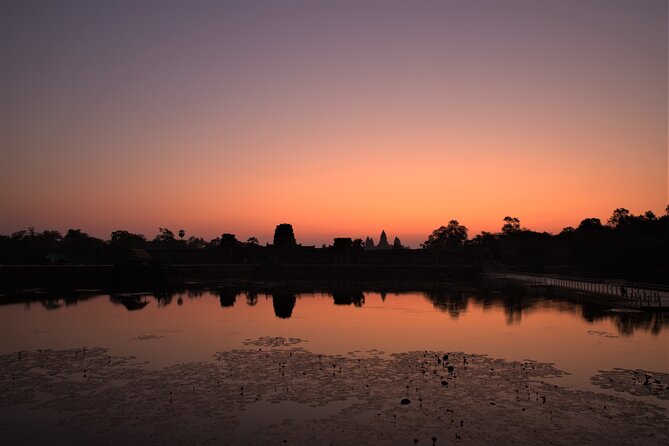
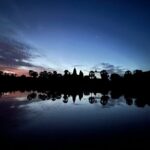
After sunrise, you’ll enjoy breakfast and some rest before setting up the mountain bikes. Then you’ll visit Srah Srang, a spot known for its water setting within the Angkor area.
Srah Srang is paired with the start of cycling-style exploration for a reason. It’s a transition moment: you’ve done the early temple, now you reset your energy and start moving on two wheels. The tour keeps this portion easy, with about 1 hour here.
A big value of going by bike is crowd management. Instead of pushing through long walking lines, you can cover distance more smoothly and get to quieter edges where the ruins and water features feel less dominated by foot traffic. You’ll still be in a famous region, but the bike changes the rhythm.
Practical tip: keep your mornings light. Breakfast and hydration matter because the ride comes after, and Cambodia heat can move quickly once the sun is up.
Ta Prohm and the back roads: roots, villages, and less time stuck
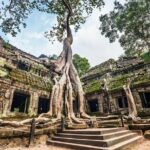
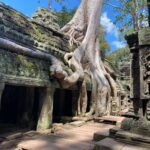
Next up is Ta Prohm, the temple often associated with dramatic tree roots gripping the stone. The tour schedules about 1 hour at this stop, and it’s placed after the bike warm-up so you can see it with fresh energy.
Here’s the part I’d pay attention to: the route isn’t only temple-to-temple by foot. You’ll take back roads through local villages and then cycle into the Angkor area. That shift matters because it turns the day into more than a list of photos. You get a sense of what’s around the temples, not just inside the temple fences.
The drawback: village lanes and temple-adjacent roads can be bumpy. The ride is described as easy, but you’ll still feel the unevenness that comes with Cambodia back roads. A helmet helps, and the mountain bike setup is there for a reason.
If you’re hoping for a quieter, more human-scale feel to Ta Prohm, this structure helps. You’re not trapped in a single narrow walkway all day.
You can also read our reviews of more tours and experiences in Siem Reap
Angkor Thom walls: the moat-and-jungle feeling on two wheels
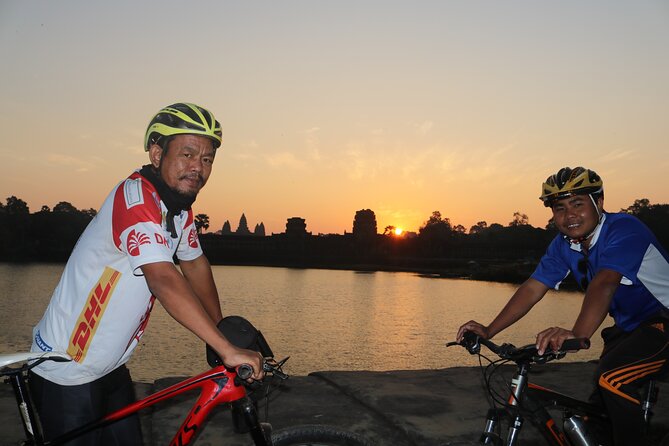
After Ta Prohm, you’ll cycle toward Angkor Thom. This segment focuses on moving along the old city wall with a moat on one side and thick jungle on the other. The tour calls this stop about 1 hour, and the tone here is more atmospheric than hectic.
Cycling along walls gives you something walking tours often can’t: continuous perspective. On foot, you stop at chokepoints and then backtrack. On a bike, you can keep a steady view line, so you get a better sense of scale and how the fortifications stretch through the landscape.
One more plus: the tour notes that Angkor Thom is admission free within this stop. That doesn’t remove the need for the temple pass for the paid sites, but it helps you understand where your budget goes across the day.
If you’re the kind of person who likes to read the place—walls, angles, protective design—this is one of the segments that lets you do that while still moving.
Bayon faces and the ride back: finishing with a clear payoff
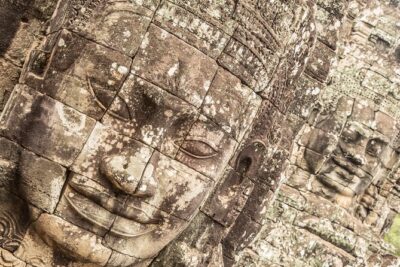
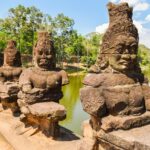
The tour wraps with Bayon Temple, known for its central towers covered with more than 200 enormous faces. Expect about 1 hour here, and then you’ll head back to your hotel.
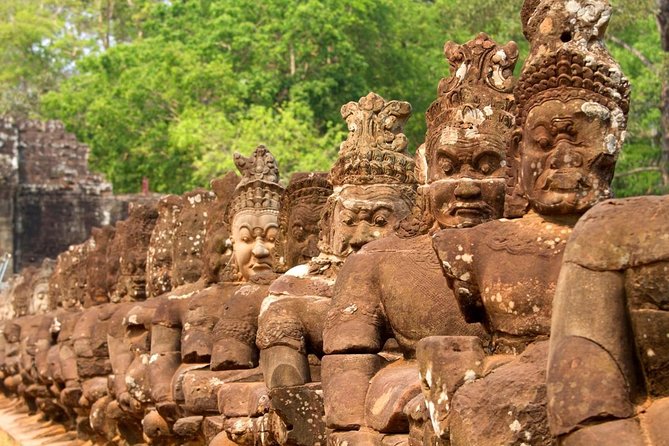
This is a satisfying ending because Bayon is visually different from the earlier stops. Ta Prohm is about roots and atmosphere. Angkor Wat sunrise is about light and grandeur. Bayon is about sheer face repetition—pattern, symmetry, and the strange feeling of being watched by carvings that seem too alive for stone.
Your ride-to-temple flow also sets you up to appreciate Bayon more. By the time you arrive, you’ve already seen the other key areas. Bayon becomes the final “wow” instead of one of five similar stops you’re trying to remember later.
Price and logistics: is $69 good value for this kind of day?
At $69 per person, the ticket price is relatively low for an Angkor-focused early morning tour that includes bikes and transport. The big reason is what’s included versus what’s not.
Included:
- English-speaking biking tour guide
- Bicycle and helmet
- Bottled water and a cool towel
- Support van or tuk tuk
- Air-conditioned vehicle
- First-aid kit
Not included:
- Temple pass/entrance fee: $37.00 per person (paid directly at the site)
So your realistic budget lands closer to about $106 total per person once the pass is added. Still, that can be solid value if you want a structured day with transport, a guide, and a bike rather than piecing it together yourself.
Also remember the time factor. This starts around 4:30am, runs about 8 hours, and covers multiple temple zones plus cycling time. For many visitors, the convenience of having it organized is what makes the cost feel fair.
What the ride feels like (pace, route choices, and comfort)
This is described as an easy ride, roughly 15–25 km. That distance is long enough to feel like cycling matters, but short enough that you’re not exhausted by midday heat alone.
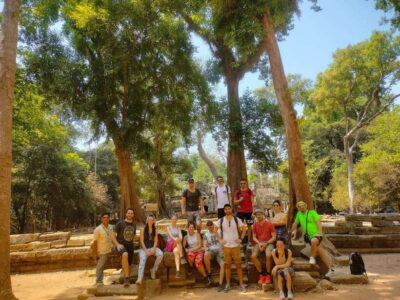
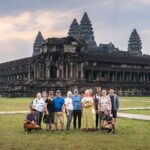
The tour also caps at 9 travelers, which affects the whole experience. Fewer people means easier group handling, less crowd compression at stops, and a more relaxed pace when you roll into temple areas.
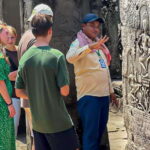
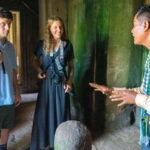
In one standout review detail, the guide Chayy was praised for being fun and knowledgeable and for asking whether the group wanted a road route or a single-track option to see additional hidden temples. You should think of that as a sign of flexibility: a good guide will match the route to the group’s comfort level, as long as conditions and timing allow.
Comfort-wise, you’ll do best if you dress for a long day. Bring light layers for early morning, then expect warmth later. And yes, the helmet is provided—use it every time you mount up.
Who should book this Angkor sunrise cycling tour
You’ll likely enjoy this most if you:
- want sunrise at Angkor Wat without turning the day into only walking
- like bikes and prefer seeing more ground at a calmer pace
- enjoy early starts and can handle temples plus cycling in one long day
- want a small-group experience instead of a huge convoy
It’s also a good fit if you’re feeling temple fatigue from repeated “stand, photo, move” tours. This day has motion. It keeps your attention active.
If you’re recovering from injury, have very limited mobility, or hate long early mornings, consider a different Angkor format.
Should you book this Angkor Sunrise Expedition in Siem Reap?
I think this is a smart booking when you want a full Angkor day that still feels human-scale. The strongest case is the combination of sunrise at Angkor Wat plus quiet backroads by bike. You get the big iconic moment, then you get a more personal way to connect the sites.
Before you hit confirm, do two reality checks:
- Budget for the $37 temple pass in addition to the $69 tour price.
- Accept the early wake-up. Pickup starts around 4:30am, and the day runs about 8 hours.
If weather is poor, the tour may be rescheduled or refunded based on the provided policy. And since the cycling depends on conditions, being flexible helps.
If your priority is a serene, efficient way to experience Angkor in one day, this one is worth serious consideration.
FAQ
What time does the Angkor Sunrise cycling tour start?
Pickup is from 4:30–4:40am from your Siem Reap hotel, and the tour begins at 4:30am.
Is the temple entrance fee included in the $69 price?
No. The temple pass/entrance fee is not included and costs $37.00 per person, paid directly at the site.
How long is the tour?
The duration is about 8 hours.
How far do you cycle during the tour?
You’ll cycle approximately 15–25 kilometers on an easy ride.
Does the tour include a bicycle and helmet?
Yes. The tour includes a bicycle and helmet.
Will I have transportation during the day?
Yes. The tour includes air-conditioned vehicle and a support van or tuk tuk.
What happens if weather conditions are bad?
This experience requires good weather. If it’s canceled due to poor weather, you’ll be offered a different date or a full refund.
How many people are in the group?
The tour has a maximum of 9 travelers.