REVIEW · SIEM REAP
Angkor Region & Rainforest Bike Tour
Book on Viator →Operated by Angkor Cycling Tour · Bookable on Viator
Two wheels beat temple queues. This Angkor Region & Rainforest Bike Tour is built for people who want the big sights, plus the quieter, back-trail route that gets you away from the thick crowds. I like that the ride is guided by an English-speaking leader who steers you onto lesser-used paths, and I love that you don’t have to sort out bike and helmet rental before you start. The main consideration: the temple pass is not included, and you should expect a real bike ride with some wet/muddy trail sections.
You’ll hit five major temple stops, including Angkor Wat and Bayon, but the day feels more like movement through the Khmer-era landscape than a hop-on hop-off checklist. Lunch, coconut juice, and pure drinking water are included, which matters because you’ll be on the go for about 8 hours starting at 7:30am. One more thing to plan for is the dress code: covering knees and shoulders is strongly encouraged for visiting sacred areas.
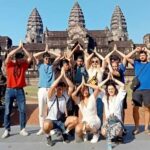
Small group size is part of the value here, too: the tour caps at 10 travelers, so you get a closer, safer feel on narrow paths. The tour also uses a mobile ticket, and you return to the meeting point at the end, which keeps things simple.
In This Review
- Key things to know before you ride
- Why this Angkor bike day feels different than tuk-tuk touring
- Price and value: what $50 really covers in Siem Reap
- Meeting at 7:30am and getting fitted to your Trek bike
- The rainforest trail start: energy, shade, and quiet paths
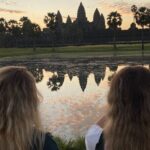
- Angkor Wat plus the Angkor Thom gates without the usual slog
- Climbing the protection wall and spotting Prasat Chrung
- Bayon’s 216 faces: a photo stop with real atmosphere
- Preah Khan and Ta Prohm: jungle temples you feel while you ride
- Lunch, coconut water, and staying fueled for 8 hours
- Who this bike tour is best for (and who should think twice)
- Should you book this Angkor Region & Rainforest Bike Tour?
- FAQ
- What time does the tour start?
- Where do I meet for the tour?
- How long is the tour?
- What’s included in the tour price?
- Do I need a temple pass?
- Is hotel pickup provided?
- Can I cancel and get a refund?
Key things to know before you ride
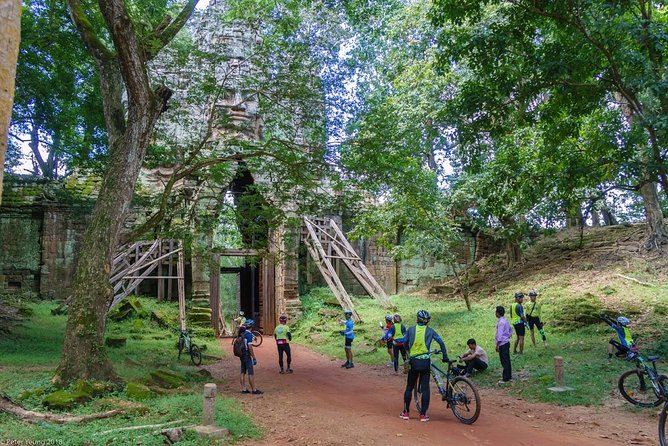
- Small-group pace (max 10): easier to ride narrow trails together and still see the temples without feeling rushed
- Your bike is included: a premium Trek mountain bike plus helmet means you’re ready at the start
- Temple pass isn’t included: the one-day pass is listed as $37, so budget for it up front
- Five temple stops on a route that avoids crowds: Angkor Wat, Bayon, Preah Khan, Tanei, and Ta Prohm
- Rainforest trails can be wet: expect mud and small wet tracks at times, especially during rainy stretches
Why this Angkor bike day feels different than tuk-tuk touring
If you’ve done Angkor by car, you already know the pattern: arrive at a gate, fight the timing squeeze, walk in the same stream everyone else is in, then repeat. This tour flips that rhythm. Instead of staying on the busiest approach roads, you ride onto hidden trails through the surrounding greenery, so the day starts to feel more local and less schedule-driven.
The payoff is that you still get the famous landmarks, but you arrive with a bit more breathing room around you. You also get the practical benefit of having your own transport the whole time. No waiting at the roadside while a car negotiates traffic, and no hanging around while the group reforms. The mountain bike makes it easier to feel the pace of the day: pedal, stop, look, learn, pedal again.
And yes, Angkor is more than scenery. It’s an active spiritual site, and people still pray, meditate, and worship as part of daily life. That’s why respectful dress matters here, especially when you’re stepping into sacred spaces.
You can also read our reviews of more cycling tours in Siem Reap
Price and value: what $50 really covers in Siem Reap
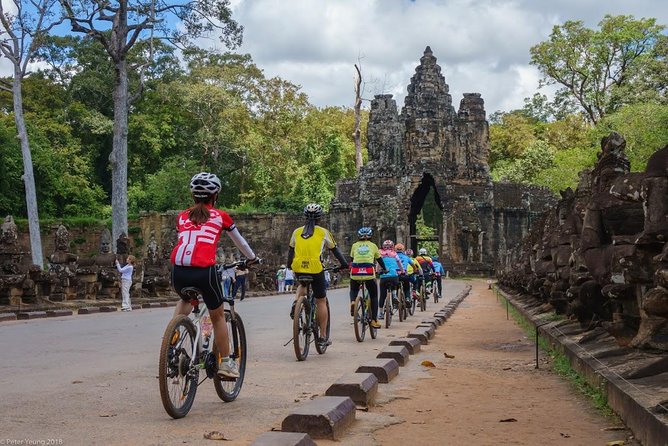
At $50 per person, this is a budget-friendly way to get both a guided temple route and a bike tour experience in one package. The important part is what’s included: an English-speaking guide, a premium Trek mountain bike, a helmet, lunch, coconut water, and pure drinking water.
That bundling is where the value shows. If you’ve ever tried to line up a guide plus a decent bike rental, you know how quickly separate costs and timing problems add up. Here, the tour company handles the core pieces so you can focus on the ride and the temples.
The one cost you must plan for is the temple pass: $37 for one-day entry. You also won’t get hotel pickup/drop-off, so you’ll need to make it to the meeting point on your own.
Meeting at 7:30am and getting fitted to your Trek bike
The tour starts at 7:30am at Taphul Rd, Krong Siem Reap 17252, Cambodia, and it ends back at the same meeting spot. That “go and return” design is practical for a day like this: no extra transfers, and it’s easier to plan the rest of your Siem Reap afternoon.
You’ll ride a premium mountain bike (TREK) and a helmet are included, which is a big deal when you’re booking early and want to avoid last-minute rentals. One detail you should not ignore: your height must be advised at booking so the bike setup fits you properly. If you skip that step, the ride can feel awkward fast.
The tour runs for about 8 hours, so treat it like a full morning/early afternoon plan. Bring the items the tour recommends: a camera, sunglasses, and sunscreen. And if you get easily annoyed by wet shoes and mud, plan ahead—this route can include small wet trails and a muddy day.
The rainforest trail start: energy, shade, and quiet paths
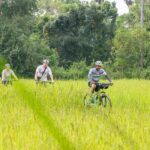
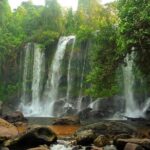
Your day kicks off with an adventurous ride through the rainforest trail—described as a natural, undisturbed path where you can learn about the World Heritage area and also spot “uninterested sites” tucked into dense vegetation for centuries. Translation: you’re not just riding between parking lots. You’re moving through the edge of Angkor’s larger environment, where the forest and the ruins overlap.
This start is useful for two reasons. First, it helps you get into the rhythm early—pedal steadily, watch your footing, and let the guide point out what matters. Second, it sets up the day’s main theme: avoiding the most obvious crowd patterns by taking routes that don’t funnel everyone into the same handful of paths.
Because you’re starting early, you’ll also generally benefit from cooler morning light and less heat on the ride and walking sections. Just remember that rainforest trails can be slick. You’ll be on two wheels, so your attention stays on the trail while you still get viewpoints and photo moments when the guide calls them.
Angkor Wat plus the Angkor Thom gates without the usual slog
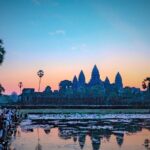
After the forest ride, you step into the core temple circuit. You’ll see Angkor Wat, then move into the defensive geometry of Angkor Thom via its gates and walls.
The highlights here are specific and memorable:
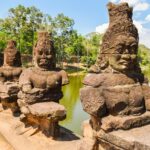
- The South Gate of Angkor Thom and the defensive wall perspective it gives
- West Gate and North Gate views as part of your loop through Angkor Thom
- Stops that connect temple architecture to how this city functioned politically and religiously between the 9th and 15th centuries
This is where biking helps. When you’re walking in line with everyone else, you tend to stay stuck at the same pace for long stretches. On a bike tour, you can move between viewpoints more smoothly, and the guide can steer you toward angles that feel less like you’re trapped in a crowd.
One consideration: Angkor Wat and Angkor Thom are sacred spaces, and you’re expected to dress respectfully. Shorts and skirts above the knees and bare shoulders are prohibited in sacred palaces. For a bike day, plan clothing that covers knees and shoulders without overheating you.
Climbing the protection wall and spotting Prasat Chrung
One of the more active moments is when you climb up and venture on the protection wall of Angkor Thom’s capital. The reward is a breathtaking view at Prasat Chrung.
This isn’t the kind of climb you do casually. You’re on foot for the ascent, and the steps and uneven surfaces can be challenging if you’re not used to them or if conditions are wet. The upside is that this gives you a higher-angle sense of the whole area—how the walls define movement and how temples sit within that defensive layout.
If you’re deciding whether to book, this is a good reality check point. Most people can participate, but if stairs and slippery surfaces stress you out, go into it with clear expectations and take your time where the guide directs.
Bayon’s 216 faces: a photo stop with real atmosphere
Next you ride to Bayon, described as a temple with 54 towers of 216 smiling faces. If you’re expecting something like a single iconic façade, Bayon is more chaotic in a good way. Those faces appear from different angles as you move around, and your perspective changes as you circle and stop.
What I like about Bayon in this format is the balance of structure and wandering. The guide keeps the day moving, but you’re not treated like a person passing through checkpoints. You get time to look up, rotate your head, and notice how the towers line the space.
Again: respect matters here. People use Angkor as an active spiritual site, so keep voices low and be mindful about where you pause.
Preah Khan and Ta Prohm: jungle temples you feel while you ride
Two of the stops shift the tone from city gates to forest temples: Preah Khan and Tanei (the ancient hospital site), followed by Taprom / Ta Prohm.
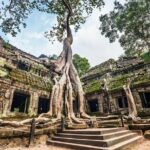
- Preah Khan is known here as a temple covered by jungle. You can feel that description the moment you start moving through it—nature is part of the architecture, and the whole area reads like it’s been reclaimed over time.
- Tanei is described as an ancient hospital that remains untouched by archaeologists, embraced by its surroundings. That phrasing matters. You’re not just seeing a restored showpiece; you’re seeing a site that feels more exposed to time and the elements than to heavy intervention.
- Ta Prohm (spelled Taprom in the tour details) fits this same mood. It’s the stop where the vegetation-and-stone relationship is the loudest, and your photos tend to look dramatic without much effort.
On a bike day, these stops land well because you’re not starting each one fresh after a long drive. You arrive with energy built from the ride, and you leave with the feeling that you actually moved through different parts of the Angkor complex rather than only viewing a few icons.
Lunch, coconut water, and staying fueled for 8 hours
The tour includes lunch plus coconut juices and pure drinking water. This is the quiet value-add that makes a difference on an 8-hour day—especially when you’re mixing riding, sun, and temple walking.
Coconut water is a smart choice in this climate because it’s easy to drink and helps you stay comfortable while you keep moving. The pure drinking water is also essential if you’re the type to forget to hydrate until you feel tired.
My practical tip: after lunch, take a moment before the next temple segment. Reapply sunscreen, drink some water, and check your footing mindset. It’s a long route, and the second half is where fatigue can creep in.
Who this bike tour is best for (and who should think twice)
This tour is best for you if you want:
- A guided Angkor route that reduces crowd pressure by using off-main trails
- A day that includes classic Angkor stops plus the forest-and-ruin connection
- A setup where the essentials are handled: bike, helmet, guide, and food/water
You might think twice if:
- You strongly prefer car touring and minimal physical activity. There’s a ride plus temple walking, and one built-in climb on a protection wall.
- You’re not comfortable with wet trails. The tour can run on muddy days and small wet forest tracks.
- You need hotel pickup. The tour meets at Taphul Rd, and there’s no pickup/drop-off listed.
Should you book this Angkor Region & Rainforest Bike Tour?
Yes, if you want Angkor with fewer crowd headaches and you like the idea of rolling past the obvious routes on a real mountain bike. For $50, the combination of a Trek bike, helmet, English-speaking guide, lunch, coconut water, and pure drinking water is strong value—especially compared with the cost and hassle of piecing it together yourself.
Book it earlier rather than later, since it’s commonly booked about 10 days in advance. Plan for the one extra cost you must handle (the $37 one-day temple pass), and make sure your clothing fits the sacred-site dress rules. If you do those two things—pass and attire—you’ll be set up for an 8-hour day that feels more like exploring than just checking boxes.
FAQ
What time does the tour start?
It starts at 7:30am.
Where do I meet for the tour?
You meet at Taphul Rd, Krong Siem Reap 17252, Cambodia.
How long is the tour?
The duration is about 8 hours.
What’s included in the tour price?
Included are an English-speaking guide, a premium TREK mountain bike and helmet, lunch, coconut water, and pure drinking water.
Do I need a temple pass?
Yes. A one-day temple pass is $37, and the temple admission ticket is not included.
Is hotel pickup provided?
No. Hotel pick-up and drop-off are not included.
Can I cancel and get a refund?
Yes. You can cancel for a full refund if you cancel at least 24 hours before the experience starts. If you cancel later than that, you won’t receive a refund.