REVIEW · SIEM REAP
Amazing full day TUKTUK tour
Book on Viator →Operated by SiemReap Perfect Driver · Bookable on Viator
Angkor feels easier by tuk tuk. This private full-day ride strings together the big names of the Angkor region, from Angkor Thom and its smiling faces to the jungle mystique of Ta Prohm, with a driver who keeps things moving in a way that feels manageable in the heat. What I love most is the comfort: cold water, cool towels, and that breezy tuk tuk ride. I also like the flexibility of the pacing, so you’re not stuck rushing every stop like a stampede.
One thing to consider: temple entrance fees are not included, so you’ll want to budget for tickets separately before you go.
You’re looking at about 8 to 10 hours, typically from pickup through drop-off, with sunset timing built in and an English-speaking driver at your side. It’s a simple, good-value way to see a lot of temples without turning the day into a logistics puzzle.
In This Review
- Key things to know before you go
- Why a full-day tuk tuk beats rushing Angkor
- Pickup and driver setup in Siem Reap
- Angkor Thom and the South Gate approach
- Baphuon, Phimeanakas, and the royal palace zone
- Baphuon Temple
- Phimeanakas
- The Terrace stops: Elephants and Leper King
- Terrace of the Elephants
- Terrace of the Leper King
- Ta Prohm: the jungle temple moment
- Srah Srang and Banteay Kdei: quieter breaks that help
- Srah Srang
- Banteay Kdei
- Angkor Wat timing: sunrise or sunset at the main stage
- Price and value: what $23 really covers
- Who this tour is best for
- Should you book this Siem Reap tuk tuk day trip?
- FAQ
- How long is the tuk tuk tour?
- Is hotel pickup and drop-off included?
- What’s included in the price besides transportation?
- Are temple entrance fees included?
- Is this a private tour?
- Do I receive a ticket on my phone?
- What is the cancellation policy?
Key things to know before you go
- Private tuk tuk comfort: small-group feel with a clean ride, water, and towels for the sweaty parts.
- Driver pacing matters: you set the rhythm, and the driver is patient about moving at your pace.
- Top temple mix: Angkor Thom + Ta Prohm + Angkor Wat in one day.
- Short stops where it helps: quick look phases at terraces and nearby temples so you spend more time where you care.
- Sunset is part of the plan: timing is included, with Angkor Wat commonly done at light for sunrise or sunset.
- Entrance fees are separate: the $23 covers transport and guidance, not the temple tickets.
Why a full-day tuk tuk beats rushing Angkor
Angkor can feel like a lot, mainly because the heat stacks up fast. A tuk tuk tour solves two problems at once: you get a faster between-sites transfer than walking, and you get real comfort breaks built into the day.
This tour is set up as a private experience, so you’re not squeezed into a packed group schedule. That matters because temple time is never perfectly predictable—one moment you’ll want an extra 10 minutes on a terrace view, and the next you’ll want to move on before the crowds and sun spike.
And you’ll get the practical comforts that actually help: cold water and towels, plus a cooling breeze as you ride. In a place where everyone starts off hopeful and ends up damp, that small stuff is the difference between tired and miserable.
You can also read our reviews of more tours and experiences in Siem Reap
Pickup and driver setup in Siem Reap
You get pickup and drop-off to your hotel, plus an English-speaking driver. I like that this removes the first annoying question: how do I even get out to the right temple circuit without wasting half a morning figuring it out.
In the reports I’ve seen from this service, drivers like Mr. Kimsun are called out for being friendly, kind, and patient—exactly what you want when you’re bouncing between big stone landmarks and narrow paths. A driver who moves at your pace helps you slow down for details without turning the trip into a chore.
Also, the tuk tuk itself is part of the comfort story. A larger, clean tuk tuk can make the day feel smoother, especially when you’re stepping on and off repeatedly for each stop.
Angkor Thom and the South Gate approach
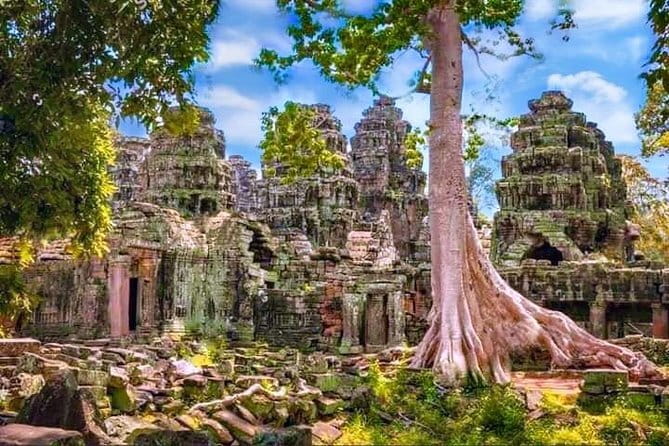
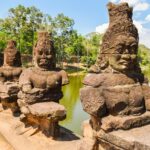
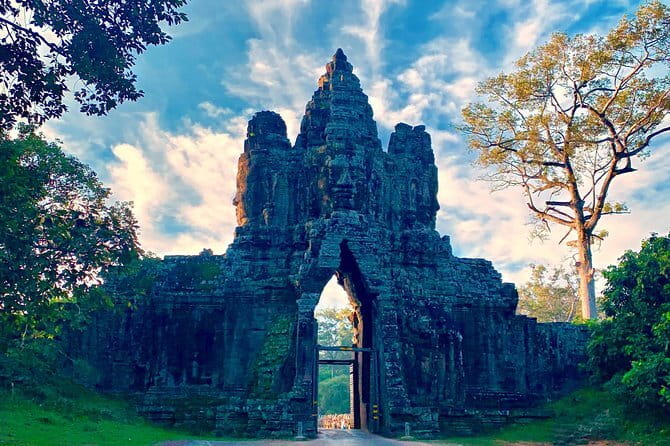
Angkor Thom is the ancient city core, and the South Gate is one of the easiest places to get your bearings fast. The moment you enter this area, the scale clicks into focus: it’s not just one temple, it’s a whole urban layout built for royal life and ceremony.
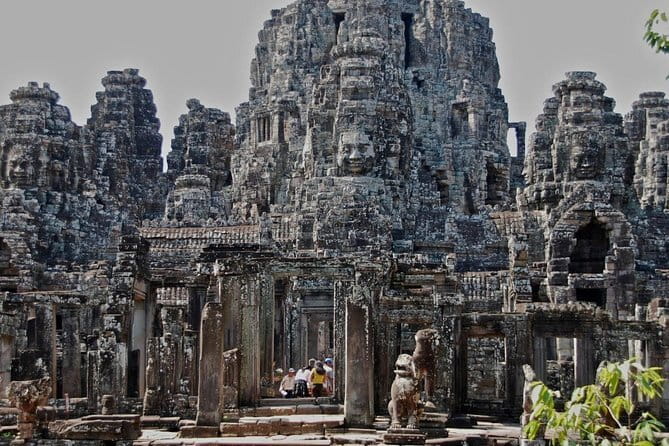
Your first major stop is Angkor Thom, including the Bayon temple’s 49 towers with the famous four-faced faces. This is the kind of site where you’ll want to circle slowly, because the expressions and angles shift as you move. If you go fast, it feels like a photo spot. If you go slow, it becomes something else—something more human.
Time check: you’ll have about 1 hour here. That’s enough to see the main levels and get some good views without feeling trapped inside every corridor.
One practical note: like many temple areas, it can get crowded and hot. If you’re serious about photos, don’t just aim for the front. Spend a minute or two scanning the surrounding walkways for angles with fewer people.
Baphuon, Phimeanakas, and the royal palace zone
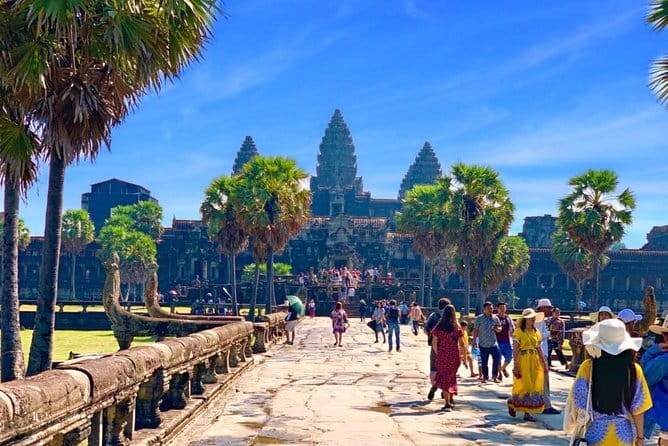
After Bayon, the day moves into adjacent stops that flesh out the idea of Angkor Thom as a royal center, not just a single sight.
Baphuon Temple
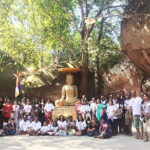
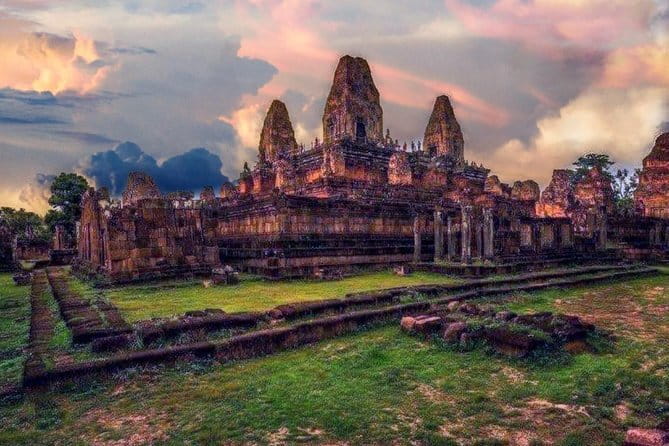
You’ll visit Baphuon, described as a Hindu temple built before Angkor Wat (11th century). Behind it sits a reclining Buddha that was built later, in the 16th century—an overlap of eras that gives the site an extra layer. It’s one of those places where the main structure draws you in, but the details behind it are what keep your attention.
Expect about 30 minutes at Baphuon. That’s a good length if you’re trying to keep energy for later stops.

Phimeanakas
Next is Phimeanakas, a pyramid Hindu temple built in the 10th century, located in the center of the old royal palace area. You’ll also visit it along with the ancient Royal Enclosure Wall, which helps connect the building to its original setting.
You’ll have about 30 minutes here. If you like understanding how Angkor was organized, the enclosure wall adds context fast.
Potential drawback here is simply the pace: these are meaningful stops, but they’re not long enough for deep “sit and read” time. So if you’re the type who needs long breaks to absorb, you might want to ask your driver to slow down at Phimeanakas.
The Terrace stops: Elephants and Leper King
These two terraces are brief but satisfying. They work because they’re less about climbing to the highest points and more about reading the artwork and imagining what royal audiences saw.
Terrace of the Elephants
You’ll spend about 20 minutes at the Terrace of the Elephants. This platform was used by kings to view victorious returning armies, and the stonework shows elephant carvings across the walls. Even if you’re not a stone-detail person, the idea is easy to grasp: this was a stage for power and ceremony.
Look for how the terrace framing sets up the view angles. It makes the whole space feel like it was designed to be watched from.
Terrace of the Leper King
Right nearby on the north side is the Terrace of the Leper King, also around 20 minutes. The carvings are the main attraction here, and the terrace helps you understand the layout of the broader Angkor Thom area.
This is a good moment in the day to take a breath. Even though it’s shorter, it helps break up the bigger temples so you don’t feel like you’re only ever walking uphill.
Ta Prohm: the jungle temple moment
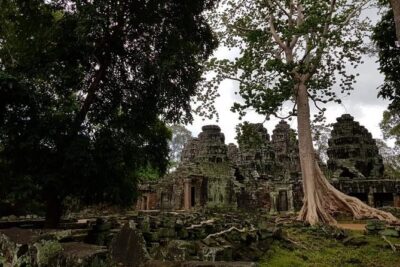
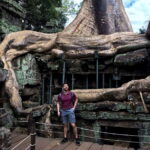
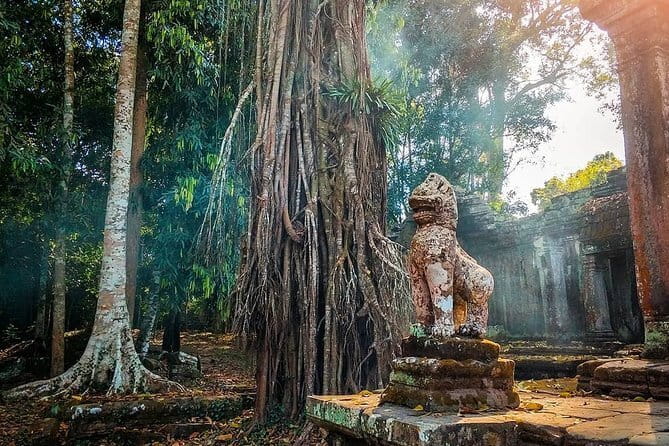
Then comes the star mood swing: Ta Prohm. This is the famous jungle temple people talk about because nature and stone are intertwined in a way that feels cinematic.
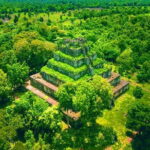
You’ll also visit a few smaller nearby temples before Ta Prohm, including Chau Say Tevoda, Thommanon, and Ta Keo. This helps the day feel like more than just one big stop. Those smaller sites can be quieter, and you often get better photo spacing.
Ta Prohm itself is the big draw, with about 2 hours set aside. This is also the temple tied to the movie Tomb Raider. Even if you’re not watching the film in your head, the effect is real: you see why filmmakers loved the mix of roots, faces, and broken corners.
How to enjoy those two hours:
- Spend the first part walking the outer paths so you understand the structure.
- Save your slower wandering for when you’ve seen the main corridors and can pick specific angles.
One consideration: Ta Prohm can be intense in the midday sun. Use the first part of your time to check the lighting, then adjust your pace.
Srah Srang and Banteay Kdei: quieter breaks that help
After Ta Prohm, the day shifts into more relaxed territory. These stops aren’t always the first ones on people’s bucket lists, but they make the overall tour feel more human.
Srah Srang
You’ll visit Srah Srang, described as a huge royal swimming pool for the king and family in ancient times. You’ll have about 20 minutes. Even though it’s not as famous as Bayon or Ta Prohm, the idea helps you picture everyday royal life, not just religious buildings.
This is also a good place to cool off with your eyes. It’s a calmer visual break after the jungle drama.
Banteay Kdei
Next is Banteay Kdei, a Buddhist temple built in the 12th century. You’ll see that the structure style is similar to Ta Prohm and Bayon, which can help your brain connect the visual language across temples.
Time listed here is very short, about 1 minute, so treat it as a quick waypoint. If you want more time, you might ask your driver whether you can add a few minutes for photos and a brief walk-through.
Angkor Wat timing: sunrise or sunset at the main stage
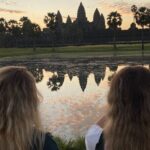
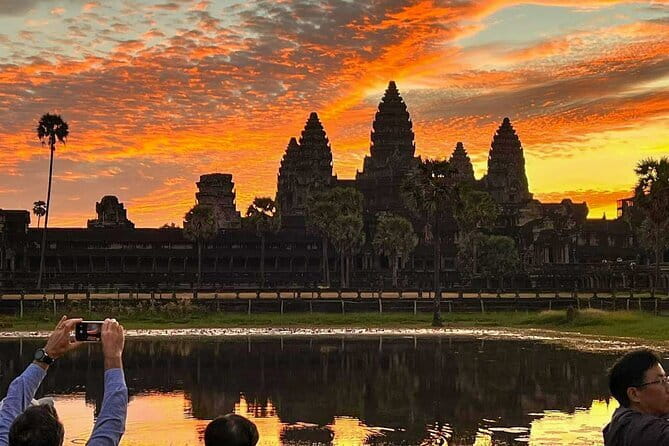
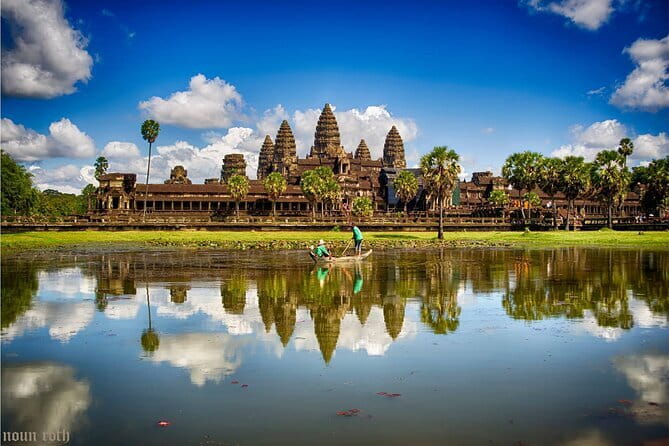
By the time you reach Angkor Wat, the day’s biggest visual payoff is waiting. Angkor Wat is the biggest Hindu temple in the world, and it’s famous for sunrise and sunset light.
The tour includes sunset timing, and Angkor Wat is set aside for about 2 hours. I like that length: it’s enough to walk at least a couple major routes, find a meaningful view, and still not feel like you’re rushing toward the next stop while your eyes are still soaking it in.
If your goal is sunrise, you’ll want a very early start. One of the big reasons people praise this style of tour is that the driver can pick you up early to match that plan. If your goal is sunset, the included sunset timing does the planning work for you.
Practical tip: dress for walking and heat. Even with a short ride between points, you’ll still spend a lot of time outside. Bring water use seriously, and use the towels when you stop—don’t wait until you feel wiped out.
Price and value: what $23 really covers
At $23, this is one of the more budget-friendly ways to do a full-day circuit, mainly because you’re paying for transport, a driver who handles the moving, and the comfort extras like cold water and towels.
What you’re not paying for: temple entrance fees. That’s the one big separate cost, and it can change your total price depending on what tickets you buy and how your day is scheduled.
So the value equation looks like this:
- If you want a private driver and cool comforts for a long day, the base price makes sense.
- If you’re traveling with the mindset that you’ll spend little on tickets and only do a handful of temples, then you might find better value with a shorter route.
- If you want the full Angkor mix without renting your own vehicle or managing transport, this hits a sweet spot.
Add in hotel pickup and drop-off, English guidance, and sunset timing, and the $23 starts to feel less like a cheap ticket and more like a straightforward service.
Who this tour is best for
I think this tour fits best if you:
- Want a full-day Angkor plan without the stress of route planning.
- Like the comfort of a tuk tuk in the heat, especially with cool water and towels.
- Prefer a driver who keeps things friendly and moves at your pace. The kind-patient vibe shows up clearly in how people describe the experience.
It’s also a strong option if you want major highlights—Angkor Thom, Ta Prohm, and Angkor Wat—without spending your whole day just getting from one far-off location to another.
If you’re a hardcore temple scholar who needs hours at each stop to study every carving, you may feel the time limits. The schedule is built for seeing a lot, not for slow, deep reading at every corner.
Should you book this Siem Reap tuk tuk day trip?
If your goal is a comfortable, efficient day with the right Angkor hits, I’d say yes. The biggest reasons are the comfort details and the human pacing: cold water and towels help you stay functional, and a patient driver makes the day feel controllable rather than chaotic.
Before you book, just do two things:
- Budget for temple entrance fees since they’re not included.
- Think about your light choice for Angkor Wat—sunrise if you can handle an early start, sunset if you want a slower evening finish.
If that matches your travel style, this is a smart, good-value way to see Angkor without turning the day into a marathon.
FAQ
How long is the tuk tuk tour?
The tour runs about 8 to 10 hours.
Is hotel pickup and drop-off included?
Yes. Pickup and drop-off to your hotel are included.
What’s included in the price besides transportation?
You get an English-speaking driver, cold water and a towel, tour information, and sunset timing.
Are temple entrance fees included?
No. Temple entrance fees are not included, so you’ll need to purchase those separately.
Is this a private tour?
Yes. It’s private, meaning only your group participates.
Do I receive a ticket on my phone?
You’ll get a mobile ticket.
What is the cancellation policy?
You can cancel for free up to 24 hours in advance for a full refund. If you cancel less than 24 hours before the start time, you won’t receive a refund.