REVIEW · SIEM REAP
Banteay Srei & Angkor Big Circuit Tour
Book on Viator →Operated by Asia Voyage Travel · Bookable on Viator
Pink stone temples set the tone early. This Banteay Srei and Angkor big circuit day trip is built for people who want a lot of high-impact Angkor sights in one go, with guided context from start to finish. I especially like the mix of stops: the delicate Banteay Srei carvings in the morning, plus the dramatic temple-gates and tree views later. The only real catch is that Angkor park entrance tickets are not included, so you’ll need to budget extra.
You also get hotel pickup and drop-off, bottled water, and cold towels, which matters in Cambodia heat. And if you land with Mr Seng as your guide, the day tends to feel clearer and more personal—like someone is translating the Khmer story into plain language. One practical consideration: you’ll be walking and moving between multiple temple sites, so comfortable shoes and a sun plan help a lot.
In This Review
- Key things to love about this Banteay Srei and Angkor big circuit tour
- Pre Rup first: how the day gets its shape
- Banteay Srei: the pink stone temple that steals attention
- Eastern Mebon and East Baray: a temple tied to a water story
- Ta Som: where the strangler fig takes over the gate
- Preah Khan: the Holy Sword temple and a bigger ending
- Guide value: Mr Seng and why explanations change everything
- Price and value: what $57.50 really buys you
- How to plan your day like a pro (without overthinking it)
- Who this tour suits best
- Should you book the Banteay Srei & Angkor Big Circuit tour?
- FAQ
- What time does the tour start?
- How long is the Banteay Srei & Angkor big circuit tour?
- Is hotel pickup and drop-off included?
- Are Angkor park entrance tickets included in the price?
- What’s included besides the guide and transport?
- Is there a professional English-speaking guide?
- Is this a private tour?
- Do I receive a mobile ticket?
- What is the cancellation policy?
- Is the tour accessible for most people?
Key things to love about this Banteay Srei and Angkor big circuit tour
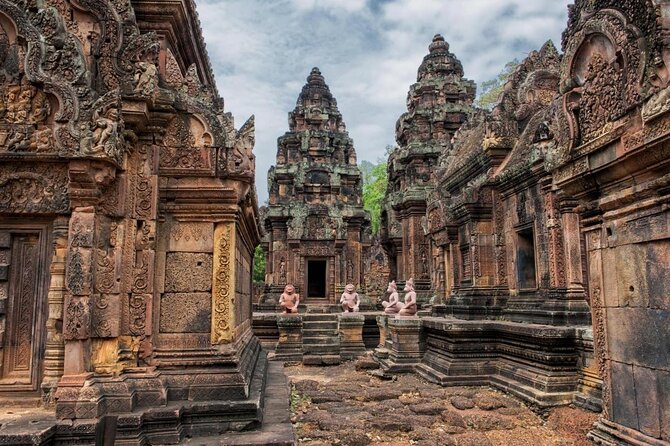
- Banteay Srei’s pink stone carvings: small scale, fine detail, and great photo moments
- Pre Rup as a smart start: a pyramid temple that sets a visual rhythm for the day
- Ta Som’s strangler fig gate: iconic nature-meets-stone composition
- Eastern Mebon and East Baray context: a temple shaped by the reservoir landscape
- Preah Khan’s Holy Sword scale: one of Angkor’s bigger stops to round out the circuit
- Hotel pickup, guide, and water: you start easier and stay calmer through the afternoon
Pre Rup first: how the day gets its shape
This tour starts at 8:00am, with pickup from your accommodation and a drive out toward Angkor. Starting early is not just a scheduling trick—it helps you beat the hottest part of the day and gives you more relaxed photo time at the first stop.
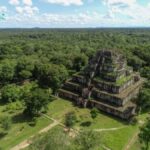
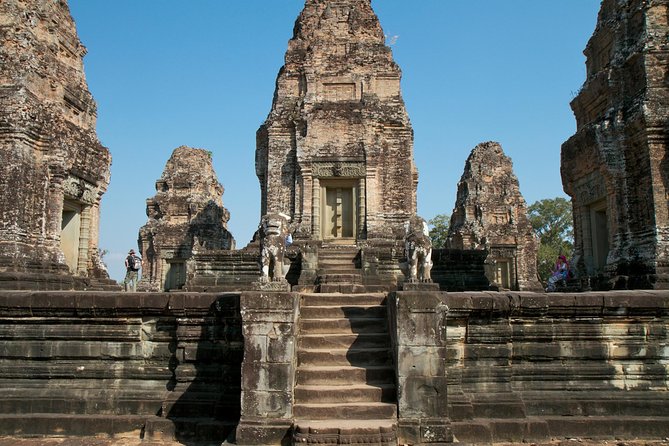
Your first temple is Pre Rup, a pyramid-shaped site that works like an orientation point. The Khmer temple layout can feel abstract if you’re just walking between structures. Pre Rup helps you see the idea of tiers and approach: you can understand how builders used height, symmetry, and viewpoint changes to guide your movement.
What I like about doing Pre Rup early is that you get a “temple vocabulary” before the day turns more intricate. By the time you reach later sites, you’re less likely to feel like you’re only collecting random stones and more likely to notice patterns—how doorways, towers, and sight lines connect.
Possible drawback: Pre Rup is still a temple ruin, which means uneven surfaces and lots of sun. Plan on slow steps, not a sprint.
You can also read our reviews of more tours and experiences in Siem Reap.
Banteay Srei: the pink stone temple that steals attention
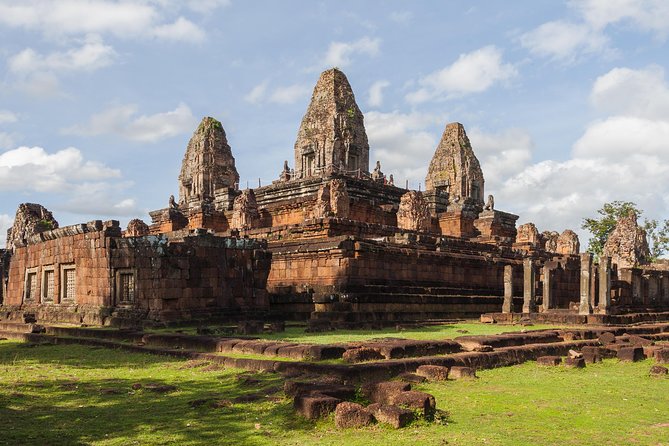
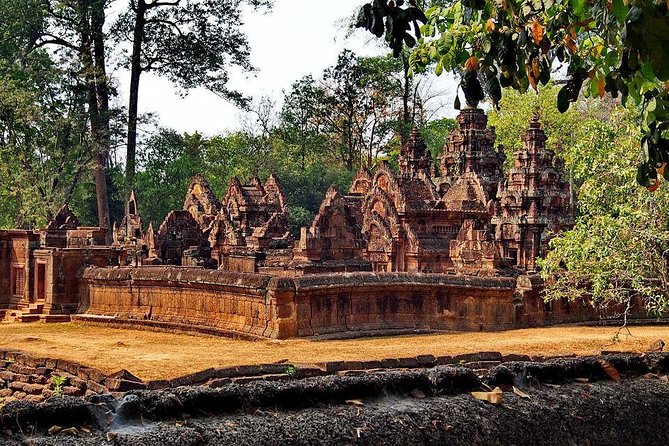
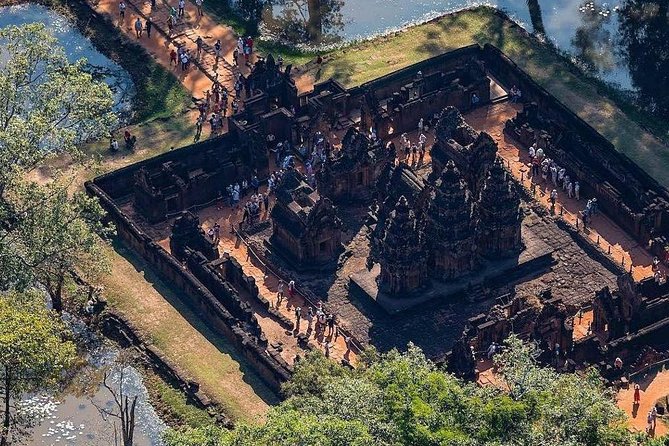
If you want one stop that defines the whole experience, it’s Banteay Srei. This is often called the Citadel of Women, and what draws people in is the color and the carving style. Even when a temple is physically small, it can feel enormous when the stonework is that detailed.
You’ll spend about 2 hours here, which is a good match for how Banteay Srei rewards patience. The carvings on walls and around doorways are intricate enough that rushing turns the visit into a blur. With the time built in, you can pause, look up, and actually notice repeating motifs—faces, ornament borders, and the kind of careful detailing that makes this temple feel different from the bigger, more worn sites.
One detail I really value: Banteay Srei’s scale helps you connect. Big Angkor temples can feel like you’re standing in the middle of a city. Banteay Srei feels more intimate. You move through it and absorb it without needing to cover as many acres.
Practical tip: Bring a light layer for shade breaks. The sun can swing fast in open temple compounds.
Eastern Mebon and East Baray: a temple tied to a water story
After the morning, you head to Eastern Mebon, with about 1 hour on site. This temple sits at the center of the area that’s now a dry East Baray reservoir. That detail matters because it changes how you read the space.
Without context, Eastern Mebon can look like another set of towers and walls. With context, it becomes part of a bigger Khmer engineering idea—how water systems shaped urban planning and religious life. Even though you’re seeing it in a “now-dry” landscape, you can still understand that the builders weren’t only building temples; they were shaping the environment around them.
This stop is also a nice contrast after Banteay Srei. Banteay Srei is about fine carving and close looking. Eastern Mebon is more about how the temple sits in a wider setting. You’ll get different photo angles, and you can let your eyes rest on the horizon lines for a bit.
Why it works: Eastern Mebon is short enough to keep your energy for the rest of the circuit, but long enough to feel like a real stop—not just a quick roadside photo moment.
Ta Som: where the strangler fig takes over the gate
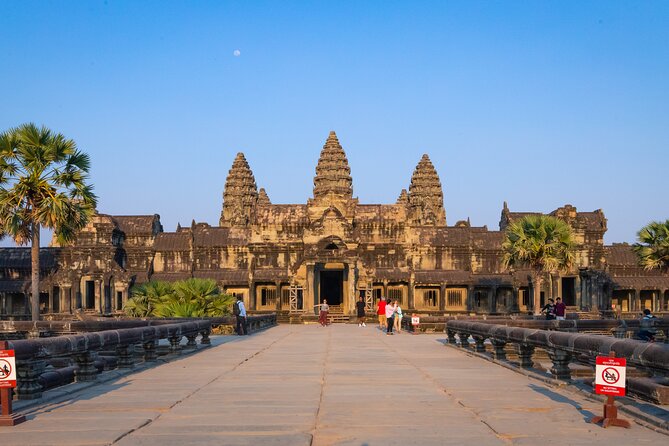
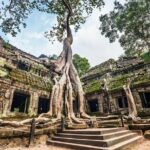
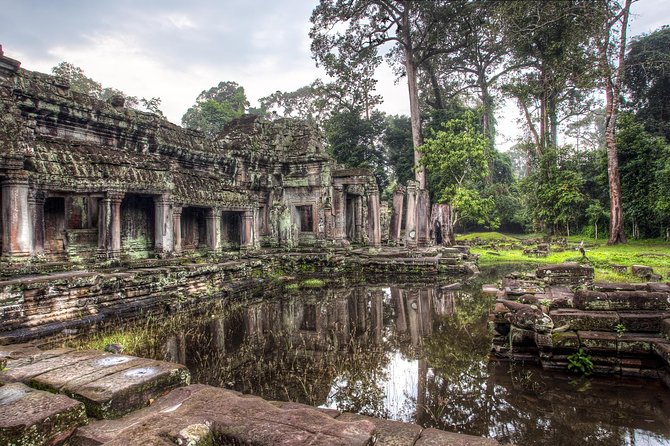
Next up is Ta Som, also about 1 hour. This temple is famous for one image: a huge strangler fig tree that has grown around and through the eastern gate area. It’s the kind of scene that looks staged until you remember it’s nature doing what nature does.
What makes Ta Som special on this circuit is how it blends two forces: carved stone and living growth. The tree doesn’t just sit nearby—it becomes part of the architecture in your view. That gives you strong “before and after” perspective as you walk: the gate changes shape depending on where you’re standing and how the roots line up.
This is a good stop for people who like visual storytelling. You can explain what you’re seeing to your travel group in a way that doesn’t require deep study. The tree is the headline, and the stone is the supporting cast.
Practical note: You’ll want to watch your footing around roots and uneven ground. Also, aim to take your photos at different angles—one position rarely tells the whole story.
Preah Khan: the Holy Sword temple and a bigger ending
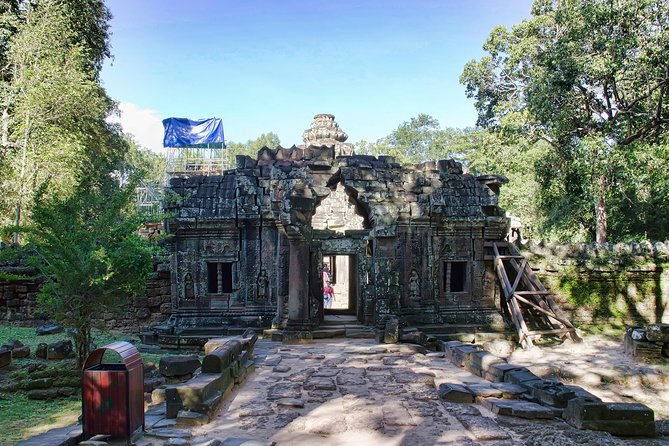
Your final stop is Preah Khan, about 2 hours. Preah Khan is known as the Holy Sword temple, and it’s also one of the biggest temple sites on this route. Built by King Jayavarman VII, it was connected with a victory over the Cham invasion—so it has a political and religious message behind the stones, not just aesthetic beauty.
This is the stop where the day can start to feel like an entire world again. Preah Khan’s larger scale means you’ll walk more within the site and see more variety: different building sections, doorways, and courtyards. If the earlier temples helped you learn the basics—symmetry, tiers, carvings—then Preah Khan is where you test that understanding in a bigger setting.
I also appreciate how Preah Khan brings the tour full circle. Banteay Srei is delicate and detailed. Ta Som is wild and visual. Eastern Mebon is about environment and water planning. Preah Khan is the “big picture,” where you’re reminded these were major centers with purpose.
Possible drawback: Because it’s larger, you’ll want to manage your energy. If you show up already tired, you’ll miss some of the details that make Preah Khan worth the time.
Guide value: Mr Seng and why explanations change everything
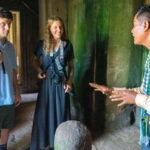
The biggest quality of this tour is that it’s not just transport between monuments. You get a professional English-speaking guide and, if you’re lucky, a guide like Mr Seng, who brings Khmer history and context into something you can actually follow.
That matters because Angkor can feel confusing if you only rely on what you see. Khmer temples are full of symbols, directional choices, and references to kings and beliefs. A good guide helps you notice what your eye would otherwise glide over—what a structure might represent, how different parts relate, and why certain scenes appear where they do.
Even better, you’re not stuck with generic facts. A guide who can explain the history, culture, and religious themes in plain language tends to make the day feel cohesive. Instead of five separate temple visits, you get a storyline.
One consideration: The listing notes limited options for English-speaking guide availability. In practice, that usually means the guide details can vary, so it’s worth confirming your language match when booking.
Price and value: what $57.50 really buys you
The listed price is $57.50 per person, and that’s before you add Angkor park entrance tickets. Since Angkor park tickets for a 1-day pass are listed as USD 37, a realistic budget for the big-ticket costs is roughly:
- Tour price: $57.50
- Park admission: $37
- Plus gratuities (recommended), and meals/drinks on the way
So you’re not just paying for access to ruins—you’re paying for the day plan: hotel pickup/drop-off, bottled water, cold towels, and guided interpretation.
Where this route can be a strong value is the stop selection. Banteay Srei plus Pre Rup plus Preah Khan gives you both “small temple detail” and “bigger temple scale” in one continuous loop. That mix can be harder to assemble on your own without careful timing, plus it reduces the guesswork around where to go and when.
Also, this is described as a private tour/activity, meaning only your group participates. That can be a big quality boost if you prefer a more personal pace rather than being squeezed into a larger group schedule.
How to plan your day like a pro (without overthinking it)
This circuit is about 8 hours total, starting at 8:00am, and that includes drive time between multiple sites. That’s a long day, but it’s a smart length for hitting these specific stops.
Here’s what will help you enjoy it more, based on the practical realities of temple touring:
- Wear grippy shoes. Ruins and roots can be slippery.
- Bring sun protection. You’ll be in open areas, especially around gate structures and temple entrances.
- Use the water and towels early. Don’t save them for a moment that never comes.
- Take breaks by necessity, not mood. If you feel your attention slipping, pause, hydrate, and reset your eyes.
Since you’ll likely need to handle park ticket entry, it’s also smart to arrive prepared with the ticket you’re using (this tour includes a mobile ticket feature, which can help).
Who this tour suits best
This itinerary fits best if you want:
- A guided Angkor day that explains what you’re seeing
- A mix of intricate (Banteay Srei), iconic tree framing (Ta Som), and larger-scale temples (Preah Khan)
- Hotel pickup and a smoother, less stressful schedule
It’s also a good match for people who are okay with a fairly full walking day and want to cover several high-value stops without making multiple separate ticketing or transport arrangements.
If you’re the type who loves big temples only, you might wish there was more time for the very largest Angkor sites. But if you like variety—detail plus scale—this route is a strong choice.
Should you book the Banteay Srei & Angkor Big Circuit tour?
I’d book this if you want a practical, efficient day built around Banteay Srei and the core “outer” circuit-style sequence, with hotel pickup, an English-speaking guide, and helpful on-the-ground context. The guide can make a real difference here, especially when you’re trying to connect the carvings, layout, and Khmer story into something that clicks.
Skip (or at least rethink) it if you’re the kind of visitor who hates extra walking or wants a very relaxed pace. Also factor in the entrance tickets up front—because once you add the USD 37 park pass, the trip becomes a bigger budget line than the tour price alone suggests.
If that trade-off sounds fair, you’ll likely leave with a day that feels balanced: pink stone detail, nature-over-stone drama, and a big final temple with meaning.
FAQ
What time does the tour start?
The tour start time is 8:00am.
How long is the Banteay Srei & Angkor big circuit tour?
It runs for about 8 hours (approx.).
Is hotel pickup and drop-off included?
Yes, hotel pick-up and drop off are included.
Are Angkor park entrance tickets included in the price?
No. Angkor Park entrance tickets (1-day USD 37) are not included.
What’s included besides the guide and transport?
You get bottled water & cold towels, plus transport by your chosen vehicle.
Is there a professional English-speaking guide?
Yes, the tour includes a professional English-speaking guide, listed as limited options only.
Is this a private tour?
Yes. It’s described as a private tour/activity, meaning only your group will participate.
Do I receive a mobile ticket?
Yes, the tour lists mobile ticket as a feature.
What is the cancellation policy?
Free cancellation is available. You can cancel up to 24 hours in advance for a full refund.
Is the tour accessible for most people?
The information provided says most travelers can participate.