REVIEW · SIEM REAP
3-Day Angkor Wat with All Interesting Major Temples, Banteay Srei & Beng Mealea
Book on Viator →Operated by Happy Angkor Tour · Bookable on Viator
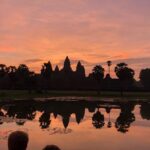
Sunrise at Angkor Wat hits different. This private 3-day Angkor adventure is built around the big “must-sees” plus a few temples people often skip, with easy hotel pickup and drop-off every day. You also get the kind of pacing that helps you actually make sense of what you’re seeing, instead of treating it like a photo sprint.
Two things I really like: first, the guide adds context as you go through the circuits, so places like Ta Prohm and Bayon feel tied together rather than random stops. Second, I appreciate the comfort touches—an air-conditioned vehicle, plus cool water and a cool wet towel—because the heat is real and your day starts early.
One consideration: temple admission is not included, and the listed total is $62 per person for Angkor Wat plus all temples. You’ll also need to budget for lunch while on the route.
In This Review
- Key Things To Know Before You Go
- Why This 3-Day Angkor Tour Feels Less Stressful Than DIY
- Day 1: Angkor Wat First, Then the Giant Tree Roots and Royal Grounds
- Angkor Wat: The Center of the Whole Complex
- Ta Prohm: When Stone Meets Giant Roots
- Ta Nei: Smaller, Quieter, and Easy to Appreciate
- Angkor Thom Highlights: Victory Gate, Bayon, and the Royal Courtyard
- Phnom Bakheng Sunset: Gorgeous Views, Timing Limits
- Day 2: Angkor Wat Sunrise + Preah Khan, Pre Rup, and the Pink-Sandstone Power of Banteay Srei
- Sunrise at Angkor Wat: Why the Timing Is Worth It
- Preah Khan: A Buddist Temple With Big Energy
- Neak Pean and Ta Som: Smaller Temples, Strong Atmosphere
- Eastern Mebon and Pre Rup: Temple-Mountain Views and Fun With Names
- Lunch Break and the Big Shift to Banteay Srei
- Banteay Samre and Banteay Kdei: Similar Style Threads
- Day 3: Roluos Group Temples and the Jungle Swagger of Beng Mealea
- Beng Mealea: Angkor’s “What If the Jungle Won” Temple
- Lolei and Preah Ko: Small Temples That Add Context
- Bakong: The Temple-Mountain Prototype Feeling
- Artisans Angkor and Psar Chaa: Cultural Stops You Can Skip
- Price, Admission Fees, and What You’re Really Paying For
- The Practical Stuff That Makes or Breaks an Angkor Trip
- Start Early When It Matters
- Use the Tour’s Built-In Cooling and Breakpoints
- Choose Your Crowd Level on Phnom Bakheng
- Be Ready for Uneven Ground at Beng Mealea
- Should You Book This 3-Day Angkor Wat Tour?
- FAQ
- Is hotel pickup and drop-off included?
- What time does the tour start on Day 1 and Day 2?
- What’s included in the price?
- Are temple admission fees included?
- Are meals included?
- Can I skip certain stops like sunset or market/craft stops?
Key Things To Know Before You Go
- Private, guided circuit touring: You’re not stuck following a crowd at Angkor’s speed.
- Sunrise and sunset planning: Day 2 has a very early Angkor Wat start, and Day 1 includes Phnom Bakheng sunset views with time limits.
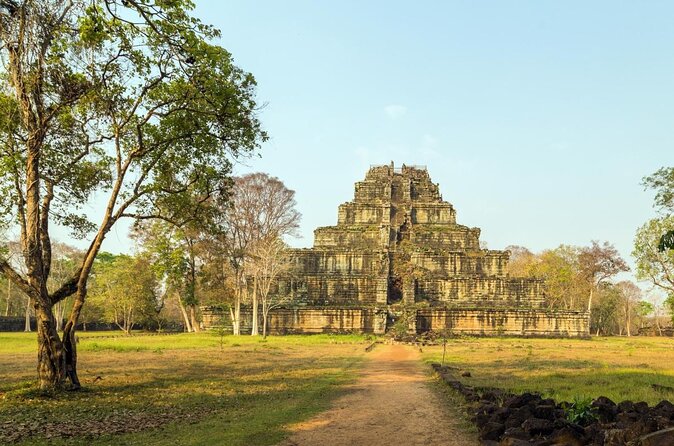
- Beng Mealea is the day-three wild card: It’s temple chaos overrun by jungle—good if you like atmosphere.
- Comfort in the heat: Air-conditioning, cool water, and a wet towel help you keep going.
- Admission and meals are extra: The $62 temple fee and lunch costs are separate from the tour price.
Why This 3-Day Angkor Tour Feels Less Stressful Than DIY
Angkor is massive, and Siem Reap traffic can be its own puzzle. What I like about this tour is the simple setup: you meet your guide each morning outside your hotel, then you return to your hotel each evening. That means you can focus on temples and timing instead of sorting out routes, parking, and where to go next when the day is already warm.
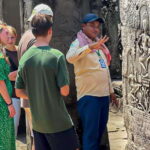
The private format also changes the feel. You’re not trapped in a fixed group rhythm, and your guide can tailor the flow a bit around what you’re interested in—history, stonework, religious symbolism, or just getting the best light for photos.
Finally, the guides in the feedback are repeatedly praised for being practical and well-informed. Names like Mony, Vanna, Mr Khmer, Mr Thou, and Mr Chen show up as guides people connected with, and you’ll see the same theme: they explain what you’re looking at, not just where to stand.
You can also read our reviews of more tours and experiences in Siem Reap
Day 1: Angkor Wat First, Then the Giant Tree Roots and Royal Grounds
Your day begins with a morning pickup from your hotel around 8:00am, after which you’ll go along the way to get your temple pass. Then you head straight into Angkor Wat—this is the part that matters most if you’re trying to see the heart of Angkor without waiting for sunrise.
Angkor Wat: The Center of the Whole Complex
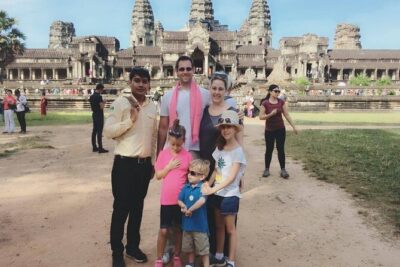
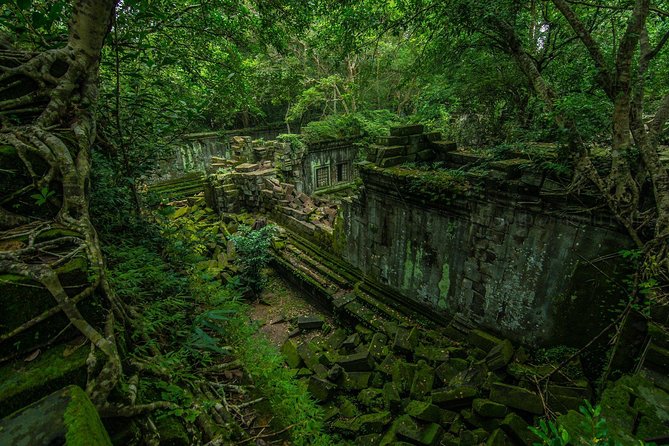
Angkor Wat is the anchor. Even if you’ve seen photos before, seeing it in person can feel oddly organized: long sightlines, disciplined geometry, and the sense that the whole place was planned to impress you from multiple angles.
You’ll spend time here early enough to dodge some of the harsh midday push. The tour doesn’t frame Angkor Wat as a single photo stop; it gives you time to understand why this temple is so famous and why people keep coming back.
Ta Prohm: When Stone Meets Giant Roots
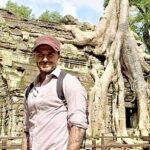
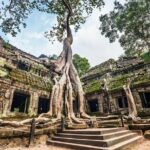
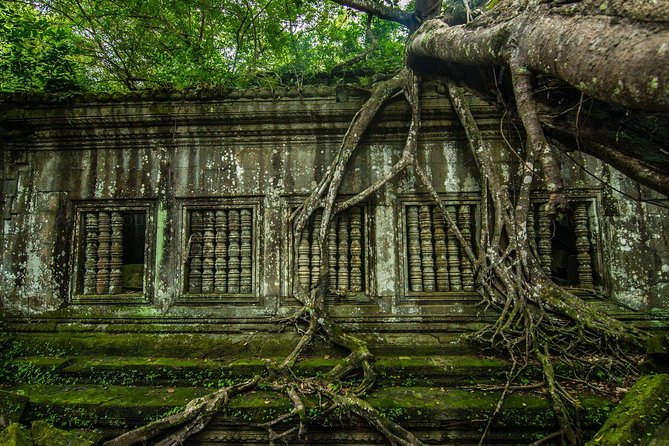
Next comes Ta Prohm, the temple that looks like nature and ruins are arguing over who controls the space. The big draw is the giant tree roots wrapping and lifting parts of the structure. It’s visually dramatic, and your guide’s commentary helps you see beyond the movie-famous look and into how this temple sits within the Angkor story.
One practical note: this is one of the sites where you’ll want to slow down. Roots and carvings take a second look, and rushing makes it feel like just another ruin.
Ta Nei: Smaller, Quieter, and Easy to Appreciate
After the big spectacle, you get a quieter counterpoint with Ta Nei. It’s described as smaller with less restoration and a temple setting surrounded by large trees. This kind of stop is great if you like stepping away from the busiest sightlines and getting a calmer feel for how the jungle reclaims parts of Angkor.
Angkor Thom Highlights: Victory Gate, Bayon, and the Royal Courtyard
The day then moves into Angkor Thom, where the “wow” factor shifts from scale to faces and symbolism.
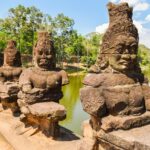
- Victory Gate is a quick, photogenic checkpoint that signals you’re entering the capital area.
- Bayon is the jaw-drop moment. You’ll hear about the 49 towers and their four faces on each tower—so you’re surrounded by repeated expressions from different directions.
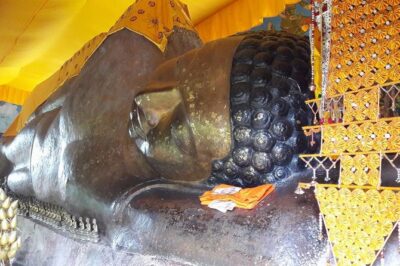
- Baphuon follows, with an earlier Hindu temple foundation and a later reclining Buddha behind it, plus time around the Royal Enclosure Wall.
- Phimeanakas adds the pyramid-style, Hindu temple angle in the center of the old royal palace zone.
- The Terrace of the Elephants and Terrace of the Leper King round out the royal storytelling through carvings and reliefs.
These stops are compact, but they build a pattern: you start seeing Angkor as a lived-in political and religious center, not just a collection of standalone buildings.
Phnom Bakheng Sunset: Gorgeous Views, Timing Limits
To close Day 1, you climb Phnom Bakheng for sunset views. There’s a warning built into the experience: due to a limited number of tourists allowed, the climb and viewing are time-managed.
If you care more about comfort than crowd logistics, the tour explicitly gives you a choice: you can skip waiting for sunset and still cover the essential viewpoints.
Day 1 takeaway: you leave with Angkor Wat’s “main character” energy, Ta Prohm’s jungle drama, and Angkor Thom’s royal face-filled power.
Day 2: Angkor Wat Sunrise + Preah Khan, Pre Rup, and the Pink-Sandstone Power of Banteay Srei
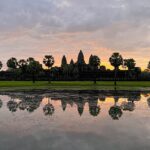
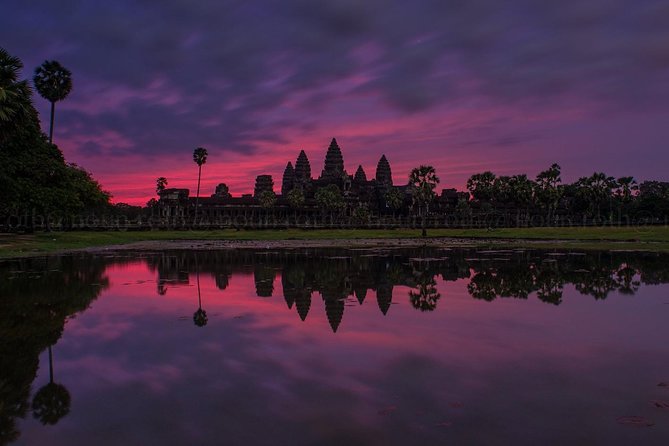
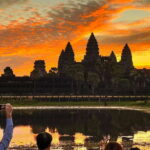
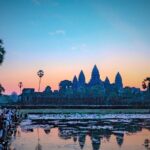
Day 2 starts much earlier—your pickup is around 5:00am for the sunrise at Angkor Wat. That early start matters. Morning light changes the color of stone, and sunrise is one of those moments that makes the whole complex feel alive rather than museum-like.
Sunrise at Angkor Wat: Why the Timing Is Worth It
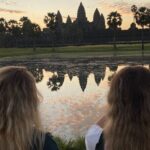
Watching the temple glow at sunrise is the reason a lot of people make the trip. The important practical part is your guide gets you there in time without you having to plan for gates, crowds, or the distance from where you’re staying.
Once you’re done, you return for breakfast, then continue on the circuit.
Preah Khan: A Buddist Temple With Big Energy
Next is Preah Khan, described as a Buddhist temple built by King Jayavarman VII, dedicated to his father. This stop is one of the better “interpretation” moments. Your guide’s commentary can help you see how meanings shift across different reigns and religious influences.
Neak Pean and Ta Som: Smaller Temples, Strong Atmosphere
You then visit Neak Pean, a small island temple set in the middle of a larger water setting, followed by Ta Som on the east side. These are shorter stops, but that can be a good thing. When Angkor gets intense, giving you a calmer pocket helps you absorb the day instead of just collecting sights.
Eastern Mebon and Pre Rup: Temple-Mountain Views and Fun With Names
Eastern Mebon is a temple-mountain ruin rising three levels with five towers at the top, and it’s noted for nice elephant statues at corners. After that, Pre Rup is another late 10th-century temple dedicated to Hindu gods, and the name meaning is a hint that these temples often tie into funeral beliefs in Cambodian tradition.
The guide’s job here is to connect the symbolism to what you’re actually standing in front of, and these stops are where that explanation can really land.
Lunch Break and the Big Shift to Banteay Srei
After lunch, the tour shifts gears to one of Angkor’s most eye-catching temples: Banteay Srei, often called Ladies temple. It’s built from pink sandstone and dates to the half of the 10th century, tied to King Rajendravarman II and the trinity gods.
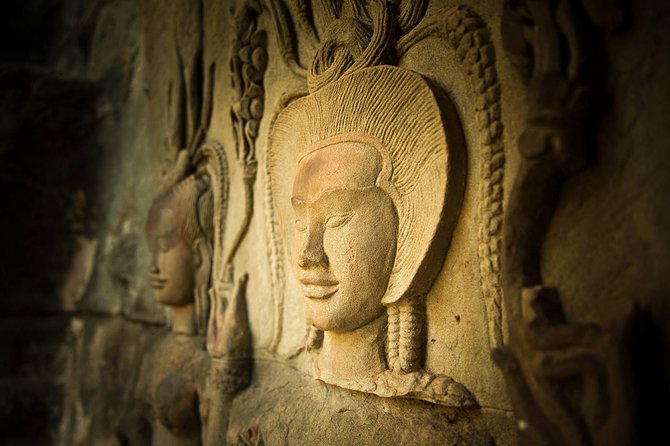
If you like carvings and smaller architectural details, Banteay Srei is a highlight. The material itself also helps photos look different from the warmer browns and greys you see elsewhere.
Banteay Samre and Banteay Kdei: Similar Style Threads
Then you have more temples that are described as having architecture similar to major Angkor examples:
- Banteay Samre: Hindu temple from the 12th century, with the suggestion that its model relates to Angkor Wat.
- Banteay Kdei: Buddhist temple from the 12th century, noted for structures similar to Ta Prohm and Bayon.
These are often the kind of stops where you appreciate a guide explaining patterns—once you understand style links, the circuit feels more coherent.
Day 2 takeaway: sunrise Angkor Wat plus a strong mix of temple types, ending with the pink-stone detail work at Banteay Srei.
Day 3: Roluos Group Temples and the Jungle Swagger of Beng Mealea
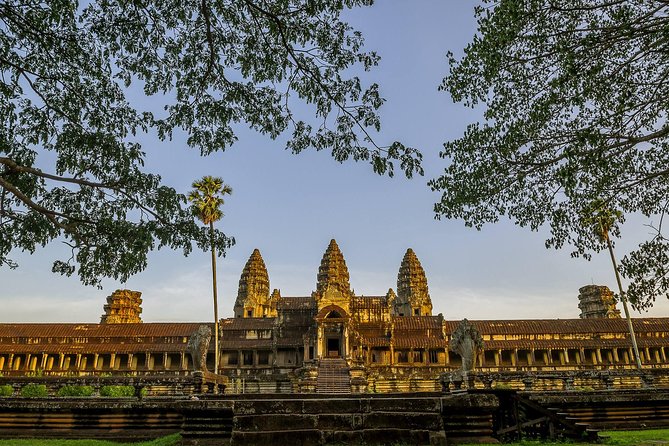
Day 3 is built around the Beng Mealea experience plus a classic set from the Roluos Group, which is a nice way to round out your Angkor understanding beyond the most famous core.
Beng Mealea: Angkor’s “What If the Jungle Won” Temple
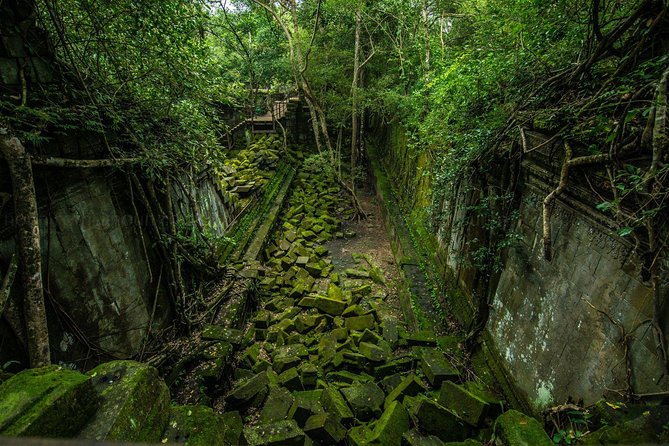
Beng Mealea is located about 68km northeast of Siem Reap, and it’s described as mysterious because nature has taken over so aggressively. You spend about 3 hours 30 minutes here, which matters because the place is full of paths, gaps, and uneven ground.
This is the day for people who like atmosphere over perfection. If you came for moody stone, wild greenery, and a temple that feels less restored, Beng Mealea is a strong match.
Practical thought: wear shoes you trust. You’ll want grip on rough surfaces, and you’ll likely be walking longer than you expect from the photos.
Lolei and Preah Ko: Small Temples That Add Context
After Beng Mealea, the tour goes to Lolei (a 9th-century Hindu temple) and Preah Ko (the first temple built in the ancient city of Hariharalaya). These stops are short, but they help you feel the structure of the broader region.
Bakong: The Temple-Mountain Prototype Feeling
Then comes Bakong, described as the first temple mountain of sandstone constructed by rulers of the Khmer empire, and the biggest temple in the Roluos Group. This is where the circuit vibe clicks: you start seeing how early Angkor temple styles influenced later monumental work.
Lunch happens around here too—your guide stops at a good restaurant option along the way.
Artisans Angkor and Psar Chaa: Cultural Stops You Can Skip
On Day 3, you also have optional-style cultural stops:
- Artisans Angkor for traditional craft products like stone carving, wood carving, lacquering, gilding, and silk processing.
- Psar Chaa (Old Market) in the center of Siem Reap.
Both are described as skippable if you don’t want them. I like having the choice on the final day, when you’re temple-fatigued but still want some local texture.
Day 3 takeaway: jungle-temple energy at Beng Mealea plus the earlier Khmer temple roots in the Roluos Group.
Price, Admission Fees, and What You’re Really Paying For
The listed price is $261 per person for the private 3-day experience. That’s not cheap, but it’s also not just “a ride and a ticket.” You’re paying for:
- Private transport in an air-conditioned vehicle
- Hotel pickup and drop-off
- An English-speaking guide with licensed guidance
- Included extras like cool water and a cool wet towel
- Parking fees and road tolls
Then you add the one big extra: admission fees. The tour lists $62 per person for Angkor Wat plus all temples. Meals (lunch) are also extra, listed at $5.00 per person, depending on the restaurant menu.
For value, ask yourself what you’d spend if you DIY’d:
- a driver for three days,
- a temple pass purchase process,
- and an actual guide to connect the dots.
If you’re the type who enjoys understanding why carvings face certain directions or how the religious function changed over time, a guided format usually pays back fast.
The Practical Stuff That Makes or Breaks an Angkor Trip
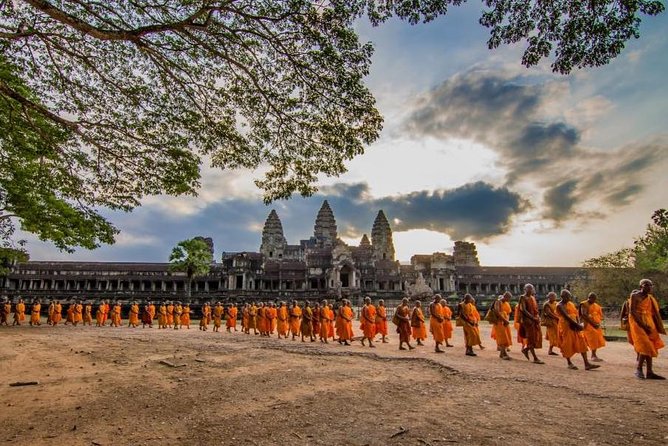
Angkor is famous, which also means it’s hot, busy, and time-sensitive. Here’s what I’d plan around based on how the tour is structured.
Start Early When It Matters
You’ll do an early 5:00am sunrise on Day 2. That’s the best kind of exhaustion because it’s rewarded with real atmosphere. If you’re tempted to skip mornings and sleep in, this tour format is built for people who want the sunrise moment.
Use the Tour’s Built-In Cooling and Breakpoints
The tour includes cool water and cool wet towels, which is not a small thing when you’re hiking temple steps and dealing with sun exposure. Keep sipping water even if you feel fine.
Choose Your Crowd Level on Phnom Bakheng
The Phnom Bakheng sunset climb includes a note about limited tourists allowed. If you’re sensitive to crowds, I like that the tour gives you an option to skip the waiting.
Be Ready for Uneven Ground at Beng Mealea
Beng Mealea isn’t restored into perfect pathways. It’s part of the point. Bring shoes with grip and be ready to walk a lot.
Should You Book This 3-Day Angkor Wat Tour?
I’d book this if you want a private, guide-led Angkor experience that covers the major highlights without you juggling routes, timing, and logistics in Siem Reap. The best reasons to say yes are the sunrise Angkor Wat, the structured circuit with commentary, and the mix of polished icons (Angkor Wat, Bayon) with messier, more atmospheric stops (Ta Prohm and especially Beng Mealea).
I would hesitate if you’re very budget-first, because the temple admission fee plus lunches sit on top of the base price. Also, if you only want one or two temples and hate early mornings, the schedule might feel like too much.
If you want the kind of trip where temples connect into a bigger story—and you get to end days with real scenery—this is a strong way to do Angkor.
FAQ
Is hotel pickup and drop-off included?
Yes. The tour includes hotel pickup and return in Siem Reap each day, with pickup starting at your accommodation and finishing with drop-off back at your hotel.
What time does the tour start on Day 1 and Day 2?
Day 1 pickup is around 8:00am. Day 2 for the sunrise at Angkor Wat is much earlier, with pickup at around 5:00am.
What’s included in the price?
The price includes an air-conditioned vehicle, an English-speaking licensed guide, pickup and drop-off at your hotel, cool water and a cool wet towel, plus parking fees and road tolls.
Are temple admission fees included?
No. Temple admission is listed as extra: $62 per person for Angkor Wat plus all temples.
Are meals included?
Lunch is not included. Meals (lunch) depend on the restaurant menu and are listed at $5.00 per person.
Can I skip certain stops like sunset or market/craft stops?
Yes. Phnom Bakheng sunset time can be skipped if you don’t want to wait. Also, the Artisans Angkor stop and Psar Chaa old market are presented as optional, so you can skip them if you prefer.