REVIEW · SIEM REAP
Full-Day Temples of Angkor Small Group Tour
Book on Viator →Operated by Journey Cambodia · Bookable on Viator
Four temples in one day, with sunrise.
This full-day Angkor tour is interesting because it packs the big names of Angkor into a single, well-paced circuit, with a licensed English guide explaining what you’re seeing while you beat some of the crowds. You’ll ride in an air-conditioned minivan, stop for the key monuments, and get that classic mix of stone art and jungle atmosphere.
I love the small-group setup. In practice, it feels more personal than you’d expect from a “group tour,” and guides like Sokpe(e), Saruon, Kiss, and Chea Sok consistently steer the day with clear, human stories (plus smart photo timing). I also like the hotel pickup and drop-off, because you start early without having to solve transport at 4:30 am.
One drawback: it’s still a big temple day. You’ll be walking and climbing for hours, and it’s best if your legs are game for stairs. Also, the temple pass is not included in the $19 price, so budget extra for the official entry fee.
In This Review
- Key things to know before you go
- Sunrise timing: why the early start actually improves your day
- Hotel pickup, air-conditioned transport, and the comfort details that matter
- Angkor Wat: the corridors, apsaras, and the payoff of starting early
- Angkor Thom’s South Gate and Bayon: 108 guardians to Khmer victory scenes
- Terrace passes and Srah Srang: brief stops, useful pacing, and a lunch break
- Ta Prohm: jungle-overgrown ruins and the Tomb Raider vibe
- Price and value: $19 plus the temple pass you should plan for
- What to wear and pack for Angkor’s stairs and heat
- Guides make the difference: what you’ll learn (and who you might meet)
- Who this tour is best for (and who should skip it)
- Should you book this Full-Day Temples of Angkor Small Group Tour?
- FAQ
- What does the $19 price include?
- Do I need to pay the temple pass separately?
- Can I buy the temple pass on the day of the tour?
- About what time does pickup happen?
- How long is the tour?
- What is lunch like on this tour?
- What should I wear to enter the temples?
- What is the minimum age to join?
Key things to know before you go
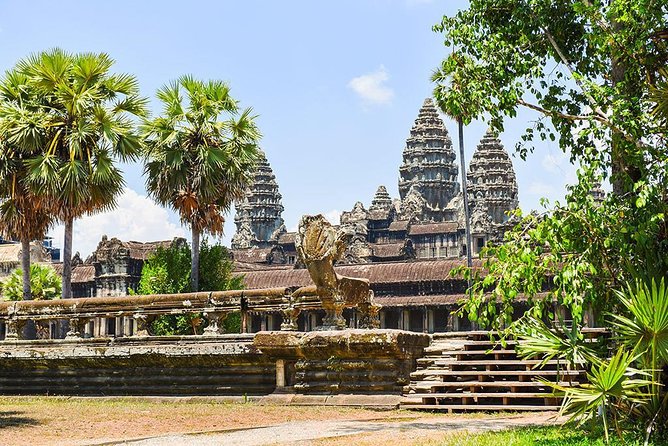
- 4:30 am style starts: many departures are timed for sunrise at Angkor Wat, so you’re in position before the day heats up
- Max 15 people: small-group feel with the chance of very small numbers on the day
- AC rides + cooling breaks: cold water and cool/wet towels are part of the comfort strategy
- Official temple pass is separate: plan for the Angkor entry fee (paid directly at the site; Visa accepted)
- A real photo advantage: guides will help you hit the best viewpoints without turning it into a selfie marathon
- Dress code matters: shoulders and knees covered is required, so bring a scarf you can actually use
Sunrise timing: why the early start actually improves your day
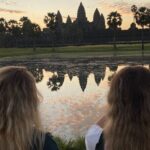
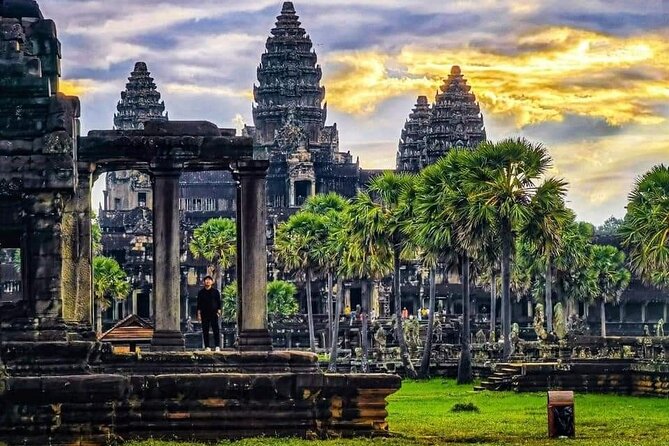
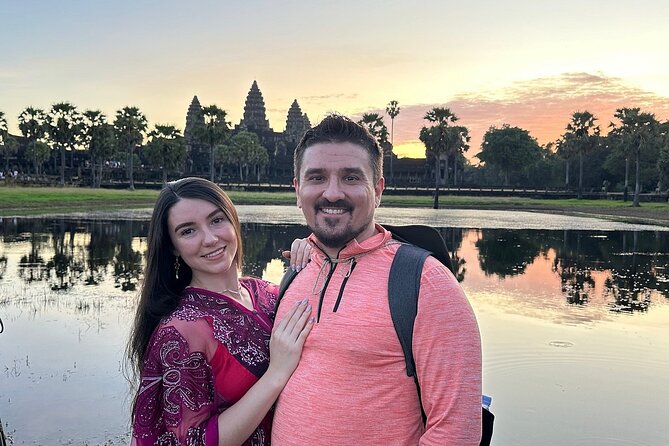
This tour is built around a simple idea: see Angkor Wat while the light is kind. With pick-up often around 4:30 am, you get to watch the sky shift over the western face of the temple complex. It’s not just pretty. That timing helps you move through Angkor Wat while the air is cooler and the crowds are still forming.
You’ll also notice how much easier the morning is for photos and first-time orientation. When you’re fresh, it’s easier to handle the layout—corridors, courtyards, and viewpoints—without feeling like you’re sprinting from one landmark to the next. If you’re the type who hates rushing, sunrise is your friend.
You can also read our reviews of more tours and experiences in Siem Reap
Hotel pickup, air-conditioned transport, and the comfort details that matter
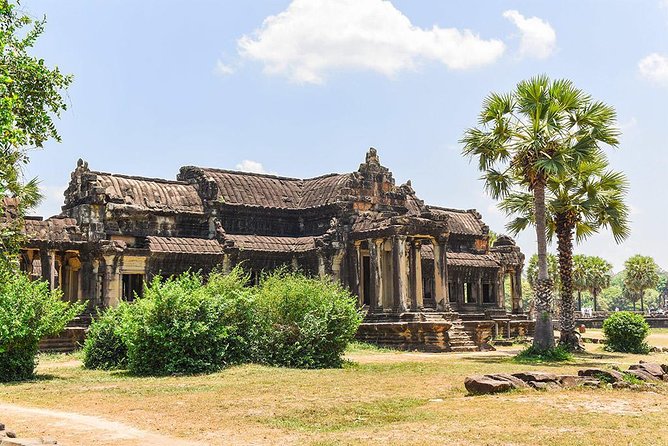
You’ll start with hotel pickup in Siem Reap and travel to the Angkor site in an air-conditioned minivan. That sounds basic, but it matters because the day is long and Cambodia heat ramps fast. In the van, you’ll have mineral water and a cool towel, and you can expect the same cooling routine when you’re back onboard between temple stops.
The “small group” promise is real here. Maximum group size is listed as 15 travelers, and your experience can feel almost private when the group runs small (people have described tours with only a few guests). A smaller group also makes it easier for your guide to pause, answer questions, and adjust pacing if someone needs a breather.
Your driver is part of the comfort equation too. Multiple guides in past days were paired with drivers who kept the ride smooth, with water and towels offered at key moments. When you’re doing a staircase day, that kind of attention is not a small thing.
Angkor Wat: the corridors, apsaras, and the payoff of starting early
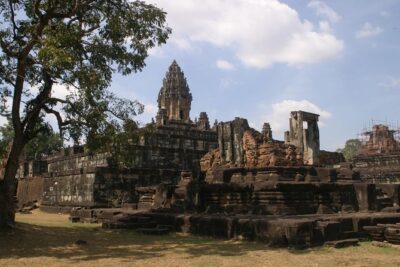
Angkor Wat is the headline for a reason. You’ll spend about two hours here, and the route usually goes right to the heart of the experience: narrow stone passages lined with detailed bas-reliefs, shrines, and the sense that the temple is alive with stories.
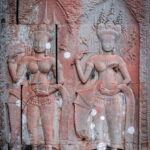
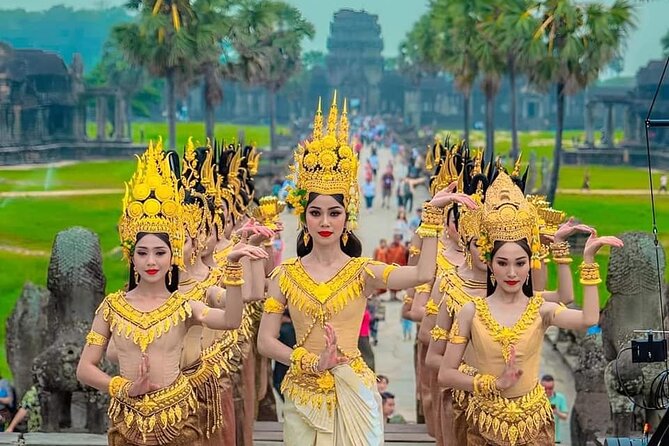
One detail that stands out from what’s shared during the visit: you may see gold-shrouded statues tended by local monks. That adds a living, present-day layer to the ancient stones. Then you’ll climb into the central gallery area where the decoration turns extra symbolic—dancing apsaras figures are part of what makes Angkor Wat feel different from the more ruin-like mood of some other temple sites.
Practical reality check: even if you’re fit, Angkor Wat includes up-and-down steps and some steep climbing. Early morning helps, but you’ll still feel it later in the day. Wear shoes with real grip, not slide-ons. Your knees will thank you.
If sunrise is on your personal must-do list, prioritize it here. The light is excellent, and the timing helps you get photos before the day gets crowded and hot.
Angkor Thom’s South Gate and Bayon: 108 guardians to Khmer victory scenes
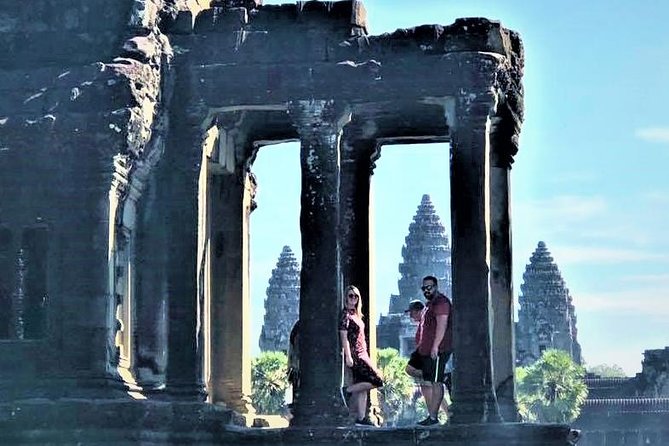
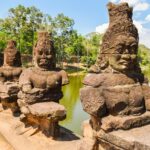
After Angkor Wat, you move into the Angkor Thom area. The stop at the South Gate gives you an immediate sense of power and scale—an approach framed by guardian figures, including the famous set of 108 statues of smiling gods and fierce demons.
This is a quick stop (around 30 minutes), so treat it like a “reset and orient” moment. You’ll take in the gateway before pushing into the larger city core.
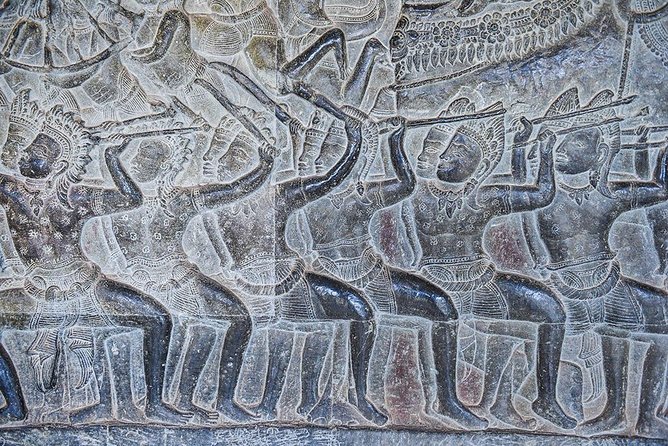
Next comes Bayon, usually around 1.5 hours, and it’s where the tour’s historical explanations pay off. Bayon is known for those face towers—stone faces that stare outward from multiple directions. Your guide will connect the artwork to the Khmer Empire’s conflicts and victories, including carvings that relate to Khmer conflicts with the Cham warriors. That context turns the bas-reliefs from “pretty carvings” into a readable story.
Also, Bayon involves more climbing and uneven walking. It’s not extreme like a trek, but it adds to your “leg totals” fast. I recommend treating the Bayon segment as a storytelling walk: slow down for the carvings your guide points out, not just for the big faces.
Terrace passes and Srah Srang: brief stops, useful pacing, and a lunch break
Between Bayon and Ta Prohm, the tour typically passes by two classic terrace features: the Terrace of the Leper King and the Terrace of Elephants. These aren’t always handled as long “linger here” stops, but even from the outside, they help connect the dots. They sit within Angkor’s wider ritual and royal landscape—places where power wasn’t just expressed in temples, but in the ceremonial spaces around them.
Then you’ll hit a break at Srah Srang. This is also where lunch fits into the day. Lunch is not included, but the tour stop is designed as a rest window—roughly one hour near local restaurant options around the Srah Srang area.
I like this structure. It stops you from turning the whole day into a nonstop grind of stone and stairs. If you’re sensitive to heat, use the lunch break to actually cool down, rehydrate, and slow your breathing for five minutes. It makes the afternoon temple portion feel more human.



Ta Prohm: jungle-overgrown ruins and the Tomb Raider vibe
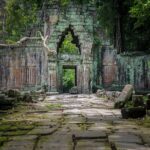
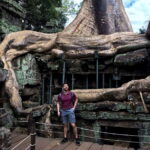
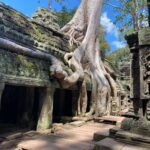
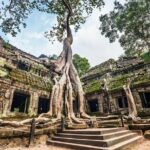
Ta Prohm is the temple that many people connect to pop culture, but the real magic is what’s happening in nature. You’ll spend around 1.5 hours here, wandering the maze-like ruins wrapped in vines and fig trees.
This is the best kind of surprise stop. You go from carefully designed stone geometry into a world where roots and vegetation have taken over walls and doorways. It feels atmospheric, and your guide can point out how restoration works while you walk through spaces that still look half-forgotten.
Practical tip: expect lots of uneven footing and stairs, plus shaded and unshaded patches. Bring sunglasses and sunscreen because you’ll still spend time in open areas. The “Tomb Raider” feel is real, but what you’re actually chasing is the way Ta Prohm shows you a temple that’s in conversation with the jungle.
If you’re a photographer, this is where guides can shine. Several guides in past groups were praised specifically for helping people hit great positions and viewpoints, not just for reading facts. Take advantage of their timing.
Price and value: $19 plus the temple pass you should plan for
The listed price is $19 per person, and it’s a bargain for what’s included. Your base price covers hotel pickup/drop-off, transport in an air-conditioned minivan, a licensed English-speaking guide, mineral water and cool towel, and local tax. You’re also getting a small-group experience designed for a full temple circuit rather than a quick drive-by.
But you do need to add the official temple entry fee. The temple pass is $37 per person and is paid directly at the site (and Visa cards are accepted). So a realistic all-in expectation is roughly $56 per person, before any lunch you buy.
Is it still good value? For many first-timers, yes. You’re paying mostly for the guide and logistics that turn Angkor from an overwhelming maze into something you can actually understand. With the pass added, you’re still getting a lot of temple time in one day—especially when the tour runs with fewer people and you get more attention.
What to wear and pack for Angkor’s stairs and heat
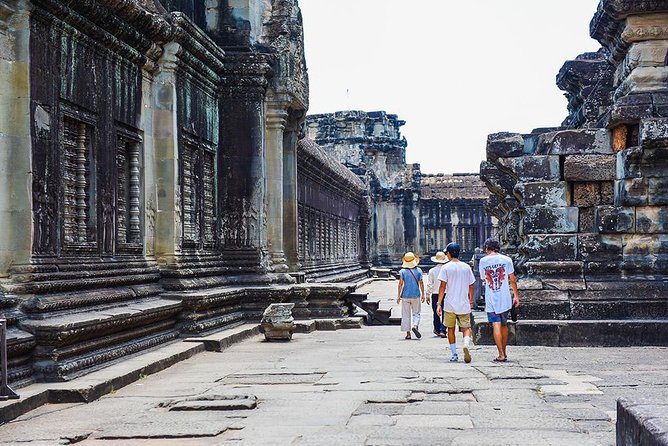
Dress code is strict enough to matter. You need respectful coverage: cover your shoulders and knees. Bring a scarf you can actually use to cover your shoulders, and avoid anything that leaves knees exposed. If you forget, you’ll spend time scrambling when you’d rather be looking at carvings.
Footwear is non-negotiable. You’ll do a lot of walking and climbing. Comfortable shoes with grip are your best friend. If you wear light sneakers, you’ll be happier than if you wear fashion footwear.
For the packing list, I’d focus on comfort and sun protection. The day can get brutally hot—one group described temperatures reaching 42°C. So pack: sunscreen, a hat or head protection, and refillable water (even if bottled water is provided). Also keep using the cool towel breaks. They genuinely help your energy last through the afternoon.
Guides make the difference: what you’ll learn (and who you might meet)
This tour lives or dies by your guide, and the names shared by past groups give you a sense of the experience style. Guides like Sokpee, Saruon (Saruon Pal), Kiss (Sok), Chea Sok, Sak, Chhay, Chansarak, Sarai, and Yuth have all been credited for clear English and for making the history understandable.
What I think you’ll appreciate most is how the guide connects art to meaning. When you hear why the Khmer Empire carved what it carved—Hindu-Buddhist transitions, warfare references in bas-reliefs, the symbolism behind gate guardians—it changes your attention. You stop guessing and start noticing.
Guides also tend to help with photos in a practical way. People have mentioned guides being patient and even stepping into the “get the shot without everyone doing awkward angles” role. If you’re traveling with family or friends, that can save you time and frustration.
One extra suggestion I’d add if you want everything to click: if your schedule allows, consider visiting a museum in Siem Reap the day before Angkor. Understanding the broader myths and Khmer empire context makes the carvings feel less like random decoration.
Who this tour is best for (and who should skip it)
Book this if you:
- Are short on time and want the core Angkor temples in one full day
- Like the idea of an early start to see Angkor Wat in better light
- Want a small group with an English-speaking guide who talks through details
- Prefer structured logistics over navigating routes and ticket timing yourself
Skip it (or consider a gentler plan) if you:
- Have mobility limits that make steps and uneven stone a problem
- Hate early mornings and long days—this is a “wake up, walk, repeat” format
- Want a totally free-form pace with long solo wandering time at every stop
Also note: drop-off logistics can vary slightly by hotel area. One small complaint mentioned people being dropped in the same vicinity rather than at exactly the front door. It’s not common, but it’s good to keep your expectations flexible.
Should you book this Full-Day Temples of Angkor Small Group Tour?
I’d recommend it for most first-time Siem Reap visitors who want a smart one-day plan. The value is strong at $19 because the big costs you control—transport, guide, and cooling support—are covered, and the small-group size helps you feel looked after. Add the $37 temple pass, and you still get a packed, guided day that would be harder to pull off smoothly on your own.
I’d also book it early in your trip. Once you’ve seen Angkor Wat, Bayon, and Ta Prohm, the rest of your time in Cambodia makes more sense. If weather turns rough, the experience may be rescheduled or you’ll be offered a refund, so keep an eye on conditions.
If you’re ready for stairs, heat, and a guided temple circuit, this is one of the more practical ways to see Angkor without it turning into chaos.
FAQ
What does the $19 price include?
It includes hotel pickup and drop-off, a licensed English-speaking tour guide, transport by air-conditioned minivan, mineral water and cool towel, and local tax.
Do I need to pay the temple pass separately?
Yes. The entrance fee/temple pass is not included. The cost is $37 per person, paid directly at the site.
Can I buy the temple pass on the day of the tour?
Yes. The temple pass can be purchased on the day of the tour, and Visa cards are accepted.
About what time does pickup happen?
Pickup is often scheduled early, with groups reporting a 4:30 am pickup to connect with sunrise at Angkor Wat.
How long is the tour?
The duration is listed as about 8 hours.
What is lunch like on this tour?
You’ll stop for lunch near Srah Srang, but lunch is not included.
What should I wear to enter the temples?
You need respectful coverage: cover your shoulders and knees. A scarf is required to cover shoulders, and comfy walking shoes are recommended.
What is the minimum age to join?
The minimum age is 5 years old.