REVIEW · SIEM REAP
3 Day Angkor Wat Kulen Mountain Beng Mealea and Floating village
Book on Viator →Operated by Asean Angkor Guide · Bookable on Viator
Three days of temple time can feel like a blur. This one is built around timing and variety: Angkor Wat sunrise, Kulen’s holy sites and waterfalls, then the floating village at Kampong Phluk.
I especially like the way the schedule front-loads the hardest-to-get moments, like early sunrise, before the crowds land. I also like the mix of big names (Ta Prohm, Bayon) with the less-visited detours (Beng Mealea and Phum Preah Dak community lunch day). The main drawback is simple: you’ll do a lot of stairs and early starts, including a sunset climb at Phnom Bakheng.
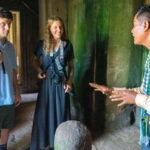
This is a true private tour for your group, with a professional English-speaking guide and an experienced driver doing the driving. In feedback, guides like Mr. Sean, Sotin Kim, Raman, and Mr. Ho come up for being friendly, clear, and fun to follow, with Raman also noted for strong photo skills.
Still, with a private setup, you’re not “wandering”—the day runs to a set rhythm—so plan to be present and comfortable, not in full relaxed mode.
You’ll get the stuff that usually becomes annoying to juggle: hotel pickup, transportation, water and towels, and tickets to the attractions. Meals are included too: breakfast plus two lunches across the three days, which helps keep the price ($195 per person) feeling fair for a tightly packed itinerary.
In This Review
- Key Highlights You’ll Care About Most
- Why This 3-Day Angkor + Kulen Route Works
- Sunrise Over Angkor Wat: The 4:40 AM Plan (and Why It’s Worth It)
- Day 1 Inside the Main Angkor Circuit: Srah Srang, Ta Prohm, Angkor Thom
- Srah Srang breakfast stop in the countryside
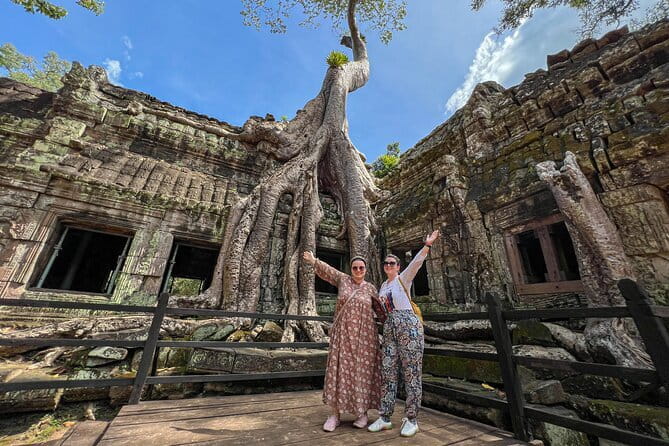
- Ta Prohm: the jungle-overgrown temple experience
- Angkor Thom and Bayon faces: Terrace views included
- Back to Siem Reap by around 13:00
- Day 2 Kulen National Park: Cliff Views, 1000 Lingas, and Waterfall Time
- Poeng Ta Kho (amazing cliff): viewpoint first
- Preah Ang Thom pagoda: 8-meter reclining Buddha
- 1000 Lingas: sacred carvings in the riverbed
- Phnom Kulen waterfall: picnic rocks and a swim option
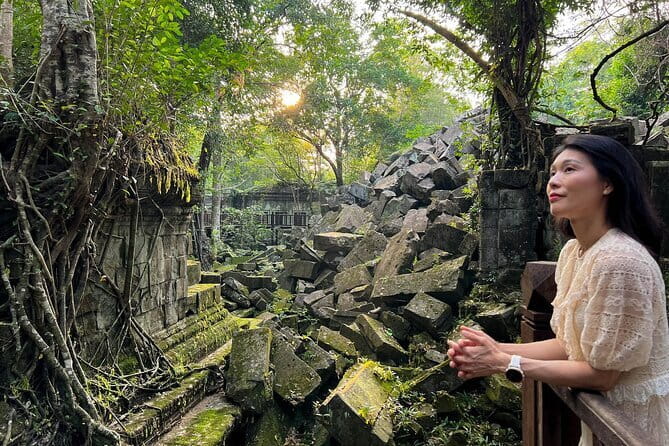
- Beng Mealea after lunch: ruins reclaimed by nature
- Kompong Phluk floating village: boat cruise on Tonle Sap Lake
- Back to Siem Reap by around 18:00
- Day 3 Temples From Banteay Kdei to Phnom Bakheng Sunset
- Banteay Kdei (45 minutes)
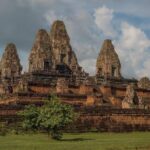
- Pre Rup (1 hour)
- Banteay Srei (1 hour)
- East Mebon (40 minutes) and Ta Som (30 minutes)
- Lunch at Srah Srang and Phum Preah Dak community: palm cake and palm sugar
- Neak Pean and Preah Khan (Temple pairing)
- Phnom Bakheng sunset climb and return to your hotel
- Price and Inclusions: What You’re Actually Paying For
- Pacing, Comfort, and Who Should Choose This Tour
- Tips So You Get the Most Out of Every Stop
- Should You Book This Private 3-Day Tour?
- FAQ
- What time does the Angkor Wat sunrise part start?
- Are the admission tickets included?
- Is breakfast included?
- How many lunches are included?
- What does lunch include on Day 3?
- Where do you go in Kampong Phluk?
- Is there a waterfall stop?
- What time do you return to Siem Reap on Day 1?
- What time do you return on Day 2?
- Is this tour private?
- Is free cancellation available?
Key Highlights You’ll Care About Most
- 4:40 AM Angkor Wat sunrise: you’re up early, but you’re there before the rush.
- Ta Prohm + Bayon in one day: roots, faces, and carved corridors without backtracking.
- Kulen National Park holy riverbed stops: Poeng Ta Kho viewpoints, Preah Ang Thom, then the 1000 Lingas.
- Beng Mealea after lunch: nature taking over, in a way that feels different from the main circuits.
- Kampong Phluk floating village: boat time on Tonle Sap Lake and life on stilt homes.
- Sunset at Phnom Bakheng: last-day climb for views over Angkor Park.
Why This 3-Day Angkor + Kulen Route Works
This tour is designed for people who want more than a checklist of temples. You’re not just repeating the same famous angles. You’re moving from the early-morning signature moment at Angkor Wat, to Kulen’s natural and sacred sites, to Beng Mealea’s “ruins with trees” feeling, then out to the water at Kampong Phluk.
The big value for me is that the schedule respects the reality of Angkor: crowds show up fast, and timing matters for photos and calm moments. Sunrise at Angkor Wat and sunset from Phnom Bakheng are both major parts of that logic. You also get a guide who can explain what you’re seeing in plain language—exactly the kind of support people highlight when they mention guides like Mr. Ho or Mr. Sean.
The trade-off is physical. Day 1 and Day 3 both involve temple walking, and Day 3 includes a mountain climb. If your knees are cranky, plan ahead with decent shoes and a slower pace at the first signs of fatigue.
You can also read our reviews of more tours and experiences in Siem Reap
Sunrise Over Angkor Wat: The 4:40 AM Plan (and Why It’s Worth It)
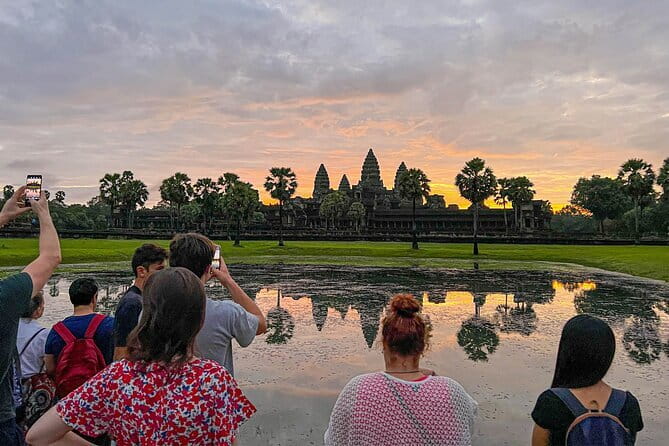
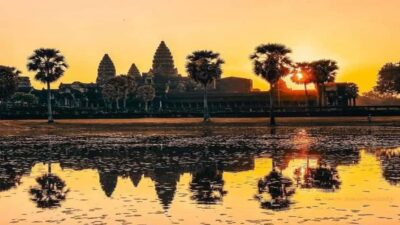
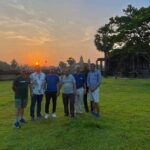
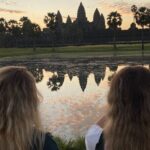
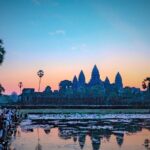
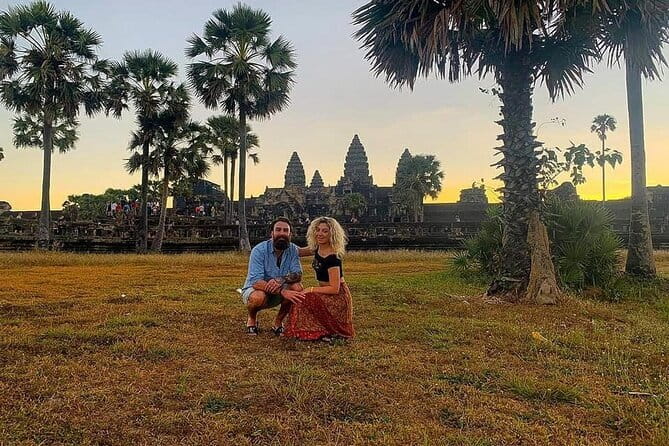
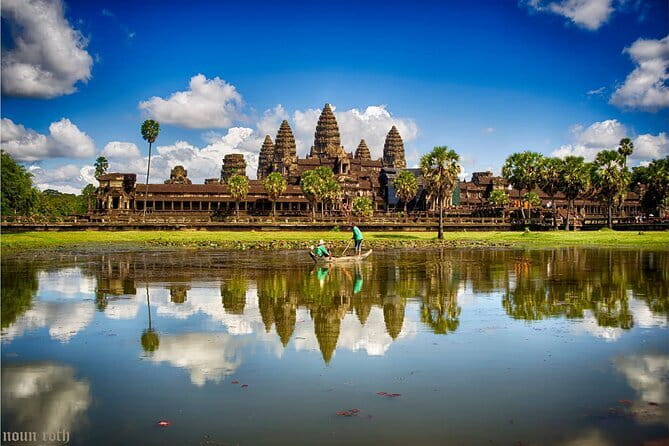
Your morning starts early: pickup from your hotel at 4:40 AM and head to Angkor Wat for sunrise. You’ll spend about 30 minutes with the sunrise moment, then the tour continues into temple exploration with the guide.
Here’s why this matters. Angkor Wat at sunrise is one of those times when the atmosphere is part of the experience, not just the photo. Being there before the crowd surge helps you actually look at the carvings and layout, instead of doing a fast walk-by. It also makes photography much easier—light angles are more controllable, and you’re not constantly negotiating foot traffic.
Practical note: after sunrise, you’ll keep touring, so don’t treat this as a quick stop. Wear something you can move in, and have your camera settings ready before you’re trying to figure them out mid-light-change.
Day 1 Inside the Main Angkor Circuit: Srah Srang, Ta Prohm, Angkor Thom
Day 1 is a classic Angkor sequence, but the order keeps it feeling efficient.
Srah Srang breakfast stop in the countryside
After sunrise and your first temple time, you get a break with breakfast at a local family restaurant in Siem Reap’s countryside. Breakfast is listed as included, and you’ll have about an hour here.
I like this stop because it turns the morning from pure monument viewing into something more human. Also, it’s real energy management. You’ll have a long day ahead, and eating somewhere local helps you recharge without guessing where to find food.
Ta Prohm: the jungle-overgrown temple experience
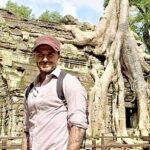
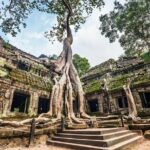
Next is Ta Prohm, where you’ll walk through a jungle-like setting and see the temple left in its original state, partly overtaken by huge roots. You get about 1 hour.
Ta Prohm’s special because it doesn’t feel like a tidy museum. It feels like a living ruin. The tour also notes that it was used as a backdrop for the film Tomb Raider, which gives you a quick cultural reference point as you explore.
If you love dramatic visuals, this is one of your best stops for “wow” factor without needing to hike to some remote spot.
Angkor Thom and Bayon faces: Terrace views included
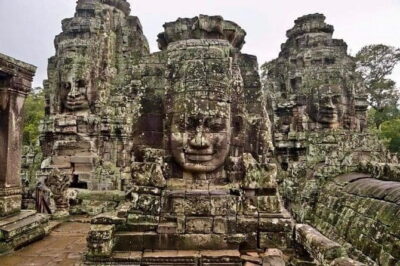
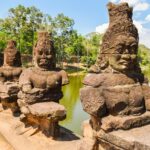
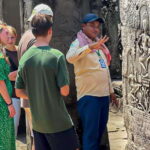
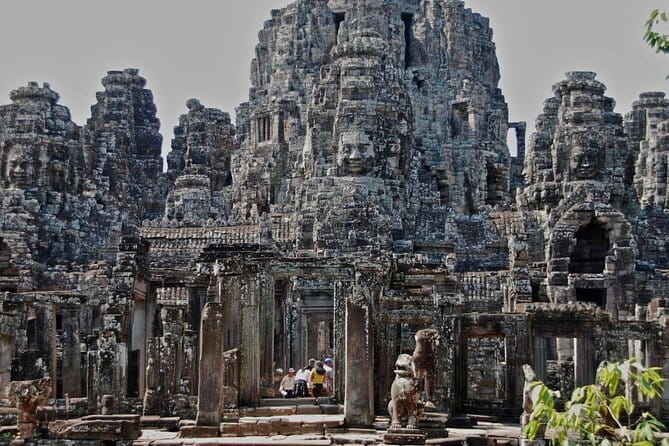
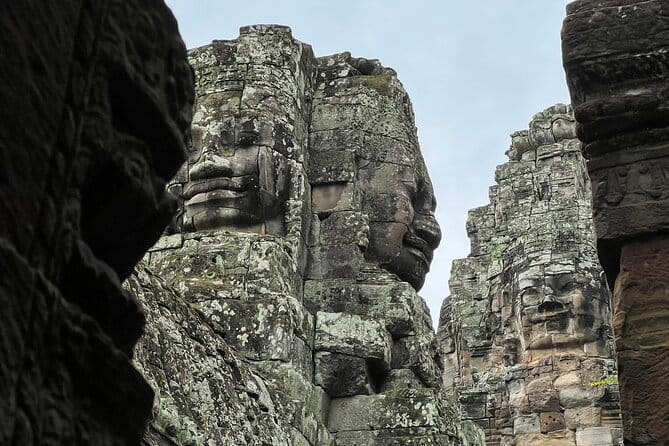
Then you go to Angkor Thom, starting at the South Gate, with time at Bayon and Baphoun temples. The tour includes the famous detail of 54 towers and 216 faces of Buddhisatva Avalokesvara and also mentions visiting the Terrace of the Elephant and additional carved terraces near the complex. This segment takes about 2 hours.
What to expect here is contrast. After the wild chaos of Ta Prohm, Angkor Thom feels tighter and more structured. It’s also a good place to let your guide slow down and point out icon details, since the faces can blur together if you’re just rushing.
Back to Siem Reap by around 13:00
You’ll transfer back to downtown Siem Reap, with an expected return by 13:00. Drop-off can be at your hotel or near the Old Market area, depending on what you prefer.
That midday finish is helpful if you want a massage, a quiet lunch after the tour’s breakfast, or time to recover before Day 2.
Day 2 Kulen National Park: Cliff Views, 1000 Lingas, and Waterfall Time
Day 2 starts at 8:00 AM pickup and leans hard into sacred sites plus nature.
Poeng Ta Kho (amazing cliff): viewpoint first
First up is Poeng Ta Kho, the cliff viewpoint that gives panoramic scenes across canyons and forests. You’ll have about 30 minutes, including a short walk from the parking area.
This is a good warm-up because it gets your eyes adjusted to big-distance views. Temple days can sometimes feel like everything is close up. Poeng Ta Kho breaks that up.
Preah Ang Thom pagoda: 8-meter reclining Buddha
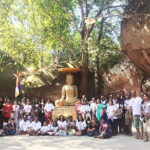
You then visit Preah Ang Thom pagoda, described as featuring an 8-meter reclining Buddha carved into the mountainside. The stop is about 1 hour.
This is one of those places where you’ll get the most from a guide who explains what you’re looking at. The rock-carved scale is the whole point, and it’s easier when someone helps you orient yourself.
1000 Lingas: sacred carvings in the riverbed
Next is the 1000 Lingas stop, described as thousands of sacred fertility symbols carved into the actual riverbed by 9th-century priests, turning flowing water into holy water for the Angkor kingdom. You’ll spend about 30 minutes.
This part is compelling because it’s not a single statue or facade. It’s a landscape detail—meaning the story is built into the water and stone.
Phnom Kulen waterfall: picnic rocks and a swim option
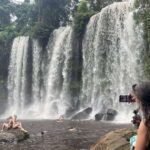
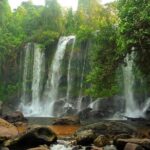
Then comes Phnom Kulen Waterfall. The tour describes crystal-clear pools fed by limestone-filtered mountain water, with picnic spread on smooth rocks and time for swimming (cold water, wake-you-up kind).
This stop is about 2 hours. Included here is the “nature break” you need after temple mornings, and it’s one of the reasons the trip feels like more than Angkor repeats.
A practical thought: bring something to change into if you plan to swim. Even if you don’t, you might still get mist and splash.
Beng Mealea after lunch: ruins reclaimed by nature
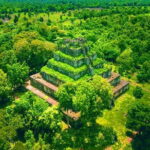
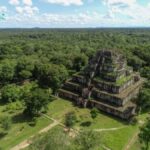
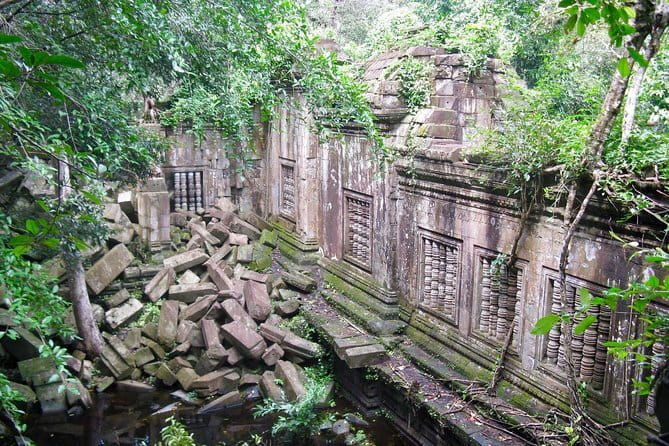
After lunch, you head to Prasat Beng Mealea. The tour frames it as what Angkor Wat might look like if nature had been left to reclaim it. You get about 1 hour here.
Beng Mealea’s appeal is its texture. It feels rougher and less controlled than the main circuits. If you’re someone who wants to see how different temple styles survive in different ways, this is a big reason to choose this route instead of a strictly classic loop.
Kompong Phluk floating village: boat cruise on Tonle Sap Lake
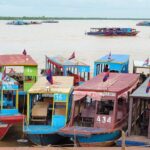
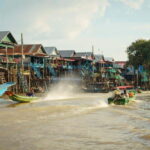
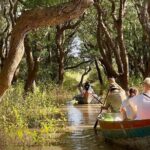
The last stop is Kompong Phluk, where families live their lives on the water with stilt houses and mangrove forest surroundings. You’ll have about 1 hour 30 minutes, and the overall tour description includes a boat cruise through the village on Tonle Sap Lake.
This is a real shift from stone to water and daily life. You’re looking at a different kind of heritage—less about carved walls and more about how people build a home around the lake.
Back to Siem Reap by around 18:00
You’ll return to town by 6:00 PM, with the option to go right back to your hotel or head toward the Old Market area.
Day 3 Temples From Banteay Kdei to Phnom Bakheng Sunset
Day 3 is temple-heavy again, but it spreads the experience out across multiple sites instead of stacking only the biggest names.
Banteay Kdei (45 minutes)
You start at Banteay Kdei for about 45 minutes. It’s a temple stop that sets the tone: you’re back in carvings, corridors, and the slow rhythm of walking.
Pre Rup (1 hour)
Then Pre Rup for about 1 hour. This is another mid-day temple segment where a guide’s explanations matter because you’ll see a lot of repeating visual language across Angkor.
Banteay Srei (1 hour)
Next is Banteay Srei with about 1 hour. It’s given enough time to look around without rushing.
East Mebon (40 minutes) and Ta Som (30 minutes)
You’ll also visit East Mebon (about 40 minutes) and Ta Som (about 30 minutes). These shorter stops are useful because they keep the day moving, so you don’t hit exhaustion too early.
Lunch at Srah Srang and Phum Preah Dak community: palm cake and palm sugar
Srah Srang is the lunch anchor on Day 3. You’ll enjoy lunch at a local restaurant cooked by the local chief (listed as included), then visit the Phum Preah Dak community. The tour notes you can learn how locals make palm cake and palm sugar, and this community segment takes about 1 hour.
This is one of the strongest “not just temples” parts of the whole itinerary. It gives you a practical, everyday culture experience that pairs well with the sacred sites. If you want your Angkor trip to feel connected to modern life, this is where it happens.
Neak Pean and Preah Khan (Temple pairing)
After the lunch/community block, you visit Neak Pean (about 40 minutes) and then Preah Khan (about 1 hour).
Again, tempo matters. A day with so many sites can feel like temple blur if you don’t slow down mentally. With a guide on hand, you can pick one or two elements to pay attention to at each stop, instead of trying to absorb everything.
Phnom Bakheng sunset climb and return to your hotel
Finally: Phnom Bakheng for sunset. The tour includes transferring you back to your hotel after the climb and sunset segment, with about 1 hour 30 minutes allocated to the stop.
This is the physical finish line. Plan for tired legs. If you’re prone to getting winded on stairs, take it one section at a time. The payoff is being at the right place for sunset views over Angkor Park, as stated.
Price and Inclusions: What You’re Actually Paying For
At $195.00 per person for roughly 3 days, the value comes from what’s bundled.
Included:
- A professional English-speaking tour guide
- Transportation with an experienced driver
- Cool bottle of water and towels
- Admission tickets to all listed attractions
- Breakfast plus two lunches
Not included:
- Soft drinks and meals not mentioned
- Tips (optional)
Here’s the practical math in plain terms: you’re paying for a guide, a driver, and ticketed access across a lot of stops, including sunrise and sunset moments. If you were to do this independently, you’d spend serious time coordinating tickets, timing, and day-to-day driving.
The private setup is the other part of the value. You’re not stuck waiting for a slow group. Your guide can pace your stops, and you can ask questions at the exact moment you see the thing that needs explaining.
Pacing, Comfort, and Who Should Choose This Tour
This itinerary is best for people who can handle a structured schedule and don’t mind getting up early.
You’ll be walking through several temple complexes, and Day 3 ends with a mountain climb for sunset. Day 1 includes major circuit walking after an early sunrise departure. Day 2 has holy sites and waterfall time, which can also mean uneven terrain.
You’ll likely enjoy this most if:
- You care about timing (sunrise and sunset matter to you)
- You want a mix of major Angkor temples and off-main stops like Beng Mealea
- You want a cultural add-on beyond ruins, especially the palm cake and palm sugar community learning
- You want a guide who can explain symbolism clearly in English (the feedback about Mr. Sean, Sotin Kim, Raman, and Mr. Ho matches this)
If your ideal vacation is slow mornings and long café hours, this may feel intense. It’s not a “show up when you feel like it” plan.
Tips So You Get the Most Out of Every Stop
A few simple moves can make a big difference on a trip like this:
- Bring comfortable walking shoes. You’ll do stairs, steps, and temple floors that aren’t forgiving.
- Keep a small kit ready: water bottle, a hat, and sunscreen. You get water and towels during the tour, but you still want your own comfort items.
- At sunrise and sunset stops, be ready to stand and wait briefly. Plan your camera settings before you’re on your feet.
- Ask your guide for one or two things to focus on per site—faces at Bayon, root chaos at Ta Prohm, or the riverbed carvings at 1000 Lingas. It keeps the day from blurring together.
And if you really care about photos, the tour’s format helps. Raman was specifically called out for photo ability in feedback, which is a good sign that your guide can help with angles and pacing if you’re paying attention.
Should You Book This Private 3-Day Tour?
Book it if you want a structured Angkor experience that includes both the headline moments and the variety: Angkor Wat sunrise, Kulen National Park, Beng Mealea, and the Kampong Phluk floating village. The included meals, tickets, and English-speaking guide make the price feel practical for what you get.
Skip it if you want a gentle pace, minimal walking, or you’re worried about the combination of early departures and temple stair climbs. This tour rewards energy and flexibility.
If you fall somewhere in the middle—curious, comfortable walking, and you want real cultural context—this is a strong choice from Siem Reap because it balances sacred sites, nature, and daily life on the water.
FAQ
What time does the Angkor Wat sunrise part start?
You’re picked up from your hotel lobby before sunrise at 4:40 AM for the Angkor Wat sunrise.
Are the admission tickets included?
Yes. Admission tickets to all the listed attractions are included.
Is breakfast included?
Yes. Breakfast is included on Day 1 at a local family restaurant in the countryside.
How many lunches are included?
You get two lunches during the 3 days.
What does lunch include on Day 3?
On Day 3, you have lunch at a local restaurant cooked by the local chief at the Srah Srang area, then you visit the Phum Preah Dak community.
Where do you go in Kampong Phluk?
You visit Kompong Phluk, described as a floating village on Tonle Sap Lake, and the tour includes a boat cruise.
Is there a waterfall stop?
Yes. Day 2 includes Phnom Kulen Waterfall, with time at pools and swimming.
What time do you return to Siem Reap on Day 1?
You’re expected to be back in downtown Siem Reap by around 13:00 on Day 1.
What time do you return on Day 2?
You’ll be back in town by 6:00 PM on Day 2.
Is this tour private?
Yes. It’s listed as a private tour/activity, meaning only your group participates.
Is free cancellation available?
Yes. There is free cancellation up to 24 hours before the experience starts for a full refund.