REVIEW · SIEM REAP
2-Day Angkor Wat Sunrise tour, Banteay Srei & Tonle Sap lake
Book on Viator →Operated by Ta Prohm Temple Tour · Bookable on Viator
Two days can feel like one big picture in Cambodia. This tour pairs Angkor Wat sunrise with a Tonle Sap floating village boat trip, so you see both the temple heartbeat and the lake life around Siem Reap.
I also like the way Day 1 threads through the Angkor Thom highlights, from Bayon to the iconic terraces with scenes in stone. And if conditions cooperate, you have the option to catch a sunset at Phnom Bakheng instead of going straight back.
One consideration: your ticket costs are separate. The Angkor Pass is $62 per person and the boat ticket is $20 per person, and you’ll pay for lunch and drinks during restaurant stops.
In This Review
- Quick hits before you go
- Angkor Wat sunrise plus Tonle Sap: the best kind of contrast
- Day 1: Angkor Thom monuments, then Angkor Wat (and an optional Phnom Bakheng)
- Day 2: 4:40 AM Angkor Wat sunrise, Ta Prohm jungle mood, and the slower temple loop
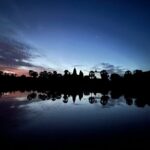
- Sunrise at Angkor Wat: the early hour changes everything
- Ta Prohm: the jungle temple effect
- Pre Rup (temple mountain feel)
- Eastern Mebon, Ta Som, and Neak Pean: smaller stops that keep momentum
- Preah Khan and a lunch stop
- Kompong Phluk on Tonle Sap: floating villages by boat
- Banteay Srei: why it’s worth aiming for in a two-day plan
- Price and value: $85 plus the tickets you must plan for
- How the guide makes a difference (and Dy’s name comes up)
- Getting the most out of the early mornings and warm afternoons
- Who should book this tour
- Should you book this 2-Day Angkor Wat sunrise and Tonle Sap tour?
- FAQ
- How much does the tour cost per person?
- How long is the experience?
- Is hotel pickup and drop-off included?
- Do I need to buy an Angkor Pass?
- Is the Tonle Sap boat ticket included?
- What time is the Angkor Wat sunrise pickup?
- Is Banteay Srei included?
- Is lunch included?
- Can I get a full refund if I cancel?
Quick hits before you go
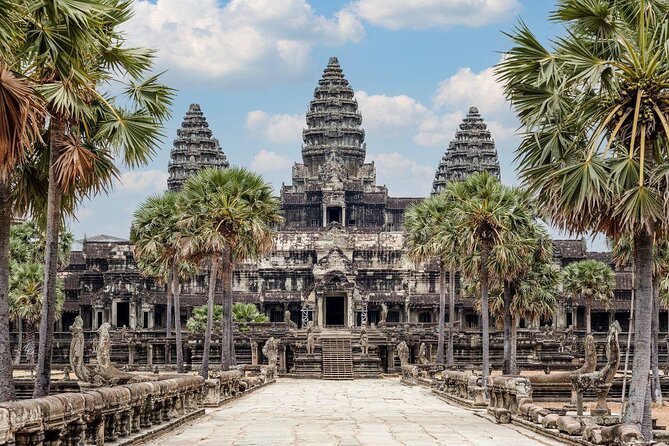
- 4:40 AM sunrise pickup at your hotel area for Angkor Wat
- Air-conditioned vehicle plus mineral water during touring
- Angkor Pass not included ($62 per person), same for the boat ticket ($20 per person)
- Optional Phnom Bakheng sunset if weather allows and you’re not too tired
- Tonle Sap Kompong Phluk visit with a local boat ride
- Dy as a standout guide name, praised for being perfect and even strong with tuk tuk driving
Angkor Wat sunrise plus Tonle Sap: the best kind of contrast
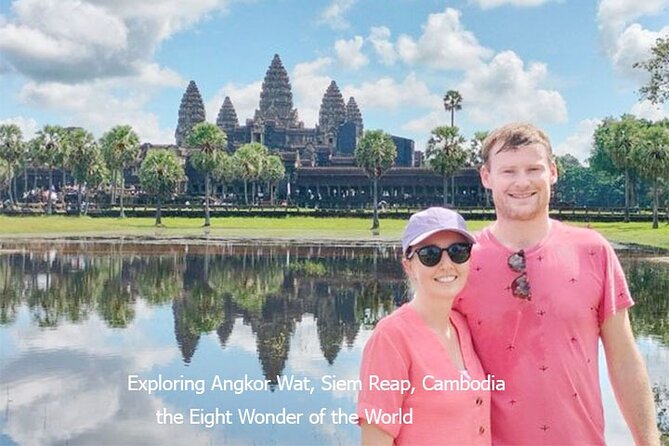
If you only do Angkor Wat, you’ll miss a whole slice of what life looks like around Siem Reap. This two-day format gives you both: the early-morning temple spectacle and then a lake-world afternoon where people live on and around the water.
I like that the tour isn’t just a single long temple march. It builds in time for breaks (including restaurant stops), and you’re moving around in an air-conditioned vehicle, which matters when heat and sun pile up fast. You’ll also be set up with a guided temple plan so you’re not guessing what to see and what to skip.
You can also read our reviews of more tours and experiences in Siem Reap
Day 1: Angkor Thom monuments, then Angkor Wat (and an optional Phnom Bakheng)
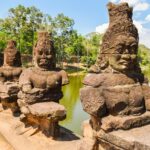
Day 1 runs like a classic Angkor circuit through the walled city of Angkor Thom, then ends with Angkor Wat. The big value here is variety: you start with gates and towering faces, then move through smaller, highly recognizable terraces, and finally land at the largest temple site.
Angkor Thom South Gate (Jayavarman VII’s capital gate)
Angkor Thom was the capital of Jayavarman VII’s empire. You’ll start at the South Gate, where you can take in the scale of the city’s layout before you start focusing on individual monuments. This stop is short, but it sets your bearings.
Bayon Temple (the Mahayana Buddhist state temple)
Bayon sits at the center of Angkor Thom and is built as a state temple tied to Jayavarman VII and the Mahayana Buddhist tradition. It’s famous for its dense decoration and the way the stone details make the whole area feel more crowded than many other ruins. You’ll spend about an hour here, enough time to slow down without feeling rushed.
Baphuon and the “secondary icons” feel
Baphuon is located northwest of Bayon and is a three-tiered temple mountain dating to the mid-11th century. Compared with Bayon and Angkor Wat, this is the kind of stop where you start noticing construction styles and layout choices. It’s brief, but it helps break up the day so you don’t only chase the biggest names.
Terrace of the Elephants
This terrace is part of Angkor Thom’s walled city complex, and it was used by Jayavarman VII as a platform. Even if you don’t know every carved scene, you’ll feel the function immediately: this wasn’t meant for quiet wandering. It was for viewing power, procession, and ceremony.
Terrace of the Leper King
This terrace is in the northwest corner of the Royal Square of Angkor Thom and built in a Bayon style under Jayavarman VII. Its modern name comes from a 15th-century reference, but the key here is the same as the Elephants terrace: you’re seeing royal staging space. It’s a good reminder that Angkor wasn’t only sacred architecture—it also served public life and authority.
Angkor Archaeological Park lunch break (pay for your own food)
You’ll have a lunch break in Angkor Park at a local restaurant for about 45 to 60 minutes, and food and drink are on your dime. I’d treat this as a practical stop: keep some cash handy for quick meals and water if you need it beyond what’s provided.
Angkor Wat (largest religious monument, major wow factor)
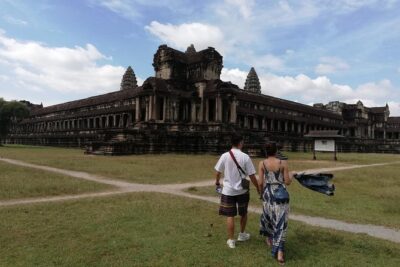
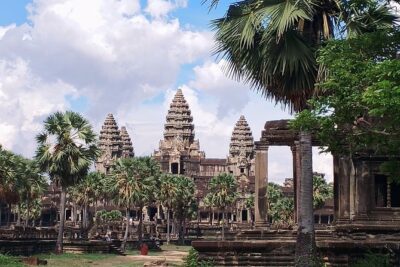
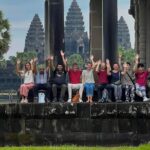
Angkor Wat is the big finish for Day 1. It’s the largest religious monument in the world on a huge site, originally constructed as a Hindu temple dedicated to Vishnu. You’ll have about an hour. That’s not endless time, so focus on the overall structure and major viewpoints rather than trying to photograph every carving.
Phnom Bakheng sunset (only if weather allows and you’re still standing)
If the weather works and you’re not too tired, you may get a sunset stop at Phnom Bakheng. This can be worth it because the light changes the mood of the ruins. If you’re sensitive to heat or you’re already cooked from the day, skip the extra effort and conserve energy for sunrise on Day 2.
Day 2: 4:40 AM Angkor Wat sunrise, Ta Prohm jungle mood, and the slower temple loop
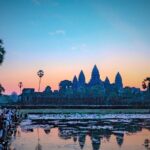
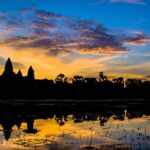
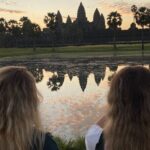
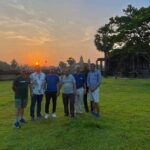
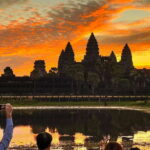
Day 2 begins before sunrise. You’ll be picked up from your hotel lobby around 4:40 AM to watch sunrise at Angkor Wat. This early start is the heart of the tour—plan your sleep like it matters (because it does).
Sunrise at Angkor Wat: the early hour changes everything
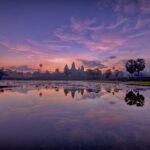
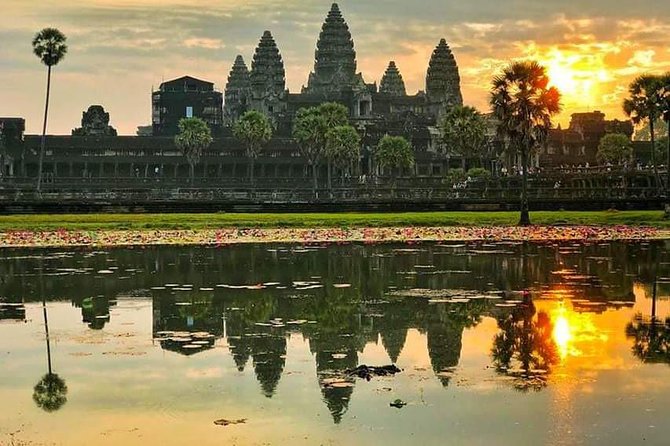
Angkor Wat is described as the largest temple site, and sunrise is when it feels most cinematic. Even if you’ve seen photos, being there early helps you see how scale and symmetry work in real life. The tour gives you about an hour at the sunrise point, so don’t arrive mentally unprepared. Comfortable shoes and a layer for early morning are a smart idea.
Ta Prohm: the jungle temple effect
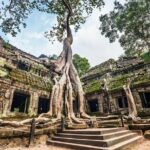
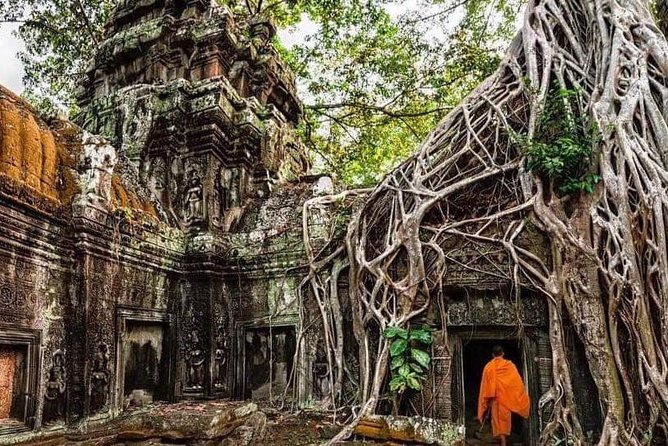
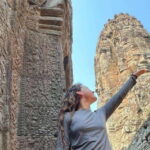
After breakfast, you’ll visit Ta Prohm, known as a jungle temple left in a more natural, overgrown state with huge tree roots. You’ll spend about an hour here. This is a different kind of Angkor experience: less about perfect geometry and more about the way nature and stone have shared the scene for decades.
If you like taking your time with texture—roots, doorways, and broken walls—this is where the tour feels most human. It also gives you a break from only “big postcard” monuments.
You can also read our reviews of more tours and experiences in Siem Reap
Pre Rup (temple mountain feel)
You’ll see Pre Rup next, described as a Hindu temple dedicated to Khmer king Rajendravarman and built around 961 or early 962. The schedule lists Pre Rup more than once, with total stop time around 1.5 hours for one segment. Translation: you’re getting enough time to understand it as a temple mountain, not just a quick photo.
Eastern Mebon, Ta Som, and Neak Pean: smaller stops that keep momentum
Then the itinerary moves into a temple loop that feels slightly less crowded than the headline sites.
- Eastern Mebon: a 10th-century temple built during Rajendravarman’s reign, on what was an artificial island in the now-dry East Baray reservoir. It’s a good stop if you like “place in context” ruins—where water once was, now there’s dry ground.
- Ta Som: another Jayavarman VII-era temple with Mahayana Buddhist associations. It’s the kind of place where you often notice design details more than crowd energy.
- Neak Pean: built during Jayavarman VII’s reign and dedicated to Maha… (the tour description cuts off, but the point is you’re moving to a distinct temple that’s treated as a dedicated site, not just a pass-through).
Preah Khan and a lunch stop
Preah Khan comes next before lunch. It’s a 12th-century temple built for Jayavarman VII to honor his father. You’ll spend about an hour here. After that, lunch happens at a local restaurant stop, and you’ll pay for food and drinks yourself again.
This midday structure matters because you’re about to switch from temples to lake travel. Eating and rehydrating without rushing helps you enjoy the Kompong Phluk portion instead of running on fumes.
Kompong Phluk on Tonle Sap: floating villages by boat
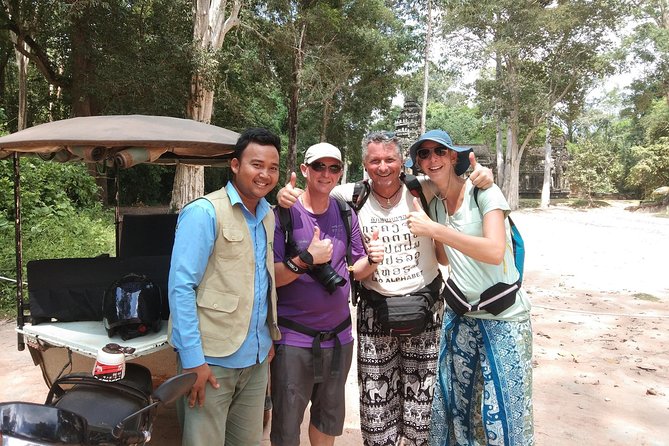
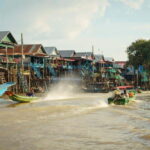
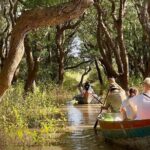
After lunch, you’ll go to Kompong Phluk, a flooded & fishing village on Tonle Sap Lake about 21 kilometers from Siem Reap. The tour includes around a three-hour block here, and once you reach the lake port you’ll take a local boat ride for the floating village experience.
Important cost note: the boat ticket fee is not included and is listed as $20 per person. That’s typical for Tonle Sap boat experiences, but it’s still something you should budget for from the start.
What I like about including Tonle Sap is that it gives Angkor a “living neighborhood” context. You’re seeing water-based community life rather than just stone monuments. You’ll likely do best if you treat this as a cultural and everyday-life stop, not a wildlife safari.
Banteay Srei: why it’s worth aiming for in a two-day plan
Even though the day-by-day stop list you’re following can change depending on pacing, the tour explicitly includes Banteay Srei as part of the temple highlights. That matters because Banteay Srei is often the kind of site people remember later for finer detail and a different feel than the big, iconic complexes.
In a two-day itinerary, that’s smart. You get at least one temple experience that’s not just the most famous one in the area. If your goal is to see Angkor at multiple scales—large state temples and more intricate sites—Banteay Srei inclusion helps you meet that goal without adding an extra day in transit.
Price and value: $85 plus the tickets you must plan for
The tour price is $85 per person. Included items are helpful: an air-conditioned vehicle, hotel pickup and drop off, and a professional English-speaking tour guide for one day, plus mineral water during touring.
But the big-ticket items are separate:
- Angkor Pass: $62 per person (admission fee not included)
- Boat ticket for Tonle Sap: $20 per person (admission fee not included)
- Food and drinks: not included
- Appreciation tip: not included
If you’re doing the simple math, you’re looking at $85 + $62 + $20 = $167 per person before meals and tips. That can still be good value if you want structure and guidance across a lot of ground, especially with sunrise included.
Where the value gets stronger: you’re paying for transportation plus a guide plan that helps you move efficiently across famous and lesser-seen temple spaces. Where it weakens slightly: if you’re the type who prefers going completely on your own schedule, the fixed timing of sunrise and set stops might feel limiting.
How the guide makes a difference (and Dy’s name comes up)
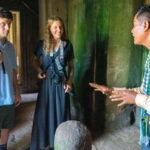
Good guiding is not a luxury in Angkor. It helps you understand what you’re looking at, but also how to pace yourself so you don’t feel like you’re running temple-to-temple.
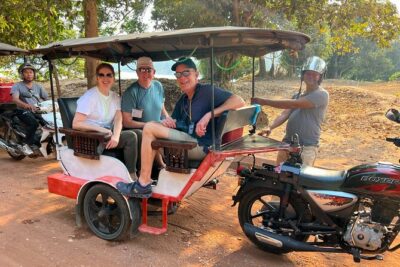
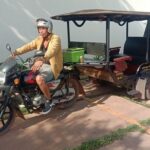
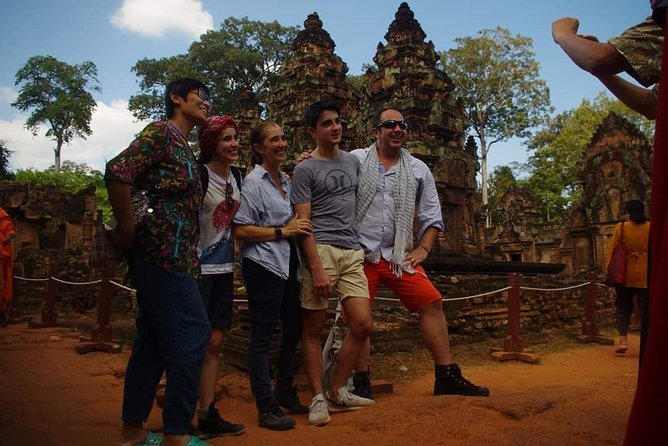
One standout guide name mentioned in the feedback is Dy, who received praise for being perfect and even strong at tuk tuk driving. That kind of practical competence matters in Siem Reap traffic and temple-access timing. Even if you never think about it, you’ll feel the difference in how smoothly the day flows.
Getting the most out of the early mornings and warm afternoons
This tour includes a pre-dawn sunrise pickup and multiple active temple stops. That means your comfort choices are part of the experience.
Here’s what I recommend you do to keep it enjoyable:
- Pack for the early hour on Day 2. Sunrise is at Angkor Wat and pickup is around 4:40 AM, so you’ll likely be moving before the day warms up.
- Wear shoes you trust. Angkor temple grounds are uneven and you’ll be walking between stops.
- Bring a payment method or cash for food. Lunch and drinks are paid by yourself during local restaurant breaks.
- Budget for the separate Angkor Pass and the boat ticket so you’re not making decisions on the spot.
- Keep flexible energy for the optional Phnom Bakheng sunset. If you’re cooked, skip it and protect the sunrise day.
Who should book this tour
This makes the most sense if:
- You want both Angkor Wat sunrise and a Tonle Sap floating village boat ride without organizing multiple vendors.
- You like a guided circuit that mixes major highlights with stops that feel a bit less expected.
- You don’t mind early mornings and want an efficient use of time in Siem Reap.
It might not be the best fit if:
- You’re allergic to early pickups or you prefer sleeping in daily.
- You hate paying add-on costs for admissions and boat rides, because the Angkor Pass and Tonle Sap boat ticket are not included.
- You want total freedom to linger in one temple for a long, slow afternoon.
Should you book this 2-Day Angkor Wat sunrise and Tonle Sap tour?
Book it if you want a clean, guided Angkor experience with structured temple time and the lake portion built in, including sunrise at Angkor Wat and a Tonle Sap boat ride at Kompong Phluk. The included A/C transport, pickup/drop-off, and guide support help a lot.
Hold off or plan extra carefully if your budget can’t absorb the Angkor Pass ($62) and boat ticket ($20), or if you’re hoping lunch and drinks are included. Sunrise plus a long temple day is the trade-off. If you’re good with that swap, this tour is a strong way to see more of Cambodia around Siem Reap in just two days.
FAQ
How much does the tour cost per person?
The price is $85.00 per person.
How long is the experience?
It’s listed as 2 days (approx.).
Is hotel pickup and drop-off included?
Yes. Hotel pickup and drop off are included.
Do I need to buy an Angkor Pass?
Yes. The Angkor Pass costs $62.00 per person and is not included.
Is the Tonle Sap boat ticket included?
No. The boat ticket fee is not included and is listed as $20.00 per person.
What time is the Angkor Wat sunrise pickup?
You’ll be picked up from your hotel lobby before sunrise at 4:40 AM.
Is Banteay Srei included?
Yes. The tour summary and included items mention Banteay Srei as part of the experience.
Is lunch included?
Lunch breaks happen at local restaurants, and food and drinks are not included, so you’ll pay on your own.
Can I get a full refund if I cancel?
Yes. You can cancel up to 3 days in advance for a full refund. If you cancel less than 3 days before the start time, the amount paid is not refunded.
If you want, tell me your travel month and whether you care more about sunrise photos or slower temple exploring. I can help you plan what to prioritize with this exact schedule.