REVIEW · SIEM REAP
2-Day Angkor Wat, Kulen Mountain, Beng Mealea and Tonle Sap
Book on GetYourGuide →Operated by BREKSA TRAVEL · Bookable on GetYourGuide
Sunrise at Angkor Wat sets the tone fast. This 2-day circuit strings together Cambodia’s biggest temple wow-factor, then swaps in jungle ruins, waterfall time, and a floating village on Tonle Sap—so the days feel like a real journey, not a checklist.
I love the early sunrise plan on Day 1, with hotel pickup around 4:30–5:00 am and time to see Angkor Wat before the heaviest crowds. I also love the small-group feel (up to 14) plus the practical touches—A/C transport, cool water, and cold towels—because your legs will notice the heat and stone steps.
One drawback to consider: this is a full-on packed schedule. You’ll start very early, walk a lot, and you’ll be outdoors in sun and humidity, so plan your pace and bring the right gear (hat, sunscreen, closed-toe shoes). Also, if you’re uncomfortable with crude or religious jokes, it’s worth being direct with your guide or choosing a reputable guide team—one past experience raised that concern.
In This Review
- Key highlights to know before you go
- Sunrise over Angkor Wat: early pickup, real photo time, and big-feel symbolism
- Angkor Thom + Ta Prohm: smiling faces, elephant terraces, and a temple that looks half-wild
- A local breakfast stop that actually adds meaning (and breaks the temple monotony)
- Day 2: Kulen Mountain with waterfalls, a reclining Buddha, and the River of 1000 Lingas
- Picnic lunch by a waterfall, plus a swim if conditions allow
- Beng Mealea: the jungle temple that feels less curated and more real
- Kampong Phluk on Tonle Sap: mangroves, stilt houses, and boat time
- Price and value: the $69 base fare vs. the passes you’ll still pay
- Comfort, logistics, and what to pack for a brutal-feeling Day 1
- Guide quality is the difference between seeing temples and understanding them
- Who should book this Angkor circuit, and who might not love it
- Should you book it? My practical take
- FAQ
- What time is pickup on Day 1 for the Angkor Wat sunrise?
- Is the Angkor pass included in the $69 price?
- What’s included for meals during the tour?
- Do I need separate tickets for Kulen Mountain, Beng Mealea, and Tonle Sap?
- How large is the group?
- What should I bring for the tour?
Key highlights to know before you go
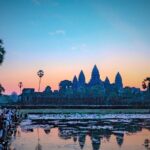
- Angkor Wat sunrise with time for photos before the biggest crowd surge
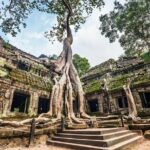
- Ta Prohm’s jungle look—roots and stones in a natural fight for space
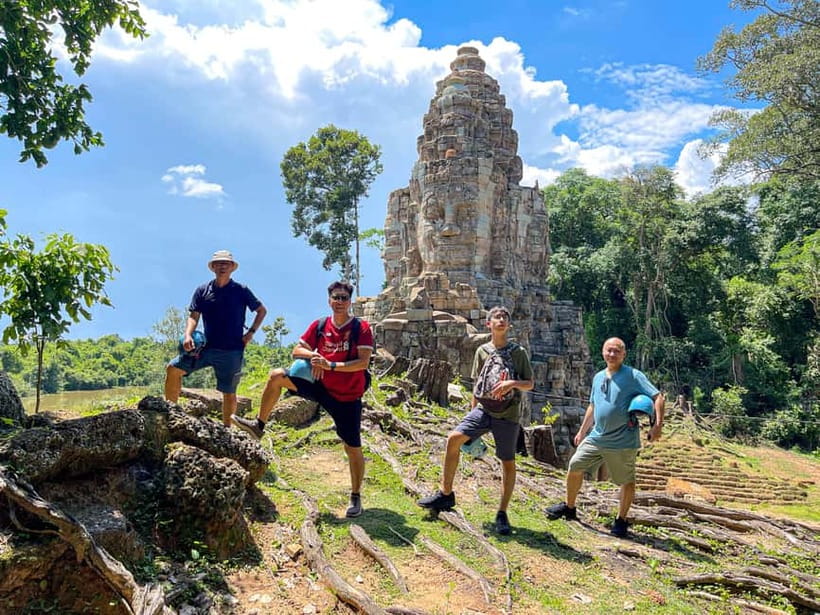
- Angkor Thom’s Bayon faces (54 towers, 216 carved faces of Avalokesvara)
- Phnom Kulen power sites: reclining Buddha and the River of 1000 Lingas (from 802 AD)
- Kampong Phluk on Tonle Sap by boat, with mangrove views and floating life
Sunrise over Angkor Wat: early pickup, real photo time, and big-feel symbolism
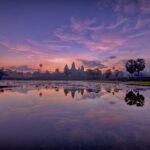
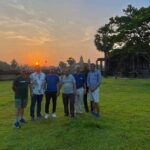
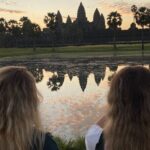
Day 1 begins with the kind of start that sounds extreme until you’re standing there. Your pickup is before dawn, typically between 4:30 am and 5:00 am, and you head straight to Angkor Wat to watch sunrise over the main towers. The payoff is not just the light—it’s the atmosphere. Early hours let you see the scale of the temple complex without the visual noise of tour groups stacked shoulder-to-shoulder.
Once you arrive, the plan includes about 1 hour 30 minutes to walk and see Angkor Wat as a whole building complex. That timing matters. Too short and you get rushed through the signature views. Too long and you melt. Here, you’re given enough time to take photos and still stay human.
You’ll also get a clear structure to your morning: you’re there for the sunrise moment, then you’re moving while the day is still fresh. A practical bonus: this is where your guide’s timing really shows. One of the best things you can ask yourself on any Angkor tour is: will I see Angkor Wat as a place, or will I only see it as a backdrop? This schedule leans toward place.
You can also read our reviews of more tours and experiences in Siem Reap
Angkor Thom + Ta Prohm: smiling faces, elephant terraces, and a temple that looks half-wild
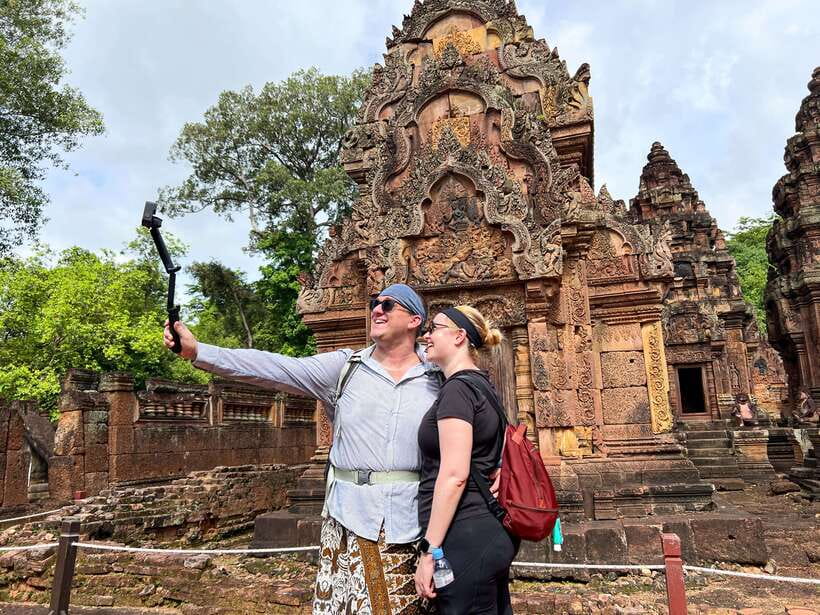
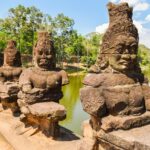
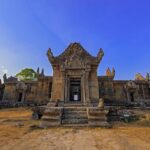
After Angkor Wat, the day shifts to the inner stories of Angkor’s city. You visit Angkor Thom via the South Gate, then head to key temples like Bayon and Baphoun.
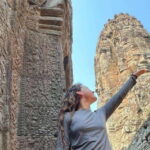
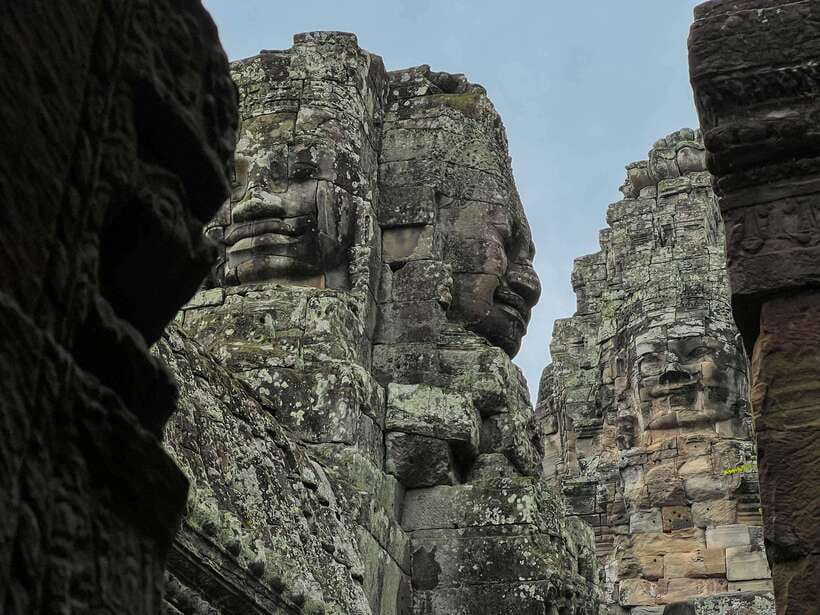
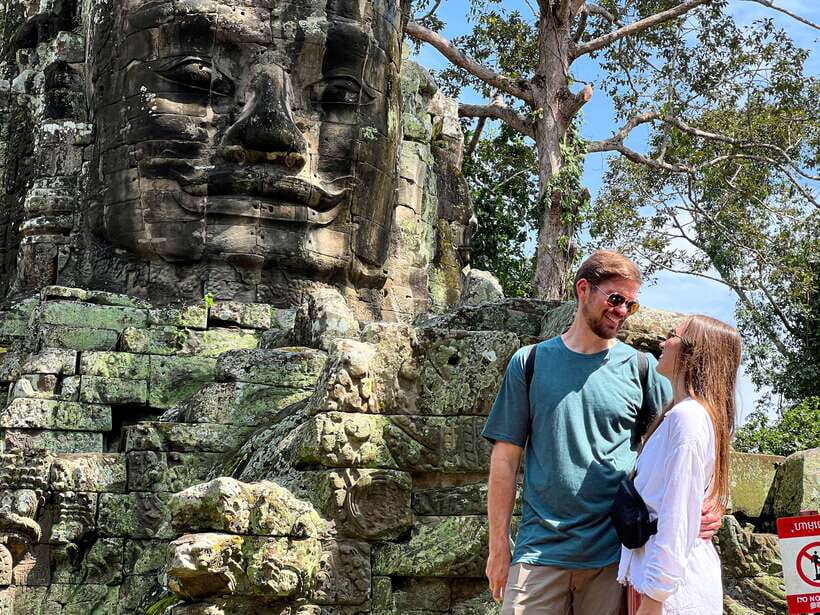
Bayon is the one people remember even if they forget the map. You’re looking at 54 towers and 216 faces of Avalokesvara. What I like about having a guide explain what those faces represent is that it stops being only decoration. You start noticing symmetry, placement, and how the temple design communicates authority and belief.
Then there are the terraces—good stops because they slow you down just enough to feel the empire behind the stone:
- Terrace of the Elephant, a royal viewing and performance space
- Terrace of the Leper King, a famous platform tied to royal audience lore
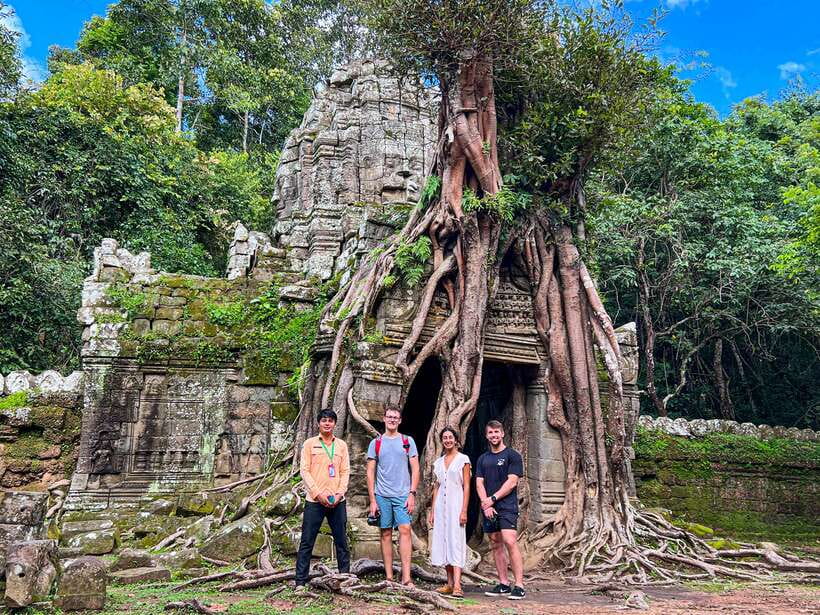
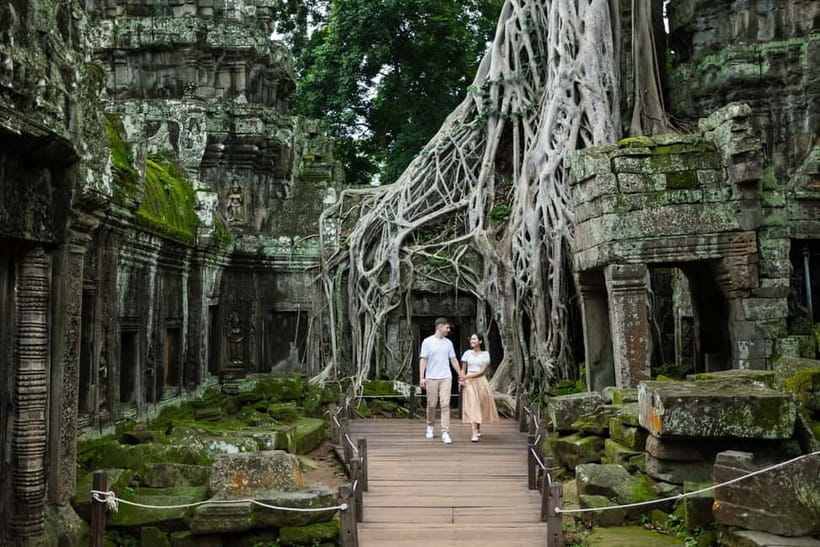
Next comes Ta Prohm, where the famous jungle look is not a themed photo set—it’s the result of a temple left in a state that lets nature take over. You walk through areas where huge tree roots climb the stonework, and it can feel oddly emotional. Ta Prohm has this “still being fought for” quality, and you’ll likely spend more time looking around than you expected.
The experience gets better if you’re the type who likes explanations as you go. A lot of guides on this route are strong at connecting the temples to the Khmer empire and to Hindu-Buddhist influences. In earlier trips with this provider, people specifically praised guides who stayed informative and respectful—names that came up included Sam, Seila, and Kim.
A local breakfast stop that actually adds meaning (and breaks the temple monotony)
Between the big temple blocks, you’ll eat breakfast at a local family restaurant in Siem Reap. This isn’t the main attraction, but it helps in two ways. First, you recharge before the walking starts again. Second, it adds a small slice of everyday life, instead of only consuming sights.
You’ll also do a rural-style break near the Preah Dak village area. You’ll taste something traditional—palm cake is part of the stop—and the guide shares how communities live alongside the temple zone. For me, these food-and-people stops are the glue. They make the day feel less like a theme park and more like an actual region.
If you have dietary needs, you might want to mention them ahead of time, but the tour data here only states that breakfast and the day-2 picnic are included, not specific menus or alternatives.
Day 2: Kulen Mountain with waterfalls, a reclining Buddha, and the River of 1000 Lingas
Day 2 starts with another morning pickup in Siem Reap. Then you head out for Kulen Mountain, including a scenic 1-hour drive through rice paddies. That drive is more than transport; it’s your mental shift from city-temple stone to hilltop and rainforest energy.
You’ll secure your Kulen Mountain ticket as part of the day, and you’ll be guided by a local guide once you reach Phnom Kulen. From there, the highlights are very specific:
- Amazing Cliff of Poeng Ta Kho viewpoint
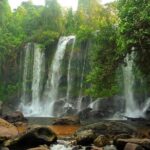
- Waterfalls
- A reclining Buddha sculpture
- The River of Thousand Lingas (noted as dating from 802 AD)
This is one of the most interesting “why it matters” parts of the itinerary. Angkor Wat and Bayon feel like the big urban centers of power. Kulen feels like a spiritual and landscape engine—holy sites placed into nature, with sacred rivers and carvings that don’t read like a museum display. When you’re standing near those sites, you can feel the religious geography that shaped Khmer beliefs.
Picnic lunch by a waterfall, plus a swim if conditions allow
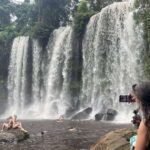
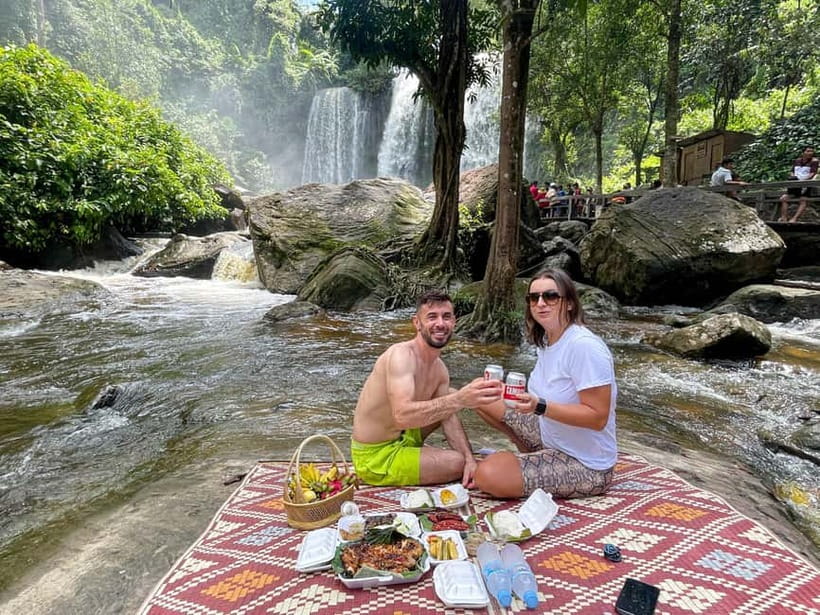
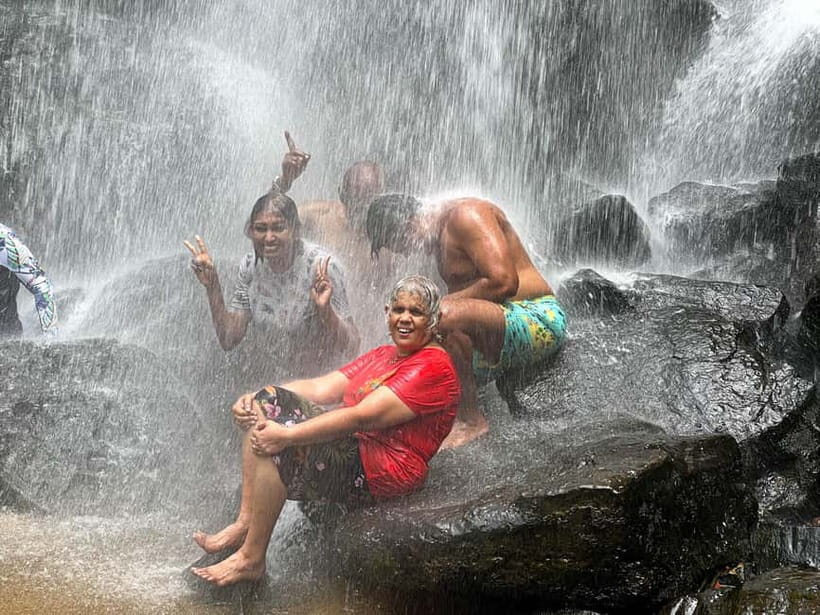
After your main Kulen exploration, you’ll stop for a picnic lunch near a waterfall. The tour includes grilled chicken with seasonal fruits. Then comes one of those “don’t skip this” moments: you can swim in the waterfall plunge pool.
If you’re thinking, I want the temples, not bathing—fair. But in practice, the swim breaks the heat and resets your energy for what comes next: Beng Mealea, which is deep jungle ruin and a lot of walking.
Bring swimwear if you think you’ll take the plunge. The tour data doesn’t spell out a policy, but the included option is there, and you’ll be in a wet area anyway.
Beng Mealea: the jungle temple that feels less curated and more real
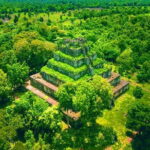
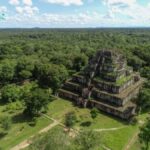
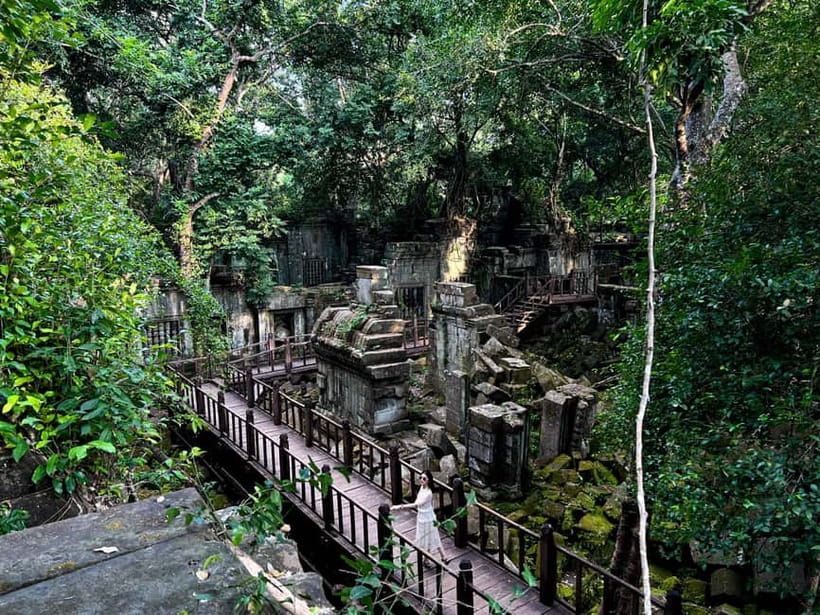
Next is Beng Mealea, a 12th-century jungle temple tied to the Angkor Wat period. Here’s the key detail that makes Beng Mealea different: it’s described as being overgrown with around 300 years of vegetation, including trees, lianas, and mosses.
That “messy” look is the point. Unlike the most restored, most symmetrical temple stops, Beng Mealea can feel like you’re stepping into an archaeological atmosphere—half stone, half jungle, with nature reclaiming the edges. It’s also quieter than some of the flashier highlights, because it’s more work to get to and more effort to walk through.
The tradeoff is comfort. You’ll want closed-toe shoes and decent traction. This part of Day 2 isn’t about sitting and snapping one postcard. It’s about moving through rougher terrain.
Kampong Phluk on Tonle Sap: mangroves, stilt houses, and boat time
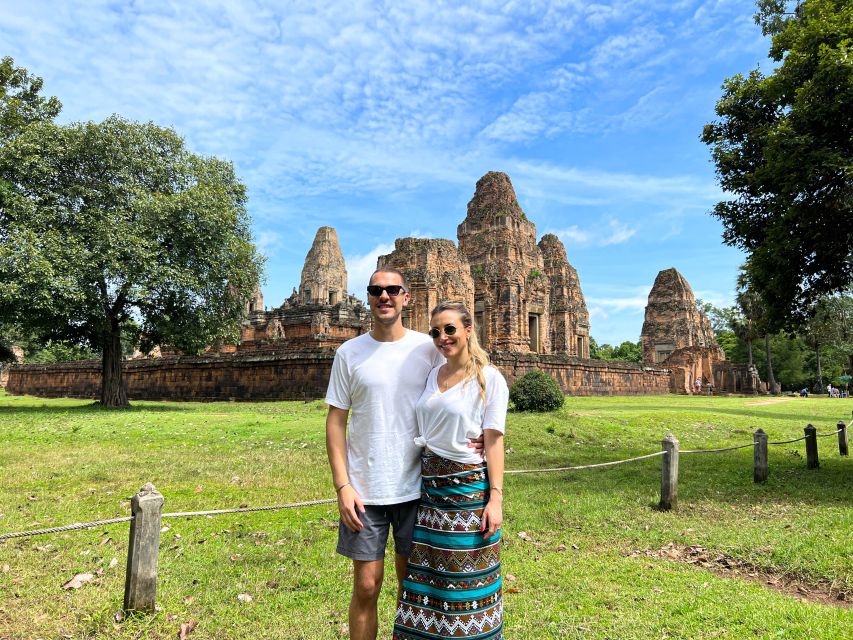
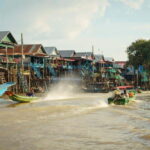
To close the trip, you take a boat ride to Kampong Phluk, a floating village on Tonle Sap Lake. Here you switch from stone temples to living water-world.
You’ll see:
- families dependent on fishing
- colorful houses on stilts
- boating through flooded mangrove forest
One of the most charming details included is wildlife: the mangrove area can include crab-eating macaques.
Timing can make a big difference here. On at least one earlier trip with guides from this team, the visit was timed for better light (sunset over Tonle Sap was mentioned). If you like photos, ask your guide what time the village boat ride will hit the best light.
Tonle Sap also gives context for why Cambodia’s waterways are more than scenery. The village isn’t a “photo stopping place”—it’s home, and you’ll notice how daily routines adapt to the water level.
Price and value: the $69 base fare vs. the passes you’ll still pay
The headline price is $69 per person for 2 days. That base price is good value if you care about convenience: you get a professional English-speaking guide, A/C transportation, hotel pickup and drop-off, cool bottle of water and towels, plus meals (breakfast Day 1, picnic lunch Day 2).
But you should budget for the entrance/transport passes separately:
- Angkor pass: $37 per person
- Kulen Mountain pass: $20 per person
- Beng Mealea pass: $10 per person or a valid Angkor pass
- Tonle Sap Lake pass with boat ride: $15 per person
- soft drinks are not included
So your real total depends on which pass rules apply to Beng Mealea and whether you’re already covered by an Angkor pass. Still, this structure can be cheaper than piecing together separate private tours, especially if you value a guided narrative and smooth logistics.
For me, the value is in the combination: sunrise, temple circuit, Kulen spiritual sites, jungle ruins, and a floating village all in two days with guided context and temperature-controlled transport.
Comfort, logistics, and what to pack for a brutal-feeling Day 1
The tour is built around early starts and active walking. A/C vans help, but you’ll still be outside. One practical reason this experience gets strong feedback is the cooling strategy—cold towels and cool water at the right times.
You’ll also want:
- hat + sunscreen (you’re outdoors at sunrise and again later)
- closed-toe shoes for uneven temple ground and Beng Mealea
- insect repellent (especially with rainforest time on Day 2)
- sunglasses and a power bank
- comfortable clothes, and note the rules: no sleeveless shirts, and no alcohol or drugs
Pickup time on Day 1 is early enough that you should set your alarm the night before and keep breakfast light. If you’re tempted to pack a “full day bag,” keep it simple: water, snacks if allowed by your comfort level, camera, and what you’ll need for sun and bugs.
Small group size (up to 14 participants) matters because it reduces delays. When it’s crowded, temple routes can get slow fast. Here, you have a better shot at a smooth flow.
Guide quality is the difference between seeing temples and understanding them
This is one of the most consistently praised parts of the experience. Names that show up in past feedback include Sam, Seila, Kim, Sotin, Jan, Mony, and Ho, plus supportive drivers like Moon, Theara, Tee, Mark, Phat, and Reaksa.
What you should take from that: the guide isn’t just pointing. The best guides on this route explain what you’re looking at—why Bayon’s faces are where they are, what the terraces meant in royal life, and how the Khmer empire fits together across sites. You’ll also get help with timing and photo spots, which matters at Angkor when everyone else is trying to shoot the same angles.
Balanced note: one earlier experience flagged that a guide made derogatory comments about religion in a joke. That’s not a “Cambodia problem.” It’s a guide-behavior problem. If you’re traveling with strong sensitivities, it’s smart to set expectations early and choose a guide team known for respect.
Who should book this Angkor circuit, and who might not love it
This 2-day tour suits you if:
- you want maximum iconic Angkor sights without planning everything yourself
- you like a guide explanation, not just photo stops
- you don’t mind a schedule that starts before sunrise
- you want cultural stops plus nature time (Kulen waterfalls and jungle ruin)
It may not fit as well if:
- you’re hoping for a slow, restful vacation
- you dislike early mornings and lots of walking
- you need highly flexible pacing (the route is structured and full)
If you’re in decent walking shape and you like a well-run group day, this is a strong way to see a lot of Cambodia’s highlights quickly.
Should you book it? My practical take
I’d book this tour if you want a two-day mix of Angkor Wat sunrise, jungle-temple drama at Ta Prohm and Beng Mealea, Kulen spiritual sites and waterfall time, and a Tonle Sap floating village boat ride—without the stress of sorting transport and timing.
Choose it especially if you value the “small details” that make the day bearable: A/C vans, cold towels, cool water, and guides who can connect the dots between Bayon, terraces, and the Khmer story. Just go in with eyes open: it’s long, it’s active, and you’ll pay entrance passes on top of the base price.
FAQ
What time is pickup on Day 1 for the Angkor Wat sunrise?
Pickup is typically between 4:30 am and 5:00 am, before sunrise, with hotel pickup included.
Is the Angkor pass included in the $69 price?
No. The Angkor pass costs $37 per person and is not included.
What’s included for meals during the tour?
Breakfast is included only on Day 1, and a picnic lunch nearby the waterfall is included only on Day 2.
Do I need separate tickets for Kulen Mountain, Beng Mealea, and Tonle Sap?
Yes. The Kulen Mountain pass is $20 per person, Beng Mealea pass is $10 per person or you can use a valid Angkor pass, and the Tonle Sap pass with boat ride is $15 per person.
How large is the group?
The group is limited to 14 participants.
What should I bring for the tour?
Bring camera, comfortable clothes, sunscreen, hat, closed-toe shoes, sunglasses, insect repellent, and a power bank.